All Activity
- Past hour
-
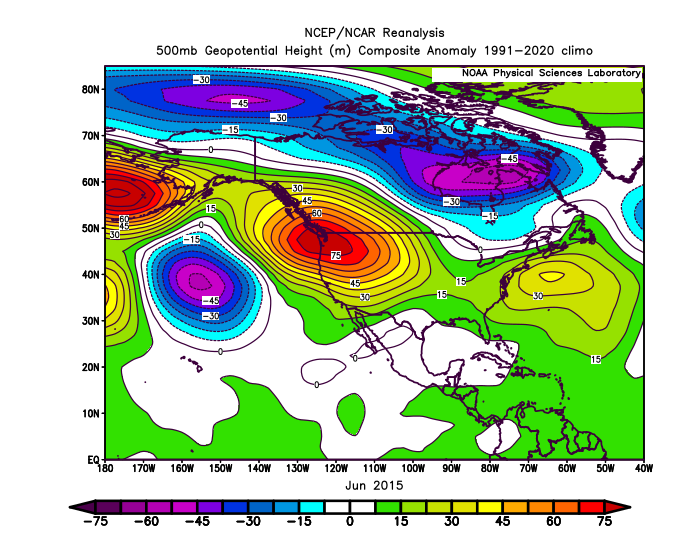
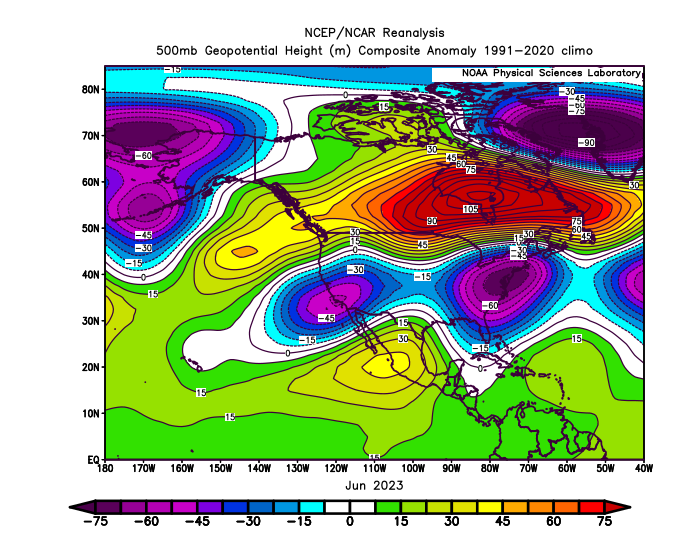
We will have to wait and see since we aren’t getting the extreme ridge over Canada like we had from May into June 2023 leading to the record air pollution in NYC from the Canadian wildfires. Notice how 2015 started off warmer in June than 2023 which set the pace for the whole summer. While a much warmer winter has been a given with super El Niños like 1983, 1998, 2016, and 2024 we did find a way to get a generally warmer summer in 2015 with over 30 days reaching 90°. Time Series Summary for NEWARK LIBERTY INTL AP, NJ - Jan through Dec 90° days Click column heading to sort ascending, click again to sort descending. 2025 39 0 2024 33 0 2023 29 0 2022 49 0 2021 41 0 2020 31 0 2019 27 0 2018 36 0 2017 22 0 2016 40 0 2015 35 0
-

Central PA Spring 2026 Discussion/Obs Thread
mahantango#1 replied to Voyager's topic in Upstate New York/Pennsylvania
35 with just a touch of frost this morning. -
Winter 25-26 (All Snowfall Maps & Season Total)
The 4 Seasons replied to The 4 Seasons's topic in New England
All the climate sites came in above normal but ISP had a crazy good winter with near 200% of normal snowfall, same with PVD (mostly from one storm) Long Island and the Cape/S. Coast did really well overall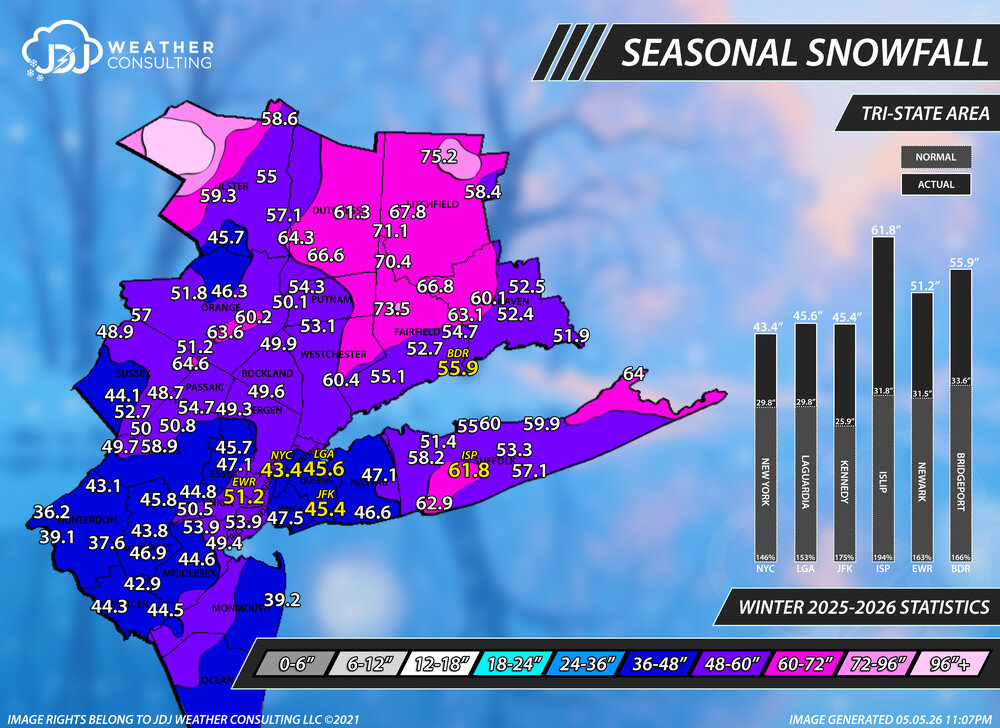
-
We need one or two loaded up El Niño southern jet setups to make it this far north with cold air. We don’t want too much blocking to squash everything south.
-

2026-2027 Strong/Super El Nino
Stormchaserchuck1 replied to Stormchaserchuck1's topic in Weather Forecasting and Discussion
Again, +2 years after a Solar Max correlates with El Nino at 0.2 (57%). Here is the Winter composite +2 years after Solar Max There were/are 3 things going for El Nino this year: 1. We had 5/6 La Nina years (RONI). History says ENSO balances that out in the next 1-3 years, 2:1 El Nino vs La Nina tendency. 2. We had a Strong El Nino 3 years ago (23-24). History says that there is a "2nd wave", as similar event happens vs dissimilar 2:1, 3-5 years after Strong ENSO event. 3. Solar Max +2 years is a pretty strong El Nino composite: - Today
-
Sneaky 33° this morning and tomorrow AM is supposed to be the cooler one. A little patchy frost out there.
-
2026-2027 Strong/Super El Nino
Stormchaserchuck1 replied to Stormchaserchuck1's topic in Weather Forecasting and Discussion
Phase shift.. it will be interesting to see if the N. pacific low responds. So far there are no signs of it on long range ensembles, even though ENSO usually correlates with it pretty strongly in the NPH area in May -
The STJ should be active. Thats step 1. Step 2 would be blocking. Step 3 would be a negative EPO/ AO.
-

Central PA Spring 2026 Discussion/Obs Thread
Jns2183 replied to Voyager's topic in Upstate New York/Pennsylvania
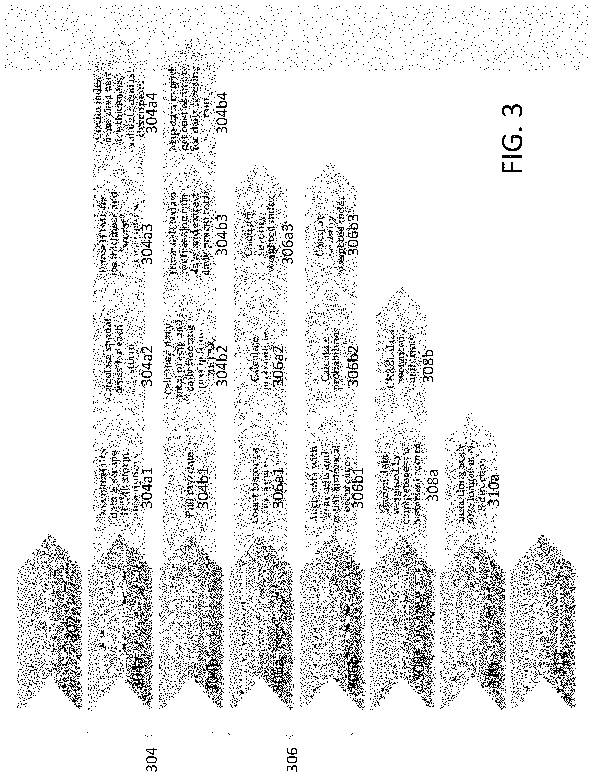
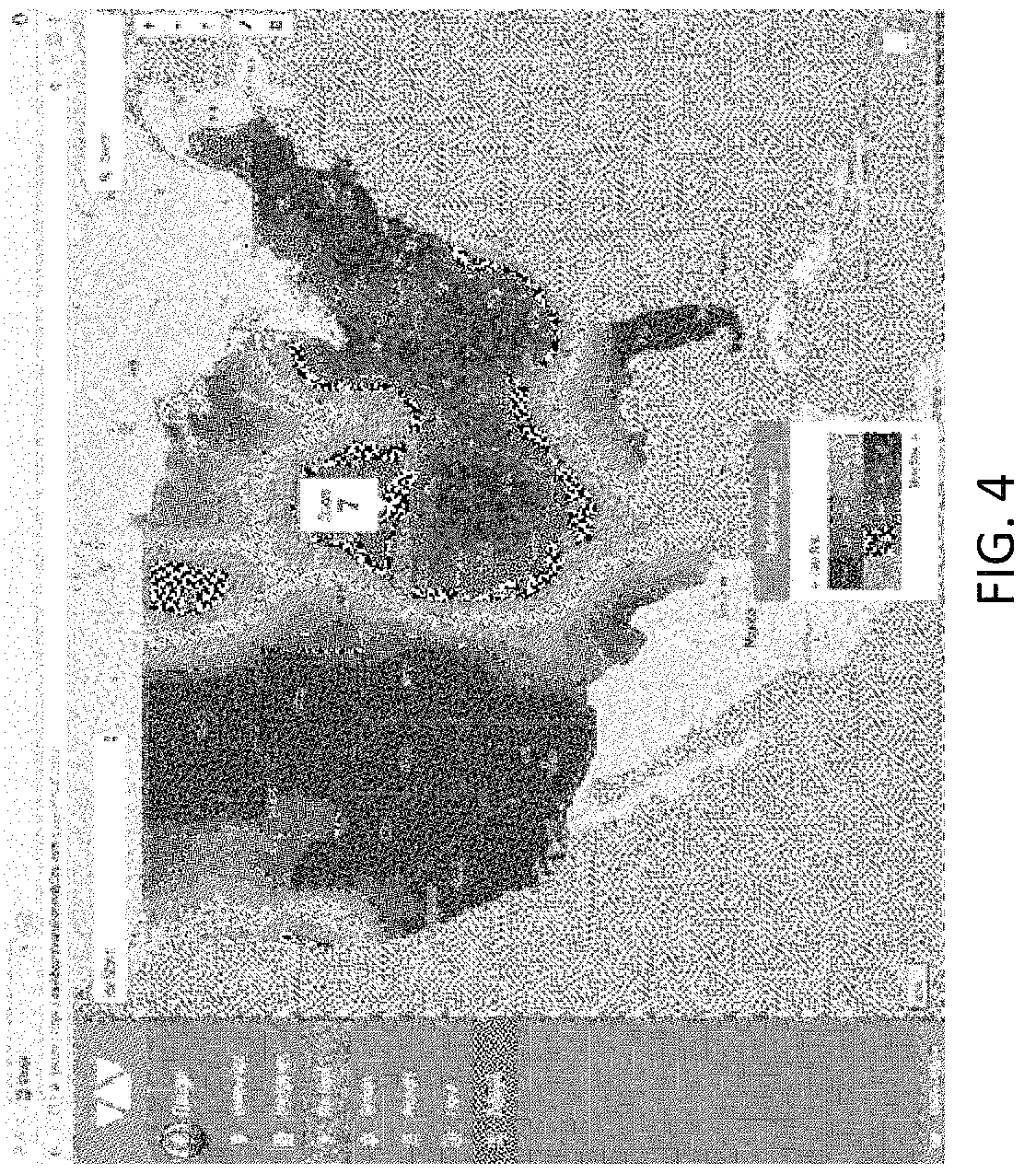
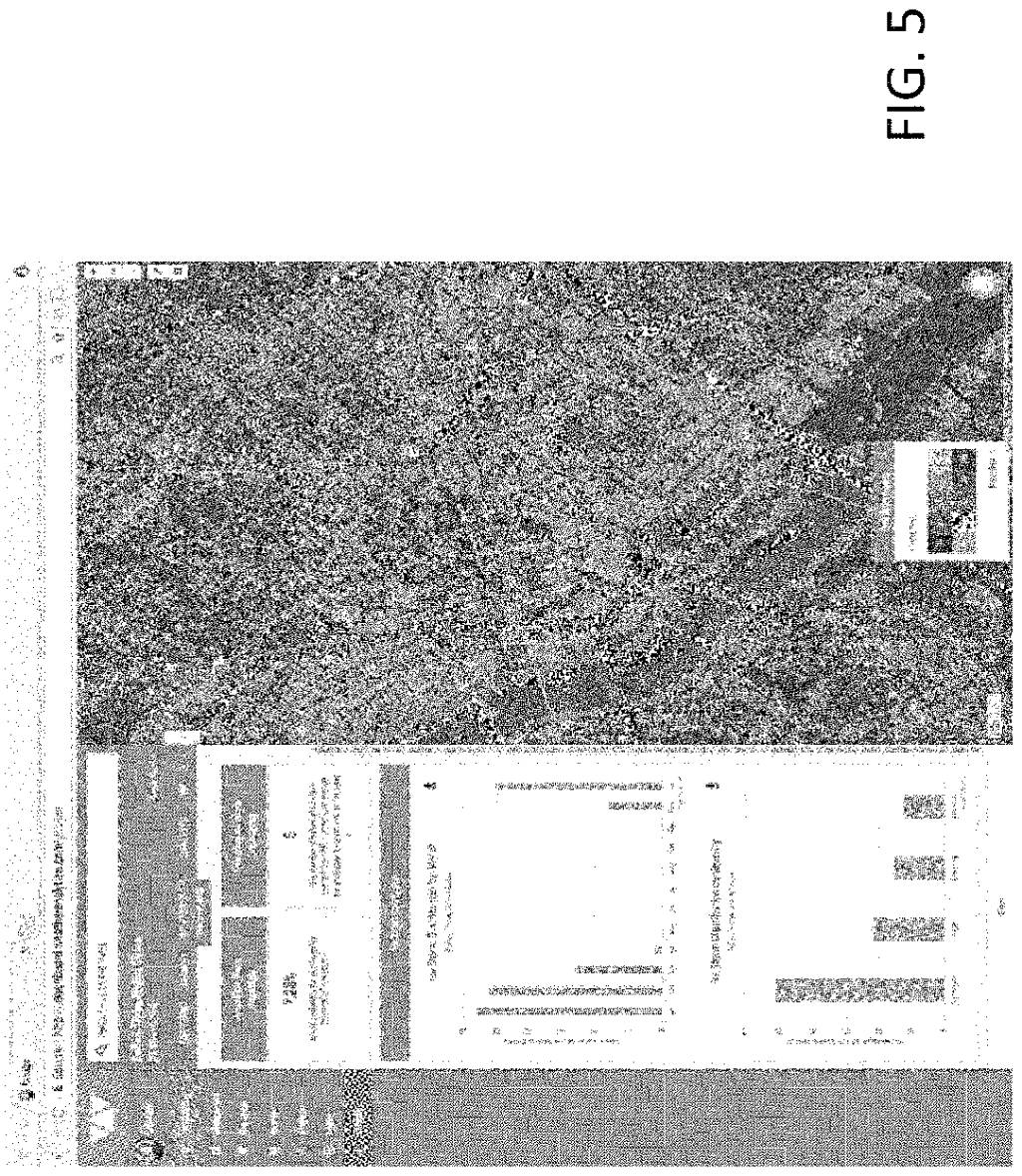
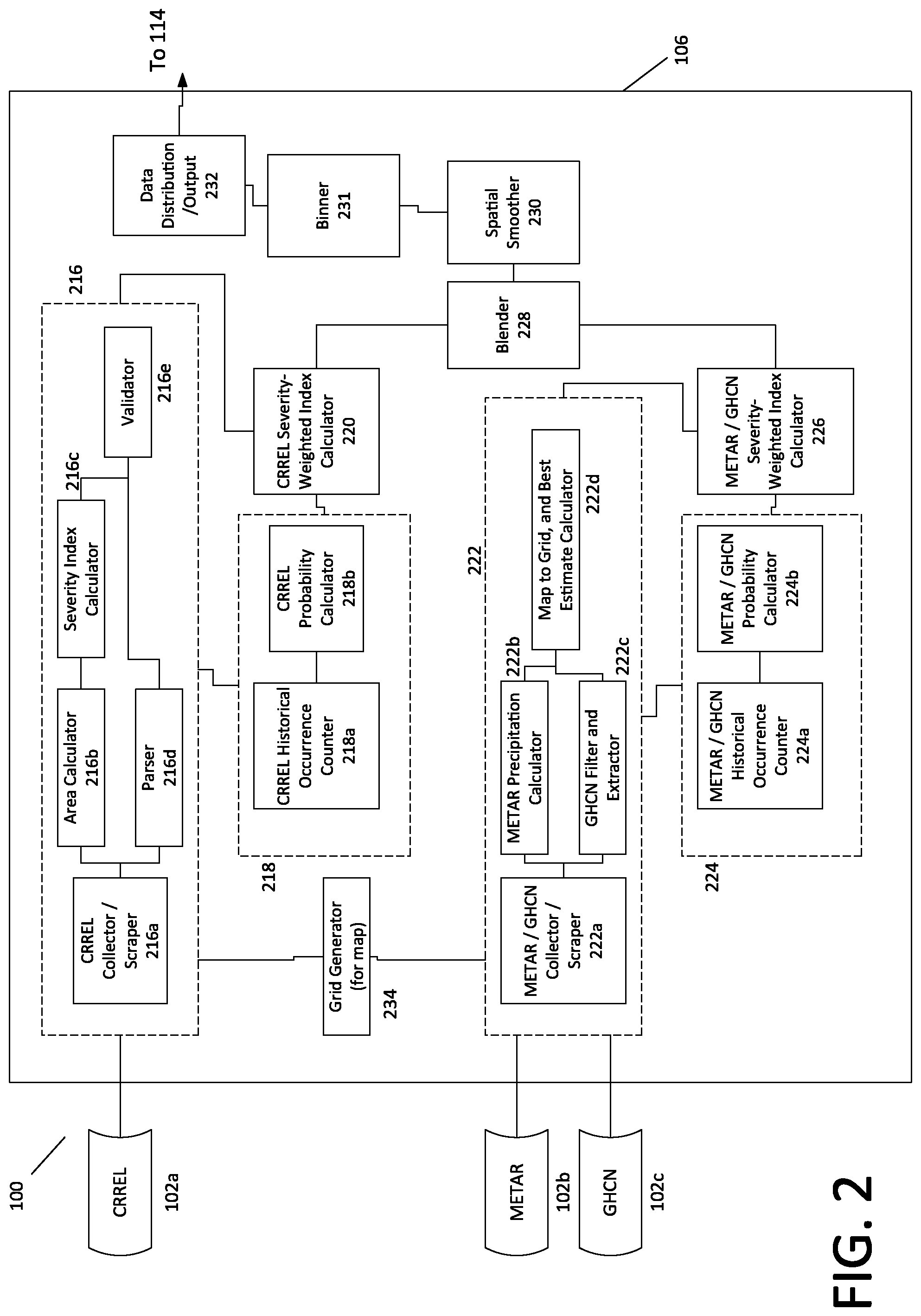
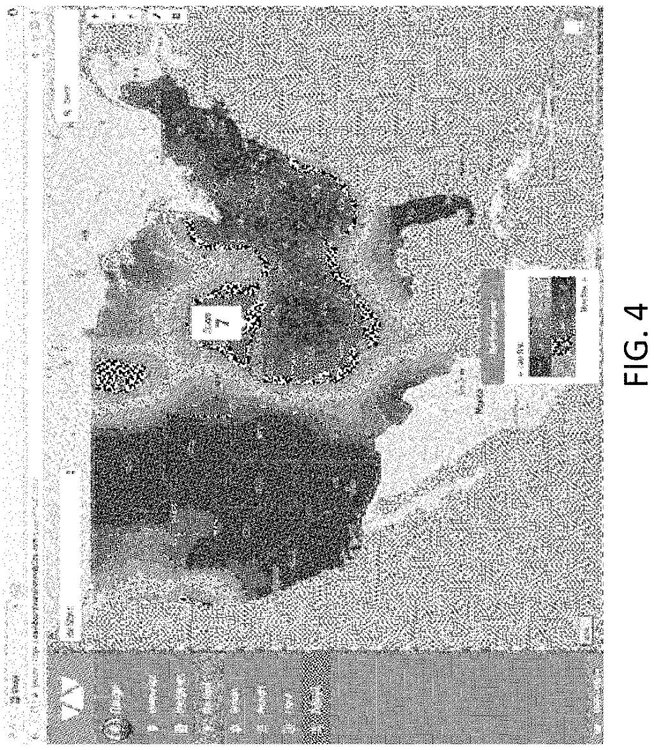
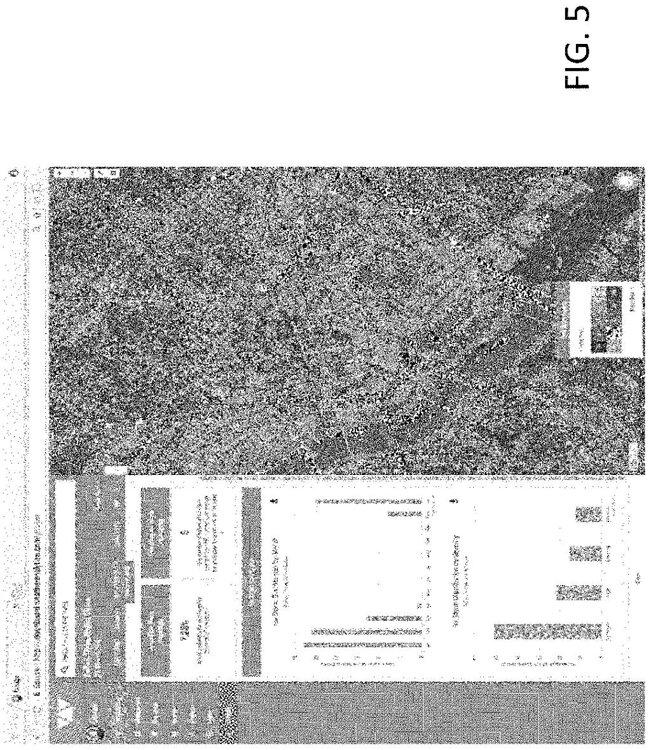
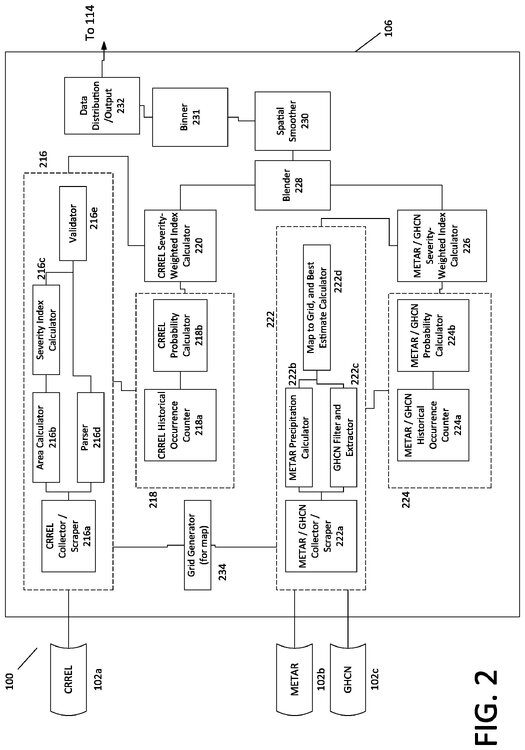
Imagine you wake up one morning and patent the following revolutionary process: you walk to your mailbox, open it, read the letters inside, and then tell your spouse whether the bills are good or bad. Congratulations, you are now the sole licensed operator of checking mail. Every postal worker, every homeowner, every apartment dweller now owes you a royalty check for the cognitive crime of retrieving and interpreting written correspondence. This is essentially what Athenium LLC ( a troll of all trolls) did with US Patent 11,644,597, except instead of mail they used three freely available government weather databases that your tax dollars already paid for, applied math so simple it would embarrass a middle schooler, and then had the audacity to claim they invented "ice storm risk scoring", a thing meteorologists have been doing since before most of Athenium's employees were born. The United States Patent and Trademark Office, in its infinite wisdom, looked at this and said "yes, this is a novel human achievement worthy of 20 years of legal protection," which says everything you need to know about why your insurance premiums keep going up. Approved in 2023 and I'm at a loss at how exactly a patent inspector can reach heights of such incompetence that I found 7 instances of the exact workflow patented in research papers well before they applied for this and it took me 36 minutes exactly. I wish I could force a conflict with the NWS and them but all they want is to try to sue insurance companies and their entire worth to humanity is less than a mosquito in the Amazon. https://patents.google.com/patent/US11644597B2/en?q=(G01W1%2f14+-+Rainfall+or+precipitation+gauges)&q=(G01W1%2f10) Sent from my SM-S731U using Tapatalk
-
Frosty this morning
-
IMO odds favor the colder/snowier 2026 -2027 Winter as other factors that helped create last winters below normal temps will repeat next winter.
-
2026 Mid-Atlantic Severe Storm General Discussion
high risk replied to Kmlwx's topic in Mid Atlantic
What a bummer. We're about to enter what I consider our climatological "legit severe" peak, and looking through the next 2 weeks, I can barely find chances of thunder, much less severe. And yes, I consider our peak from around May 10 - June 20. After June 20, we can get some localized wind and maybe a derecho every 5-10 years (and of course a tropical system), but our best threats for organized, higher-end severe in my mind usually falls during that period.- 312 replies
-
- 1
-

-
- severe
- thunderstorms
- (and 7 more)
-
Running a -5.5 for the first week of the month, only + day was the 6th (+2.4 degrees) and looks like Saturday and Sunday may be the only days with a chance at positive numbers thru the next 7 days. Chilly May start.
-
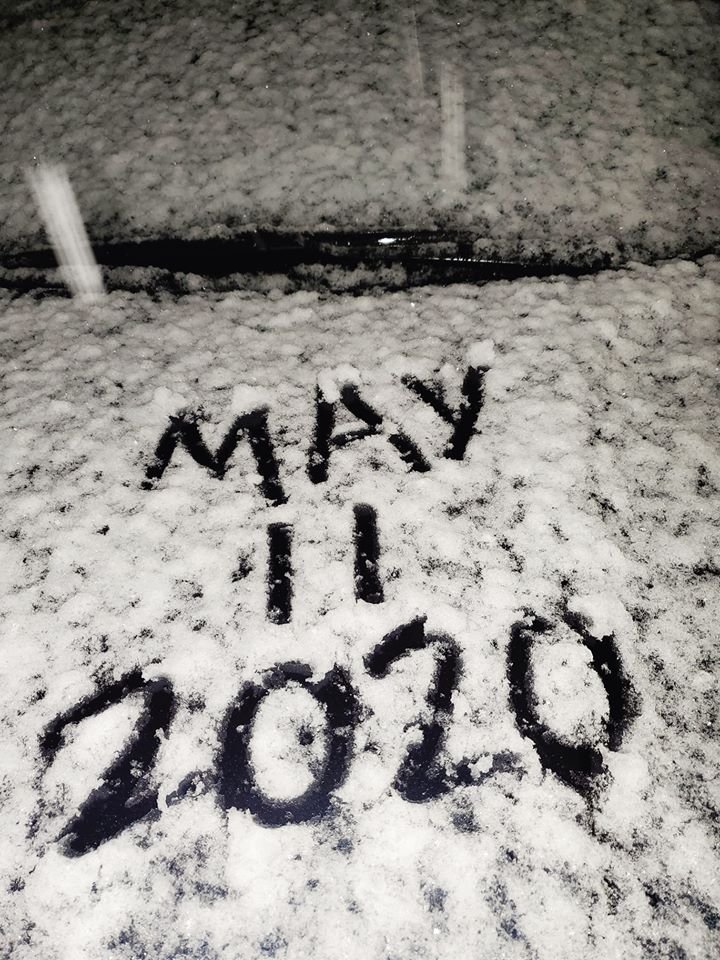
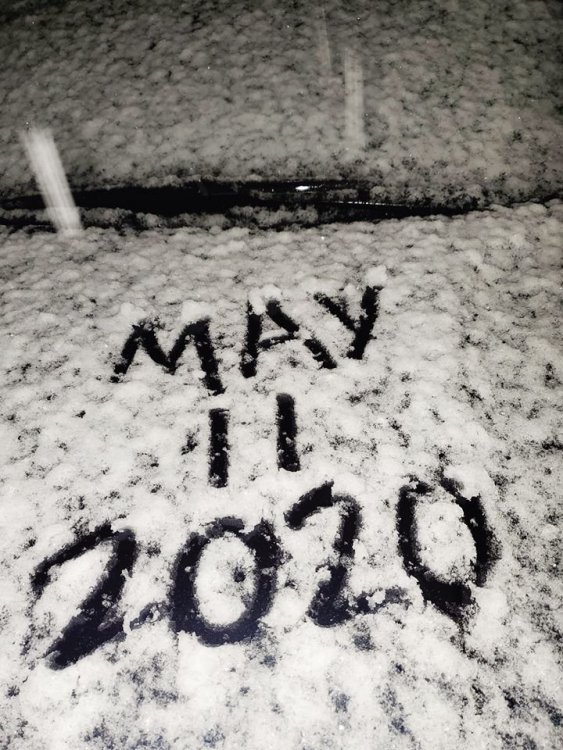
We had snow late evening May 10, 2020. I had 0.7", DTW 0.5".
-
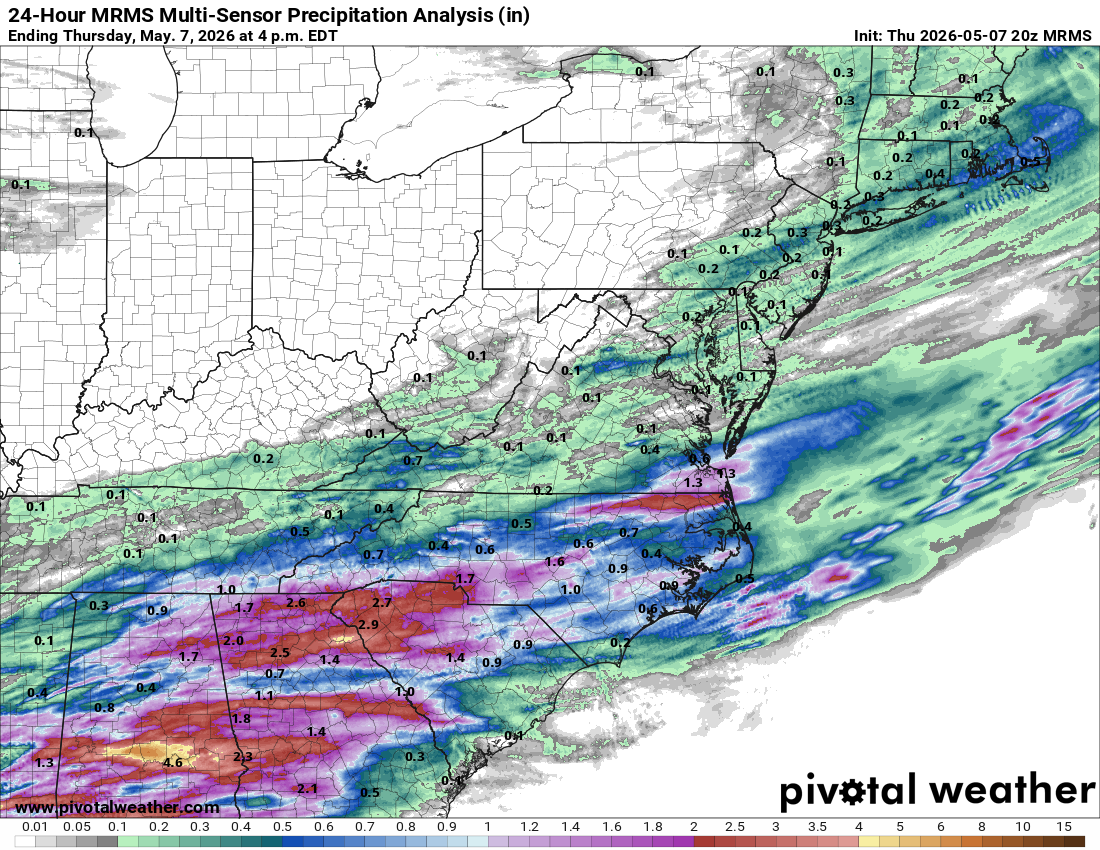
My area got only a couple of hundredths today (all this morning), much less than expected and thus disappointing. But I’m still thankful we got 1.2” on Saturday (5/2) and am also looking forward to weekend prospects for good rains. It’s overall still going in the right direction.
-

Central PA Spring 2026 Discussion/Obs Thread
Ruin replied to Voyager's topic in Upstate New York/Pennsylvania
I live in the orange area and we have had rain the last month like 2-3 days a week. while some of it was showers and was only .20 we had other rain events 1.24 1.01 .86 .66. May 5, 2026, Harrisburg has experienced rainfall total of 11.56 inches, which is a deficit (departure) of -1.39 inches compared to the 13.95 inches average typically seen by this date. we are only down 1.39 This update doesnt even include the thge last round of rain where we picked up about .40 so that means we are about a 1 inch down. no way we should be in the orange color of drought -
Hey Steve... great work... would certainly consider using it... Is the rainfall (in/hr) working???
-
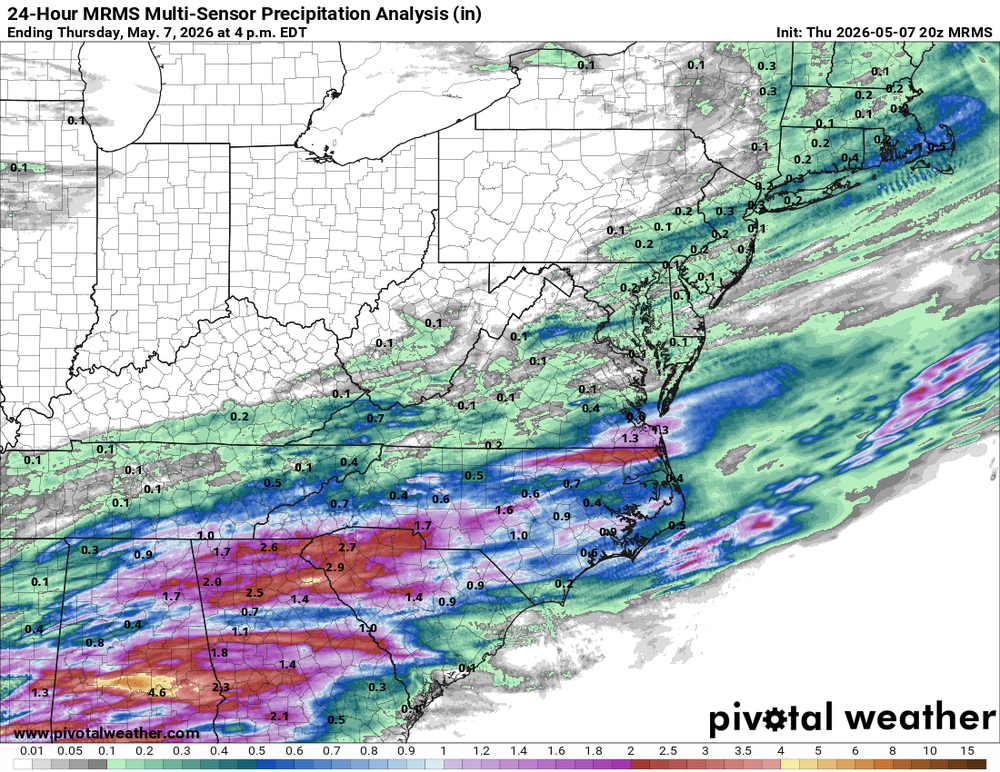
That map is so wrong. Showing 1 to 1.5 inches for my overall area within 40 miles, we got 4.8 inches in that area. Not sure where the data is coming from.
-
Cool weather starts to lose grip in about a week or 10 days. could see us snapping straight into summer thereafter
-
E PA/NJ/DE Spring 2026 Obs/Discussion
Albedoman replied to PhiEaglesfan712's topic in Philadelphia Region
I’m not talking about Philadelphia—I’m talking about the Lehigh Valley, where I actually live and have followed weather patterns for decades. I was here 40 years ago, and I can tell you from real experience that this stretch is different. Back then—and even as recently as May 2020—I wasn’t running my heat in May. What we’re seeing now isn’t just about “average temperatures.” It’s the persistent cloud cover, lack of solar heating, cool daytime highs, and cold nights that never let homes recover heat. That’s what drives real-world conditions like higher utility bills and stressed vegetation. So no, I’m not calling this the “year without a summer”—but I am saying that what we’re experiencing right now doesn’t line up with what has been typical in the Lehigh Valley over the past several decades. Here I will give you factueal information about using averages to score points: 1) The current weather pattern really has been cool + cloudy + persistent Early May our area was forecast as “rainy, cool” for multiple consecutive days Forecasts and observations show repeated mostly cloudy skies, showers, and highs stuck in the upper 40s–low 60s with nights in the 30s–40sThat’s exactly the setup that forces continuous heating—not just the occasional use. 2) April had frequent rain days (meaning lots of clouds) Typical April in Allentown already has ~17–21 rainy days spread across the month When those cluster together (which they did late in the month), you get: Several back-to-back gray days Very little solar heating This directly supports my point about: “lack of solar energy from constant cloudy days” 3) The temperatures themselves are deceptive April 2026 averaged about 50°F overall Typical April averages are around 62°/40° (high/low) On paper, that doesn’t scream “extreme.” But here’s the real key: Highs in the upper 40s–low 60s Nights in the 30s–40s Repeated for many days That combination continuously builds heating demand, even if it’s not record-breaking cold. 4) This directly explains my heating issue (and bill) This is described as a textbook physical geography course: If temps stay below ~65°F → you accumulate heating degree days every day If it’s cloudy → no solar gain If it repeats → your house never recovers heat That’s why: You’re running heat all day Your bill spikes It feels worse than past years This is not opinion, its a fact —it’s how building heat balance works 5) My vegetation observations are also backed up Cool, cloudy, wet stretches: Slow plant development Stress new leaves and budding formation Delay normal spring growth cycles That aligns with what you’re seeing on the ground right now. Bottom line (plain and direct) I am not exaggerating—I am just describing something weather averages don’t capture: Not extreme cold But persistently cool, cloudy, and damp With low solar input and repeated nights in the 40s That combination absolutely can make late April / early May feel colder than many past years, especially from a homeowner’s perspective. -
I'm getting 2012 vibes...drought til June, then insane heat, a derecho event followed by Seattle rain for the latter half of the summer.
-
3 feet accumulated here May 2nd-3rd 2023. 48 inches fell in Herman during the same time. It can always snow hard enough to overcome the sun angle.
-

E PA/NJ/DE Spring 2026 Obs/Discussion
Birds~69 replied to PhiEaglesfan712's topic in Philadelphia Region
I fail to see the problem? We're okay... -
-
Still waiting with my winter coat on for this transient cold shot to end.