MJO812 Posted December 5, 2025 Share Posted December 5, 2025 19 minutes ago, stadiumwave said: Probably brief spike before a storm & does not see it clearly. But per Bering Sea rule, expect a ridge in the east at the end of month. Could be temporary but not exactly sure. Most likelt temporary if that. We are currently in phase 8 . You also have to factor in the lag. 1 1 Link to comment Share on other sites More sharing options...
A-L-E-K Posted December 5, 2025 Share Posted December 5, 2025 1 hour ago, GaWx said: New weeks 3-4 outlook makes sense since it’s similar to the Euro Weeklies. But hopefully they will end up too warm: Already growing tired of this Link to comment Share on other sites More sharing options...
JenkinsJinkies Posted December 6, 2025 Share Posted December 6, 2025 CPC is wrong more often than it’s right. Link to comment Share on other sites More sharing options...
raindancewx Posted December 6, 2025 Share Posted December 6, 2025 The blend of the cold week this past week and the severe heat in November is pretty close to where the full winter ends up - maybe the green area finishes a touch west. But decent microcosm of what I expect - in theory cold enough for a ton of snow in the NE US, but probably too dry or poorly timed for actual heavy snow. 1 1 1 Link to comment Share on other sites More sharing options...
SnoSki14 Posted December 6, 2025 Share Posted December 6, 2025 Seeing several clipper type systems on guidance so although big snowstorms are off the table, light to moderate events seem possible even down to Mid-Atlantic 1 Link to comment Share on other sites More sharing options...
GaWx Posted December 6, 2025 Share Posted December 6, 2025 All 0Z ensembles are much colder in the E US 12/13-17 vs earlier runs. 2 Link to comment Share on other sites More sharing options...
snowman19 Posted December 6, 2025 Share Posted December 6, 2025 5 hours ago, GaWx said: All 0Z ensembles are much colder in the E US 12/13-17 vs earlier runs. I’m starting to think around 12/20 there is a relaxation of the cold. Before I get attacked, no, I’m not saying torch. Just want to make that clear because as soon as you say “relaxation” of cold, some people automatically think torch, I’m definitely not saying that but I do think there is going to be a relaxation. I also think the pattern over the next 14 days, at the very least and real likely longer than that, is going to be extremely hostile to I-95 corridor snowstorms. Clippers? Sure. Overrunning? Sure. But classic east coast snowstorms/nor’easters? Color me very skeptical 5 1 2 Link to comment Share on other sites More sharing options...
bluewave Posted December 6, 2025 Share Posted December 6, 2025 Places like Marquette are the big snowfall winner with this overpowering Pacific Jet and trough over the Great Lakes and Northeast with cold air flowing over the record warm Lakes. https://www.wpr.org/news/great-lakes-seeing-near-record-warm-waters-this-fall The Great Lakes are seeing near-record warm water temperatures right now, which means there’s a higher chance for lake effect snow when the weather turns cold.As of Thursday, all five of the lakes were around 4 to 5.5 degrees Fahrenheit warmer than their long-term average for the last three decades. That’s according to data from the Great Lakes Environmental Research Lab operated by the National Oceanic and Atmospheric Administration, or NOAA. 3 Link to comment Share on other sites More sharing options...
roardog Posted December 6, 2025 Share Posted December 6, 2025 1 hour ago, bluewave said: Places like Marquette are the big snowfall winner with this overpowering Pacific Jet and trough over the Great Lakes and Northeast with cold air flowing over the record warm Lakes. https://www.wpr.org/news/great-lakes-seeing-near-record-warm-waters-this-fall The Great Lakes are seeing near-record warm water temperatures right now, which means there’s a higher chance for lake effect snow when the weather turns cold.As of Thursday, all five of the lakes were around 4 to 5.5 degrees Fahrenheit warmer than their long-term average for the last three decades. That’s according to data from the Great Lakes Environmental Research Lab operated by the National Oceanic and Atmospheric Administration, or NOAA. I don’t think the lakes are that warm anymore. They were in October when the article in that link was written but the cold blasts in November that caused the heavy lake effect snow and the recent cold is putting a damper on that. Link to comment Share on other sites More sharing options...
donsutherland1 Posted December 6, 2025 Share Posted December 6, 2025 Today's PNA value was -0.355 with five of the first six days of December seeing negative values. The forecast calls for a continuation of the negative PNA: Nevertheless, the WPO is forecast to dive to below -2.000 on the EPS and to -3.000 or below on the GEFS. As a result, a foundation is being laid for much of eastern North America to wind up colder to perhaps even much colder than normal during the December 11-20 period. This pattern would tend to focus the snows on the Great Lakes region while the East Coast sees lesser snows. PNA- setups typically favor lighter snows on the East Coast. The single exception during December since 1980 was the Boxing Day Blizzard of 2010. Such strongly negative WPO cases also see warmer than normal conditions in the Southwest. Link to comment Share on other sites More sharing options...
bluewave Posted December 6, 2025 Share Posted December 6, 2025 43 minutes ago, roardog said: I don’t think the lakes are that warm anymore. They were in October when the article in that link was written but the cold blasts in November that caused the heavy lake effect snow and the recent cold is putting a damper on that. Lake Superior is still the 2nd warmest on record since 1995 for December 5th. https://apps.glerl.noaa.gov/coastwatch/webdata/statistic/pdf/all_year_glsea_avg_s.pdf 2 Link to comment Share on other sites More sharing options...
MJO812 Posted December 6, 2025 Share Posted December 6, 2025 6 minutes ago, donsutherland1 said: Today's PNA value was -0.355 with five of the first six days of December seeing negative values. The forecast calls for a continuation of the negative PNA: Nevertheless, the WPO is forecast to dive to below -2.000 on the EPS and to -3.000 or below on the GEFS. As a result, a foundation is being laid for much of eastern North America to wind up colder to perhaps even much colder than normal during the December 11-20 period. This pattern would tend to focus the snows on the Great Lakes region while the East Coast sees lesser snows. PNA- setups typically favor lighter snows on the East Coast. The single exception during December since 1980 was the Boxing Day Blizzard of 2010. I think the pattern gets better as we head late in December for the east when the MJO gets stronger in phase 8. 1 2 Link to comment Share on other sites More sharing options...
donsutherland1 Posted December 6, 2025 Share Posted December 6, 2025 2 minutes ago, MJO812 said: I think the pattern gets better as we head late in December for the east when the MJO gets stronger in phase 8. My comment regarding snowfall only goes through December 20th. I think if things grow more favorable for the East Coast, it would be during the December 20-31 period as things stand now. Things can still change beforehand, because teleconnections forecasts lose skill beyond 10-14 days. 3 Link to comment Share on other sites More sharing options...
roardog Posted December 6, 2025 Share Posted December 6, 2025 18 minutes ago, bluewave said: Lake Superior is still the 2nd warmest on record since 1995 for December 5th. https://apps.glerl.noaa.gov/coastwatch/webdata/statistic/pdf/all_year_glsea_avg_s.pdf Lake Superior is only one of the Great Lakes though. Both Lake Erie and Lake Ontario are below average right now for this date. Lake Huron is right about average but dropping fast and Lake Michigan is a little above average. This is much different than what it was like in October when all of the Great Lakes were very warm. 1 Link to comment Share on other sites More sharing options...
BlizzardWx Posted December 6, 2025 Share Posted December 6, 2025 The pattern we have coming up does not have many historical matches comparing it to past Decembers. I'm not exactly sure how to generalize it, but to me it almost appears that the lower latitudes portion of the pattern (say 25-40 N) is shifted east of where you would expect it given the polar configuration. It's a strange to, for example, have robust ridging for 2/3 of the country downstream of the -WPO block like we see days 10-15 in current guidance. I think this may be related to the strong Pacific jet disrupting what would otherwise be a better pattern. 4 1 Link to comment Share on other sites More sharing options...
bluewave Posted December 6, 2025 Share Posted December 6, 2025 59 minutes ago, roardog said: Lake Superior is only one of the Great Lakes though. Both Lake Erie and Lake Ontario are below average right now for this date. Lake Huron is right about average but dropping fast and Lake Michigan is a little above average. This is much different than what it was like in October when all of the Great Lakes were very warm. It’s the largest and deepest of the Great Lakes so it can absorb much more heat than the smaller and shallower lakes. So it’s still near record levels of warmth. Part of this is also related to Superior being closest to the record warmth this fall centered in Canada than the other lakes were. So this is an amazing set up for the near record snows that they experienced in November. 1 Link to comment Share on other sites More sharing options...
PhiEaglesfan712 Posted December 6, 2025 Share Posted December 6, 2025 48 minutes ago, BlizzardWx said: The pattern we have coming up does not have many historical matches comparing it to past Decembers. I'm not exactly sure how to generalize it, but to me it almost appears that the lower latitudes portion of the pattern (say 25-40 N) is shifted east of where you would expect it given the polar configuration. It's a strange to, for example, have robust ridging for 2/3 of the country downstream of the -WPO block like we see days 10-15 in current guidance. I think this may be related to the strong Pacific jet disrupting what would otherwise be a better pattern. December 2016 and December 2022 seem like the best matches. We have a lot of the elements of those seasons this year: -ENSO, deep -IOD, la nina background, and strong Pacific jet. Plus, a cooler December. If we don't get the snowstorm, then I really like the 2016-17 and 2022-23 analogs even more (sorry Team Snow). The only places I think that will do well in the East are places like upper New York (Buffalo to Albany), Vermont, and northern New Hampshire/Maine. Places near the coast are going to have a tough time getting snow. 3 Link to comment Share on other sites More sharing options...
bluewave Posted December 6, 2025 Share Posted December 6, 2025 1 hour ago, BlizzardWx said: The pattern we have coming up does not have many historical matches comparing it to past Decembers. I'm not exactly sure how to generalize it, but to me it almost appears that the lower latitudes portion of the pattern (say 25-40 N) is shifted east of where you would expect it given the polar configuration. It's a strange to, for example, have robust ridging for 2/3 of the country downstream of the -WPO block like we see days 10-15 in current guidance. I think this may be related to the strong Pacific jet disrupting what would otherwise be a better pattern. Yeah, the combination of the warmest SSTs on record for the month of November across sections of the WPAC are boosting the Pacific Jet due to the thermal gradient with the Asia. Plus the record SST warmth around Australia and the Maritime Continent keeping the forcing going in the MJO 4-7 regions also contribute to a faster Pacific Jet. It looks like the long range EPS retrogrades the ridge back to the Aleutians while the ridge is still in the West. Eventually, a jet extension will probably push that ridge further east at least for a time. We also have the falling AAM lag which will lower heights near Greenland later in the month. EPS Strong MJO 4-7 forcing into mid-December 2 Link to comment Share on other sites More sharing options...
snowman19 Posted December 6, 2025 Share Posted December 6, 2025 16 minutes ago, bluewave said: Yeah, the combination of the warmest SSTs on record for the month of November across sections of the WPAC are boosting the Pacific Jet due to the thermal gradient with the Asia. Plus the record SST warmth around Australia and the Maritime Continent keeping the forcing going in the MJO 4-7 regions also contribute to a faster Pacific Jet. It looks like the long range EPS retrogrades the ridge back to the Aleutians while the ridge is still in the West. Eventually, a jet extension will probably push that ridge further east at least for a time. We also have the falling AAM lag which will lower heights near Greenland later in the month. EPS Strong MJO 4-7 forcing into mid-December Posted about it this morning, but IMO a relaxation of the cold is looking like a very real possibility starting around 12/20. I also see nothing at all to support I-95 corridor snowstorms (nor’easters) for at least the next 14+ days 1 Link to comment Share on other sites More sharing options...
GaWx Posted December 6, 2025 Share Posted December 6, 2025 10 hours ago, GaWx said: All 0Z ensembles are much colder in the E US 12/13-17 vs earlier runs. Followup: this is only 8 days out 12Z GFS Link to comment Share on other sites More sharing options...
BlizzardWx Posted December 6, 2025 Share Posted December 6, 2025 16 minutes ago, bluewave said: Yeah, the combination of the warmest SSTs on record for the month of November across sections of the WPAC are boosting the Pacific Jet due to the thermal gradient with the Asia. Plus the record SST warmth around Australia and the Maritime Continent keeping the forcing going in the MJO 4-7 regions also contribute to a faster Pacific Jet. It looks like the long range EPS retrogrades the ridge back to the Aleutians while the ridge is still in the West. Eventually, a jet extension will probably push that ridge further east at least for a time. We also have the falling AAM lag which will lower heights near Greenland later in the month. EPS Strong MJO 4-7 forcing into mid-December I know MJO 7 is supposed to become more favorable later in December compared to early in the month or November, but I am worried that the extended jet (relating to what you were mentioning in the west Pacific) will continue to keep things out of phase with expectations. I guess we will see. 1 Link to comment Share on other sites More sharing options...
GaWx Posted December 6, 2025 Share Posted December 6, 2025 4 hours ago, PhiEaglesfan712 said: December 2016 and December 2022 seem like the best matches. We have a lot of the elements of those seasons this year: -ENSO, deep -IOD, la nina background, and strong Pacific jet. Plus, a cooler December. If we don't get the snowstorm, then I really like the 2016-17 and 2022-23 analogs even more (sorry Team Snow). The only places I think that will do well in the East are places like upper New York (Buffalo to Albany), Vermont, and northern New Hampshire/Maine. Places near the coast are going to have a tough time getting snow. US snowcover as of Dec 5th is way higher now than it was in ‘16 and even moreso vs ‘22. 1 Link to comment Share on other sites More sharing options...
qg_omega Posted December 6, 2025 Share Posted December 6, 2025 6 hours ago, bluewave said: Places like Marquette are the big snowfall winner with this overpowering Pacific Jet and trough over the Great Lakes and Northeast with cold air flowing over the record warm Lakes. https://www.wpr.org/news/great-lakes-seeing-near-record-warm-waters-this-fall The Great Lakes are seeing near-record warm water temperatures right now, which means there’s a higher chance for lake effect snow when the weather turns cold.As of Thursday, all five of the lakes were around 4 to 5.5 degrees Fahrenheit warmer than their long-term average for the last three decades. That’s according to data from the Great Lakes Environmental Research Lab operated by the National Oceanic and Atmospheric Administration, or NOAA. What? Link to comment Share on other sites More sharing options...
GaWx Posted December 6, 2025 Share Posted December 6, 2025 Highest US snow-cover as of Dec 5th 2003-25 (%)(2003-24 avg 27%): ‘05 48 ‘25 45 ‘18 43 ‘10 39 ‘13 38 ‘19 37 ‘06 33 ‘16 32 But more importantly for E US cold prospects is the Midwest snowcover: highest % as of Dec 5th (2003-24 avg 12%): ‘25 65 ‘05 45 ‘18 32 ‘06 31 ‘10 27 ‘16 25 ‘03 23 ‘08 20 https://www.nohrsc.noaa.gov/nsa/index.html?region=Midwest&year=2025&month=12&day=5&units=e 1 Link to comment Share on other sites More sharing options...
EasternLI Posted December 6, 2025 Share Posted December 6, 2025 It's kinda interesting watching the migration of the west pacific warm pool since October. Now biased more to the east. That thing starts becoming more and more of a favorable feature, and less of a detrimental one, the closer you can move it towards the dateline. It doesn't even need to reach the dateline. Just have more separation between it and 120E than usual. With the ongoing wwb, and future ones seemingly slated throughout the month ahead in the Pacific near the dateline. This probably continues to evolve. It's a curious little aspect of how things are playing out. One can't help but wonder if the evolution throughout the month ahead with this feature holds any clues for later in the winter (or not ). 2 Link to comment Share on other sites More sharing options...
George001 Posted December 6, 2025 Share Posted December 6, 2025 6 hours ago, snowman19 said: Posted about it this morning, but IMO a relaxation of the cold is looking like a very real possibility starting around 12/20. I also see nothing at all to support I-95 corridor snowstorms (nor’easters) for at least the next 14+ days I never really thought December would be a huge snow month for the I-95 corridor, I thought it would be a good month though. I still think that’s the right idea. However I disagree that there is nothing at all to support I-95 snowstorms in the next 14+ days. There is a window next weekend. Depends on how much that northern energy digs. I do however think we are seeing early signs that some of the early assumptions that you made about this upcoming winter could end up being wrong. Just curious what your thoughts are on that? Are you adjusting your Jan-Mar thoughts based on some of the things we have seen recently with the PDO, MJO, SOI and polar vortex? Or are you sticking to your guns? 1 Link to comment Share on other sites More sharing options...
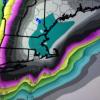
GaWx Posted December 6, 2025 Share Posted December 6, 2025 18Z GFS: 2m anomalies for 0Z on 12/14: 1 Link to comment Share on other sites More sharing options...
WVclimo Posted December 6, 2025 Share Posted December 6, 2025 4 minutes ago, GaWx said: 18Z GFS: 2m anomalies for 0Z on 12/14: A week later, from the same run. 40 to 50° below normal across the upper Midwest. 1 Link to comment Share on other sites More sharing options...
snowman19 Posted December 6, 2025 Share Posted December 6, 2025 3 minutes ago, WVclimo said: A week later, from the same run. 40 to 50° below normal across the upper Midwest. Day 14 on the operational 18z GFS 1 Link to comment Share on other sites More sharing options...
Stormchaserchuck1 Posted December 6, 2025 Share Posted December 6, 2025 I posted in this thread like 4-5 times a long time ago that weak-negativeENSO and strong -QBO has this strange coincidence of having super cold December's. 1989 and 2005 were examples. QBO is a stratosphere index so I didn't want to make the physical connection, but mentioned that it would be something if it happened again. And sure enough, it did happen again. This December is looking like one of the coldest in the eastern 1/2 since 2005. 2 Link to comment Share on other sites More sharing options...


Recommended Posts
Create an account or sign in to comment
You need to be a member in order to leave a comment
Create an account
Sign up for a new account in our community. It's easy!
Register a new accountSign in
Already have an account? Sign in here.
Sign In Now