raindancewx Posted January 14 Share Posted January 14 I've been talking about cold retrogressing to the West with time in 2026. We're finally seeing it show up now. Will be curious to see how the winter finishes up nationally. We're running "only" +6F now for January, big improvement on December since we're already 150% of average for moisture this month. A lot of the NW is running +10-20 above normal winter to date. Its hard to believe some kind of nasty regression to the mean isn't coming with Western Canada still very cold. As the cold moves toward a more-centered West location and moisture picks up as the La Nina weakens/dies, we should slowly move into a regime of different storm tracks and more powerful systems. I fully expect large areas of the lower 48 to see most of their significant snows in Feb-Mar. Activity by NE Asia earlier in the month supported more western storminess very late month January. 1 Link to comment Share on other sites More sharing options...
GaWx Posted January 14 Share Posted January 14 On 1/12/2026 at 11:32 AM, GaWx said: How would a potential shift to +AAM late month play into this? Is the +AAM the dog that wags a +PNA and/or phase 8 or do other things wag the AAM? Is the AAM a leader or a follower? @SnowNiner Look how much this changed in just 2 days of runs: 1 1 Link to comment Share on other sites More sharing options...
donsutherland1 Posted January 14 Share Posted January 14 28 minutes ago, GaWx said: Look how much this changed in just 2 days of runs: I suspect that the recent EWB had an impact. La Niña is still exerting an influence. 2 1 Link to comment Share on other sites More sharing options...
Maestrobjwa Posted January 14 Share Posted January 14 1 hour ago, donsutherland1 said: I suspect that the recent EWB had an impact. La Niña is still exerting an influence. Would either of you mind giving an explanation of the AAM and how it relates to what we see in winter? Link to comment Share on other sites More sharing options...
snowfan789 Posted January 14 Share Posted January 14 3 hours ago, raindancewx said: I've been talking about cold retrogressing to the West with time in 2026. We're finally seeing it show up now. Will be curious to see how the winter finishes up nationally. We're running "only" +6F now for January, big improvement on December since we're already 150% of average for moisture this month. A lot of the NW is running +10-20 above normal winter to date. Its hard to believe some kind of nasty regression to the mean isn't coming with Western Canada still very cold. As the cold moves toward a more-centered West location and moisture picks up as the La Nina weakens/dies, we should slowly move into a regime of different storm tracks and more powerful systems. I fully expect large areas of the lower 48 to see most of their significant snows in Feb-Mar. Activity by NE Asia earlier in the month supported more western storminess very late month January. Hope you’re right. It has been an historically abnormally warm and nearly snowless stretch for a sizable portion of the West this season so far. While that to some extent is to be expected at times with climate change, unfortunately, the giant leap we’ve very recently seen towards hot/dry is so extreme that it seemingly must revert towards the mean soon. Also, appreciate the added ~Western perspective in a forum dominated by the eastern approximately 25% of the country. No criticism intended, but what happens in New England, the Great Lakes, and northern middle Atlantic represents a small portion of the U.S. geographically. Link to comment Share on other sites More sharing options...
BlizzardWx Posted January 14 Share Posted January 14 3 hours ago, raindancewx said: I've been talking about cold retrogressing to the West with time in 2026. We're finally seeing it show up now. Will be curious to see how the winter finishes up nationally. We're running "only" +6F now for January, big improvement on December since we're already 150% of average for moisture this month. A lot of the NW is running +10-20 above normal winter to date. Its hard to believe some kind of nasty regression to the mean isn't coming with Western Canada still very cold. As the cold moves toward a more-centered West location and moisture picks up as the La Nina weakens/dies, we should slowly move into a regime of different storm tracks and more powerful systems. I fully expect large areas of the lower 48 to see most of their significant snows in Feb-Mar. Activity by NE Asia earlier in the month supported more western storminess very late month January. I certainly hope so. The short term pattern looks a lot like early December for my area with repeated glancing blows from dry cold fronts. A little bit of a signal for some kind of wintry system around the 25th. Link to comment Share on other sites More sharing options...
brooklynwx99 Posted January 14 Share Posted January 14 who could have possibly seen this coming 1 1 Link to comment Share on other sites More sharing options...
MJO812 Posted January 14 Share Posted January 14 7 minutes ago, brooklynwx99 said: who could have possibly seen this coming Happening all winter 1 1 Link to comment Share on other sites More sharing options...
donsutherland1 Posted January 14 Share Posted January 14 7 hours ago, Maestrobjwa said: Would either of you mind giving an explanation of the AAM and how it relates to what we see in winter? Angular Atmospheric Momentum (AAM) is a good tool for determining how well coupled the atmosphere is with ENSO. AAM measures how fast the atmosphere is spinning around the Earth, which is mainly a function of the strength and latitude of the westerly winds. El Niño is characterized by stronger westerly winds. AAM+ indictates stronger westerly winds. La Niña is characterized by weaker westerly winds/easterly winds. AAM- indicates weaker westerly winds/more easterly winds. Despite social media chatter that the atmosphere is not coupled with the ongoing La Niña event, the AAM showed otherwise. That the forecast AAM has also shifted negative shows that claims that La Niña is on its death bed, so to speak, are premature. La Niña is fading in discontinuous fashion and subsurface warming is starting to occur. But La Niña is not collapsing, much less essentially finished. On its current trajectory, neutral-cool conditions could develop toward the end of this month or next month. 1 3 1 Link to comment Share on other sites More sharing options...
so_whats_happening Posted January 14 Share Posted January 14 16 hours ago, snowman19 said: Wrong again, but that’s normal for you. There was just a massive EWB and positive SOI spike and region 3.4 has dropped as low as it’s been for this entire event. Maybe you should stick to predicting 30+ day long MJO phase 8 events Im not a fan of cherry picking charts. I remember rather well that CDAS 3 years ago during the Nino event was showing SSTs in the moderate to low end strong sector (roughly 1.3-1.5C above average) when almost every other (OISST, ERSST, CRW, etc.) was showing the waters near upper end strong. Now we use it to show La Nina? Come on with that. Honestly if you are going to show these types of charts in either picture stick to one source. Link to comment Share on other sites More sharing options...
so_whats_happening Posted January 14 Share Posted January 14 13 minutes ago, donsutherland1 said: Angular Atmospheric Momentum (AAM) is a good tool for determining how well coupled the atmosphere is with ENSO. AAM measures how fast the atmosphere is spinning around the Earth, which is mainly a function of the strength and latitude of the westerly winds. El Niño is characterized by stronger westerly winds. AAM+ indictates stronger westerly winds. La Niña is characterized by weaker westerly winds/easterly winds. AAM- indicates weaker westerly winds/more easterly winds. Despite social media chatter that the atmosphere is not coupled with the ongoing La Niña event, the AAM showed otherwise. That the forecast AAM has also shifted negative shows that claims that La Niña is on its death bed, so to speak, are premature. La Niña is fading in discontinuous fashion and subsurface warming is starting to occur. But La Niña is not collapsing, much less essentially finished. On its current trajectory, neutral-cool conditions could develop toward the end of this month or next month. Location is also extremely important for where these anomalies exist. https://atlas.niu.edu/gwo/ While the tropics are exerting more of a El Nino flair which may very well be enhancing some of these cold dumps horse to mid latitudes have not yet caught up. 2 Link to comment Share on other sites More sharing options...
40/70 Benchmark Posted January 14 Author Share Posted January 14 10 hours ago, raindancewx said: I've been talking about cold retrogressing to the West with time in 2026. We're finally seeing it show up now. Will be curious to see how the winter finishes up nationally. We're running "only" +6F now for January, big improvement on December since we're already 150% of average for moisture this month. A lot of the NW is running +10-20 above normal winter to date. Its hard to believe some kind of nasty regression to the mean isn't coming with Western Canada still very cold. As the cold moves toward a more-centered West location and moisture picks up as the La Nina weakens/dies, we should slowly move into a regime of different storm tracks and more powerful systems. I fully expect large areas of the lower 48 to see most of their significant snows in Feb-Mar. Activity by NE Asia earlier in the month supported more western storminess very late month January. Yea, I've been on the big-finish train. You have to think it starts up soon...probably when the MJO hits 7. Link to comment Share on other sites More sharing options...
40/70 Benchmark Posted January 14 Author Share Posted January 14 9 hours ago, GaWx said: Look how much this changed in just 2 days of runs: But La Nina is dead!!!! 2 Link to comment Share on other sites More sharing options...
40/70 Benchmark Posted January 14 Author Share Posted January 14 6 hours ago, MJO812 said: Happening all winter Except mid January, as was outlined last fall. 1 Link to comment Share on other sites More sharing options...
jconsor Posted January 14 Share Posted January 14 1 hour ago, donsutherland1 said: Angular Atmospheric Momentum (AAM) is a good tool for determining how well coupled the atmosphere is with ENSO. AAM measures how fast the atmosphere is spinning around the Earth, which is mainly a function of the strength and latitude of the westerly winds. El Niño is characterized by stronger westerly winds. AAM+ indictates stronger westerly winds. La Niña is characterized by weaker westerly winds/easterly winds. AAM- indicates weaker westerly winds/more easterly winds. Despite social media chatter that the atmosphere is not coupled with the ongoing La Niña event, the AAM showed otherwise. That the forecast AAM has also shifted negative shows that claims that La Niña is on its death bed, so to speak, are premature. La Niña is fading in discontinuous fashion and subsurface warming is starting to occur. But La Niña is not collapsing, much less essentially finished. On its current trajectory, neutral-cool conditions could develop toward the end of this month or next month. I would say the atmospheric coupling with the La Nina event has been uneven. The AAM has averaged near neutral since Nov, with a notable spike from late Nov to the first few days of Dec. I agree with your last three sentences about La Nina's continued influence in the next month or two. Also, in my experience, the CFS is known to be highly +AAM biased. 1 Link to comment Share on other sites More sharing options...
donsutherland1 Posted January 14 Share Posted January 14 16 minutes ago, jconsor said: I would say the atmospheric coupling with the La Nina event has been uneven. The AAM has averaged near neutral since Nov, with a notable spike from late Nov to the first few days of Dec. I agree with your last three sentences about La Nina's continued influence in the next month or two. Also, in my experience, the CFS is known to be highly +AAM biased. Yes. It has been uneven. Then again, it hasn’t been a strong La Niña event. 1 Link to comment Share on other sites More sharing options...
MJO812 Posted January 14 Share Posted January 14 1 hour ago, 40/70 Benchmark said: Yea, I've been on the big-finish train. You have to think it starts up soon...probably when the MJO hits 7. Earthlight also loves this pattern ahead. Link to comment Share on other sites More sharing options...
LakePaste25 Posted January 14 Share Posted January 14 8 hours ago, brooklynwx99 said: who could have possibly seen this coming Makes sense. if you over-amp the -epo in the long range and then deamplify, the cold comes east rather than dig for gold in the west. Link to comment Share on other sites More sharing options...
LakePaste25 Posted January 14 Share Posted January 14 8 hours ago, MJO812 said: Happening all winter models have been over-amping -epo’s most of the winter thus far, which happens to have downstream consequences of storms not phasing early and cutting. i would be careful to take the default position of “every trough will come east.” it’s important to understand the upstream model biases in play. 3 Link to comment Share on other sites More sharing options...
Krs4Lfe Posted January 14 Share Posted January 14 Can’t ask for a better look than the one setting up after the 1/16 cold front moves through. Lots of blocking, Greenland ridging, arctic ridging and persistent troughs swinging throuhh Centeal and east US. Unfortunately we’ve seen similar patterns in Feb 2025, Dec 2022 that have not performed. But on the flip side, we’ve seen patterns like that in Feb 2021, Feb 2015 that did perform. Seems like an equal chance at either one, pick your own adventure ! Link to comment Share on other sites More sharing options...
donsutherland1 Posted January 14 Share Posted January 14 On 1/10/2026 at 10:16 AM, donsutherland1 said: The preliminary value for the PNA has risen to -0.019. Based on the final December data and preliminary January data, today is the 34th consecutive day that the PNA has been negative. That streak will likely end tomorrow. All 10 long-duration winter PNA- regimes (25 or more consecutive days) have been followed by a regime change to positive with more than two-thirds of the succeeding 30 days being above 0. The outcome will have potentially large implications for the risk of significant or greater snowstorms in the East, especially the Mid-Atlantic Region. For example, for Baltimore, New York City, Philadelphia, and Washington, DC, there have been 9 storms since 1950 that brought 6" or more snow to three or all four of those cities. None had a PNA-. For the 14 cases where 2 of those cities saw 6" or more snow, 10/14 (71%) of those storms had a PNA+. The most recent PNA- event was the long-duration January 31-February 4, 2021 storm. There were no cases where 2 or more of those cities saw 10" or more snow when the PNA was < 0. The latest GEFS forecast for the PNA has reinforced the idea of a PNA regime change to predominantly positive following the end of the recent 34-day PNA- regime. 4 Link to comment Share on other sites More sharing options...
GaWx Posted January 14 Share Posted January 14 57 minutes ago, donsutherland1 said: The latest GEFS forecast for the PNA has reinforced the idea of a PNA regime change to predominantly positive following the end of the recent 34-day PNA- regime. If this were to verify with hardly any -PNA upcoming, that would increase the chance vs earlier runs that Jan will end up net +PNA just like all -ENSO Decs since 1983-4 have transitioned to in Jan. 3 Link to comment Share on other sites More sharing options...
michsnowfreak Posted January 14 Share Posted January 14 15 hours ago, raindancewx said: I've been talking about cold retrogressing to the West with time in 2026. We're finally seeing it show up now. Will be curious to see how the winter finishes up nationally. We're running "only" +6F now for January, big improvement on December since we're already 150% of average for moisture this month. A lot of the NW is running +10-20 above normal winter to date. Its hard to believe some kind of nasty regression to the mean isn't coming with Western Canada still very cold. As the cold moves toward a more-centered West location and moisture picks up as the La Nina weakens/dies, we should slowly move into a regime of different storm tracks and more powerful systems. I fully expect large areas of the lower 48 to see most of their significant snows in Feb-Mar. Activity by NE Asia earlier in the month supported more western storminess very late month January. Couldnt ask for a more beautiful look (from warm-heavy CPC no less) in the dead of winter. Below avg temps and above avg precip in MI Link to comment Share on other sites More sharing options...
TheClimateChanger Posted January 14 Share Posted January 14 4 minutes ago, michsnowfreak said: Couldnt ask for a more beautiful look (from warm-heavy CPC no less) in the dead of winter. Below avg temps and above avg precip in MI CPC has done a great job this winter. They were spot on with the end of December, despite critics. BAMWx questioned CPC's outlook for 1st half of January, but it's been spot on. It was BAM's outlook that blew up. 2 Link to comment Share on other sites More sharing options...
Maestrobjwa Posted January 14 Share Posted January 14 I'm guessing it's too soon to have any clues as to where in the basin the Niño will set up in terms of weather, central, or east? (or Modoki) Link to comment Share on other sites More sharing options...
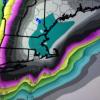
raindancewx Posted January 15 Share Posted January 15 GFS has snow to northern FL again this January. So that's neat - 90 hours out. Setups like this are consistently showing on the models over NE Asia. Blues by Kamchatka south of Reds to the north. Should see some powerful and cold systems in the Southwest roughly 17-21 days after Jan 20-25. Works out to week two of February roughly. The blue over red look (-WPO) is gone for at least a while. Feb-Apr is when the +WPO is actually a cold signal in the West, strongest in March. By mid-Feb its mostly a CA/NV/AZ thing but it expands north and east with time. At some point the purples and reds over Canada should move down to the US over different areas. That +9F area Is not very far away from the -9F area. Link to comment Share on other sites More sharing options...
donsutherland1 Posted January 15 Share Posted January 15 The probability that parts of the South, including Birmingham, Atlanta, Athens, and Mobile could see a light snowfall on Sunday has increased on the guidance. Snowfall amounts do not look excessive. This will likely be the major winter weather story this weekend. A shot of Arctic air could follow the snowfall. 2 Link to comment Share on other sites More sharing options...
EastonSN+ Posted January 15 Share Posted January 15 Seems to be following the last waves progression. Link to comment Share on other sites More sharing options...
40/70 Benchmark Posted January 15 Author Share Posted January 15 4 minutes ago, 40/70 Benchmark said: Looks like my prediction of the mid January Pacific Trough regime acting as a precursor to the ongoing reflection event is a hit. Judah's blog: "And as I have been routinely doing, looking at the wave diagnostics in Figure iv continues to display wave reflection over the weekend and into late January. For both periods shown, wave energy goes up and east over Asia, reflects off the stratospheric PV and then heads down and east over North America where the energy is re-absorbed and could potentially amplify the standing wave over North America and deliver cold air from the Arctic south, east of the Rockies. There is westward wave tilt with height over Asia and an eastward wave tilt with height over North America that is a classic signature of wave reflection. Though the eastward tilt is more pronounced in the first period compared to the second period". Here is the relevant excerpt from my blog: Stratospheric Reflection Event Likely During January 2026 Society's understanding of the stratosphere and the role that it plays in modulating our weather is very rudimentary to say the least. The basic conceptualization is that a weak polar polar vortex makes the mid latitudes more prone to cold outbreaks, and while that is true, the method of delivery for cold to North America is multifarious in that it is not relegated to a weak polar vortex/-NAO pattern. In fact, the coldest outbreaks in the CONUS are actually triggered by a strong polar vortex and +NAO regime in what is referred to as a "stratospheric reflection event". During these stratospheric reflection events, heat is transferred upward by a Rosby wave (kink in the jet stream) over Siberia and reflects back downward of off the PV into Canada via the reflective surface posed by negative vertical wind shear in the stratosphere. ( Lee et al 2019). The study notes that these reflection events are most common during the month of January. There is one reflection event on average each season, so they are by no means rar events. Reflective events are declared when the reflection index (RI), which denotes the difference in anomalous poleward eddy heat fluxes in the lower stratosphere between Siberia and Canada, exceeds 1 for 10 or more consecutive days (Lee et al 2019). Reflective events are unique occurrences in that the PV is undisturbed and initially remains strong, before being stretched by the development of Alaskan and Aleutian ridging and returning to normal strength. It is the stretching that delivers the cold south and eastward into the CONUS, as depicted in the "end of event" graphic above. This type of stratospheric phenomenon differs from the SSW events, in which heat propagates upward in waves that converge in the stratosphere, thus weakening the PV by decelerating and even reversing the zonal westerly winds that are ordinarily prevalent in the polar stratosphere. Reflection events also differ from SSW in that they are more favored during the westerly phase of the QBO, with 30/44 events since 1980 having occurred during a +QBO. While this ostensibly renders a such occurrence unlikely this winter given the very strong easterly QBO that is nearing peak, the analog events of January 16, 2001 through February 18, 2001, and January 13, 2018 through February 2, 2018 are being weighted heavily in the seasonal forecast given their strength as general analog seasons due to considerations previously discussed, such as polar, ENSO and solar considerations. This is also why these two seasons are considered superior SSW analogs. The January 2001-February 2001 reflection event is one of just 9 out of the 44 cases examined in which the reflection window overlapped with a SSW event, which is why there is a heightened risk of this co-occurrence relative to climatology this season. This actually reduces the risk of severe cold, per the study. Here is a list provided by Lee at al (2019) of the most prominent reflection events of the past 45 years, including the primary analogs of 2001 and 2018. Courtesy Lee et al 2019 The mean length of the process is 20 days, with 10 days being the minimum, and 60 days the maximum, per Lee et al (2019). Considering the length of the 2001 (33 days) and 2018 (20) events, it is expected that a reflection event will begin between approximately January 13th and 16th 2026, and end between about February 2 and 18th. This is consistent with the climatologically favored time frame per the research that was referenced previously. In order to better understand how the PV interacts with North American weather, Lee at al identified four distinct weather regimes and listed their respective frequency of occurrence between the months of November and March, from 1979 through 2017, since they last longer than synoptic scale patterns and thus provide an opportunity for longer range prediction. Pacific Trough Pattern Precursor for Reflection Events Pattern recognition is paramount in the analysis and diagnosis of reflection events because the behavior of the polar vortex has predictive value on each of these regimes at both seasonal, and sub-seasonal leads, which is roughly 15-60 day in advance. "The PV strength significantly affects the occurrence and persistence of each regime and transition between regimes" (Lee at al 2019). Research by Kretschmer et al (2018) illustrated the importance of planetary wave reflection for anomalous cold across North America. This expounded on earlier work by Kordera et al (2016) that found that wave reflection born of Pacific blocking tele-connected to a down stream trough over North America. Thus the implication here is that the Alaskan ridge pattern, which is not at all connected to the PV and is actually accompanied by a +NAO, as alluded to earlier, is most conducive to reflection events and is this correlated to the most severe arctic outbreaks in the US. Lee et al (2019) refers to this type of pattern as the "Alaskan Ridge Regime" , which is similar to the Tropical Hemisphere Pattern (+TNH). This has been the most common vehicle for cold delivery over the past decade given the increased tendency for +NAO during the winter season, so it is important to remain mindful of the fact that climate change is certainly not prohibitive to severe cold outbreaks. It does, however, decrease residence time due to the enhanced Pacific jet keeping the flow more progressive. Here is a composite of seasons that fit this +TNH description over the past decade or so. Note the similarity to the -EPO predominate extra tropical Pacific pattern that is favored this winter season. Link to comment Share on other sites More sharing options...
40/70 Benchmark Posted January 15 Author Share Posted January 15 Now the +TNH that results from the reflection event should act as a precursor to the February SSW, just as the Pacific Trough Regime that is just wrapping up was the precursor to the upcoming +TNH interval born of stratospheric reflection. 2 Link to comment Share on other sites More sharing options...


Recommended Posts
Create an account or sign in to comment
You need to be a member in order to leave a comment
Create an account
Sign up for a new account in our community. It's easy!
Register a new accountSign in
Already have an account? Sign in here.
Sign In Now