MJO812 Posted January 20 Share Posted January 20 Weeklies 5 Link to comment Share on other sites More sharing options...
EasternLI Posted January 20 Share Posted January 20 This cluster is growing FWIW.. 2 1 Link to comment Share on other sites More sharing options...
GaWx Posted January 20 Share Posted January 20 1 hour ago, MJO812 said: Weeklies The Euro weeklies are now mainly cold for the E US for most of Feb, even colder than yesterday! Any hopes for a mild E US are fading away, which is fine with me. And that’s only after the very cold late Jan! Natgas closed a pretty historic 26% above its Fri price!! In particular, the week 2/16-22 has a snowy signal: @40/70 Benchmark 6 Link to comment Share on other sites More sharing options...
snowman19 Posted January 20 Share Posted January 20 @Gawx Thoughts: 1 1 Link to comment Share on other sites More sharing options...
snowman19 Posted January 20 Share Posted January 20 @Gawx 1 Link to comment Share on other sites More sharing options...
Krs4Lfe Posted January 20 Share Posted January 20 3 hours ago, MJO812 said: Weeklies The breakdown of warm February being predicted on the weeklies after a colder second half of January is astonishing. Obviously, good looking patterns (ie, colder anomalies and ample precipitation) don't always translate to snowstorms (such as December 2022, February 2025 etc), but this is a good look to see 1 Link to comment Share on other sites More sharing options...
40/70 Benchmark Posted January 21 Author Share Posted January 21 2 hours ago, snowman19 said: @Gawx Judah is wrong...gonna split. 1 1 Link to comment Share on other sites More sharing options...
George001 Posted January 21 Share Posted January 21 11 hours ago, 40/70 Benchmark said: Problem is that some like Tony feel that as though they have a license to spew nonsense because the pattern is evolving in a cold and snowy manner. I don’t think Tony is entirely off base about the La Niña collapsing. While it is true that the surface is still solidly La Niña, the subsurface has warmed rapidly and is now warm neutral. I remember Chuck highlighted the importance of the subsurface a while ago. How big or small of a role do you think that is playing in terms of the now active STJ? 1 Link to comment Share on other sites More sharing options...
40/70 Benchmark Posted January 21 Author Share Posted January 21 13 minutes ago, George001 said: I don’t think Tony is entirely off base about the La Niña collapsing. While it is true that the surface is still solidly La Niña, the subsurface has warmed rapidly and is now warm neutral. I remember Chuck highlighted the importance of the subsurface a while ago. How big or small of a role do you think that is playing in terms of the now active STJ? It's not collapsing. It's playing very little role...we must have had an El Nino last year, right? Oops... Link to comment Share on other sites More sharing options...
George001 Posted January 21 Share Posted January 21 8 minutes ago, 40/70 Benchmark said: It's not collapsing. It's playing very little role...we must have had an El Nino last year, right? Oops... Ah I see what you are getting at. The STJ got active at times last winter too, and it was a La Niña with a La Niña subsurface. Point taken, It’s other factors that are driving the pattern, not ENSO. And that includes STJ activity. 1 Link to comment Share on other sites More sharing options...
PhiEaglesfan712 Posted January 21 Share Posted January 21 Link to comment Share on other sites More sharing options...
40/70 Benchmark Posted January 21 Author Share Posted January 21 2 hours ago, George001 said: Ah I see what you are getting at. The STJ got active at times last winter too, and it was a La Niña with a La Niña subsurface. Point taken, It’s other factors that are driving the pattern, not ENSO. And that includes STJ activity. I was thinking more of the PNA TBH....I mean, maybe the subsurface is helping the STJ perk up, but I still disagree with the notion that La Niña is collapsing. There are plenty of metrics that suggest otherwise. 1 Link to comment Share on other sites More sharing options...
40/70 Benchmark Posted January 21 Author Share Posted January 21 30 minutes ago, PhiEaglesfan712 said: Yum. Link to comment Share on other sites More sharing options...
so_whats_happening Posted January 21 Share Posted January 21 Fun 1 month SSTA map. I'm impressed how much ice has been able to form in the Bering Sea this year. Link to comment Share on other sites More sharing options...
bluewave Posted January 21 Share Posted January 21 The unusually early SSW in late November has been a really big player this winter so far. 3 Link to comment Share on other sites More sharing options...
snowfan789 Posted January 21 Share Posted January 21 21 hours ago, raindancewx said: I thought this month would finish cold in the eastern part of the US. With the cold coming late month, that doesn't look completely wrong. At worst, its delayed a week from what I thought. At best, the cold will be severe enough to make some areas cold by the end of the month. This event is behaving a lot more like a neutral than a La Nina to me. It's been very wet in the Southwest because the subtropical jet has been OK/feeding the polar jet at times. The warmth in the Northwest isn't really correlated to La Nina or -PDO either, same for the Northern Plains. But it's not really cold in the South like in an El Nino. The models continue to show a big snow/ice storm down to the Mexican border, deep into Texas and the Old South as well. That's not really super cannonical La Nina either - SE ridge usually blocks those outcomes. A lot of the great displaced to the south snow events are in super -WPO neutral events outside Nov/Feb-Apr windows - like the snows in Mexico City in the 1960s, or the snow to the Mexican border in Oct 2020, or the snow to the Santa Fe in Sept 2020. If we get another big precipitation event here (increasingly likely) the winter is basically guaranteed to be wetter than average, and this becomes one of the wettest Januaries in the past 100 years (we're already top 20). I think a lot of you guys live in a sort of perpetual state of delusion about what actually happens each winter. I saw the Don guy say something like "the Southwest will remain warm"....and its like yeah its been warm here. But the northwest/plains are running 10-15 above average in a -PDO, near La Nina. That's way more of a story than the Southwest being +7 in those conditions. A small area of the country ~55% of the way through Dec-Feb is running 1-3F below average. A comparable area of the Plains/NW is +9F or more above average. Meanwhile, the West has been pretty consistently wetter than the East, despite far greater warmth. The pattern essentially has been able to block cold to the West completely (sort of like 2017) but not moisture because there is some subtropical influence. Snow water content as measured by snotel data is probably the single most important fall/winter/spring weather-related metric for the West. And that data for this season so far is generally dismal. It is in fact breaking records in many locations. December was the warmest on record in many parts of the West. So, while it is great that parts of the Southwest have been somewhat wet, this has been an exceptionally poor “cold” season so far for much of the western U.S. Link to comment Share on other sites More sharing options...
EastonSN+ Posted January 21 Share Posted January 21 2 Link to comment Share on other sites More sharing options...
bluewave Posted January 21 Share Posted January 21 This December was a more amplified version of 1958 and 1980. Both years featured very strong ridges in the -WPO Bering Sea and Western U.S. regions. But this December was more +EPO -PNA. 1 Link to comment Share on other sites More sharing options...
MJO812 Posted January 21 Share Posted January 21 Weeklies dont want to give up with the cold. Its cold and snowy through the whole month of February in the east. Insane 2 Link to comment Share on other sites More sharing options...
TheClimateChanger Posted January 21 Share Posted January 21 On 1/13/2026 at 12:09 PM, TheClimateChanger said: Ended up narrowly edging out 1939 for 5th place in the official records. Quite the turnaround, considering the first 15 days of the month were around 1.7F BELOW the 1991-2020 mean, per PRISM's analysis. @GaWx Revisiting December's anomaly, I think the biggest surprise is UAH's satellite record for lower tropospheric temperatures had December 2025 as the SECOND most anomalously warm month on record in the satellite era. Again, not second warmest December, but second warmest of any month for both US48 & US49 [Conus + AK]. For CONUS (US48), it was behind only March 2012 & for US49, it was behind only February 2017. Since the satellite measures across a certain depth of the atmosphere, it makes me wonder if surface inversions and the like prevented us from fully realizing just how warm it was last month at the surface (2m temps). I know California was plagued by surface inversions for much of the month, so that might be a big part of the divergence between the surface record and the LT anomalies. 1 1 Link to comment Share on other sites More sharing options...
George001 Posted January 22 Share Posted January 22 10 hours ago, MJO812 said: Weeklies dont want to give up with the cold. Its cold and snowy through the whole month of February in the east. Insane But….. it’s following the canonical front loaded Nina script, therefore I gotta ignore all guidance, stick to my guns, and continue being a raging insufferable asshole to everyone who disagrees with me. 3 1 Link to comment Share on other sites More sharing options...
raindancewx Posted January 22 Share Posted January 22 The storm coming through the South should verify the bottom part of the "smile" idea I gave for snowfall in October - stretching from the interior NW (ID/MT border) down to NM/CO and then shooting east through the Southern Plains before shooting back NE through interior New England and the Midwest. You can tell its going to be a solid event, Ted Cruz is leaving Texas again, ala Feb 2021. Local forecast here varies from rain to 1-3" of snow (Weather.com), 4-8" snow (Accuweather), with the NWS mentioning 2-6" in the Winter Storm Watch. The city actually hasn't had more than 4 inches of snow in January officially since Jan 2015 (4.2"). I lean toward cold rain followed by horrible wind mixing the rain with snow. Then the wind dies and we get 2-3" at the airport where records are kept, with high elevation areas of the city seeing cold temps/faster rain-->snow change over, and less shadowing from the window. The east facing mountain slopes should do very well. When the mesoscale models come in later, I'd expect either the HRRR or 3-km Nam to show local spots of 2-3 feet with the dynamics in place. I believe these setups are usually good for Angel Fire & Red River in particular. Link to comment Share on other sites More sharing options...
raindancewx Posted January 22 Share Posted January 22 On 1/13/2026 at 9:48 PM, BlizzardWx said: I certainly hope so. The short term pattern looks a lot like early December for my area with repeated glancing blows from dry cold fronts. A little bit of a signal for some kind of wintry system around the 25th. The early CPC outlook with TX/OK/KS/NM warm only marginally favored for precip for Jan 21-27 isn't looking so great now. When the cold retrogresses it goes hard. We've got some -50 wind chills coming in the Plains in some of the places that were running +10F winter to date. Looks pretty damn cold here now for a little while. Average high is ~48-49 late January for ABQ. 1 Link to comment Share on other sites More sharing options...
raindancewx Posted January 22 Share Posted January 22 On 10/11/2025 at 3:46 PM, raindancewx said: Couple pretty cold months in there, but its not really long-lasting or consistent where it shows. Snow anomaly looks like a smiley face, going from Montana-Idaho border to NM-CO border in the West, Ozarks shooting NE to interior New England/Maine for heavy snow. In between (OK/NE New Mexico, North TX, etc) will have some nasty ice storms. I went below average for snow northern plains. I expect very little snow here for most of the actual winter, but there are windows in November, late Feb-late Apr that should be productive. For what it's worth. 1 Link to comment Share on other sites More sharing options...
snowfan789 Posted January 22 Share Posted January 22 44 minutes ago, raindancewx said: For what it's worth. Again, though, Colorado is a very big frowny face to date. We are superlatively snowless in the mountains based on the period of reliable snotel data going back to approximately the mid-80s. On the other hand, it is true that the interior intermountain west is mostly doing okay based on snotel data north and northwest of CO. Link to comment Share on other sites More sharing options...
raindancewx Posted January 22 Share Posted January 22 I wasn't trying to claim the NW has had some epic snow season - just that the bottom part of the smiley outline will fill in now. The circled area. It's been far too warm in the Northwest for meaningful heavy snow anomalies. Even within that context though, you can still see the general shape of what I outlined held up, despite the warmth. This southern portion of the storm track pattern will shift north somewhat in Feb-Apr and some of the West will do better in that time frame. I'd imagine CO will catch up a bit then. Link to comment Share on other sites More sharing options...
PhiEaglesfan712 Posted January 22 Share Posted January 22 4 minutes ago, raindancewx said: I wasn't trying to claim the NW has had some epic snow season - just that the bottom part of the smiley outline will fill in now. The circled area. It's been far too warm in the Northwest for meaningful heavy snow anomalies. Even within that context though, you can still see the general shape of what I outlined held up, despite the warmth. This southern portion of the storm track pattern will shift north somewhat in Feb-Apr and some of the West will do better in that time frame. I'd imagine CO will catch up a bit then. How does this compare to the winter of 2014-15? Link to comment Share on other sites More sharing options...
snowfan789 Posted January 22 Share Posted January 22 52 minutes ago, PhiEaglesfan712 said: How does this compare to the winter of 2014-15? Better recent comparison is probably 2017-18 fwiw. Link to comment Share on other sites More sharing options...
snowfan789 Posted January 22 Share Posted January 22 1 hour ago, raindancewx said: I wasn't trying to claim the NW has had some epic snow season - just that the bottom part of the smiley outline will fill in now. The circled area. It's been far too warm in the Northwest for meaningful heavy snow anomalies. Even within that context though, you can still see the general shape of what I outlined held up, despite the warmth. This southern portion of the storm track pattern will shift north somewhat in Feb-Apr and some of the West will do better in that time frame. I'd imagine CO will catch up a bit then. Understood. You were pretty clear. That’s why I said intermountain west - while noting that CO has fallen considerably short so far of what I thought you’d been predicting. Bummer for us. Link to comment Share on other sites More sharing options...
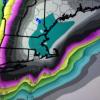
Holston_River_Rambler Posted January 22 Share Posted January 22 @40/70 Benchmark Split showing up on the 6z GFS: Link to comment Share on other sites More sharing options...


Recommended Posts
Create an account or sign in to comment
You need to be a member in order to leave a comment
Create an account
Sign up for a new account in our community. It's easy!
Register a new accountSign in
Already have an account? Sign in here.
Sign In Now