All Activity
- Past hour
-
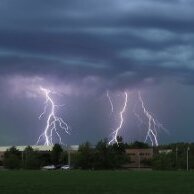
Won’t even get much thunder here. Just smallish showers. Instability is always trash with deep SW flow in this area. Zonal 500 mb flow delivers more instability, even at night. You don’t need deep CAPE for tornadoes with extreme shear, but I’d rather have a good light show than a low-topped severe event.
-
 Forecast by 6z 4/3 essentially 3 hours from now. Going forward we will be doing this on 1st of each month by 6z.
 -
 Defintely
 -
2025-2026 ENSO
40/70 Benchmark replied to 40/70 Benchmark's topic in Weather Forecasting and Discussion
-
-
March forecast review: https://easternmassweather.blogspot.com/2026/04/march-warmer-than-forecast.html Not a bad effort for the month of March overall, but it ended up much warmer than forecast on a national level due to the failure of high latitude blocking to materialize following the split of the polar vortex, which was a forecast risk that was communicated last fall. Locally here in southern New England it was anywhere from 2 to 4*F warmer than normal, as opposed to the forecast of -2 to near normal. Seasonal recap incoming in May.
-
Just took the trash out - very heavy mist atm. Feels strange - not opaque like fog and heavier/wetter.
-
Winter 2025-2026 Offers Return to Normalcy
40/70 Benchmark replied to 40/70 Benchmark's topic in New England
March Warmer Than Forecast Mild, Zonal Pacific Flow Mitigated By Stratospheric Disruptions Forecast Flaws There were two primary issues with the Eastern Mass forecasts composite for the month of March. First of all, the month was much warmer than anticipated nationally, with upwards of +10F departures over the southwest, as opposed to the +2 to +3F depicted on the forecast composite. Locally, disparity much less pronounced, as southern New England finished within the +2 to +4F departure range in contrast to the -2F to near normal that was forecast. The forecast was acceptable qualitatively speaking, since the southwest was warmest, but it was simply too cold. The forecast composite was also too wet, with the notable exception of the great lakes and Pacific Northwest. The former being due in large part to a duo of major winter storms mid month, which produced blizzard conditions over a large portion of Michigan and Wisconsin. An active Pacific jet was the driving force behind the precipitation surplus across the Pacific Northwest. It also served as the impetus for the much warmer than anticipated monthly temperature departures nationally given that the polar stratosphere did not evolve quite as anticipated near the end of the season. Pacific Jet Stronger & Polar Stratosphere Less Impactful Than Expected Two of the most prominent winter analogs identified last fall were the 2000-2001 and 2017-2018 seasons, which each featured a Sudden Stratospheric Warming (SSW) and accompanying reversal of the polar zonal winds on February 11th and 12th, respectively. This set the stage for the historic barrage of major winter storms to impact the region that followed throughout the month of March in both instances. While the latter portion of winter 2025-2026 did in fact include a blizzard (February 22-23) and zonal wind reversal on March 4th, the forecast timeline obviously differed somewhat from reality. Clearly this entailed that there was not a major winter storm between March 1-15 as outlooked last fall, and more importantly, potential impact from any polar disruption would be delayed relative to forecast, since the forecast zonal wind reversal from mid February ultimately verified as a mere Canadian Warming, as discussed previously. This allowed any residual high latitude blocking from latter February to rapidly relinquish it's grip near the onset of the month, which acted to truncate any colder intervals resulting from spasmodic episodes of PV stretching throughout the month. Here is the first such instance early in the month. Note how quickly the PV is allowed to retreat in the absence of blocking, leaving rapid warming amid zonal, Pacific flow inundating the nation. At the same time, the anticipated reversal of the zonal winds and accompanying split of the PV was finally observed in the polar domain on approximately March 4th. This split of the PV was then followed by a strong Pacific trough regime that resulted in record warmth about 7-10 days later, which was in fact very comparable to the sequence observed in the wake of the February 2018 analog-warming. This is same phenomenon also occurred to a somewhat lesser extent in 2001, as very warm temperatures with highs in the 50s also occurred on February 20th, 2001, which is 10 days subsequent to the February 11th, 2001 PV split. However, the progression of March 2026 differed from 2001 and 2018 in that high latitude blocking failed to materialize following the warm burst, approximately 15-20 days post PV split, as research suggests. This is where the forecast for the month went astray. Thus, as was the case with respect to the March 2-3 PV stretch and accompanying cold intrusion, the arctic outbreak triggered by the next episode of PV elongation on March 18-19th was also brief. One PV Love Elongates SE Towards NE & One Positioned Over Eurasia Following March 4th Split (Image Courtesy Judah Cohen AER Blog) This second major cold outbreak was well forecast given the passage of the MJO through phase 8. Note how quickly the PV lobe again retreated back northward in the absence of blocking to pin it southward. Image Courtesy of Judah Cohen AER Blog The nation was once again left in a mild, fast and zonal flow in its wake, which was the theme of the month. Incidentally, yet another reversal and split of the PV occurred on March 24th, as this brief arctic outbreak was occurring . The reality is that major polar disruptions of this ilk are very fickle and vary with regard to how they ultimately evolve, which is why the failure of this event to trigger major high latitude blocking was explicitly identified as a warmer risk for the month of March, both last fall and last month. "March should have a -NAO oriented MC deviation similar to that of March 2023, albeit with a less pronounced RNA, which may prove more favorable for a major east coast winter storm. Perhaps something more akin to March 2018: However, the relentless modern Pacific jet will need to be tempered somewhat in order to rival this month in terms of snowfall". Eastern Mass Weather 11-10-2025- The emboldened excerpt at the conclusion of the passage is largely why this warmer risk was identified in the absence of ample high latitude blocking, especially given the fact that the consistent RNA pattern persisted as forecast, albeit less pronounced than the extreme March 2023 west coast troughing. Note the trend for a faster Pacific jet over the past few decades as a byproduct of climate change, as illustrated in the winter outlook issued on November 10th. Here is the 200mb jet for the meteorological winter period of December 1 through February 28th (left) versus the jet for the month of March (right). The jet clearly grew much stronger during the month of March as heights lowered in the divinity of Alaska and much of the polar domain. The impact on the resultant pattern was very evident, as the enhanced jet may have even potentially acted as a deterrent to the establishment of high latitude blocking beyond the ides of the month, in the wake of the PV split. Note how amplified the pattern was during meteorological winter as a byproduct of a weaker jet and more high latitude blocking, which allowed cold to bleed southeast and into northeastern US . The difference is apparent versus the fast, zonal flow throughout a month of March, which largely trapped the cold in Canada save for a few instances in which the PV stretched to allow for brief arctic intrusions. Here is a juxtaposition of this past March with March 2018, which is very illuminating in that it portrays how much stronger the Pacific jet was this past March (right) relative to 2018 (left). The polar jet during March 2001 was weaker than both 2026 and 2018, which is not surprising given the aforementioned multidecadal trend. Accordingly there was a great deal of high latitude blocking with below normal temperatures throughout the northeast. Although our grasp as a meteorological community on the nuances of major stratospheric disruptions is tenuous at best, it is a reasonable postulation that the prominence of the Pacific jet may play somewhat of a role in the degree of high latitude blocking that ultimately occurs subsequent to each event. March 2026 did nothing to dissuade one from this ideology. Conclusions Drawn From March 2026 The blizzard having occurred in latter February instead of early March coupled with the timing discrepancy with respect to the evolution of the polar domain entailed that the months of February and March were effectively reversed from the 2001 and 2018 analogs. Timing not withstanding, the use of each season as primary analogs for the forecast PV split during the latter portion of the winter season was certainly not without merit. However, due to a combination of timing differences, inconsistencies regarding the precise manner in which the disruption of the PV manifested within the hemisphere, and the stronger Pacific jet relative to the two analogs the monthly clearly evolved differently than forecast. Although the strong Pacific jet and fast, zonal flow remained prevalent in the absence of high latitude blocking throughout a very mild month of March nation wide, spasmodic stretching of the PV managed to deliver fleeting arctic outbreaks throughout the northeastern US. This effectively relegated exotic warmth in the monthly mean departures to the southwestern third of the nation, despite the fact that said colder infiltrations were short-lived owed to said dearth of blocking. The inability of the cold to persist in the fast, zonal flow is undoubtedly attributable to why the month ended up so mild, despite two splits of the PV and an MJO progression through phase 8 in a similar fashion to that of March 2001. -

Central PA Spring 2026 Discussion/Obs Thread
canderson replied to Voyager's topic in Upstate New York/Pennsylvania
We’ve torched for two weeks. - Today
-
@dmillz25 @donsutherland1 @MJO812 @yoda let me know if you would like to still continue doing the monthly temp forecasts.
-
I did it for April 3rd @6z to get back into the swing of things but come May and onward we will go back to by the 1st at 6z.
-
High 85.8 here. Straight up mid summer feel, even the lawn crunch. Insane pattern. What the west dealt with all winter
-
The flip side of dealing with the endless borefest and shaftings of central PA winters is that springs and summers are very nice there. It rarely gets overly hot outside the river valleys (Susquehanna Valley though can get very hot) and none of the brutal Ambrose Jet destroyed afternoons we can get right through Memorial Day or the backdoor cold nasty gunk like today and likely on Saturday too. The barrier islands finally made it above 60 when the cold front passed yesterday and winds shifted to N. And increasingly with the waters getting warmer over the summer, the seabreeze doesn't help in August and just makes it more humid. Sept and Oct are really the nice months on the immediate south shore.
- 108 replies
-
- 1
-

-
- april showers bring may..
- rain
- (and 2 more)
-
Garden variety plus
-
It snowed on and off most of the day but nothing stuck until sundown
-
I vote for Mazooweather.
-
That’s awesome. Love meteorology.
-
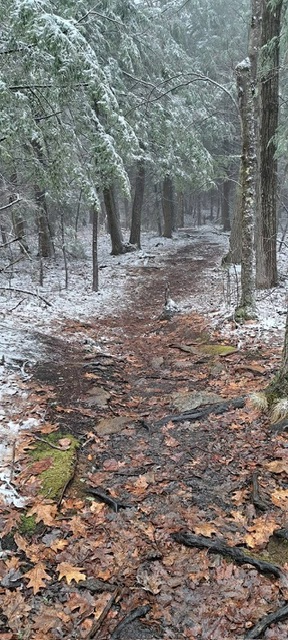
Looks like old Indian trail close to the top but could be wrong
-

Central PA Spring 2026 Discussion/Obs Thread
Itstrainingtime replied to Voyager's topic in Upstate New York/Pennsylvania
Couldn't disagree more. We just had a couple of very warm days and the next 2 days will be WAY above normal with potentially record heat on Saturday. March ended well above normal. Sorry. -
Somewhere on Wachusett today
-

E PA/NJ/DE Spring 2026 Obs/Discussion
Birds~69 replied to PhiEaglesfan712's topic in Philadelphia Region
Rooting for some dense fog... -
Turned into a yawner as soon as we started the late thread
-
tornado warning now for the northern tier of Illinois (Antioch, IL) to the Wisconsin border
-
E PA/NJ/DE Spring 2026 Obs/Discussion
Birds~69 replied to PhiEaglesfan712's topic in Philadelphia Region
There's an old man one though... Good stuff going on out there. Low 40s, wind and mist/junk falling. Power outages/stuff blowing up would be cool as well....hopefully spring and summer passes us bye. Before you know it the Birds pre-season and the start of Fall begins.