WeatherGeek2025 Posted 3 hours ago Author Share Posted 3 hours ago 1 minute ago, anthonymm said: Euro op, and every other physics based model except Canadian euro ai and ai gfs is going to replace regular euro and regular gfs, is that true? it's not looking good for ai unless they end up being right which at this point even my feen self don't believe it! Link to comment Share on other sites More sharing options...
WeatherGeek2025 Posted 1 hour ago Author Share Posted 1 hour ago nam whiffs for saturday edit: we get a period after and it depicts a dusting Link to comment Share on other sites More sharing options...
WeatherGeek2025 Posted 1 hour ago Author Share Posted 1 hour ago NAM WHIFFS FOR SUNDAY i am done 1 Link to comment Share on other sites More sharing options...
MJO812 Posted 1 hour ago Share Posted 1 hour ago 3 minutes ago, WeatherGeek2025 said: NAM WHIFFS FOR SUNDAY i am done This is too close to throw in the towel. 1 Link to comment Share on other sites More sharing options...
mob1 Posted 1 hour ago Share Posted 1 hour ago 3 minutes ago, WeatherGeek2025 said: NAM WHIFFS FOR SUNDAY i am done It is what it is. It's been fairly obvious since this morning that this threat is DOA (but God forbid someone mentions it, they get jumped on like common criminals). Link to comment Share on other sites More sharing options...
MJO812 Posted 1 hour ago Share Posted 1 hour ago 6 minutes ago, mob1 said: It is what it is. It's been fairly obvious since this morning that this threat is DOA (but God forbid someone mentions it, they get jumped on like common criminals). Agree Saturday might be more interesting 1 Link to comment Share on other sites More sharing options...
donsutherland1 Posted 1 hour ago Share Posted 1 hour ago 2 hours ago, WeatherGeek2025 said: euro ai and ai gfs is going to replace regular euro and regular gfs, is that true? it's not looking good for ai unless they end up being right which at this point even my feen self don't believe it! The ECMWF has not said that the EC-AI will replace the operational model. It complements it. https://www.ecmwf.int/en/about/media-centre/news/2025/ecmwfs-ai-forecasts-become-operational 2 Link to comment Share on other sites More sharing options...
Tar Heel Snow Posted 1 hour ago Share Posted 1 hour ago EDIT: Got a Rufus vort map from a friend on another forum and re-added the right NAM vort map Our problem on the NAM to my untrained eye is that piece of energy in Manitoba. It really rushes to push our wave out to sea (obviously not having any blocking probably hurts too) On our new buddy Rufus, our storm seems to be moving more quickly while the Manitoba wave lags behind, giving it a little more space to push west. FWIW, what Rufus is doing synoptically makes more sense to me given the type of storm for the climo I'm used to down in North Carolina. But that doesn't mean it's handling the timing particularly better than the NAM. This would be an interesting test for a model that sounds like will eventually replace the NAM Thi This is our reward on the back end^ Link to comment Share on other sites More sharing options...
eduggs Posted 1 hour ago Share Posted 1 hour ago The RRFS is very expansive with the precip. shield to the NW of the SLP. It's probably too expansive. I'm guessing a lot of that would end up as virga with that surface depiction combined with a weak 700mb low. The RRFS, NAM12km and NAM3km have a frontogenic banding signature on Saturday. 1 Link to comment Share on other sites More sharing options...
Tar Heel Snow Posted 1 hour ago Share Posted 1 hour ago 1 minute ago, eduggs said: The RRFS is very expansive with the precip. shield to the NW of the SLP. It's probably too expansive. I'm guessing a lot of that would end up as virga with that surface depiction combined with a weak 700mb low. The RRFS, NAM12km and NAM3km have a frontogenic banding signature on Saturday. Maybe so, I've seen this type of overrunning event really pump precip more than modeled due to WAA down south many times before. Might not be a thing here as much though. Probably putting too much hope into it at this point, but I was out of town for our two NY snows this year, and haven't seen a true winter storm in probably 4 years! Link to comment Share on other sites More sharing options...
eduggs Posted 1 hour ago Share Posted 1 hour ago 1 minute ago, Tar Heel Snow said: Maybe so, I've seen this type of overrunning event really pump precip more than modeled due to WAA down south many times before. Might not be a thing here as much though. Probably putting too much hope into it at this point, but I was out of town for our two NY snows this year, and haven't seen a true winter storm in probably 4 years! I'm in a similar situation both this year and in recent years. And I agree about the anecdotal observation. The RRFS is prone to wild swings (i.e. errors), especially beyond 48 hours. But it's still better to see it shift west than east. It's showing a significant snowstorm for NYC east and south on Sunday after an appetizer for some on Saturday. 1 Link to comment Share on other sites More sharing options...
WeatherGeek2025 Posted 51 minutes ago Author Share Posted 51 minutes ago reggie? 1 Link to comment Share on other sites More sharing options...
Tar Heel Snow Posted 50 minutes ago Share Posted 50 minutes ago From Eric Webb (aka my current hopium dealer) There are positive feedbacks between warm advection, precip, latent heat release, and wave tilt/amplitude that a lot of, if not most, models are going to miss in setups like these, which make them especially tricky to forecast. It’s easy for a lot of people and forecasters alike to get caught up in the models and underestimate the effect these processes and the magnitude of impact they can have on even a short range forecast. This positive feedback loop involves warm advection and upglide aloft generating more precip and latent heating, which force -PVa ahead of our upper trough, causing the wave to slow and tilt the over more negatively/less positively. The increased wave tilt is able to advect more warm/moist air aloft over the Arctic front, which triggers more precip, etc.When your air mass is super marginal like this and the large-scale flow is diffluent downstream (ridging off Newfoundland), you’re even more vulnerable to this positive feedback running away in a hurry and amplifying the short-term changes in the models. This is just the kind of recipe that can lead to big forecast busts, especially on the north & west side of these systems where the warm advection is weaker but also closer to the snow growth zone aloft Link to comment Share on other sites More sharing options...
eduggs Posted 49 minutes ago Share Posted 49 minutes ago 2 minutes ago, WeatherGeek2025 said: reggie? I love how it's snowier than 12z. Lovely model battle 1 Link to comment Share on other sites More sharing options...
Tar Heel Snow Posted 47 minutes ago Share Posted 47 minutes ago This is a wildly difficult forecast. I mean it could literally be nothing outside of some Saturday mood flakes or we could see legitimate accumulations closer to the coast. I don’t envy the Mets who have to communicate this stuff to the public. Link to comment Share on other sites More sharing options...
eduggs Posted 46 minutes ago Share Posted 46 minutes ago 1 minute ago, Tar Heel Snow said: From Eric Webb (aka my current hopium dealer) There are positive feedbacks between warm advection, precip, latent heat release, and wave tilt/amplitude that a lot of, if not most, models are going to miss in setups like these, which make them especially tricky to forecast. It’s easy for a lot of people and forecasters alike to get caught up in the models and underestimate the effect these processes and the magnitude of impact they can have on even a short range forecast. This positive feedback loop involves warm advection and upglide aloft generating more precip and latent heating, which force -PVa ahead of our upper trough, causing the wave to slow and tilt the over more negatively/less positively. The increased wave tilt is able to advect more warm/moist air aloft over the Arctic front, which triggers more precip, etc.When your air mass is super marginal like this and the large-scale flow is diffluent downstream (ridging off Newfoundland), you’re even more vulnerable to this positive feedback running away in a hurry and amplifying the short-term changes in the models. This is just the kind of recipe that can lead to big forecast busts, especially on the north & west side of these systems where the warm advection is weaker but also closer to the snow growth zone aloft Lovely write up. For a change I don't think it's all hype and BS. I seem to remember this feedback loop being enhanced when PVA tracked close to the Gulf states and picked up additional moisture inflow... which is what is forecast by most models to occur. 1 Link to comment Share on other sites More sharing options...
WeatherGeek2025 Posted 44 minutes ago Author Share Posted 44 minutes ago 5 minutes ago, eduggs said: I love how it's snowier than 12z. Lovely model battle reggie is rain to long lasting snowstorm 4-5 inches 1 Link to comment Share on other sites More sharing options...
Brian5671 Posted 42 minutes ago Share Posted 42 minutes ago 1 minute ago, WeatherGeek2025 said: reggie is rain to long lasting snowstorm 4-5 inches Round and round we go...but think a small event is in order here Link to comment Share on other sites More sharing options...
eduggs Posted 41 minutes ago Share Posted 41 minutes ago 4 minutes ago, Tar Heel Snow said: This is a wildly difficult forecast. I mean it could literally be nothing outside of some Saturday mood flakes or we could see legitimate accumulations closer to the coast. I don’t envy the Mets who have to communicate this stuff to the public. I'm hoping for more than mood flakes on Sat as I expect that to be the snowier day for me. I think LI and southern NJ has a decent shot of accumulating snow on Sun. But I'm not closing the door on a significant west trend. 1 Link to comment Share on other sites More sharing options...
mob1 Posted 39 minutes ago Share Posted 39 minutes ago I'm hugging the RGEM so hard that it has difficulty breathing. Link to comment Share on other sites More sharing options...
Franklin0529 Posted 37 minutes ago Share Posted 37 minutes ago This threat is done. Icon is wayyy east. I want what the rgem is smoking Link to comment Share on other sites More sharing options...
Brian5671 Posted 33 minutes ago Share Posted 33 minutes ago 3 minutes ago, Franklin0529 said: This threat is done. Icon is wayyy east. I want what the rgem is smoking Better model than the NAM or GFS so I'll listen.... Link to comment Share on other sites More sharing options...
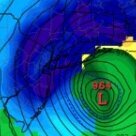
eduggs Posted 31 minutes ago Share Posted 31 minutes ago Long range HRRR for Saturday. 1 Link to comment Share on other sites More sharing options...
MJO812 Posted 29 minutes ago Share Posted 29 minutes ago 13 minutes ago, Brian5671 said: Round and round we go...but think a small event is in order here Yep most likely 1-3 inches Link to comment Share on other sites More sharing options...
the_other_guy Posted 24 minutes ago Share Posted 24 minutes ago 6 minutes ago, eduggs said: Long range HRRR for Saturday. If the HRRR has it (albeit long range) im tuned in Link to comment Share on other sites More sharing options...
the_other_guy Posted 23 minutes ago Share Posted 23 minutes ago 5 minutes ago, MJO812 said: Yep most likely 1-3 inches Then with temps in the 30s, the city wants and after dark storm 1 Link to comment Share on other sites More sharing options...
MJO812 Posted 18 minutes ago Share Posted 18 minutes ago Gfs AI still looks good Link to comment Share on other sites More sharing options...
MJO812 Posted 16 minutes ago Share Posted 16 minutes ago Gfs is west. Gets some precip in here. Link to comment Share on other sites More sharing options...
donsutherland1 Posted 15 minutes ago Share Posted 15 minutes ago My concern about Saturday is that temperatures in and around NYC will probably be around 34° during the snowfall. Even a GFS-esque burst of snow could result in a coating rather than several inches at such temperatures. That's why my current thinking is a coating to an inch. If temperatures could be a degree or two cooler, it would be easier for the snow to accumulate. 1 Link to comment Share on other sites More sharing options...
Franklin0529 Posted 15 minutes ago Share Posted 15 minutes ago Just now, MJO812 said: Gfs is west. Gets some precip in here. I give you props, you always go down with the sinking ship Link to comment Share on other sites More sharing options...


Recommended Posts
Create an account or sign in to comment
You need to be a member in order to leave a comment
Create an account
Sign up for a new account in our community. It's easy!
Register a new accountSign in
Already have an account? Sign in here.
Sign In Now