All Activity
- Past hour
-
 Buy Viagra online cheap and viagra without prescription buy Viagra over the counter https://clients1.google.co.vi/url?q=http://medmennews.xyz Cheap Viagra 100mg or https://cannapedia.site/profile/rhwsnkltsf/ sildenafil 50 mg price [url=http://www.1491.com.tw/phpinfo.php?a[]=]cheap viagra[/url] Cheap Viagra 100mg or [url=http://www.sportchap.ru/user/cdcftvihfk/]viagra without prescription[/url] Buy generic 100mg Viagra online
 -

Occasional Thoughts on Climate Change
donsutherland1 replied to donsutherland1's topic in Climate Change
The extreme heat was more the focus of climate change in my post, which merely noted that France was "wildfire-swept." At least for now, my understanding is that the connection between climate change and extreme heatwaves is stronger than the more complex linkage between climate change and wildfires. Nevertheless, there is a fairly prominent link. Since my initial post, World Weather Attribution (WWA) has published a rapid attribution report. Consistent with the expectations from a growing body of scientific literature, including one Nature piece talking about the future that I posted, climate change contributed. Excerpts: In Spain, January 2026 was the wettest January of the last quarter of a century (AEMET, 2026). In particular, in the area affected by the Ávila–Madrid–Toledo fire, rainfall was 175% higher than usual, which allowed a great accumulation of plant biomass. The summer of 2026 began with record-breaking temperatures and a severe drought, both conditions exacerbated by human-caused climate change (WWA, 2026a; WWA, 2026b). This sequence resulted in high fuel loads that then dried to become highly flammable, increasing the intensity of the fires... In 2025, WWA conducted two rapid attribution studies on fires in Spain and Portugal (WWA, 2025a) and Turkiye, Cyprus and Greece (WWA, 2025b), alongside a retrospective analysis of the entire wildfire season in several European regions (Keeping et al., 2026b). Across all three studies, we found that human-caused climate change was a key driver of the fire weather conditions, primarily through its influence on exceptionally high temperatures, but also by exacerbating drought conditions... The weeks leading up to the fires were characterised by a succession of extreme heatwaves and low rainfall across much of Western Europe, despite it still being comparably early in the season. Recent studies have shown human-caused climate change increased the likelihood of these hot and dry antecedent conditions, which were essential for the development of the extreme fire weather that enabled the fires... In both study regions observations show strong trends of increasing likelihood and severity with global warming. DSR7x values as extreme as those observed in central Spain in July 2026 are now at least 20 times more likely than in a pre-industrial climate. In the French regions the statistical model fits the data less closely and may underestimate the return period of the event, thus the result of an increase in likelihood by at least a factor two in southwest France is a conservative estimate... A recent attribution study has shown that climate change is increasing the likelihood of severe soil moisture drought through higher atmospheric evaporative demand, while the same sequence of above-average winter rainfall followed by exceptional spring drying was identified as a key driver of the 2025 Iberian wildfires. Finally, the WWA rapid attribution report cites and links to a fairly large number of papers on fire weather in Europe, many of which have relevance to the impact of climate change. -
July 2026 at DCA tied for the 16th warmest July in DC history with an average temperature of 81.7 degrees -- 0.7 above the 1991-2020 normal. January-July 2026 averaged 58.7, the 19th warmest first seven months in DC history. July 2026 precipitation at DCA totaled 3.58 inches, 0.74 below the 1991-2020 July normal of 4.32. For the first seven months of 2026, DCA precipitation totaled 17.29 inches, 7.37 below the 1991-2020 normal of 24.66 and the 13th dryest in DC history.
-
Watches and warnings of many types are issued far more often than 50+ years ago. Everyone in my family has turned off weather alerts on their phones due to the excessive number issued. Sadly, the alerts have become more noise than signal due to their quantity.
-
https://medmennews.com/# Viagra without a doctor prescription Canada buy Viagra online
-
I have been incrementally replacing bad deck boards for the last few years. I finally got tired of it(with all the other shit I have to do lol) and contracted a local 'handyman' 2 man company to finish replacing the boards. I should have thought of you! Anyway after the boards age a bit(pressure treated pine) I would like to put a transparent tinted stain on. What do you recommend? I will gladly save that job for you if you want to do it. The 'older' boards have grayed a bit and will need a wash. I won't be home on Sunday btw.
-
Gonna finish up here with a +0.4° departure , down a long way from the first 4 days. 6" of rain on the nose... 88/65 today .
-
Beautiful evening at MountainState in Deep Creek. Beers, dinner, and live music.
-
 humidity is great for plants and if you are in the pool or sitting absolutely still, otherwise it blows
 -
Our region has the problem of a lot of people living among a lot of trees. Equivalent severe storms here are much more impactful than in the plains. Yes, they are going to warn every couplet because it doesn’t take much to be damaging.
-
.thumb.gif.f92b16c631a1d15d405ed77b33f0710d.gif)
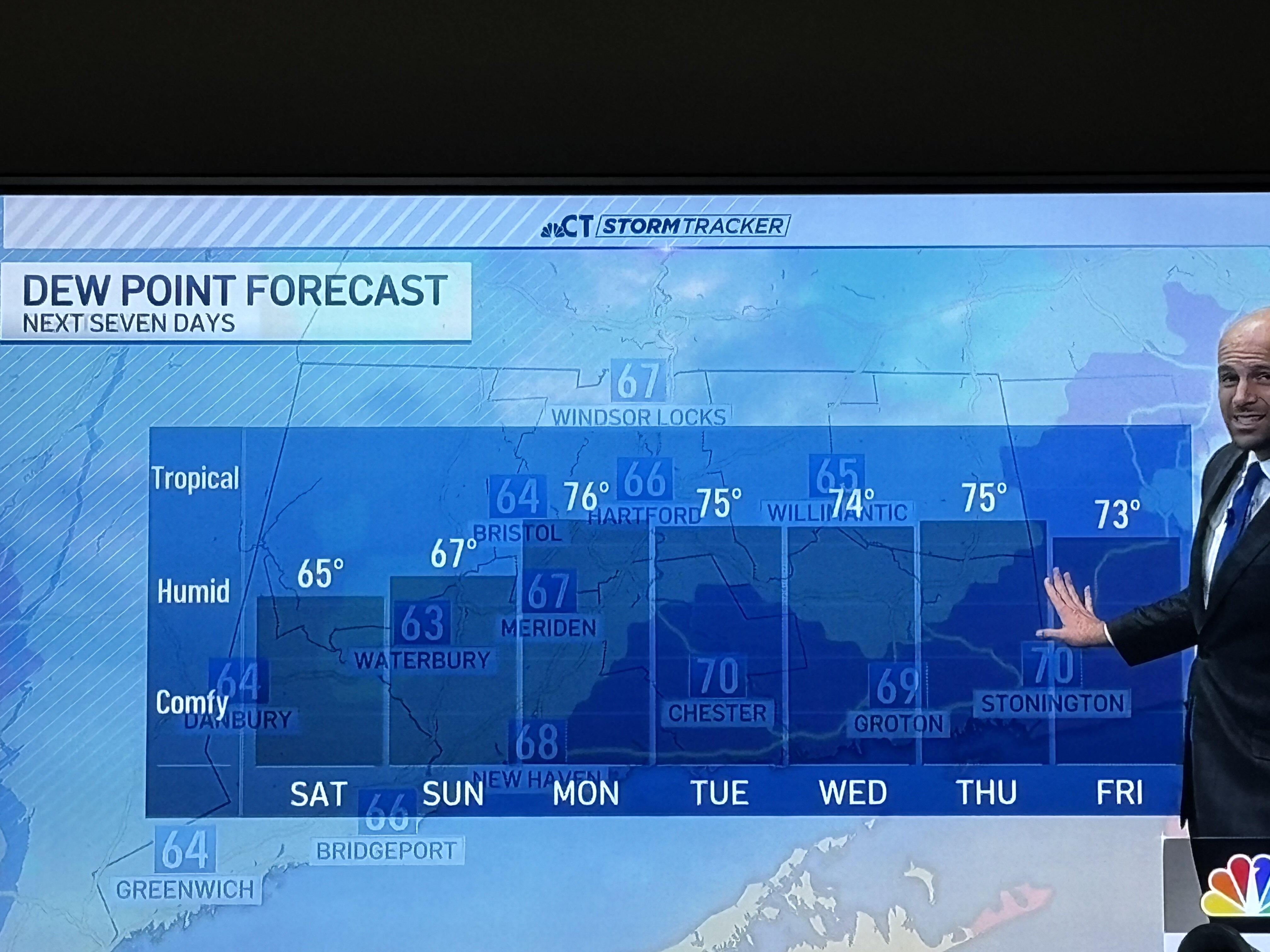
Dewgust 2026: Summer's Last Stand
Torch Tiger replied to Prismshine Productions's topic in New England
Wow lookee there, and they said cool and dry -
 Yay! Missed yet another one lol
 -

2026-2027 Super El Nino
Stormchaserchuck1 replied to Stormchaserchuck1's topic in Weather Forecasting and Discussion
Closing in on +4c in Nino 1+2 - Today
-

2026-2027 Super El Nino
cmillzz replied to Stormchaserchuck1's topic in Weather Forecasting and Discussion
The negative height anomalies near the Gulf of Alaska, together with the core of the strongest negative height anomalies over northeastern Canada, look reasonably Nino-like to me. Summer ENSO teleconnections are much weaker and noisier than in winter, so I wouldn't expect a textbook composite. Given that, the broad pattern still seems fairly consistent with a mature El Nino. -
August DCA _ NYC _ BOS _ ORD _ ATL _ IAH _ DEN _ PHX _ SEA 0.5 0.5 0.1 0.5 1.6 2.0 1.4 1.8 1.0
-

Central PA Summer 2026 Discussion/Obs Thread
canderson replied to Voyager's topic in Upstate New York/Pennsylvania
Got to 92 at home. A hot day. Car read 93 in Lemoyne. -
 August DCA _ NYC _ BOS _ ORD _ ATL _ IAH _ DEN _ PHX _ SEA 1.0 0.8 0.6 0.8 2.2 2.3 1.5 2.0 1.5
 -
2026-2027 Super El Nino
EasternLI replied to Stormchaserchuck1's topic in Weather Forecasting and Discussion
I would also like to see a recurving typhoon or two as @so_whats_happening very astutely brought up. That's another thing I'm keeping my eye's on. I feel like we will, sooner or later. Unfortunately nothing much on the radar for that currently. There's only this dubious TC that forms on the heels of typhoon Dolphin. All models show this system too, this is the euro below. Some want to recurve it, some don't. If it did, I might think of it as a baby step. I'm thinking the autumn could bring better chances though. -
You just posted a blue image. SMGDH
-
I'm going to be washing a house on Sunday at 11 right near your town. I'd love to come by and take a look. I've been restoring deck since 1997. I definitely have a few options. Send me a DM. It was super nice out today. It was a lovely day to be outside.
-
Dewgust 2026: Summer's Last Stand
Damage In Tolland replied to Prismshine Productions's topic in New England
Folks should listen instead of posting silly blue maps and charts . Fire up your Muggy meters and enjoy !!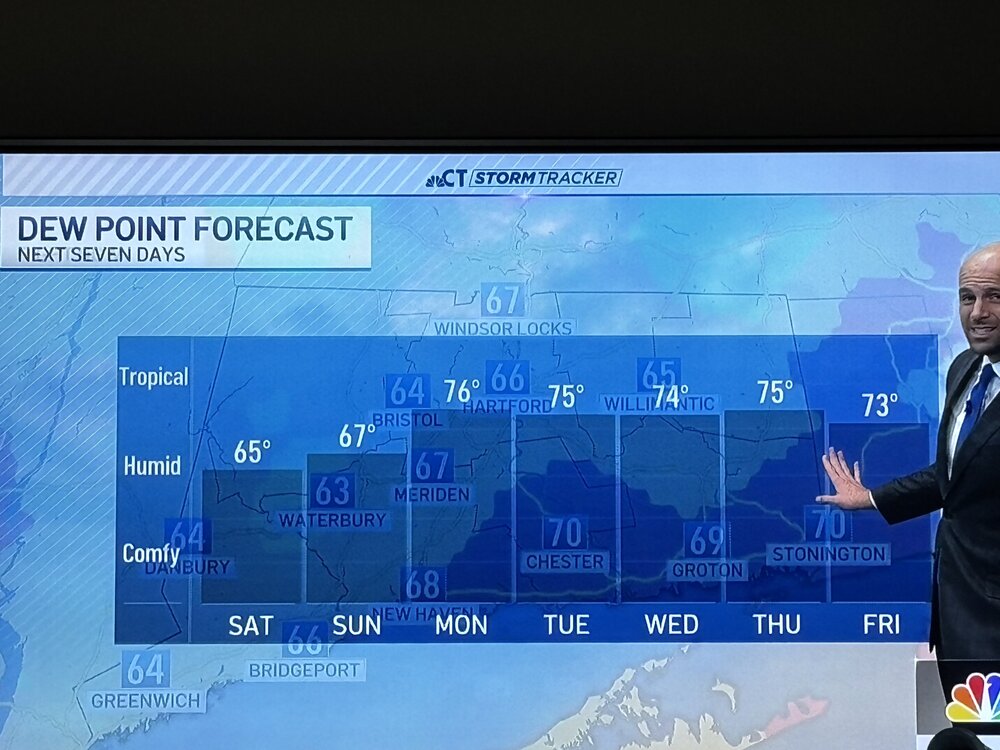
-
2026 Spring/Summer Mountain Thread
Maggie Valley Steve replied to Buckethead's topic in Southeastern States
The WPC has introduced a Slight Risk for Excessive Rainfall for tomorrow and tomorrow night.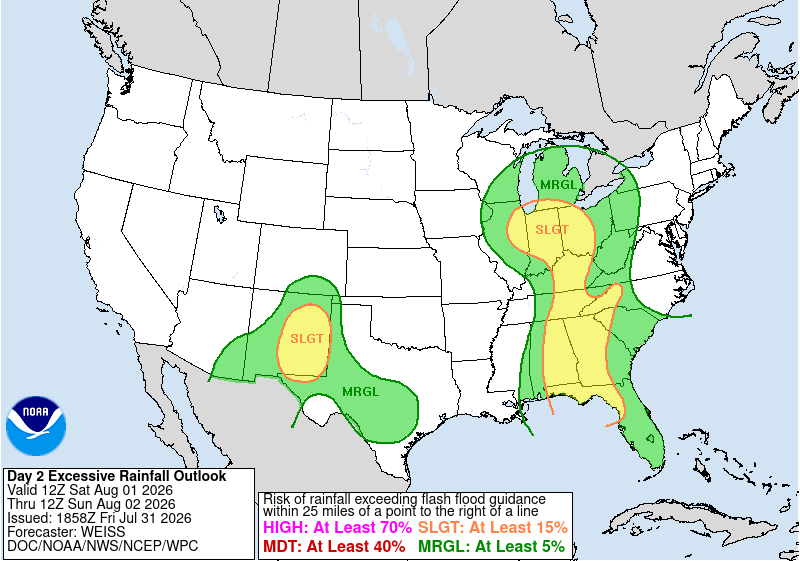
-

2026-2027 Super El Nino
snowman19 replied to Stormchaserchuck1's topic in Weather Forecasting and Discussion
The CANSIPS is playing catch up to the CFS and the EURO. It’s very likely not done strengthening this event even further, it was way too weak to start out with and very good call with its “Modoki bias”. I agree that it’s not done adjusting this to an east-based event either. The CFS just got even stronger with the traditional ONI and RONI. The EURO is guaranteed to get stronger as well, with its new update on 8/5 @LakePaste25 -
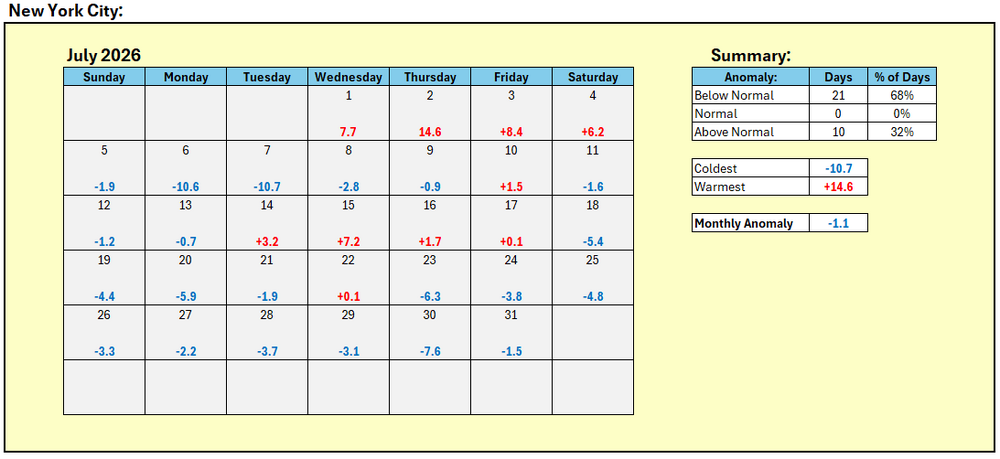
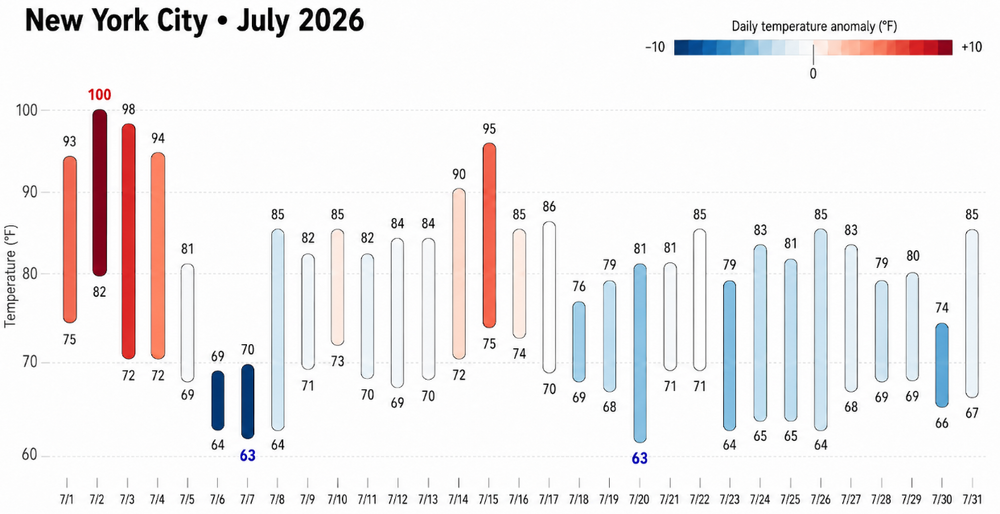
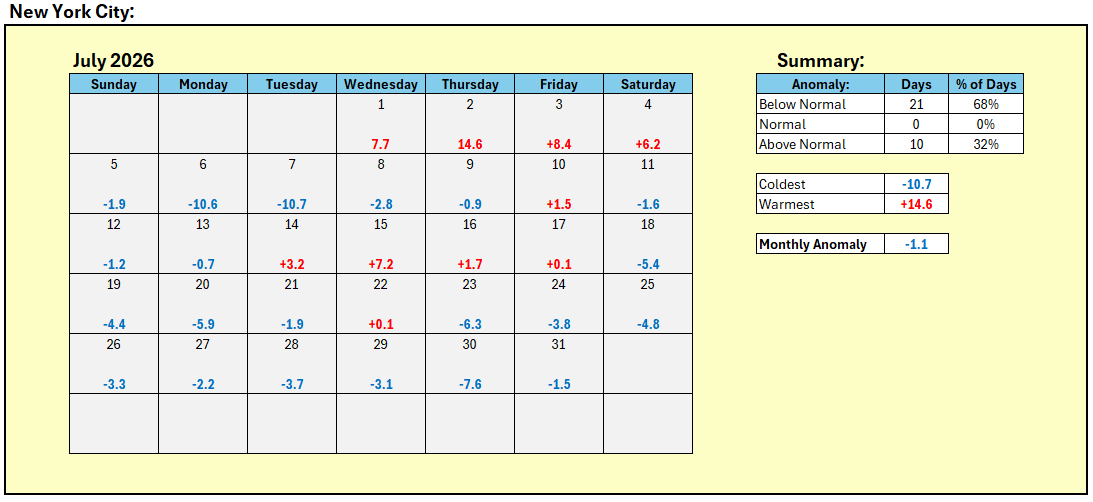
July 2026 finished with a monthly mean temperature of 76.4°, which was 1.1° below normal (0.1° below the 1981-2010 baseline).