All Activity
- Past hour
-
Banger of a weather run we're on. I look forward to a week of drizzle in the near future.
-
I will say the pattern on the EPS and AI EPS is a little interesting regarding storminess later in the 11-15 day.
-
December looks warm on that, but that seems to be the call from many.
-
Pittsburgh Area Fall 2026
RitualOfTheTrout replied to Ahoff's topic in Upstate New York/Pennsylvania
Just commenting in a vacuum without what implications this pattern may have for Winter weather later, this has been an amazing stretch. I've been thoroughly enjoying the comfortable days and cool crisp evenings and nights, and overall dry days. Looks great for remaining football game / senior night and all the Halloween events. Also barely a need to run the furnace, house warms up enough in the evening and stays comfy until the next day. -

Yellow Medicine County, MN - Climate Fact or Climate Fiction?
Brewbeer replied to Cobalt's topic in Climate Change
the science is sound, they don't need to "like" accept OR disprove anything else is delay, deny, distract; it's tiring -
E PA/NJ/DE Autumn 2026 Obs/Discussion
MGorse replied to PhiEaglesfan712's topic in Philadelphia Region
El Nino continues to strengthen. The latest from the Climate Prediction Center: https://www.cpc.ncep.noaa.gov/products/analysis_monitoring/enso_advisory/ensodisc.shtml -
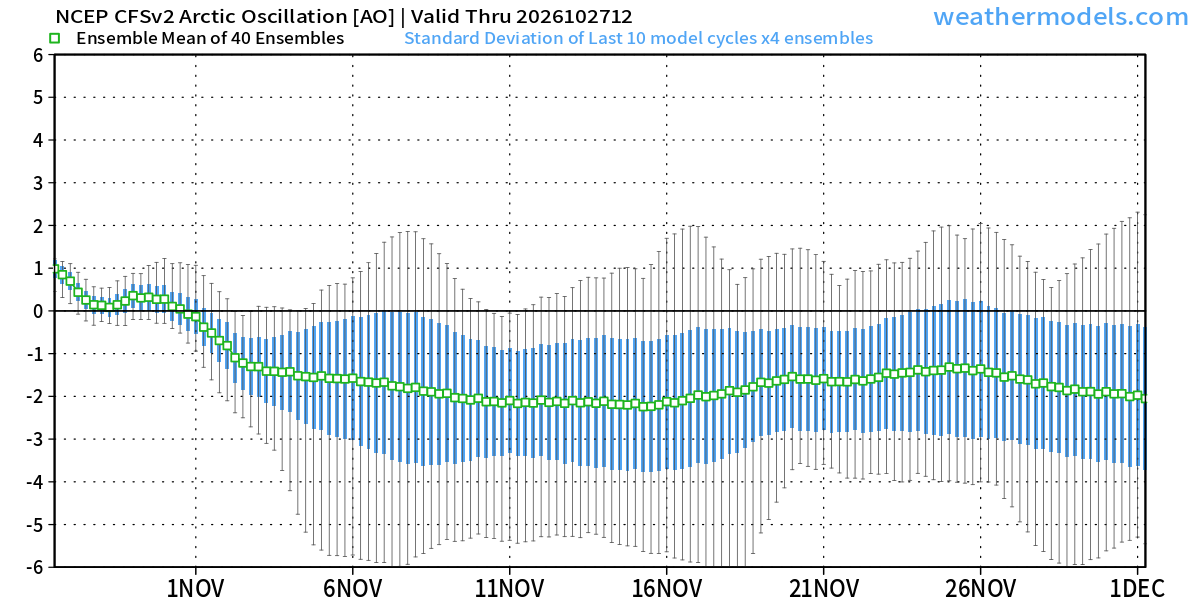
Strat stuff often muddies the forecasting water because there is no straightforward effect on the troposphere. Sometimes it helps, sometimes it doesn't mean jack squat lol. And I've never seen anyone consistently forecast how a SSW event affects sensible wx. We know what it "can" do but we also know not to read too deeply into it until you can see the effect on the longwave pattern in the troposphere. That said, this is an unusually strong event very early in the season. I wouldn't be surprised if this event kick starts a long duration -AO late Nov into Dec. Seasonal models have been honking a -AO in jan/Feb for months. It's hard not to like what we're seeing right now. We don't need siberian air to get snowstorms. Normal continental cold with a suppressed storm track is often enough in DJF.
-
Tomorrow will be another fair day. Highs will top out in the lower 60s across much of the region. Afterward, temperatures will warm into the middle and upper 60s for the remainder of the work week. Much of the region could approach or reach 70° on Friday. Unseasonable warmth will continue into the start of November. Dry conditions will likely persist through next week. The ENSO Region 1+2 anomaly was +5.2°C and the Region 3.4 anomaly was +3.4°C for the week centered around October 14. For the past six weeks, the ENSO Region 1+2 anomaly has averaged +5.08°C and the ENSO Region 3.4 anomaly has averaged +3.22°C. ENSO Region 3.4 breaks the all-time record most recently set in the prior week. The ongoing strong El Niño, will continue to strengthen through the mid-fall. The SOI was +12.57 today. The preliminary Arctic Oscillation (AO) was +1.303 today. Based on sensitivity analysis applied to the latest guidance, there is an implied near 99% probability that New York City will have a warmer than normal October (1991-2020 normal). October will likely finish with a mean temperature near 59.4° (1.5° above normal). Supplemental Information: The projected mean would be 2.5° above the 1981-2010 normal monthly value.
-

Yellow Medicine County, MN - Climate Fact or Climate Fiction?
Cobalt replied to Cobalt's topic in Climate Change
It appears that Yellow Medicine County, MN (Population 11,404) is poised for a top 10 warm October. -
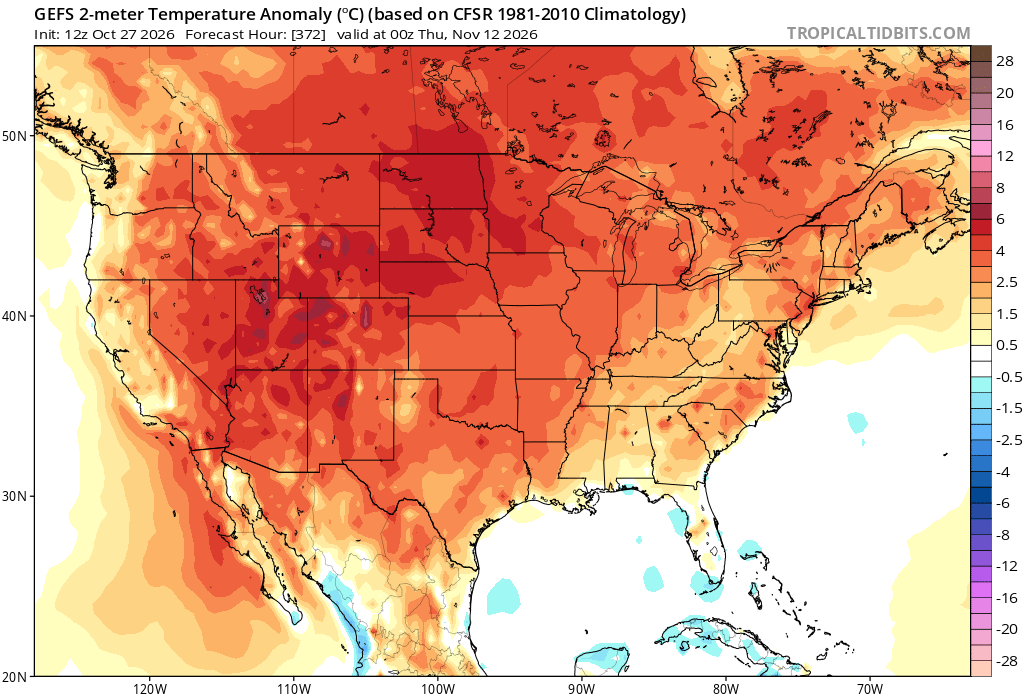
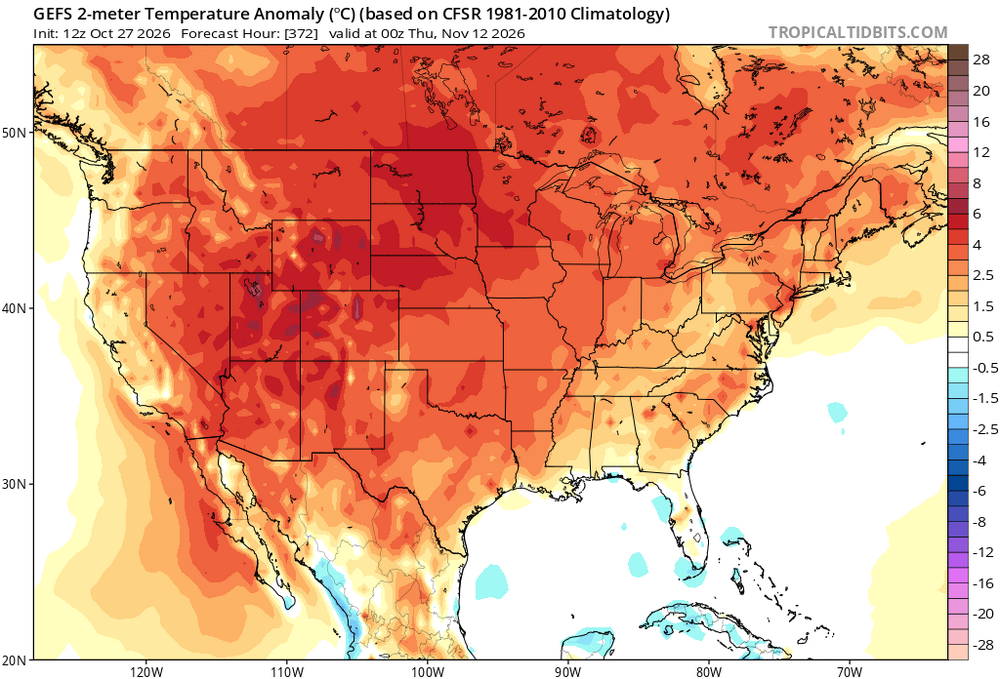
GEFS look cool heading into mid-November.
-

2026-2027 Record-breaking El Nino
GaWx replied to Stormchaserchuck1's topic in Weather Forecasting and Discussion
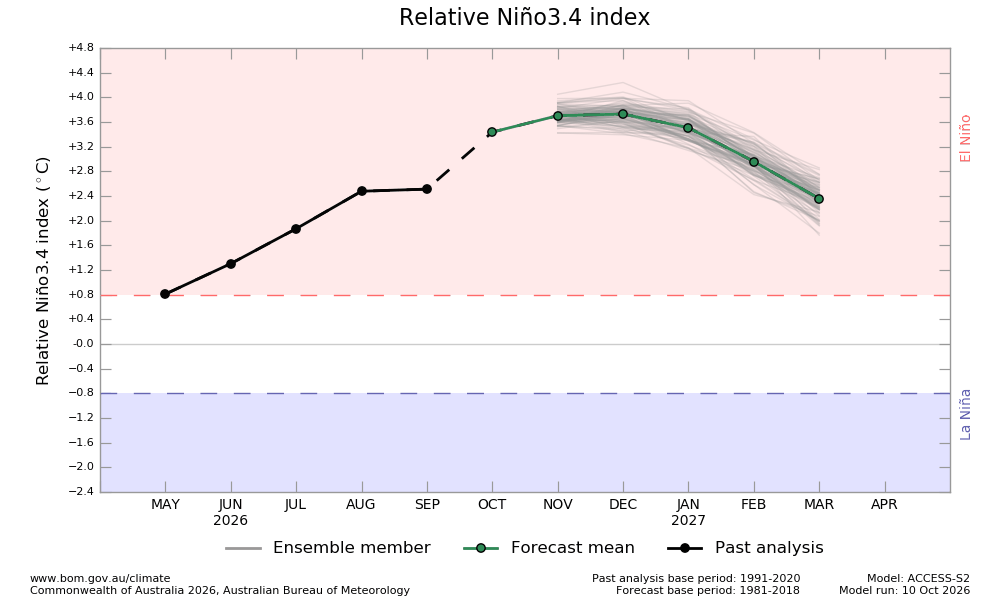
The BoM has been overshooting every near month forecast by a significant margin (0.4+) since April with it averaging 0.5 too high! Oct is joining the club: Here was the forecast for Oct as of just 2 weeks ago, which had Oct way up at +3.5: Look how far down the Oct 24th MTD is: only +2.8! So, full Oct is likely going to end up at no warmer than +3.0, which would make its Oct forecast verify 0.5+ too warm and thus continue the trend that started with April: This tells me that Nov will have a good chance to end up verifying ~0.5 too warm or at ~+3.2 vs its forecast of +3.7. Either Nov or Dec will very likely end up as the peak. So, if BoM monthlies were to peak at, say, +3.3, then the NOAA monthlies would likely come in cooler and peak at ~+3.0 and the trimonthlies would likely peak at ~+2.8, which is where I am currently (not much change from before).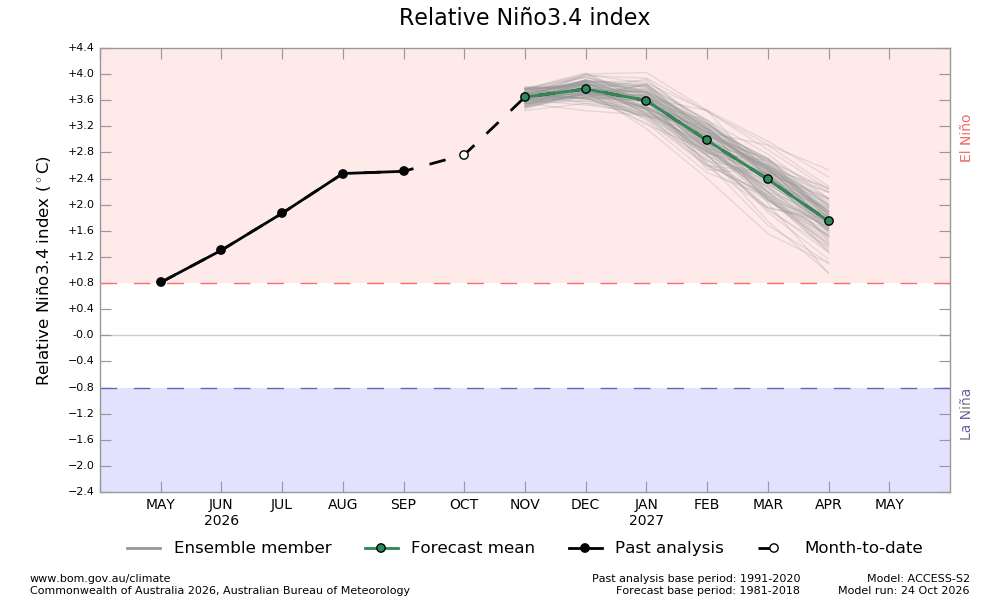
-
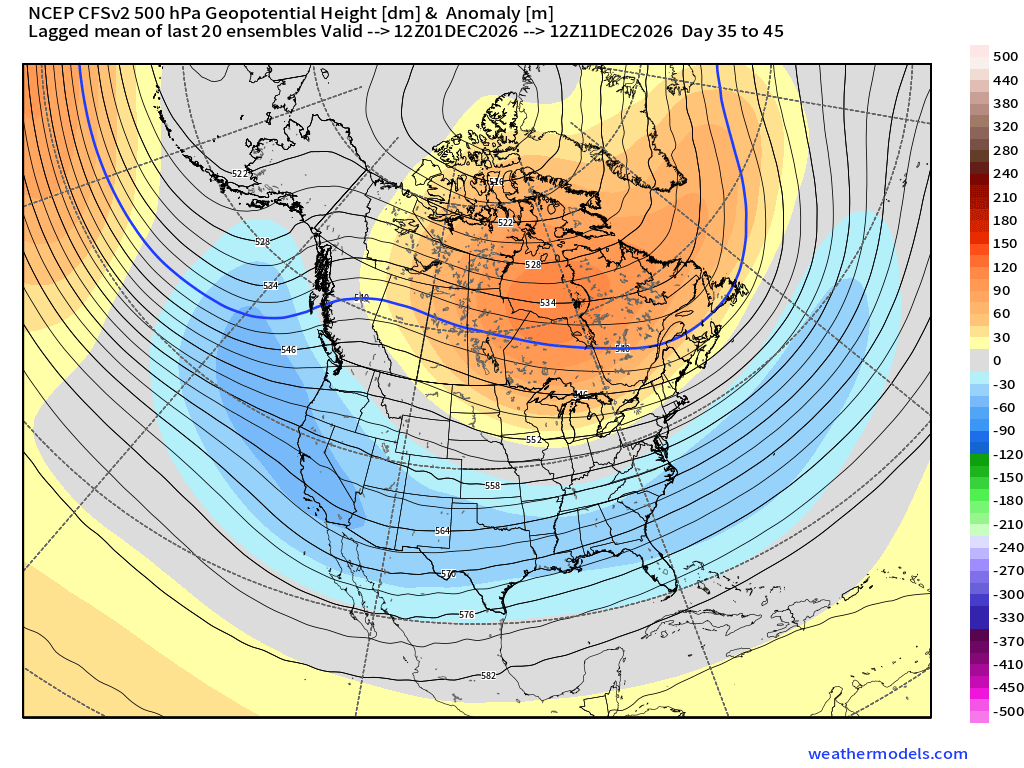
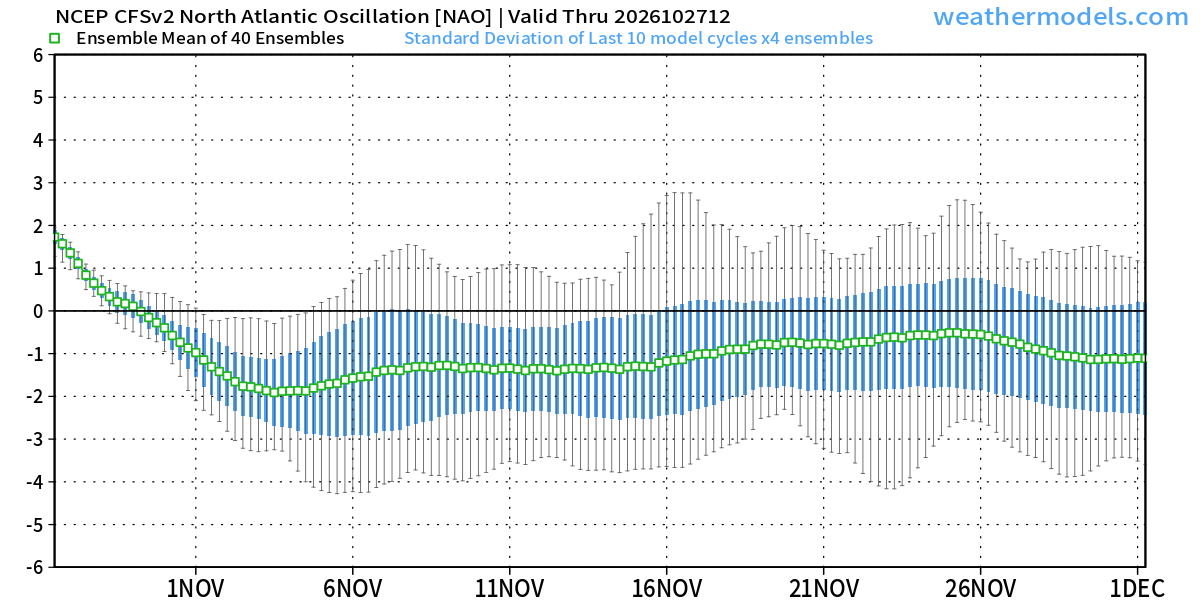
In other non-SPV news...maybe lol CFS weekilies...getting into DEC so at least interesting to look. DEC 1-11, 500mb Also notice NAO & AO take the initial dips & looks like another possible early DEC. Just stuff to yawn & watch.
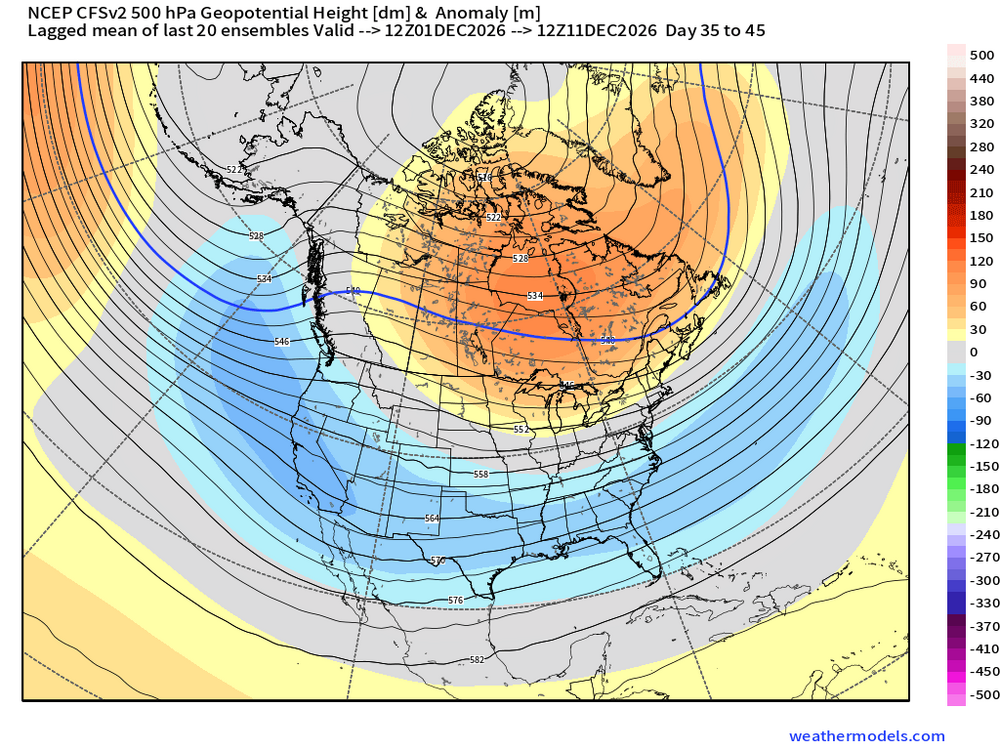
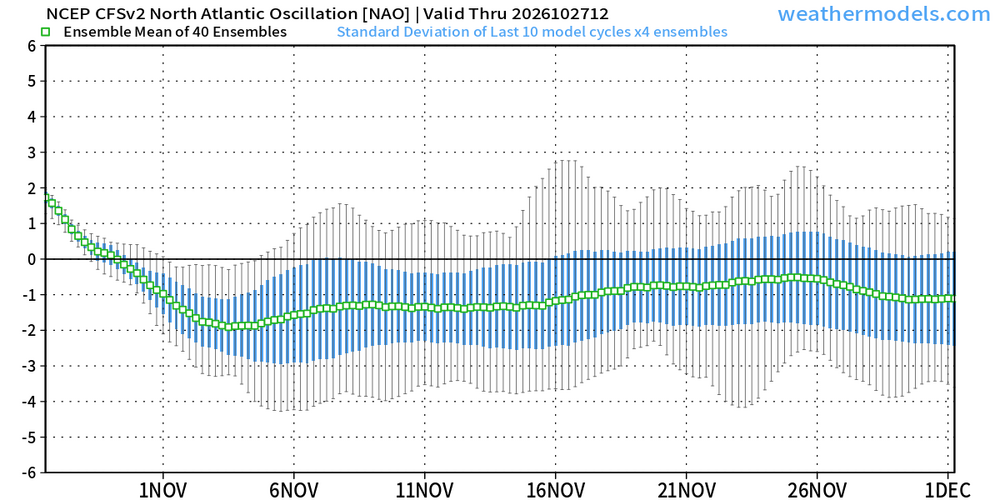
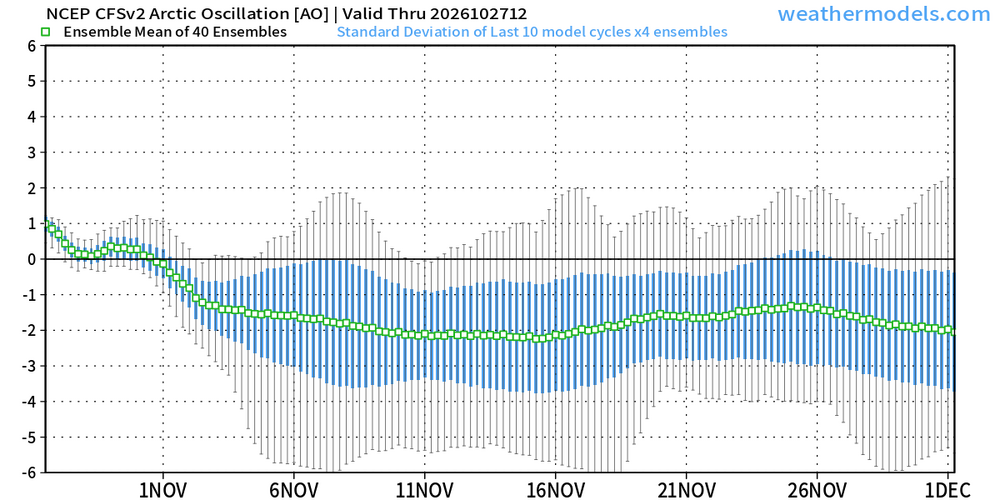
-
Maybe some of them are. I am not sure what you're referring to. I don't follow the METS much but mostly the science nerds. The event itself interests me regardless of outcomes. It is pretty rare. And no one knows how it may or may not affect DEC much, but its certainly not beyond the realm of possibilities that it can. I just think it's wrong to be dogmatic either way. One can speak in probabilities & that's fine but 100% no one knows.
-
Really depends on cloud cover and rain but otherwise temps are[emoji383] .
-
The ensembles are a dream for folks who want to see a long, mild fall. I’m a happy camper. .
-
(002).thumb.png.6e3d9d46bca5fe41aab7a74871dd8af8.png) A certain local PA MET just messaged me on X and said the number that stunned him most in the study was the flip from only 19% of counties showing any statistical warming in PA with raw data to once we include the NCEI adjustments....to seeing the impressive jump to an overwhelming 95% of all counties. To quote him "things that make you go hmmm!"
A certain local PA MET just messaged me on X and said the number that stunned him most in the study was the flip from only 19% of counties showing any statistical warming in PA with raw data to once we include the NCEI adjustments....to seeing the impressive jump to an overwhelming 95% of all counties. To quote him "things that make you go hmmm!" - Today
-
 medicine from mexico: pharmacies in mexico - best online pharmacies in mexico
 -
I’m not saying we won’t get a trough out of it, but I have a big problem with how this it hyped.
-
High of 71 here today...the air quality taking a dive into "yellow" under the pressure dome. Almost looks like wildfire smoke out there. Fire danger something to watch as well.
-

E PA/NJ/DE Autumn 2026 Obs/Discussion
penndotguy replied to PhiEaglesfan712's topic in Philadelphia Region
Just curious what is state of the El Niño? Is still waining? -
I smell what you did there.
-
SSWs would be more exciting if we knew displaced polar air was headed our way, but we don't, at least not yet. The cold and snow might just as easily wind up elsewhere.
-
buy medicine from india to usa or best online pharmacy in india indian online pharmacy USA https://shop.hahanoshizuku.jp/shop/display_cart?return_url=http://zenithindusrx.shop online generic medicine india and http://lostfilmhd.com/user/mcqtecysro/ indian pharma online pharmacy [url=http://images.google.com.om/url?q=https://zenithindusrx.shop]online shopping medicine[/url] prescription drugs in india and [url=https://lifnest.site/user/npuolbbyaknpuolbbyak/?um_action=edit]indian pharmacy legit[/url] online medicine home delivery
-
buy medicine from india to usa or best online pharmacy in india indian online pharmacy USA https://shop.hahanoshizuku.jp/shop/display_cart?return_url=http://zenithindusrx.shop online generic medicine india and http://lostfilmhd.com/user/mcqtecysro/ indian pharma online pharmacy [url=http://images.google.com.om/url?q=https://zenithindusrx.shop]online shopping medicine[/url] prescription drugs in india and [url=https://lifnest.site/user/npuolbbyaknpuolbbyak/?um_action=edit]indian pharmacy legit[/url] online medicine home delivery