EasternLI Posted December 12, 2025 Share Posted December 12, 2025 Hmm, this is an interesting chart depicted by last night's eps cluster analysis. Not for whatever it may be depicting in anyone's backyard. The leading cluster in the day 11-15 range is this one. That progression of the troposphere gets really close to something resembling EOF2 from the following paper. With the +NAO and Scandinavian block. The progression leading to it is even pretty close to what is depicted in the paper. The Scandinavian Greenland dipole. Worth keeping an eye out for that phenomenon in future runs. As it's not something that's well modeled in advance. But a depiction of something like that on a prominent piece of guidance is interesting. Representation of the Scandinavia–Greenland pattern and its relationship with the polar vortex in S2S forecast models https://rmets.onlinelibrary.wiley.com/doi/full/10.1002/qj.3892 From the abstract: "The strength of the stratospheric polar vortex is a key contributor to subseasonal prediction during boreal winter. Anomalously weak polar vortex events can be induced by enhanced vertically propagating Rossby waves from the troposphere, driven by blocking and wave breaking. Here, we analyse a tropospheric pattern—the Scandinavia–Greenland (S–G) pattern—associated with both processes. The S–G pattern is defined as the second empirical orthogonal function (EOF) of mean sea-level pressure in the northeast Atlantic. The first EOF is a zonal pattern resembling the North Atlantic Oscillation. We show that the S–G pattern is associated with a transient amplification of planetary wavenumber 2 and meridional eddy heat flux, followed by the onset of a weakened polar vortex, which persists for the next two months." 3 Link to comment Share on other sites More sharing options...
snowman19 Posted December 12, 2025 Share Posted December 12, 2025 @40/70 Benchmark Mark Moregarbage’s wishcast of a major SSWE, full wind reversal, a SPV split, MJO phase 8, arctic cold death and KU blizzards up the east coast by Christmas week looks like it’s going to work out superbly!! Link to comment Share on other sites More sharing options...
brooklynwx99 Posted December 12, 2025 Share Posted December 12, 2025 you know, some of you keep giving that guy a platform by breathlessly posting about him. we know he sucks Link to comment Share on other sites More sharing options...
kazimirkai Posted December 12, 2025 Share Posted December 12, 2025 On 12/10/2025 at 9:18 AM, Terpeast said: As I said in the MA forum yesterday, it won’t take much to shift that wpac warm pool slightly east to favor MJO 7-8 instead of 4-6. MJO 7 has sometimes shown to be a precursor to our biggest storms. And while the warm up is getting more aggressive on the models, my overall thoughts have not changed about 1) Neg WPO, 2) cold air source in Canada, 2) MJO waves into 7 and 8, and 4) increased chance of blocking due to stratosphere activity. These will increase the likelihood of a cold January moreso than a warm one. I mean the MJO signal isn't progged to project much on to the midlat pattern for the foreseeable future beyond day 21 so I'm a little doubtful of it's predictive relevance in this case. Link to comment Share on other sites More sharing options...
kazimirkai Posted December 12, 2025 Share Posted December 12, 2025 2 hours ago, EasternLI said: Hmm, this is an interesting chart depicted by last night's eps cluster analysis. Not for whatever it may be depicting in anyone's backyard. The leading cluster in the day 11-15 range is this one. That progression of the troposphere gets really close to something resembling EOF2 from the following paper. With the +NAO and Scandinavian block. The progression leading to it is even pretty close to what is depicted in the paper. The Scandinavian Greenland dipole. Worth keeping an eye out for that phenomenon in future runs. As it's not something that's well modeled in advance. But a depiction of something like that on a prominent piece of guidance is interesting. Representation of the Scandinavia–Greenland pattern and its relationship with the polar vortex in S2S forecast models https://rmets.onlinelibrary.wiley.com/doi/full/10.1002/qj.3892 From the abstract: "The strength of the stratospheric polar vortex is a key contributor to subseasonal prediction during boreal winter. Anomalously weak polar vortex events can be induced by enhanced vertically propagating Rossby waves from the troposphere, driven by blocking and wave breaking. Here, we analyse a tropospheric pattern—the Scandinavia–Greenland (S–G) pattern—associated with both processes. The S–G pattern is defined as the second empirical orthogonal function (EOF) of mean sea-level pressure in the northeast Atlantic. The first EOF is a zonal pattern resembling the North Atlantic Oscillation. We show that the S–G pattern is associated with a transient amplification of planetary wavenumber 2 and meridional eddy heat flux, followed by the onset of a weakened polar vortex, which persists for the next two months." Idk bout the two months but the current state would suggest some effects in early January which are reflected in extended gefs guidance Link to comment Share on other sites More sharing options...
MJO812 Posted December 12, 2025 Share Posted December 12, 2025 Im not sure if we gonna see a big warmup. So much cold air up north. Looks like a gradient pattern to me . 1 1 Link to comment Share on other sites More sharing options...
EasternLI Posted December 12, 2025 Share Posted December 12, 2025 16 minutes ago, kazimirkai said: Idk bout the two months but the current state would suggest some effects in early January which are reflected in extended gefs guidance Well sure, a couple things about that though. I've seen those charts change very rapidly in the past for one. As they start picking up on any specific tropospheric pattern that are the drivers of said events. Which models aren't great with at extended leads as we all know. Or even 5 days for that matter . Also that chart is from yesterday's weekly run. I didn't see anything resembling what I posted about on any of the runs yesterday. This was something new today in the 00z eps members. Lastly, I didn't call for anything to happen. That was just perfect opportunity to bring it up as it's a good illustration. Plus seeing that within the 00z eps members is a little interesting. Link to comment Share on other sites More sharing options...
GaWx Posted December 12, 2025 Share Posted December 12, 2025 17 minutes ago, MJO812 said: Im not sure if we gonna see a big warmup. So much cold air up north. Looks like a gradient pattern to me . The Euro Weeklies suggest the most intense and persistent torching will actually be concentrated well to the W and SW of the E coast. So, whereas a big warmup vs the current very cold pattern is coming on all models, that big warmup in the E US appears to take it to only moderately warmer than normal instead of downright torchy when averaged out. 1 Link to comment Share on other sites More sharing options...
40/70 Benchmark Posted December 12, 2025 Author Share Posted December 12, 2025 1 hour ago, snowman19 said: @40/70 Benchmark Mark Moregarbage’s wishcast of a major SSWE, full wind reversal, a SPV split, MJO phase 8, arctic cold death and KU blizzards up the east coast by Christmas week looks like it’s going to work out superbly!! Waste of bandwidth. 1 Link to comment Share on other sites More sharing options...
GaWx Posted December 12, 2025 Share Posted December 12, 2025 Natural gas is down still another 3% on the day, which brings the total drop since the peak of 8 days ago to a very steep 25% on an anticipated much warmer E US pattern (though maybe not to a torch in the means as I stated in my prior post) starting mid to late next week and continuing for the foreseeable future! At least that’s some good news for future heating bills. @Stormchaserchuck1 1 Link to comment Share on other sites More sharing options...
JenkinsJinkies Posted December 12, 2025 Share Posted December 12, 2025 1 hour ago, MJO812 said: Im not sure if we gonna see a big warmup. So much cold air up north. Looks like a gradient pattern to me . I mean highs in the 50s are still above average. Link to comment Share on other sites More sharing options...
schoeppeya Posted December 12, 2025 Share Posted December 12, 2025 True kiss of death on a return to colder pattern is the cold air in Canada getting washed out, dont see any signs as of now. Link to comment Share on other sites More sharing options...
GaWx Posted December 12, 2025 Share Posted December 12, 2025 Today’s GEFS PNA forecast is the most negative for this Dec that I can recall: This implies the realistic chance for a sub -1 Dec PNA. Whereas that’s bad news for those wanting E US cold in the 2nd half of Dec in the MidAtlantic/OH Valley south, it isn’t necessarily bad news for January prospects. That’s because in the vast majority of cases for -ENSO, the PNA in January rose sharply from Dec: PNA Dec/Jan for -ENSO for strongly -PNA in Dec - 1955-6: -2.1/-1.3 (rose 0.8) - 1961-2: -1.2/-0.1 (rose 1.1) - 1964-5: -1.7/-0.2 (rose 1.5) - 1971-2: -1.5/-1.4 (rose 0.1) - 1984-5: -1.6/+1.6 (rose 3.2) - 1996-7: -1.2/+0.6 (rose 1.8) - 2008-9: -1.4/+0.6 (rose 2.0) - 2010-1: -1.8/+1.3 (rose 3.1) - 2012-3: -1.0/+0.6 (rose 1.6) - 2013-4: -0.9/+1.0 (rose 1.9) - 2021-2: -2.6/+1.0 (rose 2.6) So, average PNA rise Dec to Jan for these was a whopping 1.9! Dec temperature anomalies: coldest N Rockies to N Plains/mild much of SE 1/3: Jan temp. anomalies: coldest shifts 1,000 miles SE and warmth gone https://www.cpc.ncep.noaa.gov/products/precip/CWlink/pna/norm.pna.monthly.b5001.current.ascii.table 2 2 Link to comment Share on other sites More sharing options...
Maestrobjwa Posted December 12, 2025 Share Posted December 12, 2025 So...how's the PDO looking? Link to comment Share on other sites More sharing options...
GaWx Posted December 12, 2025 Share Posted December 12, 2025 Just now, Maestrobjwa said: So...how's the PDO looking? WCS: Pretty steady for now but still within a longer term (6 month) rise: 1 1 Link to comment Share on other sites More sharing options...
MJO812 Posted December 12, 2025 Share Posted December 12, 2025 56 minutes ago, schoeppeya said: True kiss of death on a return to colder pattern is the cold air in Canada getting washed out, dont see any signs as of now. Thats why I think the warm pattern will be brief and somewhat muted. 1 1 Link to comment Share on other sites More sharing options...
TheClimateChanger Posted December 12, 2025 Share Posted December 12, 2025 2 hours ago, GaWx said: Natural gas is down still another 3% on the day, which brings the total drop since the peak of 8 days ago to a very steep 25% on an anticipated much warmer E US pattern (though maybe not to a torch in the means as I stated in my prior post) starting mid to late next week and continuing for the foreseeable future! At least that’s some good news for future heating bills. @Stormchaserchuck1 2 Link to comment Share on other sites More sharing options...
Maestrobjwa Posted December 12, 2025 Share Posted December 12, 2025 10 minutes ago, GaWx said: WCS: Pretty steady for now but still within a longer term (6 month) rise: Thanks! Where do you find that? Been interested in the PDO because of how much the negative state screwed with snow chances the last decade. Link to comment Share on other sites More sharing options...
GaWx Posted December 12, 2025 Share Posted December 12, 2025 3 minutes ago, Maestrobjwa said: Thanks! Where do you find that? Been interested in the PDO because of how much the negative state screwed with snow chances the last decade. https://s2s.worldclimateservice.com/climatepanel/ Then click on 2nd map on right. 1 Link to comment Share on other sites More sharing options...
GaWx Posted December 12, 2025 Share Posted December 12, 2025 12 minutes ago, TheClimateChanger said: NG bulls want the opposite of this EPS HDD trajectory (see left graph): the cold part through 12/15 was dialed in to prices many days ago: Link to comment Share on other sites More sharing options...
LakePaste25 Posted December 12, 2025 Share Posted December 12, 2025 Classic CAD setup which denies the coast of the torch. So despite it being warm just about everywhere else, we’ll constantly hear about how it’s “not a torch” because the most important cities in America will be cooler. 2 Link to comment Share on other sites More sharing options...
Benjamn3 Posted December 12, 2025 Share Posted December 12, 2025 4 minutes ago, LakePaste25 said: Classic CAD setup which denies the coast of the torch. So despite it being warm just about everywhere else, we’ll constantly hear about how it’s “not a torch” because the most important cities in America will be cooler. As god intended. “God bless us, everyone. “ 1 Link to comment Share on other sites More sharing options...
snowman19 Posted December 12, 2025 Share Posted December 12, 2025 34 minutes ago, LakePaste25 said: Classic CAD setup which denies the coast of the torch. So despite it being warm just about everywhere else, we’ll constantly hear about how it’s “not a torch” because the most important cities in America will be cooler. Can’t wait for the inevitable weenie “it’s only warm aloft!!” proclamations. Right out of the JB playbook. Chapter One Link to comment Share on other sites More sharing options...
GaWx Posted December 12, 2025 Share Posted December 12, 2025 I remain on “hope the Euro Weeklies for Jan fail miserably mode” because not only did today’s hold onto the mild pattern (though consistent blowtorch still well W of the E US thanks probably to refreshing CAD at times), they warmed that final week of the run (1/19-25) vs yesterday: H5 yesterday’s run for 1/19-25: H5 today’s run for 1/19-25: 2m yesterday’s run for 1/19-25: 2m today’s run for 1/19-25: Edit: Lakes to NE still average near normal temps almost every week of the run. 1 Link to comment Share on other sites More sharing options...
brooklynwx99 Posted December 12, 2025 Share Posted December 12, 2025 25 minutes ago, snowman19 said: Can’t wait for the inevitable weenie “it’s only warm aloft!!” proclamations. Right out of the JB playbook. Chapter One last time I checked, though, most people don't life 5000 feet above the surface, let alone 15000 feet. if it's NN to BN at the surface in the NE at times, nobody will care if it's +20F over some barren cornfield in NE 1 Link to comment Share on other sites More sharing options...
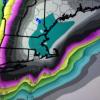
brooklynwx99 Posted December 12, 2025 Share Posted December 12, 2025 the EPS shows this colder wedging pretty well. might be a bit overdone, but I doubt really torches from NYC north. hell, New England can even see some mixed systems 1 Link to comment Share on other sites More sharing options...
snowman19 Posted December 12, 2025 Share Posted December 12, 2025 8 minutes ago, brooklynwx99 said: the EPS shows this colder wedging pretty well. might be a bit overdone, but I doubt really torches from NYC north. hell, New England can even see some mixed systems Who on here said the word torch? As far as cold wedging, central and northern New England? Sure. NYC is not going to escape the warmup, it’s coming. Gradient patterns favor New England, not NYC, although some on here think NYC is the new Fort Kent, Maine and go into full blown panic attacks and defense/attack mode if anyone dares mentions the words “NYC” and “warmup” in the same sentence. Guess it interferes with their wishcasts of non stop, unabated cold and snowstorms from November through the end of March Link to comment Share on other sites More sharing options...
JenkinsJinkies Posted December 12, 2025 Share Posted December 12, 2025 1 minute ago, snowman19 said: Who on here said the word torch? As far as cold wedging, central and northern New England? Sure. NYC is not going to escape the warmup, it’s coming. Gradient patterns favor New England, not NYC, although some on here think NYC is the new Fort Kent, Maine and go into full blown panic attacks and defense/attack mode if anyone dares mentions the words “NYC” and “warmup” in the same sentence. Guess it interferes with their wishcasts of non stop, unabated cold and snowstorms from November through the end of March Plus it’ll be relatively short lived. Link to comment Share on other sites More sharing options...
stadiumwave Posted December 12, 2025 Share Posted December 12, 2025 Yesterday forecast: Today: Link to comment Share on other sites More sharing options...
stadiumwave Posted December 12, 2025 Share Posted December 12, 2025 European & Canadian 12z products show another stratospheric warming event in the late period. GFS products had only minor. But the 12z Eurp OP, EPS products & the Canadian spilt the PV at 10mb & 50mb. Here's the Euro OP: 50mb 10mb The EPS control is more aggressive with the strat warmth. Regardless of how strong this should continue to prevent the STP from getting carried away & increase chances of HLB. Hopefully, at some point maybe favorable. Right now it is just a "take note" & see if this goes anywhere. 2 1 Link to comment Share on other sites More sharing options...


Recommended Posts
Create an account or sign in to comment
You need to be a member in order to leave a comment
Create an account
Sign up for a new account in our community. It's easy!
Register a new accountSign in
Already have an account? Sign in here.
Sign In Now