All Activity
- Past hour
-

February 2026 OBS & Discussion
Freezing Drizzle replied to Stormlover74's topic in New York City Metro
Like the warm rainstorm 11 days after the January 7-8, 1996 snowstorm. -
Friday has a better chance but thats not saying much.
-
Groundhog says six more weeks of this and then 10 weeks of April!
-
Most guidance has a nice band west of the Apps. Need to get some dynamite to clear out those mountains so it doesn’t get shredded!
-
3D SPV maps started updating again. Below just for imagery purposes, but it still looks like there will at minimum be a major disruption to the SPV around or just before Valentines day:
-
The fast flow idea is something which definitely needs more research...not just in the sense of comparing charts but using the complex mathematical equations to either back up the idea or debunk it and also factor in wavelengths. It's something Ray and I had some dialog on earlier last month and I didn't have much of an answer but I've continued to think about it and have generated some hypotheses on why the fast flow would seemingly hurt us but no where else. An idea which comes to mind is the fast flow greatly alters both the position, strength, and orientation of the ridge/trough evolution downstream of the jet max. When it comes to "fast flow" I don't know if there is any literature which provides some methods or means to defining it, I am going to assume just a simple, "deviating from the mean" so with that the focus on my mind is the strength of the jet max. The second part of this, and this is where I don't have much thought or reasoning is, because of where we are located geographically with respect to "normal" trough/ridge axes and evolution...the faster flow just screws us. Let's look at it in this sense: During the summer, what is one reason why it is extremely difficult (or what seems impossible) to get the extreme heat into our region (I'm talking about widespread >100°F)? The position and orientation of how the southern ridge evolves...it either does so to pump the heat into the West, central states, midwestern states, or mid-Atlantic. Now there are other factors such as airmass modification due to convection, fronts, etc. Back to the cold season, but with the faster flow you are either increasing the likelihood for cyclogenesis and rapid LP strengthening well west of the Appalachians (hence west of us getting hit) or a bit farther off the mid-Atlantic coast or even southeast coast (hence south of us getting hit) but the faster flow disrupts storms potential from coming up the coast. I think this could be similar to that of tornado alley. There has been alot of discussion of whether tornado alley has "shifted" from what it was once perceived. But historically tornado data shows a concentrated area of tornadoes within the Great Plains ("original Tornado Alley") and a secondary concentrated area within the Mississippi Valley area (with a gap between the two). This gap could be explained by shifts within the trough axis based on the flow so either you get periods (years) where tornado activity is concentrated within the Great Plains or where it is concentrated several hundred miles south and east...so the area in between these two has a lower concentration of activity just because of where they happened to reside to the location of the trough axis. This could be a incredibly cool and fun study for someone to heavily divulge into but would requite using primitive equations to explain the flow, changes in the flow, and downstream implications.
-
February 2 1996: The all-time state record low temperature is set in Minnesota. With numerous media folk present, the low dips to -60 three miles south of Tower. Governor Arne Carlson cancelled school statewide due to the cold. 1988: The temperature bottoms out at -43 at Embarrass. 1927: Spring-like temperatures are felt on Groundhog Day. Tracy is 57 and Fairmont reaches 56. For Monday, February 2, 2026 1952 - The only tropical storm of record to hit the U.S. in February moved out of the Gulf of Mexico and across southern Florida. It produced 60 mph winds, and two to four inches of rain. (2nd-3rd) (The Weather Channel) 1956 - A record snowstorm in New Mexico and west Texas began on Ground Hog's Day. The storm produced 15 inches of snow at Roswell NM, and up to 33 inches in the Texas Panhandle. (David Ludlum) 1987 - A fast moving arctic front brought snow and high winds to the north central U.S. Winds gusted to 69 mph at Brookings SD. Big Falls MN reported nine inches of snow. Record warmth was reported just ahead of the front. Burlington IA reported a record high of 59 degrees. (The National Weather Summary) (Storm Data) 1988 - A dying low pressure system over southern California deluged the San Diego coastal mountains with more than four inches of rain causing half a million dollars damage. Arctic air invading the north central U.S. sent the mercury plunging to 38 degrees below zero at Park Rapids MN. Raleigh NC reported a record high of 75 degrees. (The National Weather Summary) (Storm Data) 1989 - Bitter cold air covered much of the central U.S. Butte MT reported a wind chill reading of 91 degrees below zero, Salt Lake City UT was blanketed with 11.9 inches of snow in 24 hours, and winds around Reno NV gusted to 80 mph. Unseasonably warm weather continued in the southeastern U.S. Twenty-eight cities reported record high temperatures for the date, including Wilmington NC with a reading of 80 degrees. (The National Weather Summary) (Storm Data) 1990 - Thunderstorms developing ahead of a cold front produced severe weather in the Lower Mississippi Valley during the late afternoon and evening hours. One person was injured in a tornado near Reidheimer LA. Thunderstorms northeast of Brandon MS produced hail three inches in diameter along with high winds which downed or snapped off one hundred trees. (The National Weather Summary) (Storm Data) 1996 - An Arctic outbreak that lasted from late January through early February produced nearly 400 hundred record lows, 15 all-time low readings, and over 50 new record lows. Four states recorded their all-time record low temperatures, including Tower, Minnesota, on this date with a reading of 60 degrees below zero, canceling Tower's annual Icebox Days festival because it is too cold. Locations that reported their all-time record low or tied included: Cresco, IA: -36°, Osage, IA: -34°, Charles City, IA tied their record low with -32° and Lancaster, WI tied their all-time record low with -31°. International Falls, MN, and Glasgow, MT set records for February with -45° and -38°, respectively. The temperature at Embarrass, MN, plummeted to -53°. Rochester, MN, dipped to -34° for its coldest temperature in 45 years. Green Bay, WI only reached -16° for the high temperature for the day, their coldest 2006 - New Orleans is struck by two tornadoes, collapsing at least one previously damaged house and battering Louis Armstrong International Airport. <a href="http://islandnet.com/~see/weather/almanac/diaryfeb.htm">The Weather Doctor</a> 2008 - Hilo, HI, is deluged by 10.82 inches of rain in a period of 24 hours, breaking the previous record set in 1969 by 3.5 inches. <a href="http://islandnet.com/~see/weather/almanac/diaryfeb.htm">The Weather Doctor</a> 2011 - A high temperature of 44°F registered at Sky Harbor Airport in Phoenix, AZ, sets an all-time February record for the coldest high temperature for the city. <a href="http://islandnet.com/~see/weather/almanac/diaryfeb.htm">The Weather Doctor</a> That stretch in 1996 was the worst to endure. Schools shutdown for a week. The sawmill I worked at shutdown, as well. Hydraulic fluid gelled. Heaters couldn't keep up. Highs upper -10's to -20's, and lows -30's to -50's with -60 as the state record. WICKED COLD!
-
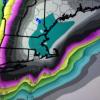
Is we back? February discussion thread
40/70 Benchmark replied to mahk_webstah's topic in New England
Hope and Pray for -NAO....why? Please, let's hold onto the bitter wind chills and dearth of storms for just a few more weeks...please, oh pretty please... I'm ready to rinse and make then make one more go of it before the draft. -
February 2026 OBS & Discussion
Freezing Drizzle replied to Stormlover74's topic in New York City Metro
Right. The January temperature figures are an example of a flaw that can occur with the use of (only) the mean average. In this case, one data set are high (temperatures) and the other are low (temperatures), the mean makes it appear like the month was in the middle. -
Kaiser Icon
-
16° mean temp here prior 9 days.
-
 "The Arctic rigors...have come down like an avalanche upon us. How must the poor have suffered...in ill-provided dwellings, with lack of comfortable clothing by day and night, with lack of fuel and even food perhaps! The extreme cold, before unparalleled in this latitude, which looked into many well-conditioned and provided homes with an awe-inspiring presence, with what pallid ghastliness must it have invaded the houses of the poor even to their hearthstones." -- Bangor (Maine) Daily Union, Jan. 26, 1857
 -
Is we back? February discussion thread
40/70 Benchmark replied to mahk_webstah's topic in New England
Zzzzzzzzzzzzzzzzzzzzzzzzzzzzzzz -

February 2026 OBS & Discussion
[email protected] replied to Stormlover74's topic in New York City Metro
I guarantee you that the Park doesn't go below 7-8 degrees this weekend! -
2025-2026 ENSO
40/70 Benchmark replied to 40/70 Benchmark's topic in Weather Forecasting and Discussion
Not really. I'd be stunned if we didn't see blocking in March. -
Looks like a 12 hour shot of high winds and biting cold ... then the wholesale pattern across the continent has a better than random chance of a cold relaxation. The N/stream backs off the incursions and we see 540 dm thickness back more convincingly to 40N across the conus ( not just a narrow spike but with breadth) for the first time in quite a while. Unclear what this means for specific anomalies/dailies, but at least a moderation in temperatures should and would be consistent with the current telecon vision together with loss of N/stream direct
-
Sorry to be pedantic but the meteorological term is "weak-ass"
-
Pretty eh model runs over night to be honest. No real snow and 2 rain storms lol
-
 We've reached the minus 30s 6 times. -36 Jan 16, 2009 (Big Black River in NW Maine sets a new statewide minimum with -50, eclipsing the -48 in Van Buren.) -34 Jan 17, 2009 -31 Jan 4, 2014 -31 Dec 29, 2017 -30 Jan 22, 2005 -30 Jan 27, 2022 We've also had 4 mornings at -29, 3 in Jan and one in Feb. Fort Kent had some impressive cold during our 10 years there. -41 in Jan 1976 (11 days after we moved there), -39, -42 and -47 in Jan 1979, also -42 in Dec 1980.
 -
 yeah, no. the ice didn't go anywhere in SNH. the weight of the snow on the ice may have pushed water up to the surface creating the slush (which happens almost every year), but there has been no ice melting.
 -

WxUSAF's weak ass frontal passage thing.
Solution Man replied to dailylurker's topic in Mid Atlantic
We got HRRR on our side, what could go wrong. We got this -

WxUSAF's weak ass frontal passage thing.
NorthArlington101 replied to dailylurker's topic in Mid Atlantic
Least the FV3 doesn't blank us. I'd lock this up if I was able to -
NAM and FV3 are kinda rough, but we soldier on
-
Sold. Screw the NAM. Until it shows snow
-
Gorgeous! Any chance mods would consider this thread pinnable? Or would that be too many pins. I don't know if people would use it (especially if current bitterness persists ) just sayin lots of great photos of the pack and frozen area waters being posted in different threads. It would be nice to be able to look through later. I'm a pack/ice freak, though. That is one thing this winter has given.

.thumb.png.4150b06c63a21f61052e47a612bf1818.png)