All Activity
- Past hour
-

January 2026 Medium/Long Range Discussion
BTRWx's Thanks Giving replied to snowfan's topic in Mid Atlantic
Anyone know why the Physical Sciences Division stopped updating ssts? Is this the end for it? https://psl.noaa.gov/map/clim/sst.shtml -
u keep doing u comrade
-

January 2026 regional war/obs/disco thread
Typhoon Tip replied to Baroclinic Zone's topic in New England
Kind of with Scott on the mid monther ... for the time being, anyway. I'm open to changes at 7+ days of course, but ugly overnight. I didn't like 00z GEFs or the EPS regarding that period. They were not representative of a type of system we'd expect to see emerging - better hints in prior cycles have regressed to ...something else. This is all given to the blah blah PNA gobble-dee goop. Both look like some kind of polar boundary with maybe a clipper on it? not very clear what that is... but the passage is NW-SE and not including much of any coherency to a coastal. Basically unremarkable. Meanwhile, the operational GFS' 0z and slightly less so, 06z kind of does, but they just look weird. So does the GGEM... -
January 2026 regional war/obs/disco thread
40/70 Benchmark replied to Baroclinic Zone's topic in New England
Snowfall up....heating bill and salt usage down..... -
Last January I remember being elated that it snowed on my birthday. This birthday it will be 73 degrees in the exact same location.
-
I was just looking at my Facebook memories from last January. What a different a year makes lol. Last year it was winter. This year were stuck in November weather like our classic shitty winters lol
-
January 2026 regional war/obs/disco thread
jbenedet replied to Baroclinic Zone's topic in New England
We have not had one fun storm to track… Just hella cold. Need I mentions the other “benefits” of this crap Pattern— Heating bills up ice melt use up slips trips falls up doggy depression up boredom up -
January 2026 regional war/obs/disco thread
40/70 Benchmark replied to Baroclinic Zone's topic in New England
Another season that I'd take and run and at this point. -
January 2026 regional war/obs/disco thread
40/70 Benchmark replied to Baroclinic Zone's topic in New England
Could even be 2....we just don't know... jk love ya, Wolfie! -
Best event was the 15.9" of snow on 2/12. Even got a call from NWS Blacksburg confirming what I had on the ground due to a 15" report from a spotter 5 miles away earlier. Why? Because forecast was 6-8" lol. Needless to say a BIG forecast update took place within the hour. Second would be snow OTG from 1/6 thru the end of month, 25 days! Third would be the erratic rainfall for summer and fall, with weeks of dry then a one day 2 incher to only run off!
-

January 2026 regional war/obs/disco thread
Great Snow 1717 replied to Baroclinic Zone's topic in New England
But we're only 2 1/2 weeks into winter...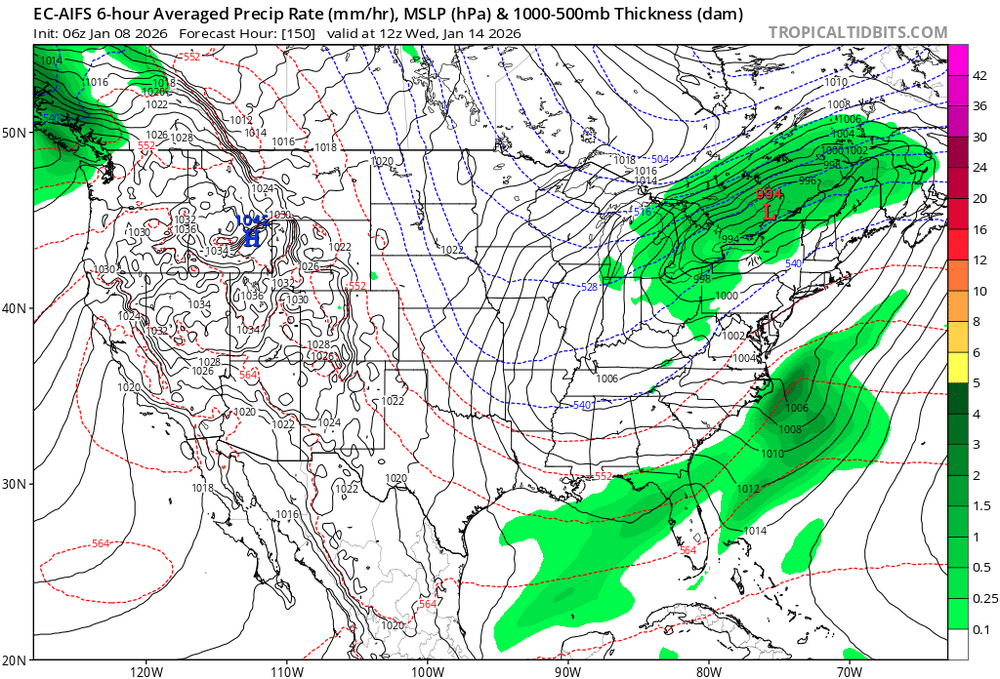
-
January 2026 regional war/obs/disco thread
40/70 Benchmark replied to Baroclinic Zone's topic in New England
I'd kill for this season....more than double the snowfall, and when it wasn't snowing, it was pleasant with minimal inconvenience or salt showering my vehicle. -

January 2026 regional war/obs/disco thread
metagraphica replied to Baroclinic Zone's topic in New England
Over the top heat. KBOS at 37. KGON at 27. -
I changed my contest number at the end of the deadline I should of stuck with the dreadful ones I had initially lol. Always get wrapped up in the hype as the season draws closer. Damn it.
-
Good morning guys, plenty of opportunities for next week, we'll see what happens. We need a big one here
-
(002).thumb.png.6e3d9d46bca5fe41aab7a74871dd8af8.png)
E PA/NJ/DE Winter 2025-26 Obs/Discussion
ChescoWx replied to LVblizzard's topic in Philadelphia Region
Does the Wiggum rule require that reading at PHL airport? -
January 2026 regional war/obs/disco thread
jbenedet replied to Baroclinic Zone's topic in New England
Even a ratter is better than rotten… -

Central PA Winter 25/26 Discussion and Obs
Superstorm replied to MAG5035's topic in Upstate New York/Pennsylvania
Good news. -

Central PA Winter 25/26 Discussion and Obs
mahantango#1 replied to MAG5035's topic in Upstate New York/Pennsylvania
Maybe the best of winter is yet to come! Waiting for that 2' snow storm, it's been awhile! -
January 2026 regional war/obs/disco thread
40/70 Benchmark replied to Baroclinic Zone's topic in New England
Do me the privilege sharing Liam's feed in one week from now....it will probably be filled with 20-something hour runs from late January. -
First week of Jan Departures through the 7th LGA: -3.5 NYC: -2.3 JFK: -2.2 EWR: -1.6
-
Records: Highs: EWR: 70 (1998) NYC: 65 (1998) LGA: 64 (2008) JFK: 58 (1949) Lows: EWR: 3 (1970) NYC: 2 (1968) LGA: 3 (1968) JFK: 1 (1968) Historical: 1780: One of the coldest times in Washington history that froze all the waterways of the Middle Atlantic region including the Potomac River and most of the Chesapeake Bay. The cold started in Dec. 1779 and lasted through the first week in Feb. The coldest periods were Jan. 6-8, Jan. 13-16 and Jan. 19-29. On the northern part of the Bay, sleighs crossed from Annapolis to the Eastern Shore. To the south Norfolk, Hampton, Newport News and Portsmouth were connected by thick ice that supported foot traffic between ports. (p. 30 Washington Weather Book 2002 by Ambrose, Henry, Weiss) 1836"The Big Snow" dumped 4 to 5 feet of snow on parts of New York State. (Ref. Wilson Wx. History) 1859: This is the only day that New York City’s temperature remained continuously below zero. (Ref. AccWeather Weather History) 1913: Record cold gripped the areas from the Rockies to the West Coast. Death Valley National Park in California recorded a low of 15°, the coldest reading ever recorded in Death Valley. (Ref. Wilson Wx. History) 1923: Los Angeles recorded its hottest January temperature ever with a reading of 90 degrees. (Ref. AccWeather Weather History) 1937: Locations from the Rockies to the West Coast endured record cold. Nevada recorded its coldest temperature ever as San Jacinto dropped to -50°. (Ref. Wilson - Additional Temperatures Listed On This Link) 1953 - A severe icestorm in the northeastern U.S. produced up to four inches of ice in Pennsylvania, and two to three inches in southeastern New York State. In southern New England the ice coated a layer of snow up to 20 inches deep. The storm resulted in 31 deaths and 2.5 million dollars damage. (David Ludlum) 1973 - A severe icestorm struck Atlanta GA. The storm paralyzed the city closing schools and businesses, and damage from the storm was estimated at 25 million dollars. One to four inches of ice coated northern Georgia leaving 300,000 persons without electricity for up to a week. Between 7 PM and 9 PM on the 7th, 2.27 inches (liquid content) of freezing rain, sleet and snow coated Atlanta, as the temperature hovered at 32 degrees. (7th-8th) (David Ludlum) (The Weather Channel) 1973: Georgia's worst ice storm since 1935 occurred from the 7th through the 8th. Freezing rain and sleet began during the early morning hours on Sunday the 7th and ended in most areas on Monday. Total damage was estimated at well over $25 million. The electric power companies suffered losses estimated at $5 million, and telephone companies had another $2 million in damages. Some schools were closed for more than a week. 1987 - A winter storm moving out of the Southern Rockies into the Central Plains Region produced 14 inches of snow at Red River NM, and 17 inches in the Wolf Creek ski area of Colorado. Wichita KS was blanketed with seven inches of snow. (National Weather Summary) (Storm Data) 1988 - A winter storm spread heavy snow across the northeastern U.S., with up to ten inches reported in southern New Jersey. (National Weather Summary) (Storm Data) 1989 - Strong northwesterly winds and bitterly cold temperatures prevailed in the north central U.S. Winds in the Great Lakes Region gusted to 58 mph at Chicago IL, and reached 63 mph at Niagara Falls NY. Squalls in western New York State produced 20 inches of snow at Barnes Corners and Lowville. Snow squalls in Upper Michigan produced 26 inches around Keweenaw. (National Weather Summary) (Storm Data) 1990 - High winds plagued the northwestern U.S., with the state of Oregon hardest hit. Two persons were killed in Oregon, and nine others were injured, and the high winds downed fifty-five million board feet of timber, valued at more than twenty million dollars. Winds gusted to 90 mph near Pinehurst ID, and wind gusts reached 96 mph at Stevenson WA. (National Weather Summary) (Storm Data) 2019: An unusual January tornado impacted Cortland, Ohio, during the mid-morning hours. The EF-1 tornado developed northeast of Champion Township in Trumbull County and moved east. The tornado brought down numerous trees and wires along the 4.5-mile path.
-
One of you weenies should get this. https://www.facebook.com/marketplace/item/1858739201695639/?ref=browse_tab .
-
January 2026 regional war/obs/disco thread
40/70 Benchmark replied to Baroclinic Zone's topic in New England
I mean, ON PAPER...I see plenty of hope later in the season....but truth be told, I want out- Under 9" on the season headed into mid January at my locale, and nothing but misfit, orphaned PNA ridges in the imminent future? Suck a poison-d1ck and GTFO of here with that. -

Central PA Winter 25/26 Discussion and Obs
Blizzard of 93 replied to MAG5035's topic in Upstate New York/Pennsylvania
Global ensembles overnight continued to ramp up snow amounts for week 2 through day 16. We should at least have chances for Winter weather tracking starting next week & beyond.