GaWx Posted December 17, 2025 Share Posted December 17, 2025 24 minutes ago, Stormchaserchuck1 said: Yeah, it neutralizes. If you start from the most extreme point, it should come toward evening out. Still, ENSO is a powerful factor so I would have thought the +PNA January's would be more extreme. 6/7 were +PNA January's though, and since 1980, 5/5 were +PNA January's. It neutralizes the other side/point. Still, a net neutral signal in January-ENSO is something. Will be interesting to watch and see how this January evolves, I do know that Natural Gas led these Euro weeklies and all this warm stuff for Jan by some time! Chuck, The strongest Jan +PNAs for +ENSO were these: 1977: +1.8 from +0.5 in Dec 1983: +1.2 from +0.8 in Dec 1987: +1.0 from +1.4 in Dec 1992: +1.3 from +0.5 in Dec 2003: +1.3 from +1.6 in Dec 2010: +1.3 from +0.3 in Dec 2016: +2.0 from +0.8 in Dec So, avg Dec preceding +1+ +ENSO Jan PNA was +0.8. But avg Jan following +1+ +ENSO Dec PNA was only +0.5 though it was skewed by 1954. Link to comment Share on other sites More sharing options...
Stormchaserchuck1 Posted December 17, 2025 Share Posted December 17, 2025 7 minutes ago, GaWx said: Chuck, The strongest Jan +PNAs for +ENSO were these: 1977: +1.8 from +0.5 in Dec 1983: +1.2 from +0.8 in Dec 1987: +1.0 from +1.4 in Dec 1992: +1.3 from +0.5 in Dec 2003: +1.3 from +1.6 in Dec 2010: +1.3 from +0.3 in Dec 2016: +2.0 from +0.8 in Dec So, avg Dec preceding +1+ +ENSO Jan PNA was +0.8. But avg Jan following +1+ +ENSO Dec PNA was only +0.5 though it was skewed by 1954. Yeah, look at how there is consistency. This is what I would expect. Usually the Winter pattern sets up in Nov/Dec and persists. In the Pacific the Winter pattern can even set up as early as Sept/Oct. If the atmosphere is Nina-like right now, I don't see why it would be +PNA in Jan, although 7 of the last 7 is like a 1:25 random type of thing. The 384hr ensemble means still have a very strong Aleutian ridge, +300dm in early Jan. It's also showing no signs of letting up, strengthening in anomaly between 372hr - 384hr. Kudos to those who said La Nina effects would happen this Winter. The pattern with a dry STJ and flooding in the NW is actually Moderate/Strong Nina like. 2nd year PDO's, where the PDO didn't correlate year 1 have really high correlation numbers in year 2 for whatever reason. 2 Link to comment Share on other sites More sharing options...
Krs4Lfe Posted December 17, 2025 Share Posted December 17, 2025 4 hours ago, Stormchaserchuck1 said: Yeah, look at how there is consistency. This is what I would expect. Usually the Winter pattern sets up in Nov/Dec and persists. In the Pacific the Winter pattern can even set up as early as Sept/Oct. If the atmosphere is Nina-like right now, I don't see why it would be +PNA in Jan, although 7 of the last 7 is like a 1:25 random type of thing. The 384hr ensemble means still have a very strong Aleutian ridge, +300dm in early Jan. It's also showing no signs of letting up, strengthening in anomaly between 372hr - 384hr. Kudos to those who said La Nina effects would happen this Winter. The pattern with a dry STJ and flooding in the NW is actually Moderate/Strong Nina like. 2nd year PDO's, where the PDO didn't correlate year 1 have really high correlation numbers in year 2 for whatever reason. And unfortunately, those strong La Niña are often a coin toss between whether there is above average snowfall in New York City or well below average snowfall in New York City. Looks like the active weather pattern will continue across for northern US and put the south and the central US states will remain warm and dry. Usually it does not bode well for the mid Atlantic when there’s only an active northern stream and the southern stream is relatively muted. That doesn’t prevent coastal storms or the big bowling ball storms and most of us need to produce meaningful snow. For New England an active northern stream is conducive for snowfall, but for most of us absolutely is not. The long range models show no signs of this pattern, letting up. There will likely be no chances for snowfall for most of us in the foreseeable future going out through at least early to mid January. 1 Link to comment Share on other sites More sharing options...
40/70 Benchmark Posted December 17, 2025 Author Share Posted December 17, 2025 8 hours ago, raindancewx said: I'm running +7 or +8 month to date here, while Boston is running -7 to -8 month to date...but we've still had more snow than Boston even with less precipitation and a warmer base climate. Really is a pretty weird pattern this month - everything is a bit off from normal flow and progression. Yea, lovely- Link to comment Share on other sites More sharing options...
40/70 Benchmark Posted December 17, 2025 Author Share Posted December 17, 2025 6 hours ago, Daniel Boone said: Everyone of them went to a +PNA. Wow . Should happen again. 1 Link to comment Share on other sites More sharing options...
donsutherland1 Posted December 17, 2025 Share Posted December 17, 2025 The latest guidance shows a WPO-, EPO+, NAO+, PNA- pattern for late December. This pattern typically is not a "torch" in the Northeastern U.S. and eastern Canada. Using New York City as an example, some statistics: December 20-31, 1980-2024: Mean temperature: 38.0° (1991-2020 Mean: 37.4°) Distribution of Highs: 30s: 19% 40s: 63% 50s: 6% 60s: 13% Lowest: 33° Highest: 65° Distribution of Lows: 20s: 38% 30s: 50% 40s: 13% Lowest: 24° Highest: 42° Unfortunately, the cooler conditions aren't widespread. The Northeast tends to be a cooler exception in such patterns. Much of the southern U.S. tends to be warm to very warm. 2 Link to comment Share on other sites More sharing options...
MJO812 Posted December 17, 2025 Share Posted December 17, 2025 19 minutes ago, donsutherland1 said: The latest guidance shows a WPO-, EPO+, NAO+, PNA- pattern for late December. This pattern typically is not a "torch" in the Northeastern U.S. and eastern Canada. Using New York City as an example, some statistics: December 20-31, 1980-2024: Mean temperature: 38.0° (1991-2020 Mean: 37.4°) Distribution of Highs: 30s: 19% 40s: 63% 50s: 6% 60s: 13% Lowest: 33° Highest: 65° Distribution of Lows: 20s: 38% 30s: 50% 40s: 13% Lowest: 24° Highest: 42° Unfortunately, the cooler conditions aren't widespread. The Northeast tends to be a cooler exception in such patterns. Much of the southern U.S. tends to be warm to very warm. Not the eps and gfs. 2 1 Link to comment Share on other sites More sharing options...
snowman19 Posted December 17, 2025 Share Posted December 17, 2025 5 hours ago, Stormchaserchuck1 said: Yeah, look at how there is consistency. This is what I would expect. Usually the Winter pattern sets up in Nov/Dec and persists. In the Pacific the Winter pattern can even set up as early as Sept/Oct. If the atmosphere is Nina-like right now, I don't see why it would be +PNA in Jan, although 7 of the last 7 is like a 1:25 random type of thing. The 384hr ensemble means still have a very strong Aleutian ridge, +300dm in early Jan. It's also showing no signs of letting up, strengthening in anomaly between 372hr - 384hr. Kudos to those who said La Nina effects would happen this Winter. The pattern with a dry STJ and flooding in the NW is actually Moderate/Strong Nina like. 2nd year PDO's, where the PDO didn't correlate year 1 have really high correlation numbers in year 2 for whatever reason. We are and have been in a classic, canonical La Niña pattern since September 1st. It’s been fitting a “front-end loaded” Niña to a tee up to this point in time….. 1 Link to comment Share on other sites More sharing options...
EastonSN+ Posted December 17, 2025 Share Posted December 17, 2025 9 hours ago, PhiEaglesfan712 said: 2000-01 was the most disappointing in my lifetime. I know this one technically ended with above average snowfall, but the epic snow bust in early March left a very sour taste. Oh what could have been if the forecast had even come close to verifying. Up here we ended up with above average snowfall and some snow from the "bust" so actually a decent year IMBY. Link to comment Share on other sites More sharing options...
bluewave Posted December 17, 2025 Share Posted December 17, 2025 59 minutes ago, 40/70 Benchmark said: Yea, lovely- This is going to be one of the strongest -WPO blocks that we have seen for the month of December. But it’s a different configuration of other factors that we have previously seen with December -WPOs in the past. This one has a much more amplified Pacific Jet into the PACNW and BC than we have seen before with the historic flooding in those areas. Plus we have an out of phase +EPO and very strong ridge onto the Western US. Unique December 2025 500 mb and Pacific Jet stream pattern compared to previous very strong -WPO patterns 1 1 Link to comment Share on other sites More sharing options...
EastonSN+ Posted December 17, 2025 Share Posted December 17, 2025 7 hours ago, Daniel Boone said: Not here either. December '89 was colder and snowier. I should have said IMBY which is SW CT. Central park also, which only received 1.4 inches of snow before turning to rain (this year they had a grossly undermeasured 2.9 inches AND a runaway HEI (they were 37 at the onset while the central Jersey coast had 34 lol)). To me it was the most disappointing BECAUSE it was historically cold and ended up with a rain storm in the middle of single digit temps before and after storm lol. 1 Link to comment Share on other sites More sharing options...
EastonSN+ Posted December 17, 2025 Share Posted December 17, 2025 16 minutes ago, snowman19 said: We are and have been in a classic, canonical La Niña pattern since September 1st. It’s been fitting a “front-end loaded” Niña to a tee up to this point in time….. This is a disappointing front load if that's the case. Link to comment Share on other sites More sharing options...
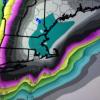
EastonSN+ Posted December 17, 2025 Share Posted December 17, 2025 So if anyone knows, what exactly is the below? I do not see a true -NAO but rather a large east coast ridge facilitated by a deep RNA. To me this is NOT a scary "SE ridge linking up to a negative NAO". I am sure this has happened MANY times in the past. Not sure how the rest of the winter shaped up in the past. A good deteriming factor of whether or not it is a true neg nao would be if it retrogrades to a neg AO or not. Link to comment Share on other sites More sharing options...
EastonSN+ Posted December 17, 2025 Share Posted December 17, 2025 1 hour ago, donsutherland1 said: The latest guidance shows a WPO-, EPO+, NAO+, PNA- pattern for late December. This pattern typically is not a "torch" in the Northeastern U.S. and eastern Canada. Using New York City as an example, some statistics: December 20-31, 1980-2024: Mean temperature: 38.0° (1991-2020 Mean: 37.4°) Distribution of Highs: 30s: 19% 40s: 63% 50s: 6% 60s: 13% Lowest: 33° Highest: 65° Distribution of Lows: 20s: 38% 30s: 50% 40s: 13% Lowest: 24° Highest: 42° Unfortunately, the cooler conditions aren't widespread. The Northeast tends to be a cooler exception in such patterns. Much of the southern U.S. tends to be warm to very warm. Thanks Don. I feel that the urban heat island affect has gotten out of hand and unfortunately, central park's temperatures are no longer relevant as a representation of the northeast tri state corridor. Seeing 37 while all other areas were 34 is insane. Would white plains or newark be a better benchmark moving forward? I mean, literally one mile away from central park was far colder and received more snow. North south east and west. If we keep using Central Park it will just keep getting worse and will misrepresent the entire area moving forward. Perhaps we can still use Central Park, but adjust the temperature down. However, this may be a worse idea 1 Link to comment Share on other sites More sharing options...
Krs4Lfe Posted December 17, 2025 Share Posted December 17, 2025 7 minutes ago, EastonSN+ said: So if anyone knows, what exactly is the below? I do not see a true -NAO but rather a large east coast ridge facilitated by a deep RNA. To me this is NOT a scary "SE ridge linking up to a negative NAO". I am sure this has happened MANY times in the past. Not sure how the rest of the winter shaped up in the past. A good deteriming factor of whether or not it is a true neg nao would be if it retrogrades to a neg AO or not. Looks like winter 2023 to me. Troughs knocking into west coast, keeping them cold and stormy while the east US roasts 2 Link to comment Share on other sites More sharing options...
snowman19 Posted December 17, 2025 Share Posted December 17, 2025 11 minutes ago, EastonSN+ said: So if anyone knows, what exactly is the below? I do not see a true -NAO but rather a large east coast ridge facilitated by a deep RNA. To me this is NOT a scary "SE ridge linking up to a negative NAO". I am sure this has happened MANY times in the past. Not sure how the rest of the winter shaped up in the past. A good deteriming factor of whether or not it is a true neg nao would be if it retrogrades to a neg AO or not. It’s an east-based -NAO 2 Link to comment Share on other sites More sharing options...
Stormchaserchuck1 Posted December 17, 2025 Share Posted December 17, 2025 12 minutes ago, EastonSN+ said: So if anyone knows, what exactly is the below? I do not see a true -NAO but rather a large east coast ridge facilitated by a deep RNA. To me this is NOT a scary "SE ridge linking up to a negative NAO". I am sure this has happened MANY times in the past. Not sure how the rest of the winter shaped up in the past. A good deteriming factor of whether or not it is a true neg nao would be if it retrogrades to a neg AO or not. What exactly are you asking? That is a -NAO with the Pacific having greater anomalies and overpowering it. This -PNA/+EPO/-NAO vs +PNA/-EPO/+NAO has been a common pattern since 2007, and more since 2013. When the NAO goes positive again later in January I would expect the Pacific to also change phases, unless ENSO is completely overpowering this year. See how the Stratosphere warming +lag is correlating to -NAO conditions last week of Dec/early Jan? I was talking about this when EPS ensembles were showing +0.5 NAO through the time (graph that don s. previously posted). Models have changed in the last few days to have +heights in and around Greenland. 2 2 Link to comment Share on other sites More sharing options...
EastonSN+ Posted December 17, 2025 Share Posted December 17, 2025 7 minutes ago, snowman19 said: It’s an east-based -NAO Thanks so this shows a positive PNA/east based EPO with an east based NAO which historically would have always worked and not linked up with a ridge. Goes to show the importance of the PNA region which is flipped now. I bet think "linking" always occured. Link to comment Share on other sites More sharing options...
donsutherland1 Posted December 17, 2025 Share Posted December 17, 2025 59 minutes ago, MJO812 said: Not the eps and gfs. I may not have refreshed the chart from the EPO. When the NAO is negative, the pattern is cooler (36.4°). The larger idea that the Northeast will likely avoid a "torch" pattern through December still holds in either case. It's uncertain whether the warmth will break through to start January, but that's still far in the extended future. 3 Link to comment Share on other sites More sharing options...
EastonSN+ Posted December 17, 2025 Share Posted December 17, 2025 8 minutes ago, Stormchaserchuck1 said: What exactly are you asking? That is a -NAO with the Pacific having greater anomalies and overpowering it. This -PNA/+EPO/-NAO vs +PNA/-EPO/+NAO has been a common pattern since 2007, and more since 2013. When the NAO goes positive again later in January I would expect the Pacific to also change phases, unless ENSO is completely overpowering this year. See how the Stratosphere warming +lag is correlating to -NAO conditions last week of Dec/early Jan? I was talking about this when EPS ensembles were showing +0.5 NAO through the time (graph that don s. previously posted). Models have changed in the last few days to have +heights in and around Greenland. Thanks, do we have statistics on how much the frequency has increased since 2007? Was there another "spike" in the past (if it was even tracked)? Link to comment Share on other sites More sharing options...
Stormchaserchuck1 Posted December 17, 2025 Share Posted December 17, 2025 2 minutes ago, EastonSN+ said: Thanks, do we have statistics on how much the frequency has increased since 2007? Was there another "spike" in the past (if it was even tracked)? I did a statistic analysis once that had a 0.25 correlation to the pattern after 2007, a 0.30 correlation to the pattern after 2013, and a 0.40 correlation to the pattern 2019-2023. It dropped a little bit since 2023, but is still in the ~0.35 correlation range. Historically, the correlation as not as high but still there (0.05 to 0.10 before 2007) 1 Link to comment Share on other sites More sharing options...
donsutherland1 Posted December 17, 2025 Share Posted December 17, 2025 14 minutes ago, EastonSN+ said: Thanks Don. I feel that the urban heat island affect has gotten out of hand and unfortunately, central park's temperatures are no longer relevant as a representation of the northeast tri state corridor. Seeing 37 while all other areas were 34 is insane. Would white plains or newark be a better benchmark moving forward? I mean, literally one mile away from central park was far colder and received more snow. North south east and west. If we keep using Central Park it will just keep getting worse and will misrepresent the entire area moving forward. Perhaps we can still use Central Park, but adjust the temperature down. However, this may be a worse idea New York City's UHI has been around for decades. The numbers are warmer there, but the differences between cooler or warmer outcomes relative to climatology apply. Having said that, there are day-to-day issues at the Park. Actually, Central Park's December lows relative to those at White Plains have changed very little. Of course, when conditions are ripe for radiational cooling, there will be large temperature differences between Central Park and White Plains. 1 1 Link to comment Share on other sites More sharing options...
GaWx Posted December 17, 2025 Share Posted December 17, 2025 1 hour ago, MJO812 said: Not the eps and gfs. Here’s the 0Z GEFS NAO: week 2 of this and the EPS for the mean (green line) have gotten much more negative just since 24 hours earlier and are now close to the strongest -NAOs of all runs at least since Oct 31st per WxBell’s history that goes back that far: look at green line 2 1 Link to comment Share on other sites More sharing options...
stadiumwave Posted December 17, 2025 Share Posted December 17, 2025 1 Link to comment Share on other sites More sharing options...
GaWx Posted December 17, 2025 Share Posted December 17, 2025 From NOAA, one can see how much the NAO has dropped since just yesterday on the GEFS: Yesterday’s GEFS NAO (12/16); Today’s GEFS NAO (12/17): note the biggest changes are for 12/22-26, only 5-9 days out. Yesterday they were ~0 while today they’re -0.7 to -1.0: 1 Link to comment Share on other sites More sharing options...
MJO812 Posted December 17, 2025 Share Posted December 17, 2025 3 1 Link to comment Share on other sites More sharing options...
JenkinsJinkies Posted December 17, 2025 Share Posted December 17, 2025 20 minutes ago, MJO812 said: I have a feeling that Webb is going to ride the torch wave until the very end. 1 2 Link to comment Share on other sites More sharing options...
GaWx Posted December 17, 2025 Share Posted December 17, 2025 Is NG finally bottoming? It’s currently up over 3%. If this were to hold, this would be the best day since Dec 5th, the day it peaked. There’s been only one other up day since then, Dec 9th, when it closed up 1/2% and then was followed by more big down days as the maps kept insisting on warmth dominating the US. Why do I think it’s up today? The AO and especially the NAO forecasts have gotten significantly more negative than yesterday’s more neutral forecasts as per my post three above this. A strong -NAO lead to much colder 0Z and 6Z GFS after Christmas fwiw. This kind of thing with the -NAO/-AO happened early this month. 2 Link to comment Share on other sites More sharing options...
40/70 Benchmark Posted December 17, 2025 Author Share Posted December 17, 2025 1 hour ago, stadiumwave said: I saw a Roundy tweet and was like "this can go one of two ways"....either you shared, or snowman....I saw you and was like, "Thank God". Yea, mid January is a time of great flux that I am focused on....expect big +PNA/TNH to lead into the big Feb SSW. 2 1 Link to comment Share on other sites More sharing options...
snowman19 Posted December 17, 2025 Share Posted December 17, 2025 7 minutes ago, 40/70 Benchmark said: I saw a Roundy tweet and was like "this can go one of two ways"....either you shared, or snowman....I saw you and was like, "Thank God". Yea, mid January is a time of great flux that I am focused on....expect big +PNA/TNH to lead into the big Feb SSW. I’m not seeing a way out (yet) from a canonical Niña February, I’ll reserve my final opinion once we are into January. That said, if there is in fact a major SSWE in February like you think there will be, with the lag, I would think that would/could affect March more so than February, especially if it occurs closer to mid-February (i.e. 2018) Link to comment Share on other sites More sharing options...


Recommended Posts
Create an account or sign in to comment
You need to be a member in order to leave a comment
Create an account
Sign up for a new account in our community. It's easy!
Register a new accountSign in
Already have an account? Sign in here.
Sign In Now