vortex95
-
Posts
2,209 -
Joined
Content Type
Profiles
Blogs
Forums
American Weather
Media Demo
Store
Gallery
Everything posted by vortex95
-
In one fell swoop, @CoastalWx could get rid of his "imagined" Weymouth drought! LOL.
-
Septorcher 2026 Discussion - Endless Summer
vortex95 replied to Damage In Tolland's topic in New England
A September nor'easter of this strength here is uncharted waters. That high to the N and the way the low comes up so deep? This would be impressive in mid-winter. Extraordinary patterns often result in extraordinary individual wx events! -
Septorcher 2026 Discussion - Endless Summer
vortex95 replied to Damage In Tolland's topic in New England
And @ineedsnow I bet thinks the UKX2 intensity fcst is DA BOMB?! -
Septorcher 2026 Discussion - Endless Summer
vortex95 replied to Damage In Tolland's topic in New England
Link to that excellent SST analysis? -
Septorcher 2026 Discussion - Endless Summer
vortex95 replied to Damage In Tolland's topic in New England
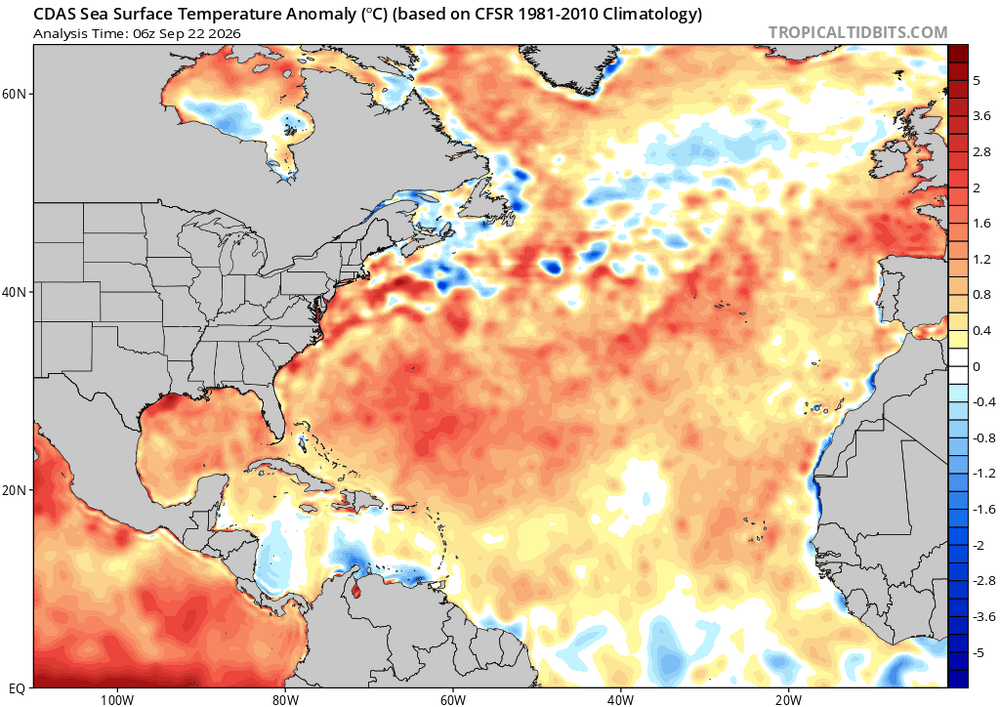
Immediate coast yes, but that's not where I am talking about. The low slows stalls over 22-24 C SSTs. Stop using SSTs closest to Weymouth as if that is the world! Your IMBY bias needs to end...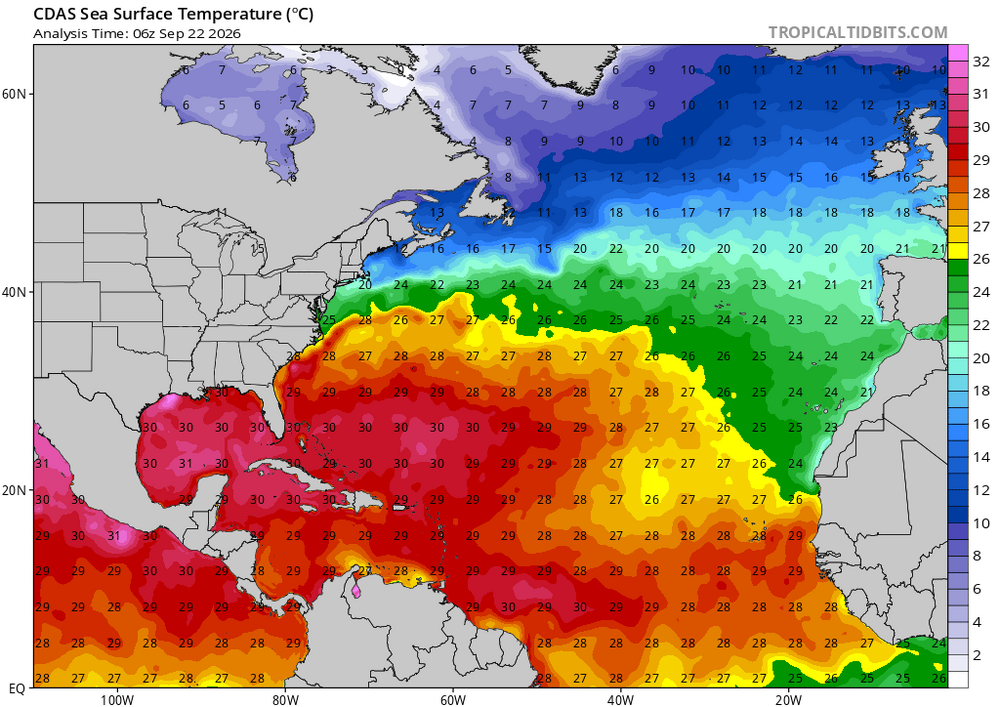
-
Septorcher 2026 Discussion - Endless Summer
vortex95 replied to Damage In Tolland's topic in New England
@CoastalWxwill conclude this..."we blow all our chances way too early in the season! El NIno SUXS" -
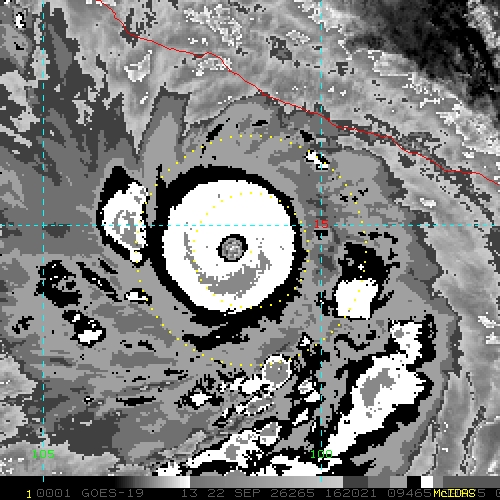
The Dvorak color table really gives an ideal of CDO intensity and symmetry!
-
NHC mentioned last night the depth of the 30-31 C ocean temp was quite deep in this area, but still some slight upwelling would occur for such an intense and slow-moving TC. That could reduce max potential a bit. Just thinking of how low the pressure can get. Only Patricia has EPAC pressure below 900 mb.
-
Did we not work out something with Mexico with regard to potential threats? Granted, Polo likely avoids landfall, but it will pass close enough to cause problems (i.e. flooding). We may have. The first time I recall a scheduled recon into a EPAC system was Linda in Sep 1997 b/c it was originally fcst to recurve and hit srn CA! Other than that, it was just the occasional NOAA research mission. It may be if the TC is fcst to get intense and is close to Mexico, they do recons.
-
2026 Atlantic Hurricane Season
vortex95 replied to Stormchaserchuck1's topic in Tropical Headquarters
See my edit. I'm not upset at all. I just need to be clear. That's ok. Being clear on social media is not always easy. Context and tone is often challenge! I think that's were emojis come in. -
2026 Atlantic Hurricane Season
vortex95 replied to Stormchaserchuck1's topic in Tropical Headquarters
To clarify, I don't know for sure the exact reasons why Sandy was not called a hurricane at landfall, but I think one reason is there were no hurricanes warnings in effect N of ORF. How does that look from a agency PR standpoint? No warnings? You know how that sentiment goes in the public's eye. Yes, there were non-tropical warnings out by local WFOs covering the dangerous conditions, but really, which do you think the public would react to more and take seriously, gale/storm/high wind warnings, or hurricane warnings? And this was not doing it for the sake of jacking up the level or warnings for public safety, there was a significant chance that Sandy would still be a hurricane at landfall, and NHC has a relatively low threshold policy for model probabilities when they issue tropical watches/warnings. You can see this often and I'm sure some notice at times. TS warning that far away or in that location and you ask yourself, "are the chances for sustained 34 kt winds that probable?" You can see this a lot for systems passing offshore from the Mid-Atlantic and Northeast, where you can't apply the same reasoning to TC wind fields here as in the tropical and subtropics since TCs become asymmetrical and move faster at mid-latitudes And we knew the storm surge alone was going be very high/record impact in NJ and NYC. Sandy is one of the few times truly the absolute intense hype days ahead of time IMHO was warranted for this region, since a NW moving, large hurricane making landfall in NJ was unheard of prior. -
2026 Atlantic Hurricane Season
vortex95 replied to Stormchaserchuck1's topic in Tropical Headquarters
I hope you are not upset. Debate/discussion is what science is all about, so talking about this all is not a counterproductive notion. I was talking in general as how things are not always done by meteorological standards only and there are many external factors out there. That's not a conspiracy, that's just how society is, and not unique to the wx field. I don't know specific reason(s) why Sandy called what is was at landfall, but something doesn't jibe w/ empirical observations and standard/practices done w/ many other TCs in the similar state of transition, and it is not just me who have questioned things. And we are talking about what it is called (tropical or not), not specific reasons why, and just that it is not always objective or supports the evidence. You wrote: "Whatever their reasons in 1991 for a large hybrid system that gains an inner symmetrical tropical surface low." Sandy was very similar to this. It was a large hybrid system once it got to the Bahamas, then then on the day of landfall, and inner symmetrical tropical sfc low developed. So I go back to the consistency of standard/practices here. As I have said, we've seen many times NHC keep a TC tropical when it clearly not anymore, or declare something that does not fit the definition of a TC, but it is close to land. Whether it is close to land or not should be irrelevant. I mentioned this w/ Fay, when another noted they seemed to delay calling it even a TD when it was likely it was since it was no threat to land. Semantics do count. What something is called officially or not has significant impact, such as in the legal profession. And exact details/meanings count in the sciences. An ET low and TC has a number of similarities, but also sig differences. Same thing for a mesocyclonic tornado and landspout. And they way things are, what something is called or not does matter outside the met sciences in the social/economic/political realms and their influences are there. -
2026 Atlantic Hurricane Season
vortex95 replied to Stormchaserchuck1's topic in Tropical Headquarters
Look at the loop here that shows the evolution before and after the time of the image you showed. https://rammb-data.cira.colostate.edu/tc_realtime/loop.asp?product=4kmirimg&storm_identifier=al062026&starting_image=2026al06_4kmirimg_202609201250.gif&ending_image=2026al06_4kmirimg_202609202220.gif That's not a real eye, just a residual dry slot that happens to look like one. You can see the continuous dry slot poke in towards the center before the feature forms, end then that feature goes away almost immediately. You have to be careful taking single images in such a case when TCs are developing and dry air is in proximity. -
2026 Atlantic Hurricane Season
vortex95 replied to Stormchaserchuck1's topic in Tropical Headquarters
Regardless of the inadequacies of insurance policy, Sandy transitioned prior to landfall, and this was even confirmed in post-analysis. The mets at the NHC aren't going to get involved in politics, and they do not undermine their scientific work for the benefit of the private sector despite any conspiracies to the contrary. Granted, you didn't present this as your own opinion, but that of some others, but let us squash that discussion before it begins. NHC has at times. The Perfect Storm in Oct-Nov 1991. That clearly transitioned to a hurricane and they actually had a recon in it and confirmed it was a hurricane. Yet they did not declare it operationally. Yes, in post-season analysis they did, but was clear what it was operationally, and they did not declare/name it. That's being unscientific and not meteorologically objective. Call a system for what it is. If one doesn't, that suggests other factors outside the met science. I can give other examples less obvious but still suspect. This doesn't mean they are "bad" or otherwise, just it is the reality of things. Not all decisions in wx are made independent of external non-scientific factors. -
2026 Atlantic Hurricane Season
vortex95 replied to Stormchaserchuck1's topic in Tropical Headquarters
Yes, one of many things that can be different, depending on the state or county, and unquestionably this has been a factor at times. Sandy's classification at landfall I think was political/economic. The decisions not to go w/ tropical watches/warnings N of ORF was ridiculous given what the models were showing, and when it actually went more tropical that day of landfall, they still did not back off. Also, tropical storm force winds occurred on the coast before it was declared PT, so there you go. It was still solid warm cold up to 200 mb at landfall, Looking at the AMSU polar pass show this clearly. Hurricanes don't just go PT/ET in an instant, It is gradual process most of the time. It like when JTWC says in their advisories "becoming extratropical." Sandy's inner core was weakening at landfall, but it had not dissipated completely. Pressure was up only 6 mb at landfall from the 940 mb peak. And the argument that fronts has made its to the center is weak. We have seen a number of times NHC declare a system that has fronts a TC when it was clear from satellite it still had fronts attached to the center. And we've seen systems that looked far less tropical that Sandy at landfall and they are called/declared TCs. So they are not always consistent/meteorologically objective. I recall a NWS tropical met from a WFO in the Northeast at a conference some time ago. He thought Sandy was still a hurricane at landfall and just in transition phase, like almost all hurricanes that hit New England. You don't see them stop being called hurricanes just before landfall. -
Septorcher 2026 Discussion - Endless Summer
vortex95 replied to Damage In Tolland's topic in New England
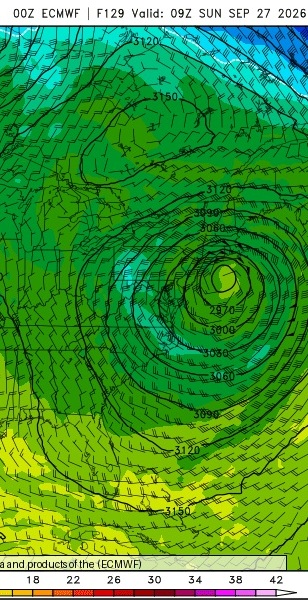
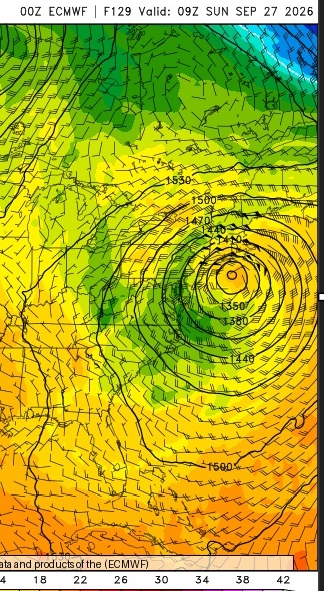
I posted this one another forum. @CoastalWx in awe of the meteorological and social science analyses? ---------- For several days now, the global models have been indicating an atypically strong non-tropical low for September developing off the U.S. Mid-Atlantic/New England coasts by this weekend. High winds, coastal flooding, and excessive rains are becoming more likely, especially in southern New England. Some models, such as the ECMWF and UKMET, are showing a strong warm seclusion evolving when the low slows down and stalls for a time not far S of New England. I attached the 850, 700, and 500 heights/temp valid 09z September 27 from the 22/00z ECMWF that clearly shows the warm seclusion. SSTs S of New England are running anywhere between 2-4 C above average and are 22-25 C in the region where the low is forecast to slow/stall, more than enough for subtropical development, and with such SSTs we have seen full tropical transition before. Now I know this sounds like I am getting ahead of myself here, but one has to proactively think in the abstract and outside the box here, especially when it comes to atypical/outlier events forecast and their impacts. I know of no case where a strong non-tropical low transitioned to subtropical or tropical in this area of the Atlantic so close to the Mid-Atlantic or New England coasts. There was an intense non-tropical low that impacted this region in October 2021 that eventually became TS Wanda, but not until far out of sea in the central Atlantic. The conundrum I see is that if such a transition occurs, it may be while significant non-tropical land impacts from wind/rain/coastal flooding are ongoing. So that implies non-tropical wind warnings would have to be switched to tropical wind warnings. This presents a problem in messaging, among other things. We have policy/procedures in place when a tropical system transitions to PT/ET -- the capability to continue pre-existing tropical wind warnings, but what about when you have an ET low going to subtropical/tropical? There is no sensible weather difference between gale/storm warnings and tropical storm warnings, but a significant amount of the public does not realize or understand that. Going from an unnamed system to a named system? Well, I don't have to say how the media (social and otherwise) reacts when a subtropical/tropical system is named. But the meteorology operationally just can't be ignored either. A system is what it is. This is further complicated by the fact that days before non-tropical low develops, a strong pressure gradient from high pressure over southeastern Canada will result in gale force E and NE winds as early as late today over the marine zone waters off the Mid-Atlantic and New England coast. In my opinion, the above is a non-trivial from a logistical and social point-of-view if such a non-tropical to ST/T transition occur in said region. A similar modern day event that did not fit or work within any current policies/produces at the time occurred with Hurricane Sandy in October 2012, which was also this very same region. The ante this time is not forecast to be on the level of Sandy, but nevertheless is significant.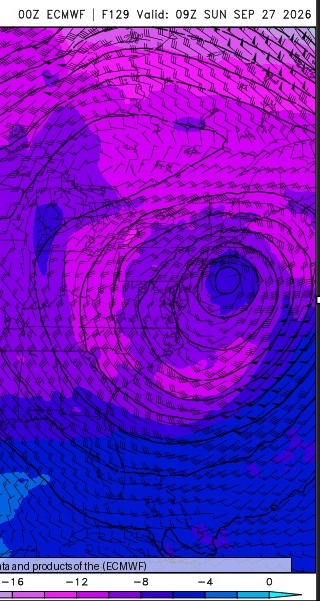
-
Septorcher 2026 Discussion - Endless Summer
vortex95 replied to Damage In Tolland's topic in New England
You forget how we are at peak SSTs for the season, and they are running 2-4 C above avg not that far S of the region, so better mixing down of 925 winds likely. -
Septorcher 2026 Discussion - Endless Summer
vortex95 replied to Damage In Tolland's topic in New England
The most epic of epic of all Sep nor'easters! Weenies rejoice! -
Septorcher 2026 Discussion - Endless Summer
vortex95 replied to Damage In Tolland's topic in New England
Well, you already had ACWATT. So why not? -
Septorcher 2026 Discussion - Endless Summer
vortex95 replied to Damage In Tolland's topic in New England
Recon may get there when it peaks, which will be KEWL! Odds are good that it will be stronger than Dvorak says, which is very common for intense TCs. Dvorak works best for TCs between 60 and 105 kt. -
Septorcher 2026 Discussion - Endless Summer
vortex95 replied to Damage In Tolland's topic in New England
You read my mind. See post coming shortly on this thread. -
2026 Atlantic Hurricane Season
vortex95 replied to Stormchaserchuck1's topic in Tropical Headquarters
I just posted this on another forum. Food for thought for the upcoming E Coast storm! For several days now, the global models have been indicating an atypically strong non-tropical low for September developing off the U.S. Mid-Atlantic/New England coasts by this weekend. High winds, coastal flooding, and excessive rains are becoming more likely, especially in southern New England. Some models, such as the ECMWF and UKMET, are showing a strong warm seclusion evolving when the low slows down and stalls for a time not far S of New England. I attached the 850, 700, and 500 heights/temp valid 09z September 27 from the 22/00z ECMWF that clearly shows the warm seclusion. SSTs S of New England are running anywhere between 2-4 C above average and are 22-25 C in the region where the low is forecast to slow/stall, more than enough for subtropical development, and with such SSTs we have seen full tropical transition before. Now I know this sounds like I am getting ahead of myself here, but one has to proactively think in the abstract and outside the box here, especially when it comes to atypical/outlier events forecast and their impacts. I know of no case where a strong non-tropical low transitioned to subtropical or tropical in this area of the Atlantic so close to the Mid-Atlantic or New England coasts. There was an intense non-tropical low that impacted this region in October 2021 that eventually became TS Wanda, but not until far out of sea in the central Atlantic. The conundrum I see is that if such a transition occurs, it may be while significant non-tropical land impacts from wind/rain/coastal flooding are ongoing. So that implies non-tropical wind warnings would have to be switched to tropical wind warnings. This presents a problem in messaging, among other things. We have policy/procedures in place when a tropical system transitions to PT/ET -- the capability to continue pre-existing tropical wind warnings, but what about when you have an ET low going to subtropical/tropical? There is no sensible weather difference between gale/storm warnings and tropical storm warnings, but a significant amount of the public does not realize or understand that. Going from an unnamed system to a named system? Well, I don't have to say how the media (social and otherwise) reacts when a subtropical/tropical system is named. But the meteorology operationally just can't be ignored either. A system is what it is. This is further complicated by the fact that days before non-tropical low develops, a strong pressure gradient from high pressure over southeastern Canada will result in gale force E and NE winds as early as late today over the marine zone waters off the Mid-Atlantic and New England coast. In my opinion, the above is a non-trivial from a logistical and social point-of-view if such a non-tropical to ST/T transition occur in said region. A similar modern day event that did not fit or work within any current policies/produces at the time occurred with Hurricane Sandy in October 2012, which was also this very same region. The ante this time is not forecast to be on the level of Sandy, but nevertheless is significant.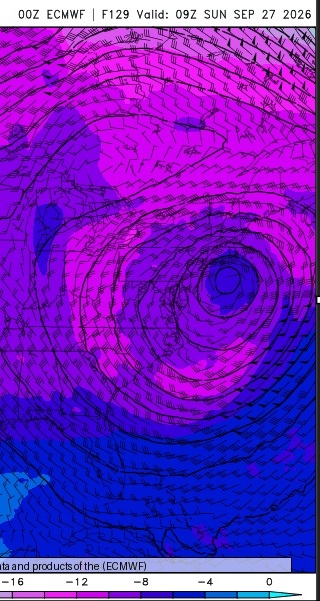
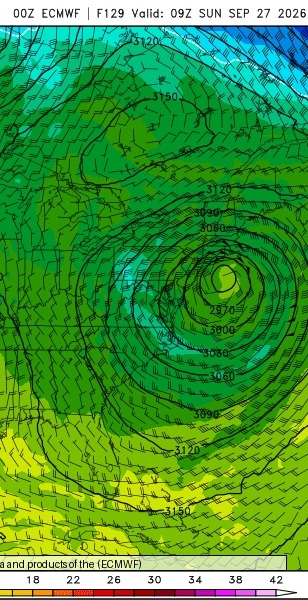
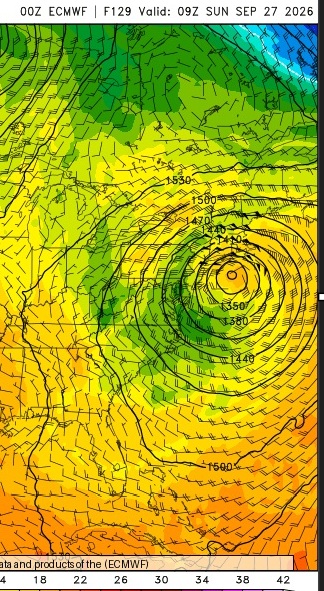
-
Regarding recons in the EPAC, they were hardly ever done prior to early 2000s, even for very intense systems. CPAC has always had them for those systems that were threatening HI.
-
Septorcher 2026 Discussion - Endless Summer
vortex95 replied to Damage In Tolland's topic in New England
STS can and do occur w/ SSTs as low as 15 C. And you can get hurricanes below 26 C easily. That thing in Jan 2023 S of New England that NHC ignored operationally that had a persistent, defined eye and remarkably deep convection for Jan was over 21-23 C SSTs when it formed, and it actually looked best when it well SE of ACK over SSTs closer to 18 C! NHC in retrospect called it a 60 kt STS, but you look at satellite? Let me put it this way, they have called things *far* worse or lame-looking fully tropical cyclones! Dvorak T-numbers got as high as 4.5 (77 kt). Funniest things I found is that while this thing was there, we got a period of S- in SNE! @CoastalWxbe like, "no freakin' WAY!!!!" -
Septorcher 2026 Discussion - Endless Summer
vortex95 replied to Damage In Tolland's topic in New England
Can't deny the ECMWF's consistency. Get ready. Perhaps the nastiest nor'easter on record for Sep for SNE. I can't recall anything like this fcst in Sep here. Seems like @CoastalWx is looking for reason for it not to happen or at very least taking the ho-hum approach. No passion or excitement. It's not like the models are all over the place (minus the GFS, but no surprise there), so a big event prob looks quite high.