

vortex95
-
Posts
2,206 -
Joined
Content Type
Profiles
Blogs
Forums
American Weather
Media Demo
Store
Gallery
Everything posted by vortex95
-
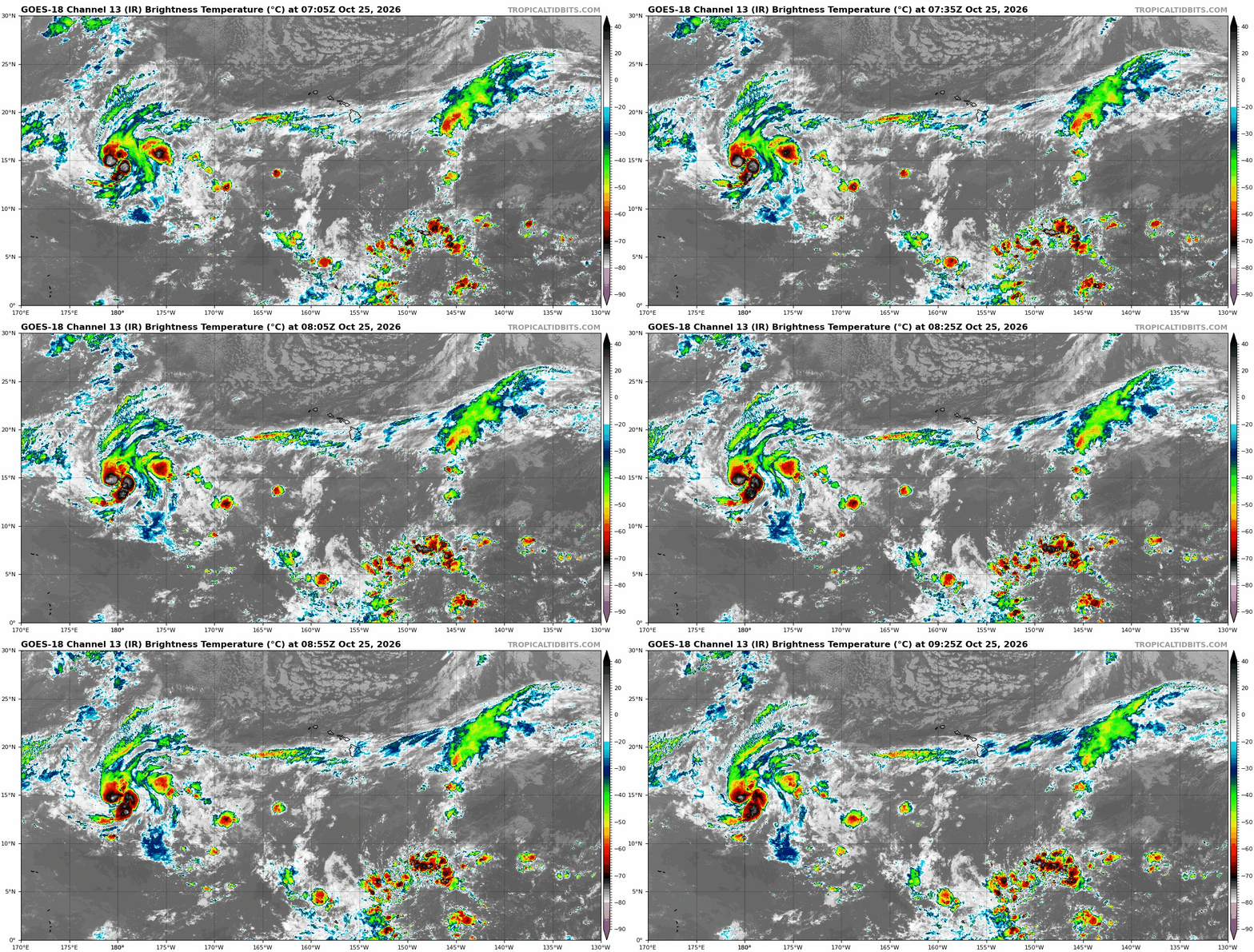
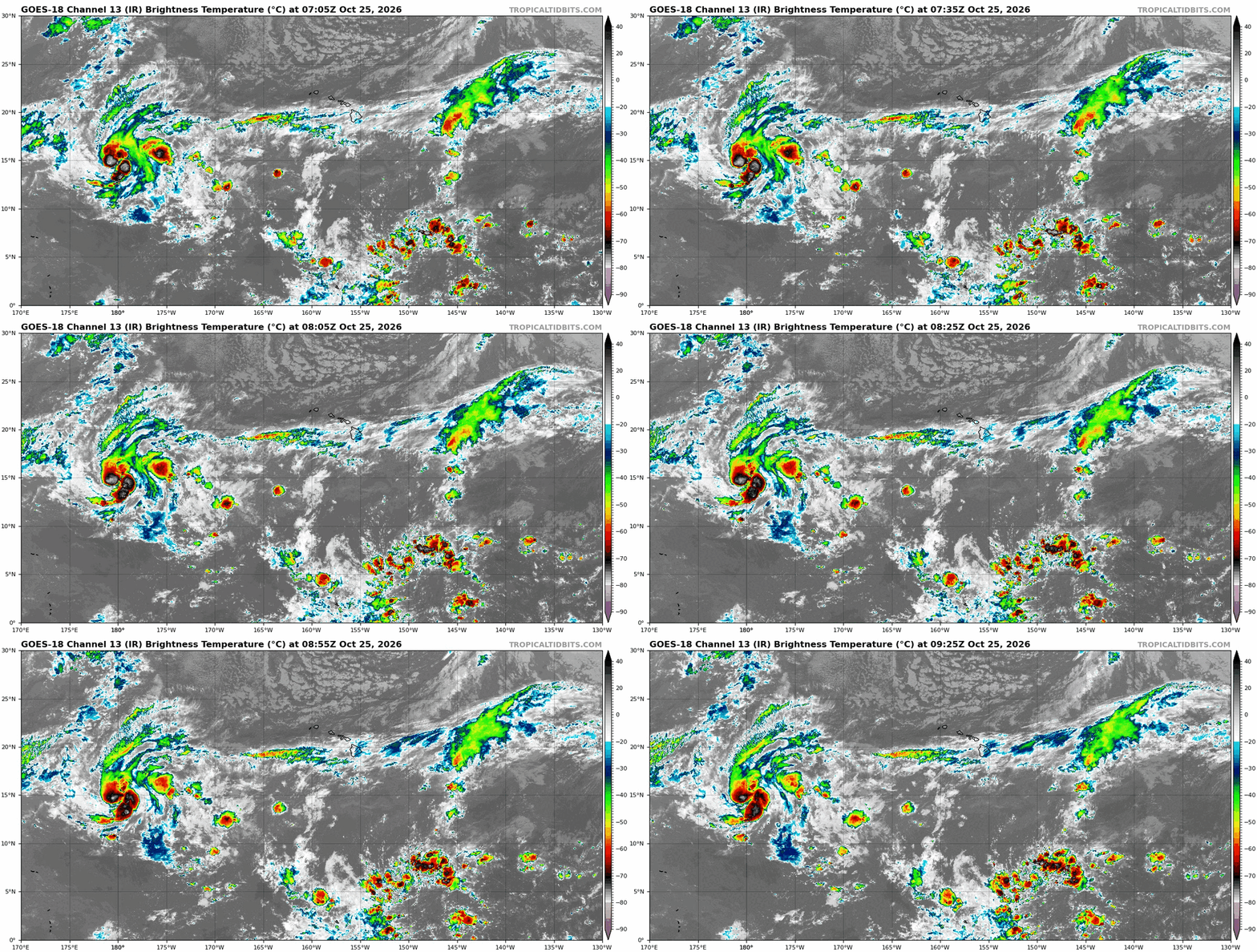
The system one the Dateline is clearly a TD, if not a weak TS. I looked at a WSF-M pass and it shows good curved banding, about 4/10 on Dvorak so that a T2.5. EIR loops attached speaks for itself. And yet there is not even an invest designation yet! And CPHC gives it only 40/50. No excuse for this. I've done TC classifications for a long time and this isn't borderline or vague.
-
Since @CoastalWx is in boring mode. How about this to "jolt" things? https://www.facebook.com/reel/2923636334653844 bolt.mp4
-
Apparently, this may be started by the NWS in 2028 I am hearing. @weatherwiz all excited but @CoastalWx MEH b/c it doesn't help w/ snow! THREATS-IN-MOTION – FACETs-Severe National Weather Service Severe Weather Warnings as Threats-in-Motion in: Weather and Forecasting Volume 36 Issue 2 (2021)
-
You forgot "LIVING IN A SHOTGUN SHACK!"
-
21 for a low at KLKP. AirNav: KLKP - Lake Placid Airport PlyStWx need to update their station map! Add 1B9 (Mansfield MA). 4B8 (Plainville CT), 6B0 (Middlebury VT), 8B0 (Rangeley ME), and BXM (Brunswick ME)! And the biggest omission? (@CoastalWx will be mad) - no GHG (Marshfield MA)! That has been an AWOS for 20 years. Also, no IZG (Fryeburg ME). That's a cold spot! OGS Ogdensburg NY is missing, and just added? - N66 Oneonta NY.
-
I do not contest the cold out W and warm in the E. but the choice of colors and the 0.5 C intervals make things look a lot more "Xtreme" than they really will be. It is a manipulative psychological thing, often done on purpose to push the extreme/crazy wx narrative. You could choose a different color table, and shows the same thing, and it would not look as "scary." For a met analysis and forecast tool it is good, but IMHO such maps, which are shared en masse on social media, do more harm than good due to the how the general public perceives them. Also, I find people do not know the difference between temp anomalies and actual air temp, the public that is. And the hype-masters out there know this. And it is taken out of context far too often. For instance, temps 8-12 C above avg DCA to BOS in early Nov is actually GREAT wx for the time of year (for most), as one example. Temps in the 70s and 80s w/ low dew points. Costs for heating are *way* down. Atypically warm in the cool season is not the same as in the warm season, not for sensible wx impact and humans. And such a pattern means little in the way of inclement wx. That is good for business and commerce. For general audience, just shows a map of actual fcst air temps, anomalies can be misleading.
-
-
In the end, it all comes down to in situ observations. We can't possibly know the state of every cubic centimeter of the atmosphere at a given time. Even if we did, models would need to make LOTS of assumptions w/ parametrization and emulation b/c we still can't directly simulate many atmospheric processes. And the more complex models get, the challenge to keep things in balance goes up exponentially. In other words, tweak one little thing, and it breaks another, and sometime a big break in an unexpected way. @CoastalWx will just have to live w/ the fact he will never be able to forecast snowfall down the tenth of inch in Weymouth!
-
One message "did you see the GFS?" and you'll look!
-
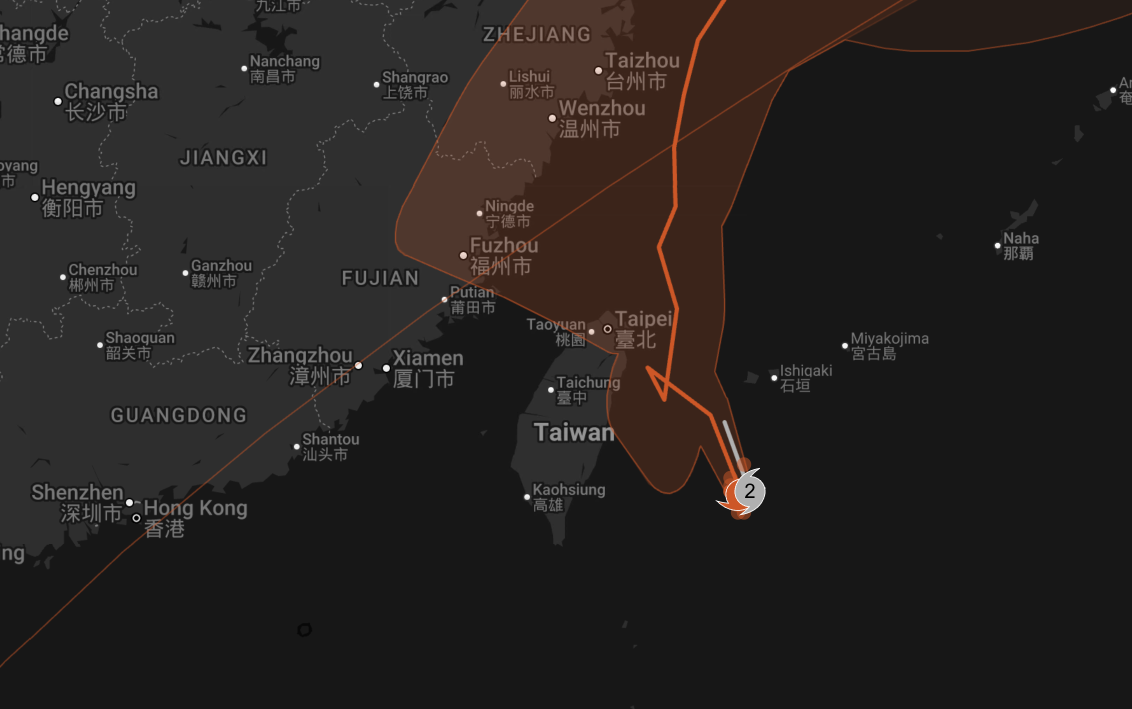
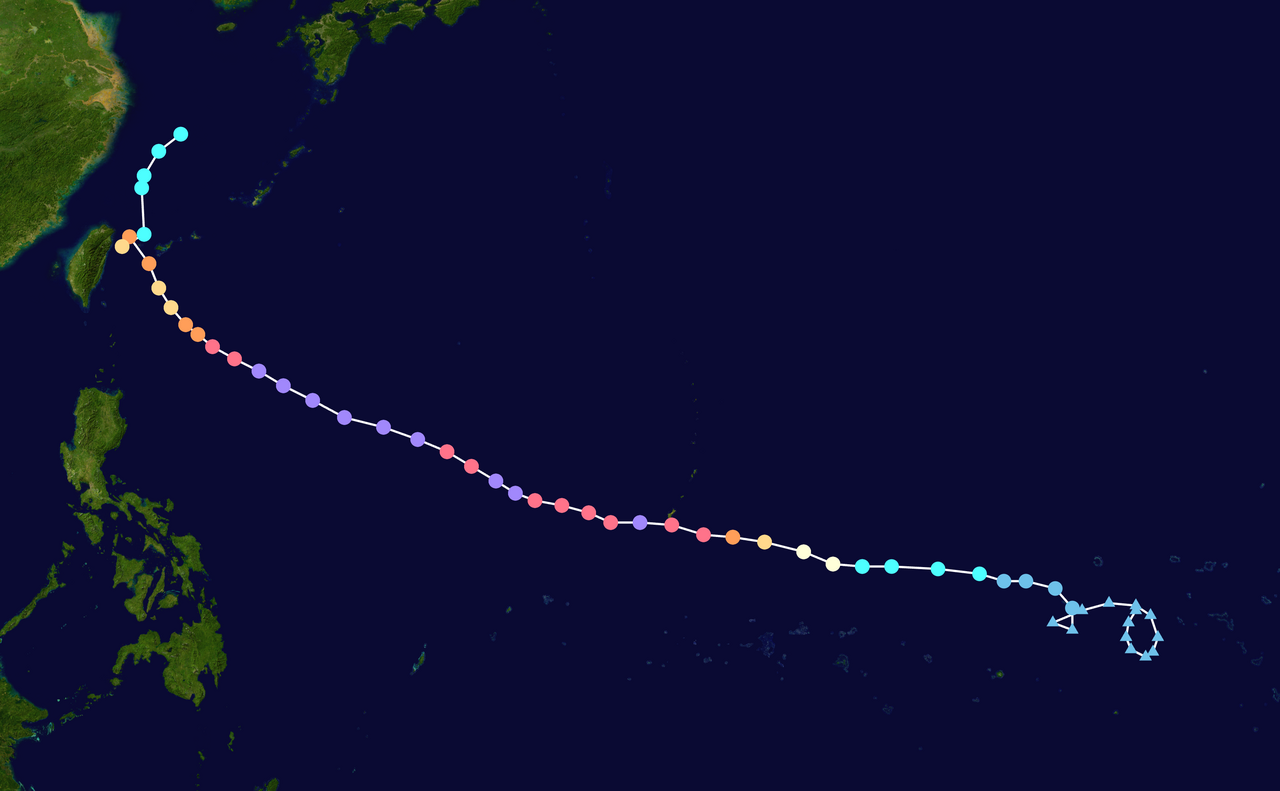
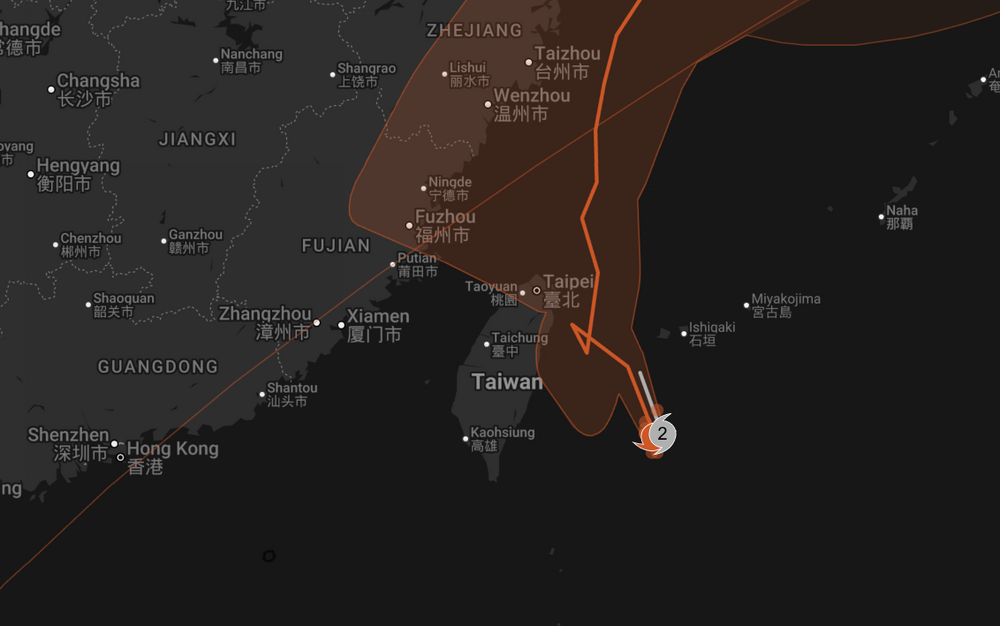
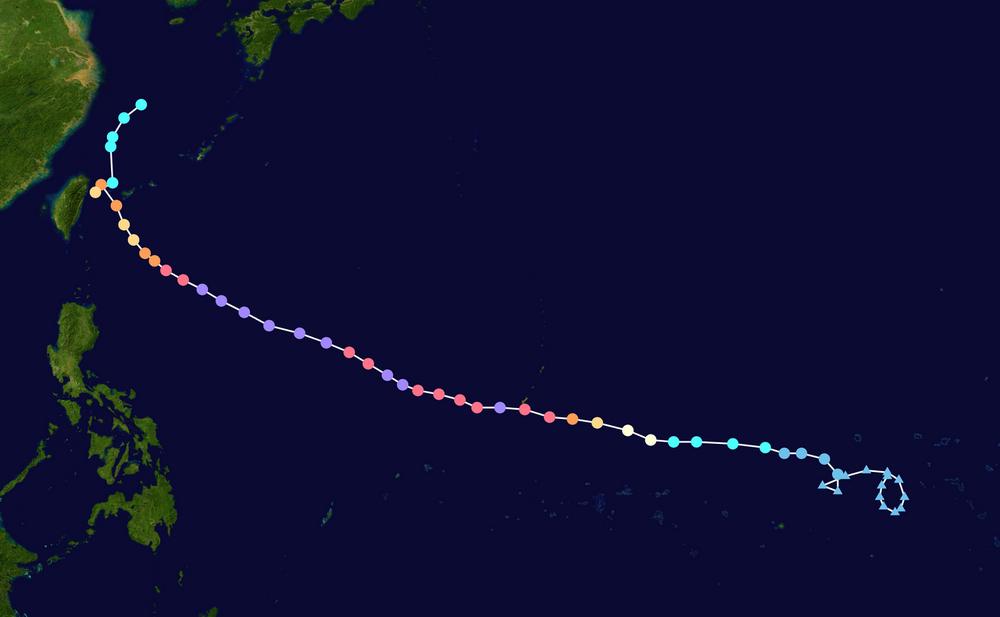
This radar loop is KEWL for Champi!
-
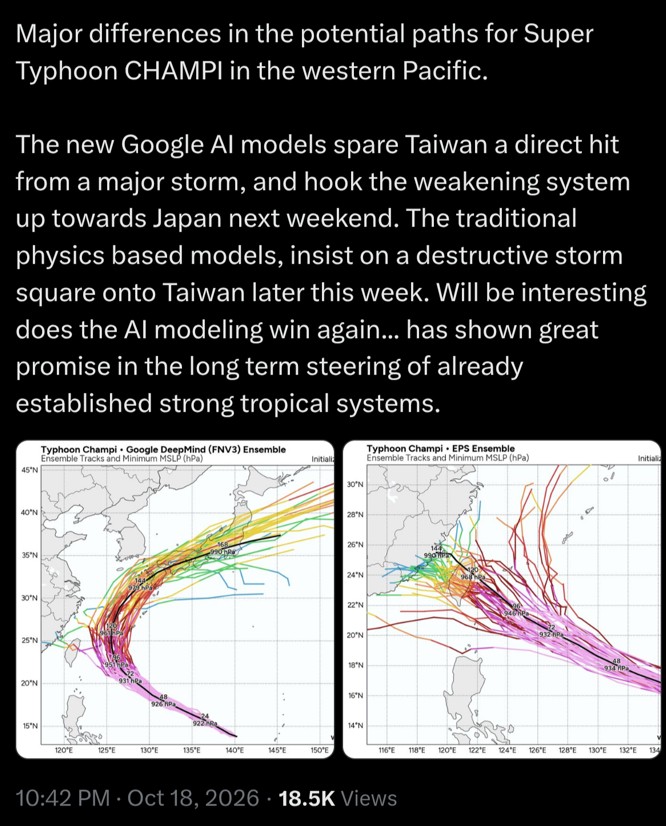
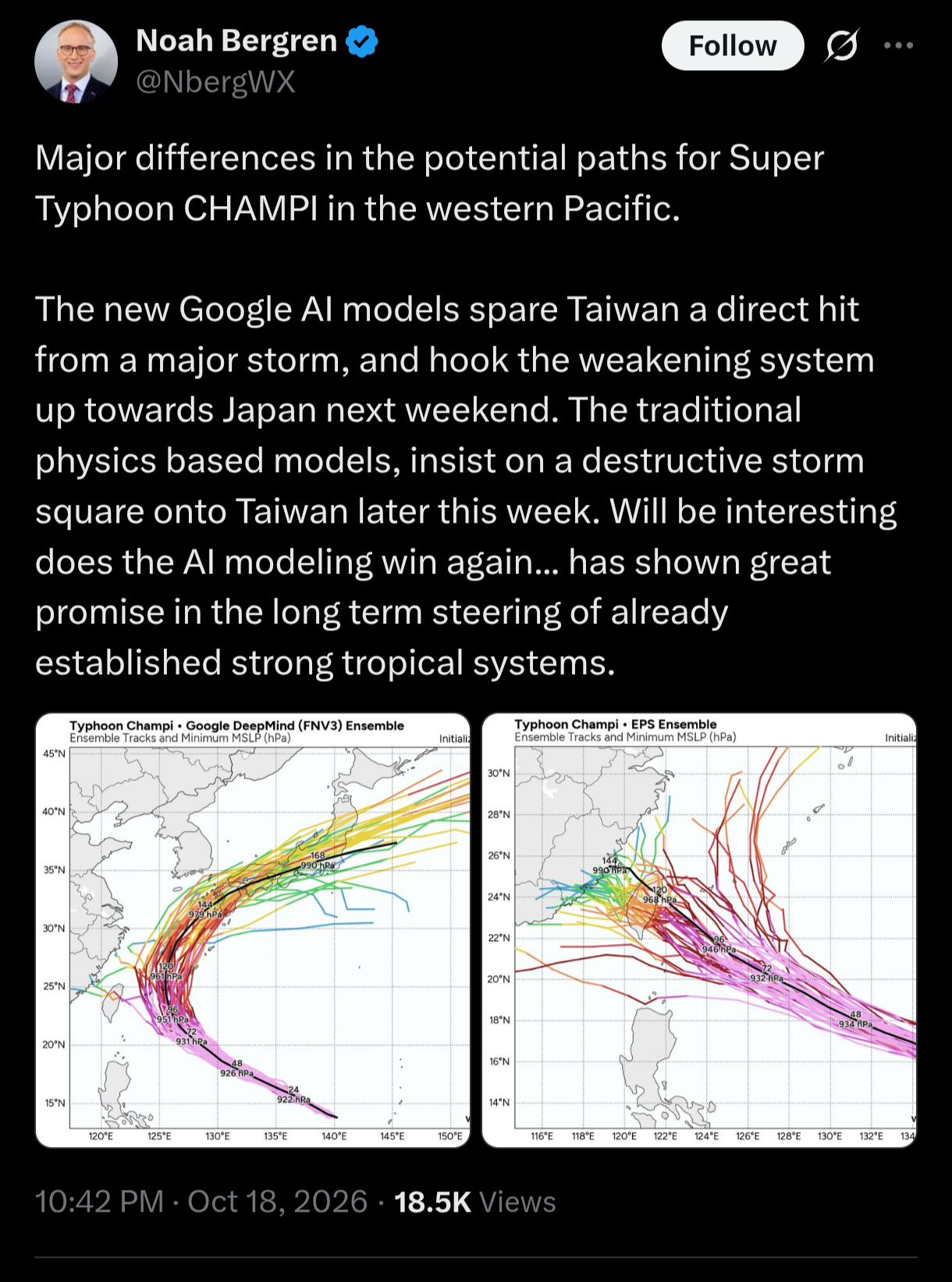
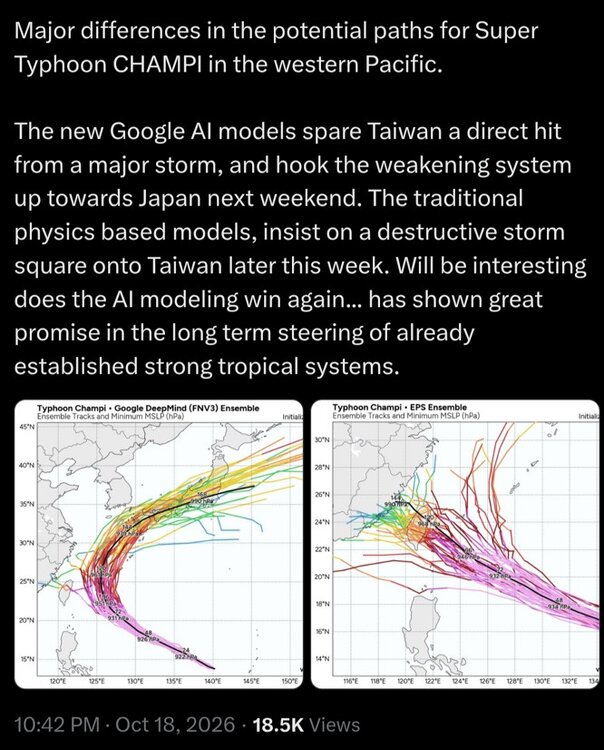
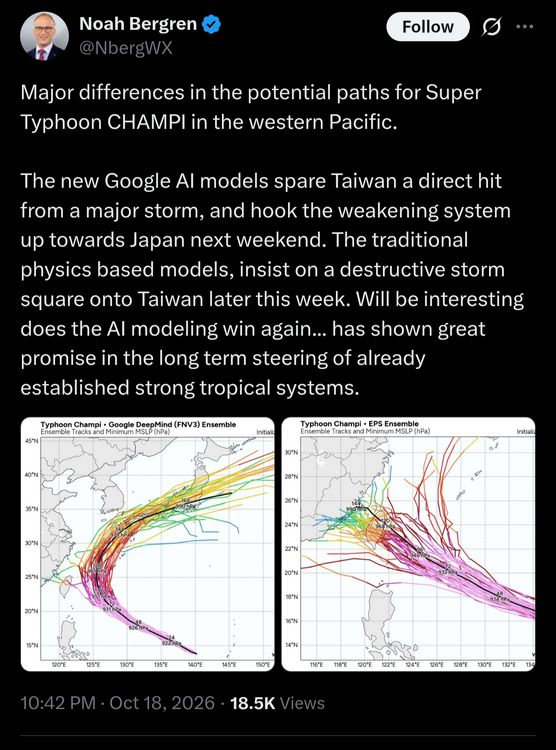
@CoastalWx needs to stop putting the 'bots up on pedestal when it comes to forecasting. Cherry-picked events skewing things, so he worships it like it is a panacea for all our fcst problems! GDMI only does well for the "easy" patterns/forecasts. Follow climo basically! Here's what GDMI had vs. EPS on 10/18. And the EPS also handled the loop/odd motion many TYs have when the approach Taiwan. You need physics-based models for terrain factors, among other things. These kinds of details count and the ante is high. Outlier cases are often the biggest impacts, like a Sandy, and not enough cases for GDMI to draw from.
-
A landfalling HU or whatever you want to call it that strong and large coming in from the SE to the NJ coast? That in itself was by far the outlier. It is so rare for any tropical system to it first U.S. landfall on the NJ coast in the first place, let along having such strong NW motion N of Hatteras' latitude. So you knew the storm surge was going to epic. It was a no-brainer. Sandy was the first time I noted a model (ECMWF) more than a week out has a record event forecast and it verified. It shows modelling had got to a point where the real biggies were forecastable w/ good detail so far out. The Bliz of 93 was forecast well a week out, but its strength, esp. so far S while still in the Gulf, and its record pressure of 960 mb later was not forecast early one. I recall the ECMWF showing Sandy as low as 927 mb just E of NJ one run! Not off by too much...940 mb!
-
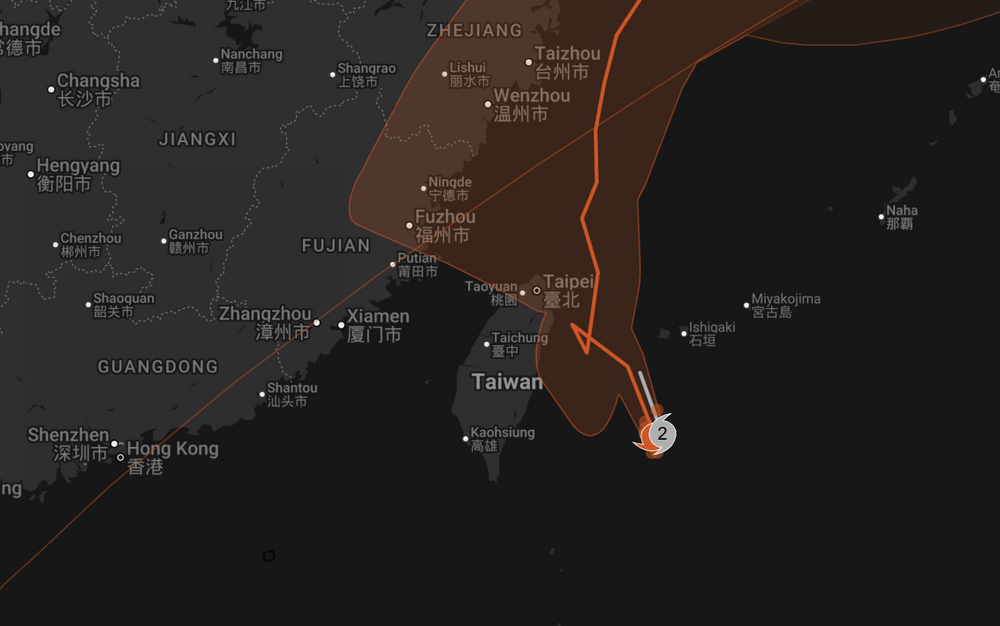
Yes, so this is a lesson about AI models. They are not infallible and can be off quite a bit. Just I see some putting them up on pedestal and worshiping as to having the final say. And look at what a physics-bases model (ECMWF ENS) did. It even caught the odd motion from terrain influences so common for when a TY approaches Tawain!
-
Avg annual global ACE is 787. 1000 have been exceed 6 times. Max is 1163 in 1992. 1992 E/CPAC total was 27 NS and they go to the Z storms for the EPAC. But POR is only 1990-present since fully geostationary coverage for the IO was not established until 1989 (the SIO is #2 for avg annual ACE contribution). The previous record ACE for the EPAC 2018 and 1992, those were only weak El Nino years, so the very strong El Nino is not a prerequiste.
-
2026 Atlantic Hurricane Season
vortex95 replied to Stormchaserchuck1's topic in Tropical Headquarters
There is no reason why a subtropical storm cannot have min hurricane force winds. I've seen 60 kt ST storms, so does something happen at 65 kt that suddenly makes it more tropical? The atmosphere does not work on such sharply defined small changes. Winds in an STS are dependent on many factors, like how fast it moving, how high the SSTs are (for better mixing), environmental pressure gradient around the storm, and how strong the ET low was initially for max sustained winds, which can be all over the place from far from the center to a continuous 65 kt + max right to near the center. ET storms can have winds as high as 105 kt sustained, so when it deeply occludes and winds come down, they can still be 65 kt when they go ST. I think NHC wants to avoid the confusion of a "subtropical hurricane" b/c of the of the media. Well. you have subtropical storm, so the next terminology step? But ET/PT lows have HU-force winds often, so what is that problem here? And storm #1 in 1979 was 65 kt. There is another case that had even stronger winds as ST from those days I cannot recall it though. Either way, this should be irrelevant. A storm is what it is. You can't force it to be something it is not b/c it is not nice and neat from a public knowledge standpoint or does not fit into current policy! That Jan 2023 system off the mid Atlantic that was completely ignored operationally by NHC when it clearly was a hurricane. They included that as a 60 kt STS post-analysis, but Dvorak got to 4.5 (77 kt). and the ring of convection was remarkably solid and cold for a Jan atmosphere. Plus it was over 21-23 C water and a clear warm core. So given less than ideal mixing from lower SSTs, 65 kt is completely reasonable. When it passed Sable Island just to the W, they recorded sustained winds of 49 kt, and this was over much cooler SSTs (6-7 C), so easily 65 kt much further S over the Gulf Stream! See loop here. What would you call this thing??? (5) Deelan Jariwala on X: "I decided to make a loop of the unnamed system because I figured that with the late ATCF designation, there isn't much imagery from the usual sources (NRL, RAMMB, FNMOC, etc). This video runs from 00z on the 15th through 20z on the 17th. https://t.co/28L0zZlwhG" / X (5) Tomer Burg on X: "Among notable factors that helped Invest 90L form its very unusual structure for this time of year are its track almost perfectly following the Gulf Stream - which at ~21-23C is warmer than average - and low tropospheric stability beneath an upper-level trough. https://t.co/P2LKNihn7v" / X -
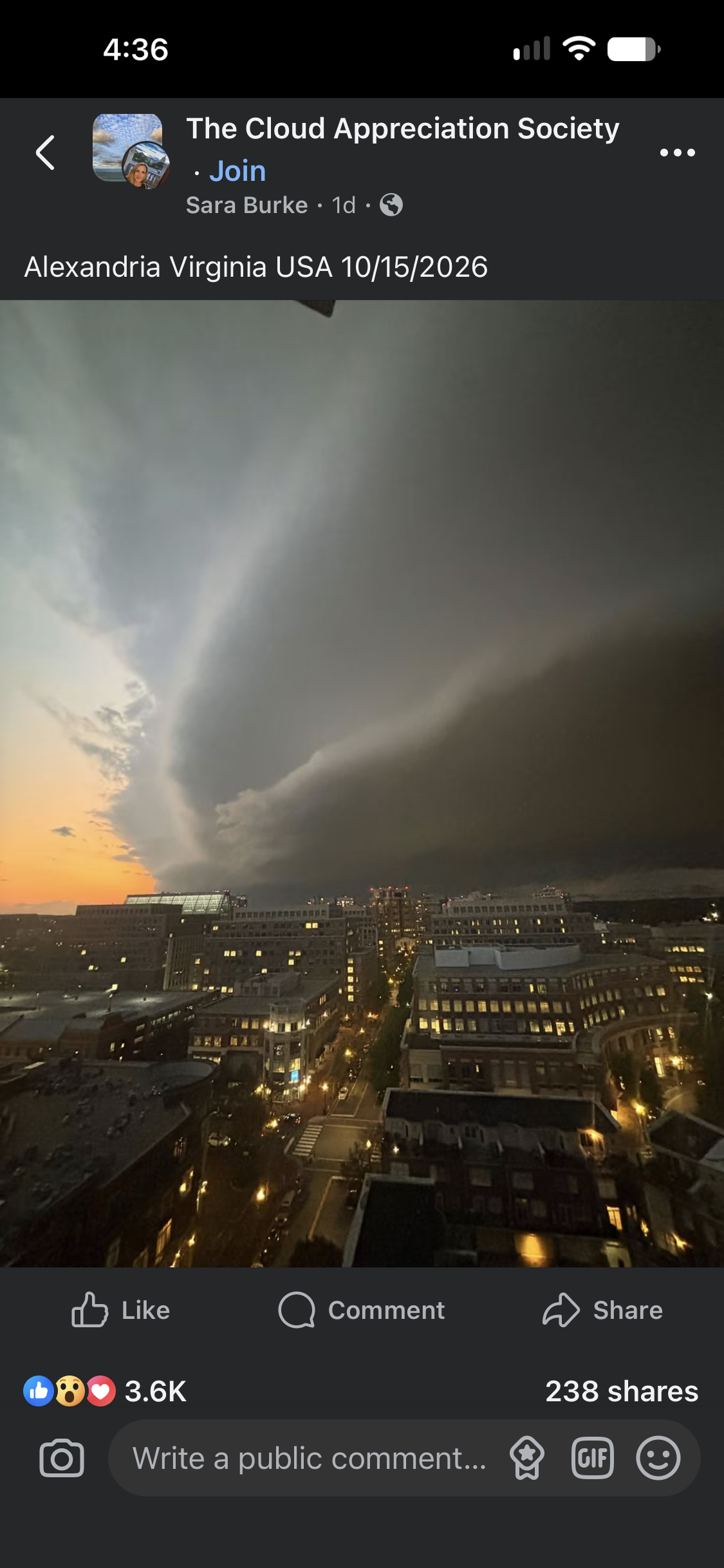
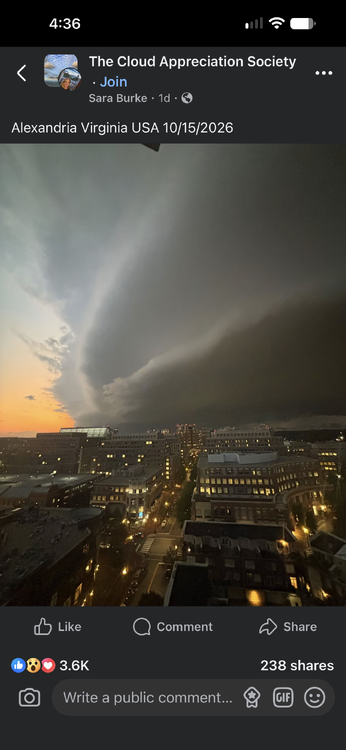
Saw this on FB. Did it really look like this? Just I saw no pix on this thread or other Mid-Atlantic threads. I figure at least one would have been posted. Just being cautious b/c DCA METAR did indeed report "shelf cloud," but you know how it can go when something get reported and what some will find from other events, and them claim it was on X day. And the date is listed as 10/15. The line of tstms was on 10/16!
- 2,604 replies
-
- 1
-

-
- severe
- thunderstorms
- (and 7 more)
-
Yes, I do not like that term either. "Thunderstorm" is best b/c it means w/ or w/o precip which covers it all b/c how many time do you not get a drop of rain but you get LTG/T that sends @weatherwiz and @ineedsnow bouncing off the walls!? Or @CoastalWxgetting a jolt from his PC b/c of an isolated +CG hits very close that scares the bejesus out of him, but it is sunny out? And when you get to desert regions, many tstms never get a drop to the ground since it is all virga, yet the LTG/T is nasty! And when you say "thunder," that by default means convective, even when it is from CSI or embedded in a large area of synoptic precip (convective elements), so the precip is showery in nature and thus "showers" attached to thunder is redundant. I bet @CoastalWx still uses "thunderhead" to describe a CB! Also, "heat lightning!" Or he may go, "why is is called a "funnel cloud" when it always does not look like a funnel!"
-
Sometimes the tightness/RI *saves* and area from a bigger hit. Melissa over Jamaica was similar. If Melissa had be a long-tracked Cabo Verde, it would have been much larger when striking Jamaica. Sure, it may not have been as intense since multiple ERCs would preclude its sub-900 mb intensity, but a large Cat 4 impacting the entire island vs. only 1/3 of the islands getting Cat 3+ winds is not the same. Also, the wrn 1/3 of Jamaica is significantly less populated, and one of its main airports went largely unscathed, and the other being on the N coast on the wrn side of the island had sig less impact than if it were on the S side. Compare to Gilbert at cat 3 in Sep 1988 that cut down the full length of the Jamaica E-W w/ the entire land devastated. 80% of home lost their roofs. At least w/ Melissa on about 1/2 of the island, one could find relief, relatively speaking, short-term before full aid arrived and was distributed.
-
Imagine a li'l Scott if svr tstm warnings were issued for gusty showers in the 80s. He would be like, "how can this be? I don't understand!" And then write a letter to Dick Albert!
-
Recall when you talked about the Dec 1994 storm when you are greener than green at WSI in 2005? And I go, "how did you know about that?!" You had no idea it actually was a 70 kt HU. It's on the list to be included as a HU.
-
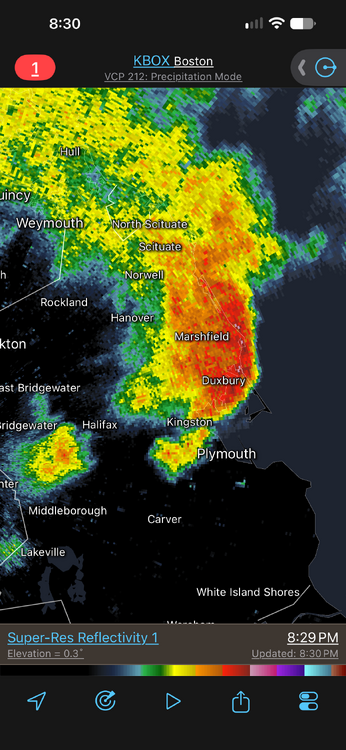
GHG PT?
-
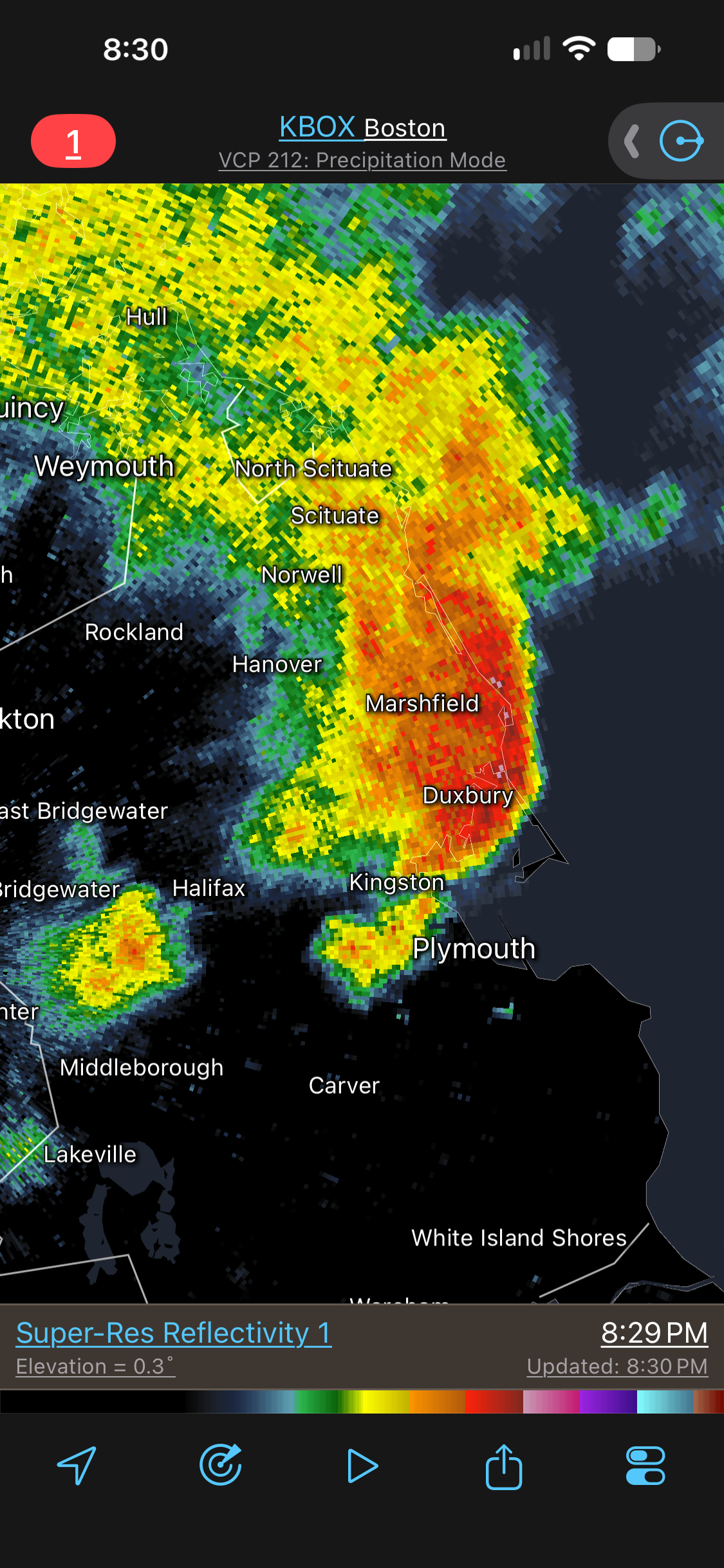
I really think they should have short-fused high wind warnings in these cases. Think about it, when ppl hear "svr tstm" they expect LTG/T and it to be rockin'. Just promotes distrust and apathy.
-
It seems over time, the size of warnings has grown, or they are issued earlier. Special marine warnings for Chesapeake Bay this evening, and the line of storms was 1 hr out. No OFB ahead yet either. People are only willing to take so much time out of their day. More is not always better. Say one day we can give a spinner warnings 1 hr ahead. So does that mean people need to go to their basement immediately? That is absurd. And say some do that, and nothing happens (which will for the majority), many will not be happy b/c it is a waste of time. For large venue locations w/ lots of people, yes longer lead times are better, but that's the minority of the time.
-
I get that, but @CoastalWx has no excuse!