vortex95
-
Posts
2,206 -
Joined
Content Type
Profiles
Blogs
Forums
American Weather
Media Demo
Store
Gallery
Everything posted by vortex95
-
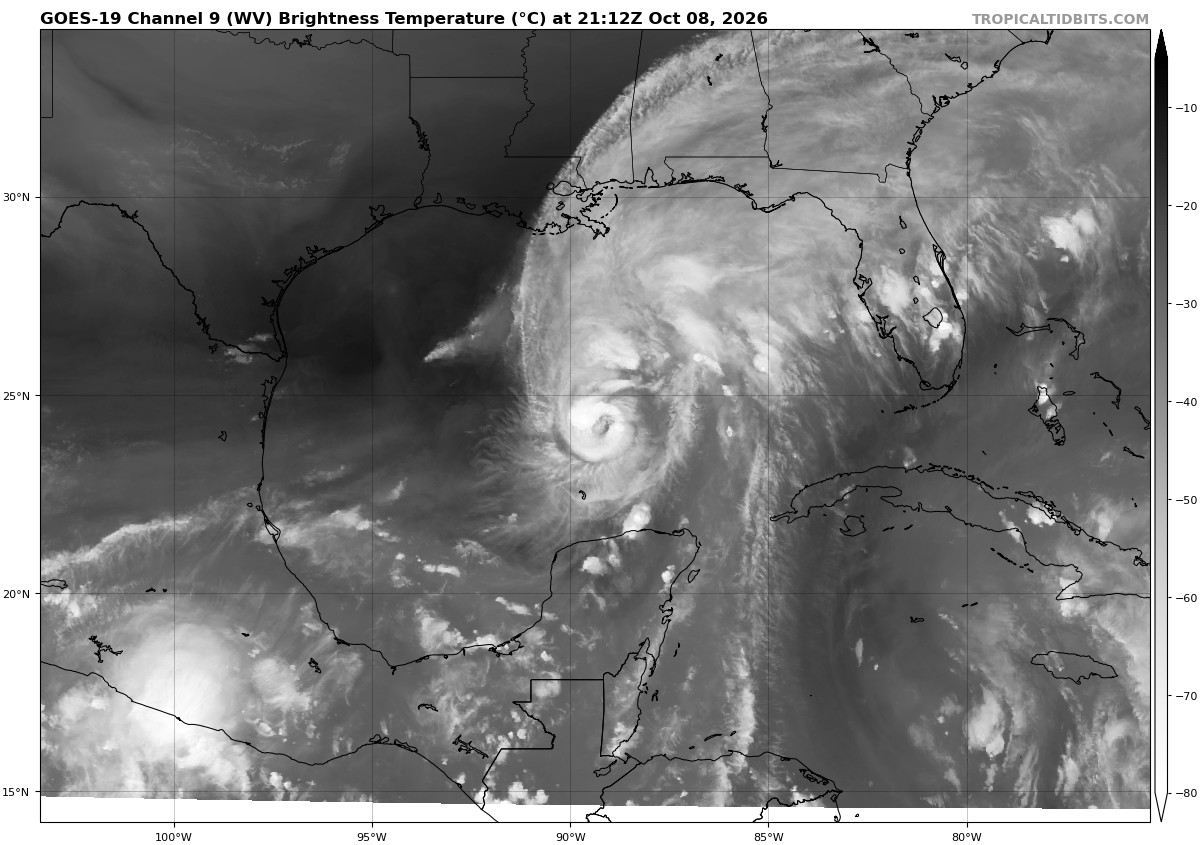
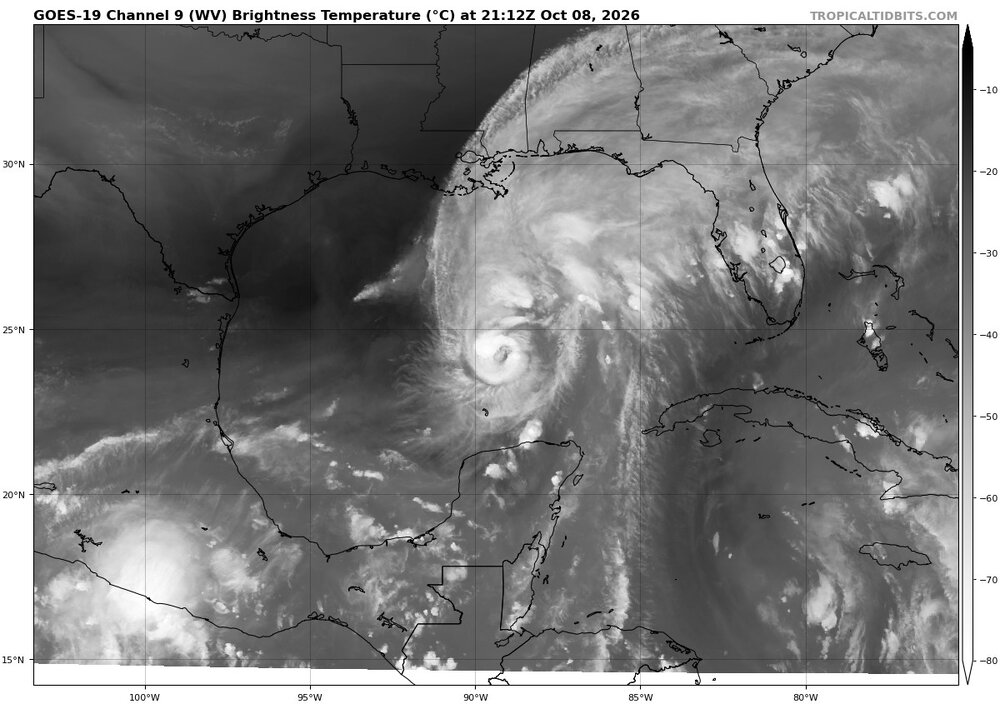
For scale, I attached zoomed out WV image,. The CDO/core of Isaias is very small. That makes it much more susceptible to shear and dry air. Also, easier RI. The 12z HAFS A/B shows sig intensification, but the rate of weakening it shows just in the last 9 hr up to landfall is quite remarkable. Just from a wild extreme swing one end to the other, this may be an exceptional event meteorologically. We get lots of big RIs just before landfall (Michael, Otis), but going the other way? I know no Atlantic situation quite like this, at least for an impending landfall. Sure, many HUs elsewhere has got torn apart in short order, but it is so much different when close to landfall and the system is quite strong within say 12-15 hr of landfall. A lot more eyes are on it!
-
They are reaching IMHO. No drop in pressure and FL winds the same? That tail radar measurement I bet was due to pulsing convection transitory spot wind, rather than true gradient. And the Dvorak does not support 85 kt winds. One observation does not take precedence over several observations that show the contrary. I just find if they can hedge higher for system threading land, they will.
-
This happened w/ HU Lili in Oct 2002. It ramped up very quickly over the loop current, but once exiting, it weakened even faster in short order. 90 > 125 kt in 24 hr and then 125 > 80 kt in 24 hr at landfall. And the environment for LIli was not nearly as baroclinic w/ a lot of dry air/shear present as Isaias now. 20021002, 0000, , HU, 23.0N, 85.7W, 90, 967, -999, -999, -999, -999, -999, -999, -999, -999, -999, -999, -999, -999, -999 20021002, 0600, , HU, 23.6N, 87.2W, 100, 962, -999, -999, -999, -999, -999, -999, -999, -999, -999, -999, -999, -999, -999 20021002, 1200, , HU, 24.4N, 88.3W, 110, 952, -999, -999, -999, -999, -999, -999, -999, -999, -999, -999, -999, -999, -999 20021002, 1800, , HU, 25.4N, 89.5W, 120, 941, -999, -999, -999, -999, -999, -999, -999, -999, -999, -999, -999, -999, -999 20021002, 2013, I, HU, 25.9N, 89.9W, 125, 938, -999, -999, -999, -999, -999, -999, -999, -999, -999, -999, -999, -999, -999 20021003, 0000, , HU, 26.7N, 90.3W, 125, 940, -999, -999, -999, -999, -999, -999, -999, -999, -999, -999, -999, -999, -999 20021003, 0600, , HU, 28.1N, 91.4W, 105, 957, -999, -999, -999, -999, -999, -999, -999, -999, -999, -999, -999, -999, -999 20021003, 1200, , HU, 29.2N, 92.1W, 80, 962, -999, -999, -999, -999, -999, -999, -999, -999, -999, -999, -999, -999, -999 20021003, 1300, L, HU, 29.5N, 92.2W, 80, 963, -999, -999, -999, -999, -999, -999, -999, -999, -999, -999, -999, -999, 10
-
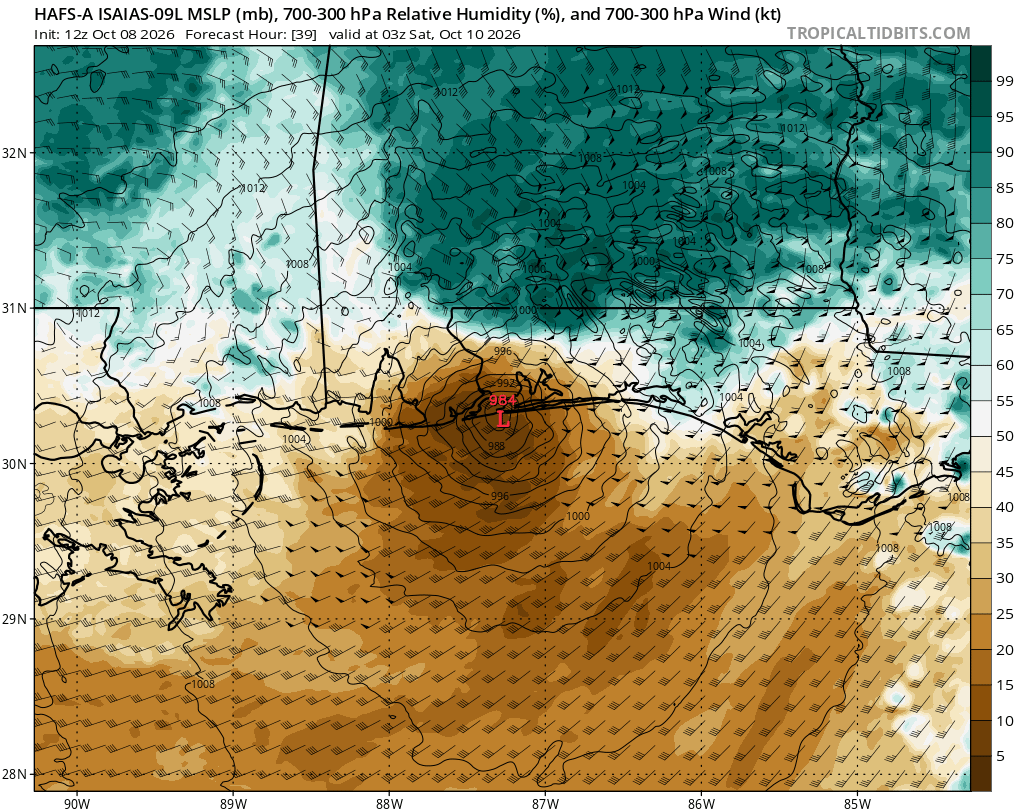
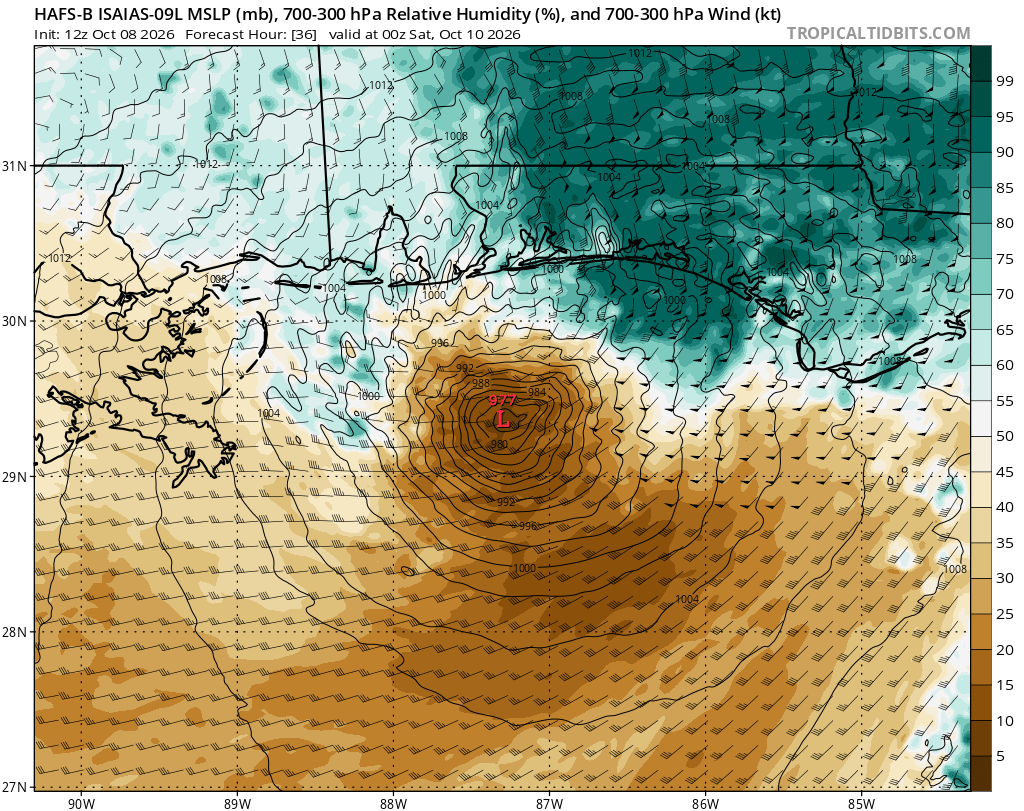
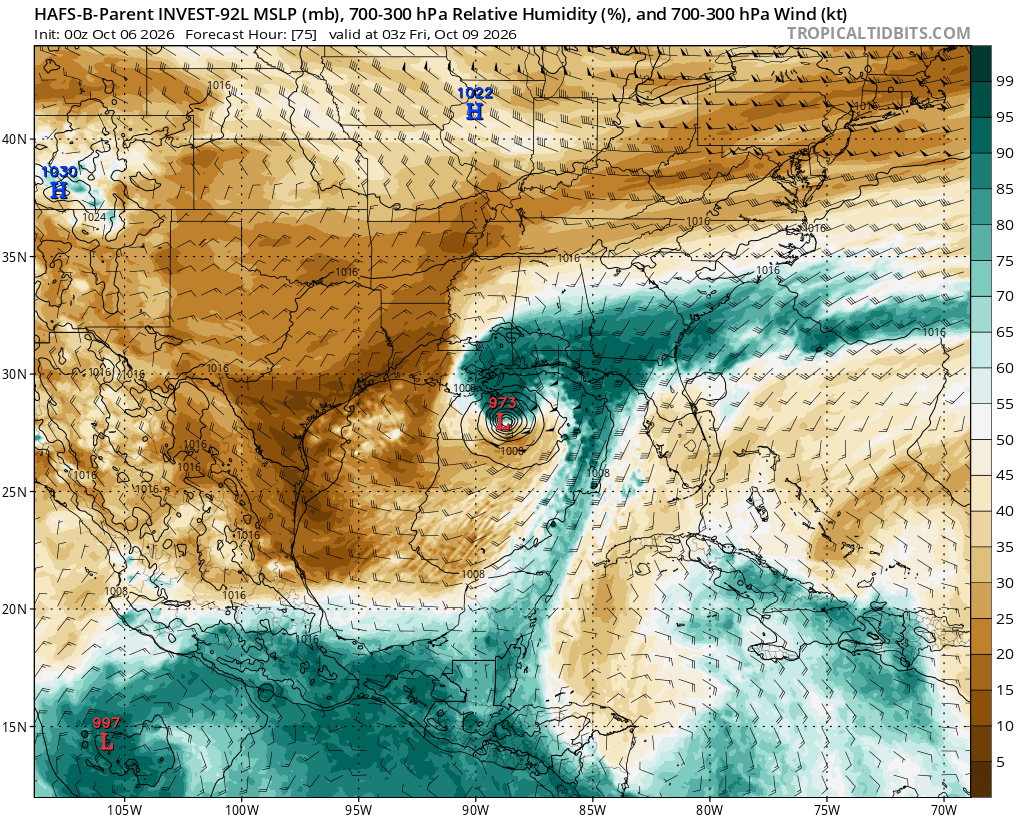
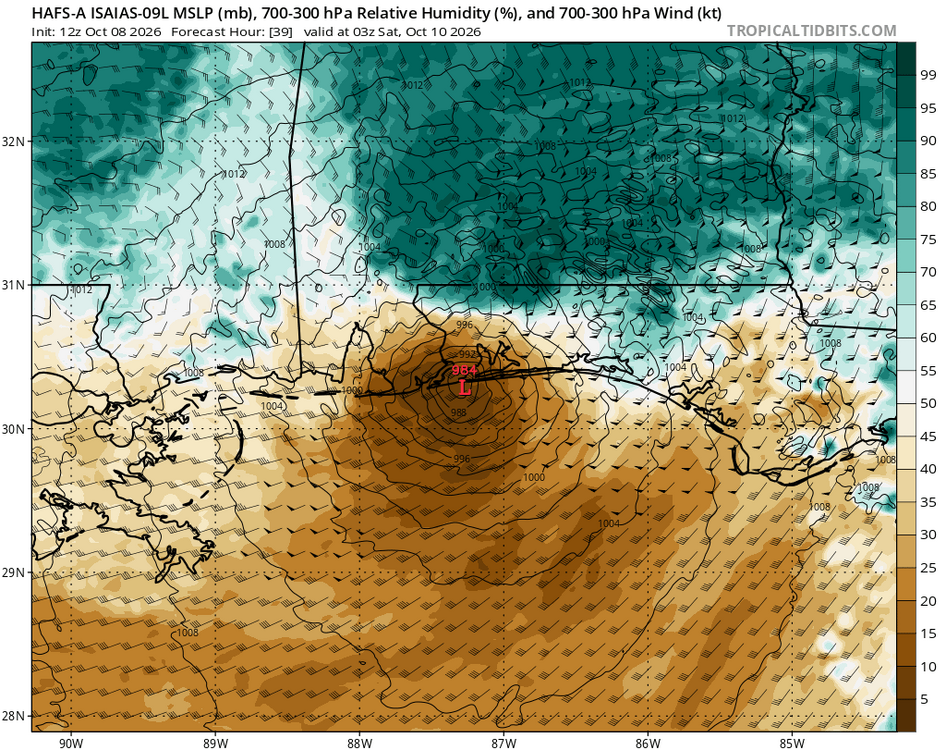
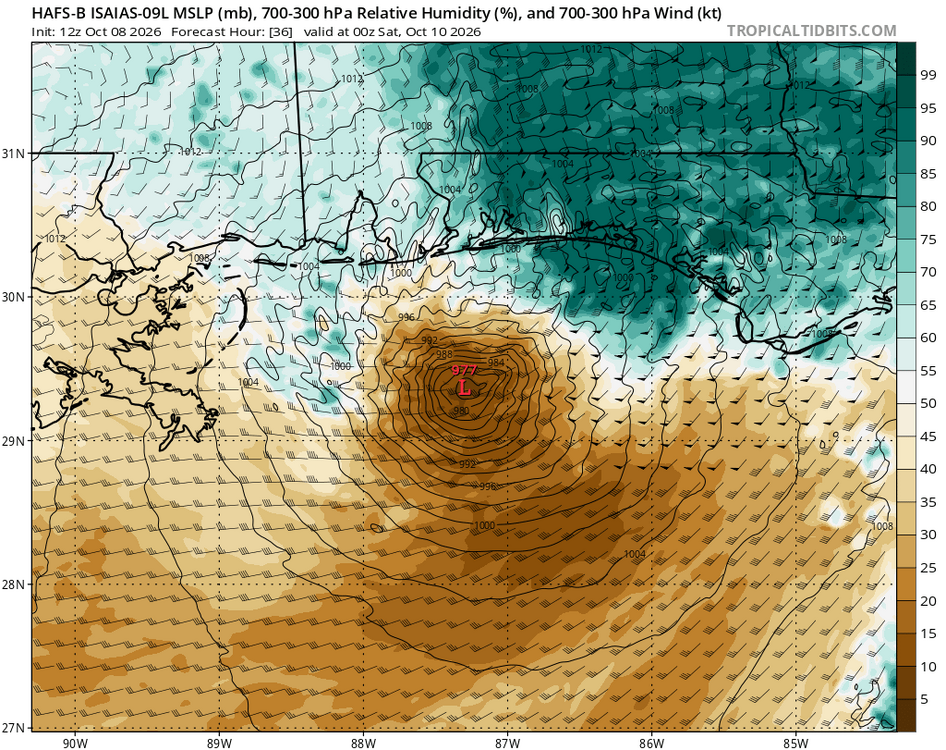
Isaias is an atypical TC situation esp. for a landfall. In a way it reminds me of Sandy in Oct 2012, but some differences. However, it has similar implications. The models, both global and hurricane, all along have showed very rapid weakening of Isaias the last 9-12 hr to landfall. 12z HAFS-A 09/18z 951 mb /110 kt 10/03z 984 mb / 63 kt 12z HAFS-B 09/18z 964 mb / 99 kt 10/03z 985 mb / 57 kt So there is a serious question if it will be a hurricane at landfall. In addition, looking at the storm structure forecast, it is difficult to imagine it will still be classifiable as a tropical cyclone at landfall. The SHIPS shear value is 35 kt 09/12z increasing to 49 kt 10/00z. It is fully embedded in a 250 jet streak near landfall and all the convection sheared off N of the center at the time. Very dry air (<20% 700-300 RH) is completely wrapped around and over the center (HAFS A/B forecast attached) and clear, defined frontal features apparent on the moisture fields. Since Isaias is rather small and not that strong, it is unlikely to be able to ward off wind shear and dry air intrusion, like Ian did in Sep 2022. Despite all of the above, I do not see any real emphasis currently in the mainstream on this very real possibility. I've seen this before from NHC. They avoid much emphasis on rapid weakening close to landfall b/c they think ppl will not take the warnings as seriously, but I find this disingenuous. They are not being objective and transparent. This was apparent w/ Milton, which is the most rapid weakening for a HU in a short period leading up to a U.S. landfall. Our forecast skill/modeling have come a long way for TCs, so confidence in outlier or atypical scenarios is higher these days and we should take full advantage of this operationally. I know of no Gulf hurricane situation quite like this one where such rapid weakening and quick PT/ET transition occurs near landfall (Milton comes close). And I see no reason why the HAFS weakening forecast would be wrong given the synoptic pattern currently and this model handled the very rapid weakening of Milton. That was a strong baroclinic interaction with high shear impacting the hurricane. So this presents a problem/challenge as to how Isaias could be handled. The concern is that in deference to messaging, it may not be called PT/ET at landfall or below hurricane strength even if it clearly is since within 12 hr of landfall it may be much stronger. From an objective meteorological standpoint? It should not matter where a TC is (close to a landfall or far at sea), how strong it is, or what type of watches/warnings are in effect, it should be treated "as is" operationally. So if goes ET/PT just before landfall, call it for what is it. The atmosphere does not care about our subjective policies/rules, it does what it does. There is nothing that says a TC can not go ET/PT just before landfall, and it has been done before (Sandy). And after Sandy, things were adjusted so tropical watches/warnings remain in place even if a TC goes ET/PT, so things are covered here from a messaging standpoint. This kind of objectivity is important to the meteorological science. A hurricane at landfall or not is significant from a climo standpoint. And in some cases depending on the state, county, or city/town, what something is called/labeled makes a difference from an insurance and legal standpoint. Some may say all what I say above is being pedantic or picayune, but I beg differ. There were significant discussions and controversy in the meteorological and other fields as to what Sandy was called at landfall. I am just proactively pointing out beforehand a similar TC situation currently.
-
Probably b/c of it small size. Global models had trouble picking it up.
-
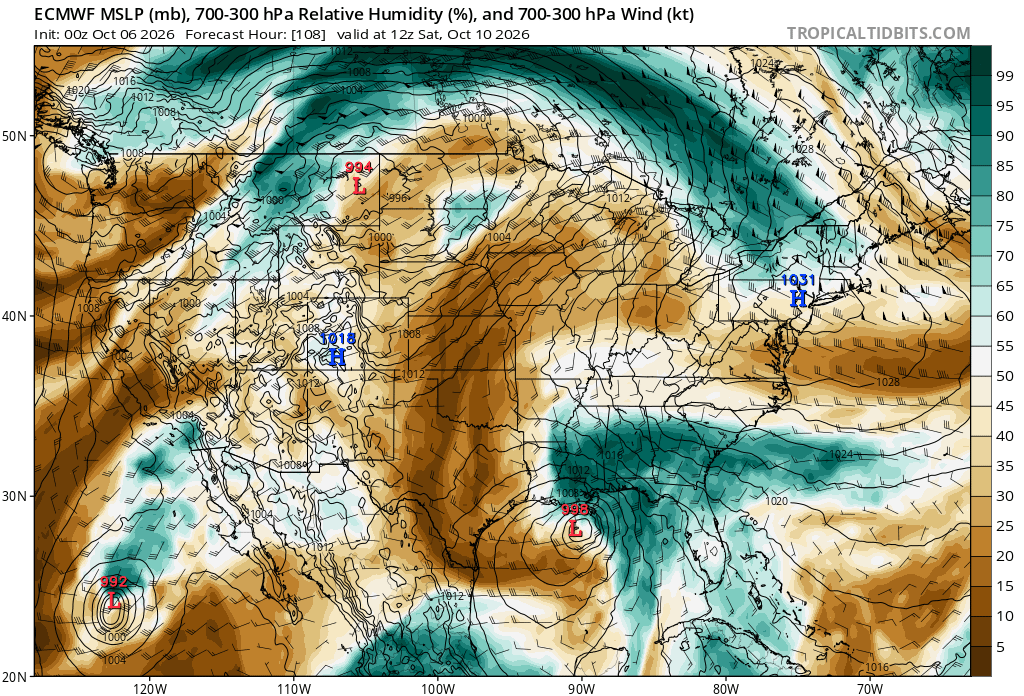
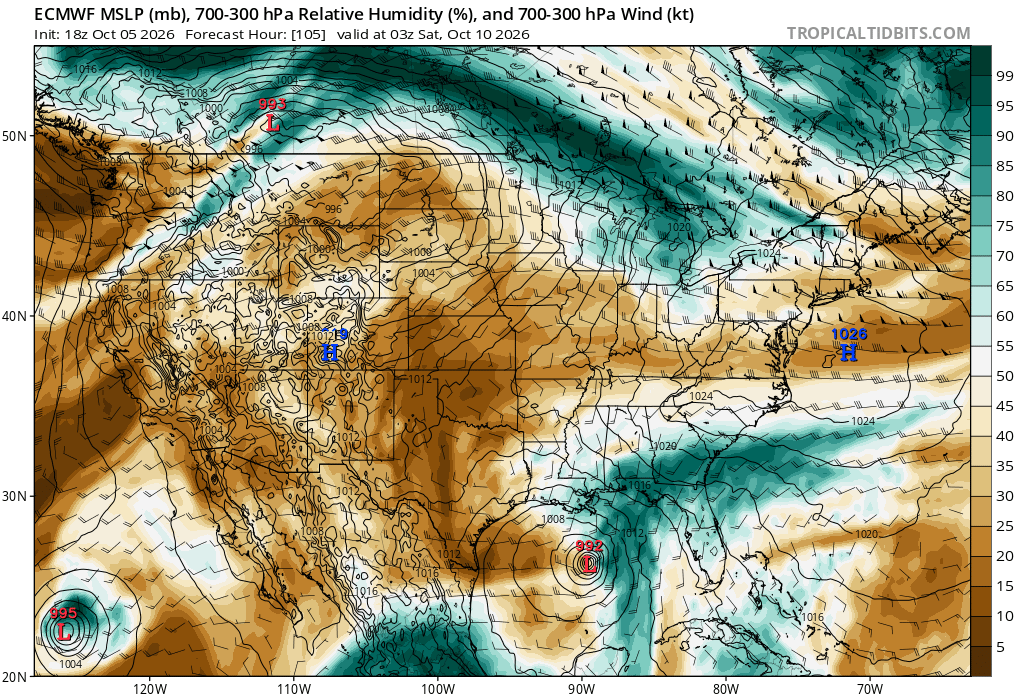
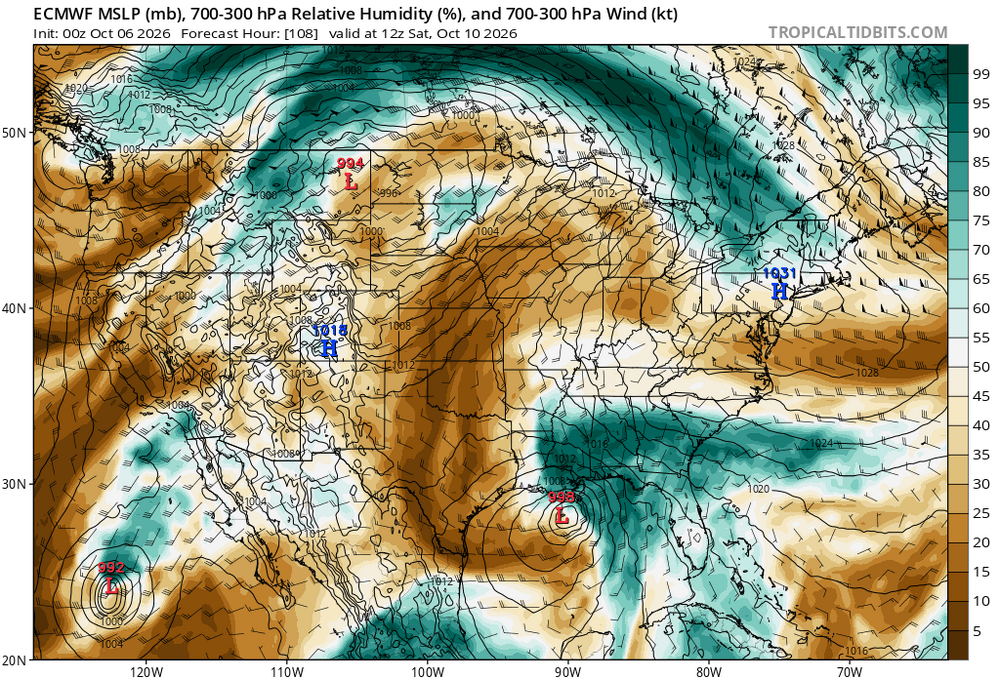
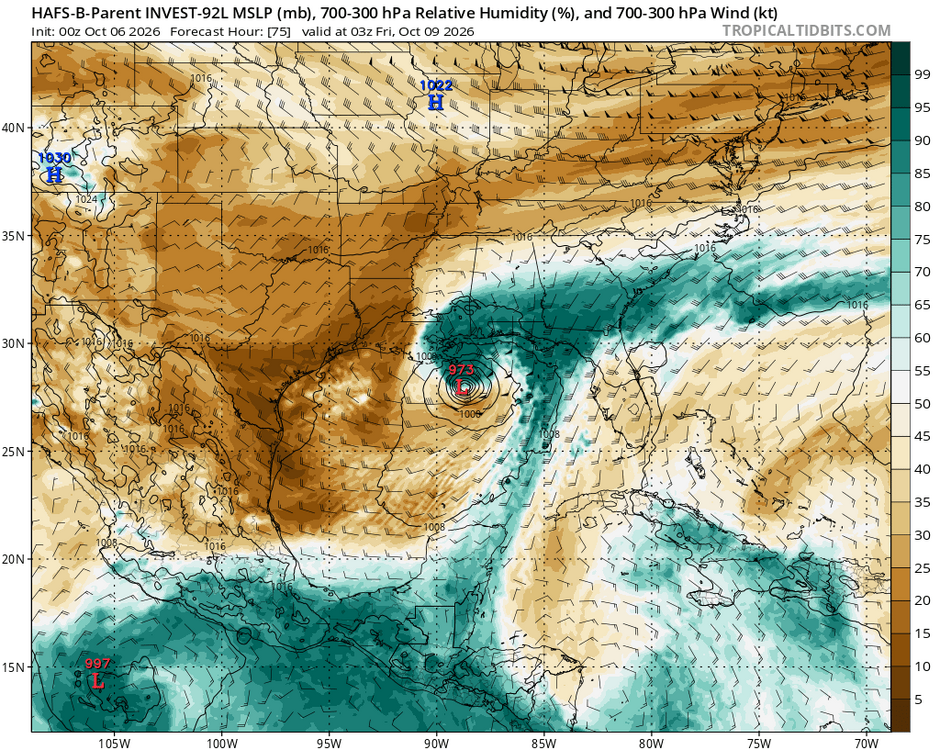
The 00z ECMWF still has a stark 700-300 mb RH gradient early on that just intensifies as it heads N. The pattern/structure at 108 hr for this parameter looks more like a baroclinic leaf than anything. It dependents it to 998 mb, 9 nm weaker than the 00z, which is in line w/ the 1992 and 1994 early Oct events as to am ET low development in the Gulf making landfall. The HAFS-B is much deeper, but also look at its 700-300 mb RH fcst (attached). That configuration strongly suggests a frontal structure and baroclinic leaf. I would find it hard to believe it could drop into the 970s from largely baroclinic forcing. The deepest ET low in the Gulf ion record s 980 mb from the Bliz of 1993 and that had unreal baroclinic support! The GFS does the opposite of the HAFS-B, it makes it strong as a TC early, and *then* weakens is as it heads N. That coulld happen.
-
That much snow already made on Whiteface Mtn trails? https://www.facebook.com/share/p/19m3Gzn9Z8/ It did snow: https://www.instagram.com/p/DeH8zc0ylm9/?utm_source=ig_embed&utm_campaign=embed_video_watch_again But is that FB image current?
-
And "one more hour of cooling so it can snow easier!" You actually see this nonsense posted. Some are trolling but some actually believe it. I see the same thing for svr wx. Extra hour of heating after late March in the Plains!
-
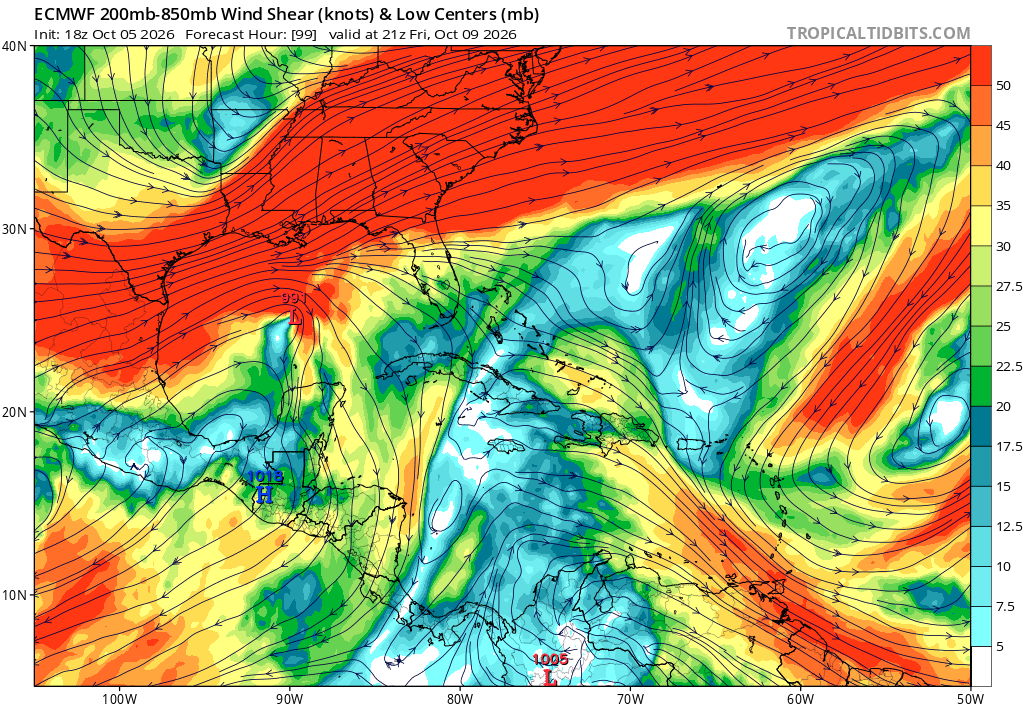
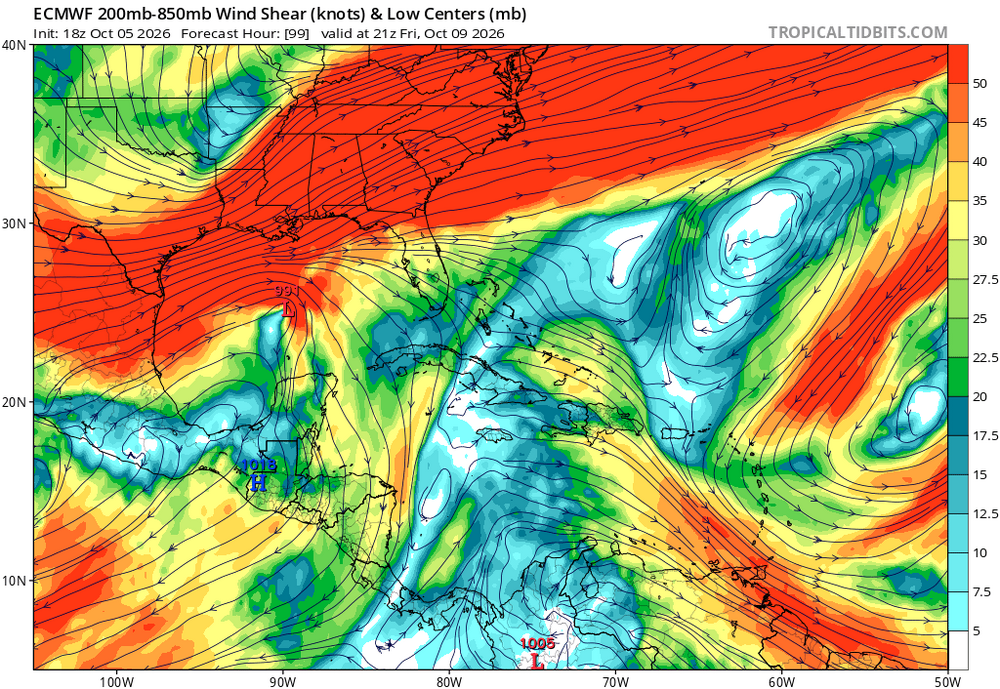
Given the fcst 850-200 mb wind shear over the northern Gulf is fcst in excess of 50 kt and how the global models depict the storm structure, I have a tough time thinking this can sustain a tropical status once farther N. Sfc winds E of the center will likely get quite strong, but due to baroclinic deepening. If this were a well-established strong TC already, I would not be as concerned about the shear here. Here are two storms in early Oct 1992 and 1994 that fit this scenario. The 1992 event deepened to 996 mb and and 1994 to 1000 mb from baroclinic processes.
-
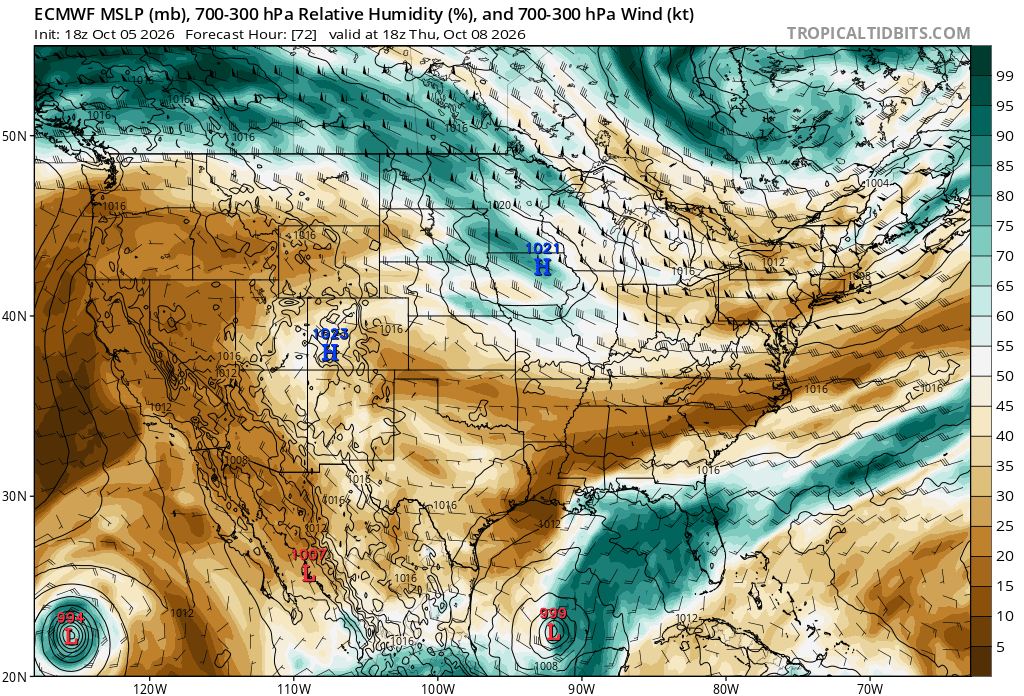
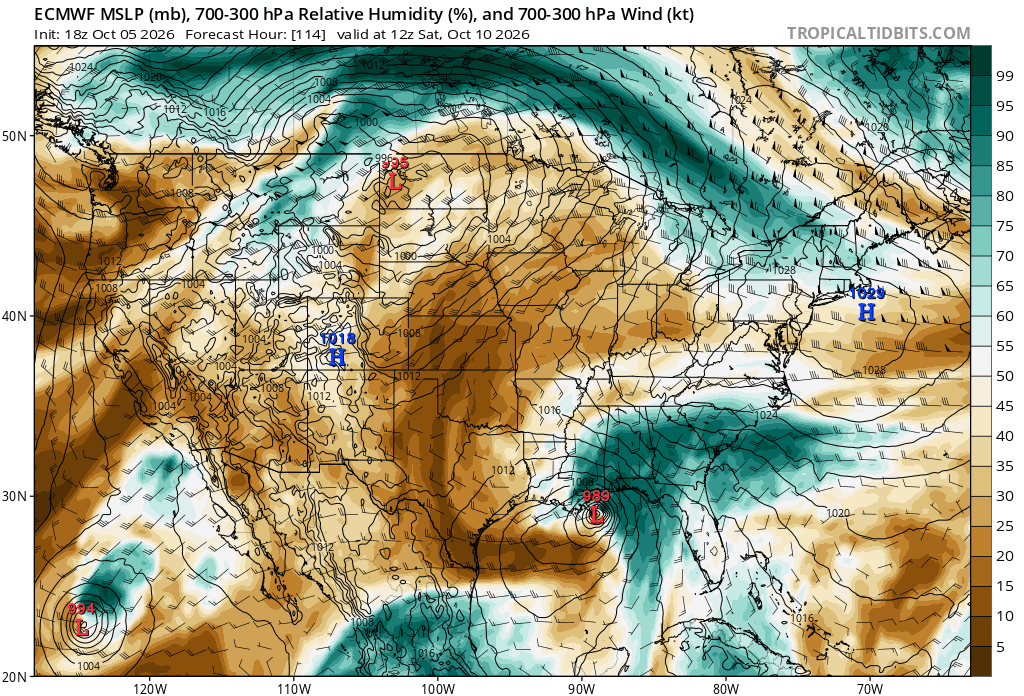
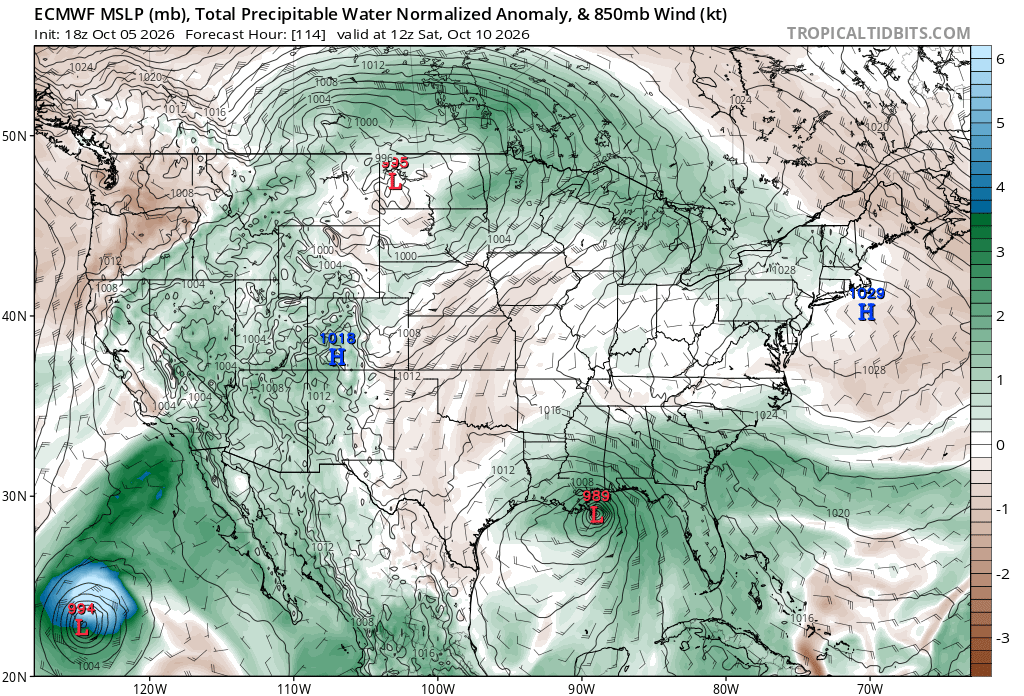
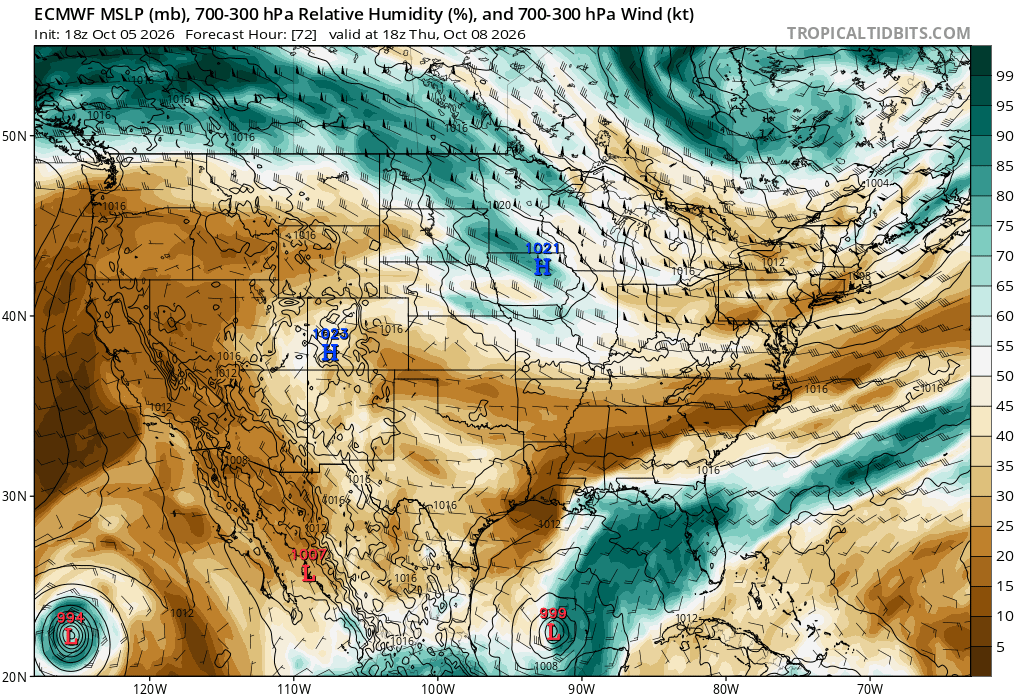
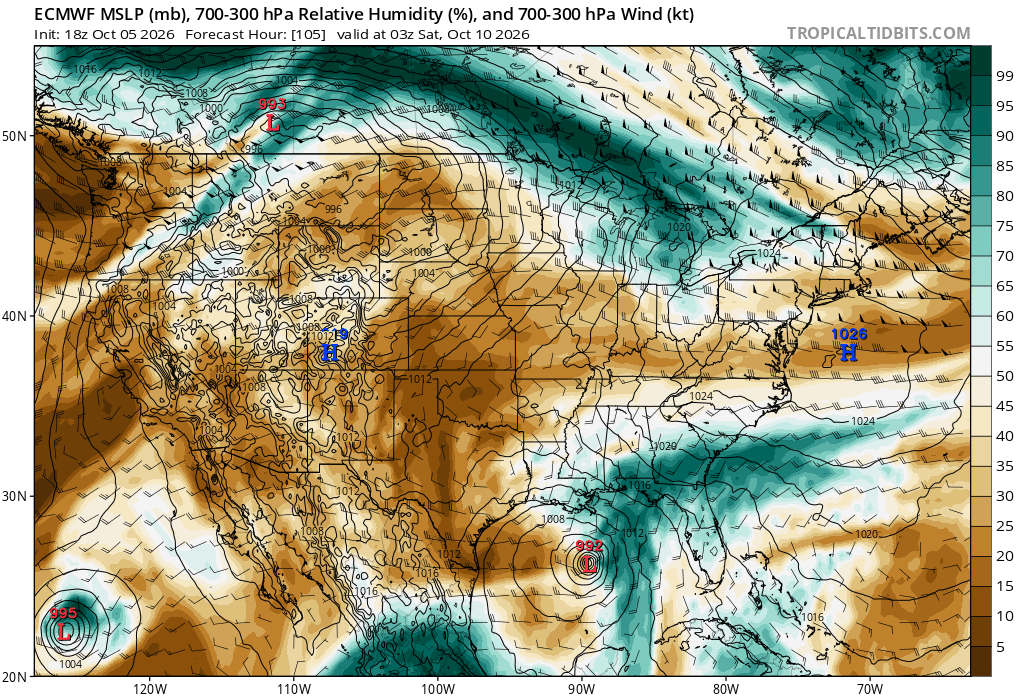
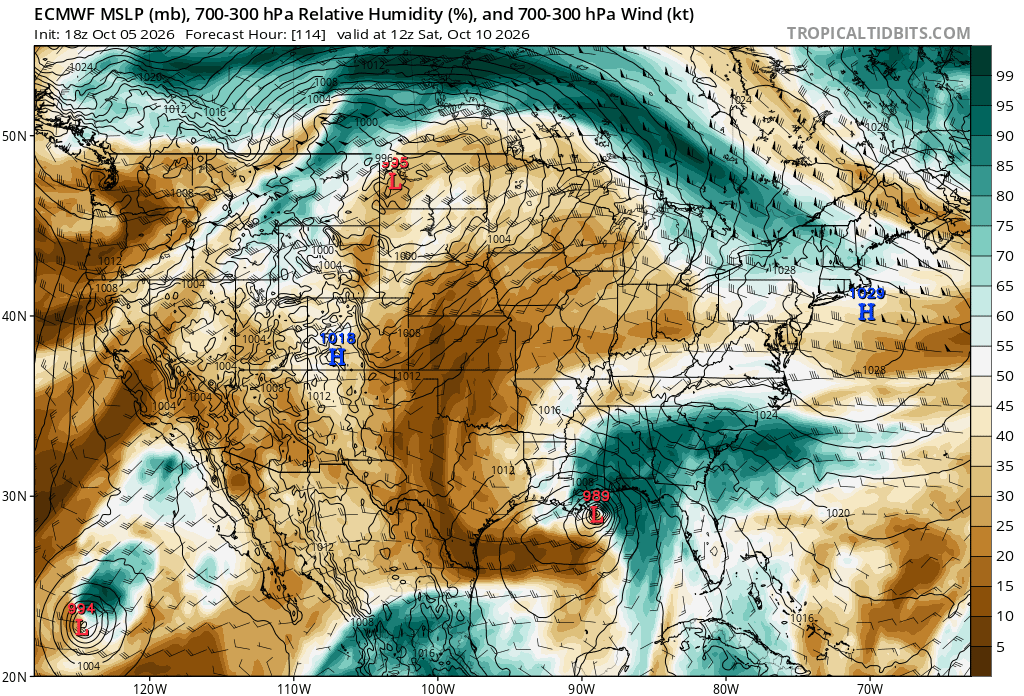
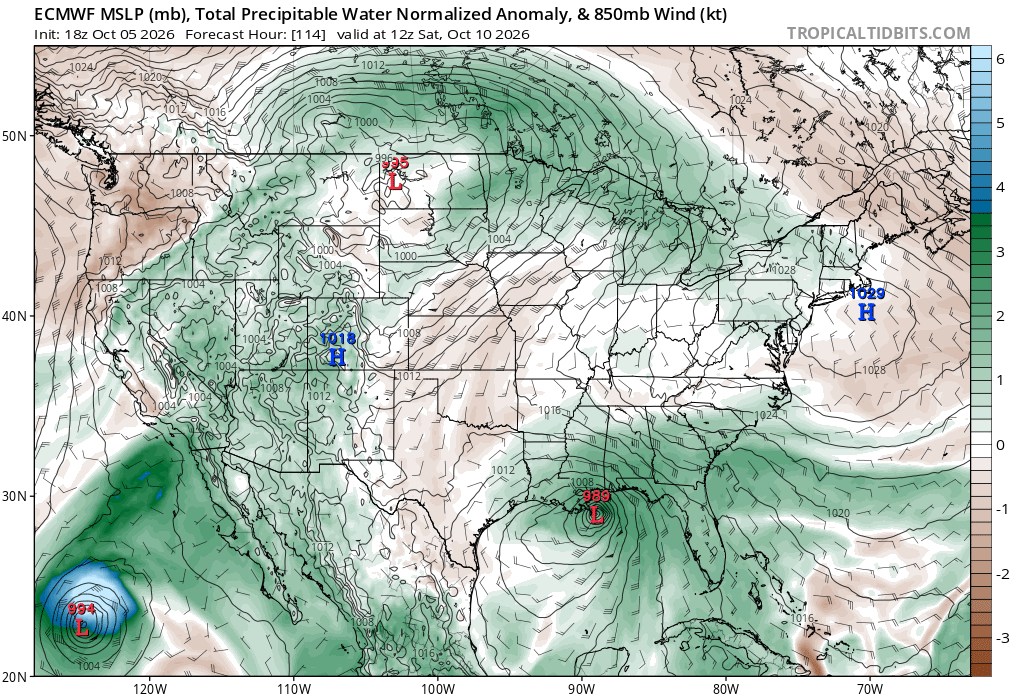
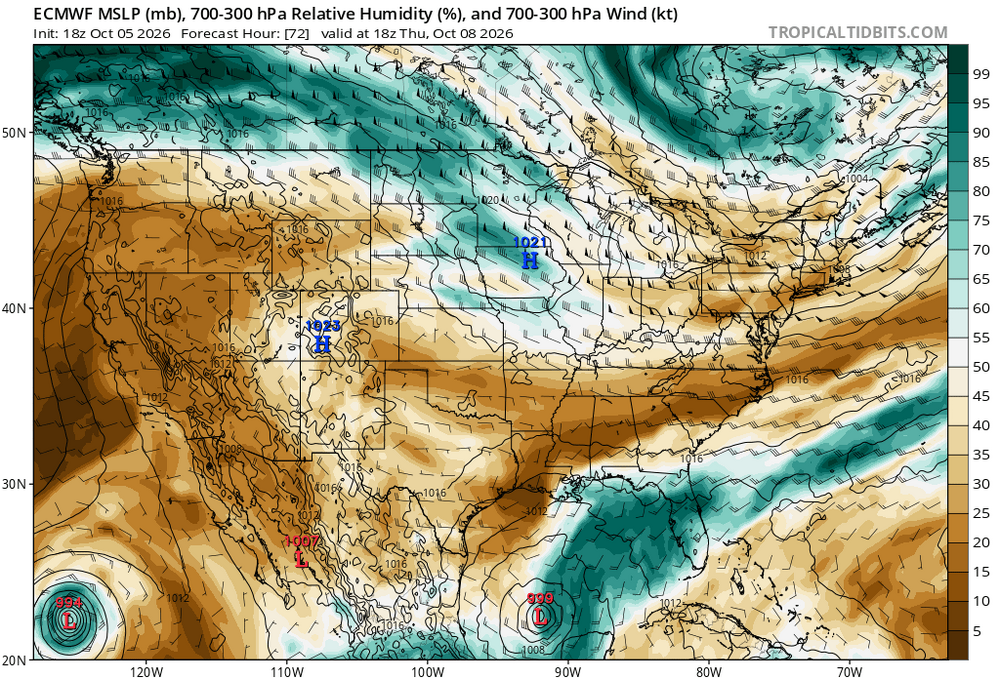
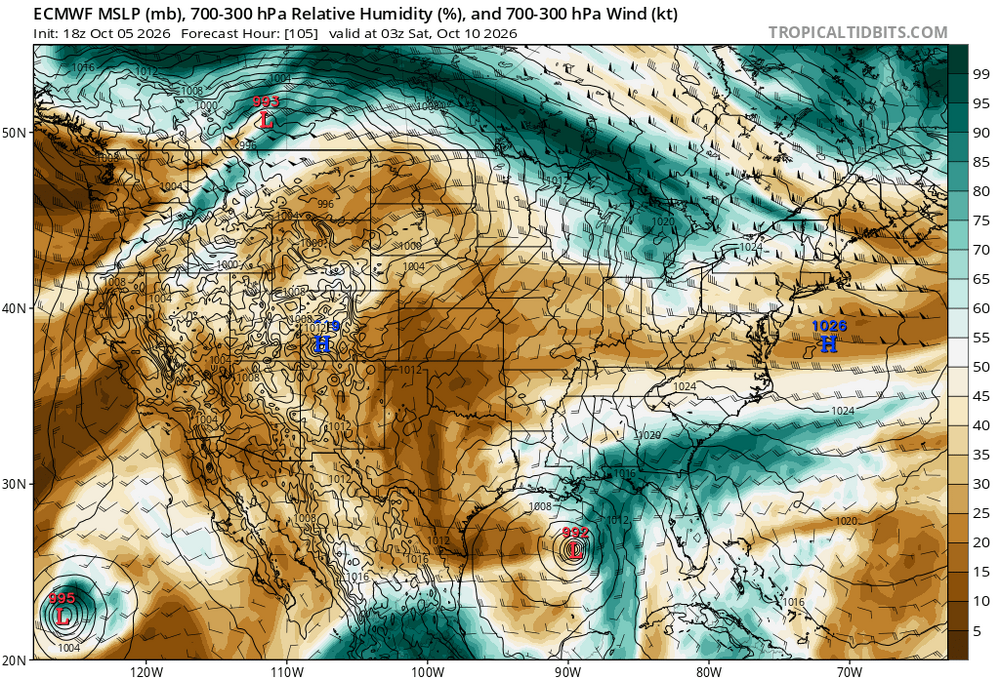
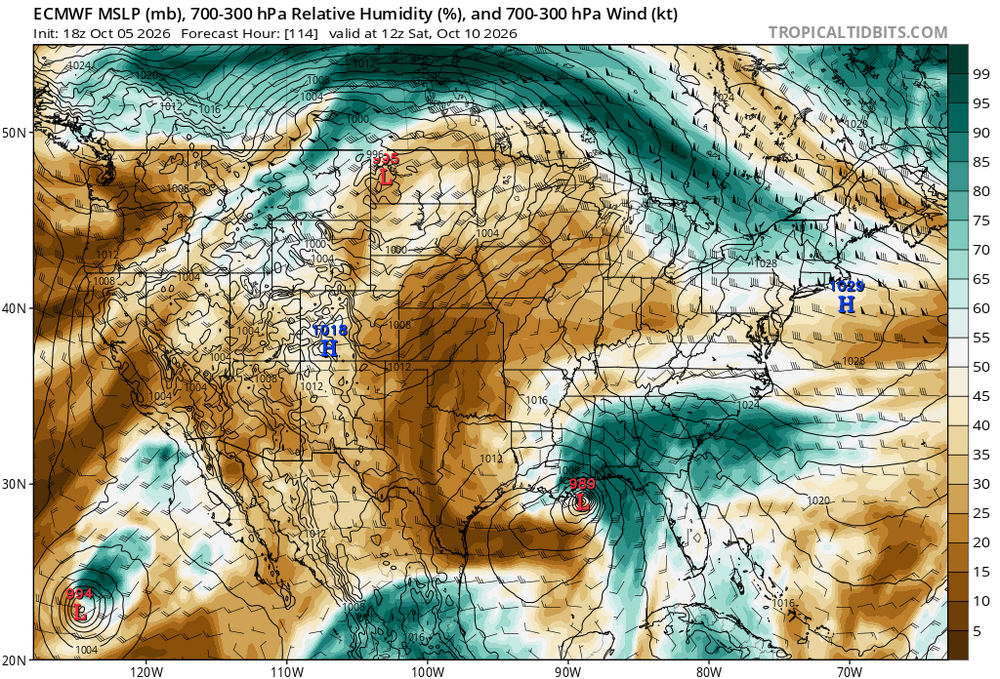
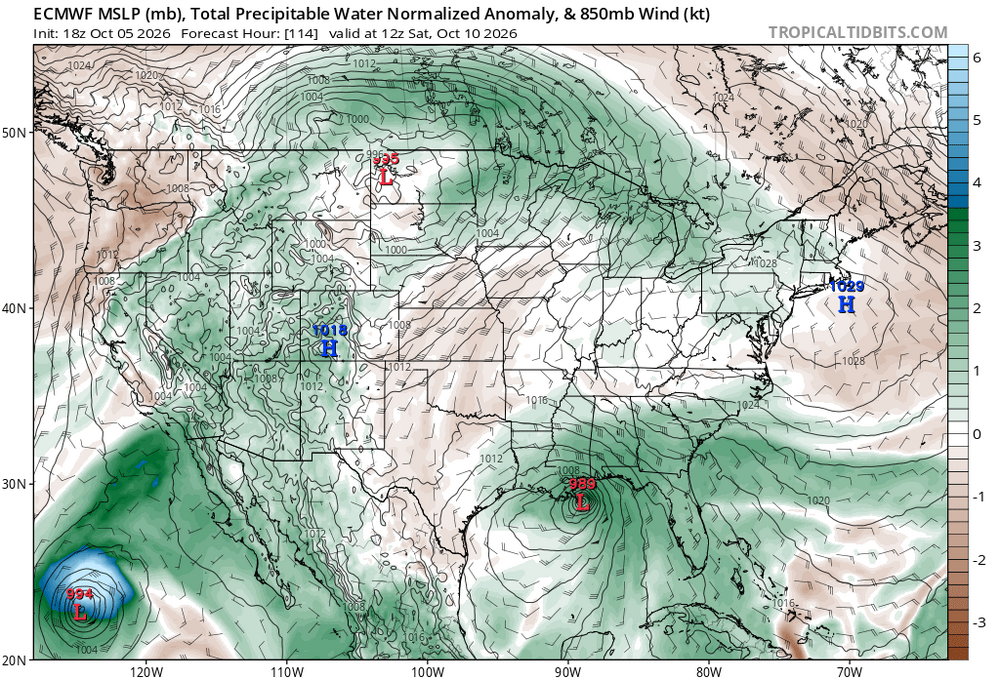
Posted this on the Tropical Forum, but will do so here b/c this could some "fun ' games" as to what is what when it comes to a TC or not! ----- Something doesn't seem right. I was surprised the 18z ECWMF suddenly went the GFS route. The 700-300 mb RH fields and PWAT anoms tell the story. I attached 18z ECMWF 72, 105, and 114 hr 700-300 RH. Even when it is still the Bay of Campeche, it is "halved" from a strong moisture gradient, and it just gets stronger w/ time. looking like a typical ET low development. And look at the 114 hr fcst PWAT anomaly. That clearly shows a frontal structure, and compare the PWAT anomalies to Simon in the EPAC. That's not nearly the anomaly you'd see in a typical TC. I can see NHC "playing games" here. Calling it something that it is not b/c of non-meteorological factors (social media nonsense, its sensible wx impact, etc). But ET low can and do form in the Gulf in Oct (see the 1992 case I posted about earlier) and given the strength of El Nino, it makes ET lows this early even more likely. In fact, by 36 hr, the 250 mb STJ become quite apparent near the Gulf Coast, and in 5 days close to landfall, a strong 250 s/w is present in the region, obviously aiding in the system's development. Some might go, "but the simulated IR from the GFS shows an eye!" Well, it is the GFS, and yes, initially it could be a TS/STS but here lies another issue, transition to a PT/ET low when it is approaching a landfall. Sandy anyone? You see the problem here. But I say, in the end, it is what it is, and call it as such. Don't let external pressures and nonsense contaminate the met science!
-
CAR 2.5" Sep 29-30, 1991 for its first measurable snow on record in Sep. 2" at Glen NH Sep 16, 1986 as a spinner occurred at the same time in Scituate MA. @CoastalWx be like, "how can that be!?"
-
One could say that Miller A having higher LEQ and lower snow ratios due to their warmer nature, they likely have more underestimation due to compaction.
-
40"+ was common N&W of BOS for 78.
-
From a strictly climo POV, yes, such a formation in the Bay of Campeche and intensification as a TC to the Gulf Coast happens often, but this climo is a weakness at times for AI models b/c not all follow climo or what would be more typical.
-
Also, here is the 18z SHIPS output for 92L, The environmental shear is currently moderate and increases w/ time so it is 30 kt by 84 hr. https://hurricanes.ral.ucar.edu/realtime/plots/northatlantic/2026/al922026/stext/26100518AL9226_ships.txt
-
Something doesn't seem right. I was surprised the 18z ECWMF suddenly went the GFS route. But the 700-300 mb RH fields and PWAT anoms tell the story. I attached 18z ECMWF 72, 105, and 114 hr 700-300 RH. Even when it is still the Bay of Campeche, it is "halved" from a strong moisture gradient, and it just gets stronger w/ time. looking like a typical ET low development. And look at the 114 hr fcst PWAT anomaly. That clearly shows a frontal structure, and compare the PWAT anomalies to Simon in the EPAC. That's not nearly the anomaly you'd see in a typical TC. I can see NHC "playing games" here. Calling it something that it is not b/c of non-meteorological factors (social media nonsense, its sensible wx impact, etc). But ET low can and do form in the Gulf in Oct (see the 1992 case I posted about earlier) and given the strength of El Nino, it makes ET lows this early even more likely. In fact, by 36 hr, the 250 mb STJ become quite apparent near the Gulf Coast, and in 5 days close to landfall, a strong 250 s/w is present in the region, obviously aiding in the system's development. Some might go, "but the simulated IR from the GFS shows an eye!" Well, it is the GFS, and yes, initially it could be a TS/STS but here lies another issue, transition to a PT/ET low when it is approaching a landfall. Sandy anyone? You see the problem here. But I say, in the end, it is what it is, and call it as such. Don't let external pressures and nonsense contaminate the met science!
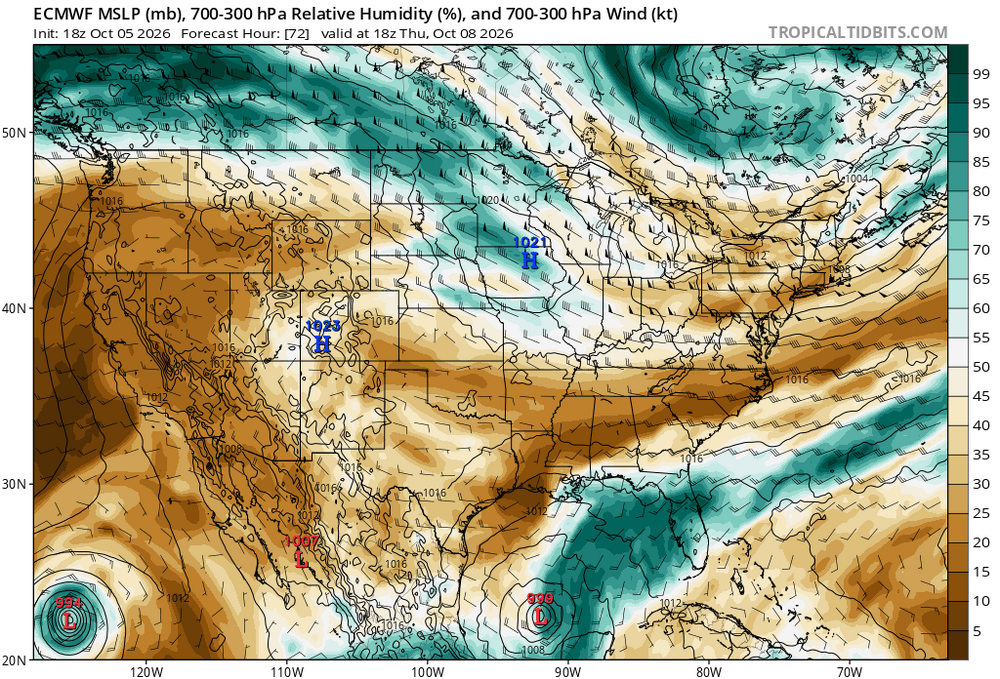
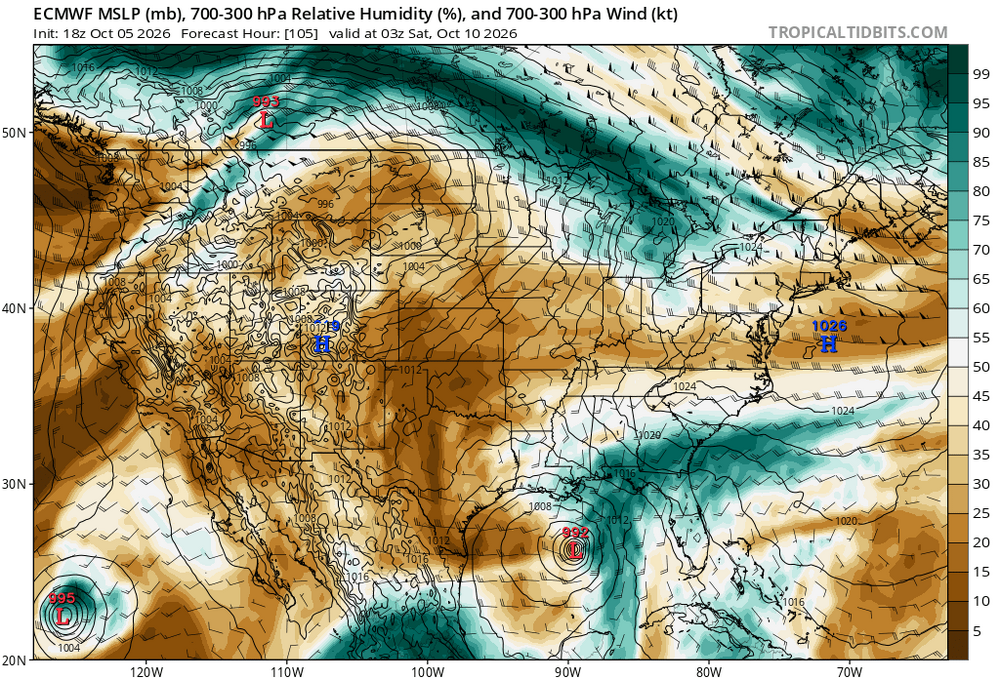
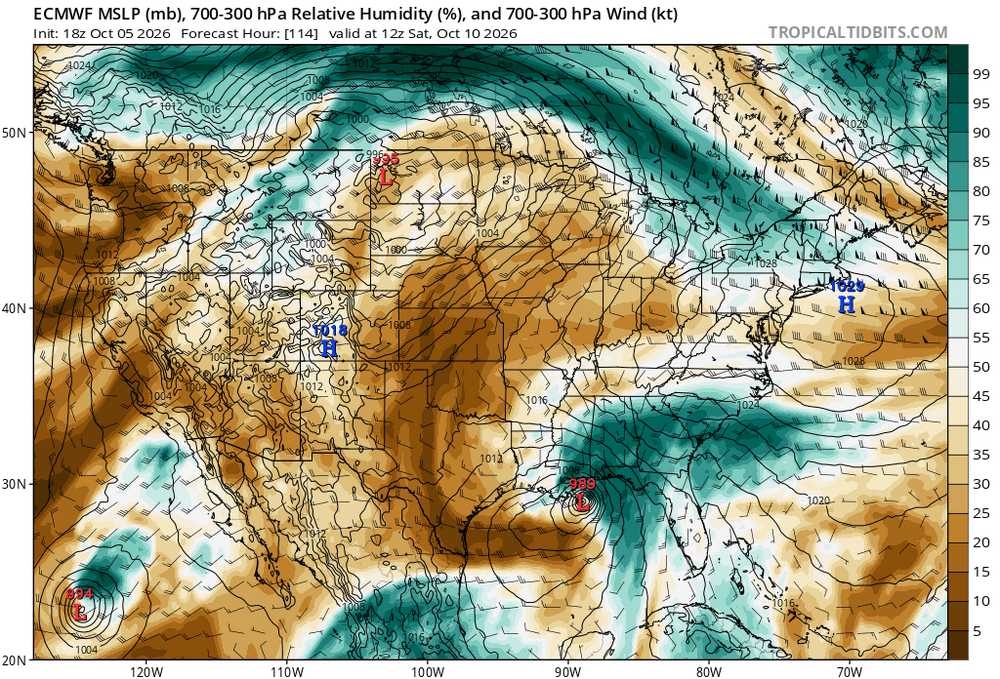
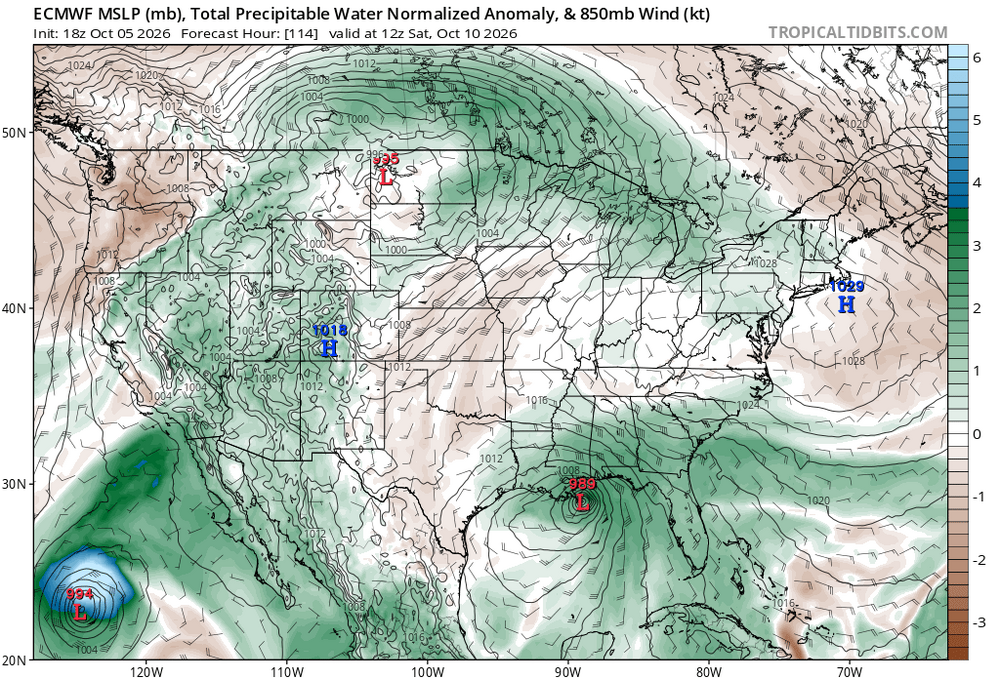
-
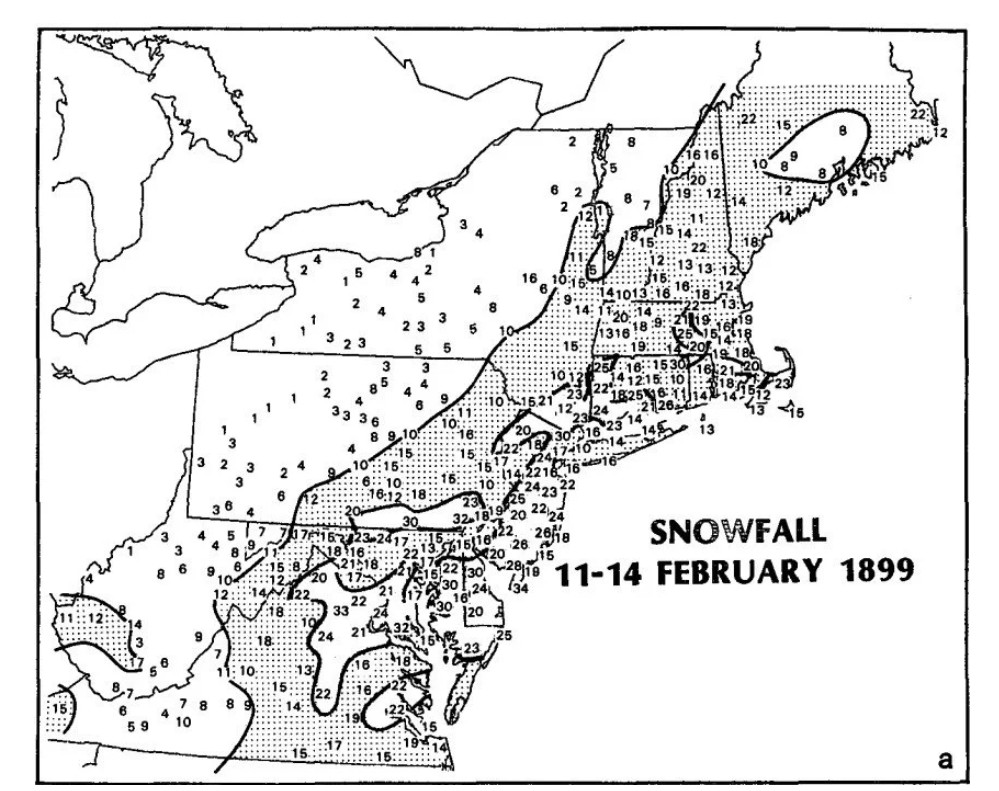
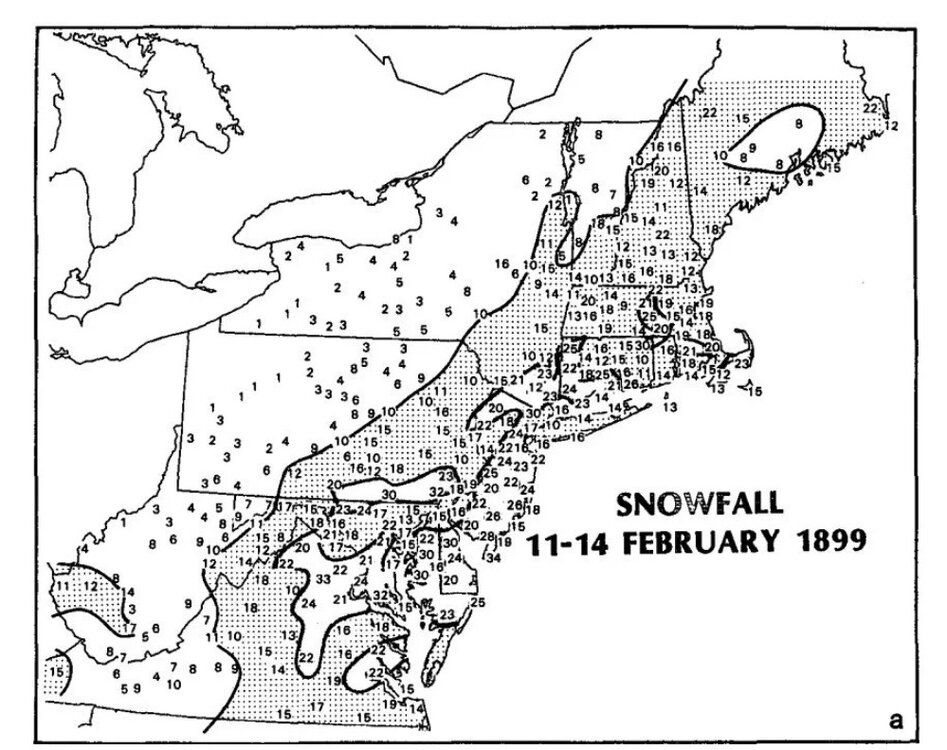
#3 NESIS March 1960...you won't find that kind of 20"+ coverage that often in SNE. 31" at ACK for their all-time. Explain that! https://www.ncei.noaa.gov/monitoring-content/snow-and-ice/rsi/nesis/19600302-19600305-8.77.jpg And as I mentioned, if snow measurements were consistent going way back, you;d be surprised at Miller A totals. esp. since their LEQ is usually higher. Recall many locations through the 1950s used to melt a snowfall down and then multiple by 10! As if all storms were 10:1? Given how ridiculously cold the Feb 1899 blizzard was, and the above? @CoastalWxneeds to adjust! And you exclude NNE and @dendrite. Very disappointing! Too much IMBY and relying on anecdotal snowstorm experience! Need to look outside the Weymouth/GHG/Brockton realm.
-
Overall for the E Coast for the top positions, Miller As rule on the NESIS. Bliz of 93 #1 Bliz of 96 #2 https://micromet.psu.edu/ewall/NARR/1996/us0107.php Mar 2-5, 1960 #3 https://www.ncei.noaa.gov/monitoring-content/snow-and-ice/rsi/nesis/19600302-19600305-8.77.jpg Bliz of 1899 was Miller A and was on par w/ the Bliz of 93 https://www.woodtv.com/wp-content/uploads/sites/51/2023/02/1899-Weather-Map-Feb.-12-1899.jpg And best snowstorm BOS ob ever and highest gust w/ a snowstorm is from the Bliz of 93! BOS RS 2250 W0 X 0TS+BS 875/31/31/0647G62/916/R04RVR06-V06 TB50 SW MOVG N OCNL LTGIC DRFTG SNW PK WND 0670/33 PRESFR SNOINCR 3/11/12 If you had snowfall measurements done consistency and right back in the day, BOS top 10s would not be what they are currently as prior to the 1990s. Snowfall practices then resulted in too low totals. But Don't be a @CoastalWx and act IMBY only!
-
The "what if" and "could be" scenarios along w/ endless speculation, conjecture, and opinion are all that matters. It is the business paradigm, and a deplorable one at that. ENSO does not work necessarily in a linear fashion for all regions of the globe, so the notion that this is strongest one on record = worse by default is flawed. Also, you can't compare ones long ago (1877-78) to what would happen today in terms of societal impact. 50M fatalities then and equating to now? Back then, the world was very different. You did not have scale of global economic trade and communication, let alone forecasts that allow us to prepare. And we did just fine in all other very strong El Ninos since 1950, so why is this one going to be *any* different overall? I say "overall" b/c that is key. Yes, the Atlantic TC season is more suppressed than ever, and the EPAC is record levels, but focusing on such details is narrow-minded. What is happening in the big picture, and taking into account to what has happened before in very strong El Ninos, is actually happening as expected for TCs in the Atlantic and EPAC. And we already see signs for the STJ getting active in the LR and already a wet pattern across the Gulf Coast States, and perhaps our first Gulf wave/Miller A storm. There is far to much focus on what is different and the negative, and the same and positive are ignored, ever notice that? You'd think El Nino leads to pure atmospheric chaos, when it clearly does not. It is well understood and has plenty of order, as evidenced what was said in the previous paragraph. And yet you get fear-mongering articles like this: https://www.cnn.com/2026/09/23/climate/super-el-nino-heat-deaths Notice it is "could cause", again, conditional supposition. But here what they do not tell you. Such warmer global conditions mitigate significant cold-related issues/fatalities globally, and cold causes more fatalities than warm in the mean. The article says that there could be an excess of 3500 fatalities in the U.S. alone, but no mention of lives saved due things like the lack of hurricanes and a mild winter. Clear cherry-picking/omission of facts here. Want harder info and proof? See here about the impacts of the 1997-98 event. https://journals.ametsoc.org/view/journals/bams/80/9/1520-0477_1999_080_1819_ioenog_2_0_co_2.xml So they found for costs: • $1.7 billion, and uninsured losses were estimated as $ 1.1 billion based on the fact that insured storm losses normally represent 65% of all structural losses from storms • federal government relief = $400 million; • state assistance costs = $125 million; • agricultural losses = $650 to $700 million; • lost sales in snow-removal equipment = $60- $80 million • losses in the tourist industry = $ 180 to $200 million. For benefits: • reduced heating costs = $6.7 billion; • increased sales of merchandise, homes, and other goods = $5.6 billion; • reductions in costs of street/highway removal of ice and snow = $350-$400 million; • reductions in normal losses due to absence of snowmelt floods and no Atlantic hurricanes = $6.9 billion; • income from increased construction and related employment = $450-$500 million • reduced operating costs to airlines and trucking industry = $160-$ 175million. Totals: LOSSES Human lives lost = 189 Economic losses and costs = $4.2-$4.5 billion BENEFITS Human lives saved = 850 Economic gains = $19.6-$ 19.9 billion So how is this bad net-net? Very strong El Nino has a considerable net benefit. and from an individual intuitive/empirical observation POV, it is not hard to see how such benefits come about in society. The savings in heating costs *alone* exceed all other losses.
-
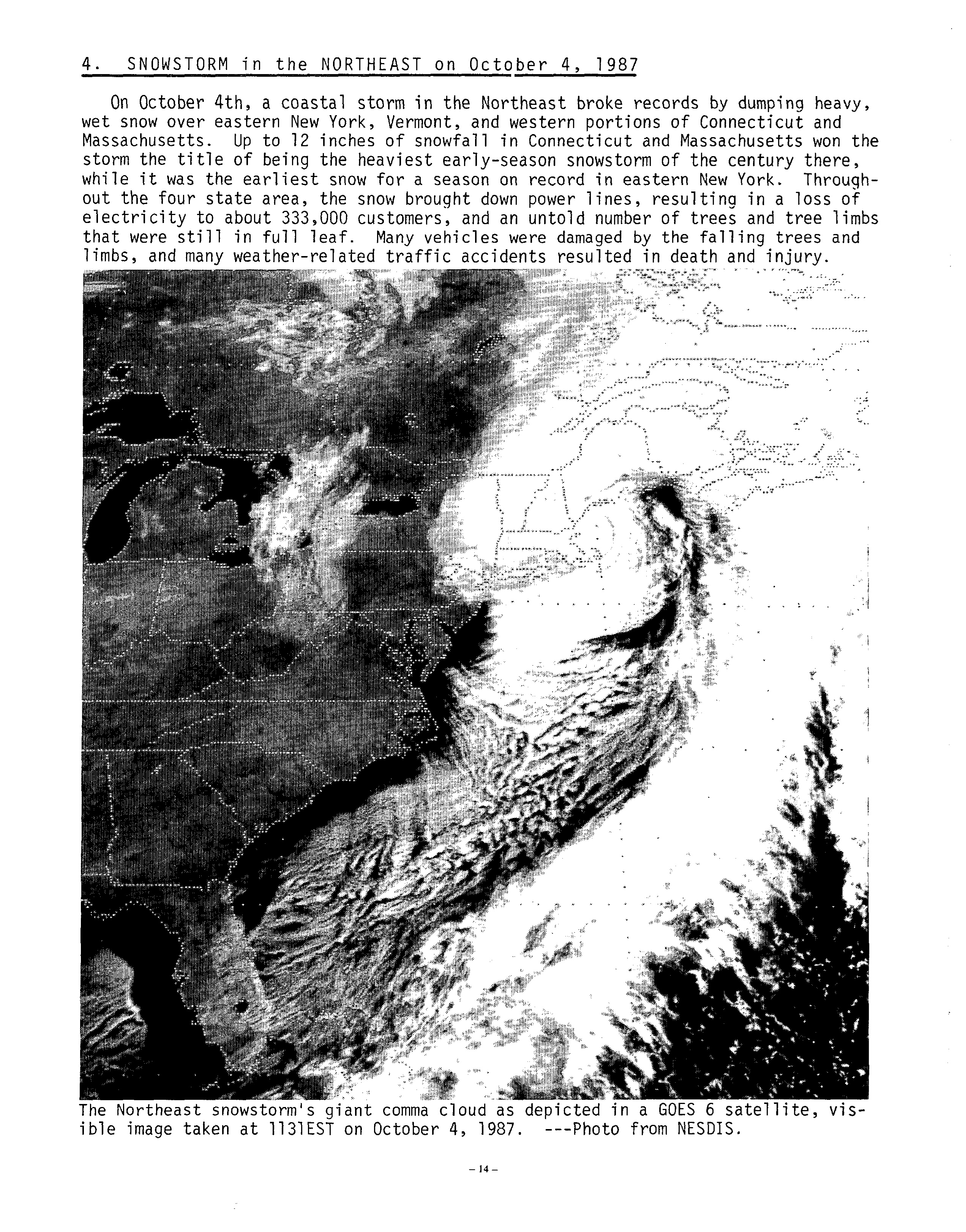
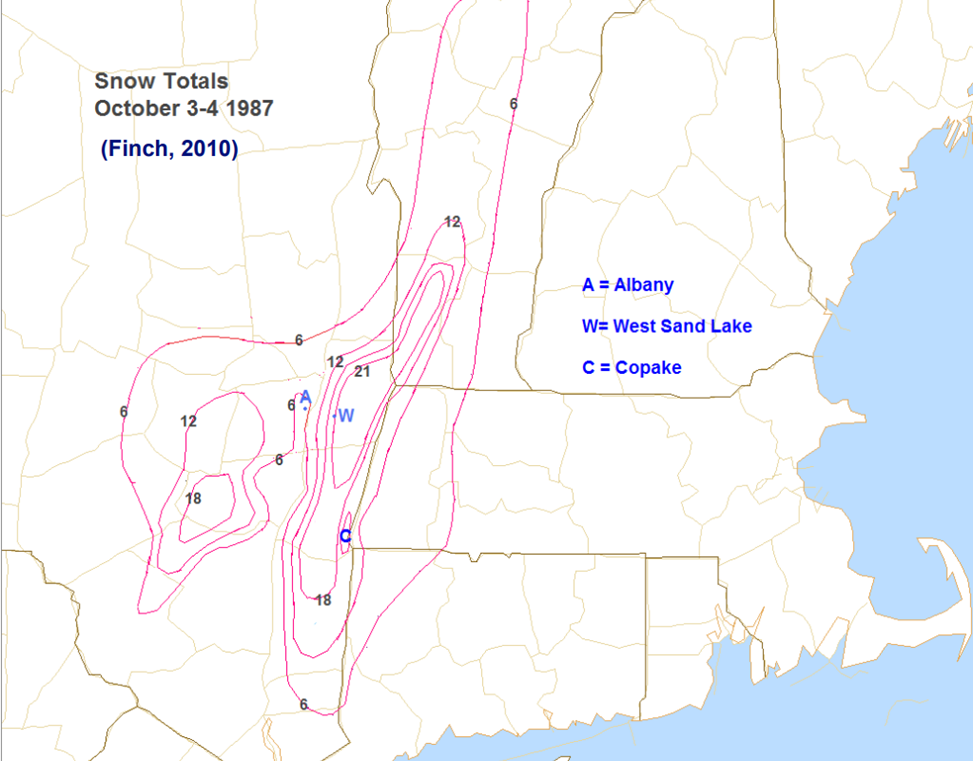
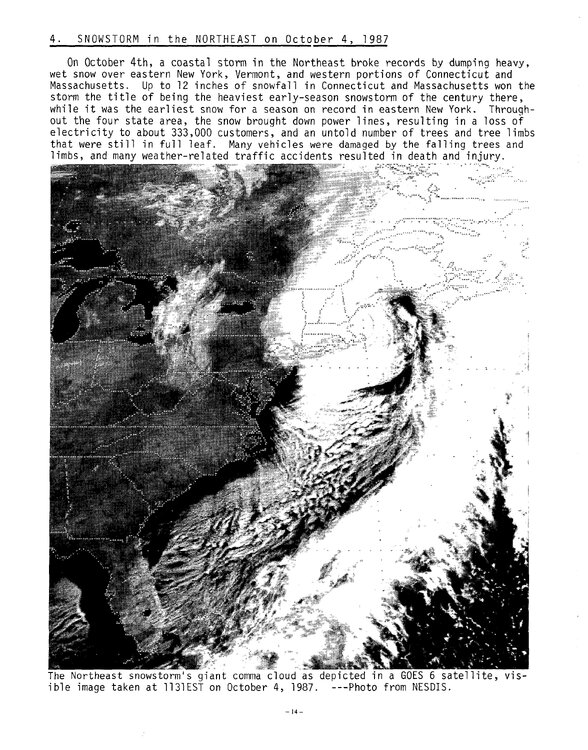
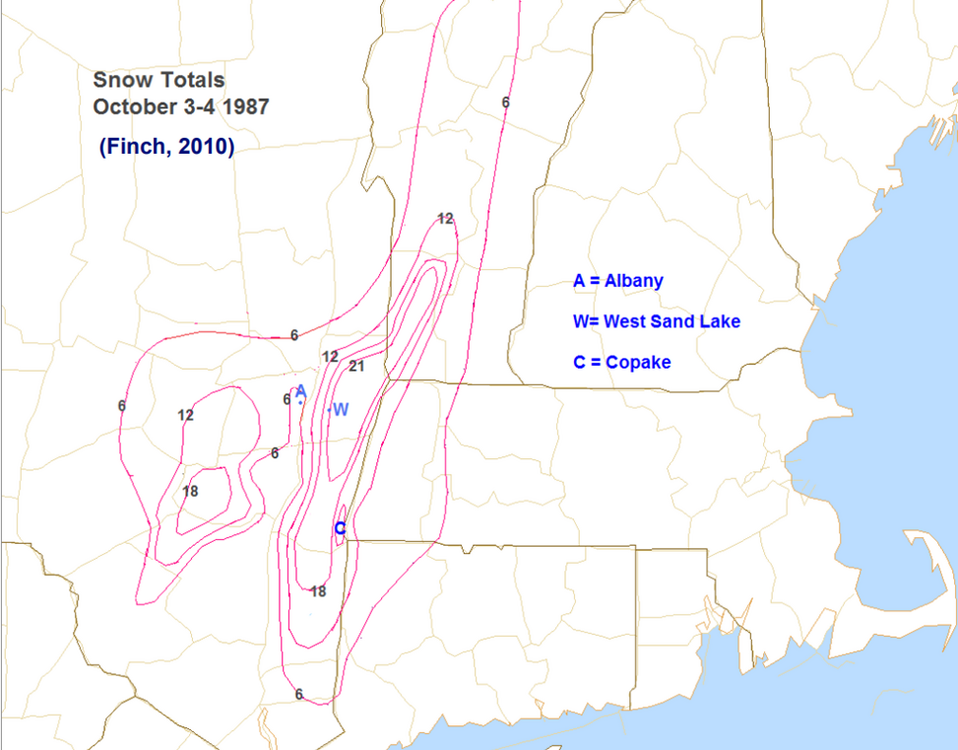
And 39 years ago today, the best early season PT snow event ev-A! Needless to say, it was not fcst! Accum map attached but it's off a bit. 7" fell at DXR and 1" at HVN. Max amount of 26" at Slide Mtn NY and 22" at Grafton NY. 18" at Pownal VT. A trace of snow fell as far E as Ashburnham MA in the @ineedsnow area and as far S as NYC. Not just an elevation storm as even ALB got 6". I have read that the snow was so wet, it was 3:1 ratio, but I do not think that is possible. Let the snow weenie here chime in on this -- "what was the lowest snow ratio event you have had?" It is the first time the term "warm snowstorm" was used, as many areas never fell below 32 for the entire event. Did an 8 year old @CoastalWxrecall waking up this Sunday morning and wondered, "how could this happen?!" Does he even remember it at all?
-
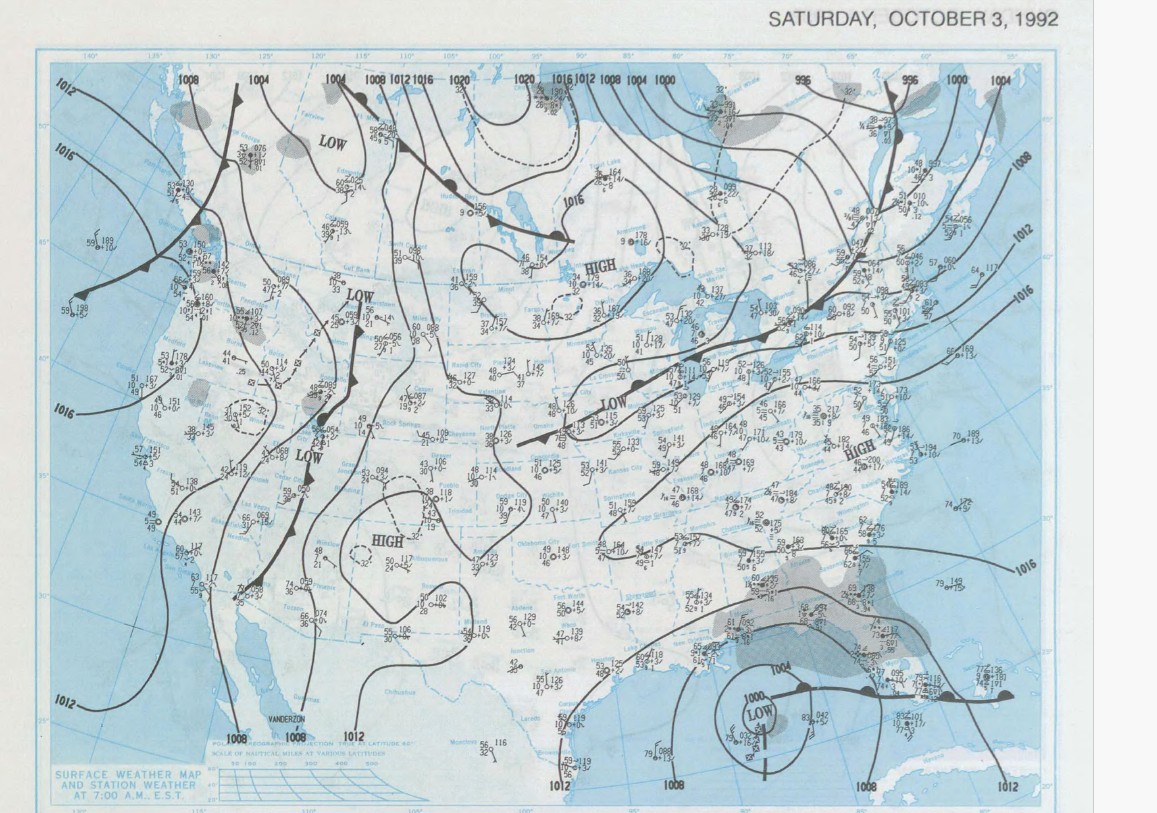
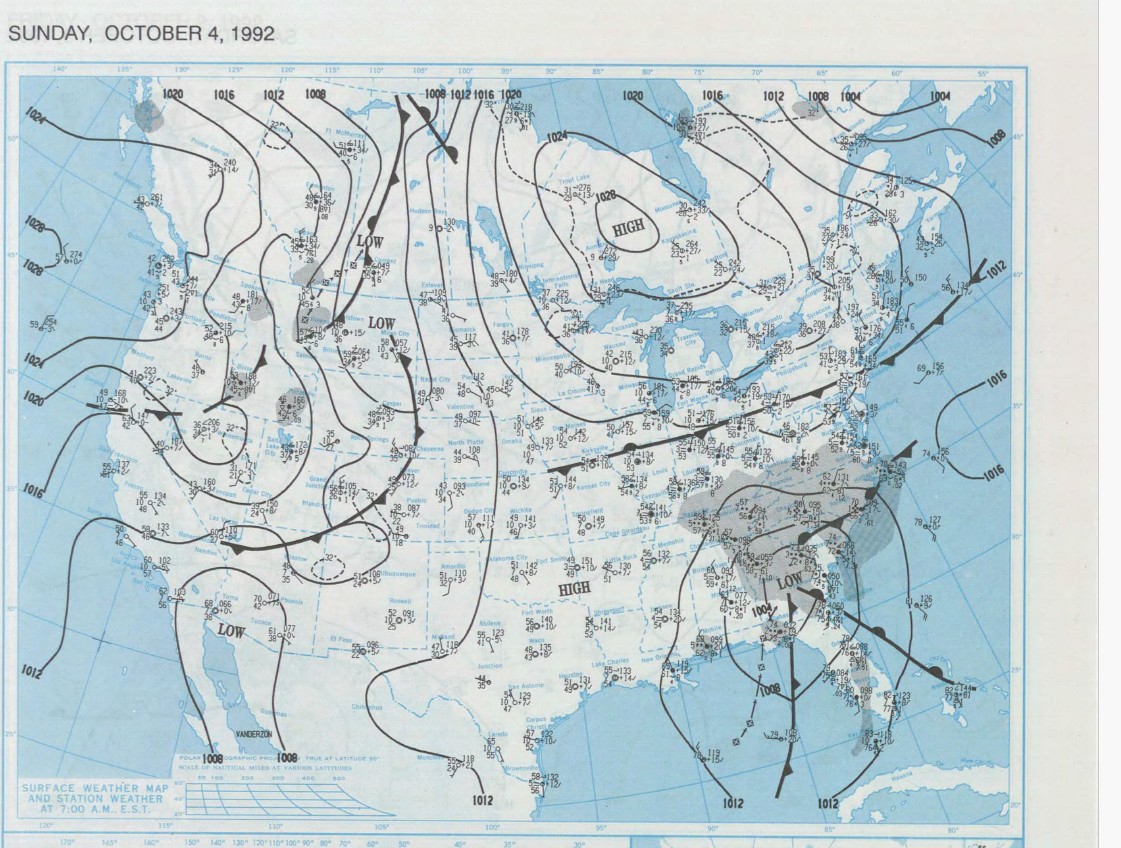
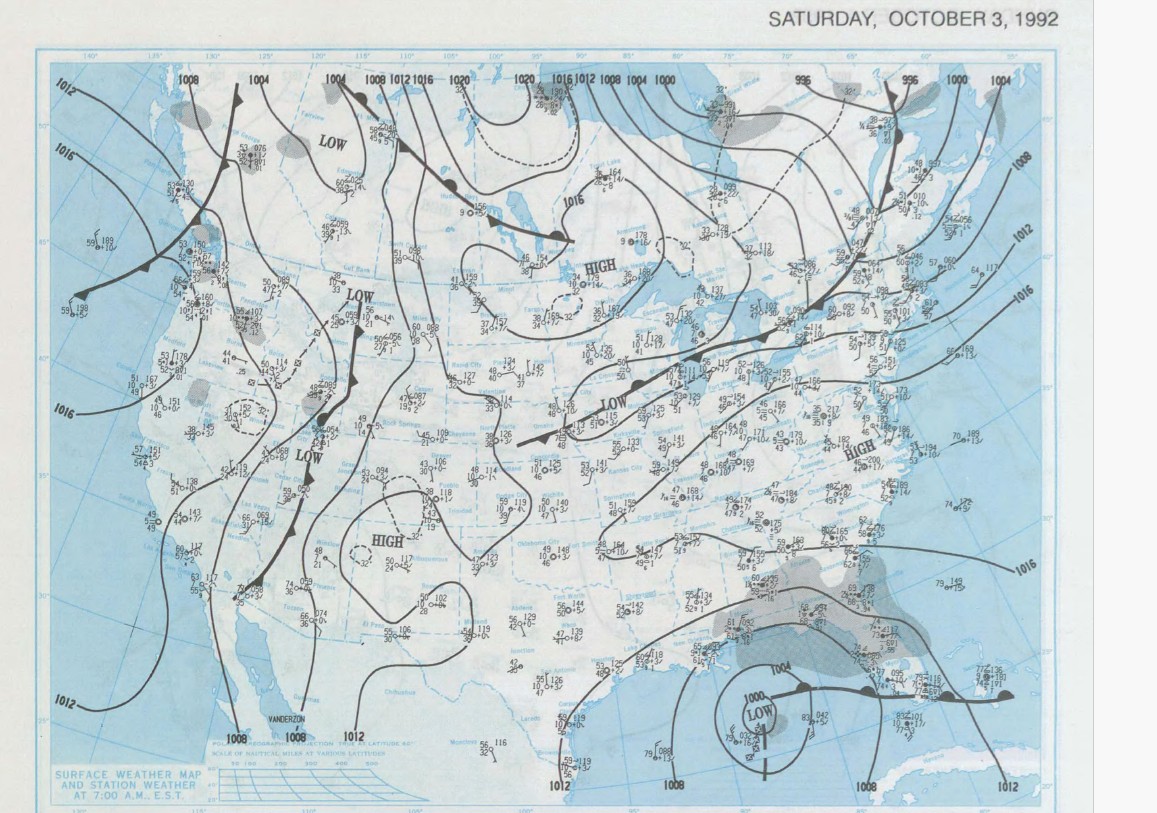
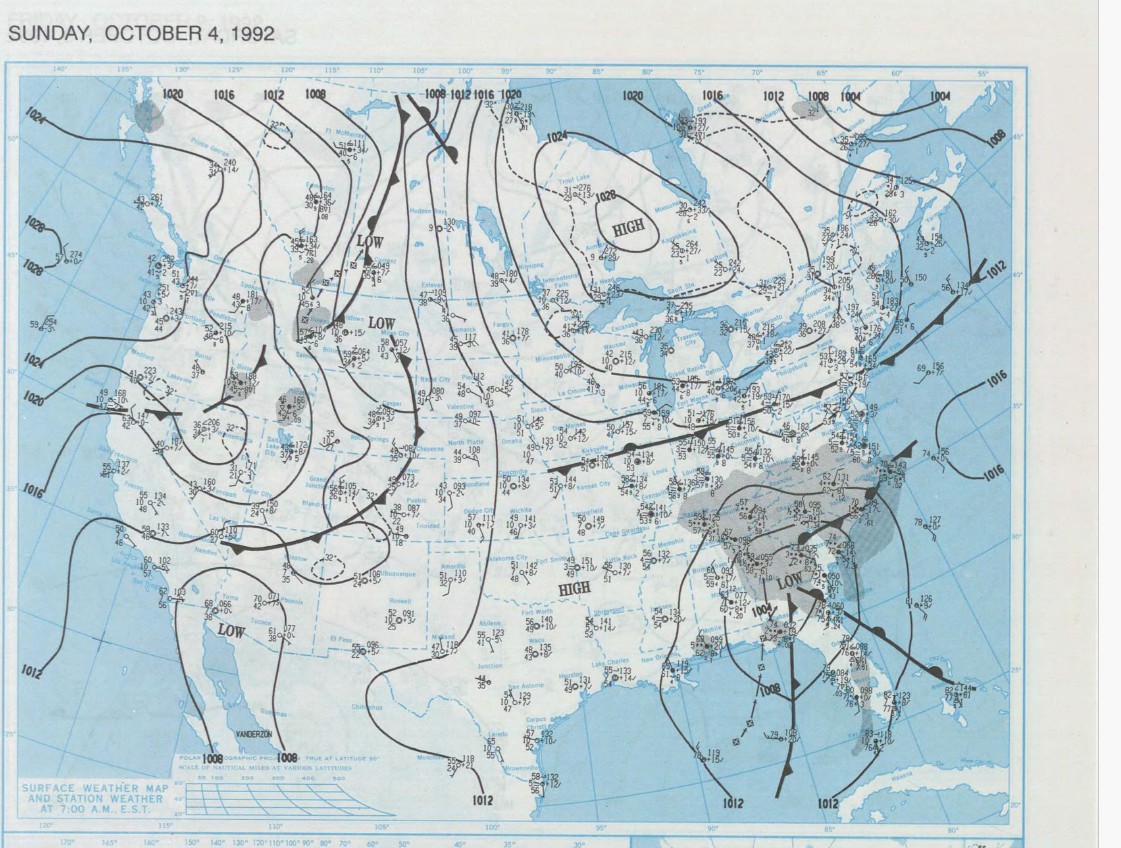
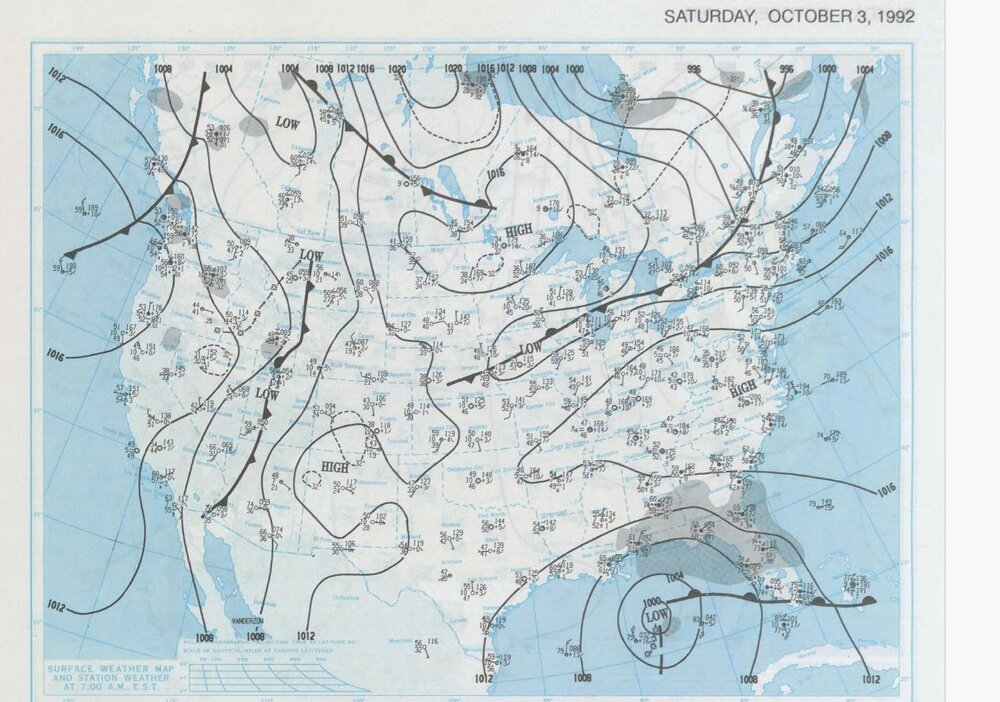
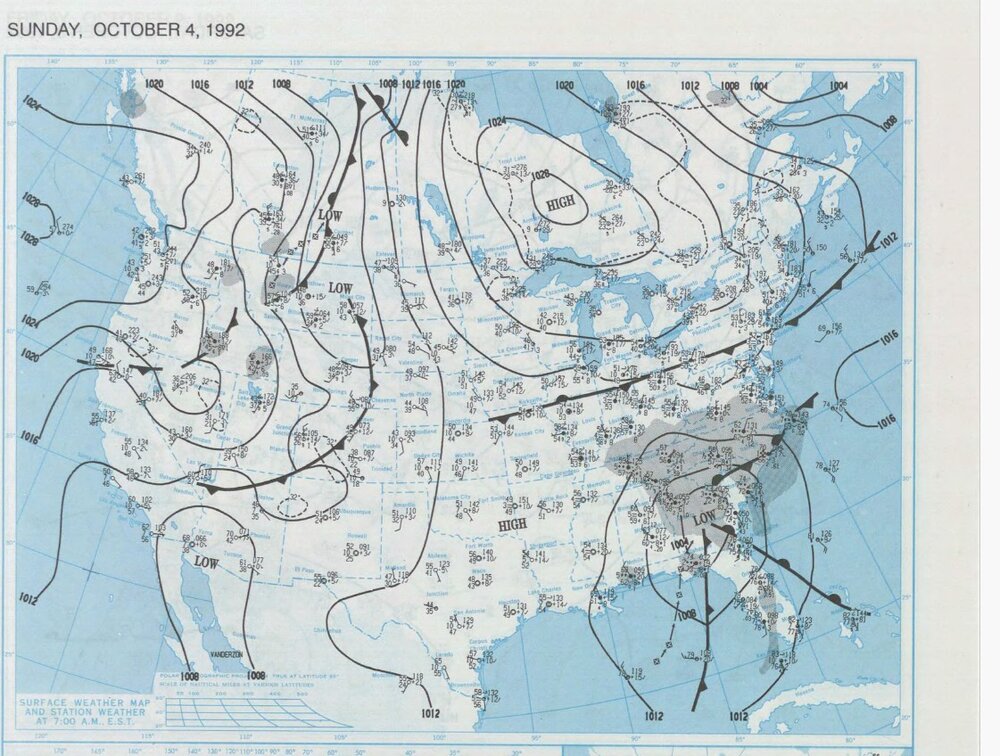
And in case @CoastalWx thinks "this is too early for a Gulf wave," enter Oct 3-4, 1992. He's be surprised... Sig tor outbreak in the TPA area, 5 foot storm surge in the FL PH, and over 10" of RPLUS in Brunswick GA.
-
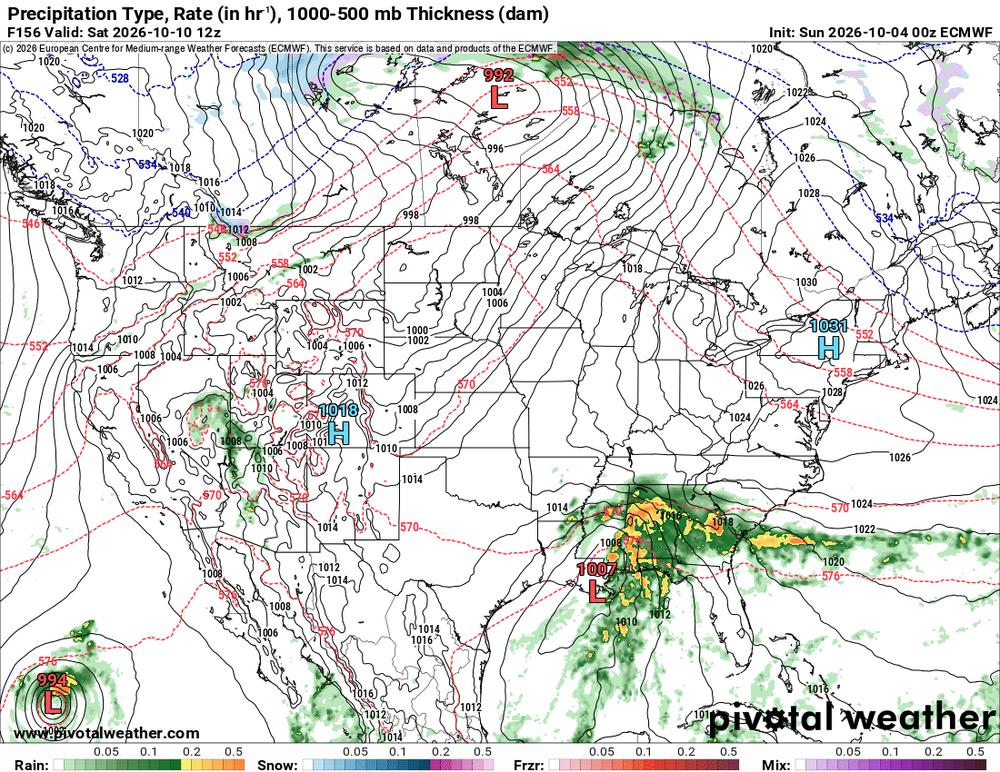
The Miller As begin! And it eventually comes to the NEUS.
-
2026 Atlantic Hurricane Season
vortex95 replied to Stormchaserchuck1's topic in Tropical Headquarters
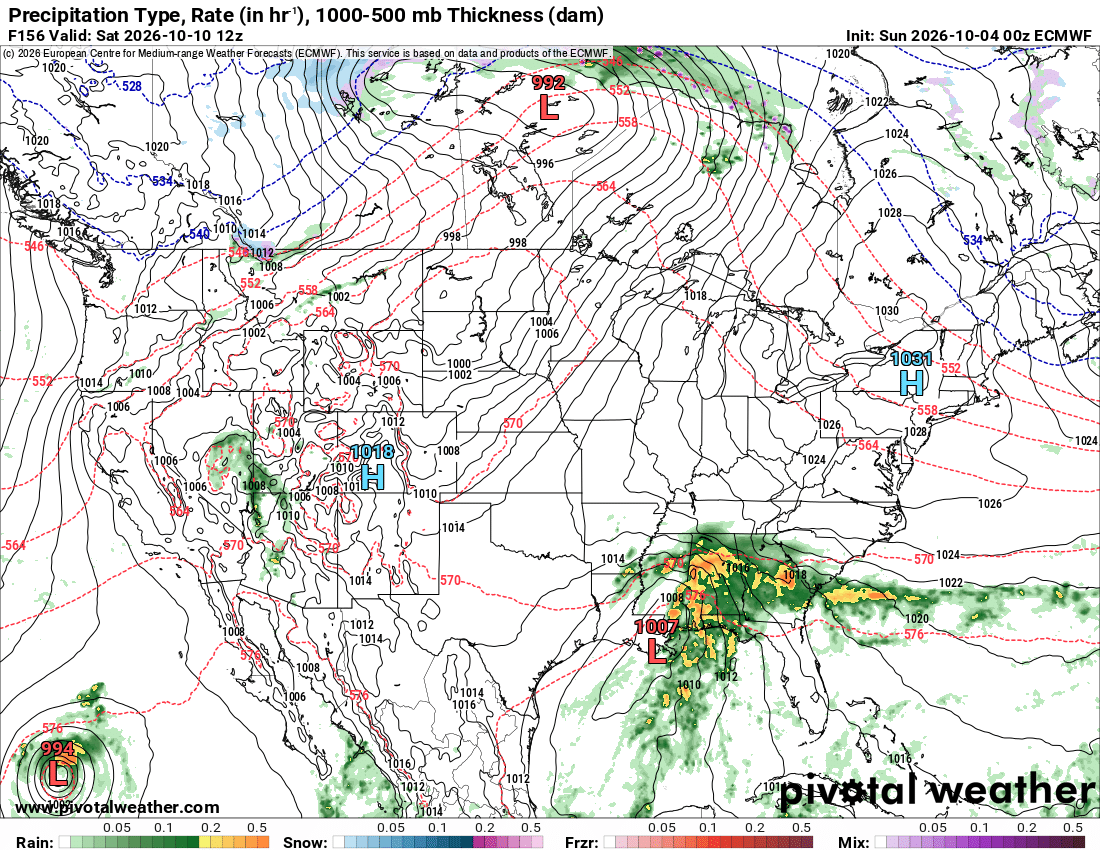
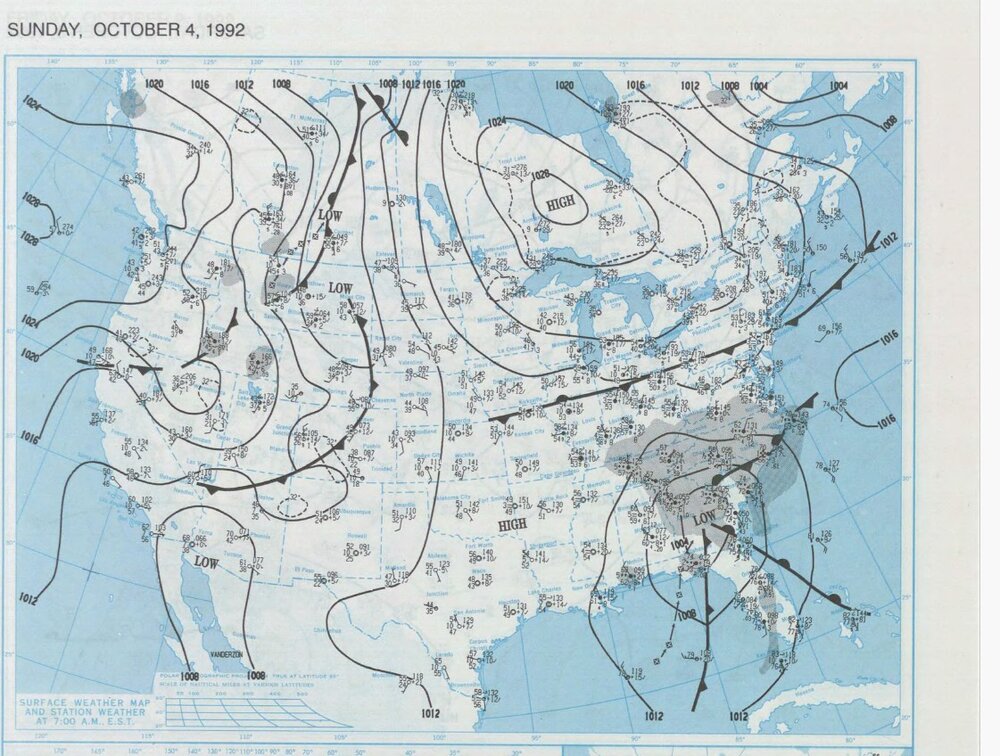
Now the 00z GFS does what the GFS likes to do w/ TCs in the long range, overly aggressive. What the other global models show do not look very tropical. The system is highly asymmetrical and looks more like a monsoonal depression or STS. With a front fcst across the central Gulf, that appears reasonable. It reminds me of ET lows that you get in the cool season in the Gulf when strong El Nino is present, and the subtropical jet does become more defined in the next week. You can get strong ET lows in Oct in this area. Here's one from Oct 3, 1992. Take note @GaWx of the big rains in Brunswick GA! A strong low pressure system moving northeast out of the Gulf spawned several tornadoes in the Tampa, Florida area. One person was killed and 23 homes were destroyed as an F2 twister moved through Largo. 3 people were killed and 75 were injured in Pinellas Park as an F3 tornado ripped through. Total damage was estimated at 32 million dollars. Heavy rain spread over northern Florida and Georgia on this day and continued into the 4th. Jacksonville, Florida recorded 8.69 inches of rain and Brunswick, Georgia was deluged with 10.14 inches in 24 hours. Strong winds and a long fetch pushed tides 4 to 5 feet above normal along the west coast of Florida.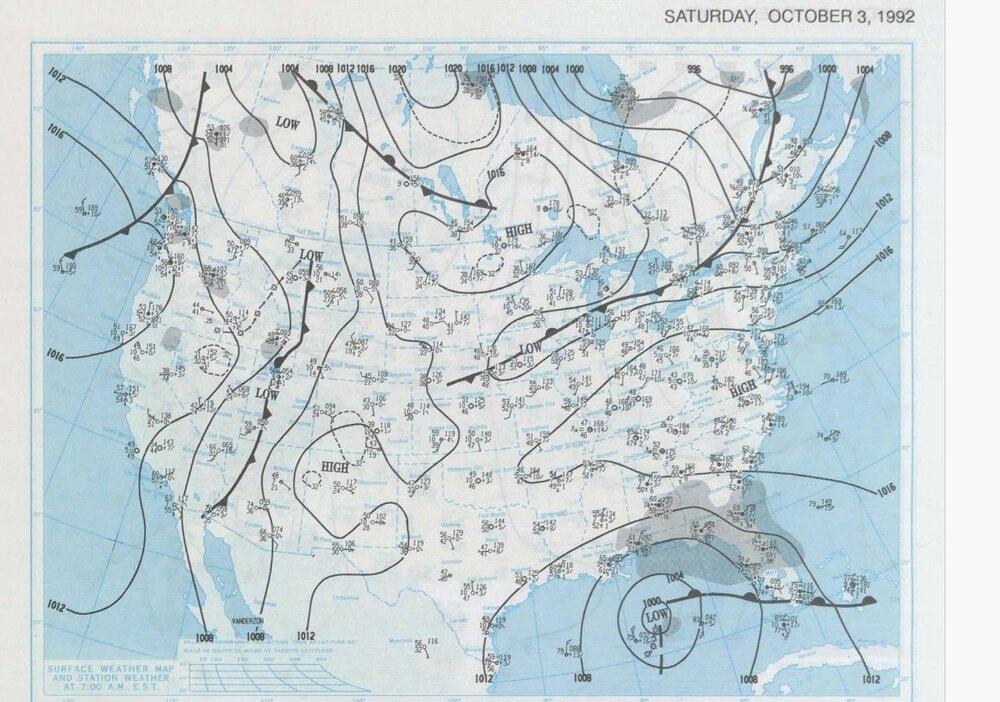
-
Be more specific. Let me put it this way, if NNE gets a foot plus and @dendrite is walking in "white gold," and Weymouth is all rain, you are just as mad as if no storm occurred at all!
-
Well that's part of the issue overall w/ you. Beggars can't be choosers. Now, I guess we can say for @CoastalWx "if it is not a Miller B, who cares...MEH!" And what about the ones that don't "fit?" Dec 9, 2005 for instance, Or the early March 2013 "surprise" event? How about the 100 hr snowstorm late Feb 1969? Oh, wait, "the BOS 26" fell over 100 hr. It was all S- w/ sucky dendritic growth w/ an avg snowfall rate only 1/4"/hr -- WORST EVA!" Meanwhile, in @dendrite country, 50"+ falls!