vortex95
-
Posts
2,209 -
Joined
Content Type
Profiles
Blogs
Forums
American Weather
Media Demo
Store
Gallery
Everything posted by vortex95
-
Another item on Polo. It is rare you see a hurricane in the deep tropics in the NHEMI bodily move SE like Polo has for the past 12 hr. No evidence of a trochoidal eye wobble yet. I hope there is a recon soon. Would be a shame to miss it peak intensity!
-
One other item concerning Polo. The only thing that may prevent record territory here is its slow, meandering movement in the next 24 hr. Yes, NHC notes the high OHC, however, when talking absolute records, everything typically has to be near ideal. The deep-layer 31 C SSTs, if that "only" falls to 30 C due to upwelling, that can be a factor. Still very intense, but 1 C difference in SST can be significant, in a relative sense, in this case, again when you are talking record territory.
-
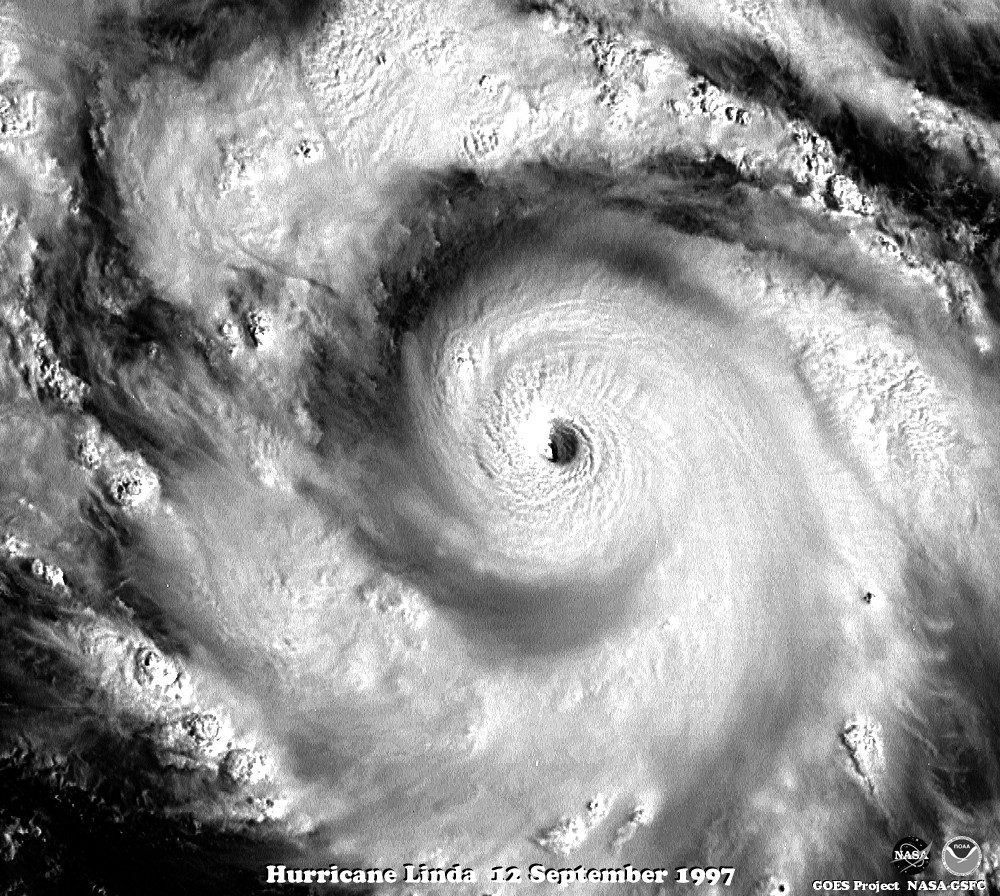
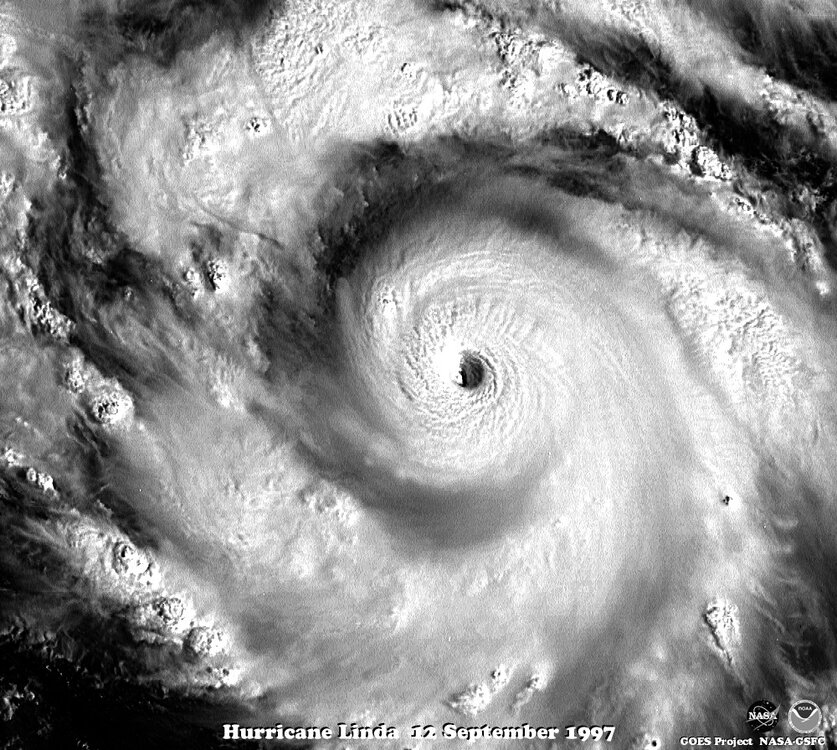
HU Polo is in an RI phase now, and it would not surprise me if it over-performs and gets to high-end (150-160 kt). This tends to occur in very strong El Nino. We had Patrica in 2015 and Linda in 1997. Linda never has a recon in when it was intense, sot its 160 kt peak is estimated, but it is likely it was higher than that. Look at this VIS image of Linda on 9/12/97. It was not as small as Patrica, but look at its CDO and very sharp subsidence ring around it. That is tell-tale sign of high-end intensity! Probably closer to 170 kt for a peak, but as I noted, NHC does not go above 160 kt for a TC in the absence of recon or other in situ data. The uncertainty when you get this intense is just too high, but one can say it was highly likely it was at *least* 160 kt!
-
2026 Atlantic Hurricane Season
vortex95 replied to Stormchaserchuck1's topic in Tropical Headquarters
This short paper from 2007 (attached) from Chris Landsea of NHC summaries well the issues w/ "missing" TCs in the Atlantic. Counting Atlantic Tropical Cyclones Back to 1900 From the paper: In particular, Landsea et al. [2004] esti- mated an undercount bias of zero to six tropical cyclones per year between 1851 and 1885 and zero to four per year between 1886 and 1910. These undercounts roughly take into account the typical size of tropical cyclones, the density of shipping tracks over the Atlantic basin, and the amount of popu- lated coastline. As one goes back further in time, the numbers of ships and shipping lanes decreases and fewer people live in the tropical and subtropical coastal regions. These factors make it increasingly likely that some tropical cyclones would not be counted the farther back in time examined. I like how he compared 1933 to 2005, which is #1 and #2 for most ACE in a season. Look at the gap out in the cntrl and ern Atlantic. The 20 storms in 1933 I bet is at least 5-8 too low. We saw what happened in 2005 when everything went "right." We were getting late- season oddballs Oct-Dec often cntrl and ern Atlantic, and that season redefined what we call a TC and expanded what was possible! He said that as to hurricanes from 1851 to about 1940, anywhere from 0 to 4 hurricanes in the Atlantic were likely missed in any given year, w/ the avg being likely close to 1. Meaning that 1914 probably had a hurricane, just never detected. When you see something like Fay recently, and tiny systems like Oscar even when not in the middle of nowhere, you see how the probability is quite high here. It is fascinating stuff to look at history and do "sleuthing!" The Hurricane Reanalysis Project displays this best. I wish other agencies would do this for TC basin worldwide. There is *lot* of data out there that could be gathered, analyzed, and much to be found. And you do not have to go the far back. Full geostationary sat coverage did not exist in the western Pacific until 1987 and not until 1989 over the IO. However, for over 25 years up to this point, we had plenty of polar imagery, and as I mentioned, the delays in transmission of polar imagery in those days was several hours or more, so it could not be used operationally to assign proper TC intensity. It's the main reason why if you want to look at trends for TCs in the IO, you really can't start until 1990, and by extension, global TCs are well. The SIO is the second most active basin globally for ACE per year. landsea-eos-may012007.pdf -
2026 Atlantic Hurricane Season
vortex95 replied to Stormchaserchuck1's topic in Tropical Headquarters
Yes, you can clearly see the outflow plume on the N side getting squashed by nrly shear. It is moving steadily S now as well. S movement outside an eye wobble loop usually means not good times ahead as it takes quite strong flow to push a TC bodily S. Most of the time, the LLCC gets exposed in short order. An exception I can think of was Joaquin Oct 2015, but that was much farther S (22-23N) and over the Gulf Stream. Solid, strong banding on the E side of Fay now, but the W side convection is waning. -
Septorcher 2026 Discussion - Endless Summer
vortex95 replied to Damage In Tolland's topic in New England
And there full LEAVES on the TREES! One thing @CoastalWxneeds to account for here for the winds. -
Septorcher 2026 Discussion - Endless Summer
vortex95 replied to Damage In Tolland's topic in New England

-
Septorcher 2026 Discussion - Endless Summer
vortex95 replied to Damage In Tolland's topic in New England
One thing about lows that hook or loop back to the NW, it jacks up the winds more as it pushes against the high to NW. One reason why the Oct 2021 event was NUTZ for WINDZZZZZZZZZZ! -
Septorcher 2026 Discussion - Endless Summer
vortex95 replied to Damage In Tolland's topic in New England
@CoastalWx must relent! And yes, it might just be a "COASTAL WX" sig impact event, but so was the Perfect Storm in 1991! -
Septorcher 2026 Discussion - Endless Summer
vortex95 replied to Damage In Tolland's topic in New England
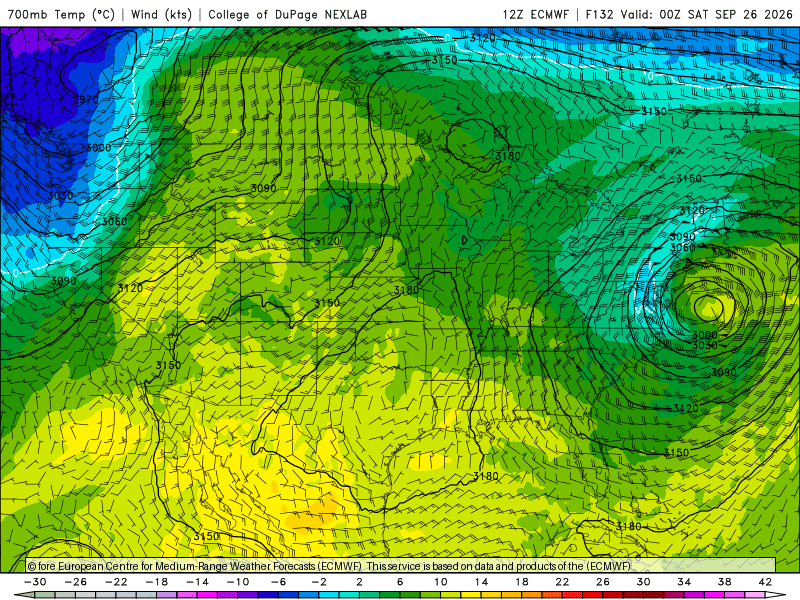
12z ECMWF by 132 hr showing a strong warm seclusion unfolding (-6 C at 500 and +11 C at 700). I will get way ahead of myself and say this now, and an excuse to talk about past policy and events! The problem I see here is not whether it goes ST, it is the messaging. A strong non-tropical low then going ST and getting a name when it is sitting close to the coast? That is big problem for messaging b/c non-tropical wind warnings would have to be changed to tropical wind warnings! I do not know of any case like this this close to the coast, but similar things have happened. The Perfect Storm in Oct 1991. Once it deeply occluded, it drifted S of the Gulf Stream and become a hurricane, but they did not call it such operationally *even* thought they had a recon in it and found a 981 mb pressure and 88 kt FL winds! I found that disingenuous, as it was abundantly clear what it was, but NHC did not name it, and only included it in post-season analysis. The reasoning was they did not want to confuse the public, as the public may have thought the storm was a hurricane all along and cry foul. Such would never happen today b/c of the internet and social media. Back in those days if NHC could get away w/ not declaring a high latitude or out of season TC and defer it to post-season analyses, they would. But it has gone further. In Sep 1992, there was a small hurricane that quickly developed just N of TXKF, and it passed close to Sable Island when it was starting to weaken on sat, but they still recorded 55-60 kt winds. It was not even included in post-season analysis! In the TWO, it said, "moving towards cooler waters." That was "out phrase" for NHC not to declare something back then. Again, disingenuous and I find lazy. Just b/c something only exists for a short time, does not mean it does not exist! There are 5 suspect TCs in 1992 alone that will likely get included in HURDAT once the reanalysis project gets into to the 1990s (they plan to go to 2000). And for those wondering, the pre-Christmas 1994 storm ( the @CoastalWx “how did you know about that?” event) is a likely candidate for a 70 kt hurricane, peaking at 70 kt / 969 mb near 40/70.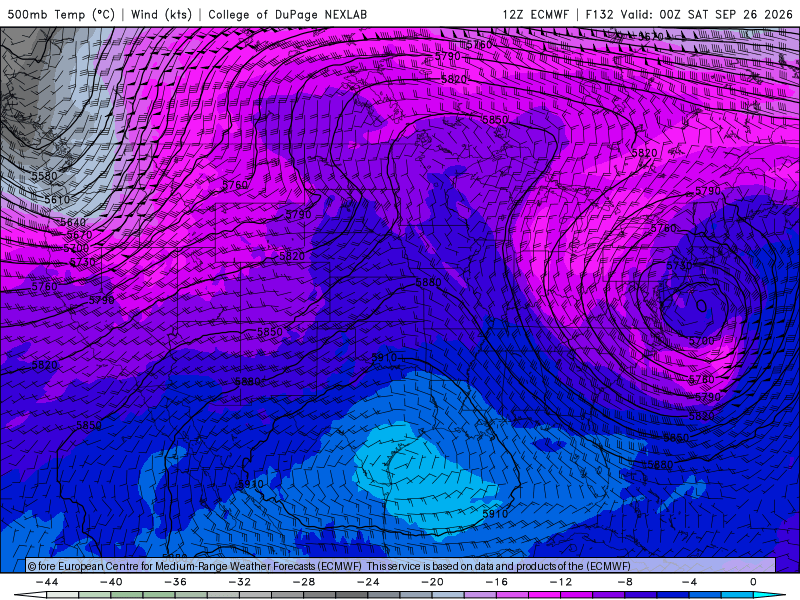
-
Septorcher 2026 Discussion - Endless Summer
vortex95 replied to Damage In Tolland's topic in New England
If this was Jan, you'd be all in at this point! -
Septorcher 2026 Discussion - Endless Summer
vortex95 replied to Damage In Tolland's topic in New England
No back-pedaling allowed! Your initial approach was, "ho-hunm, maybe we can get something" said in EEYORE tone, despite strong signals in the models. -
Septorcher 2026 Discussion - Endless Summer
vortex95 replied to Damage In Tolland's topic in New England
How about those 12z ECMWF rainfall totals when all is said and done? 9.95" right over Weymouth! Would be among the best Nor'easters in Sep for the region.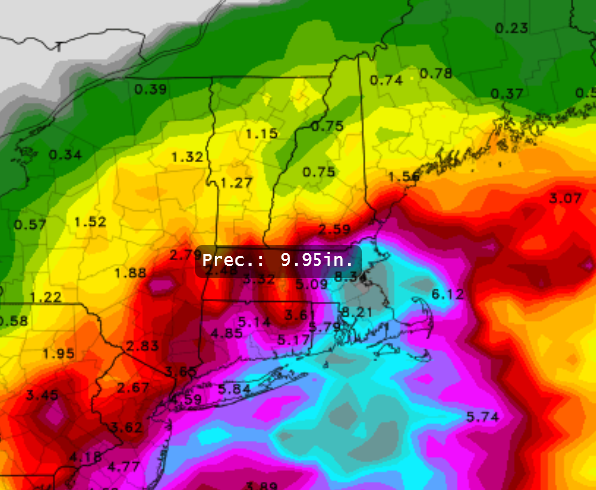
-
2026 Atlantic Hurricane Season
vortex95 replied to Stormchaserchuck1's topic in Tropical Headquarters
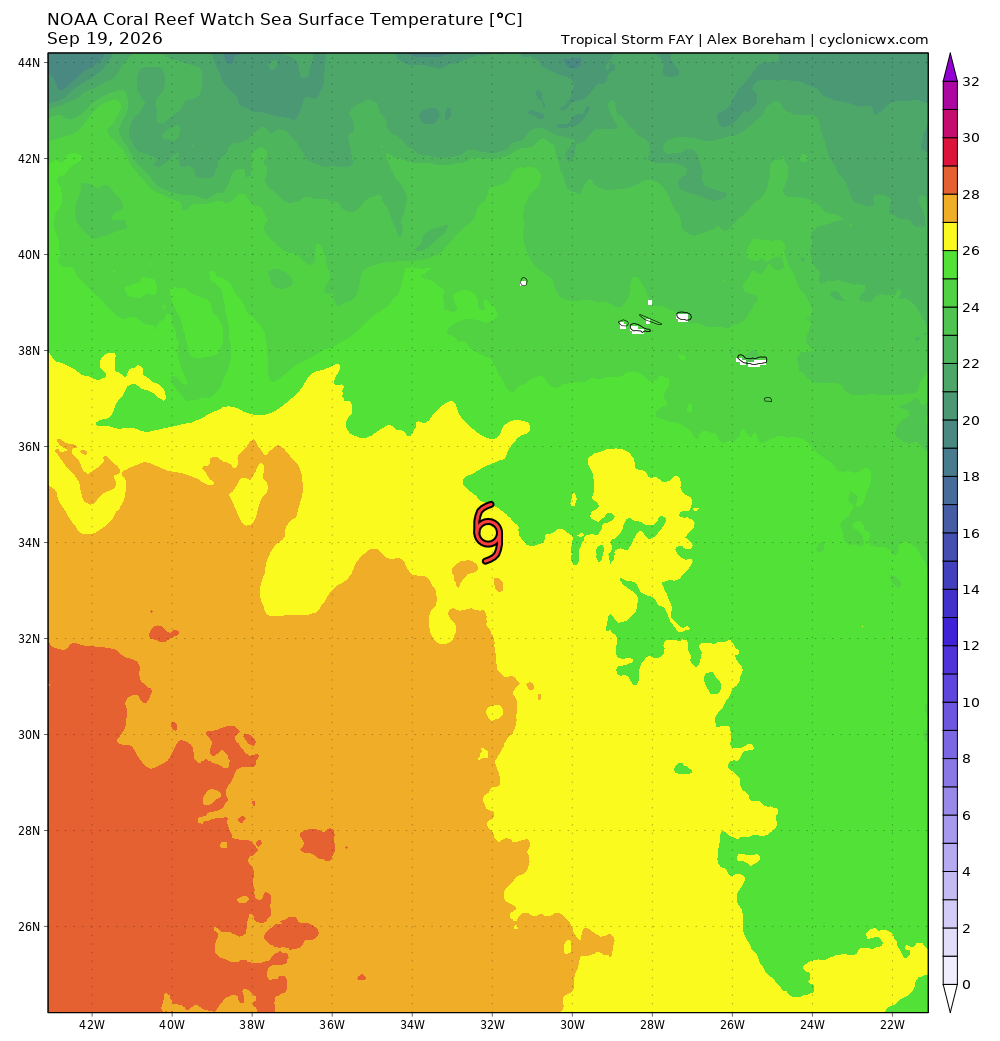
Yes, a dry air slot. Look at the last few EIR frames. It is possible since it has not moved much at all, some upwelling is taking place. 00z ATCF gives it 60 kt/995 mb. Hard to get a T4.0 (65 kt) from Dvorak w/o an eye or embedded center pattern. You need excellent banding and very cold cloud tops for a 4.0 when a banding pattern is applied. Tiny TCs are indeed not handled well by Dvorak, however, that largely applies when there is an eye (can't get a cold ring thickness wide enough for proper T-numbers). Also, Fay is over marginal SSTs (see attachment) and not in pure tropical environment, so the mixing down of the higher winds aloft 500-800 m up is not ideal. I'm just pointing these factors out now b/c I'm sure you'll see discussions/debate if it was a hurricane or not, pending the next 6-12 hr! Still, Fay did what can be expected for tiny systems. Models will have no clue. Recall Oscar from a few years ago.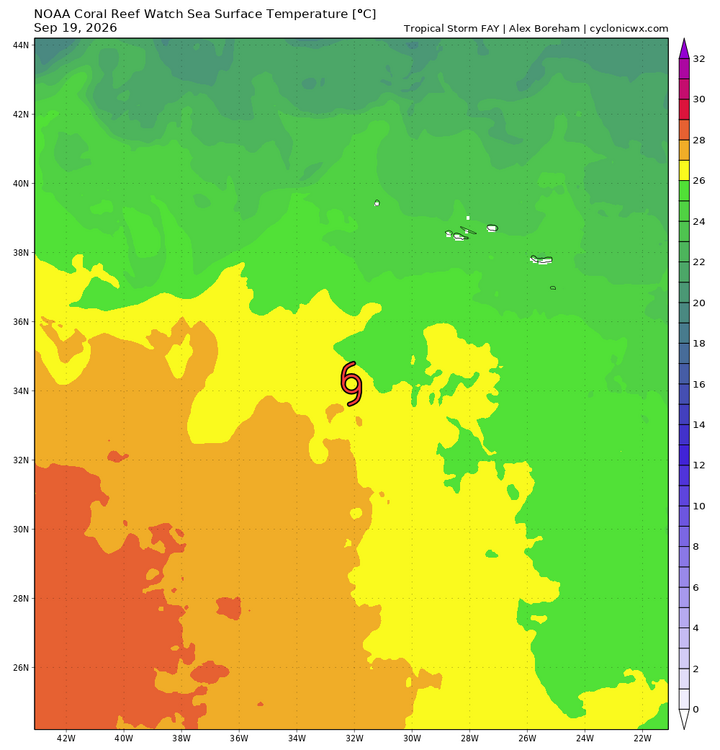
-
Septorcher 2026 Discussion - Endless Summer
vortex95 replied to Damage In Tolland's topic in New England
What? The GFS and ECMWF show extended storminess, unlike anything I can recall in Sep. Even before the rain, that E fetch sets up and sticks around for almost a week? Do you know what kind of coastal flooding that will result in w/ the water piled up constantly for so long? That sprawling high stuck to the N is epic for Sep. 1036 mb? That would be excellent for the heart of winter. And the GFS and ECMWF both shows it well. And they way it tries to reload for coastals as the blocking stays in place? And then big QPF wildcard. I guess b/c it is isn't snow, @CoastalWx doesn't care? Jaded, tattered, and torn from the "boring" pattern, and when something potentially historic for an extended Nor'easter so early in the season for the NEUS shows up, he be like "MEH!" Very, very disappointed in you!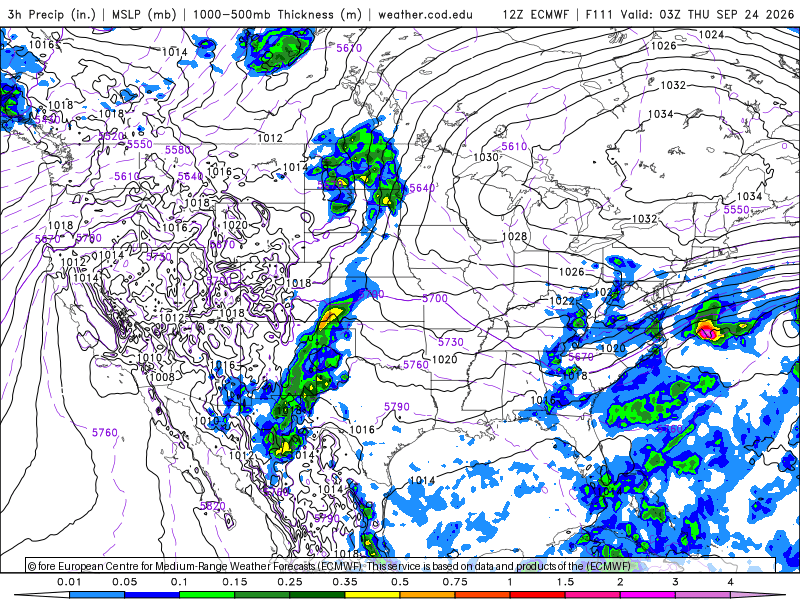
-
2026 Atlantic Hurricane Season
vortex95 replied to Stormchaserchuck1's topic in Tropical Headquarters
I spoke too soon. Strong anticyclonic shear is disrupting the core in the last few hr and the circulation getting elongated again. I would be surprised if they upgrade it to a TS at 03z, unless they get a good ASCAT or SAR pass showing TS-force winds. -
2026 Atlantic Hurricane Season
vortex95 replied to Stormchaserchuck1's topic in Tropical Headquarters
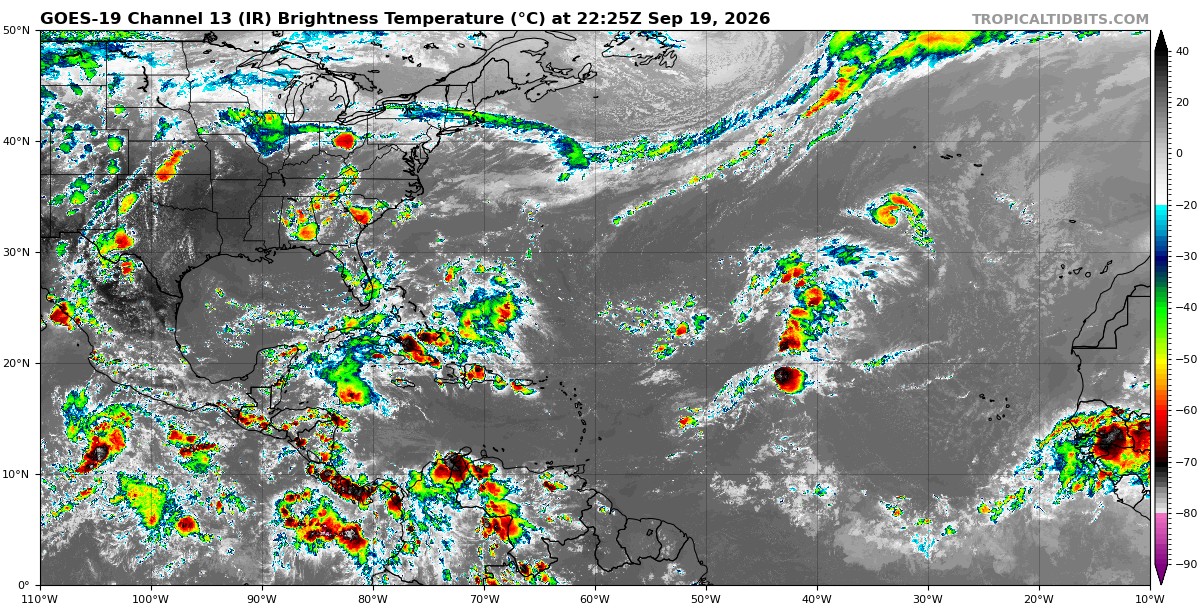
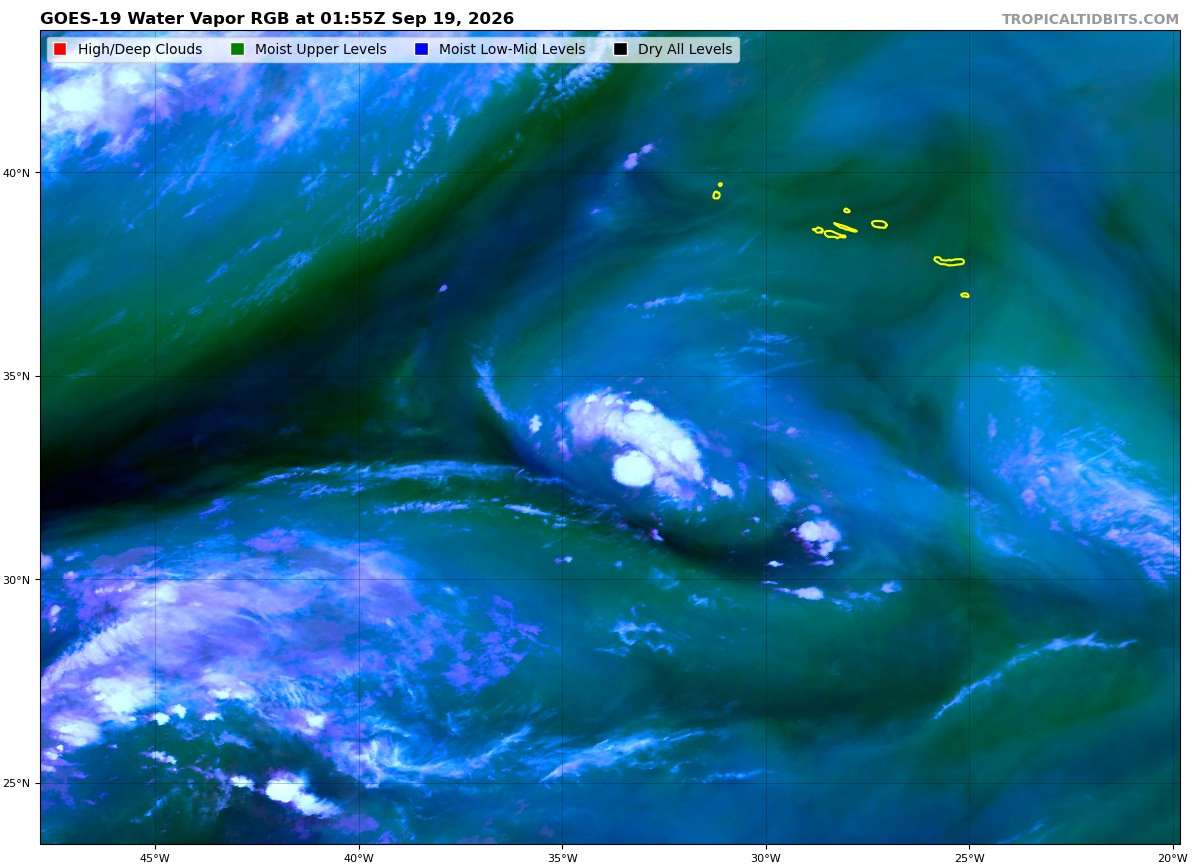
Talk about threading the needle. That anticyclonic cirrus shear plume is right on the doorstep of the core, and yet no shearing of the convection over the core. One thing about seasons like this, the TCs are often small. TD6 exemplifies this. At first glance in vacuum, you look at the EIR image below of the Atlantic, and go, "where is it?!" Areas of convection exists sig larger than TD6 here!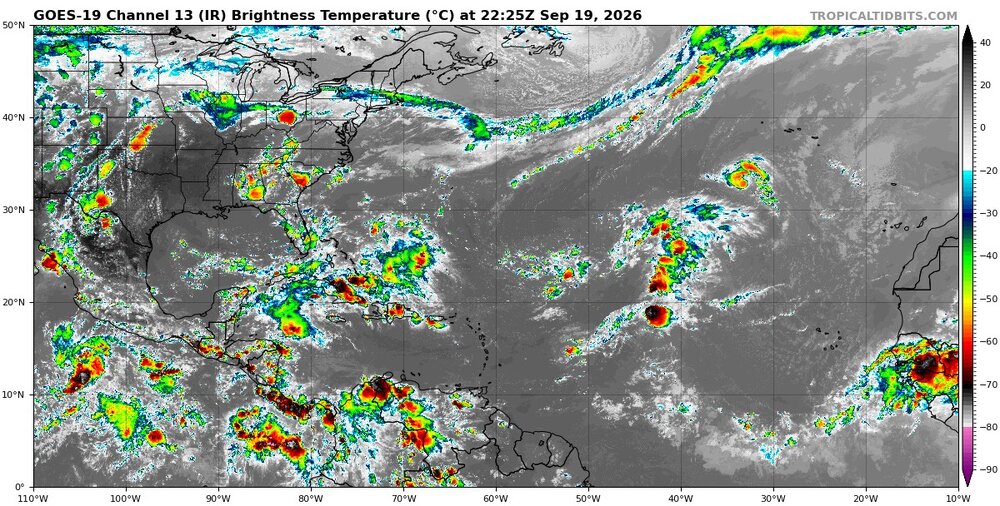
-
2026 Atlantic Hurricane Season
vortex95 replied to Stormchaserchuck1's topic in Tropical Headquarters
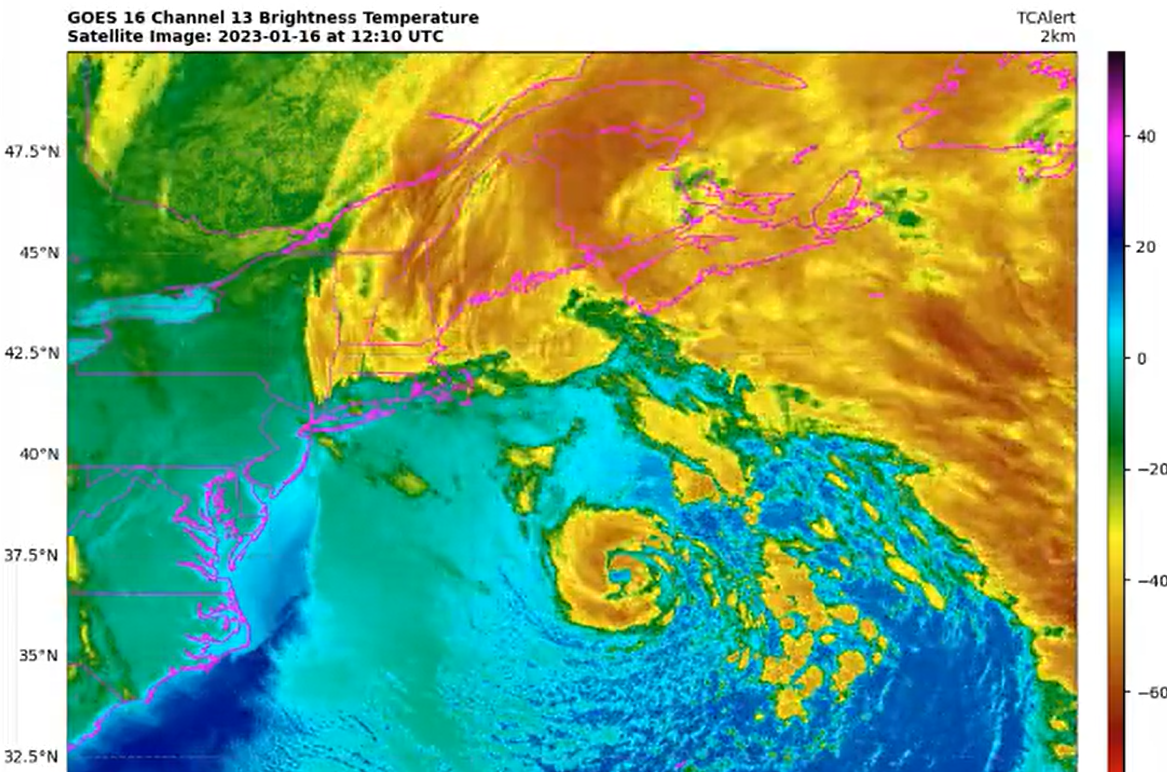
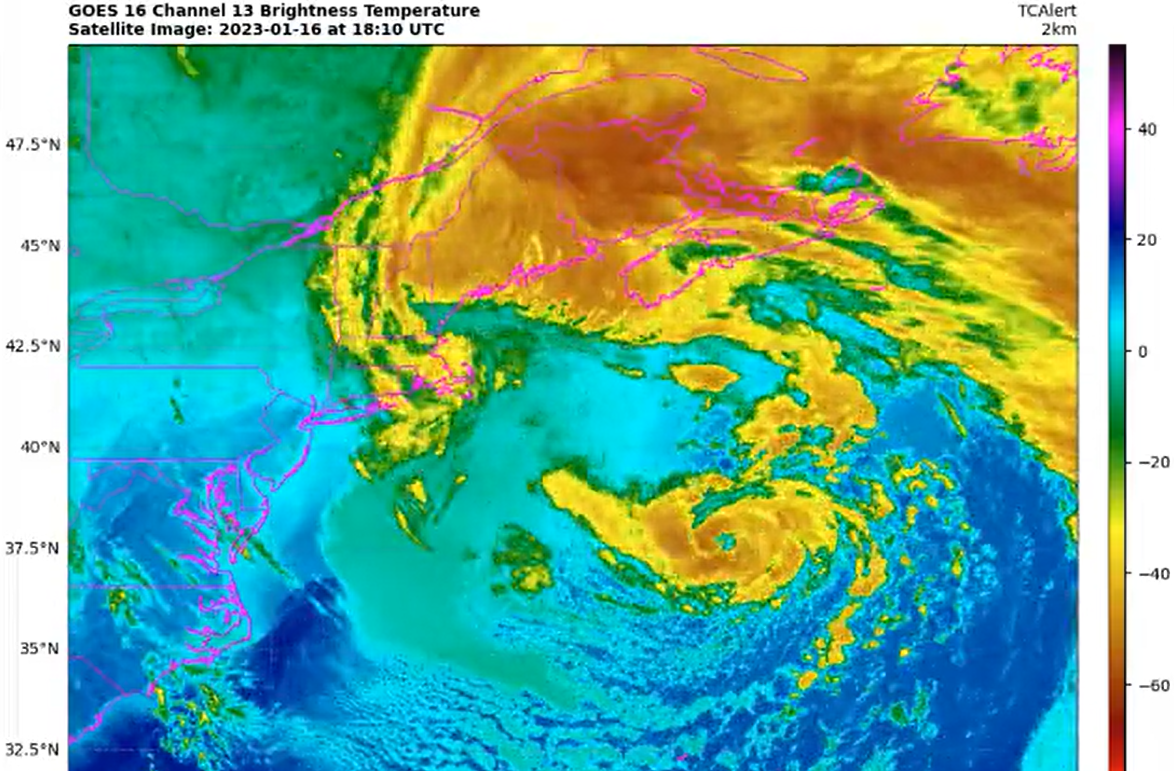
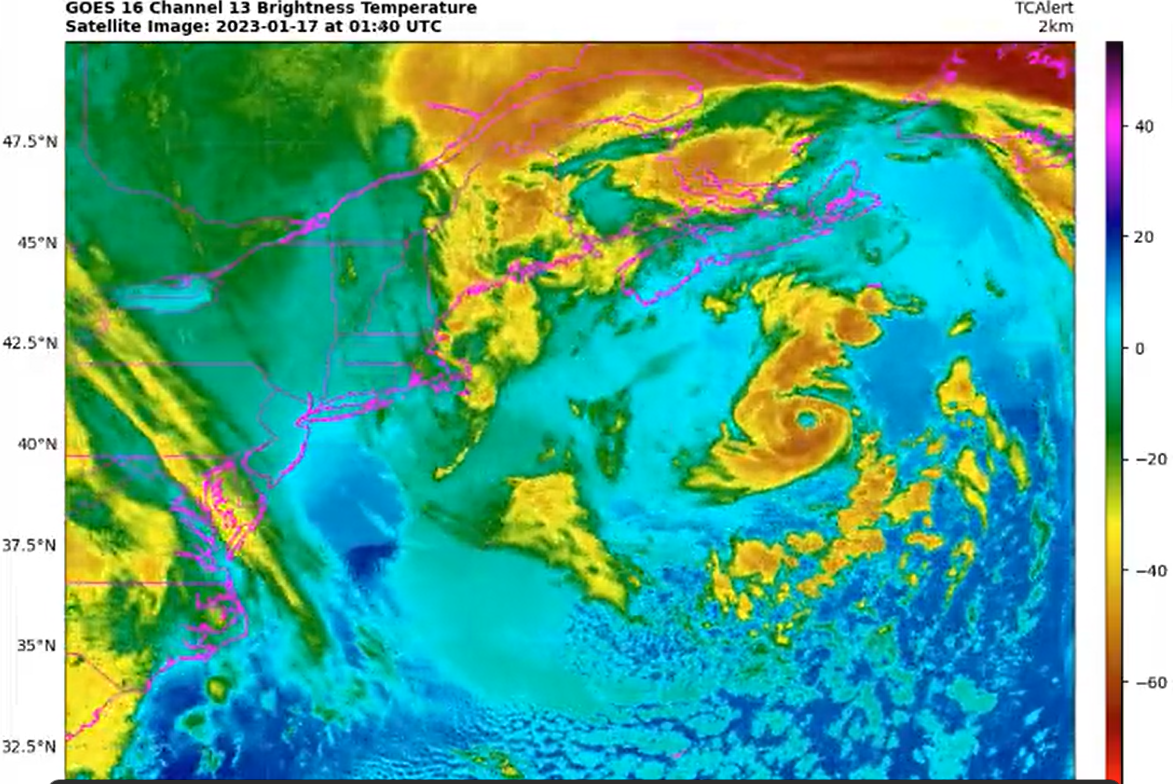
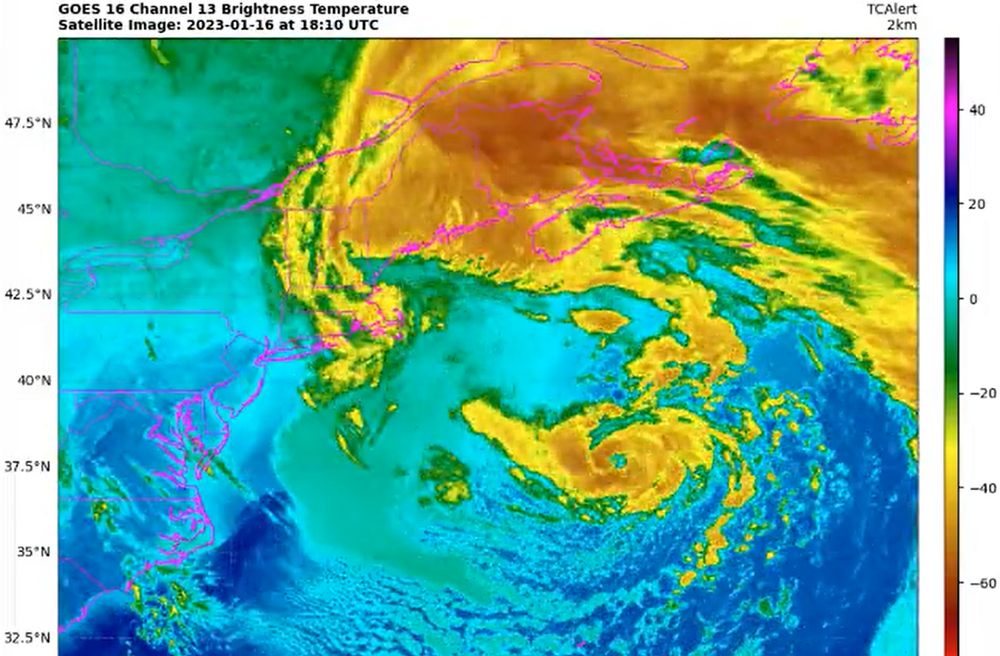
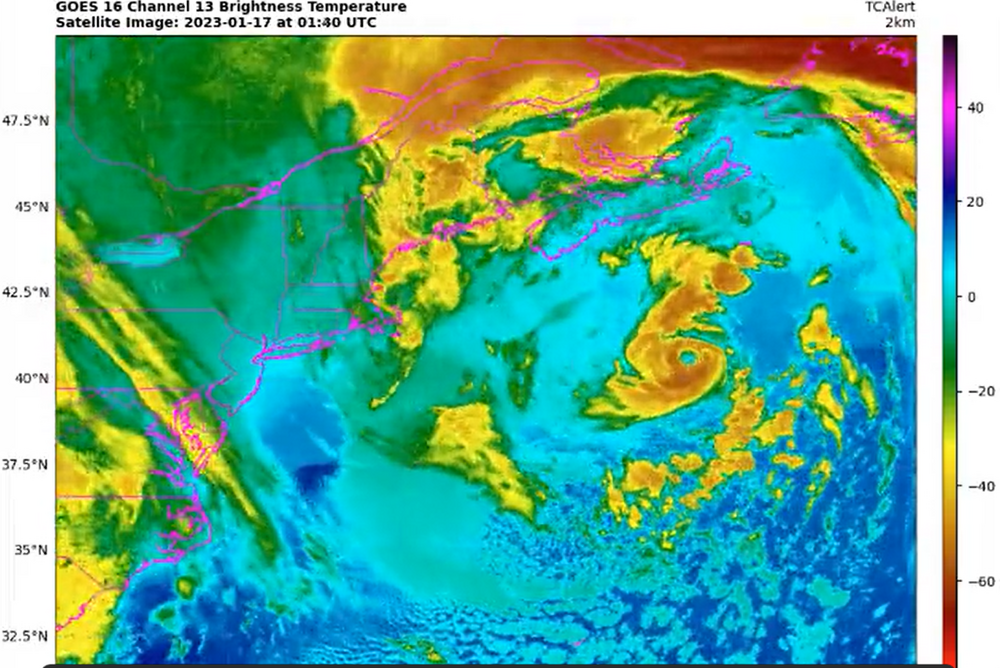
As much as they would not admit, sometimes that is a factor. Here is something similar. Recall the system S of New England Jan 2023? That was a hurricane, but they blew it off operationally. Yes, a few months later they included it as a 60 kt STS, but not operationally declaring it when it was clear what it was? So that suggests that if they can get away w/ not doing it operationally, and just let post-season analysis "deal w/ it," they will. Another motivation could have been that a hurricane close to the East Coast "out of blue" in Jan? The public and media would freak and perhaps they did not want to deal w/ all that, but again, we should not be summarily constrained by policy or social/political factors when it comes to operational meteorology and calling things for what they are. And this ended up impacting marine Canada, so it was not a "fish storm." And put it this way, we've seen far worse looking systems declared/called a TC. So where is the meteorological consistency here? Loop here: https://x.com/WxTca/status/1615532584016162822 Sfc and SST analysis https://x.com/burgwx/status/1615099242728628231 That is a clear eye and quite deep convection for Jan. I got T4.5 on it (77 kt) using Dvorak. Now granted, SSTs were 21-23 C, so that means less efficient mixing down of winds aloft, but still 65 kt is likely here. Notice when it approached Sable Island crossing a very sharp SST gradient, it actually looked best! The center passed just W of Sable island which recorded sustained winds of 49 kt. That was over much cooler SSTs, so again, when it was farther SW over 21-23 C, 65 kt would be easy. This is not armchair quarterbacking, nitpicking, or a borderline TC situation. This system's nature was obvious and screaming at you, and the model fcsts handled its ET to T transition warm seclusion very well), so this was not a "surprise." Like I have said, call wx phenomena for what they are in real-time. The atmosphere doesn't care about human-imposed rules or what we think, it does what it does, and we all look at the same data, so by doing this, you prevent push back/calling out/criticism to yourself! And I see on this forum, ppl sometimes say, "I can't believe it hasn't been declared yet" or "it obviously stronger (weaker) than that!" That's not just random complaints/musings all the time, many times such statements and observations have merit or are true! loop.mp4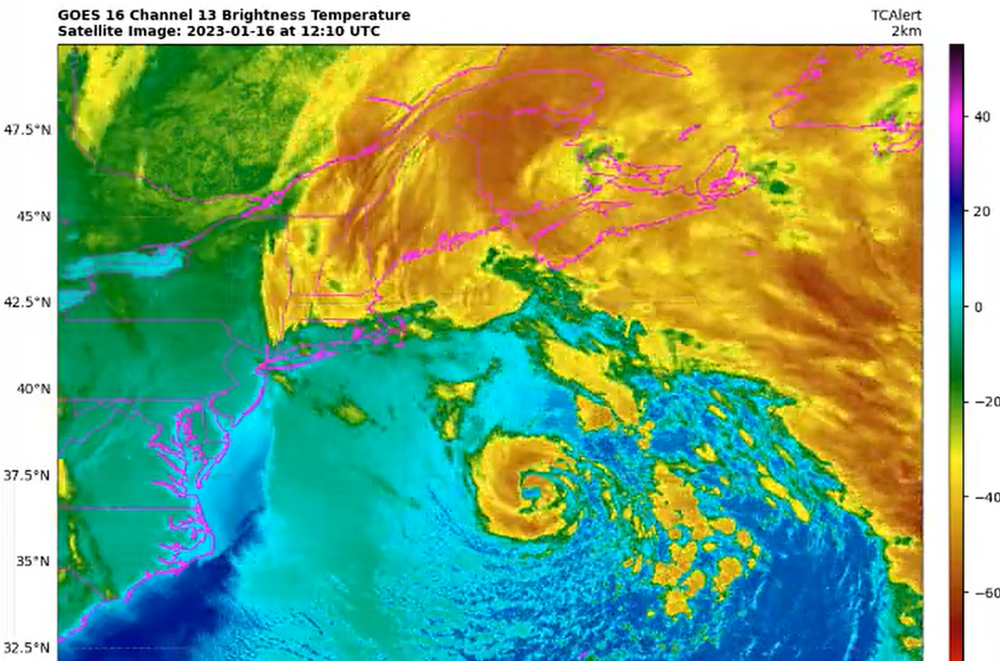
-
Septorcher 2026 Discussion - Endless Summer
vortex95 replied to Damage In Tolland's topic in New England
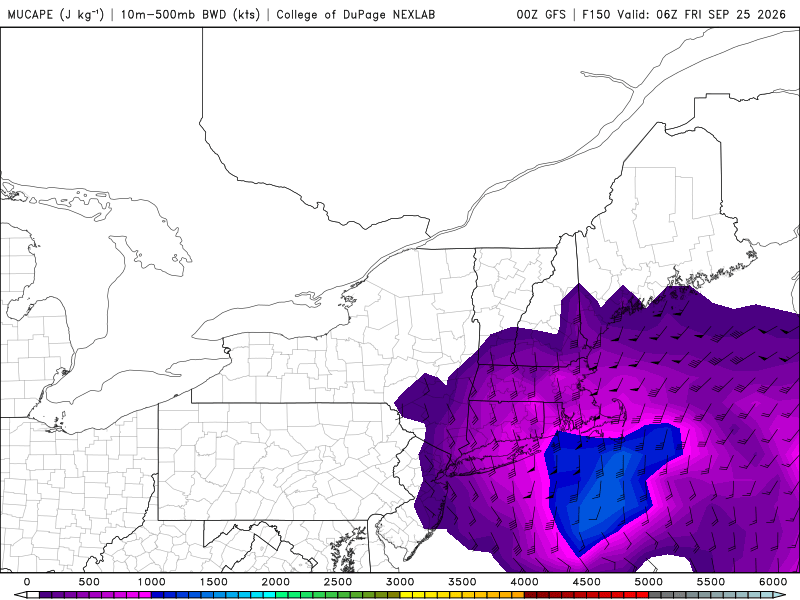
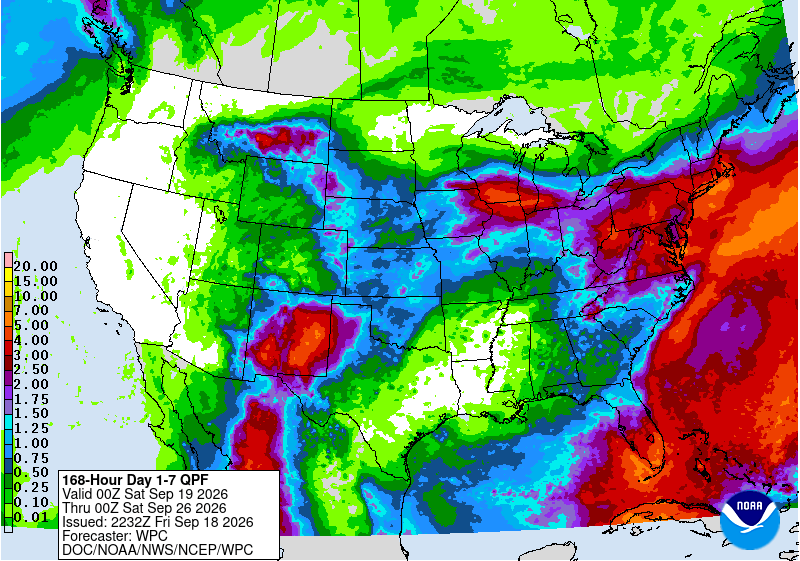
@CoastalWxPT time in Weymouth? 00z GFS all in. WPC in their 7-day pcpn totals likes it! And that's a lot of CAPE for a Nor'easter. Lots of embedded tstms and good mixing down of BL high winds. Why not? It's Sep w/ SSTs highest and there is a sig area 100-150 mi S and E of CC of anomalies up to +4 C! @weatherwiz @ineedsnow getting ready. Sfc low not that deep but when it is 1004, 1033 high in Quebec due N, so outstanding gradient and fetch for a Sep nor'easter. I don't recall anything quite like this in Sep in recent times, but I'll let others chime in on that for historical context! Only thing missing is some isolate pockets of 0 C at 850 in NNE, but it does get down to +3 C even in MA.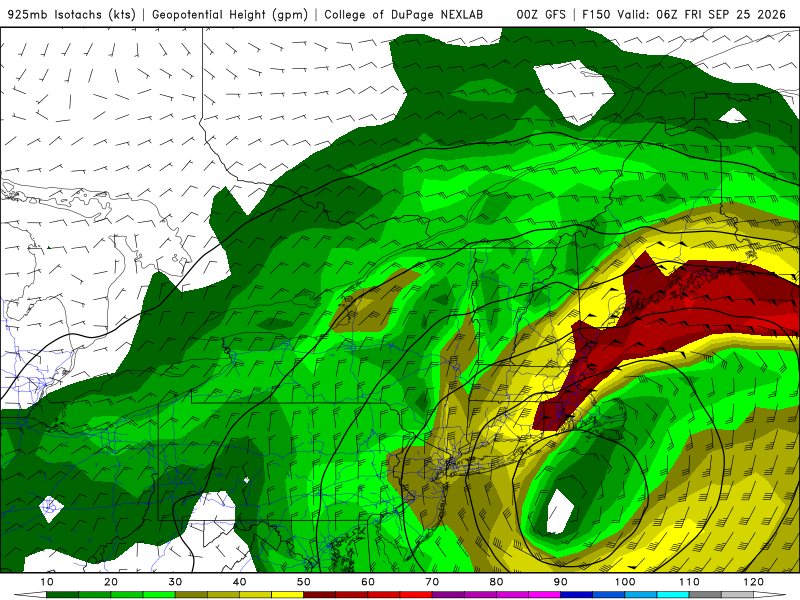
-
2026 Atlantic Hurricane Season
vortex95 replied to Stormchaserchuck1's topic in Tropical Headquarters
@WEATHER53, you are not wrong in your observation here. ----- Now, first let me say I don't want what I say below cause a flare-up b/c of the topical item was mentioned in the quoted posts above. I am listing objective, factual statistics below that provide context and perspective only and inform about some things some may not know or realize when it comes to TC records/stats in the Atlantic. ----- After the record 2005 season, things shutdown big time for landfalls in the CONUS, setting a record on the other end of the spectrum. After Wilma's landfall in Oct 2005, the CONUS went 11.5 years w/o a major hurricane landfall, which is the longest period on record going back to 1851. And the period 1995-2016? 3 of 32 hurricanes in the Atlantic had a CONUS major landfall 1995-2003, 7 of 13 2004-2005, and 0 of 29 from 2006-2016. So it was all focused in one big 2-year period, and atypically quiet either side for 20 seasons for CONUS landfalls. We hear plenty of talk on how active things have been recently, and it indeed has, but often I find little context and perspective given in reports, not only from a historical point-of-view, but also records that display atypical inactivity in recent decades. If you are going to talk about trends/changes, all relevant and reasonable information/data should be presented/provided, not cherry-picked. Facts are meaningless w/o context. I would also caution about falling into the recency bias trap when it comes to wx events. It is cognitive shortcut where people give more importance and weight to recent events, experiences, or information than to prior or historical data. Here is a good example: The 10-year period 2015-2024 had 25 CONUS hurricane landfalls. However, the record in a 10-year period is 27 1879-1888. So what has happened recently for CONUS hurricanes landfalls is not unprecedented. And if you look at events that occurred long ago that have no equal in recent decades? * Two category 3 hurricanes (both 110 kt) made landfall 23 hours apart in the U.S. in Sep 1933 (Jupiter FL and Brownsville TX). Nothing else even close to this exists in the record. * There are only 5 known Atlantic hurricanes to occur in May since 1851. Last time there was one was in 1970. The strongest was in 1863, which made landfall as category 2 in the FL Panhandle, making it the earliest landfall CONUS hurricane on record. * The last June CONUS hurricane landfall was in 1986. This is the longest stretch w/o a June CONUS landfall on record. * In June 1886, 3 hurricanes made landfall in the U.S. No other June has had more than 1. * New England had 5 hurricane landfalls in a 23-year period 1938-1960. None have occurred for 35 years 1991-2026, which is the longest period on record for the region. -
2026 Atlantic Hurricane Season
vortex95 replied to Stormchaserchuck1's topic in Tropical Headquarters
00z analysis gives 99L 30 kt and 1015 mb. Convection is better for overall coverage, but is still is disorganized w/ pulsing. You can see an anticyclonic jet plume starting to impinge on the srn part of the system. Also, on WV, the overall circulation has become more elongated since 18z. That is not a positive sign. Objectively, it is TD I think, but given the surrounding environmental trends, NHC may not do anything at 03z.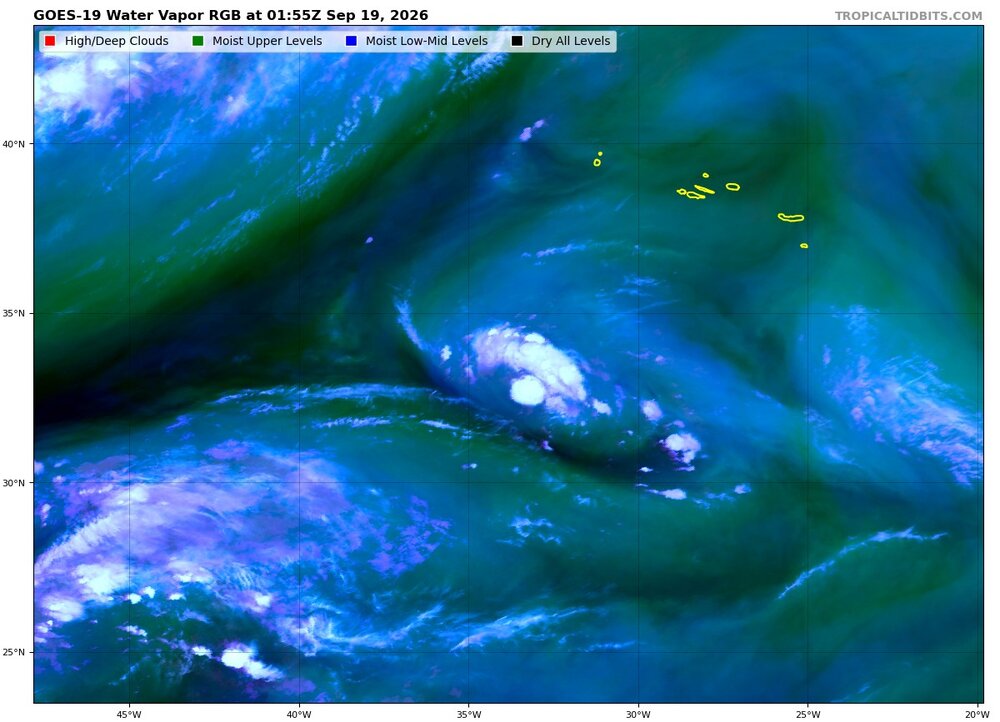
-
2026 Atlantic Hurricane Season
vortex95 replied to Stormchaserchuck1's topic in Tropical Headquarters
I am not sure AI models would do well for systems in this part of the Atlantic since TCs are not nearly as common as in other parts of the Atlantic. -
2026 Atlantic Hurricane Season
vortex95 replied to Stormchaserchuck1's topic in Tropical Headquarters
Edouard was named a TS at 00z 9/1. So it depends on what type of time you use if it formed in Sep or not! And if you go by when it was declared a TC, that is in August solidly. -
2026 Atlantic Hurricane Season
vortex95 replied to Stormchaserchuck1's topic in Tropical Headquarters
If was close to land, odds are they would declare it a TD as well. I do not agree w/ such a policy. Treat all systems the same regardless of location or risk in terms of calling it for what it actually is. One could call this a TD taking a snapshot as it is right now, but I go back to the persistence factor of convection and the marginal environment. -
2026 Atlantic Hurricane Season
vortex95 replied to Stormchaserchuck1's topic in Tropical Headquarters
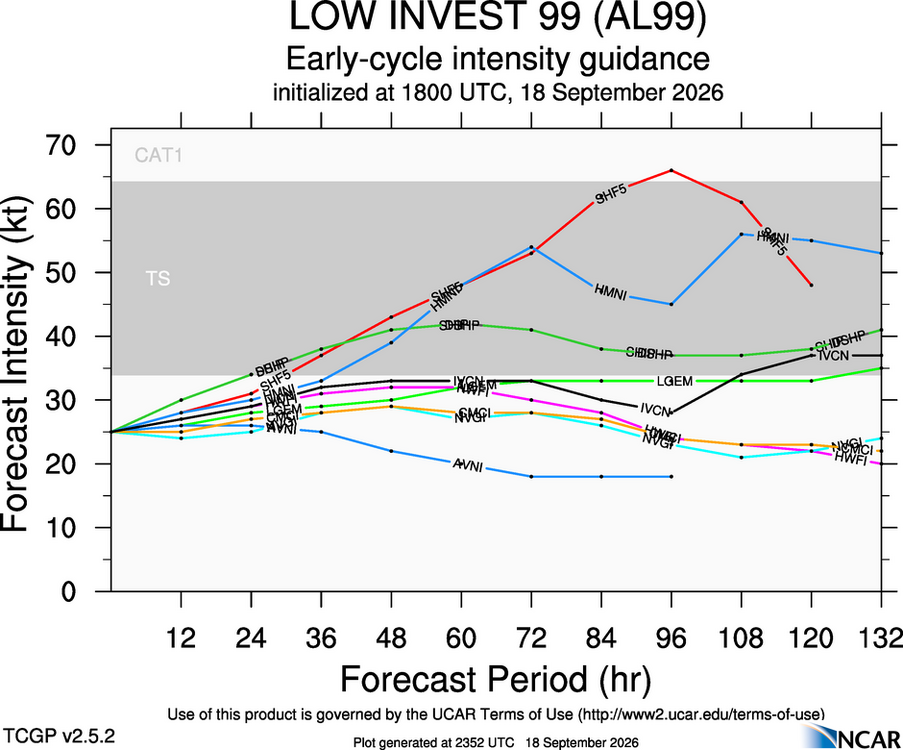
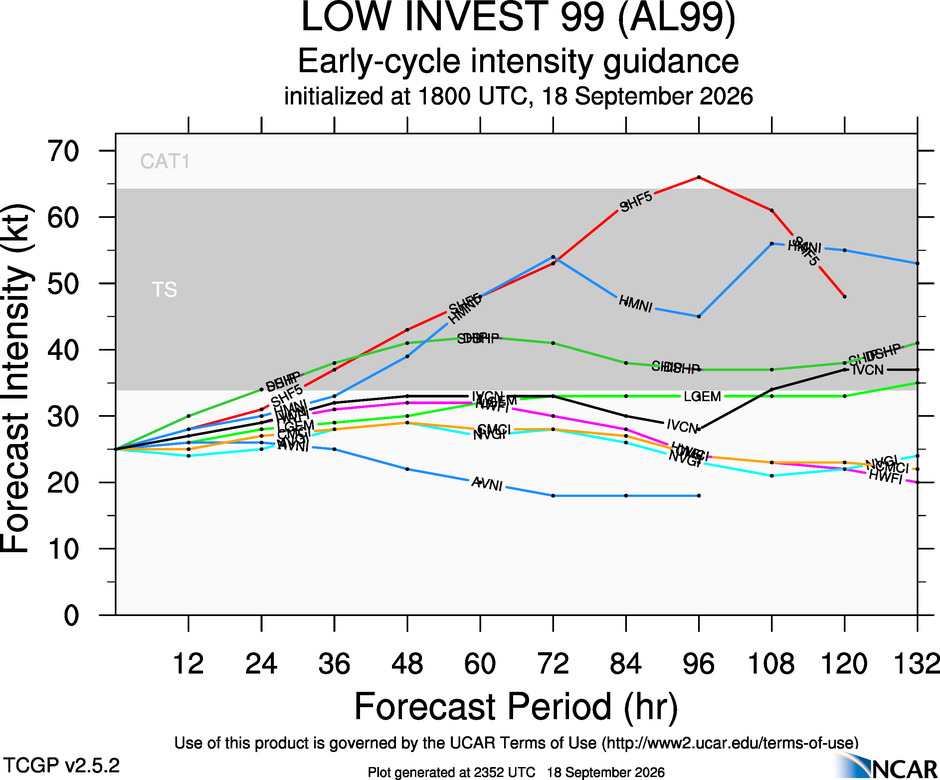
No I hadn't . What model is this? I was looking at the various primarily model outputs for intensity fcst (see attachment). The operational GFS and ECMWF do very little w/ the system. ECMWF brings it down to 1012 mb and makes it a TD. Since the overall environment is marginal and fcst to gradually degrade, I am not optimistic at this time more than a TD. That being said, the convection that has developed on the N side in the last few hours is more organized, but we need to see if it persists. The dry air present makes it prone to pulsing up and down. This makes it hard to pull the trigger and declare. At 03z, it could look quite good and get declared, and then all the convection could collapse, and we are back at square one. So NHC tends to hold off until clear trend or consistency exists. These kind of high-latitude systems are often a challenge!