Jump to content

All Activity

This stream auto-updates

  1. Past hour
  2. Those are the best kind. Single Supercell CB with nothing around it for 100 miles, carving a canyon 100 miles long
  3. https://www.reuters.com/business/energy/goldman-sachs-flags-upside-risks-oil-prices-near-term-into-2027-2026-03-19/
  4. I hope so, nothing destructive of course. Starting over the next few weeks i'm going to be posting links to live streams whenever I have the opportunity to stream adverse, interesting, beautiful weather and wildlife. By the time winter rolls around I hope to have multiple cameras set up with lighting, and feed for wildlife doring and after the storms. I'll also have a camera mounted to me for all my winter storm excursions. I realized that viewers from here, maybe quite limited, even non existent, but I just watched someone obtained 230,000 viewers hiccuping into a video camera, for twelve hours straight. It's actually just something I I've wanted to do for fun and have no intentions of gaining any profit sharing from youtube. I probably be running my first test late tonight . The link will just be to a camera looking out into my backyard.
  5. I posted it for Ineedsnow. Im still looking at the models to see if any threats pop up but its looking less likely.
  6. It’s over…you said it yourself.
  7. Boy does the Piedmont look dry over the next 2 weeks. We need some rain!
  8. That one is penetrating well south of i80 anyways
  9. Ahh, persistent eastern trough with a western ridge. Don’t worry, it’ll overstay its welcome.
  10. Waving... From one high masking neurodivergent adult to another.
  11. I suppose if we can't get the rain at this point to offset this drought we will take the wet snow, It only pads the stats at this point.
  12. Low of 34 and light frost.
  13. Oh man have been there 3 times. First had surgery in 99 for a 3 mm stone. Then passed a stone in 2013 and again in 2022. And I eat healthy. Being GF most fast food places are land mines for hidden wheat. Every time you have one your chance goes up 50% of having another. Mine are caused by my neurodivergence and sometimes going a whole day on one 16oz. glass of water. Remembering to drink is my downfall and I go through spurts of being really good and then going to bed at night and asking myself did I drink anything today. Sending good healing vibes to @RevWarReenactor
  14. Mountains were pretty! We got a few runs up at Sugar. After hitting 80 in Chatty last week, driving up and seeing snow before reaching the Tri Cities was a trip. Great time with family spring break. So looks like the AC will be humming this weekend. Then back to slightly below normal temps next week (except midweek). Should even get cool and cozy nights and mornings a few days next week. WNW flow in early spring is a wild ride! Appears that the last few days of March will usher in a warm early April. Mid Atlantic ridge may not be centered over the Valley. See if it'll let in some April showers.
  15. Records: Highs: EWR: 85 (1945) NYC: 83 (1945) LGA: 82 (1945) JFK: 73 (2020) Lows: EWR: 15 (1949) NYC: 11 (1885) LGA: 19 (1949) JFK: 15 (1949) Historical: 1772: A cold and stormy pattern returned to the Middle Atlantic region in March of 1772. Three storms - on March 11, March 17, and March 20 - laid down a blanket of snow that totaled 20 inches in Central Maryland. The snowfall total for the winter of 19771 - 1772 was over 50 inches in Central Maryland. (Ref. P. 27 Washington Weather Book 2002 by Ambrose, Henry, Weiss) 1885: The minimum temperature for the date is 12 °F in Washingon, DC. (Ref. Washington Weather Records) 1907: This was the last of three consecutive record warms days across parts of Colorado. Denver broke a record soaring to 80°. This followed a record high minimum of 52°. (Ref. Wilson Wx. History) 1912: Heavy snow followed the passage of a front across the central Rockies. Denver reported 6.3 inches of snow with gusty winds. The strong cold front plunged temperatures from a high of 60° on 3/19 to a low of 1° on this date. (Ref. Wilson Wx. History) 1924 - A late winter storm in Oklahoma produced nearly a foot of snow at Oklahoma City and at Tulsa. (David Ludlum) 1948 - The city of Juneau received 31 inches of snow in 24 hours, a record for the Alaska capitol. (20th-21st) (David Ludlum) 1948: The city of Juneau received 31 inches of snow in 24 hours, a record for the Alaska Capitol. (20th - 21st) 1948: Also, on this day, an F3 tornado tracked through Tinker Air Force Base in Oklahoma City, OK just before 10 pm destroying 54 aircraft, including 17 transport planes valued at $500,000 apiece. The total damage amounted to more than $10 million, a record for the state that stood until the massive tornado outbreak of 5/3/1999. Major Ernest W. Fawbush and Captain Robert C. Miller were ordered to see if operationally forecasting tornadoes were possible. The tornado prompted the first attempt at tornado forecasting. Forecasters at Tinker believed conditions were again favorable for tornadoes and issued the first recorded tornado forecast. Five days later, on 3/25 at 6 pm, a forecasted tornado occurred, crossing the prepared base, and the damage was minimized. The successful, albeit somewhat lucky forecast, paved the way for tornado forecasts to be issued by the U.S. Weather Bureau after a lengthy ban. Click HERE for more information from NOAA. 1958: The dense flakes fell rapidly through the night and into the morning of the 20th and by noon, the worst of the storm was over, but periods of light to moderate snow continued on into the morning of the 21st. The interesting feature of this storm was extreme amount of water content. National Airport recorded a water content of 3.75 inches and some stations reported over 5 inches of liquid content. The snowfall total at National Airport was only 4.8 inches of wet snow. Arlington had a foot of snow. In the Maryland suburbs, 9 inches fell in Greenbelt; 11 inches in Silver Spring; 15 inches fell at Fort Meade; and 16 inches fell at Bethesda. Much of the Upper Montgomery County and Howard County received over 20 inches and Mt. Airy, Maryland had 33 inches of snow. (P. 69-70 Washington Weather Book 2002 by Ambrose, Henry, Weiss) Ref. (NWS Ranking for Storms between 1956 and 2011) This is the 31st Worst Snowstorm 1984 - A severe three day winter storm came to an end over the Central Plains. The storm produced up to twenty inches of snow in Colorado, Nebraska and Kansas, and left a thick coat of ice from eastern Kansas across northwestern Missouri into Iowa. (Storm Data) 1987 - A storm produced blizzard conditions in Wyoming and eastern Nebraska, and severe thunderstorms in central Nebraska. Snowfall totals ranged up to 12 inches at Glenrock WY and Chadron NE. Thunderstorms in central Nebraska produced wind gusts to 69 mph at Valentine, and wind gusts to 76 mph at Bartley. (Storm Data) (The National Weather Summary) 1988 - Squalls in the Great Lakes Region left up to eight inches of new snow on the ground in time for the official start of spring. Unseasonably warm weather prevailed in the western U.S. Seven cities reported new record high temperatures for the date, including Tucson AZ with a reading of 89 degrees. (Storm Data) (The National Weather Summary) 1989 - Snow and high winds created blizzard conditions in western Kansas to usher in the official start of the spring season. Thunderstorms produced severe weather from east Texas to Alabama and northwest Florida, with nearly fifty reports of large hail and damaging winds during the afternoon and evening hours. (The National Weather Summary) (Storm Data) 1990 - The northeastern U.S. was in the midst of a snowstorm as spring officially began at 4 19 PM. Snowfall totals in the Green Mountains of Vermont ranged up to thirty inches, and up to 15 inches of snow was reported in the Catskills and Adirondacks of eastern New York State. Totals in eastern Pennsylvania ranged up to 12 inches at Armenia Mountain. The storm resulted in one death, and forty-nine injuries. (The National Weather Summary) (Storm Data) 1998: A deadly tornado outbreak occurred over portions of the southeastern United States on this day. Particularly hard hit were rural areas outside of Gainesville, Georgia, where at least 12 people were killed during the early morning hours. The entire outbreak killed 14 people and produced 12 tornadoes across three states. The town of Stoneville, North Carolina, hard hit by the storms. 2005 - An F1 tornado hits South San Francisco. Trees are uprooted. At least twenty homes and twenty businesses are damaged, including the city's new fire station. 2006 - Grand Island, NE, receives 17.8 inches of snow in 24 hours, breaking the old local record for the most snowfall in a day by 4.8 inches. 29.7 inches in 48 hours also breaks a record. 2018: NYC 8.1 inches of snow
  16. Should be a decent three days today through sunday in SNE at least 48-58 with sun 65% of the time.. Then we go back to cold
  17. Well here in the South I'd have said the same thing, lol! Tennessee, Kentucky, Alabama, Kansas and Auburn (NIT) all play today. My Wichita State is also in the NIT. Could be a fun day. Could be heartburn. What happened to Georgia? STL opened up a can of General Sherman. Not a huge upset 8v9 but an epic blowout!
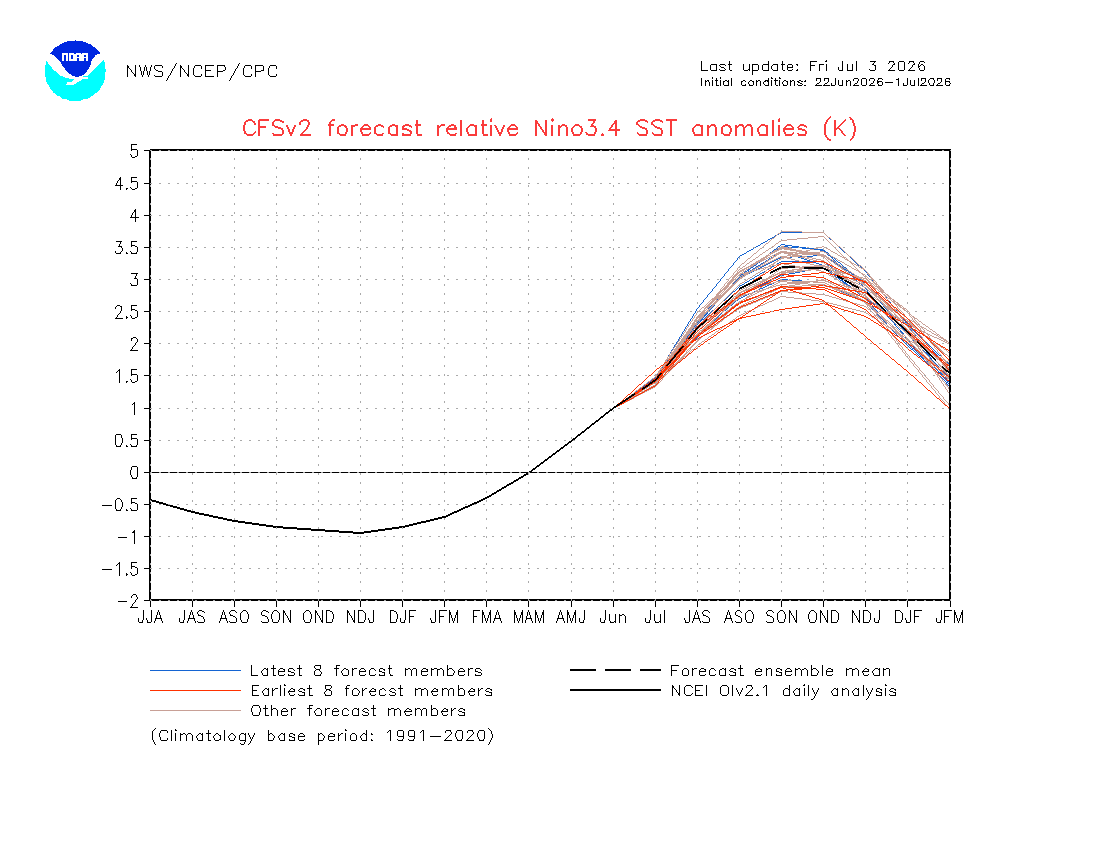
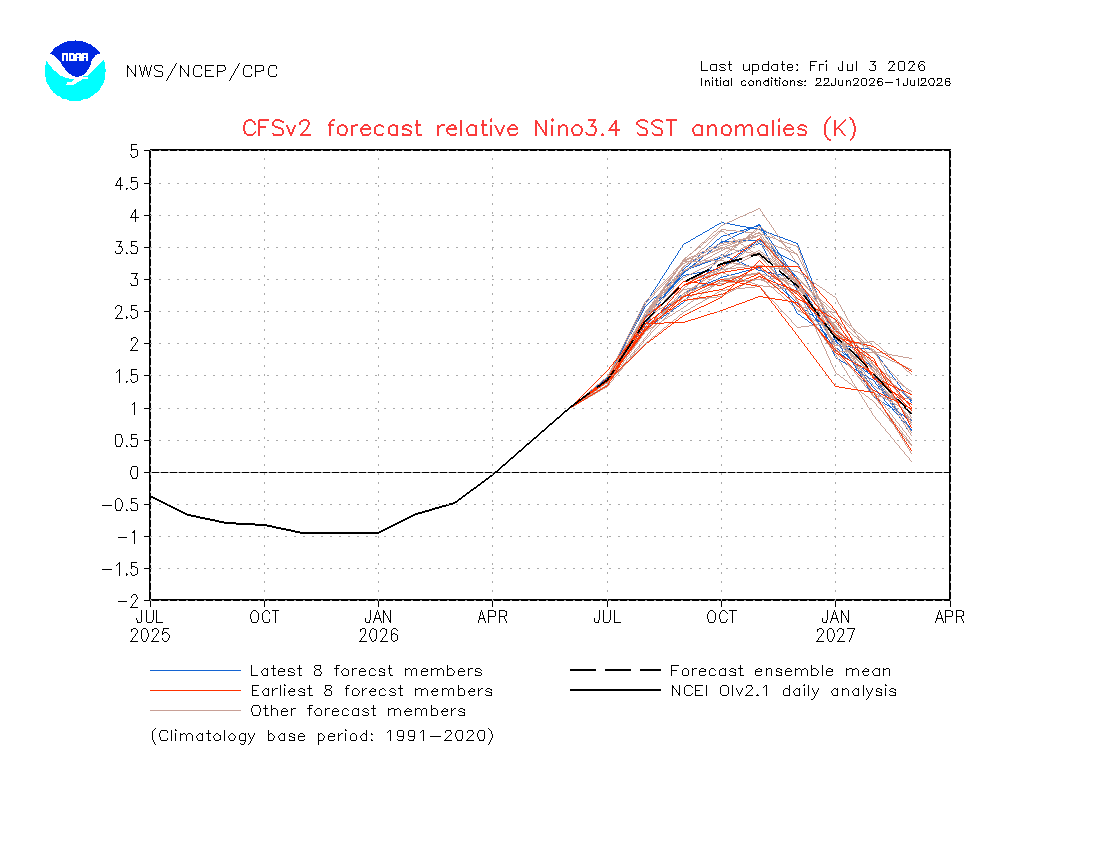
  18. C02 (and other green house gases) warms initially. This improves water evaporation ... Once in water vapor (H2O gas), it absorbs 8+ magnitudes more outgoing LWR than does C02. This secondarily triggers the system into a thermal state acceleration. Not sure what the C02 vs WV discussion y'all engagin' in, but that is the critical relationship. It's interesting as it has been calculated/shown that the oceans have absorbed ~ 90% of the d(T)/attributable heat of the total GW... Generate excerpt from Climate.gov and United Nations, "The oceans have absorbed about 90% of the excess heat generated by global warming, which is equivalent to approximately 23 zettajoules of heat energy in 2025 alone" (there are numerous other sources for the ocean absorption quotient in the GW total) It's a crucial machinery that frankly has saved ours, and countless other species, from an acceleration toward tipping points ( to put it nicely...). The ocean is the great climate regulator in the sense that because the atmosphere's in a perpetual quasi coupled state to the ocean, en masse it is held in check. Thus, the atmosphere can't really modulate too far way from the background thermal state of the oceans. This relationship may have been exemplified in 2023 https://phys.org/news/2025-09-ocean-carbon-ailing-absorption-marine.html. While the article doesn't directly discuss a plausible factor in the atmospheric temperature bounce phenomenon that happened at global scales that spring, but prudent scientific awareness begs the question. Apparently, there occurred a 10% reduction in carbon sink --> the oceanic temperature rises that year, with furthering physical concepts discussing why. Later in the article, this paraphrased article ( actual study here: https://www.nature.com/articles/s41558-025-02380-4 ), cite, "This sudden warming of the ocean to new record temperatures is challenging for climate research—because to date it was unclear how the marine carbon sink would respond," says Nicolas Gruber, Professor of Environmental Physics at ETH Zurich." I bring this citation to attention because my biggest peeve in the ongoing observation of climate change, is that there is either lacking, or too hidden, a sense of urgency that relates to the fact that the whole planet's atmospheric thermal state surged, completely and utterly unpredictably, the way it did. Are we connecting the dots here? So to bring it home. The question/suspicions stems from fairly rudimentary logic; if the oceans absorb the lion's share of the GW total ( over time...), I don't like coincidences. Dynamics processes failed to absorb carbon into the oceans, hence a thermal sphere response: the atmosphere heat burst in the spring of 2023 should be explored/connectable to that. If carbon absorption isn't monitored, it should be, because oh by the way ... the oceans are critically approaching the 2024 curve... It makes one wonder if an atmospheric heat surge is mere month(s) away. Interestingly, the article also describes El Ninos as being 'carbon capture' periods, because the warm water caps the rising CO2, which defaults the system to negative for the atmosphere. It's basically as thought the Earth has built in regulators in all dimensions of consideration- probably what makes life abound on this world... digression.
  19. Most years, hard to even expect consistent summery weather (70s+) here until Father's day. Kinda expecting a porking this spring anyhow, so those 60s are going to be elusive indefinitely unless we get this pattern outta here
  20. 42 / 32 clear but wont last long as clouds already approaching from the nw. Much warmer today 60s in NJ 50s elsewhere with some showers. Sunny clear and a bit cooler saturday mainly mid / upper 50s. Warmer buy clouds again Sunday which will limit any extent of upper 60s to 70. Overall near to slightly below normal Mon - Fri and next weekend with a warmer close to the month as ridge builds east - extent of warmth still to be determine in the 3/30 - 3/31 timeframe
  1. Load more activity
×
×
  • Create New...