All Activity
- Past hour
-

Central PA Summer 2026 Discussion/Obs Thread
canderson replied to Voyager's topic in Upstate New York/Pennsylvania
55 was my low. Once we get highs down into the mid 60s is my “heck yes” moment. -
I know it’s off topic but I’m putting it up anyway. A great honor to Welles Crowther https://www.foxnews.com/politics/trump-posthumously-awards-medal-freedom-9-11s-man-red-bandana
-

Septorcher 2026 Discussion - Endless Summer
Brewbeer replied to Damage In Tolland's topic in New England
about 5% of the natural gas used in New England per year comes in via ship, and most of that gas is used for heating on the coldest days on the year those ships are mostly coming from Trinidad and Tobago to the terminal in Everett -
 generic propecia price and cost generic propecia without dr prescription cost propecia no prescription https://www.google.com.vn/url?q=https://hairguardrx.shop cost of propecia for saleor https://act2day.eu/profile/szzdqpgkwn/ cost of propecia without rx [url=https://www.google.com.pg/url?q=https://hairguardrx.shop]cheap propecia online[/url] order cheap propecia without prescriptionand [url=https://4k-porn-video.com/user/blxmwnhofq/]cost cheap propecia without insurance[/url] buy propecia for sale
 -
2026 Atlantic Hurricane Season
WxWatcher007 replied to Stormchaserchuck1's topic in Tropical Headquarters
No disagreement there. I’m thinking that as we see more penetrating cold fronts, offshore coastal lows, and CAG season opening up late September into October, things pick up. Maybe we get something else in the MDR, but it seems unlikely to me. I still have 3 H and 1 MH for my peak season forecast. -
tamoxifen and ovarian cancer: NolvaCare : tamoxifen men
-

Septorcher 2026 Discussion - Endless Summer
CoastalWx replied to Damage In Tolland's topic in New England
Gas probably goes up since a lot of it is brought over by ships. But yeah not directly like oil. -

Occasional Thoughts on Climate Change
TheClimateChanger replied to donsutherland1's topic in Climate Change
Not to change the subject, but one thing I find interesting is recent CONUS temperatures - while historically record-breaking - are not really far removed from the expected baseline. With the controversy over RCP8.5 / SSP5-8.5 in the NCA5 report, I took a look at it. Figure 1.15 was interesting... note that the caption in the text of the document states that the US average temperature is all 50 states, plus Puerto Rico. However, this appears to be erroneous. The reported 1991-2020 ("current") average is identical to the NCEI CONUS mean (53.3F). Obviously, including Alaska would lower that as it 17% of the total area of the CONUS with a mean more than 25F lower. Hawaii and PR are both warmer (not by as much as you might think due to terrain) but are negligible area. So I'm pretty confident that is actually the CONUS mean and the caption is incorrect. Anyways, at 1.5C, we see the mean jumps to 55.3F. In 2024, with global temps around that 1.5C level, we had a mean of 55.4F - hottest on record. This year is certain to exceed that and possibly become the first year over 56F. So this year might be legitimately a bit above the new baseline for national temps, but not by much. I could see where next year - with the strong El Nino - could be 56.5F+. A cold year under today's baseline would likely be no colder than the existing climatological normal. It's pretty fascinating to consider, when you think of all of the crazy records we've seen this year (e.g., the March heat, record summer, etc...). This is really just the new norm, and not that spectacular at all. With 2 of the last 3 years (2026 almost certain) to be around/above the modeled value for a 1.5C world - and 2027 very likely to do so as well, with the added El Nino warming - the modeled projection looks quite accurate to me, as we now have some real-world data to compare to. At 2C global warming, which is very likely by mid-century, the CONUS mean reaches 56.6F. Warm years could be from 57.5-58F+ or 2-2.5F+ warmer than the present record, with even a cold year being not much colder than 2024. At 3C global warming, models suggest the CONUS mean temperature would reach 59.1F. At that level of warming, every year would be far warmer than 2024 - even a cold year, probably even a volcanically enhanced cold year. Such a degree of warming is possible, but far from guaranteed, by the latter portion of this century. At 4C global warming, models suggest the CONUS mean temperature would reach about 60.8F. Such a degree of warming is very unlikely this century with the retirement of RCP8.5 / SSP5-8.5 but remains possible in the 22nd century. -
I guess the NYC on south peeps probably have 15-16 and 82-83 visions dancing in their heads and sure there is some truth to that. But you can’t rule out a 97-98 either. I saw Mike’s graphics from that post and you could also go the other way and say how that’s not good. I just wish people would give arguments as to why both things can occur vs all snow all the time.
-

Septorcher 2026 Discussion - Endless Summer
kdxken replied to Damage In Tolland's topic in New England
I know right? First thing I thought of and looked it up. It's not too bad. Happy to have gas -
Ain't that the sad truth!!!
-
Septorcher 2026 Discussion - Endless Summer
Brewbeer replied to Damage In Tolland's topic in New England
he is not well, did anyone see the series of posts he uncorked one night this past weekend ? I'm not gonna post it since it will piss people off, but here is a link for those who want to double facepalm repeatedly -

Septorcher 2026 Discussion - Endless Summer
Brian5671 replied to Damage In Tolland's topic in New England
Damn. Thank God for natural gas-still fairly cheap -
Can anyone other than Ray post realistic non-fantasy discussions about weather vs having their hands glide across the keyboard directed by their weenie? Good God.
-

2026 Atlantic Hurricane Season
LongBeachSurfFreak replied to Stormchaserchuck1's topic in Tropical Headquarters
If we end up with little or no major hurricane activity this season we are priming the basin for next season. Without the upwelling caused by stronger hurricanes. OHC will continue to accumulate. With a Nina likely next year 27 could be the polar opposite of this season. . -

2026 Atlantic Hurricane Season
Winter Wizard replied to Stormchaserchuck1's topic in Tropical Headquarters
But what's interesting about this graph is it shows closer to home, the Gulf and the Atlantic, have been less hostile with subdued wind shear. Not to mention SSTs are an inferno. I certainly don't see anything on the horizon anytime soon, but that's another piece of data that suggests if something does take off this year, it will likely be closer to home. I think Edouard was a warning shot in that regard considering how close it was to becoming a hurricane in the runup to landfall. We very well may come out unscathed, but I think it's a mistake for people to write off the season entirely at this point. -
order propecia without a prescription: cost of propecia pill ~ propecia
- Today
-
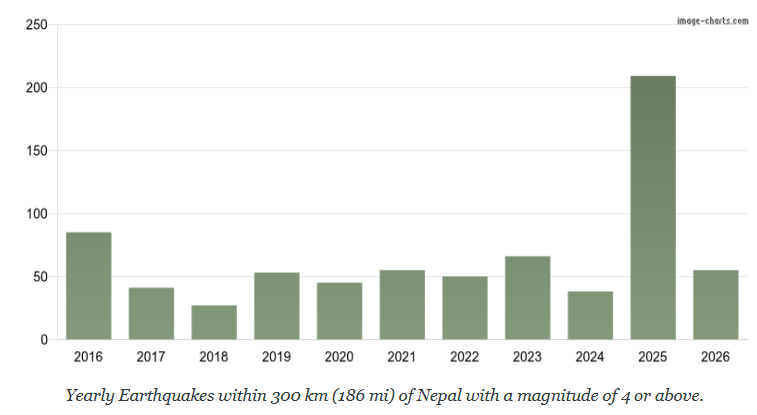
It is hard to imagine that record warm temps did not hasten the bedrock/glacier collapse disaster. That part is just pure conjecture really. Maybe years of earthquakes over somewhat young fragile mountains causing lots of micro-fractures in the bedrock in that region was the main driver. Very large uptick in 2025 could have easily caused lots of fractures and crumbling, and this is only 4.0 or greater.
-
didn't you go to school in philadelphia? time to come to the dark side
-
Septorcher 2026 Discussion - Endless Summer
CoastalWx replied to Damage In Tolland's topic in New England
I paid 4.82 or so last week. Gone up 20 cents since. #WINNING -
Septorcher 2026 Discussion - Endless Summer
kdxken replied to Damage In Tolland's topic in New England
I just looked at the discount places where you pay cash for delivery. Even they are $5 a gallon. -
cost generic propecia without rx: HairGuardRx - get generic propecia tablets
-
http://nolvacare.com/# nolvadex side effects
-

Septorcher 2026 Discussion - Endless Summer
SouthCoastMA replied to Damage In Tolland's topic in New England
I thought 4.44/gal for heating oil was bad a month ago. now it's over $5.30 here -

Occasional Thoughts on Climate Change
WolfStock1 replied to donsutherland1's topic in Climate Change
Yes very true - it appears very evident that it did. Question is - was it a case of "hastening" (as in - it would have collapsed at some point, warming just made it collapse sooner than otherwise), or was it a case of "causing" (as in - if this level of warming hadn't happened - it would not have ever collapsed)? Probably will never know of course. Plenty of glacier collapses of course happened in pre-warming times, e.g. several big ones in the early 1800's in Switzerland, France, and Caucasus mountains.