All Activity
- Past hour
-
Thanks for keeping it real. Lots of bad and erroneous info being pushed…sensationalism at its worst.
-
Ginxy got into the cannabis infused Hershey bar last night?
-
Bradley has froze and frosted a long time ago though.
-

2026-2027 Record-breaking El Nino
bluewave replied to Stormchaserchuck1's topic in Weather Forecasting and Discussion
I never mentioned anything about snowfall prospects yet. My focus has been on how much warmer each of the months since May have been exceeding the seasonal long range model forecasts and past developing super El Niño events. We all know with super El Niños is that it only takes one well timed storm with just enough cold to snow to make a late season snowstorm. 1997-1998 was a weaker east based event featuring no MC forcing. We had a very active East Coast storm track. Many lows hugged the East Coast. Several lows also tracked out near the Benchmark. But the very powerful EPAC vortex and STJ never really allowed high pressure to become established long enough over the Northeast. So places like NYC Metro saw many rainstorms and very little snow through DJF. It was actually March which delivered the best snow of the season. But March into even early April during the 1990s was much colder and snowier than the 2020s with record low March snowfall through the first 6 years of the decade. So in order to salvage the snowfall season for places around NYC Metro, we would want to do it before we get into March which has become so much warmer this decade. Let’s see what happens. But we would need to get an improvement in the lack of cold high pressure in the Northeast vs 1997-1998 to see better snowfall results. -
lol mid month is an inferno. Polar split going to bring warmest CONUS Novie ever? Thank you Super Nino snd CC. We grow.
-
33 here. Coldest yet. 20s a few feet lower.
-
 DCA: +0.3 NYC:: +0.5 BOS: +0.5 ORD: +0.7 ATL: -0.3 IAH: -0.6 DEN: +0.4 PHX: -0.9 SEA: +1.1
-
2026-2027 Fall/Winter Mountain Thread
Met1985 replied to BlueRidgeFolklore's topic in Southeastern States
Yeah a very nice rainfall this morning. -
You wonder if Jspin will start having domestics soon?
-
Yep great event
-
Cocked
-
2026-2027 Fall/Winter Mountain Thread
Maggie Valley Steve replied to BlueRidgeFolklore's topic in Southeastern States
Yes Sir! 45 and light rain here in the Valley. -
2026-2027 Fall/Winter Mountain Thread
Buckethead replied to BlueRidgeFolklore's topic in Southeastern States
What a wonderful surprise it is to wake up to 43 and rain this morning! Sent from my SM-S948U using Tapatalk -
Aren't they worthless?
-

2026-2027 Record-breaking El Nino
snowman19 replied to Stormchaserchuck1's topic in Weather Forecasting and Discussion
-
And just like that next week looks mostly dry.
-

2026-2027 Record-breaking El Nino
GaWx replied to Stormchaserchuck1's topic in Weather Forecasting and Discussion
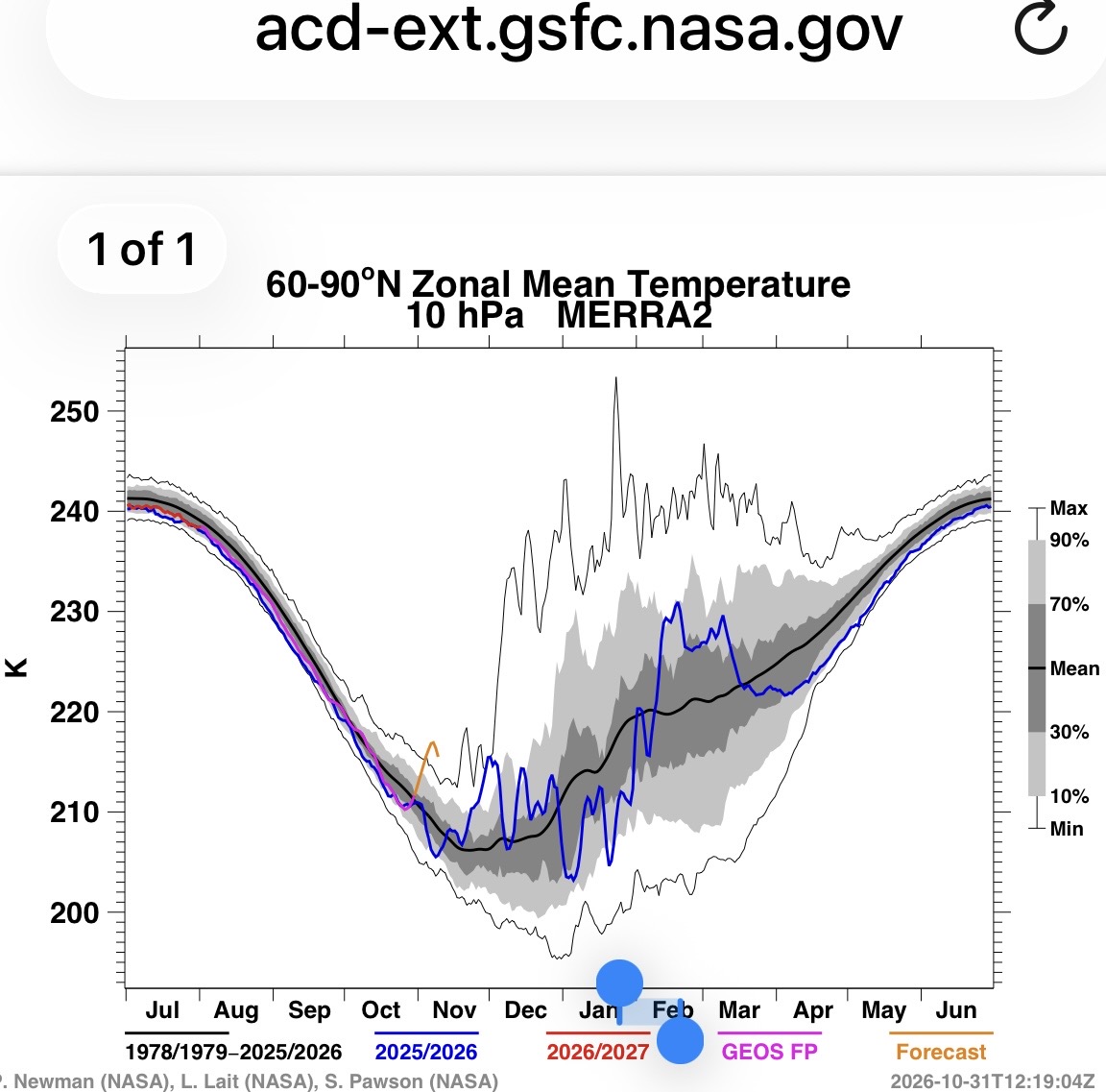
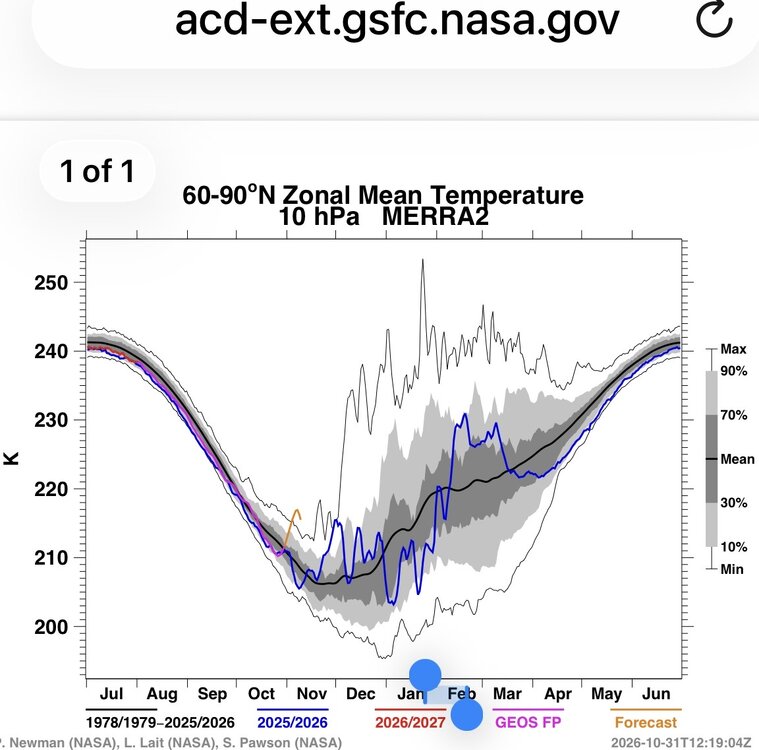
What’s odd is the comparison of the record high 10 hPa/60N-90N temps in Oct/Nov on NCEP (top) and NASA (bottom). NCEP looks like it has artifacts caused by algorithmic errors with two nearly vertical peaks that don’t look natural. Thus I’ve decided that the NASA graph is correct, and record high temps are being forecasted at 10 hPa/60-90N after all with 217K ~Nov 8th. NCEP Oct/Nov 2 near vertical peaks for old record high temps (black) don’t look natural/look like artifacts and thus this makes it appear nowhere near record high temps are being forecasted (green): NASA Oct/Nov old record high temps don’t have artifacts and thus new early Nov record high temps are being forecasted (red), which makes sense due to this being the first on record early Nov SSW causing record shattering low 10 hPa/60N winds: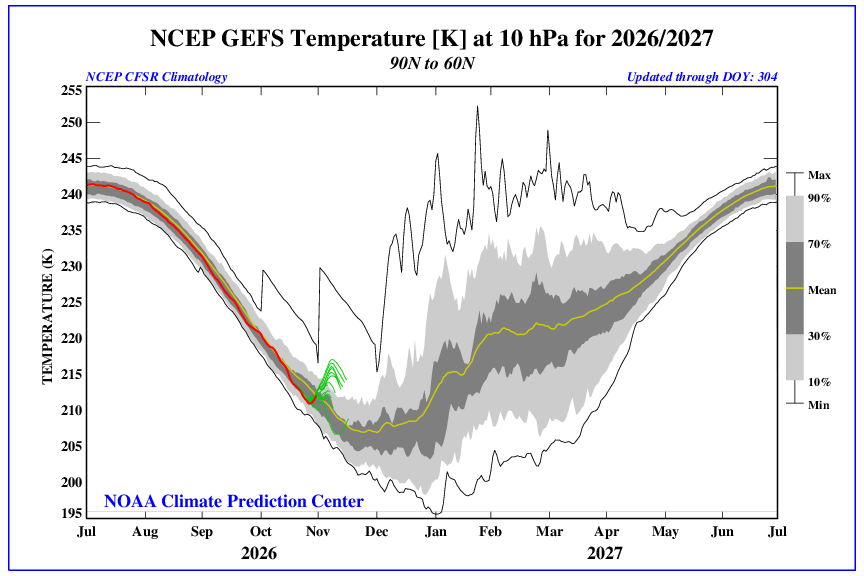
-
Brattleboro, low 20F, also coldest yet.
-
24.5° Forgot to cover one of the plants in the field that wasn’t fully lignified yet. Oops.
-
29 degrees.
-
Bottoming out at 25F here, not bad.
-
A very San Diego-like October in the Northeast.
- Today
-
26F. Coldest AM thus far this fall.
-
2026-2027 Record-breaking El Nino
GaWx replied to Stormchaserchuck1's topic in Weather Forecasting and Discussion
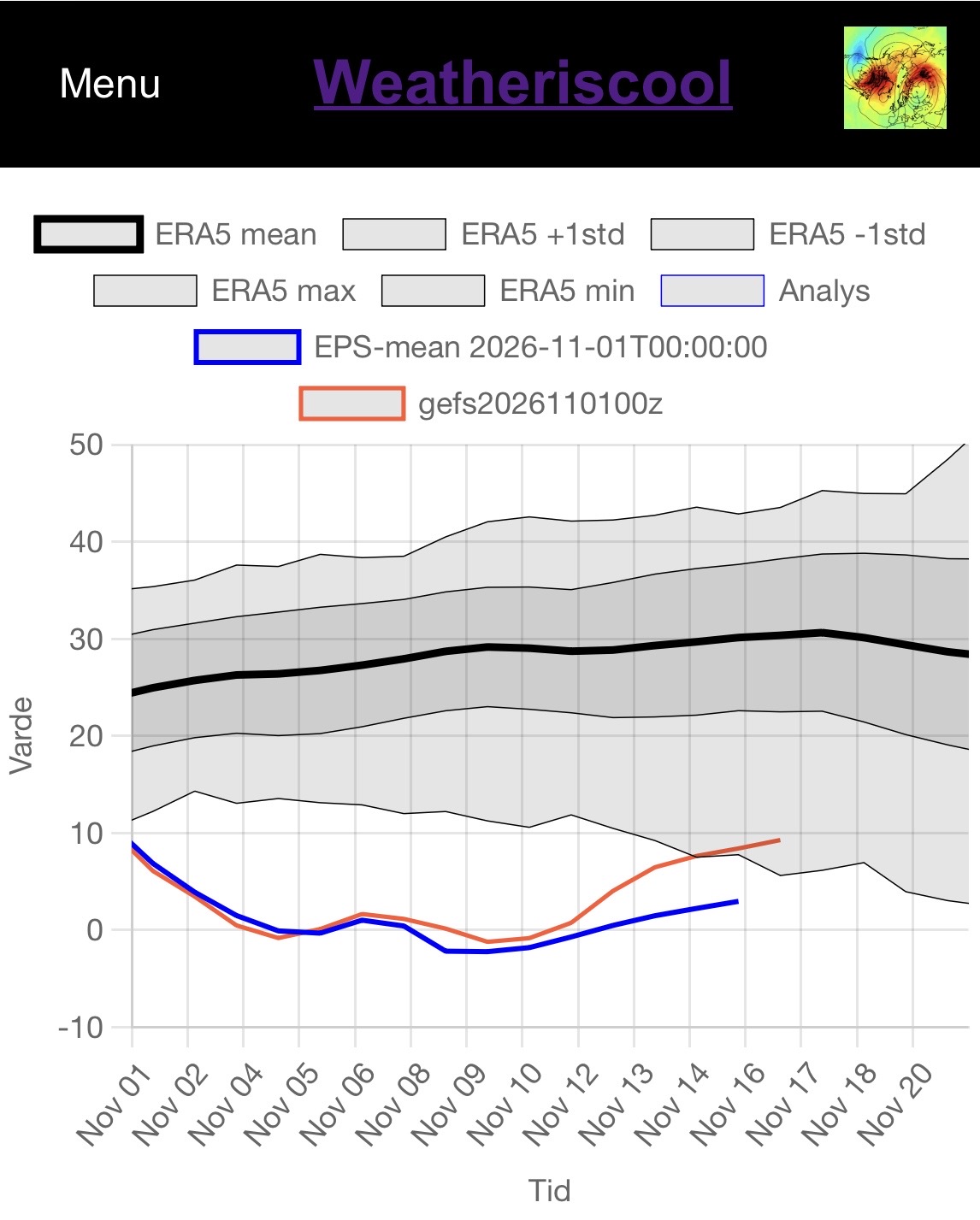
Record shattering low 10 hPa winds 1st 1/2 of Nov: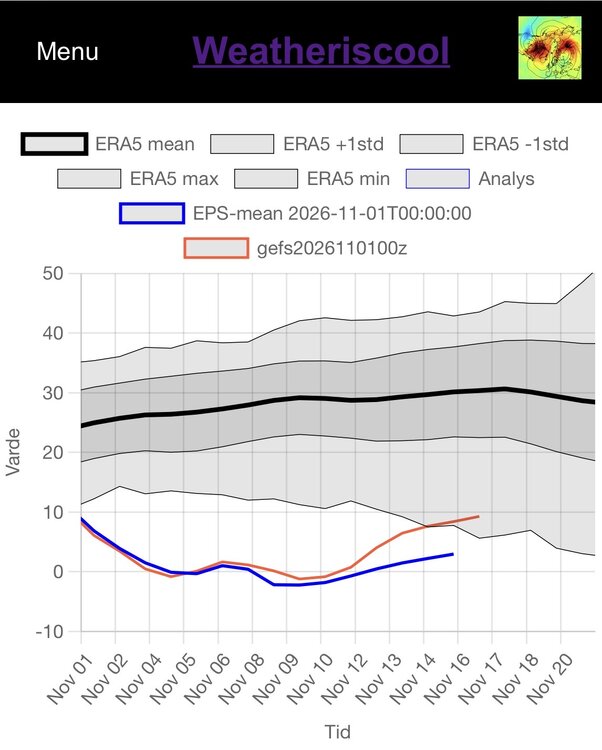
-
2026-2027 Record-breaking El Nino
bluewave replied to Stormchaserchuck1's topic in Weather Forecasting and Discussion
During the end-Permian extinction about 252 million years ago, a supercontinent known as Pangaeaexperienced extreme climate disruptions driven by a 10-year mega El Niño episode. [1, 2] Key Details from Research Duration: Unlike modern El Niño events that typically last about a year, the warmest phases of this ancient event lasted up to 10 years continuously. [1, 2] The Panthalassic Ocean: This multi-year event originated in the vast Panthalassic Ocean (the super-ocean surrounding Pangaea), which was much larger than today's Pacific Ocean and absorbed immense amounts of heat. [1] Volcanic Forcing & CO2: Massive volcanic eruptions from the Siberian Traps doubled atmospheric carbon dioxide (CO₂) from roughly 410 to 860 ppm, collapsing ocean circulation and flattening temperature gradients across the super-ocean. [1] Mass Extinction Impact: The decade-long locking of severe drought, extreme heat, and raging wildfires devastated terrestrial forests, accelerated a global feedback loop, and contributed to the greatest mass extinction event in Earth's history. [1, 2, 3]