EastonSN+ Posted January 11 Share Posted January 11 Nice dip in the AO. 1 Link to comment Share on other sites More sharing options...
donsutherland1 Posted January 11 Share Posted January 11 The PNA has gone positive with a value of +0.173. As noted previously, all 10 long-duration winter PNA- regimes (25 or more consecutive days) have been followed by a regime change to positive with more than two-thirds of the succeeding 30 days being above 0. 1 Link to comment Share on other sites More sharing options...
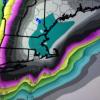
jaxjagman Posted January 11 Share Posted January 11 4 minutes ago, EastonSN+ said: Nice dip in the AO. Can you imagine that with this,of course its fantasy right now Link to comment Share on other sites More sharing options...
EastonSN+ Posted January 11 Share Posted January 11 8 minutes ago, jaxjagman said: Can you imagine that with this,of course its fantasy right now I honestly do not understand these maps. Is that representative of a stretched PV? Link to comment Share on other sites More sharing options...
EastonSN+ Posted January 11 Share Posted January 11 9 minutes ago, donsutherland1 said: The PNA has gone positive with a value of +0.173. As noted previously, all 10 long-duration winter PNA- regimes (25 or more consecutive days) have been followed by a regime change to positive with more than two-thirds of the succeeding 30 days being above 0. Hey Don if that Dip in PNA is false, we could have the -AO, PNA and MJO phase 8 line up! The missing piece would be the NAO. Link to comment Share on other sites More sharing options...
Krs4Lfe Posted January 11 Share Posted January 11 3 hours ago, bluewave said: The best snow cover extent relative to the means so far this winter was back in late November and early December prior to the big warm up for much of the CONUS outside the Northeast and Great Lakes. And that area of above average snowfall and below average temperatures continues to shrink every day. It's been a year without winter west of the Mississippi river. And here in the northeast we've torched quite well this week. Colder weather appears to return this week which brings more warmth to the west. Been lots of talk about a 2013-2014 pattern setting up or 2014-2015, but this winter is one of the farthest from those. 1 Link to comment Share on other sites More sharing options...
donsutherland1 Posted January 11 Share Posted January 11 5 minutes ago, EastonSN+ said: Hey Don if that Dip in PNA is false, we could have the -AO, PNA and MJO phase 8 line up! The missing piece would be the NAO. Right now, the NAO still appears likely to be mainly positive. It wouldn't be a "deal-breaker." 1 Link to comment Share on other sites More sharing options...
donsutherland1 Posted January 11 Share Posted January 11 Amidst all the discussion of a possible strong WWB this month, the development of a pretty strong EWB slipped under the radar. In fact, the past two days have seen the SOI at or above +20. Interestingly enough, a slightly weaker EWB (just below +20) preceded the record-January WWB of 2017 by about a week. 3 Link to comment Share on other sites More sharing options...
GaWx Posted January 11 Share Posted January 11 1 hour ago, EastonSN+ said: Potential for phase 8 by EOM. Thanks for posting that. But well before any potential phase 8 late month, the models are near unanimous in predicting phase 6 lasting through Jan 21st. Per the image below, the current phase 6 started on Jan 5th. So, if the models verify well, this could end up as a 17 day long phase 6! How would a 17 day long phase 6 compare to the longest phase 6 on record (since 1974)? -Still not close to the 22 days in the summer of 1984 (7/28-8/18) -But this would obliterate the longest on record fully within met. winter, which is 13 days set in 1999 (1/30-2/11) (also La Niña) -The longest on record fully within Jan is the 11 days of 2005 (1/9-19). -The longest on record fully within Jan during La Niña is the 10 days of 1976 (1/13-22). https://www.bom.gov.au/clim_data/IDCKGEM000/rmm.74toRealtime.txt 1 Link to comment Share on other sites More sharing options...
jaxjagman Posted January 11 Share Posted January 11 2 hours ago, EastonSN+ said: I honestly do not understand these maps. Is that representative of a stretched PV? Just shows the PV getting dispaced into the Baffin Sea and Northwesten Passages,its still just fantasy,not sure why i even posted it here,but that could get quite cold into parts of NA depending on what ever teleconnection connect with 2 Link to comment Share on other sites More sharing options...
snowman19 Posted January 11 Share Posted January 11 2 hours ago, donsutherland1 said: Amidst all the discussion of a possible strong WWB this month, the development of a pretty strong EWB slipped under the radar. In fact, the past two days have seen the SOI at or above +20. Interestingly enough, a slightly weaker EWB (just below +20) preceded the record-January WWB of 2017 by about a week. It’s pretty uncanny (at least so far) how close we’ve been following the 16-17 La Niña evolution….weak Niña, very strong -IOD in the fall, now the “under the radar” EWB and SOI spike right around the same times in January. Then the big WWB afterwards and total La Niña collapse….assuming this one (WWB) ends up being comparable to 2017. This latest EWB and SOI spike definitely did some damage though, huge SST drop in region 3.4 with the upwelling and there’s real healthy tropical instability waves showing up on the new SST charts 2 Link to comment Share on other sites More sharing options...
GaWx Posted January 11 Share Posted January 11 19 hours ago, snowman19 said: It’s pretty uncanny (at least so far) how close we’ve been following the 16-17 La Niña evolution….weak Niña, very strong -IOD in the fall, now the “under the radar” EWB and SOI spike right around the same times in January. Then the big WWB afterwards and total La Niña collapse….assuming this one (WWB) ends up being comparable to 2017. This latest EWB and SOI spike definitely did some damage though, huge SST drop in region 3.4 with the upwelling and there’s real healthy tropical instability waves showing up on the new SST charts Comparisons of indices Jan ‘26 to Jan ‘17 1. Jan of 2017 was also at this time in phase 6. But that’s where the similarities end as 2017’s phase 6 was much shorter (lasted <2 days) and it sped all the way around to phase 3 by late month! It may just get to 8 at about the same time. So, MJO starting off similar but ending totally different. 2. PNA similar through Jan 21st but then 2017 went back to +PNA. We’ll see whether 2026 does that. 3. Strong +AO 2017 vs strong -AO 2026. So, AO patterns are opposites. 4. 2017 had a +NAO 1/7-18, but then it turned to a moderate -NAO 1/20-6 before rising to neutral late. 2026: -NAO til today and forecasted to head to weak +NAO for a week+. So, NAOs very different. 5. 2017 had -WPO-EPO most of first 1/2 and then +WPO/+EPO 2nd half vs 2026 having some +WPO/+EPO that’s now turning to -WPO/-EPO, which should last for awhile. So, WPO and EPO very different. In summary, other than ENSO related stuff and PNAs being similar, the other 5 indices are far different. Good luck on getting a similar result to 2017, whatever that result is. 3 Link to comment Share on other sites More sharing options...
raindancewx Posted January 11 Share Posted January 11 The La Nina is almost over. The subsurface wasn't even meaningfully negative in Dec, definitely won't be in Jan. 0-300m down for 100-180W by the equator was only -0.03 in Dec, v. -1.20 in Dec 2024. It's night and day different. https://www.cpc.ncep.noaa.gov/products/analysis_monitoring/ocean/index/heat_content_index.txt The eastern zones of 3 and also 1.2 are much warmer than they have been in a while. The rapid transitions out of La Nina to El Nino tend to be stormy in the West and we've seen that in recent weeks/months. The record warmth out here is more tied to the North Pacific, it's more of a leftover from last winter than a direct driver from this winter. Essentially the setup is nearly identical in the background for the north pacific, and since we've had near neutral conditions in the tropics, not a whole lot has changed. Once we get in Feb/Mar/Apr the subsurface warming will either peak and reverse or continue and that will shake up the pattern. 2 Link to comment Share on other sites More sharing options...
brooklynwx99 Posted January 11 Share Posted January 11 can’t remember the last time we’ve seen subsidence like this over the MC… straight up P8 forcing late month 4 3 Link to comment Share on other sites More sharing options...
GaWx Posted January 11 Share Posted January 11 3 minutes ago, raindancewx said: The La Nina is almost over. The subsurface wasn't even meaningfully negative in Dec, definitely won't be in Jan. 0-300m down for 100-180W by the equator was only -0.03 in Dec, v. -1.20 in Dec 2024. It's night and day different. https://www.cpc.ncep.noaa.gov/products/analysis_monitoring/ocean/index/heat_content_index.txt The eastern zones of 3 and also 1.2 are much warmer than they have been in a while. The rapid transitions out of La Nina to El Nino tend to be stormy in the West and we've seen that in recent weeks/months. The record warmth out here is more tied to the North Pacific, it's more of a leftover from last winter than a direct driver from this winter. Essentially the setup is nearly identical in the background for the north pacific, and since we've had near neutral conditions in the tropics, not a whole lot has changed. Once we get in Feb/Mar/Apr the subsurface warming will either peak and reverse or continue and that will shake up the pattern. OHC continues to rise rapidly: 1 Link to comment Share on other sites More sharing options...
snowman19 Posted January 11 Share Posted January 11 15 minutes ago, GaWx said: Comparisons of indices Jan ‘26 to Jan ‘17 1. Jan of 2017 was also at this time in phase 6. But that’s where the similarities end as 2017’s phase 6 was much shorter (lasted <2 days) and it sped all the way around to phase 3 by late month! It may just get to 8 at about the same time. So, MJO starting off similar but ending totally different. 2. PNA similar through Jan 21st but then 2017 went back to +PNA. We’ll see whether 2026 does that. 3. Strong +AO 2017 vs strong -AO 2026. So, AO patterns are opposites. 4. 2017 had a +NAO 1/7-18, but then it turned to a moderate -NAO 1/20-6 before rising to neutral late. 2026: -NAO til today and forecasted to head to weak +NAO for a week+. So, NAOs very different. 5. 2017 had -WPO-EPO most of first 1/2 and then +WPO/+EPO 2nd half vs 2026 having some +WPO/+EPO that’s now turning to -WPO/-EPO, which should last for awhile. So, WPO and EPS very different. In summary, other than ENSO related stuff and PNAs being similar, the other 5 indices are far different. Good luck on getting a similar result to 2017, whatever that result is. I guess maybe you missed the part where I was only speaking in terms of ENSO, not any of the other stuff you mentioned? @GaWx Ummm no, that is not what I was implying at all. I’ll say it again, I was speaking only of the ENSO evolution 1 Link to comment Share on other sites More sharing options...
GaWx Posted January 11 Share Posted January 11 3 minutes ago, snowman19 said: I guess maybe you missed the part where I was only speaking in terms of ENSO, not any of the other stuff you mentioned? Are you implying that 2026 will probably be similar to 2017 for the rest of winter in the E US? 1 Link to comment Share on other sites More sharing options...
GaWx Posted January 11 Share Posted January 11 This 6-10 is a beaut from my perspective! 3 Link to comment Share on other sites More sharing options...
donsutherland1 Posted January 11 Share Posted January 11 Beware of the latest ill-informed Social Media hype: No "big" snowstorm is likely for the Northeast during January 15-16. Key factors argue against it: 1) The AO-/PNA+ pattern is just getting established. The trough is not likely to be sufficiently sharp. 2) There are numerous areas of vorticity competing with one another. The probability that the various areas of vorticity will develop into a single consolidated low that takes an ideal track for a classic NE snowstorm is low. Notice that only the operational GFS was shown. Moreover, large splashes of color on vorticity maps don't always translate into surface potential. There's a lot involved for the upper levels and surface to become aligned. 3) The realistic scenarios have been available for some time, even as the exact solution cannot yet be pinned down. During the 1/11 0z EPS cycle, a single ensemble member had 6"+ snow (none had 10"+) and during the 1/11 12z EPS cycle, no ensemble members had 6"+ snowfall in New York City. For Boston, the figures were 6 and 4 members respectively. Bottom line: the probability of a significant NE snowstorm is low; the probability of a major NE snowstorm is extremely low. What's far more likely than a big snowstorm is the idea that there will be periods of precipitation that transition to periods of snow, as some areas could start as light rain. A light accumulation is plausible in the New York City area. Details are uncertain, but a 1"-3"/2"-4" type snowfall would be vastly more likely than a 6"+ one. Southeast New England has a better chance of seeing a moderate accumulation. Even if some areas of 6" or above snows develop over a portion of SE New England, the areal coverage of such amounts will likely be limited. By no definition will this be a classic NE snowstorm. It won't be something that would be placed in the iconic KU Northeast Snowstorms books. Best guess from this far out: At most, maybe one of the following locations will see 6" or above snowfall during January 15-16: Baltimore, Boston, New York City, Newark, Philadelphia, Washington, DC. Most will see < 3" of snow. That's not a "big one." By the way, that's the same outfit that ignored the guidance and also failed to understand how a PNA- teleconnection translates downstream (SE ridge/warmth in the SE), and said that places like Atlanta would have a much colder than normal January. January 1-10 has a mean anomaly just above 12° above normal in Atlanta. Just for January 2026 to reach normal, Atlanta would need to experience its coldest January 11-31 since 1985! Again, as noted ad nauseum, anyone can play forecaster on social media. There, "clicks" and "views," not knowledge, skill, or accuracy are the currency of value. Entertainment value not quality of information is promoted and monetized. Hence, it's no surprise whatsover that what might become a moderate storm, if things work out (still not assured), is being hyped as a potential "big one." 7 2 1 Link to comment Share on other sites More sharing options...
GaWx Posted January 11 Share Posted January 11 Kudos to Euro Weeklies for having +PNA switch week of 1/12-8 as far back as this one issued 12/24: 1st run w/notable hint of +PNA; it never looked back/kept strengthening it though it mistakenly had -NAO: Today: strong +PNA, no -NAO Today’s 1/26-2/2 subtly suggesting +PNA may return then: Otherwise, maps today mild for bulk of Feb fwiw. Hoping these will change and end up wrong! 2 Link to comment Share on other sites More sharing options...
leo2000 Posted January 12 Share Posted January 12 More hits to the SPV. 1 1 Link to comment Share on other sites More sharing options...
Krs4Lfe Posted January 12 Share Posted January 12 Regardless of how the potential snow event pans out on the 16th, some legit cold is going to drop into CONUS, east of the Rockies through southeast. Many places east of Missouri River will remain cold throuhh end of month and throuhh beginning of February according to models and the CPC. Inherently; that should lead to increased chances for wintry weather, especially for those in the south and central US where winter has been absent. If these trends continue, it can be a real winter redeemer for much of the US (except from the Rockies to west coast where it seems destined that winter will not arrive this season) 1 Link to comment Share on other sites More sharing options...
so_whats_happening Posted January 12 Share Posted January 12 On 12/26/2025 at 4:18 PM, stadiumwave said: I wonder if all the people that ran to Twitter like a kid to post how strong the SPV would be (assuming it meant warmth), will be as eager to post the same data has significantly changed? WED Update THURS Update FRI Update 6 hours ago, leo2000 said: More hits to the SPV. This shows some pretty bad forecasts. Late December is the first set of images and the latter is as we close in on mid month. 2 Link to comment Share on other sites More sharing options...
40/70 Benchmark Posted January 12 Author Share Posted January 12 PV forecasts this season have been positively abysmal, which is why I'm not yet concerned about my call for a Feb SSW...TBH, I'd prefer that a strong PV be modeled for February at this point.....I have said all along that it won't show up in guidance until the end of January at the earliest. Remember back in December I wasn't worried about the long range saying that the PV would remain weak, so it goes both ways....I'm not just being a weenie. 2 Link to comment Share on other sites More sharing options...
40/70 Benchmark Posted January 12 Author Share Posted January 12 16 hours ago, GaWx said: Kudos to Euro Weeklies for having +PNA switch week of 1/12-8 as far back as this one issued 12/24: 1st run w/notable hint of +PNA; it never looked back/kept strengthening it though it mistakenly had -NAO: Today: strong +PNA, no -NAO Today’s 1/26-2/2 subtly suggesting +PNA may return then: Otherwise, maps today mild for bulk of Feb fwiw. Hoping these will change and end up wrong! AGAIN...Exactly what I said to expect for this period.....I kept reiterating +PNA January even though long range guidance was trying to show a never ending RNA....also said that PV would get strong as a result of the +TNH and strat reflection, but this is priming the atmosphere to rape the PV next month. IGNORE GUIDANCE. Maybe I will be wrong about the Feb SSW...I don't mean to sound arrogant. All I am saying is that it's too early to know despite long range guidance. 2 1 Link to comment Share on other sites More sharing options...
40/70 Benchmark Posted January 12 Author Share Posted January 12 16 hours ago, donsutherland1 said: Beware of the latest ill-informed Social Media hype: No "big" snowstorm is likely for the Northeast during January 15-16. Key factors argue against it: 1) The AO-/PNA+ pattern is just getting established. The trough is not likely to be sufficiently sharp. 2) There are numerous areas of vorticity competing with one another. The probability that the various areas of vorticity will develop into a single consolidated low that takes an ideal track for a classic NE snowstorm is low. Notice that only the operational GFS was shown. Moreover, large splashes of color on vorticity maps don't always translate into surface potential. There's a lot involved for the upper levels and surface to become aligned. 3) The realistic scenarios have been available for some time, even as the exact solution cannot yet be pinned down. During the 1/11 0z EPS cycle, a single ensemble member had 6"+ snow (none had 10"+) and during the 1/11 12z EPS cycle, no ensemble members had 6"+ snowfall in New York City. For Boston, the figures were 6 and 4 members respectively. Bottom line: the probability of a significant NE snowstorm is low; the probability of a major NE snowstorm is extremely low. What's far more likely than a big snowstorm is the idea that there will be periods of precipitation that transition to periods of snow, as some areas could start as light rain. A light accumulation is plausible in the New York City area. Details are uncertain, but a 1"-3"/2"-4" type snowfall would be vastly more likely than a 6"+ one. Southeast New England has a better chance of seeing a moderate accumulation. Even if some areas of 6" or above snows develop over a portion of SE New England, the areal coverage of such amounts will likely be limited. By no definition will this be a classic NE snowstorm. It won't be something that would be placed in the iconic KU Northeast Snowstorms books. Best guess from this far out: At most, maybe one of the following locations will see 6" or above snowfall during January 15-16: Baltimore, Boston, New York City, Newark, Philadelphia, Washington, DC. Most will see < 3" of snow. That's not a "big one." By the way, that's the same outfit that ignored the guidance and also failed to understand how a PNA- teleconnection translates downstream (SE ridge/warmth in the SE), and said that places like Atlanta would have a much colder than normal January. January 1-10 has a mean anomaly just above 12° above normal in Atlanta. Just for January 2026 to reach normal, Atlanta would need to experience its coldest January 11-31 since 1985! Again, as noted ad nauseum, anyone can play forecaster on social media. There, "clicks" and "views," not knowledge, skill, or accuracy are the currency of value. Entertainment value not quality of information is promoted and monetized. Hence, it's no surprise whatsover that what might become a moderate storm, if things work out (still not assured), is being hyped as a potential "big one." Yea, that threat never had a chance...DOA. 2 Link to comment Share on other sites More sharing options...
40/70 Benchmark Posted January 12 Author Share Posted January 12 17 hours ago, brooklynwx99 said: can’t remember the last time we’ve seen subsidence like this over the MC… straight up P8 forcing late month We should see a nice stretch later on once the MJO hits 7, and especially if it actually hits 8. 17 hours ago, snowman19 said: I guess maybe you missed the part where I was only speaking in terms of ENSO, not any of the other stuff you mentioned? @GaWx Ummm no, that is not what I was implying at all. I’ll say it again, I was speaking only of the ENSO evolution I hope you were speaking only in terms of intensity, otherwise 2016-2017 is an atrocious analog...that event was Modoki, this is east-based. 4 Link to comment Share on other sites More sharing options...
40/70 Benchmark Posted January 12 Author Share Posted January 12 On 1/10/2026 at 10:16 AM, donsutherland1 said: The preliminary value for the PNA has risen to -0.019. Based on the final December data and preliminary January data, today is the 34th consecutive day that the PNA has been negative. That streak will likely end tomorrow. All 10 long-duration winter PNA- regimes (25 or more consecutive days) have been followed by a regime change to positive with more than two-thirds of the succeeding 30 days being above 0. The outcome will have potentially large implications for the risk of significant or greater snowstorms in the East, especially the Mid-Atlantic Region. For example, for Baltimore, New York City, Philadelphia, and Washington, DC, there have been 9 storms since 1950 that brought 6" or more snow to three or all four of those cities. None had a PNA-. For the 14 cases where 2 of those cities saw 6" or more snow, 10/14 (71%) of those storms had a PNA+. The most recent PNA- event was the long-duration January 31-February 4, 2021 storm. There were no cases where 2 or more of those cities saw 10" or more snow when the PNA was < 0. I was debating DT online RE this....he was arguing that the NAO was more important, and I was saying it was the PNA....this is why. 4 Link to comment Share on other sites More sharing options...
EastonSN+ Posted January 12 Share Posted January 12 Steady....looks pretty close to the last wave that hit 8. 1 Link to comment Share on other sites More sharing options...
GaWx Posted January 12 Share Posted January 12 1 hour ago, 40/70 Benchmark said: I was debating DT online RE this....he was arguing that the NAO was more important, and I was saying it was the PNA....this is why. Down here in the SE like at RDU/ATL, there’s also a notably higher correlation to a +PNA than to a -NAO for 3-6”+ snowstorms. The PNA seems to be the most telling single index. Speaking of which, the 0Z EPS mean actually has it coming back up to + at the end (1/26). If this occurs, that will increase the chance that Jan will end up with a net +PNA like all of the other -ENSO -PNA Dec transitioned to: However, on the GEFS, it still doesn’t get back up to +PNA as of 1/26 though it appears to be on its way just afterward, which would still mean a better than 50% chance to attain a net +PNA for Jan: 1 Link to comment Share on other sites More sharing options...


Recommended Posts
Create an account or sign in to comment
You need to be a member in order to leave a comment
Create an account
Sign up for a new account in our community. It's easy!
Register a new accountSign in
Already have an account? Sign in here.
Sign In Now