All Activity
- Past hour
-
We all know the earth is warming. No shit. Point being since 1995 combined with ocean its slower than what you posted I can manipulate data too Tip. Why the random 1950 to 2020? Let's be real you were looking for maximum effect in your post. I am one of the few who actually read your soliloquy daily, as you noted to Wiz earlier. Its not the first time you post random maps with no explanation
-

2026-2027 El Nino
michsnowfreak replied to Stormchaserchuck1's topic in Weather Forecasting and Discussion
Im sure its random. After all, enso is just one piece of the puzzle. But the 1890-1957 timeframe still had plenty of up and down winters. -
2026-2027 El Nino
michsnowfreak replied to Stormchaserchuck1's topic in Weather Forecasting and Discussion
Interesting...coming off of the snowy 2010s where Detroit averaged 49.4" (snowiest decade on record), the 2020s so far averaged 37.8". This is very close to the 1950s 37.4". -

2026-2027 El Nino
Great Snow 1717 replied to Stormchaserchuck1's topic in Weather Forecasting and Discussion
In other words there is still time for things to change in one direction or the other... -
Aside from the fact, the critique is misplaced. We in the Met and Climate community, who are not assholes and/or just fucking morons, already are aware that the oceans have absorbed 90+% of the warming that began actually since the Industrial Revolution. The oceans are intrinsic as a heat sink and modulator. Therefore, representing these warming(cooling ) graphics, respectively, already has that consideration embedded geo-physically.
-
They do. But the purpose of that was the atmosphere. You're extension of which does not invalidate it -
-
That used to happen every spring at my last house, I guess that's the price for living near woods.
-
The one thing to keep in mind with using ocean temps (especially present or very recently) are the changes ongoing within the PDO domain, AMO, and of course ENSO region. But alot of studies and data have shown SSTs have increased over the years (hence the development of the RONI to incorporate this signal). It is also very likely that we are now headed towards the negative phase of the AMO so naturally we *should* begin seeing the Atlantic cool.
-
Yeah, that’s what I have. I find it amazing that there were none for the 68 winters between 1888-9 and 1957-8. I wonder whether or not this is random, especially considering there were 7 over the subsequent 68 winters 1957-8 through 2024-5!
-

Central PA Spring 2026 Discussion/Obs Thread
canderson replied to Voyager's topic in Upstate New York/Pennsylvania
Flight home Sunday from DFW looking very doubtable as I look at SPC data. -
Ocean temps don't matter I guess.
-
Ssts are 07 to 16 earth temps are 95 to 2025
-
Because sst datasets start in 2002 . Saying how much the earth warmed should include the ocean
-
it's ok, i still believe the flyers are going to make the playoffs this year...
-
That would be nice tho... So far we are spits and starts of green up around this N. Middlezex Co region. Lawns have some patches. The forsythia and lilac buds are swollen. Some of the random shrubbery have green-ish tints to the still barren stems. All large species trees are in nuclear hibernation - not buying it... We need the nights to stop with this < 35 bullshit. Just give us 40 for fuck sake. You know? And make it stick. 40 to 52 with highs 60 to 70+ with this solar should finally tune up the lawn mowers.
-
Last cold pisser for a while
-

Central PA Spring 2026 Discussion/Obs Thread
Jns2183 replied to Voyager's topic in Upstate New York/Pennsylvania
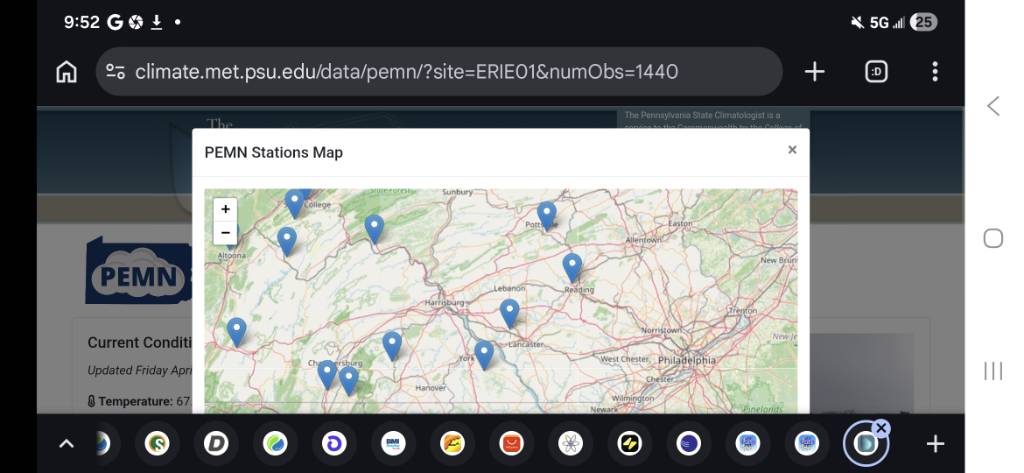
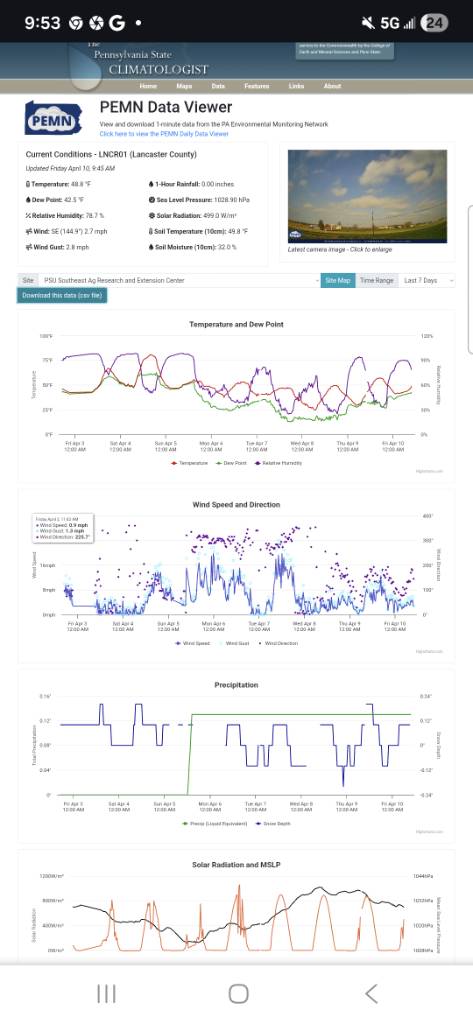
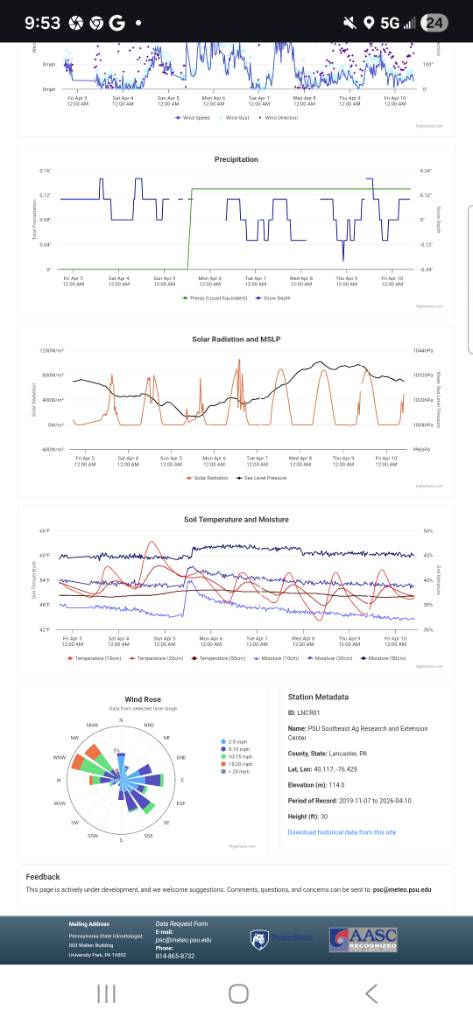
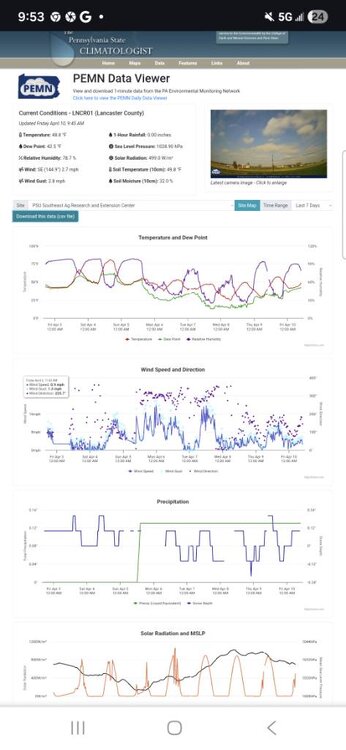
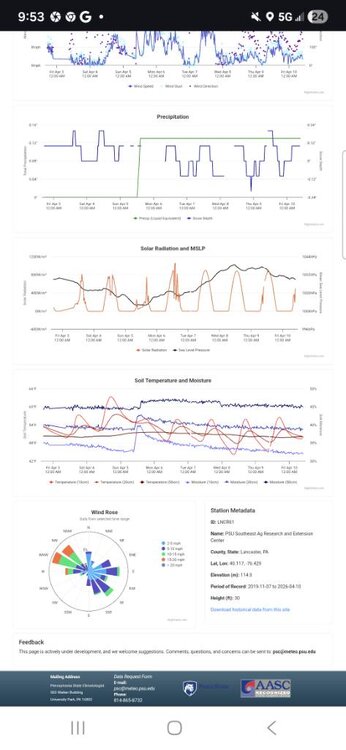
Those stations I posted about from PEMN have soil moisture and temperature at 3 depths Plant Available Water. 10\text{cm}: Moisture for your Lawn. (Currently in a deficit/drying phase). 20\text{cm}: Moisture for your Shrubs and Garden. (Currently stable, near baseline). 50\text{cm}: Moisture for your Trees. (Currently very healthy and high). Watch moisture after it rains and during dry spells. They signal everything The rain past Sunday never even with dent on the deeper sensors. The upper sensor we already are below where we were on Sunday. Sent from my SM-S731U using Tapatalk -
hehhhhh I would encourage using larger hemispheric basis for determining back door potential in this case. I realize the modeling consensus - for now - is putting a Euro like solution as an outlier, but I really argue that a Euro like solution has a ton of support from both that larger synoptic perspective, but also in in the season trend. We've been dealing with a PV anomaly of varying strength.... averaging near 100 or 90 W by 60 N, for months. In all models, Euro combined, that still there out to 300+ hrs. That has been at times mirrored across the conterminous by warm heights S of ~40N. Larger gradient results. The flow between physically/necessarily faster than normal at mid and upper levels. Moving a stream of air faster than normal from Lake Superior -ish to the Maritime of Canada, is a very BD prone mean. That why we've seen a buck shot of BD's ... so it seems. I can't say this for sure, but it "seems" to me that we are above normal incidences therein, relative to date. I don't know if there is any climatology for numbers of BD, per date. So this is largely conjecture on my part. Be whatever that may be, I just base it on anecdotal accounting having suffered the vicissitudes of New England springs for that past 45 years of my life jesus. Anyway, being a bit flowering with rhetoric here but I think there's enough precedence both in spring climo, seasonal trend in play, and synoptic observable construct at large scales, not to be overly confident next week.
-
2026-2027 El Nino
40/70 Benchmark replied to Stormchaserchuck1's topic in Weather Forecasting and Discussion
This is a warmer version of the 1950s and 1980s, though hemispherically speaking, it's more akin to the 1950s...so instead of 19.9" or 19.7, NYC has averaged 18.2 this decade. o - Today
-
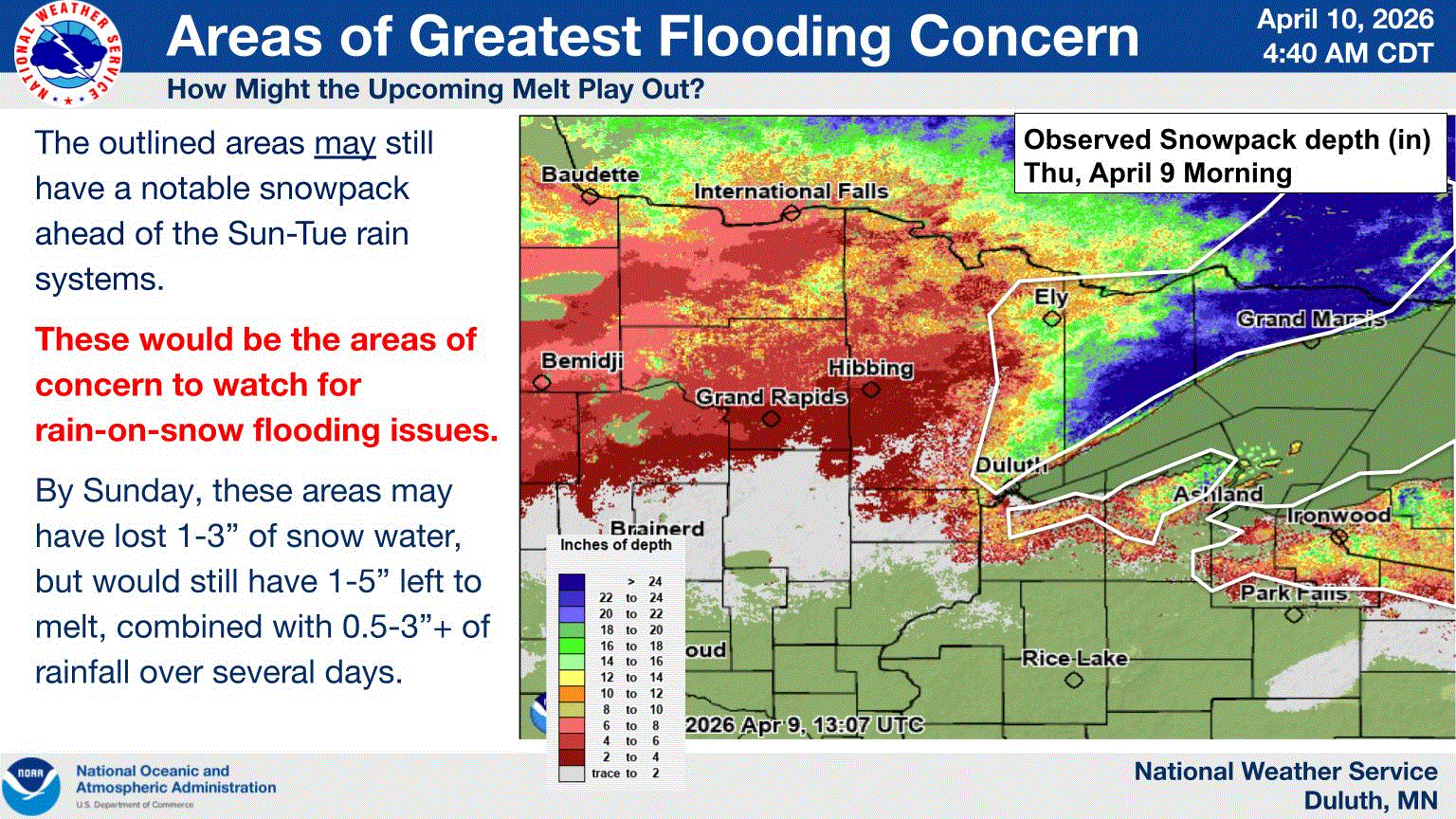
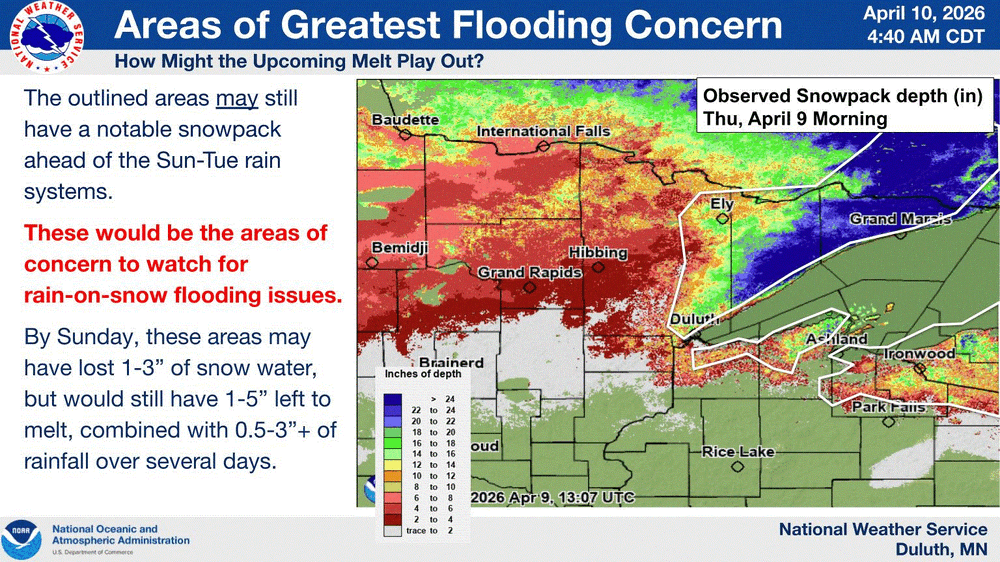
Looks like the rivers along the shore are going to be roaring next week. Gooseberry Falls should be a cool site to visit.
-
April 10 1977: A record high of 86 is set at Redwood Falls. For Friday, April 10, 2026 1894 - A heavy late season snow blanketed parts of the northeastern U.S. Heavier snowfall totals included 31.5 inches at Salem Corners PA, 30 inches at LeRoy NY, 26 inches at York PA, 14 inches at Waterbury CT, and 9 inches at Providence RI. (The Weather Channel) 1935 - Severe dust storms across Iowa and Kansas closed schools and highways. Dodge City KS experienced its worst dust storm of record, with dense dust reported from the morning of the 9th until after sunset on the 11th. The sky was almost as dark as night at times during the daylight hours. The thick dust suspended traffic on highways and railroads, and also suspended most business in town. (The Weather Channel) 1979 - A massive tornado smashed into Wichita Falls, TX, killing 43 persons and causing 300 million dollars damage. Another tornado struck Vernon TX killing eleven persons. (David Ludlum) (Storm Data) 1987 - Blustery northwest winds prevailed across the Northern Plains Region. Winds in Wyoming gusted to 65 mph. Temperatures in North Dakota were only in the 20s and 30s, following afternoon highs in the 70s the previous day. (The National Weather Summary) 1988 - Unseasonably warm weather prevailed in the western U.S. Eleven cities reported new record high temperatures for the date, including Bakersfield CA with a reading of 95 degrees, their warmest for so early in the season. Pocatello ID warmed from a record low of 19 above to an afternoon high of 63 degrees. (The National Weather Summary) 1989 - Strong northerly winds, gusting to 53 mph at Albuquerque, NM, ushered cold arctic air into the south central U.S. The temperature at Albuquerque plunged from 82 degrees to 29 degrees overnight. Thirty-three cities in the central U.S. reported record low temperatures for the date, including Goodland KS with a reading of 4 degrees above zero. (The National Weather Summary) 1990 - Thunderstorms produced severe weather from the Central Gulf Coast Region to western sections of the Carolinas during the afternoon and evening. Evening thunderstorms over western South Carolina produced wind gusts to 98 mph which injured four persons at Holly Springs, and wind gusts to 100 mph which injured one person and caused half a million dollars damage north of Dacusville. (The National Weather Summary) (Storm Data) 2005 - Heavy snow affected the Colorado Rockies during April 10-11, as up to 30 inches of snow affected the mountains around Denver. In the Denver metro area, 10-15 inches of snow accumulated.
-
2026-2027 El Nino
40/70 Benchmark replied to Stormchaserchuck1's topic in Weather Forecasting and Discussion
I was, but appreciated his thoughtful response, anyway. -
People making calls for this winter this early is ridiculous. Look how winter forecasts from months in advance have turned out in recent years.
-
Central PA Spring 2026 Discussion/Obs Thread
Jns2183 replied to Voyager's topic in Upstate New York/Pennsylvania
If people are not aware I wanted to let them know about the PEMN Network Penn state's putting a lot of places that are rural. We're talking about many thousands of dollar professional stations that put out excellent one minute data that can be seen in real time. If you go to the Pennsylvania climate website and look for PEMN viewer Sent from my SM-S731U using Tapatalk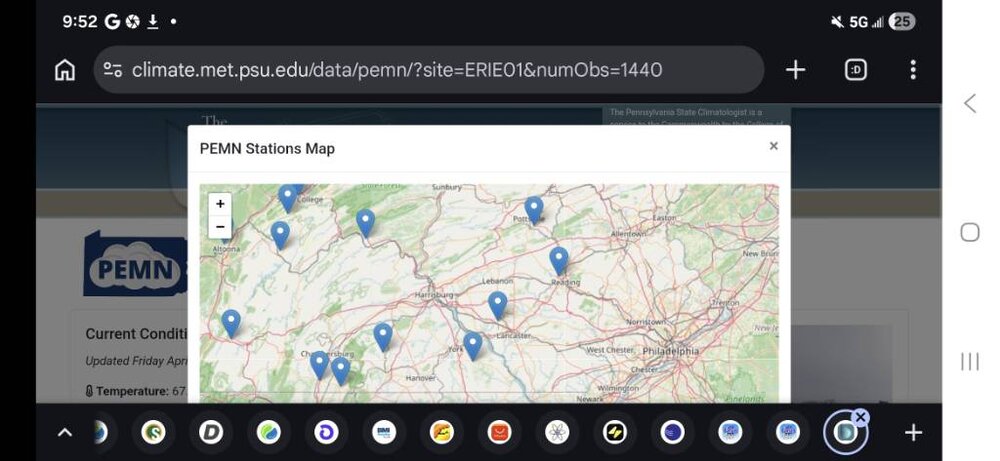
-
2026-2027 El Nino
michsnowfreak replied to Stormchaserchuck1's topic in Weather Forecasting and Discussion
I read it. It just seems like a weird way to word it. "as things stand right now worst case...". Thats like saying day 14 on the GFS looks stormy so as things stand right now, best case we get showers, worst case it floods. And then when day 14 becomes day 0 and its dry, cant say you misspoke, but it wasnt anything close the expected scenarios 2 weeks earlier.