Typhoon Tip
-
Posts
44,845 -
Joined
-
Last visited
Content Type
Profiles
Blogs
Forums
American Weather
Media Demo
Store
Gallery
Everything posted by Typhoon Tip
-
"Real summer heat" It gets in the 90s in April ... How hot does it have to be in order to subjectively be real? It's a matter of frequency, only. Some years you do it earlier ... some later. Granted, the longer termed mean argues the return rate increases from April --> May --> June, such that it's rarer in Apr compared to the June or July. There's no other reality. This year we've been all over the place with real heat in April and May, and a wet June preventative - by and large. That's all. Nothing more, nothing less.
-
right, it took a minor event in the physics and fractal'ed it till the cows came home. ha
-
Interesting pattern offered overnight by both the Euro and GFS... Nothing terribly well organized, but daily convection chances for like 10 straight days. Some days only one or two cells sprinkled about, other days ... pervasive 18z explosions in a higher K-index, DP rich bonanza. All the while...there's a modest heat signal lurking. It's not likely the operational runs will ever see this. I've given up. The last one was a whopper, and we ended up folding the ridge over with a closed low in WV that took a hot signal and turned it into everything but an actual coastal storm ... other than heat. That's the rub with teleconnectors in the summer - the correlations are different because of the nebular flow types/lacking coherent long-wave..etc. Anyway, presently there is an EPO positive switch to negative (+1 to -1 SD), while the PNA is collapses to -1SD ... as we head through the holiday times. That combination at this time of year would settle a flow nadir into the Pac NW... with tendencies for rising heights across the eastern mid latitude continent. It's a question of how much(little) amplitude, and if greater... than we get warmer. The only problem is... the operational runs don't really reflect any of the above actually happening right now. It may emerge over the next week, similar to how the "fold over" pattern with ridging and apocalypse fires in Canada and a cut off S wasn't handled until nearer terms, we could formulate a passive heat footprint given time.
-
Same here ... +CG overnight, some so powerful you'd think the sonic waves must've cracked brick structures
-
Remember those Euro runs ... heh. I mean it didn't get it right, per se ... but interesting nonetheless
-
It's got to be the 850Td + ( 700T - 700Td) part of the total expression that's throwing the high threshold because that's like being under warm water out there today
-
Fledgling heat signal in the toward the first week of July ... maybe post 4th. Not a very bright but it's there. Shortened R-wave scaling with an onset dive in the EPO, whilst a neutralizing PNA (that actually goes modestly negative depending on the source) typically eject a heat plume. Heights in the east are rather zonal though ... (though trending). Operational GGEM/GFS hint, but don't actually contain a SW expulsion per se.
-
K index must be very high ... just about any CU turns into a grumbling down pour.
-
it's 76 of 70 here... Not sure what the convective temp is - Looks on sat like there's already deep convection moving up from the upper M/A. That may be related to on-going perturbation in the flow rather than in situ destabilization, tho.
-
That statement ( bold ) could be used a rubric for the general society pitfall caused by info-on-tap. It's an even deeper dive into off-topic ... but we really live in an era of paradox. Easy of information lends eventually to indolence ( eventually...), and out the window goes the will to vet, leading to less/no real information actually succeeding transmission --> easy civility ... Evolution leading to its own extinction may be rooted in some sort of mathematics, within which also contains some form of proof that (gee, ya think) that it is just like that everything in the universe: it is constrained by finite existence. Perhaps the X-factor is as much an unknown (how it all goes down), as it is also ironically a certainty.
-
Not sure about every model that exists ...but as far as what's typically used the Euro/GFS/GGEM ( and NAM 32km has decent skill with convection < 30 hours) products all had QPF resembling convection, abruptly emerging on the charts by 18z and carrying on through 00z, when looking at the guidance from the previous day. Lot of words to say yes... haha. But I'm not sure if it was focused in here or by forecasting efforts et al. There's models, then there's social aspects - sometimes the two are less than married.
-
The term was coined in recognition of the deep layer circulation, one that draws the air mass and it's quality from the Bahama general region. I suppose that can vary some...whether it's more Gulf of Mexico, or biased NE of Bahama toward Bermuda - but it was always Bahama because that's the predominating/mean source-region. But further op ed/observations ... The description is not one that contains 'smoke' and or haze/bio-mist and/or industrial smogs combinations, etc, associated with 'HHH' weather from the continent. The air quality is cleansed down to just higher DP/WV. The sky is sharply differentiable between tall CU turrets and blue purity. Vestigially if not outright, the soundings at point sites along the EC coastal plain from the Mid Atlantic all the way up might even become like San Juan or Nassau. Yesterday was not quite that, but it was in a quasi state - just based on what I observed leading. It got really close, but was cut off for several hours in the early morning because a weak area of frontalysis/low pressure slipped along LI and cut off the supply. But this latter circumstance was too weak to remove the air mass that had become entrenched from the previous period, which did draw the air mass from deep origin E of Florida. In principle, it's whenever the circulation can identify a deep layer transport/source from the eastern Gulf/Florida/Bahama region, all the way N. Technically it doesn't even parallel the eastern seaboard, because the flow is more S-N and ends up moving from subtropical/tropical regions back over land. But for brevity it's EC parallel flow from the S. Lastly ... this is all in a world according to me stuff. Folks can choose to adopt these phrases if they like...but once the reason/recognition is understood, it's like cataloguing synoptic circumstances for the purpose of brevity - which this post fails...I understand, but I'm just answer the question. SW/"Sonoran" heat release. Bahama Blue. It's just a quick as "Montreal Express" for a particular type of cold, like that which we experience early February just this last winter. These are real identities that have reproducible weather types that can be visualized/associated with them, etc...
-
Make sure you wipe thoroughly
-
Can you imagine being N of the border up there in interior eastern QUE ? One sees DPs around 53 or whatever and might think ahhh, but temp might not matter under that extraordinary smoke slab - jesus. I mean to completely obscure from seeing the surface of the Earth through that giant region on vis sat, whence the solstice sun cannot even penetrate, goes in both directions - which means they probably don't even have the dim orb looking up from the ground. The day light's probably dimmed down to apocalypse eeriness.
-
ho man, good luck standing in an open field at that time of day in this air mass
-
80/71 already ... should be good for 85 or 86. This seems to match current MET/MAV machine guidance at HFD, matching 850 mb/skew-t diagram for ~16C at 850mb, but the 2-meter would actually push 92. Depends on the usuals ... For now the sun continues unabated (above the S. coastal region) so we'll see. Seems we've lost the Bahama Blue flow for the time being. Hi res vis loop shows that while it persists up to about LI, along and N of that west-east axis there's an established NNW motion. WPC analyzed no boundary, however. This circumstance may break down toward mid day? start actually moving slowly the other way. Or perhaps going toward stationary with pulse thunderstorms. SPC has us in general Anyway, said N motion isn't lowering DPs really. It is a bit drier mid VT/NH but there's little/no low level advection. As the Lakes trough tries to briefly amplify along 80 W give or take later Monday, the deep layer circulation medium again goes S-N into Wednesday. That may set up more BB. Looks like the 4th is intact to a reasonable tolerance - for now. There seems to be a seasonal loss in impulse coverage in the guidance going on after about Thursday this week... carrying us through the holiday. What's interesting is that the 570 hydrostat meanders N and S of us at irregular intervals ...which that is a very warm thickness to assume the EPS blended 2-anomaly will be colder than normal. I've noticed that the ensemble 2-meter anomalies from all three main model systems is consummately too cold though. They got the recent cooler June right in principle (for ex) but they were too extreme. Most places will probably be -1 to -3, as opposed to the -4 to -6... so it's a tedious complain, granted. Right now they are modestly negative week 1, but go modestly positive week 2. Bottom line... looks like a seasonal 4th of July stretch, Saturday thru next Tuesday. NOT like it was 2021
-
Nah that’s later after the kids are down for the night
-
Yup ...deep Bahama Blues. It's relatively rare as a phenomenon to get 73.4 DPs with blue toned sky pure enough to challenge a post Canadian snow storm on a mid February afternoon.
-
Uh ...CNN is - That headline there came 2 hours ago
-
You wonder what's going on in the think tanks/Pentagon - I was entertaining the notion that Yevgeny might be sort of secretly a Ukrain sympathizer or even switched sides. But my buddy brings up the obviously over-arcing oligarchy role in probably not agreeing with Putin's tact at this point - that's sort of been there all along... forgot about that. But suppose for a second the oligarchy got to the Wagner chief ... this could still be a preamble? testing Moscow's flinch response. That doesn't work either. The problem I'm having with any of this is that the element of surprise has been removed from any future attempt. So I'm curious what the motivation was for "staging" a move on Moscow in the first place - and what changed to draw the Wagner forces to now stand down. What a f'n morass
-
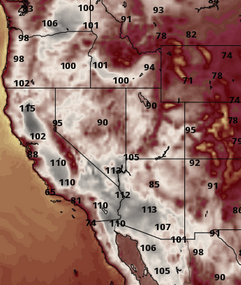
Kinda interesting... get a load a California at the end of this Euro run. Considering the snow pack in the Sierra and all that water apparently in the valleys
-
I suspect ASH's DP is too high. Just as FIT's seems too low. More so in the latter suspicion, I've noticed FIT is always last. Today's no different - I realize other Mets disagree, but KEEN, KASH ... everywhere around just finished a morning of saturating air, light rain, and are reporting a sultry 70 DP ... FIT is stuck at 66. I mean they are surrounding by readings that make more sense synoptically. Interesting...
-
mmm, perhaps a little 'too great'
-
Holy shitness Bat Man! CNN's headline page banners, "Apparent Insurrection Underway In Russia" uhh... Yeah, I guess it's a specter that's been looming. This Wagner chief, ...railing on as a recent antagonist against his own government was a sort of wake up call. Why CNN also reports that U.S. officials were caught of guard might just be CNN invent-a-click news reporting but we'll see... And we'll see if any of the above is true. But wow - historic if so...
-
Last two runs of the operational GFS backdoors - end thread necessity.