
SnowenOutThere
-
Posts
5,731 -
Joined
-
Last visited
Content Type
Profiles
Blogs
Forums
American Weather
Media Demo
Store
Gallery
Everything posted by SnowenOutThere
-
I'm wondering how this winter might be different for myself down in Charlottesville. Obviously, I'm still in the hope for a big storm category but otherwise are there any meaningful differences?
-
Ens are pretty rough. EPS goes cool for a bit around labor day before running back the heatwave we're in by late next week. CMCE keeps things cooler with more backdoor fronts. GEFS is a bit of a mix between the two that keeps us on the south side of any fronts, but has colder air up in PA.
-
Think it looks pretty good to become a TS if it becomes strong enough. It has some surprisingly nice outflow to its south with a good level of anticyclonic spin aloft. Honestly, the limited convection makes it a good study of the cyclonic surface vs anticyclone aloft.
-

2026 Mid-Atlantic Severe Storm General Discussion
SnowenOutThere replied to Kmlwx's topic in Mid Atlantic
Hoping Cvill can get in on the action once the ridge starts to break down towards the weekend. -
That’s why you gotta go out to them. It snows at the drop of a cold front out there. Last year I managed to sneak in an early November snow hike and a couple throughout January.
-
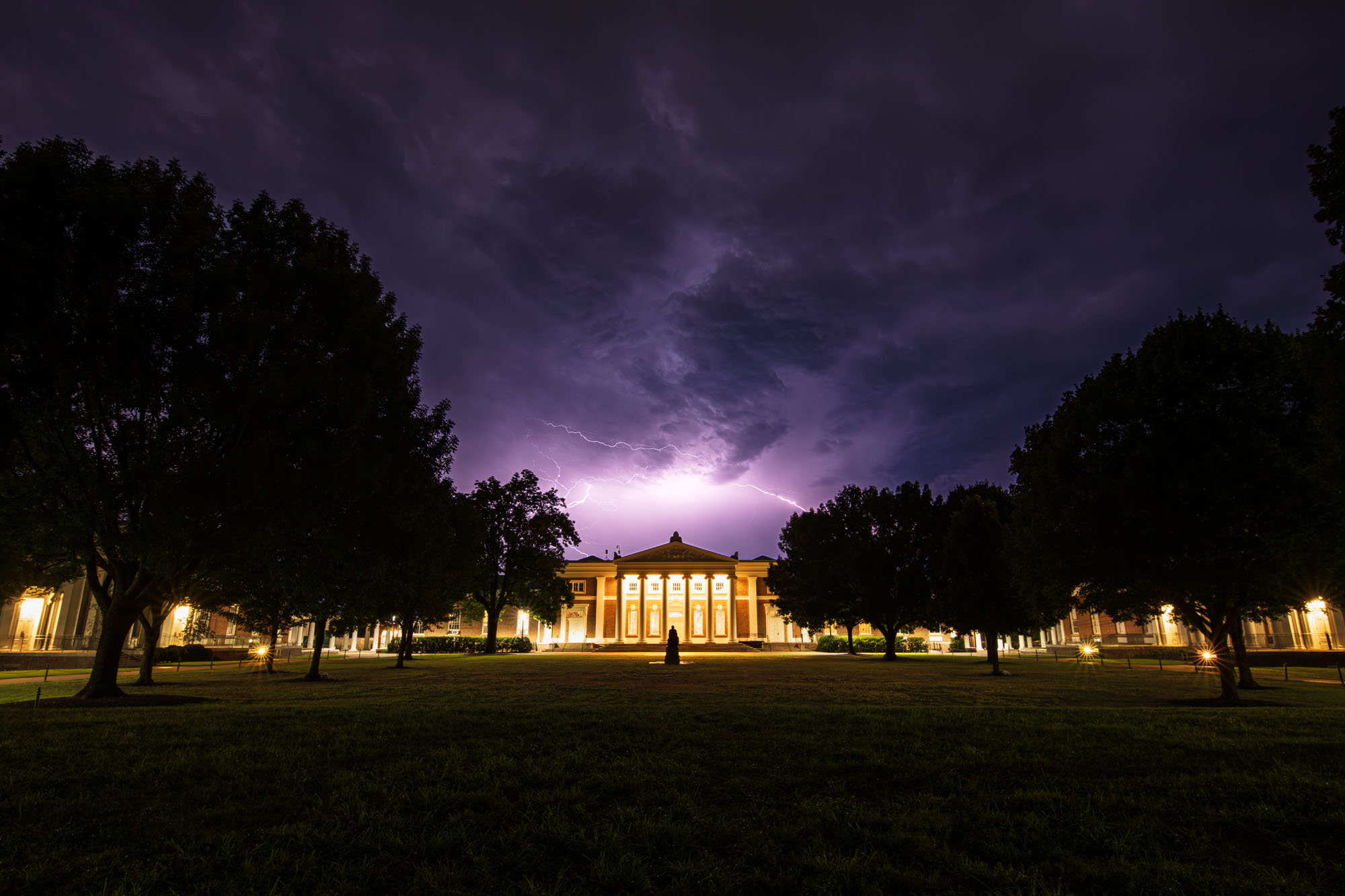
@NorthArlington101Turns out UVA liked them too as I'm now a post on their Instagram. https://www.instagram.com/p/DclqopRDcKi/?utm_source=ig_web_copy_link&igsi=MzRlODBiNWFlZA%3D%3D


-
Storms ruined my picnic plans last night, but once they moved out to the southeast they put on one of the most incredible lightning shows I've seen. One of those times were even other, presumably "normal" people stop to look up at the sky. Bolt after bolt ran along the clouds for hours. Had the privilege of walking down to watch it once with a friend and then later on with my camera. Won't be a night to forget.
- 947 replies
-
- 17
-

-
Tomorrow is gonna be elite. DP will be below 55 degrees for the first time in who knows how long.
-
2026 Mid-Atlantic Severe Storm General Discussion
SnowenOutThere replied to Kmlwx's topic in Mid Atlantic
Got to my apartment today and it was a good storm. Not much wind but tons of good lightning and thunder.- 2,562 replies
-
- 1
-
-
- severe
- thunderstorms
- (and 7 more)
-
The models have always been inaccurate. They always will be too. In order to have a perfect forecast you need two things: 1. A perfect simulation of every thermodynamic/kinematic process down to the air molecule and 2. Input data of every air molecule and its relevant properties. Now, obviously we will never hit that lofty goal. However, the same principles apply to figuring out why models have improved or stalled/declined in skill. Considering that, and this is a hard fact of reality not up for debate, here is list of soundings ended due to both budget cuts and personal loss at NOAA post doge. Below is quoted from a brookings article. Weather balloon launches were suspendedin Albany, New York, and Gray, Maine. Weather balloon launches were ended in Kotzebue, Alaska. Balloon launches were suspended in Omaha, Nebraska, and Rapid City, South Dakota. Balloon launches were cut from twice daily to once daily in Aberdeen, South Dakota; Grand Junction, Colorado; Green Bay, Wisconsin; Gaylord, Michigan; North Platte, Nebraska; and Riverton, Wyoming. Nearly half of all weather offices are currently missing 20% of their staff. The New York Times reports that some of the weather service’s departments will no longer have weather forecasters working overnight If you cut input data you cut model accuracy. To reiterate, this is not up for debate but the reality we live in. Ask yourself if those actions were done by the “other” political party what would your reaction be? It’s alright to admit that these cuts are a price you paid due to aligning with the admin on its other policies, but it’s not alright to deny the truth of the matter. Final point here. For the 2027 fiscal budget the admin wants to cut NOAA spending another 17-25%. Imagine that. Our forecasters are already overworked, our data collection crumbling, and our main flagship models falling behind peer nations; and the solution is to cut funding. Own up to your politics. Sources: https://www.brookings.edu/articles/how-politics-is-weakening-americas-weather-service/ https://www.theguardian.com/us-news/2026/may/18/trump-cuts-ai-weather-prediction-forecasts https://silencingscience.org/actions/noaa-budget-cuts-proposed-for-fy2027/
-
First mid-lat bomb with snow on the GFS
-
2026 Mid-Atlantic Severe Storm General Discussion
SnowenOutThere replied to Kmlwx's topic in Mid Atlantic
Impressive how organized the cells are. The one hitting me just popped up 30 minutes ago and was in the process of forming a shelf cloud. Some sculpting was evident with the mid level clouds being held behind the front and upper clouds. Lots of scud too indicating good inflow. This line won’t be bad till it moves off east, but concerning what it may do out near DC. -
2026 Mid-Atlantic Severe Storm General Discussion
SnowenOutThere replied to Kmlwx's topic in Mid Atlantic
I think the main round is initiating. The cells are already 20-30 kft cloud tops so the ML lapse rates aren’t killing their ability to blow up. -
2026 Mid-Atlantic Severe Storm General Discussion
SnowenOutThere replied to Kmlwx's topic in Mid Atlantic
That’s an impressive sounding for us. The low level directional shear is way better than I expected.- 2,562 replies
-
- 2
-
-
- severe
- thunderstorms
- (and 7 more)
-
2026 Mid-Atlantic Severe Storm General Discussion
SnowenOutThere replied to Kmlwx's topic in Mid Atlantic
I would be surprised if the bay bounties didn't get a TOR watch.- 2,562 replies
-
- 1
-
-
- severe
- thunderstorms
- (and 7 more)
-
2026 Mid-Atlantic Severe Storm General Discussion
SnowenOutThere replied to Kmlwx's topic in Mid Atlantic
My take on today. Made before the Dulles sounding, but I doubt that changes too much from the parameters shown on mesoanalysis.- 2,562 replies
-
- 2
-
-
- severe
- thunderstorms
- (and 7 more)
-
2026 Mid-Atlantic Severe Storm General Discussion
SnowenOutThere replied to Kmlwx's topic in Mid Atlantic
This is one of the best read ups I’ve read in a bit! We’ll have to see how the situation evolves with our cape ml lapse rates improving. -
I believe that these equations of ocean to atmosphere heat transfer are what’s taught at meteorology courses. I’m sure there’s a way to do this.
-
https://www.nytimes.com/2026/08/18/climate/trump-ends-roadless-rule-forests.html?unlocked_article_code=1.6VA.m1Sl.hpiH3V8wmXUd&smid=url-share “After the proposal is published in the Federal Register, which is expected later this week, the Forest Service will accept public comments before making the rule final.” I’d implore everyone to let their voice be known as our administration plans to divide and then cut down our oldest forests; despite the fact that currently existing national forest roads are hemorrhaging money and resources.
-
2026 Mid-Atlantic Severe Storm General Discussion
SnowenOutThere replied to Kmlwx's topic in Mid Atlantic
Severe storm just past Cvill is rotating anticyclonically- 2,562 replies
-
- 1
-
-
- severe
- thunderstorms
- (and 7 more)
-
Charlottesville gets hit with another severe storm. Sure that as soon as I arrive it’ll be the driest remainder of the year on record.
-
Ended with 1.37 inches of rain throughout today. Watching an epic light show to the southeast of me from my deck. One of the best I’ve seen in years.
-
2-3 inches of rain per hour rates right now with over .7 in the gauge.
-
2026 Mid-Atlantic Severe Storm General Discussion
SnowenOutThere replied to Kmlwx's topic in Mid Atlantic
Some decent velocities showing up in the Stephen’s city line segment -
2026 Mid-Atlantic Severe Storm General Discussion
SnowenOutThere replied to Kmlwx's topic in Mid Atlantic
Not the thread for this question, but is the conversation for it. I understand turning the NAM off for convective season, however, I don’t understand turning it off for winter short term stuff. I would love to know why, I assume it’s something in how it handles thermodynamics and WAA, but the NAM is almost always the most correct model when it comes to refining the mixing line in synoptic scale winter storms. It just seems odd to turn off a model which has a very useful edge on all others, even if it sucks at a lot of other aspects; could at least compromise and run it before major storms on the east coast. Would love to know your thoughts on both why it surpasses the other mesoscale models in the mixing line placement and how to compensate for its disappearance come winter time.