-
Posts
74,767 -
Joined
-
Last visited
Content Type
Profiles
Blogs
Forums
American Weather
Media Demo
Store
Gallery
Everything posted by 40/70 Benchmark
-
Like 40-50"
-
Say it with me now...everyone....March 1956.
-
Feb 28th-March 1st long duration Miller B threat
40/70 Benchmark replied to George001's topic in New England
Yea, I mentioned that PM Kraft -
Winter 2022-2023 Promises Plenty of Mid Season Mayhem
40/70 Benchmark replied to 40/70 Benchmark's topic in New England
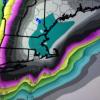
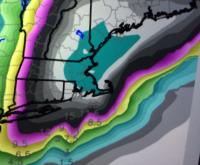
Final Call for Significant Tuesday Snowfall Subtle Changes at High Latitudes Limit Potential Eastern Mass Weather began to sound the alarms on Wednesday for a March lion that had the potential to be one of the larger storms of this decade, and at the very least the largest of this season. It now can confidently state that it will be the latter and here is why. The Synoptic Situation: What has not changed is that a very vigorous piece of energy still looks to eject out of the southwestern US on Monday and head towards the area. However, what has become clear over the course of this week for reasons discussed on Saturday in the First Call is that the system will run out ahead of the polar vortex (PV) that had been trying to feed into the back side on some of the guidance earlier last week. Be that as it may, some this northern stream does attempt to phase in as the system begins to exit the region on Tuesday evening, which may protract the period of precipitation somewhat as slightly colder air filters back into the region around the low on Tuesday evening. Expected Storm Evolution: Snow will overspread southwestern New England late Monday evening. And the rest of the region during the overnight and predawn hours early Tuesday AM. As warmer air is drawn to the north during the predawn hours of Tuesday AM, snow will begin to mix with and possibly and change to rain along the south coast/cape and islands, but precipitation should fall as primarily snowfall over a large area that has seen just about none thus far this season. The Tuesday morning commute will be highly problematic for the region, as snowfall continues north of the south coast/cape and islands. Although much of eastern Mass and southern Connecticut and Rhode Island will continue to see snowfall during the morning hours of Tuesday, and through midday and into the afternoon, onshore flow coupled with an increasingly strong late February sun will significantly slow accumulations in this area. This may especially hamper accumulations over eastern Mass, due to decreasing lift and dynamics as the shortwave attenuates prior to the influx of some northern stream energy. This is apparent in the soundings across the region. Note how there is significantly stronger lift and more moisture within the -12c to -18c snow growth zone (SGZ) near Hartford, CT. And even to a slightly lesser extent near Springfield, MA. However, note how lift and moisture is not quite as robust within the SGZ in Worcester, MA, which implies that highest amounts in this region are likely to be in the higher elevations of the Worcester hills. By the evening commute, any mixed precipitation over the south coast/ cape and islands should begin to transition back to snowfall, as colder air and a burst of dynamics infiltrates the area as northern stream energy finally begins being ingested as the system pulls away. While this burst of snow will not be of long enough duration to significantly impact accumulations, the timing of it during the evening commute maybe problematic. Precipitation should taper off by before midnight Tuesday evening, as the secondary low becomes dominant and pulls away to the east. Final Call: First Call: Issued Saturday 2/25 @5AM Final Call will to be issued on Monday- -
Feb 28th-March 1st long duration Miller B threat
40/70 Benchmark replied to George001's topic in New England
Final Call: https://easternmassweather.blogspot.com/2023/02/final-call-for-significant-tuesday.html -
New England Met Winter 2022-2023 Banter
40/70 Benchmark replied to HoarfrostHubb's topic in New England
I will say, if it isn't going to snow, then I would rather it 60 with a slight breeze....but no way would I opt for it over snow. -
Feb 28th-March 1st long duration Miller B threat
40/70 Benchmark replied to George001's topic in New England
All kidding aside, GFS has closed the gap by a good margin. Euro still probably superior, but not like it was 5 years ago. -
New England Met Winter 2022-2023 Banter
40/70 Benchmark replied to HoarfrostHubb's topic in New England
If this was sincere, I completely understand that sentiment.....however, my visceral interpretation to this is that its akin to being rebuked upon attempt to sit next to a girl at the second grade lunch table, then expressing in an angry retort "Fine, I didn't like you, anyway"! -
New England Met Winter 2022-2023 Banter
40/70 Benchmark replied to HoarfrostHubb's topic in New England
Its really just an infantile response to not getting what he wants for 3 months. -
Feb 28th-March 1st long duration Miller B threat
40/70 Benchmark replied to George001's topic in New England
I don't get why some were trying to give it credit on this one.....GFS had the right idea about the further east 50/50 in the first place, while Euro was trying to go HECS at day 5. -
New England Met Winter 2022-2023 Banter
40/70 Benchmark replied to HoarfrostHubb's topic in New England
God, he's exhausting. -
Feb 28th-March 1st long duration Miller B threat
40/70 Benchmark replied to George001's topic in New England
I don't see any compelling reason for much change to my going call later today....we'll see. -
+.5" 26"
-
I picked up 1/2" off fluff on Sunday.
-
Winter 2022-2023 Promises Plenty of Mid Season Mayhem
40/70 Benchmark replied to 40/70 Benchmark's topic in New England
Mild & Well Forecast February; More Wintry March Likely The pattern during the month of February overall, was expected to vacillate between a traditional "modoki" la nina like pattern, which is very mild over the east, and a gradient type of pattern. The latter features a pronounced reservoir of cold over the source region despite a lack of blocking, similar to the 1973-1974, 1975-1976, and 2007-2008 seasons. This is precisely what took place. Note the similarity between the MJO filtered forcing and the modoki la nina like regime. This makes sense given that the la nina has actually shifted into more of a modoki event as the season has progressed. Here is the February 1-25 H5 anomaly plot, which is similar to both the modoki and February forecast composite: Versus the forecast February H5 plot: Note the similarities between the actual and forecast save for two differences. Firstly, while there was not expected to be any high latitude blocking this month, the polar vortex ended up even stronger than anticipated, which is likely due to the mid month SSW which will have implications on the pattern during the month of March. Secondly, heights were lower over the southwest than anticipated, likely due to some variations in the western Pacific. Here are the temp anomalies for February 1-23: Versus the February forecast: Note again that while the east coast is mild, as forecast, the southwestern US was cooler than forecast. Finally, here are the actual February 1-23 precipitation anomalies: And the forecast February precipitation anomalies: It was dry over portions of the east and southern California with an active storm track through the Pacific northwest. The monthly teleconnections were all well forecast. The AO and NAO both averaged positive: The extremely positive AO value is not only a reflection of not only the modoki la nina pattern, but also due to the flex of the polar vortex that often takes place during and in the immediate wake of a major disruption, which took place mid month. The initial sign of the disruption manifested itself in the form of a stretched vortex, which is why latter February turned colder across the north. However, the the warming over the polar stratosphere is propagating down to the troposphere. Thus it is likely to induce a pro longed period of high latitude blocking, which is already showing up on guidance for at least the first half of the month of March. Forecast for Blockier and More Wintery March Remains Unchanged The month of March is indeed highly likely to begin as a lion, as one moderate winter storm is likely on Tuesday with the potential for a follow up major system waiting in the wings for Friday. What is a apparent is that a fairly strong NAO block becomes established, which prevents the system from tracking well inland, despite a very deep and negatively tilted trough. The reason for said negative NAO is very evident given the fact that the aforementioned SSW is propagating down to the lower levels. However, while the disturbed PV means that March is unlikely to accrue the positive anomalies that January and February featured, the month is still unlikely to average significant negative temperature anomalies given that the main PV remains on the other side of the globe. This is consistent with both the Eastern Mass Weather forecast composite, which reflects near normal temperature departures: As well as current climate guidance that also has temperatures near normal: CFS forecast March Temp anomalies EURO forecast March temp anomalies: Given that there is high confidence that the month will begin cooler and stormy, the main question is how long said pattern will persist. Given past instances of SSW induced episodes of high latitude, including this past December, the blocking is likely to persist for approximately ten days to two weeks. This is also in accordance with current tropical indicators. Tropical Support for March Blocking Thus far this season, the MJO has been unable to enter phases 8 and 1 for any length of time given the la nina derived standing wave. However, guidance is strongly indicating that that is about to change, perhaps owed to waning la nina and changing wavelengths. There exists strong agreement amongst both the European and GFS guidance that the MJO wave is going to amplify in phase 7 and remain potent as it progresses through phases 8 and 1 during the first half of March. This progression is also evident in the MJO filtered velocity potential forecast, which is a strong indicator of where the forcing (MJO wave) will be positioned. Note that has the pattern peaking during the second week of March, the forcing reaches the dateline, which is congruent with MJO phase 8. This is logical given that the first major winter storm on Friday is going to occur with the MJO in phase 7 and a western atlantic ridge in place, which is why it likely to have precipitation type issues near the coast. But then the pattern is expect to become more favorable for sustained cold when it peaks in phase 8, during the second week of the month. It is reasonable to conclude that this more wintery pattern will persist at the very least through mid March, and there is the potential for longer given the analog of March 1956, which followed a similar progression. March H5 anomaly forecast composite: CFS anomaly forecast composite: European anomaly forecast composite: Stay tuned to Eastern Mass Weather for more on individual storm threats both this week and throughout the month of March. -
https://easternmassweather.blogspot.com/2023/02/mild-well-forecast-february-more-wintry.html Feb was well forecast overall.