Jump to content

40/70 Benchmark

Members
  • Posts

    74,824
  • Joined

  • Last visited

Everything posted by 40/70 Benchmark

  1. December recap and January preview...LOTS to dicsuss and more to come. https://easternmassweather.blogspot.com/2025/12/december-colder-than-forecast.html
  2. December Colder Than Forecast January Poised to Deliver Increased Volatility & Storm Chances December Review The month of December has featured near normal to slightly above normal snowfall throughout the majority of the region, although some areas near the coast are going to finish slightly below average given that the month was not as active as anticipated. Although the rate of storm's was not as frequent as theorized, the region's first widespread snowfall did in fact occur near the end of week two, as implied by the analogs in the winter outlook. The month behaved largely as expected in terms of the evolution of the pattern, primarily owed to the similarity of the anticipated deviation from the predominate Maritime Continent forcing of the past decade, to the analog periods of December-January 2017-2018 and 2024-2025. December 1-25 2025: December 2017-January 2018: December 2024-January 2025: However, the month has been much more extreme than forecast in terms of the magnitude of negative temperature departures by approximately 5 degrees F, as the range across the region is between about -4 to -6F, as opposed to -1 to +1F forecast. This is largely due to the extreme Bering Sea blocking (-WPO) that has been observed (-3.48 WPO peak on 12/13), which has also amplified the positive anomalies that were expected across the western CONUS. In fact, the magnitude of the mean WPO this month has been so extreme that it has entirely negated the consistently negative RNA that was anticipated to modify the pattern to an extent. This extreme nature of this -WPO block is also likely at least in part why the pattern remained drier than expected, as northern stream clippers were the predominate storm type as opposed to the anticipated SWFEs. There are also additional idiosyncrasies with regard to the polar domain that have conspired to bias the forecast consistently colder than expected, despite a fairly well forecast upper level pattern. Behavior of the Polar Domain During December The polar vortex disruption that occurred near the end of November was similar to the December 4, 1981 alternative scenario that was laid last fall in that it barely managed to trigger a full 850MB zonal mean wind reversal in the arctic, where as the 2000 event missed by a narrow margin. Thus it was slightly more significant than the December 2000 analog event. However, the vortex still recovered to something approaching climo levels by the holiday week, as forecast last fall per research conducted Lee et al (2019), which indicates that the arctic high regime is favored for less than 20 days following a weak PV (roughly November 28th). This despite the insistence of initial modeling and social mediaologoists alike that it would remain weak through the new year. This consistent recovery of the PV following the major disruption one month ago did in fact result in a reprieve from the high latitude blocking by mid-month, as forecast, however, the blocking has unexpectedly rematerialized over the course of the last week given that the stratosphere and troposphere are uncoupled. The hostile polar domain during the mid-month interval in conjunction with lowering heights on the west coast as reflected by a descending PNA value did in fact allow the storm track to shift west just in time for the forecast "Grinch Storm" to verify , which eradicated all of the snowpack throughout southern New England. This is event was similar to periods prior to the Christmas holiday in the referenced analog months of December 2007 and 2008, especially the former. However, there were idiosyncrasies with respect to the Polar vortex that acted to mitigate these warmer interludes. First of all, it has been consistently stationed not only on this side of the hemisphere, but as nearby as southeastern Canada, which in conjunction with the potent Bering Sea ridge has ensured that the mild intervals were always shorter in both duration and magnitude than the colder intervals given that the cold air source was always so readily accessible. Additionally, even when the stratospheric vortex had recovered to climo level and beyond as the holiday period approached, it remained uncoupled from the tropospheric vortex, which has allowed the blocking to redevelop, further attenuating what was expected to be a prolonged stretch of milder weather across the northeast. This has been especially evident during the latter portion of the month, which has acted to mitigate the moderation of the pattern despite the development of the expected Pacific trough regime. Mid-Month Pacific Trough Transition Well Forecast There has been a battle waged throughout the holiday period, as the MJO has remained shallow and variable, while the Pacific Trough regime asserted itself right on schedule. Note the disparity between the first and second half of the month. The first half of the month was remarkably similar to the aforementioned MC mismatch analog periods. And the latter half baring a striking resemblance to the Pacific trough data set, despite not being mild across the east in the mean due factors previously discussed. Be that as it may, the development of this Pacific trough regime further evinces one of the premises of the Eastern Mass Weather winter outlook from last fall in that the MJO would continue to struggle to accrue residence time in phase 8 because of the west Pacific warmth. This has indeed been the case. The consistent struggle for the MJO to remain a coherent wave in the western Pacific has been a theme over the course of the past decade that any seasoned forecaster should not have neglected to consider. The disjointed signal that results from the continuation of the battle for proxy between the MC and western Pacific will allow for an occasional element of western Pacific expression to assert itself into the pattern as a byproduct of the areas of dual forcing. This has been, and will continue to be especially prevalent during the final week of the month, as arctic intrusions have managed to periodically infiltrate the northeastern quarter of the country and limit what would have otherwise been a mild couple of weeks in the mean during this ongoing Pacific trough regime. The final sequence of 2025 is a prime example of this, as the system poised to impact the area tonight and tomorrow drives west of the region and induces a warm up for Monday propelled into the region on a southwest flow. However, this warm up is met with resistance from antecedent cold, which produces a period dangerous icing early Monday morning before a surge of warm air transitions precipitation over to plain rain. The departing storm is then rapidly followed up by yet another invasion of arctic air the very next day. This is the type of pattern that heralds in the new month, and new year, and as will be discussed, also may serve to trigger a chain of events in the stratosphere that will ensure that the latter portion of the season is anything but characteristic of a typical cold ENSO season. January Replete With Volatility & Ample Opportunity For Storminess Amid Colder Risks Pacific Trough & MJO In Conflict With Polar Domain The Eastern Mass Weather winter outlook asserted that an intensifying polar vortex and Pacific trough regime would bias the first half the month of January significantly milder than average, which would then be largely negated by mid month transition to a +TNH regime that would usher in a return to arctic cold and winter storm opportunities. It was to be a tale of two months that would average slightly milder (+1 to +3F) in the mean. The forecast will be graded as is per the scoring guidelines that Eastern Mass Weather has abided by since its' inception. However, it is now clear that there are colder risks earlier in the month due to the same factors that conspired to bias December much colder than expected. These factors are the aforementioned close proximity of the mean polar vortex position to the forecast area, as well as the tendency for the polar stratosphere to remain uncoupled from the troposphere during intervals of time in which it is stronger than average. Clearly the PV has strengthened to near and above climo levels, as forecast, but this has not been accompanied by a consistently hostile polar domain during this period as forecast. Note the presence of the seemingly omnipresent -NAO block, which in conjunction with the behavior of the PV continues to allow colder intervals during a Pacific trough regime that would ostensibly favor consistently mild conditions. The first half of the month will be similar to the latter portion of December in that it will be a battle between a polar vortex that will be stationed near James Bay in the lower levels, while the stratospheric vortex consistently stretches in the direction of North America, and a meager MC MJO wave that will constructively interfere with the Pacific trough regime. WEAK MC FORCING WILL ALLOW FOR SOME MILDER DAYS In the mean this pattern is likely to yield a metaphorical "tug-of-war" between arctic air and warmth that will not want for storm opportunity. The first such opportunity looks to occur in the vicinity of January 6-7th. Thereafter, during the second week of the month, there is likely to be another milder push before major changes ensue that will have colder shorter-term implications. This will also potentially trigger a feedback in the stratosphere that will determine the manner in which winter 2025-2026 concludes.. Latter January +TNH to Potentially Shuffle Stratospheric Deck Looking ahead the second half of January, there are signs that the mid-month stratospheric reflection event theorized to take place in the Eastern Mass Weather winter outlook may indeed come to fruition. This would not be a surprise given that the onset of the Pacific trough regime in mid December did in fact materialize, and this is the most conducive pattern to the development of a reflection event. Consider the following passages from the winter outlook issued last fall for added clarity: "Research by Kretschmer et al (2018) illustrated the importance of planetary wave reflection for anomalous cold across North America. This expounded on earlier work by Kordera et al (2016) that found that wave reflection born of Pacific blocking tele-connected to a down stream trough over North America. Thus the implication here is that the Alaskan ridge pattern, which is not at all connected to the PV and is actually accompanied by a +NAO, as alluded to earlier, is most conducive to reflection events and is this correlated to the most severe arctic outbreaks in the US. Lee et al (2019) refers to this type of pattern as the "Alaskan Ridge Regime" , which is similar to the Tropical Hemisphere Pattern (+TNH)". Here is a composite of seasons that fit this +TNH description over the past decade or so. Note the similarity to the -EPO predominate extra tropical Pacific pattern that is favored this winter season. The implication here is that there is an increased likelihood for both anomalous cold outbreaks, and deviation from the predominate MC regime of the past decade during winter 2025-2026, which corroborates with previous forecast methods considered. "Lee et al (2019) identified the transition from this Pacific trough regime to the Alaskan ridge regime as most conducive to the type of wave propagation needed to trigger a reflection event, which renders the Pacific trough regime the precursor pattern". Note the Presence of the Central US Ridge in PT Regime (Lower Right) That Has Been Consistent Throughout Latter December Lending confidence to this notion is the fact that the European ensemble guidance implies the possible development of an Alaskan ridge regime beyond mid month, as the EPO and WPO are expected to descend, and the PNA and NAO are forecast to rise. While this does not absolutely ensure the development of a +TNH pattern later in January, if one were to develop, this is precisely the type of behavior from these teleconnections that any forecaster would expect. "The mean length of the process is 20 days, with 10 days being the minimum, and 60 days the maximum, per Lee et al (2019). Considering the length of the 2001 (33 days) and 2018 (20) events, it as expected that a reflection event will begin between approximately January 13th and 16th 2026, and end between about February 2 and 18th. This is consistent with the climatologically favored time frame per the research that was referenced previously". "The expected midseason progression is illustrated in the schematic below that details the typical evolution of reflection event. Note that the pattern begins to reverse in earnest approximately 5 days after the event onset, during which time the anonymously strong PV reverts to normal strength, and begins to stretch due to the building Alaskan and Aleutian ridging that retrogrades from North America. This is why it is often very mild at the onset of these events, during the antecedent Pacific trough pattern, but by ten days post reflection the pattern has reversed and is characteristic of an Alaskan ridge regime (bottom right above). Once the process terminates and run its course by early February, a more canonical La Nina pattern will likely ensue in the absence of the expected SSW. However, should one materialize as anticipated, another arctic high interval is possible for potential grand finale to the season". More on this possibility later, but this particular update shall conclude with an acknowledgement of the resemblance between the modeled latter January (21st) pattern, and the wave 2 type precursor pattern to a an eventual PV split. The February 4th date that is implied using the 14 day window noted in the above annotation is well within the January 17th and February 17th window identified last fall for a SSW and accompanying PV split. Conclusions To Be Drawn Lots to consider, but in summary, the early January Pacific trough regime will be largely negated by a polar domain that will continue to be conducive (lower PV that is close by and uncoupled from stronger stratospheric vortex, and stratospheric vortex that often stretches towards northeast US) to allow for colder interludes into the northeastern US. The current Pacific trough regime is then forecast to act as the precursor to a mid-January reflection event, which will induce the Alaskan ridge regime necessary to ultimately trigger a wave 2 split of the PV in February, which will all about ensure an ending to this winter season that will be nothing like the tame ending that we have come to expect from cool ENSO winters. Needless to say, the month of January should be anything but mundane, so stay tuned-
  3. I'm not upset at you at all . The frustration is strictly over the weather....
  4. It's cute how you list all of these meteorological milestones in areas where I do not reside, as if that will sway my opinion of my much it's sucked diseased donkey balls where I live.
  5. When you got boned in both "blockbusters", absolutely. I mentioned January 2024 because I didn't get boned in the January 7th event....I would also take December 2019, and February 2021.
  6. I'll get excited when I'm up to my knees and shoveling without amounts half of everywhere around me.
  7. I think that is extended a bit too far to the north...MHT has like 14", which is at least normal for them....but I am not far se of them and only have 8".
  8. I don't give a rat's greasy taint about pond hockey...give me one huge storm surrounded by 50's, over cold and dry. It's easy to mock the IMBYism when you aren't in someone's shoes...it's been nearly a decade since I have sniffed a normal snowfall season. That is extraordinarily unusual and did NOT happen in the 80s.
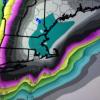
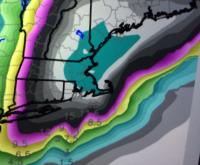
  9. Yea, another sucky month in terms of snow AFAIC......only reason it isn't abysmal is the 3" right before XMAS. But I'm not sure how you consider it a good winter month when your largest storm is 3". I'd take January 2024 over December 2025 100/100 times.
  10. Thanks for mentioning....I noticed that that actually made my map look worse if extrapolating it out haha.
  11. I have no idea why anyone would be using the -IOD to forecast at this stage, as it's long-gone. https://www.bom.gov.au/climate/enso/indices.shtml?bookmark=iod
  12. I don't think the first half of January will be colder than the second half.
  13. I agree that is a big miss on that central area, but I still sent B- bc the rest of the forecast was essentially perfect...but yea, I had pause. I am usually a pretty tough grader, but threw myself about bit of a bone there...many outlets were also too robust in the max area, too...hell, NWS went 8-12". I was torn between B- and C+, so that is reasonable.
  14. Even Tippy's 582DM Miami rule is met there, but easy to do at hr 222.
  15. No, not him...but he likes January, too. I don't speak with Dave much via DM.
  16. Friday-Night Saturday AM Snows Verification Strong Overall Forecast With One Major Exception Failed Hedge Against Data For Best Banding The vast majority of the forecast was very accurate, as can be seen by the juxtaposition of maps below. However, the one glaring fault with the map is unfortunately where it mattered most, which is respect to the all-important best banding. As it turned out, the 6-10" "bonanza area" should have been placed approximately 50-60 miles to the southwest, over the southwestern half of Connecticut, as the consensus of guidance had emphatically signaled. The rest of the forecast was perfect with the exception of the north shore of Massachusetts, where the ocean enhancement did not come to fruition, so 1-3" would have sufficed as opposed to the chosen 2-5" range. But this issue pales in comparison to the aforementioned discrepancy with respect to the erroneous placement of that extremely heavy band that contained snowfall rates of up to 3-4" for a short period of time. Overemphasis Placed on 700MB Warm Front The main forecast premise in Eastern Mass Weather's Final Call yesterday was that guidance was not emphasizing the placement of the 700mb warm front enough as it pertained to where the band of exotically heavy snowfall would materialize. This was obviously crucial since this band ultimately led to major accidents despite a lower holiday volume of traffic. The forecast rationale was that the band would focus where the 700mb warm front stagnated, which was over the upper Connecticut river valley of Massachusetts, much of Worcester county and into the hills of extreme northeastern Connecticut and northwestern Rhode Island. However, the reason that guidance was not targeting this area where the mid level front stagnated, as it would under conventional synoptic circumstances ,is that the dynamics of the system were eroding and being displaced southeast at that point due to the resistance it was met with by the confluent flow to the northeast. This is an issue that the forecast took into account and contemplated when considering the disparity between the ominous forecast soundings over western Connecticut and, the tamer scenario being depicted over Worcester in central Massachusetts. However, Eastern Mass Weather incorrectly took a leap of faith that guidance was eroding the dynamics too quickly, which was the ongoing trend. This would have allowed central Massachusetts to better avail of the stagnating midlevel warm front to endure a protracted period of enhanced snowfall rates, but ultimately these rates occurred instead further to the south, over Connecticut, as the consensus of guidance had been indicating. Final Grade: B-
  17. Great forecast for last night and early this AM, with the notable exception that I missed on the placement of the heaviest band, so amounts were oversold in central Mass, where 2-5" fell instead of the 6-10" forecast fell where models had in CT. Final Grade: B- https://easternmassweather.blogspot.com/2025/12/friday-night-saturday-am-snows.html
  18. I mentioned on the forum that an online friend of mine has been targeting the Jan 8-12 period for a month or so...
  19. I let this last one roll off of my chest....I was so appreciative of that Xmas bone and knew I was in a bad spot for this. Hopefully snowy January en route.
  20. Anyway, we should all have ample chances the rest of the season if it works out how I envision.
  21. I know I'm not Dave or ineedsnow, who jack in half of the storms...or even scooter, who frequently jacks in cold coastals...conditions have to be perfect for this area to JP....I just mean start getting consistent, representative snows...that's all. Just near 60" in a season, while n ORH county gets high 70s. Not a huge ask....I don't think...
  22. Right....because the rosy wave train has had a huge ridge over the midwest...if that were over Montana or Idaho, which it never is anymore, we'd be getting rocked.
×
×
  • Create New...