WxWatcher007
-
Posts
36,433 -
Joined
-
Last visited
Content Type
Profiles
Blogs
Forums
American Weather
Media Demo
Store
Gallery
Everything posted by WxWatcher007
-
 What’s your forecast for your backyard? Happy 4th!
 -
I’m more than a little skeptical of big totals, but with that gradient and high amounts of moisture available someone will get smoked.
-
It’s going to go nuclear
-
95.1/75 at WXW1 82/66 at WXW2
-
Running just behind yesterday’s pace now at WXW1. 91.7°
-
Interesting (from a few hours ago)
-
98.7° for a high
-
Not sure my station can hit 100°
-
99/70 at HFD 97.6/79 at WXW1
-
KNYC 100°
-
10am 85.3/76 at WXW1 91/70 at HFD 78/67 at SLK 75.0/70 at WXW2
-
The storm that popped over WXW1 in central CT went from nothing to a 54k top in under 20 minutes. That’s nuts.
-
Damage in the area from that line of storms. Another awesome night.
-
88/75 at HFD 87.5/77 at WXW1
-
Having someone die on your property is definitely something insurance companies want to see.
-
90.6/77 at WXW1
-
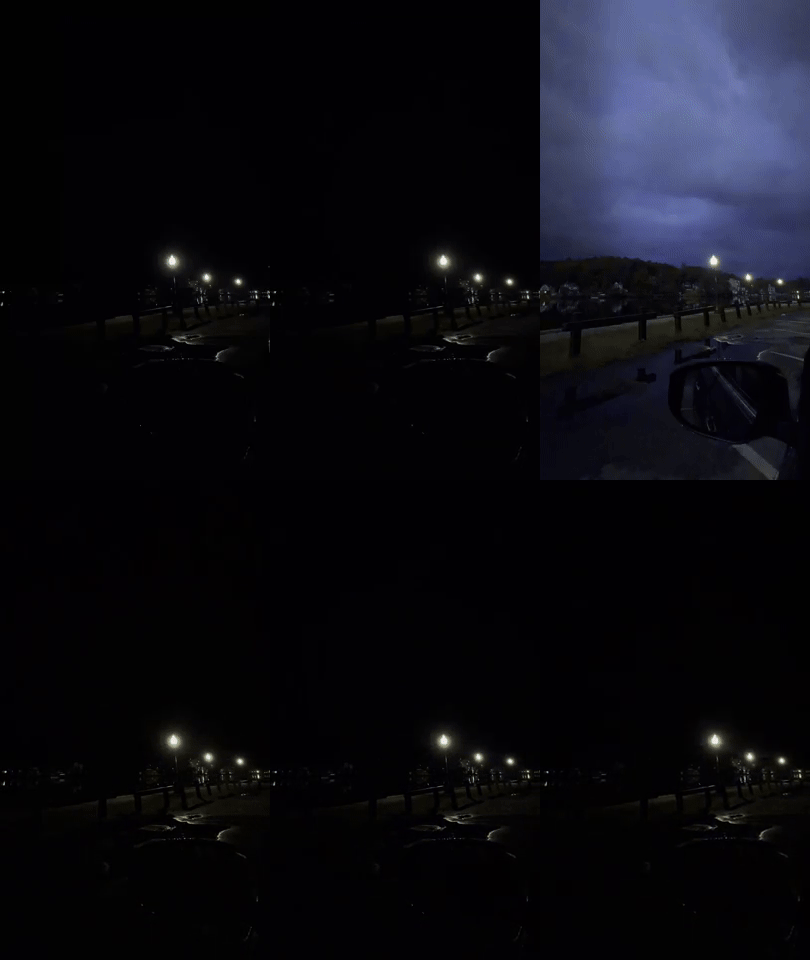
Best light show in years and I had to go to Saranac Lake for it.
-
Thanks. If ORH can hit upper 90s, we're looking at real deal heat.
-
Post em if you got em. Watching closely here. Hoping for a light show.
-
Can I have both?
-
I think that’s Earthlight?
-
Home got stopped at 89.3°. Raining up here at WXW2
-
Damage reports came in just north of town.