vortex95
-
Posts
2,209 -
Joined
Content Type
Profiles
Blogs
Forums
American Weather
Media Demo
Store
Gallery
Everything posted by vortex95
-
Augdewst 2026: Summer's Last Stand
vortex95 replied to Prismshine Productions's topic in New England
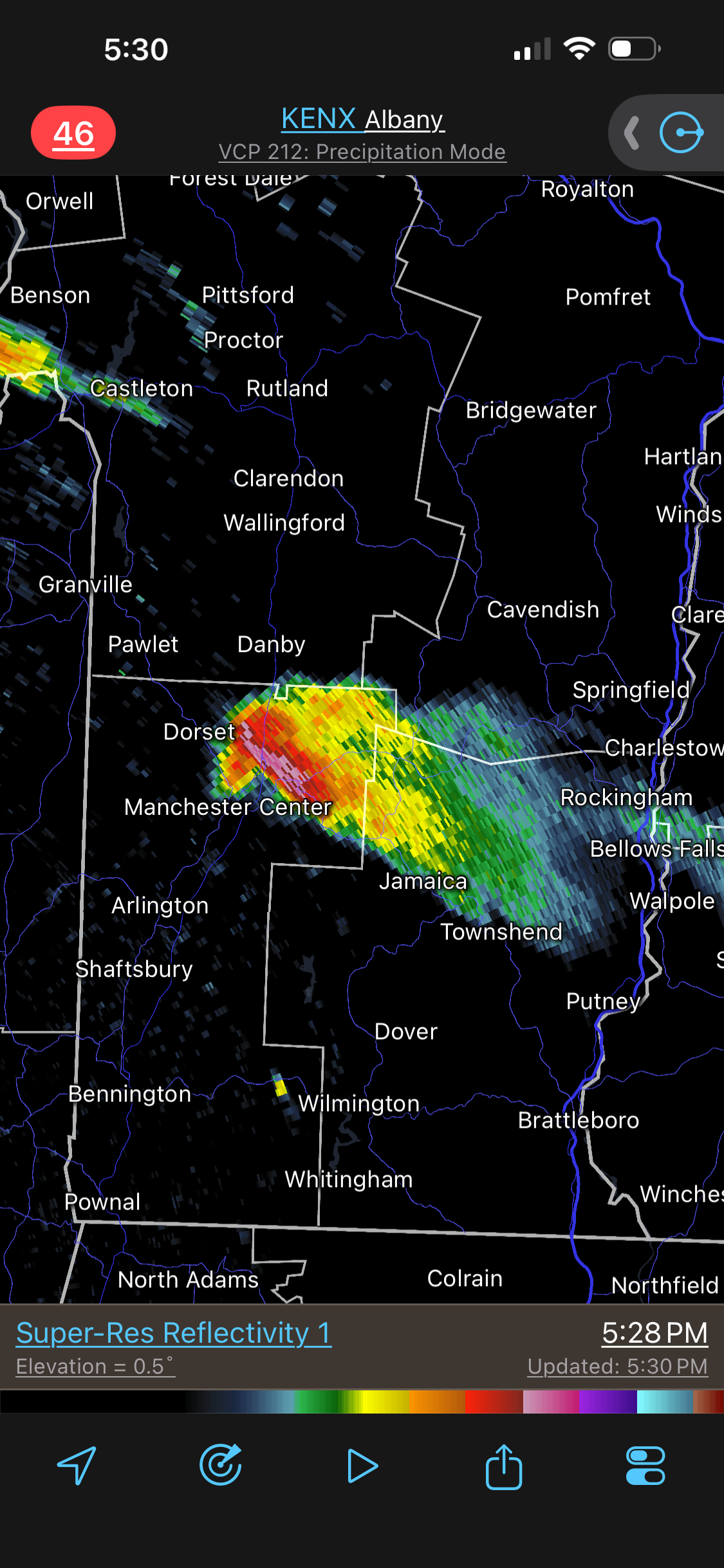
Two days in a row supercells in cntrl VT. The action ydy during the day, overnight, and now tdy over-performing, and @CoastalWx still be like MEH! -
Augdewst 2026: Summer's Last Stand
vortex95 replied to Prismshine Productions's topic in New England
And North Haven had tstm wind damage 8/10! All happens and hail HVN (not Weymouth)! Preliminary Local Storm Report National Weather Service New York NY 845 PM EDT Tue Aug 11 2026 ..TIME... ...EVENT... ...CITY LOCATION... ...LAT.LON... ..DATE... ....MAG.... ..COUNTY LOCATION..ST.. ...SOURCE.... ..REMARKS.. 0619 PM Tstm Wnd Dmg 1 N North Haven 41.40N 72.85W 08/11/2026 New Haven CT Law Enforcement Tree down across Washington Avenue in North Haven. Time estimated by radar. -
Augdewst 2026: Summer's Last Stand
vortex95 replied to Prismshine Productions's topic in New England
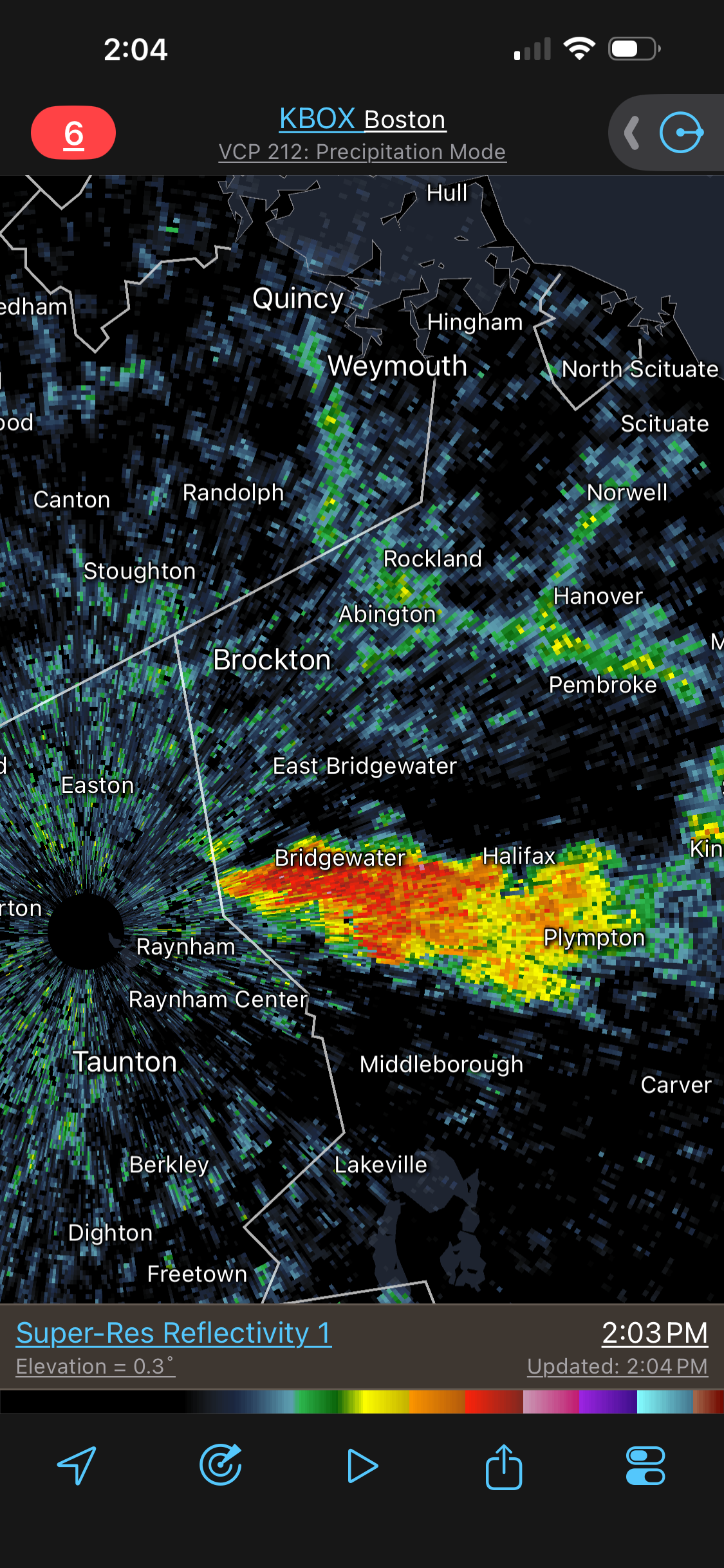
And @CoastalWx still misses the storms! Can he at least hear T to the S?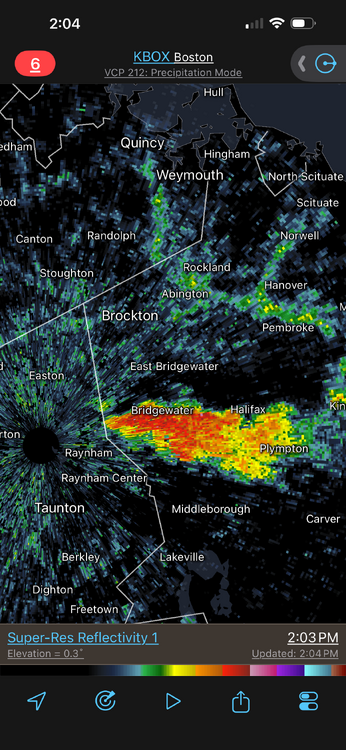
-
Yes, the ""tor psbl" tag gives a lot more leeway yet covers the threat just the same. It is a good "in-between" and works b/c now we know there are so many little spin-ups in SQLN situations. Some are very transient, but still can do damage. Then you have gustnadoes w/ can be up to EF1 strength, but do not count as tornadoes unless they connect to the cloud base, which often not easy to determine in the more moist environment and less visibility compared to the Plains.
-
This Aug 1871 hurricane made landfall on the Big Island as an estimated Cat 3. Detailed analysis here: https://journals.ametsoc.org/view/journals/bams/99/1/bams-d-16-0333.1.xml
-
Yes, the criticism has been rife. Most armchair ppl were calling it out b/c of what KLWX radar showed. They failed to account for TBWI radar! Many of these kind of QLCS spin-ups are low-level, and if the radar is not close (say within 30 mi), it can overshoot the solid low-level rotation. QLCS tors are *far* more common than once thought. They account for 20% of all tors now.
- 2,604 replies
-
- 3
-

-

-

-
- severe
- thunderstorms
- (and 7 more)
-
Augdewst 2026: Summer's Last Stand
vortex95 replied to Prismshine Productions's topic in New England
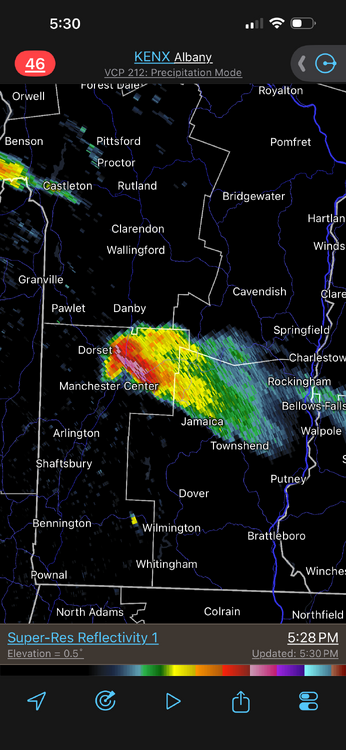
Can @weatherwiz see the CB from his place??? Clear as a bell to the N! No warning on this? Strong hail core. White VIL on Radarscope means svr almost for sure. Obviously a supercell, and 90% of all supercells produce some form of svr wx.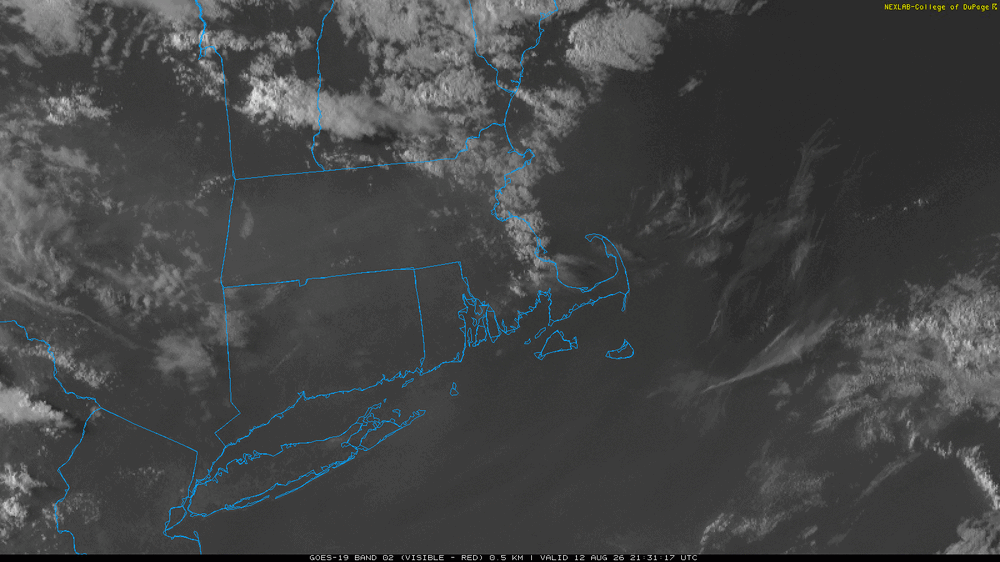
-
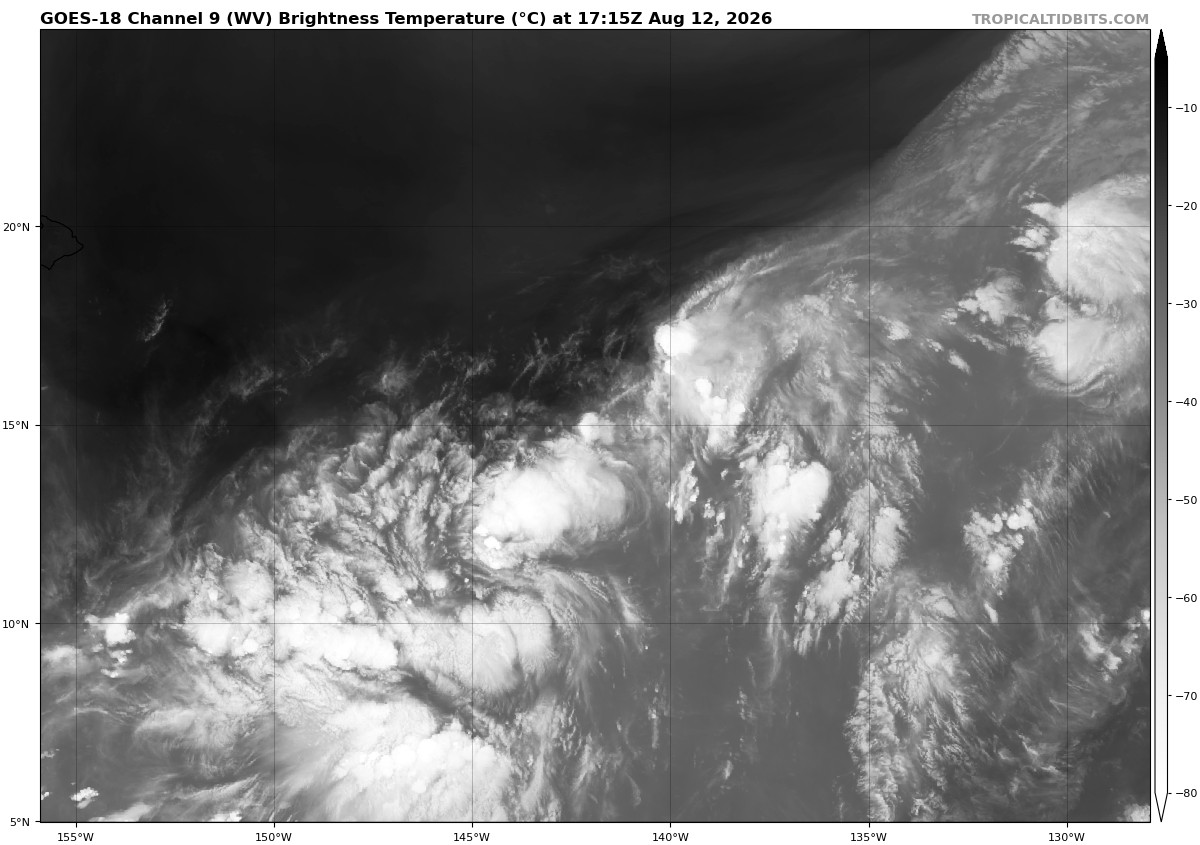
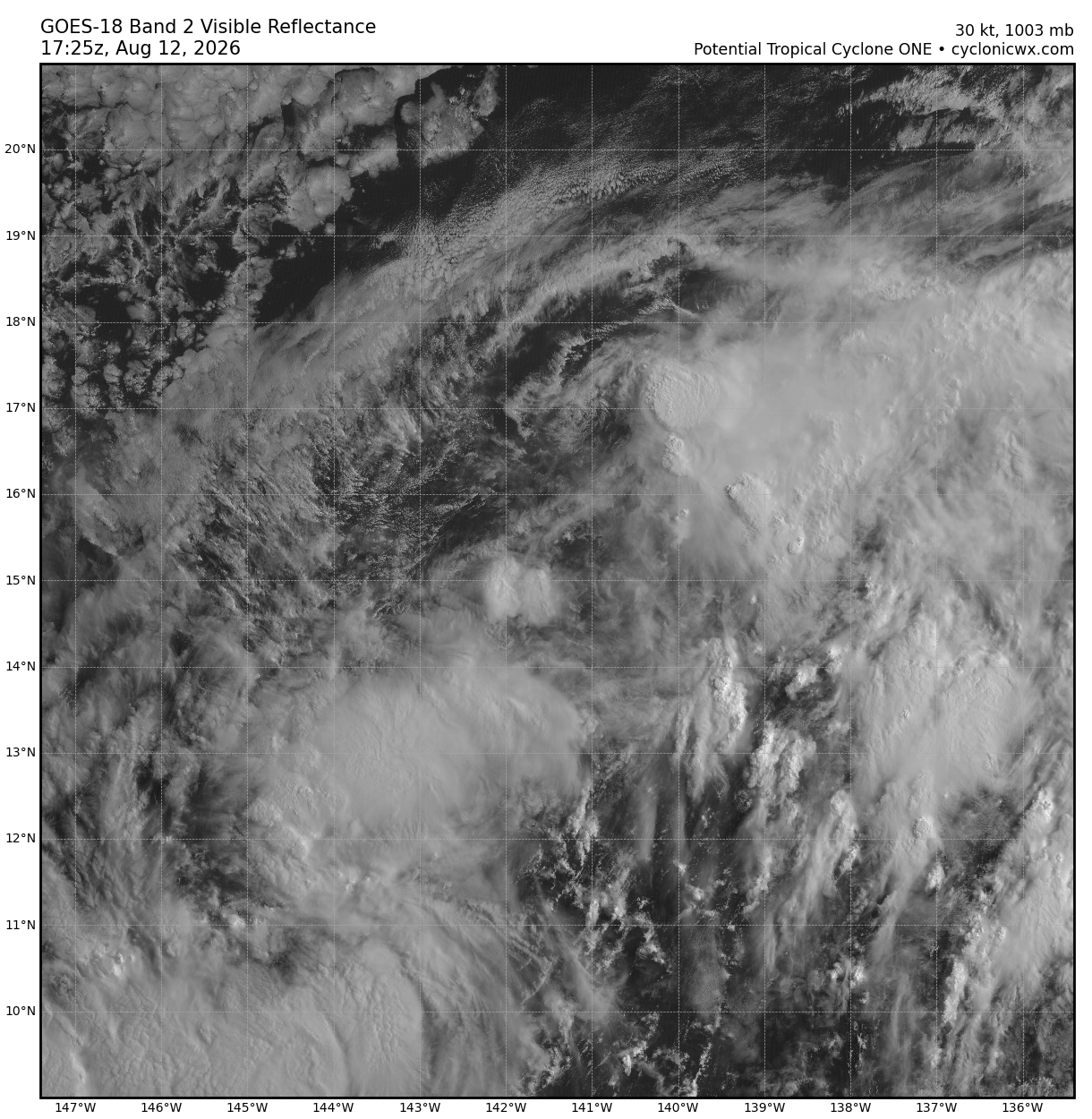
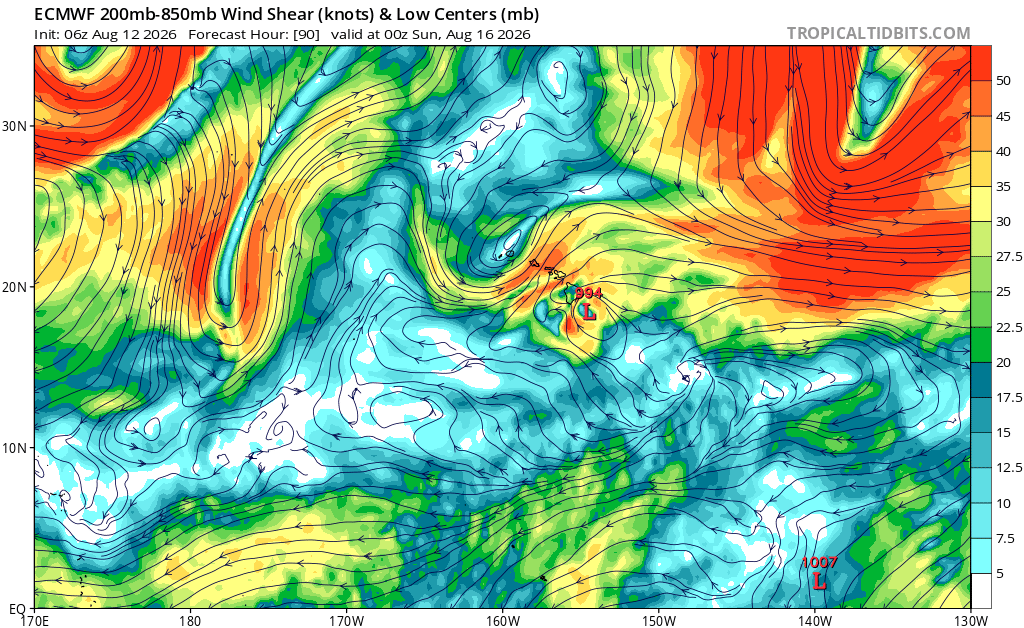
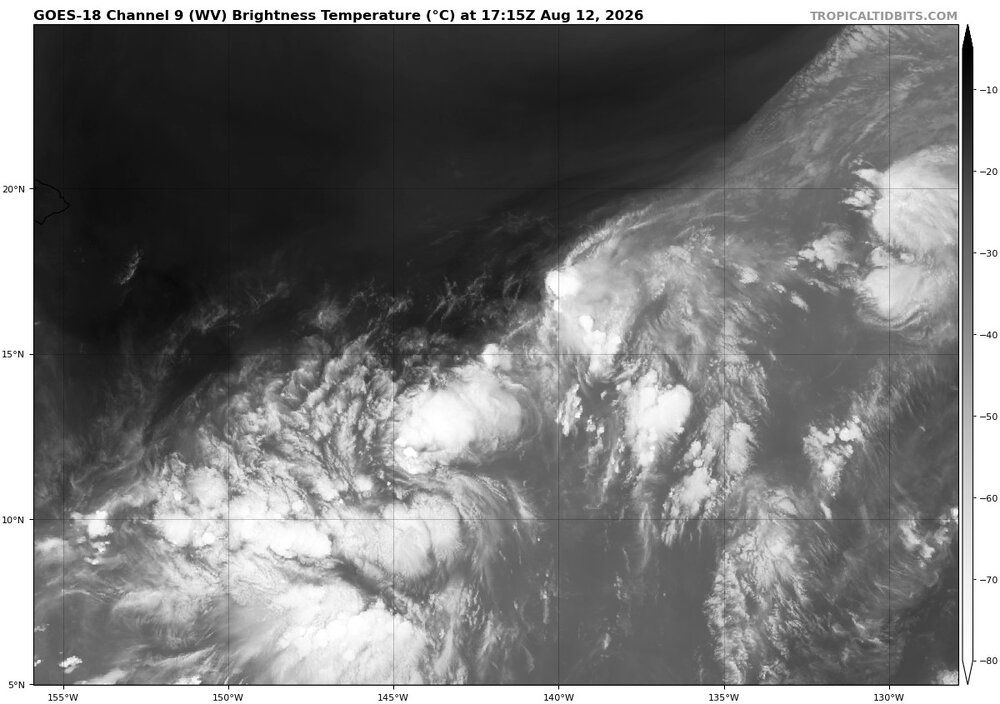
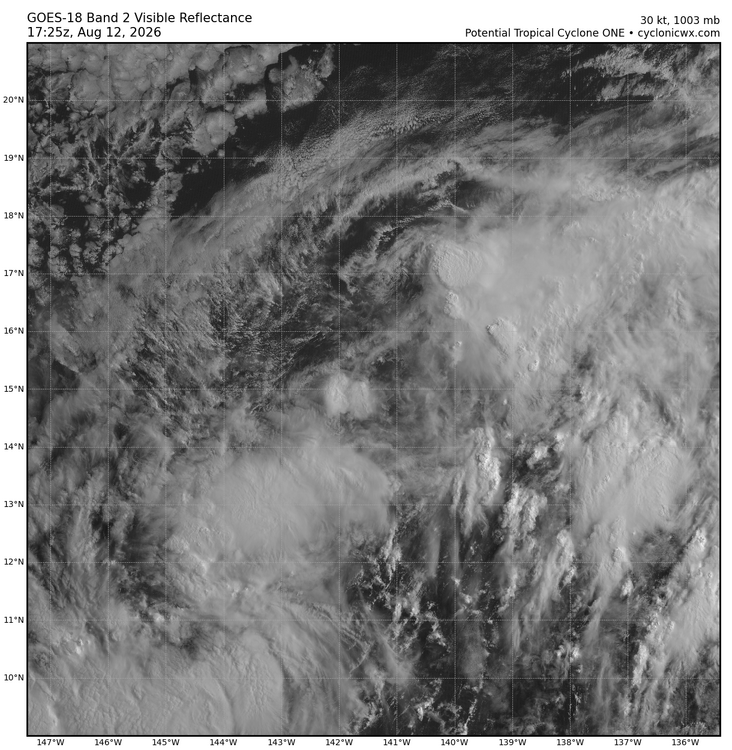
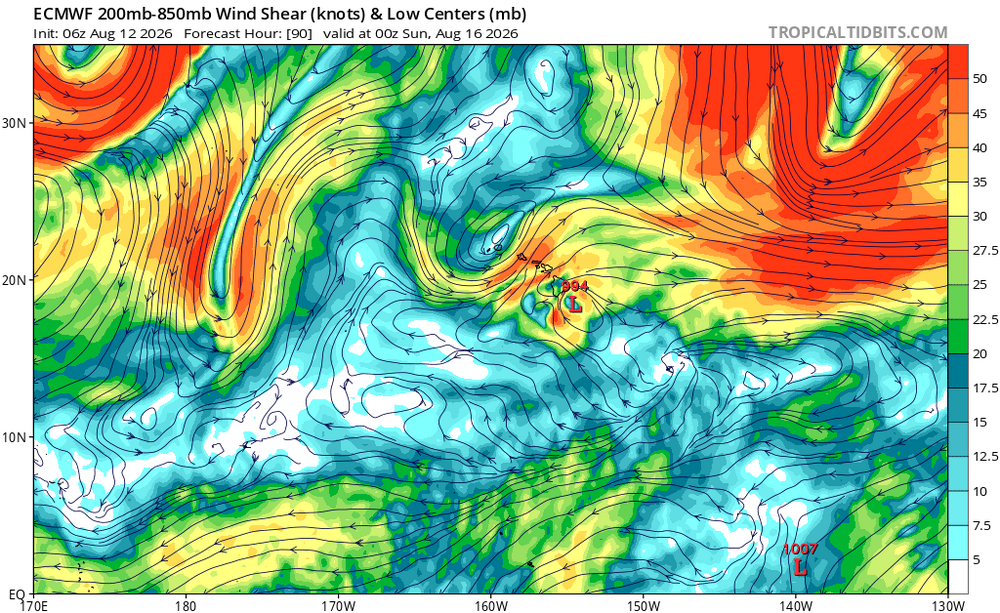
I am not impressed w/ this cntrl Pacific system (now PTC 01C). It is broad and monsoonal, and lots of dry air at mid-levels just to its NW over a large area along w/ stable stratocu present (see WV and VIS attached). A trough develops over HI as the system approaches the Big Island (see 850-200 shear attached at 90 hr), so another negating factor. Being a larger monsoonal-type TC, this prevents it from becoming tight and solid RI phases. Also, long parcel trajectories around the system promote more dry air intrusions into the center. I think it will be no worse than a typical strong Kona low HI gets almost every winter. Significant impact yes, but one has to look beyond the media hype and the fact it has a name. That does not change actual wind, surf, or rain. 50 kt winds and 20" of rain is the same whether it comes from a TC or ET low. Even though direct TC strikes on HI are uncommon, they are used to such conditions (a strong TS) from Kona lows. That makes a big difference for preparations and overall less shock and awe. I like to look at the SHIPS output for TC as you can sum up things fairly quickly as to shear and dry air issues in the fcst. Here is the 12/12z run for 01C: https://hurricanes.ral.ucar.edu/realtime/plots/northcentralpacific/2026/cp932026/stext/26081212CP9326_ships.txt Look at the SHEAR (KT) and SHEAR DIR lines, You see it increases by 72 hr, not high, but look at the direction, out of the W, and w/ the TC moving to the W? That's a problem. And the 700-500 MB RH line. Environmental mid-level RH is key. Anything bellow 60% is not good and you can see it drops below 40% by 84 hr. The are many others items in the SHIPS output, but the shear and RH I find most useful. Now, there are caveats. When you have a large and strong TC, it can fight off modest shear and its inner core can remain isolated from dry air in the surrounding environment., Shear and RH values front he SHIPS did *not* work well at all for HU Ian in Sep 2022 leading up to the FL landfall. Shear was quite strong (over 30kt ) and RH below 60%, and it still intensifies to a Cat 5! But for nascent or weaker TCs, modest shear and dry air at mid-levels are typically a significant hindrance. When these factors are present, it's hard for any TC to get above Cat 2 strength. For 01C, I think 60 kt for a peak is a good fcst. Once it gets well beyond HI near the Dateline, it looks like it could become much stronger.
-
Augdewst 2026: Summer's Last Stand
vortex95 replied to Prismshine Productions's topic in New England
Pffttt! Lame X post. He does not specify how *strong* El Nino was those years. That makes a big difference. And there have been 10 El Nino events since 1994, so where are the other 7 for comparison? 2002-03 was strong El Nino. How did that winter do? /S 2009-10 was strong El Nino, what happened that winter? /S We should be looking at very strong El Ninos only. We've have 4 since the 1950s, 1982-83, 1991-92, 1997-98, 2015-16. It is a mixed bag, leaning toward below avg snowfall, but there was the Feb 1983 blockbuster and also Jan 2016. So it does not mean it is a complete loss. Also, sample size, 4 very strong El Ninos in 70 years does not tell us the full gamut of what can happen, so don't let the @CoastalWxDebbie Downer attitude rule here! There are no less than a dozen other global and regional oscillations going on and how they interact w/ El Nino can and does lead to the unexpected. Case in point, normally in very strong El Nino, Cali is soaked and the Pac NW is dry. Well, that did not occur in 2015-16, it was the exact opposite! Also, the wx/atmosphere does not work linearly. In other words, just b/c this may be the strongest El Nino in modern times, does not mean you simply extrapolate in one direction based off other very strong events, esp. when it comes to regional sensible wx and the specifics. -
Augdewst 2026: Summer's Last Stand
vortex95 replied to Prismshine Productions's topic in New England
Likely a rain-wrapped tor. If it was a MB that strong to flip cars, the other ones nearby would have at least been pushed sideways. Nothing I find more frightening in wx is not having good VIS when a tor may be present. I've been in that situation before in OK (the day of the El Reno monster in May 2013), and it was a harrowing experience to say the least. -
2026 Atlantic Hurricane Season
vortex95 replied to Stormchaserchuck1's topic in Tropical Headquarters
The wind shear "barrier" along 20N is quite impressive. So 92L and what is behind it don't stand a chance once they gain more latitude. 93L well to the N in the basin is likely a TD/weak TS now. Sheared, but LLCC has become more defined and convection is persisting E of the center, plus its fast forward motion is likely augmenting the winds on the S quad. NHC gives it 40/40 but it could be declared at any time. It's small and will not last long if it becomes a TC.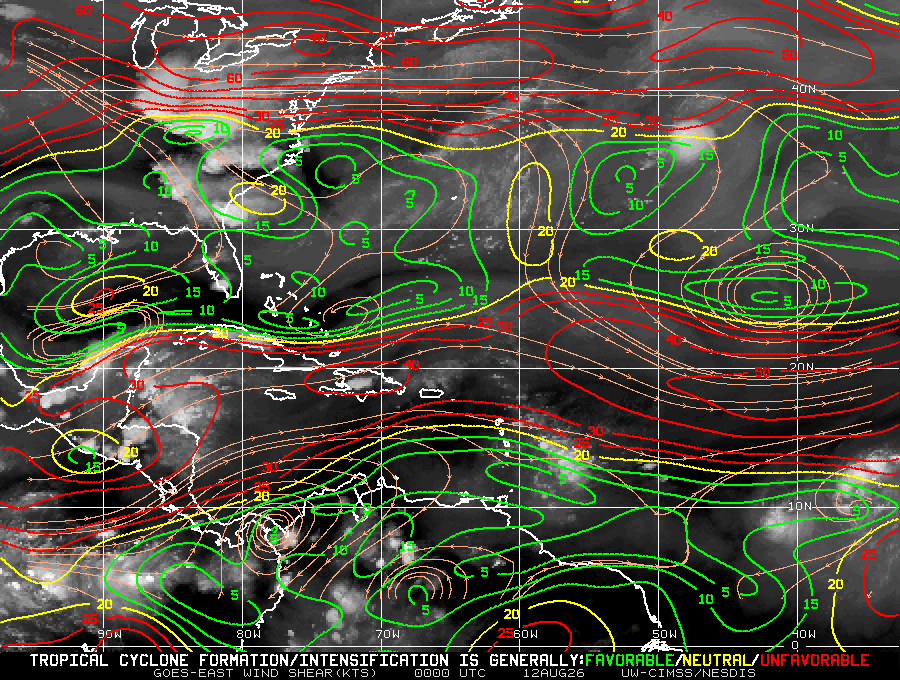
-
Augdewst 2026: Summer's Last Stand
vortex95 replied to Prismshine Productions's topic in New England
Thanks. The 1871 event from the reports was likely similar to Iniki in intensity. The thing that made the 1871 event stand out was its angle of approach. Iwa and Iniki both were picked up by a strong trough to the W and accelerated N to the islands. The 1871 event was just moving within the tropical easterlies. In the cntrl Pacific, the way the mean pattern/flow is in the summer and fall makes conditions rather hostile (wind shear) within about 500 mi E of the islands. So any EPAC system that is intense and tracks W right towards HI weakens significantly to below HU strength by the time it gets to the area. So whatever pattern was in place over the cntrl Pacific in Aug 1871 must have been highly anomalous for such a strong HU to make landfall from the E. -
I'm glad you got great LTG. Location, location, location for LTG! And talk about localized. One person gets several very close CGs and ear-splitting thunder, and they are like. "WOW, what storm!" And another a few miles away just gets some mdt booms. Such can change a perception of a storm so easily! The #1 thing I look for always is lots of LTG at my location, esp, close strikes and the really odd acoustics you can get sometimes. Several years ago here, for the first time I had ever witnessed, I actually heard the ZZZTTT!!! when a strike hit about 200 ft away, It was not the typical electric click/pops, more a "frying" noise, probably from arcing from streamers.
-
Augdewst 2026: Summer's Last Stand
vortex95 replied to Prismshine Productions's topic in New England
Hawaii looks to be impacted by a TS or min HU in about 5 days. The angle of approach is a bit atypical coming in towards the Big Island from the ESE, but it is a strong El Nino, and this results in higher potential for a strong TS/min HU direct hit in Hawaii (Iwa in 1982 is a good example) and the cntrl Pacific is more active overall in El Nino. But the system (93C currently) looks monsoonal and broad, so that should preclude any big intensification. Also, 700-500 RH drops below 60% by 60 hr and below 50% by 72 hr well before it gets to the islands, so despite above avg SSTs, low environmental RH tends to override and will limit things. Of course the MSM will act like it is end of days, as if such an event is unprecedented. I will point out this TC on 8/9/1871. A estimated cat 3 made landfall on the Big Island coming in from the ESE. To get a TC of this strength coming in from the E at that latitude for a landfall is exceptional. No other record of anything like this exitss. Iwa in 1982 and Iniki in 1992 came in from the S https://journals.ametsoc.org/view/journals/bams/99/1/bams-d-16-0333.1.xml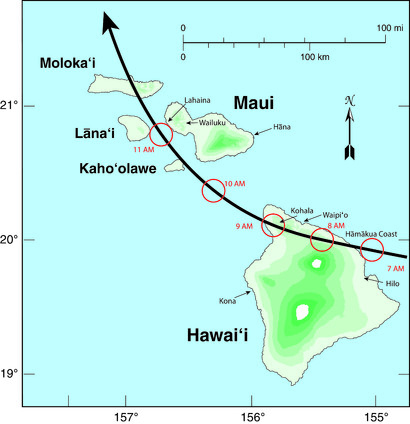
-
Augdewst 2026: Summer's Last Stand
vortex95 replied to Prismshine Productions's topic in New England
We have a combo continental/marine climate, so we get just about everything, just less extremes in terms of frequency. Is that so bad? Prevailing westerly flow for continental influence, and the ocean right next to us for marine. 4 very distinct seasons and true variety for all types of wx. @CoastalWxneeds the marine influence for his Weymouth OES! And really, continental climate outside of mountain areas?, 8-14" is considered a monster snowstorm. So be grateful we exceed that for our definition! -
Augdewst 2026: Summer's Last Stand
vortex95 replied to Prismshine Productions's topic in New England
And MET is going away in Oct. -
Augdewst 2026: Summer's Last Stand
vortex95 replied to Prismshine Productions's topic in New England
Yes, nice center point, and MPV airport is 1166 ft. I think one reason why it was farther W to have coverage in Upstate NY, which is part of the BTV CWA. Fortunately, the Canadian radars that were upgraded to Doppler last decade help a *lot* for NNE! On another note, today EC starts targeted (polygon-based) svr/tor warnings. https://dd.meteo.gc.ca/doc/genots/2026/08/03/NOCN04_CWAO_031225___62572 -
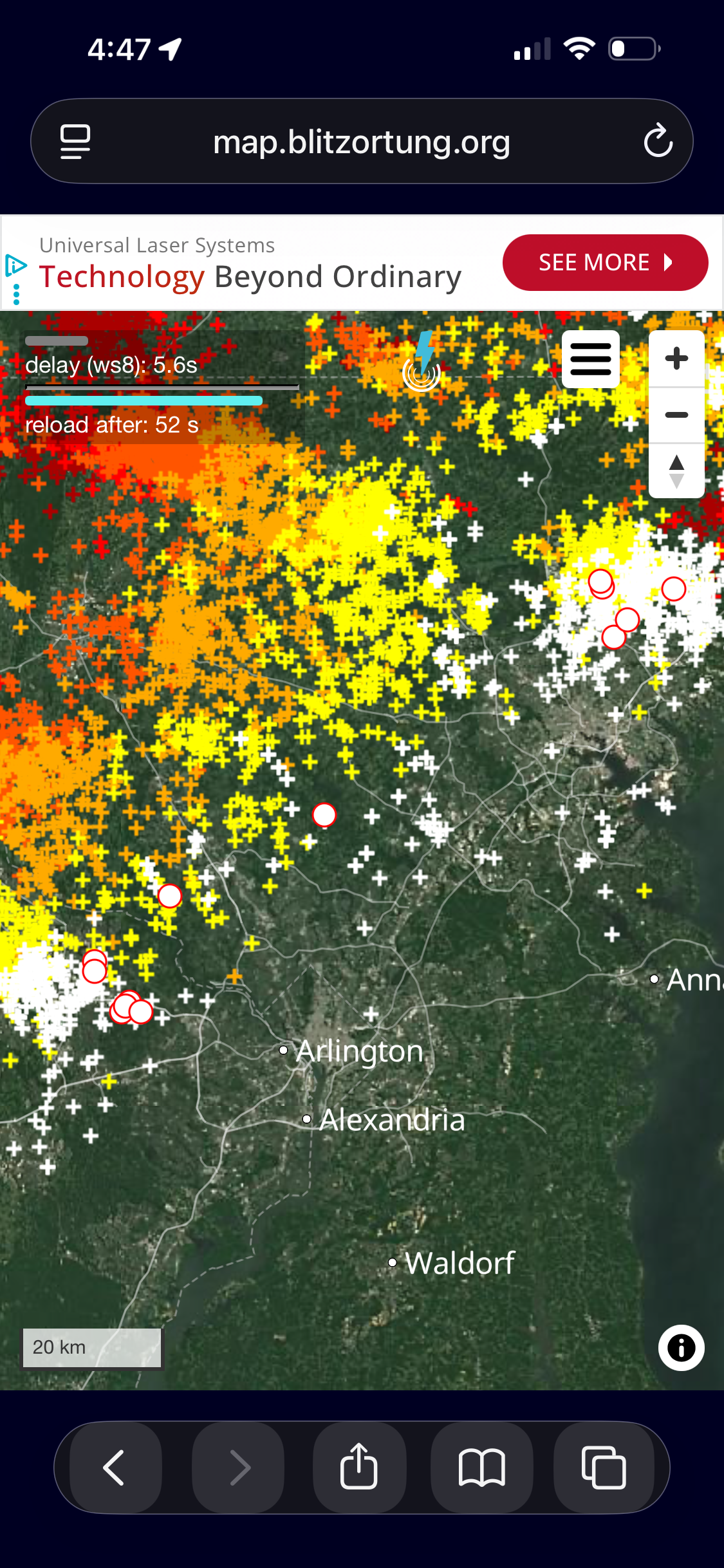
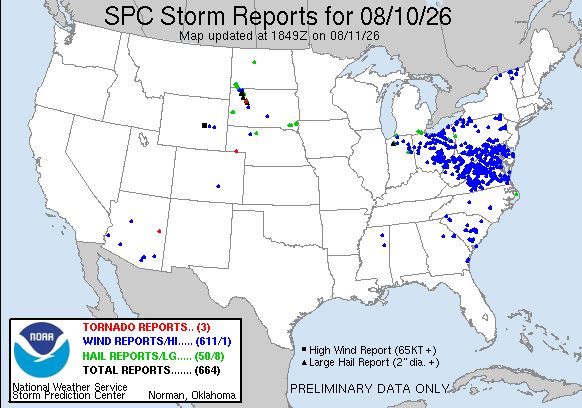
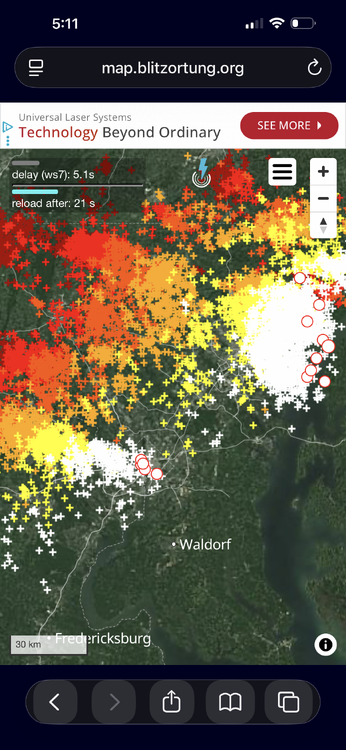
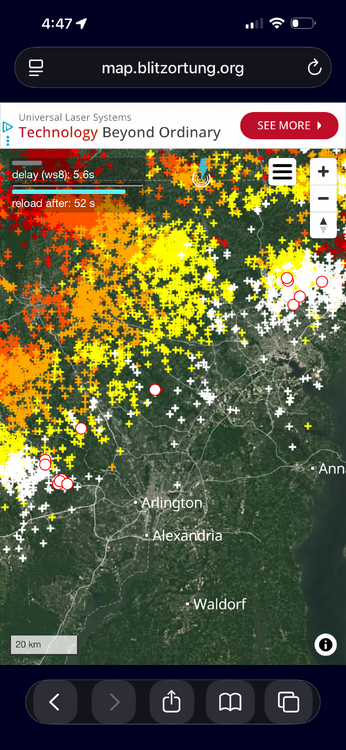
Yesterdays wind reports?...wow. You'd think it was a bona fide derecho! It wasn't, but the MCS areal coverage was very impressive NE to SW PA to VA. Also, the classic DC split occurred, at least for CGs. Take a look at the plot from later ydy. There was an uptick on CGs in downtown Silver Spring after the line moved through N side of the city. Saw some good CGs and heard some solid booming thunders to my S.
- 2,604 replies
-
- 3
-
-
- severe
- thunderstorms
- (and 7 more)
-
Augdewst 2026: Summer's Last Stand
vortex95 replied to Prismshine Productions's topic in New England
Yes, I did know about Mt Mansfield, but I was thinking some towers were grandfathered in when new laws were passed? Also, when the WSR-88Ds were being installed, you had push back in some areas thinking these radars were a radiation hazard. I am not kidding! When the WSR-88D were installed, the NWS planned things right. That's why OKX is in over cntrl LI, b/c the former WSR-57 was right in NYC, and the ground clutter was horrendous! Out West, the put a number of radars on top of mountains b/c otherwise they would have been worse than even KCXX for coverage! So I do not think it was the NWS being lazy at all here. They took care to try to place all radars within 50 mi of the largest city in the CWAs for low-level mesocyclone detection. Again, this was the biggest selling point and upgrade from the former radars, so not having 0.5 BREF and VEL is a big deal. -
Augdewst 2026: Summer's Last Stand
vortex95 replied to Prismshine Productions's topic in New England
And just like that canceled. However, the KCXX is practically useless for low-level scans in its E quadrant, so you have to wonder. The VT laws not allowing certain towers on hills/mountains, that is what I think prevented the KCXX radar from being placed properly when built 30 years ago. If it is, it is stupid law b/c these radars were installed to protect lives and property, and the biggest selling point when we upgraded to the WSR-88D was tornado detection! -
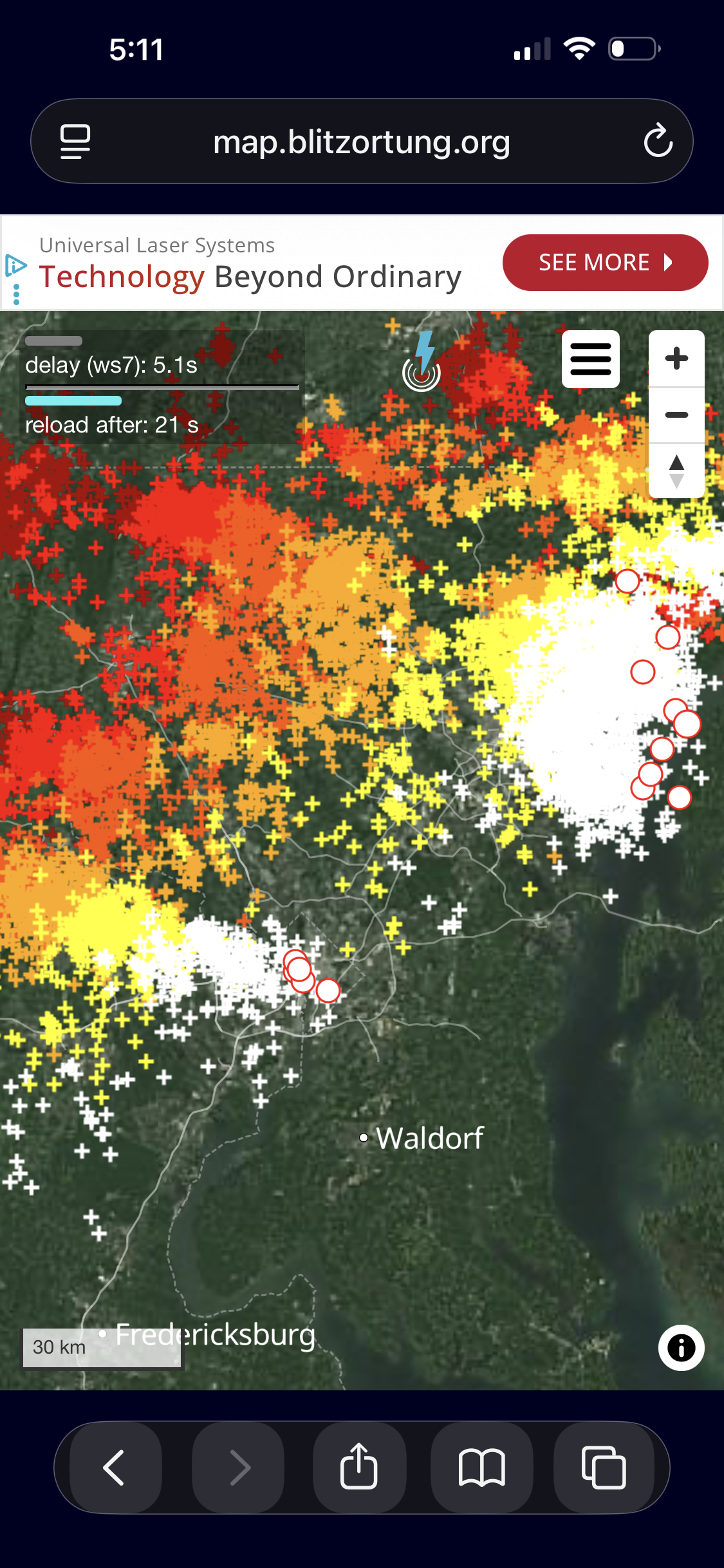
Not too impressive in my part of Silver Spring. Not much LTG/T at all. G45KT leading edge. Rainfall not torrential. The leading edge of the line was just forming a shelf cloud as it passed so it had not quite matured yet, so I would have thought better or more widespread for such an impressive line. CG plot attached. Looks like it weakened as it move into the N and NW of the immediate metro!
- 2,604 replies
-
- 1
-

-
- severe
- thunderstorms
- (and 7 more)
-
Maybe this time we can get it to really go nuts before it gets to the bay high dew point area just E of i-95? I can't tell you how many times Silver Spring misses out b/c of this!
-
The only difference from an MCS and MCS is the extent, duration, and eccentricity of the very cold cloud top canopy. As for sensible wx, the both can produce high-end svr wx and unreal LTG displays!
- 2,604 replies
-
- 3
-
-
- severe
- thunderstorms
- (and 7 more)
-
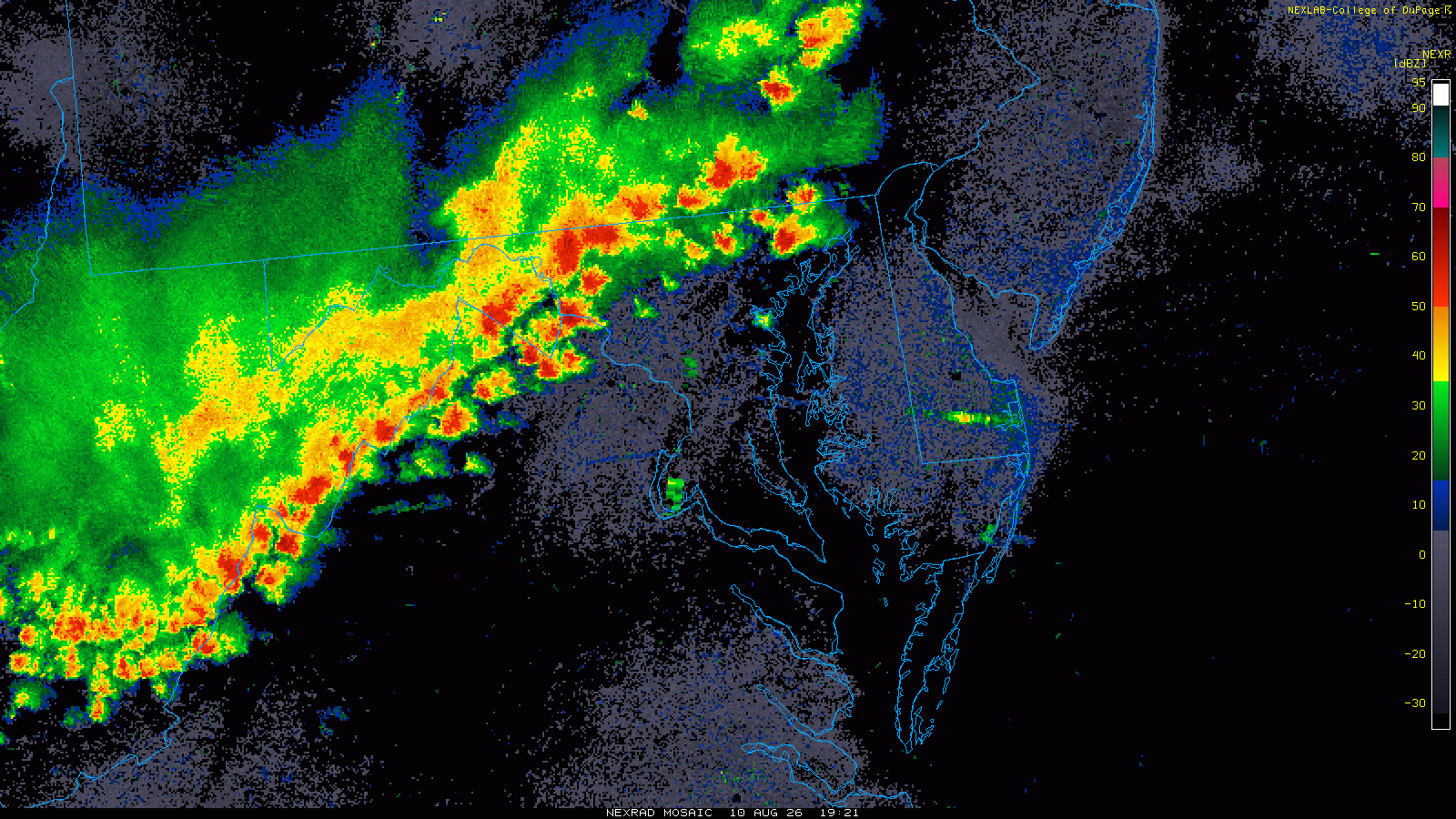
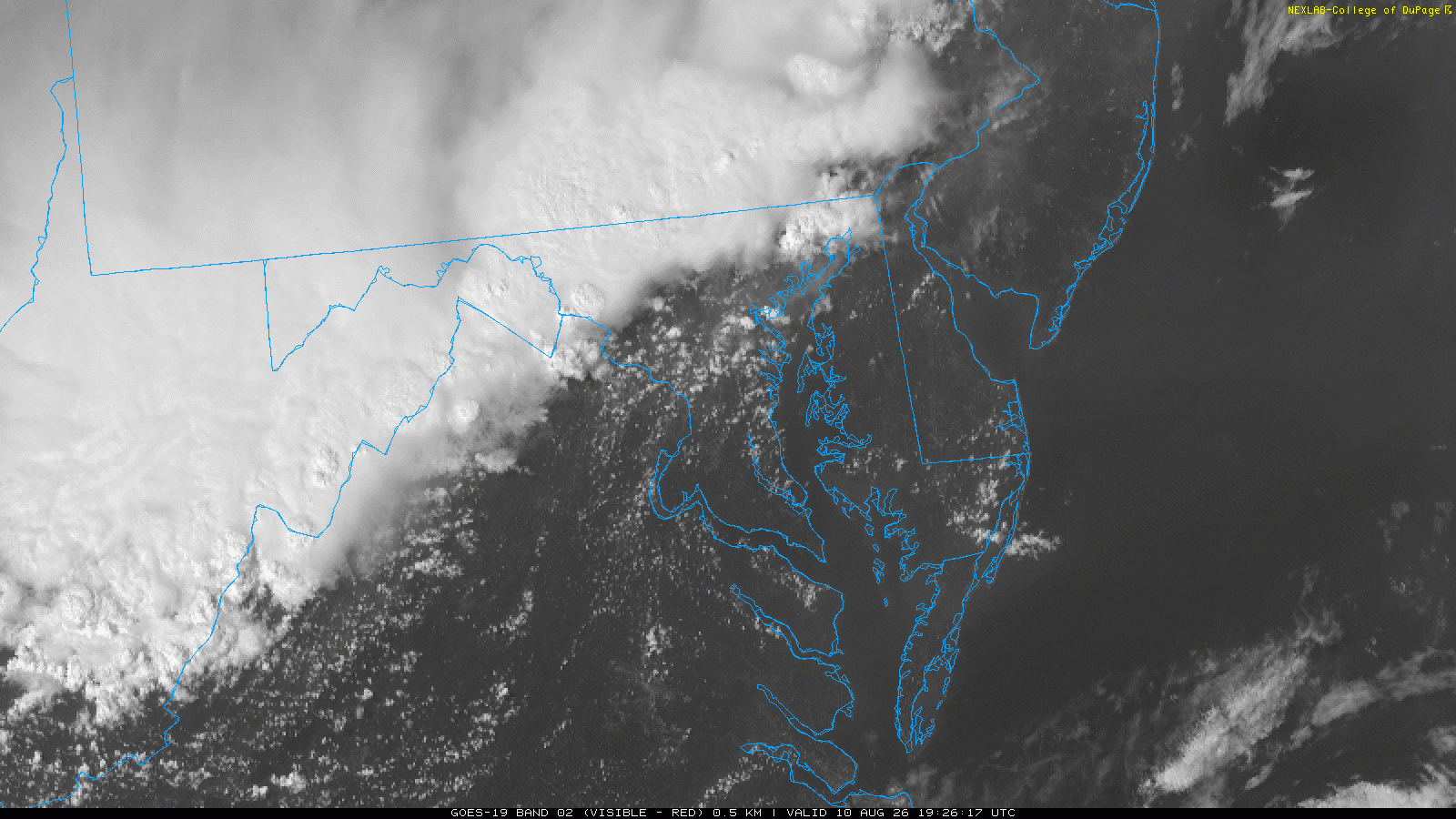
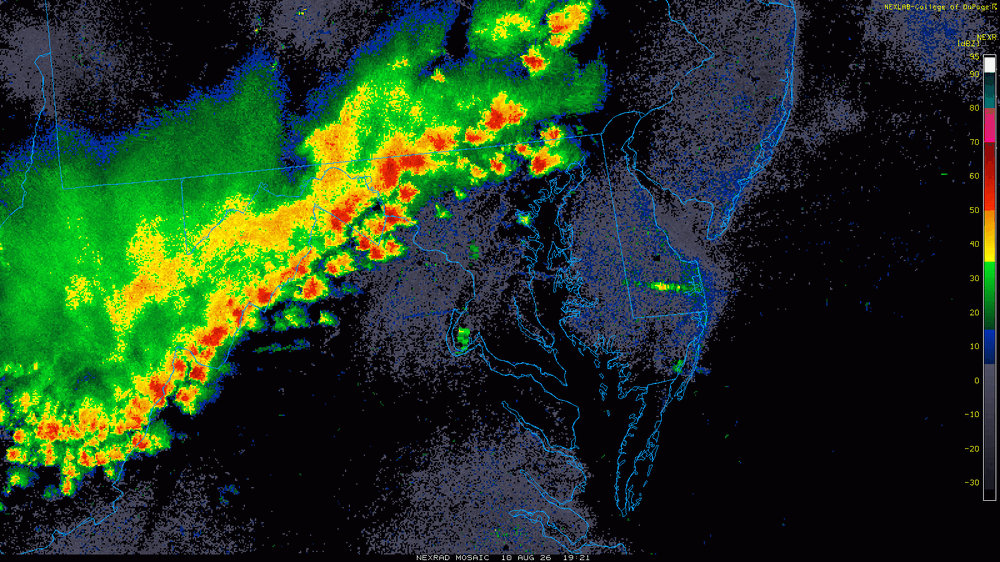
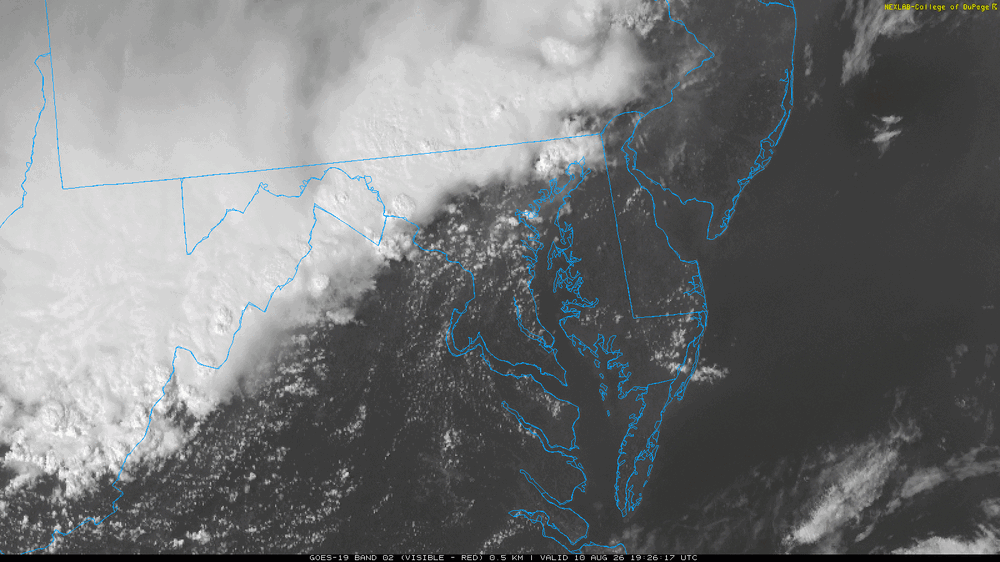
Radar looks "meaty." Not only the SQLN but discrete cells forming just ahead. It does not look like it is gusting out yet which is good. I like the CU streaks on the VIS over the DC area.
- 2,604 replies
-
- 1
-
-
- severe
- thunderstorms
- (and 7 more)
-
Like the other day, this area has likely laid down subtle boundaries across nrn VA and cntrl MD, perhaps providing local focus for storms later.
- 2,604 replies
-
- 2
-
-
- severe
- thunderstorms
- (and 7 more)