All Activity
- Past hour
-
It's lightened up here but still light to mod snow and winds are nuts.. sitting in my car warming up.. its not sticking much but that next band about to.come in looks legit.. wish I could post a video here.. im so happy right now
-
-
Anomalous Late Spring storm May 30 2026
Damage In Tolland replied to HoarfrostHubb's topic in New England
Shorts and hoody . Haven’t worn pants since mid Morch other than work or church -
The radar goes to clear air mode just as it starts pouring rain, lovely. 52/46, shorts and a t-shirt on.
-
Great day for putting down asphalt driveway .
-
E PA/NJ/DE Spring 2026 Obs/Discussion
Albedoman replied to PhiEaglesfan712's topic in Philadelphia Region
What we are experiencing in Pennsylvania today—a dry, gusty, almost desert-like northwest wind—is actually part of the same larger weather pattern that is hammering the higher elevations of New England. At the summit of Mount Washington, temperatures can be 30–40°F colder than the valleys, and when a late-season cold upper-level trough swings through, the mountain essentially reverts back to winter. Six inches of snow and sleet at the end of May, with June literally days away, is extraordinary but not impossible on that mountain. Mount Washington is famous for producing weather that feels more like January than late spring. For perspective: Many locations in Pennsylvania are seeing temperatures in the 60s and even 70s. Trees are fully leafed out across the Northeast. Memorial Day has already passed. Yet the summit of Mount Washington is receiving accumulating snow significant enough to disrupt travel to the top. Like you, I've seen snow in May before, but seeing conditions severe enough that you'd say "Forget about taking the train or driving to the summit!" right on June's doorstep is something most people witness only a handful of times in their lives. What's even more striking is the contrast: Lowhill Township: dry, windy, fire-weather type conditions. Mount Washington: sleet, snow, winter driving conditions. That is nearly a January-to-June weather difference occurring within a single region of the Northeast. Weather enthusiasts often say that if you don't like the weather on Mount Washington, wait five minutes. But getting a legitimate snowstorm there at the end of May is the kind of event that people will be talking about when they look back on the weather records for 2026. As a longtime weather observer, my reaction is understandable—this is one of those "I can't believe I'm seeing this so close to June" moments. https://www.facebook.com/reel/2064983904453037 -
Hey man, I didn't name it. lol.
-
Anomalous Late Spring storm May 30 2026
HoarfrostHubb replied to HoarfrostHubb's topic in New England
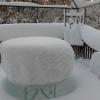
That’s not the summit. It points towards it but it is from the base of the ski area -
It’s crazy how rapidly it left up here too. Turning into a sunny day and already 50s at 1,500ft after mangled flakes four hours earlier. 1.56” past 24 hours.
-
https://www.wachusett.com/the-mountain/media-center/webcams/#summitCam
-
Nice Dave! That’s legit.
-
This is true
-
Anomalous Late Spring storm May 30 2026
HoarfrostHubb replied to HoarfrostHubb's topic in New England
Summit cam? -
Well you feel that way when the temp drops below 70…so we know how you roll.
-
Just came back from Dunkin. Debated on pulling out the winter hat before I left.
-
The Wachusett summit cam doesn't look all that impressive with snow or wind. Looks like Hub's video.
-
Shorts or pants today?
-
Lol
-
Anomalous Late Spring storm May 30 2026
Damage In Tolland replied to HoarfrostHubb's topic in New England
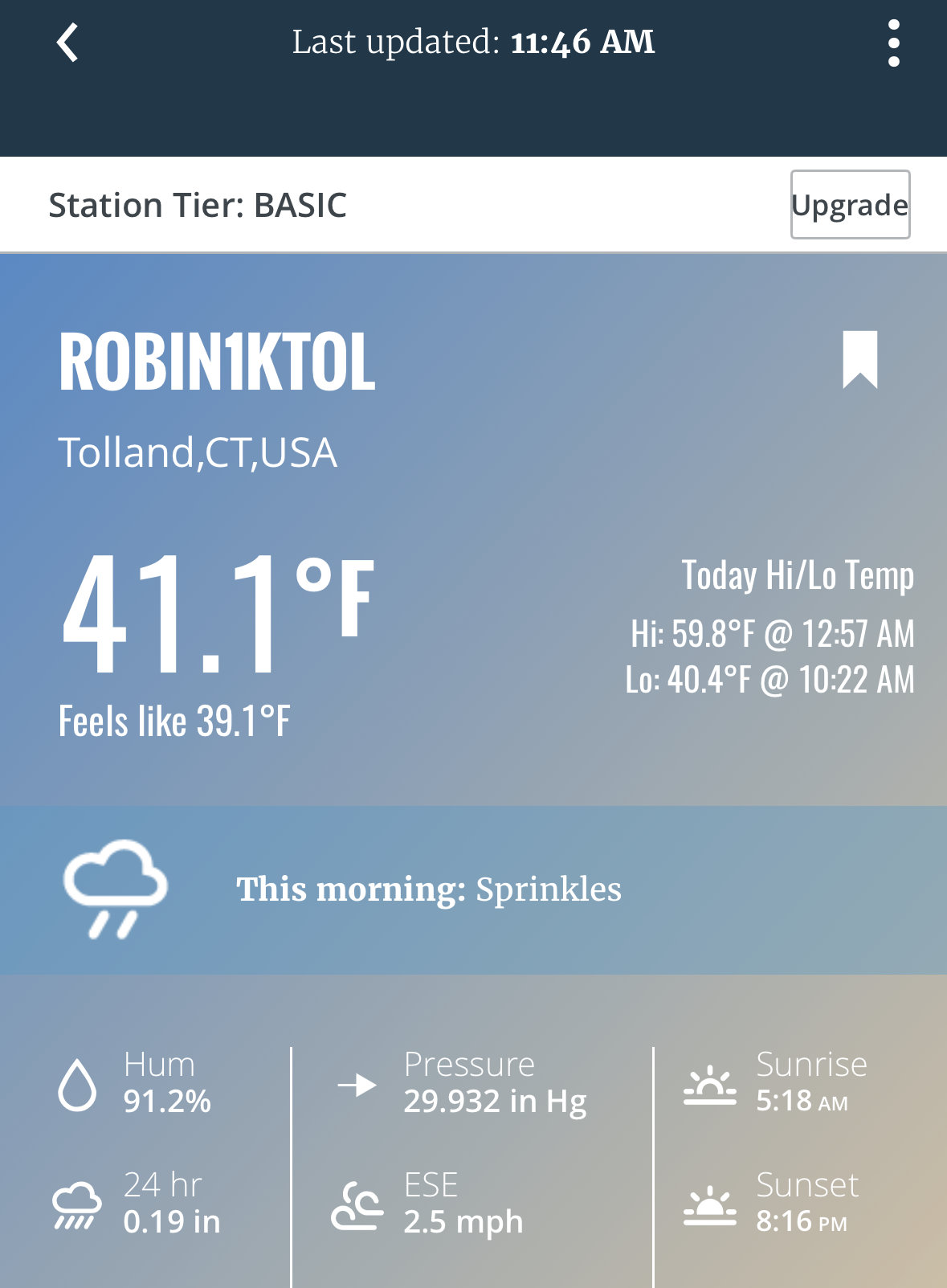
41 -
Well whatev. It’s INS so you have to take 50-75% of his estimate
-
Records: Highs: EWR: 98 (1987) NYC: 97 (1987) LGA: 96 (1987) JFK: 92 (1987) Lows: EWR: 39 (1949) latest 30s low NYC: 42 (1884) LGA: 48 (2021) JFK: 45 (1949) Historical: 1879 - A major outbreak of severe weather occurred in Kansas and western Missouri. In Kansas, tornadoes killed eighteen persons at Delphos, and thirty persons at Irving. Two tornadoes struck the town of Irving within a few minutes time virtually wiping the small Kansas community off the map. The second tornado was perhaps two miles wide, and exhibited multiple vortices. (David Ludlum) (The Weather Channel) 1880: A violent tornado near Delphos, KS that carried a cat ½ mile; every bone was broken and she was “crushed as flat as if passed through a cider press.” Two 1,220 lb. horses were blown ½ - ¾ mile. They lived. (Ref. Weather Guide Calendar with Phenomenal Weather Events 2011 Accord Pub. 2010, USA) 1927: The Kentucky River peaks during a massive flood that killed 89 people and left thousands homeless. Torrential rains caused this unprecedented flood. 1948 - A railroad bed acting as a dam gave way during a flood along the Columbia River destroying the town of Vanport, OR. The nearly 19,000 residents escaped with little more than the clothes on their backs. (David Ludlum) 1948 - Twenty carloads of glass were needed in Denver, CO, to replace that destroyed by a severe hailstorm. (The Weather Channel) 1974: Severe thunderstorms produced winds of 57 mph or greater over parts of eastern Missouri. Hail measuring up to 2.75 inches in diameter was also reported in St. Charles County, Missouri and an F2 tornado caused $2.5 million dollars in damage in Adams County in Illinois. (Ref. Wilson Wx. History) 1982: An amazing 17 inches of rain fell in a nine day period of time ending on this date at Avon, South Dakota. This led to major flood problems in the area. Krug's lake, located one mile south of Avon, is normally dry. Not only did the lake fill up, but it also drained into the south side of the town after a hastily constructed dike gave way. Many dwellings in the town ended up being completely surrounded by water. (Ref. Wilson Wx. History) 1983: Unusually high temperatures throughout the western United States caused a rapid runoff from snow pack in the Rocky Mountains. This caused flooding which washed out bridges and caused mudslides in parts of Nevada. (Ref. Wilson Wx. History) 1987 - Unseasonably warm weather prevailed across the eastern U.S. Eighteen cities, from Virginia to Ohio and Michigan, reported record high temperatures for the date. Afternoon highs of 97 degrees at Baltimore, MD, and Washington, DC, and 98 degrees at Newark, NJ, were records for the date. (The National Weather Summary) 1988 - Memorial Day heralded heavy snow in some of the mountains and higher passes of Wyoming, closing roads in Yellowstone Park. McDonald Pass, MT, was blanketed with eight inches of snow, while the temperature at Miles City, MT, soared to 94 degrees. A "supercell" thunderstorm in west Texas produced baseball size hail in Bailey and Lamb counties, and up to five inches of rain in less than an hour. (The National Weather Summary) (Storm Data) 1988: Memorial Day heralded heavy snow in some of the mountains and higher passes of Wyoming, closing roads in Yellowstone Park. McDonald Pass, Montana was blanketed with eight inches of snow, while the temperature at Miles City, Montana soared to 94 degrees. 1989 - Thunderstorms produced severe weather from the Upper Mississippi Valley to the Upper Ohio Valley during the day. A powerful (F-4) tornado injured three persons and caused a million dollars damage at New Providence, IA. Baseball size hail was reported at Blue Earth, MN. (The National Weather Summary) (Storm Data) 1990 - Thunderstorms developing along a warm front spawned fourteen tornadoes in northeastern Texas during the late afternoon and evening hours. The thunderstorms also produced baseball size hail near Marshall, wind gusts to 77 mph at Commerce, and up to five inches of rain. Thunderstorms over southwestern Kansas produced up to six inches of rain. (The National Weather Summary) (Storm Data) 1991: Record maximum temperature for Washington DC. for the date is 98 °F. (Ref. Washington Weather Records - KDCA) 1991: Washington's hottest May ever - The mean temperature was 73.0 °F, and the months temperature departure was +7.0 °F. May had a record of eleven 90 °F days. Three thunderstorms produced 5.65 inches of rain in a 3-hour period across New Marlboro and Sheffield, MA resulting in severe flooding. Many roads and several bridges were washed out eventually isolating the two towns. About 89 miles of road were damaged. Typical washouts ranged up to 8 feet deep and roads that were 25 feet wide were reduced to only 10 feet. Power outages were widespread and a state of emergency was declared. The flooding was the worst since 1955 for the area and total damage was estimated near $10 million dollars. (Ref. Wilson Wx. History) 1988: Memorial Day heralded heavy snow in some of the mountains and higher passes of Wyoming, closing roads in Yellowstone Park. McDonald Pass, Montana was blanketed with eight inches of snow, while the temperature at Miles City, Montana soared to 94 degrees. 2002: About 40,000 people obtain permits each year to climb dangerous Mount Hood, OR. On this date, a group of four climbers roped together was about 800 feet from the summit at a ledge called the "Pearly Gates," when a misstep by two climbers at the rear of the group pulled them all down and they slid into five other climbers. One by one, the climbers fell into a deep horizontal gash in the ice that forms each spring, many of them falling as much as 250 feet. Three climbers died. (Ref. Wilson Wx. History)
-
Anomalous Late Spring storm May 30 2026
HoarfrostHubb replied to HoarfrostHubb's topic in New England
Summit doesn’t have trees on it -
-
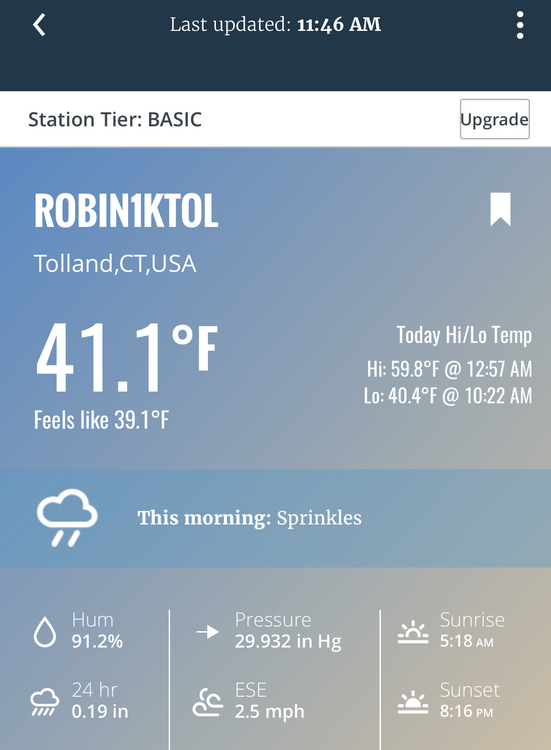
What's the temperature down there?
-
Leaves are in the trees. It’s probably 35-40. lol