Records:
Highs:
EWR: 75 (1976)
NYC: 72 (1880)
LGA: 72 (1976)
JFK: 66 (1985)
Lows:
EWR: 9 (1948)
NYC: 3 (1872)
LGA: 9 (1948)
JFK: 14 (1978)
Historical:
1821: President James Monroe's inauguration was only the 2nd to be held outdoors. The weather did not cooperate, as a mix of rain and snow fell with temperatures in the upper 20’s. (Ref. Wilson Wx. History)
1872: The minimum temperature for the date is 6 °F in Washington, DC. This is the latest in season the temperature has fallen below ten degrees F.(Ref. Washington Weather Records - KDCA)
It was the most severe modern March cold wave in the East. Boston, MA had a low of -8° on the 6th, the coldest in March since 1833.(Ref. Wilson Wx. History)
1894: The low temperature of 36 degrees in San Diego, California, on this day was their lowest on record for March.
1959: In Iowa, the record-breaking snowstorm on March 4-6 began with light snow in western Iowa on the morning of the 4th, then spread across the state and intensified with heavy snow falling from the night of the 4th through the 5th and into the early morning on the 6th in eastern Iowa. The snowfall and its subsequent effects were less severe in western Iowa and grew progressively worse, moving eastward. In central Iowa, snowfall amounts were generally 6 to 10 inches. In contrast, in eastern Iowa, a swath of about 12 to 20 inches of snow fell roughly from Appanoose County through Tama County and northeast to Allamakee County. Reported storm total snowfall amounts included 12.9 inches at Waterloo, 14.5 inches at Decorah, 16.0 inches at Oelwein, 17.0 inches at Oskaloosa, 17.6 inches at Dubuque, 19.8 inches at Marshalltown, where 17.8 inches fell in just 24 hours, and 22.0 inches at Fayette where 21.0 inches fell in 24 hours. Winds strengthened steadily during the storm, with speeds reaching 30 to 50 mph at times and causing extensive blowing and drifting of snow. Drifts 6 to 10 feet deep were common, and in northeastern Iowa, a few locations reported drifts 15 to 20 feet deep.
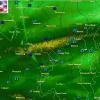
1959: Near blizzard conditions occurred over northern and central Oklahoma. Up to seven inches of snow fell and winds up to 50 mph created snow drifts 4 to 8 feet deep. In Edmond, a bus slid off the road into a ditch and overturned, injuring 16 people. The image below is from Storm Data.
1960 - Eastern Massachusetts greatest March snowstorm of record began to abate. The storm produced record 24 hour snowfall totals of 27.2 inches at Blue Hill Observatory, 17.7 inches at Worcester, and 16.6 inches at Boston. Winds gusted to 70 mph. (3rd-5th) (The Weather Channel)
1962 - A tremendous storm raged along the Atlantic coast. The great Atlantic storm caused more than 200 million dollars property damage from Florida to New England. Winds along the Middle Atlantic Coast reached 70 mph raising forty foot waves, and as much as 33 inches of snow blanketed the mountains of Virginia. The Virginia shoreline was rearranged by historic tidal flooding caused by the combination of the long stretch of strong onshore winds and the Spring Tides. (David Ludlum)
1966: A plane crashes near Mount Fuji in Japan after severe turbulence. Aviation-safety.net said the probable cause was, "The aircraft suddenly encountered abnormally severe turbulence over Gotemba City, which imposed a gust load considerably over the design limit." All 124 people on board were killed in the crash.
1972: Palm Springs, California, recorded a high of 100 degrees, the earliest the city has ever hit the century mark.
1987 - A storm in the western U.S. produced heavy rain and high winds in California. Up to six inches of rain soaked the San Francisco Bay area in 24 hours, and winds gusted to 100 mph at the Wheeler Ridge Pumping Plant near the Tehachapi Mountains. (The National Weather Summary) (Storm Data)
1988 - While snow blanketed eastern Kansas and northern Oklahoma, eight cities in North Dakota reported new record high temperatures for the date. The afternoon high of 61 degrees at Bismarck ND was 27 degrees warmer than that at Chanute KS. (The National Weather Summary) (Storm Data)
1989 - Thunderstorms produced severe weather in the southeastern U.S. A strong (F-2) tornado killed one person and injured six others in Heard County GA. A strong (F-3) tornado injured 23 persons and caused more than five million dollars damage around Grantville GA. (The National Weather Summary) (Storm Data)
1989: A F2 tornado killed one person and injured six others in Heard County, Georgia. A stronger F3 tornado injured 23 persons and caused more than $5 million in damage around Grantville, Georgia.
1990 - Thunderstorms over eastern Colorado, developing ahead of a major storm system, produced up to three inches of small hail around Colorado Springs in the late morning and early afternoon. Strong thunderstorms swept through southeastern sections of the Denver area during the evening hours. These strong thunderstorms also produced up to three inches of small hail, along with wind gusts to 50 mph, and as much as 2.4 inches of rain. (The National Weather Summary) (Storm Data)
1994: Snowiest winter ever at Elkins, WV 124 inches, Erie, PA 125 inches, also Boston, Binghamton, Hartford and Worcester until record broken again in 1996. (Bob Ryan's 2000 Almanac)
1998: A thunderstorm dropped dime to golfball size hail along its track from McLain to Leakesville, Mississippi. The most severe damage was around the city of Leakesville. Hail depth was six to twelve inches throughout the city. The elementary school in Leakesville reported hail drifts to the bottom of the school's windows.
2000: A major wildfire near Miami, FL threatened homes as southern Florida continued in its worst drought in 200 years. Rainfall amounts were as much 5 feet below normal over the preceding 3 years. The Florida Aquifer, which supplies most of the potable water, was reportedly at its lowest level in history as intense development combined with the drought reduced water levels.
Minneapolis, MNestablished a new record for the fewest number of days between 70° temperature readings; from the last date in the autumn to the first date in the spring. This season only 113 days passed, the previous record was 131 days, the average, 175 days.
(Ref. Wilson Wx. History)
2001: The snowstorm that missed the Washington, DC area and much of NJ/NYC gave this station only 1.5 inches of snow. Little snow here but 20 to 40 inches fell in New England. (Bob Ryan's 2002 Almanac)

.thumb.png.de7a06217c3380bab9590159def96994.png)
.thumb.png.86df960426f47c63c7d24f32ef9eb2ca.png)












.png.30ceacb1b5f56be28a4b473ed39dc9e2.png)
.png.08888e99a3911b1e7e401411d646fb65.png)