wxsniss
-
Posts
5,830 -
Joined
-
Last visited
Content Type
Profiles
Blogs
Forums
American Weather
Media Demo
Store
Gallery
Everything posted by wxsniss
-
At least for inside 128, not feeling a surprise >3" snow: DPs: Still an 850 tongue on 0z NAM 6z: Station: KBOS Latitude: 42.37 Longitude: -71.02 Elevation: 37.29 Press Height Temp Dewpt Dir Spd SFC 1023.6 37 0.5 0.1 51 13 M 1000.0 224 -0.8 -1.1 57 26 S 950.0 633 -1.7 -2.0 86 32 S 900.0 1065 -0.2 -0.5 87 22 M 850.0 1523 0.3 0.0 112 13 S 800.0 2009 -0.1 -0.4 147 9 S 750.0 2526 -0.4 -0.7 201 16 M 700.0 3077 -1.9 -2.3 229 25 9z: Press Height Temp Dewpt Dir Spd M 1000.0 214 -0.7 -9999.0 53 24 S 950.0 624 -0.4 -0.7 91 28 S 900.0 1057 -0.1 -0.4 96 23 M 850.0 1515 0.2 -0.1 123 13 S 800.0 2001 -0.5 -0.7 158 9 S 750.0 2517 -0.7 -1.0 239 16 M 700.0 3067 -2.2 -2.5 261 25
-
6z Friday on NAM: Station: KBOS Latitude: 42.37 Longitude: -71.02 Elevation: 37.36 Press Height Temp Dewpt Dir Spd SFC 1024.1 37 0.1 -0.4 51 13 M 1000.0 227 -1.0 -1.4 57 27 S 950.0 636 -2.9 -3.4 83 33 S 900.0 1066 -1.2 -1.6 96 25 M 850.0 1523 -0.0 -0.3 119 20 S 800.0 2008 -0.7 -1.0 139 20 S 750.0 2524 -1.1 -1.4 181 16 M 700.0 3073 -2.6 -3.1 219 22 S 650.0 3658 -5.1 -5.9 234 28 S 600.0 4284 -8.2 -9.2 243 35 S 550.0 4955 -11.7 -13.1 248 45 M 500.0 5679 -16.0 -17.8 251 54
-
Did not expect these heavy rates (admittedly didn't really pay attention to guidance on this event)... roads are almost completely white with cars crawling near Fenway, briefly has the look of a moderate snowstorm
-
42 dBz over Boston, all snow
-
Massive flakes almost like the SWFE finale Jan 26... all snow near Fenway
-
Pounding great dendrites occasional quarters... roads starting to whiten near Fenway
-
< 1/2 mile now in Boston... wish this would last CC has mix line to south shore? (further west looks down by CT/MA border)
-
"Don’t do it" 2026 Blizzard obs, updates and pictures.
wxsniss replied to Ginx snewx's topic in New England
No idea either… you might want to DM the original tweet by @weathernut27 Would be amazing to archive a searchable library of storms in this way (and something I’ve long wanted to do but never have time: archive how all the main models performed for each storm) -
"Don’t do it" 2026 Blizzard obs, updates and pictures.
wxsniss replied to Ginx snewx's topic in New England
One of the better timelapses I've seen overlaying H5 + surface + radar, showing cyclogenesis and capture: https://x.com/WeatherNut27/status/2026280880675913988?s=20 https://twitter.com/WeatherNut27/status/2026280880675913988?s=20 (and if anyone knows, let me know how I can get these to embed) -
"Don’t do it" 2026 Blizzard obs, updates and pictures.
wxsniss replied to Ginx snewx's topic in New England
Funny, classic New England: https://x.com/FallRiverReport/status/2026010622186442928?s=20 -
"Don’t do it" 2026 Blizzard obs, updates and pictures.
wxsniss replied to Ginx snewx's topic in New England
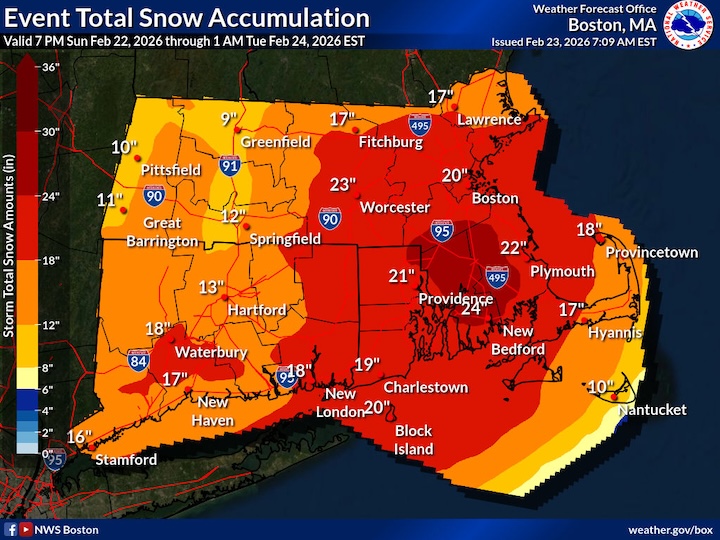
Yeah. Boston area was literally 40 miles from 40 inches. Benchmark track would've been a top 3 storm of all time for pike region. Like 2015-level complete-grid-shutdown no-school-for-week. As is, still easily a SNE HECS considering impacts south shore to coast. -
"Don’t do it" 2026 Blizzard obs, updates and pictures.
wxsniss replied to Ginx snewx's topic in New England
Drone video from Scituate at peak, really impressive... no wonder 100% without power: https://twitter.com/accuweather/status/2026316284682760389?s=20 > 200k in EMA still without power on Eversource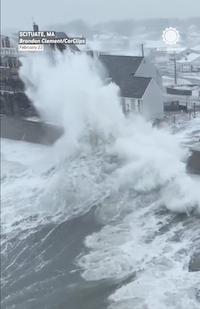
-
"Don’t do it" 2026 Blizzard obs, updates and pictures.
wxsniss replied to Ginx snewx's topic in New England
Yeah I was sure we'd hit 18. We were close... got a little robbed with subsidence in the closing hours while adjacent south shore was a 1-2"/hr assembly line. Obviously not complaining... there were much bigger losers in this storm. -
"Don’t do it" 2026 Blizzard obs, updates and pictures.
wxsniss replied to Ginx snewx's topic in New England
Every time. Funny how random strangers can share the same intense emotions, and conversely feel estranged from people immediately around them who don't get it. The chase, the exhilaration as the unlikely breaks our way, the thrill of the event, the sleep deprivation... then it's over and mundane reality returns. I jokingly warned my wife earlier tonight that I'm having post-storm dopamine withdrawal. Part of what keeps us coming back every year. -
"Don’t do it" 2026 Blizzard obs, updates and pictures.
wxsniss replied to Ginx snewx's topic in New England
Some of the best snowgrowth too with that last band, maybe because winds have subsided Let's see if remnant fronto can congeal to give us another moderate+ band 20z HRRR has snow falling until 8-9pm Brookline schools closed Tuesday -
"Don’t do it" 2026 Blizzard obs, updates and pictures.
wxsniss replied to Ginx snewx's topic in New England
Back to heavy rates in Boston with this band setting up We continue this for several hours Logan will break 18" -
"Don’t do it" 2026 Blizzard obs, updates and pictures.
wxsniss replied to Ginx snewx's topic in New England
0100 PM Snow Logan AP 42.36N 71.01W 02/23/2026 M14.4 Inch Suffolk MA Official NWS Obs -
"Don’t do it" 2026 Blizzard obs, updates and pictures.
wxsniss replied to Ginx snewx's topic in New England
Brookline just west of city was at least 10" at 9am... no way Logan hasn't already topped 12", and little doubt they reach 16"+ by end -
"Don’t do it" 2026 Blizzard obs, updates and pictures.
wxsniss replied to Ginx snewx's topic in New England
230k+ power outages on Eversource Eastern MA most of Cape Cod 90-100% out Plymouth 72% out and rising -
"Don’t do it" 2026 Blizzard obs, updates and pictures.
wxsniss replied to Ginx snewx's topic in New England
Always appreciate your posts, nice to have some hyperlocal validation and analysis Wonder how @weathafella's doing I'm hoping we're in decent position for the pivot and can also benefit from farther west fronto 3k NAM keeps us in decent rates noon through 7pm, hopefully at least another 6-8" -
"Don’t do it" 2026 Blizzard obs, updates and pictures.
wxsniss replied to Ginx snewx's topic in New England
Wish it was just like 10 miles further west but we're still getting 1"/hr+ at minimum What are your totals? I have no idea precisely what we have, shoveled earlier guesstimating 10-12" around 9am -
"Don’t do it" 2026 Blizzard obs, updates and pictures.
wxsniss replied to Ginx snewx's topic in New England
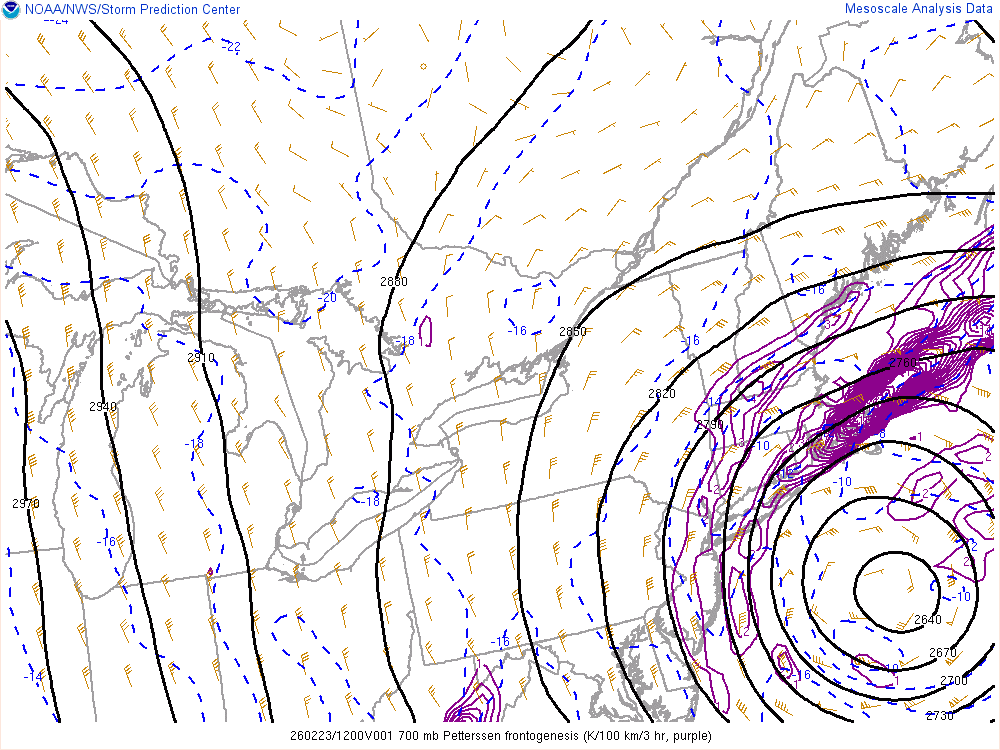
Meso Discussion from a few hours ago: Mesoscale Discussion 0117 NWS Storm Prediction Center Norman OK 0413 AM CST Mon Feb 23 2026 Areas affected...parts of the Northeast and southern New England Concerning...Blizzard Valid 231013Z - 231515Z SUMMARY...Very heavy snowfall rates of 2-3 inches per hour and widespread blizzard conditions should persist across Long Island and southern New England through 10 AM EST. DISCUSSION...Classic bomb cyclone/nor'easter off the Northeast coast will slow its deepening over the next few hours as it tracks northeastward off the southern New England coast through midday. As this occurs, multiple bands of very heavy snow from NJ to southeast MA should consolidate into one primary band across Long Island to eastern MA through mid-morning. Extremely enlarged low-level hodographs are indicative of the impressive warm conveyor north of the cyclone. In addition, very high KDP values detected within and somewhat below the dendritic growth zone amid base reflectivity values around 35 dBZ all point to highly prolific snowfall rates of 2-3 in/hr. From eastern Long Island through eastern MA, this appears likely to persist for several hours. Measured severe wind gusts should persist in this same region, supporting widespread blizzard conditions. The aforementioned slowing of cyclogenesis and northeastward track will eventually yield a more progressive tapering of very heavy snowfall rates from the southwest towards late morning. ..Grams.. 02/23/2026 -
"Don’t do it" 2026 Blizzard obs, updates and pictures.
wxsniss replied to Ginx snewx's topic in New England
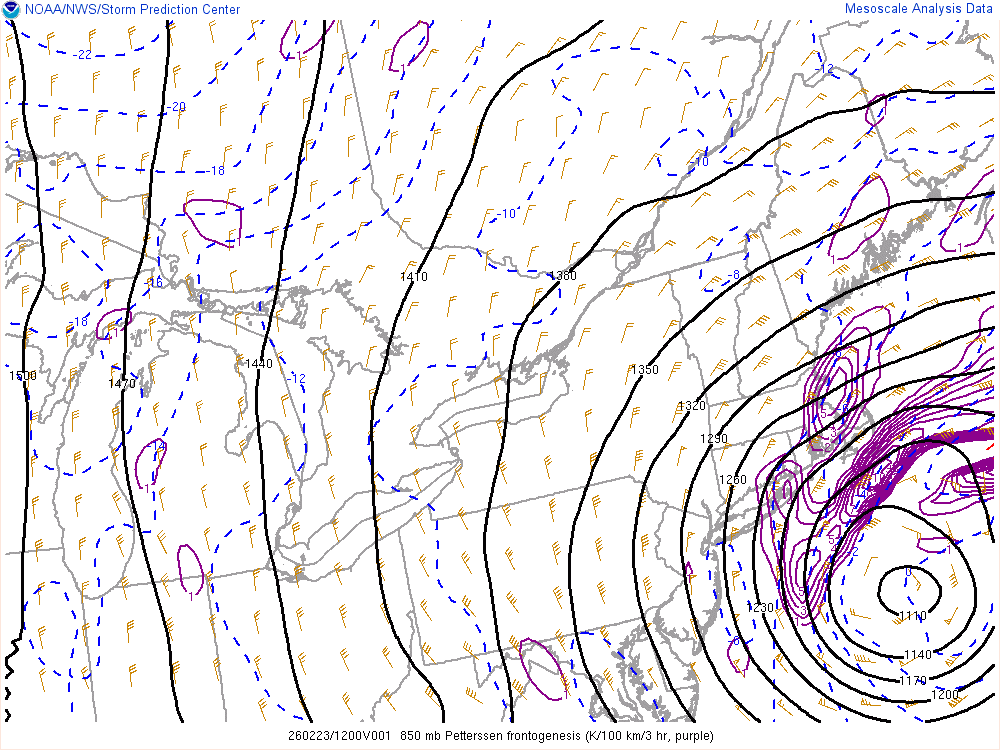
-
"Don’t do it" 2026 Blizzard obs, updates and pictures.
wxsniss replied to Ginx snewx's topic in New England
Incredible blizzard conditions Located in Brookline just outside Boston Windows caked, can barely see a few hundred yards, must be at least 2/hr, occasional wind roar @weathafella hope you’re loving this and don’t lose power > 100,000 in Eastern Mass lost power and rapidly rising -
"Don’t do it" 2026 Blizzard obs, updates and pictures.
wxsniss replied to Ginx snewx's topic in New England
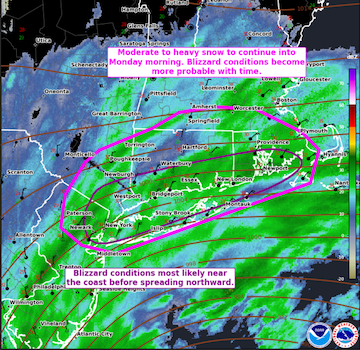
Mesoscale Discussion 0116 NWS Storm Prediction Center Norman OK 1145 PM CST Sun Feb 22 2026 Areas affected...New York City Vicinity into southern New England Concerning...Blizzard Valid 230545Z - 231045Z SUMMARY...Moderate to heavy snowfall will continue from the NYC Metro vicinity into southern New England. Snowfall rates of 1-2 inches per hour are likely with localized 2+ inches per hour possible. Greater rates will spread north with time. Blizzard conditions will also become more prevalent, particularly near the coast. DISCUSSION...Over the past 5 hours, the surface cyclone off the Mid-Atlantic coast has deepened approximately 9 mb per objective analysis. Bands of moderate to heavy snow continue to pivot into the NYC metro vicinity as well as southern New England. Moderate snow observations are beginning to occur into Massachusetts. As the upper trough continues to intensify and become more negatively tilted, the surface cyclone will deepen further into Monday morning. A long duration of at least moderate snowfall can be expected. Closer to 4-7 AM EST, a zone of very favorable ascent is expected to set up over southern New England. Snowfall rates of 1-2 inches per hour are likely along with the potential for localized 2+ inches per hour. Greater snowfall rates will also gradually shift northward as the system slowly lifts northeastward. Beyond significant snowfall rates, surface winds have already begun to increase from the Mid-Atlantic into southern New England. Current observations show winds gusting into the mid 30s to low 40s kts in Long Island. This trend should continue over the next several hours. Blizzard conditions will remain more likely near the coast, but inland areas will become increasingly impacted by strong winds and reduced visibility later this morning. ..Wendt.. 02/23/2026