Volcanic Winter
-
Posts
1,674 -
Joined
-
Last visited
Content Type
Profiles
Blogs
Forums
American Weather
Media Demo
Store
Gallery
Everything posted by Volcanic Winter
-
 The AMOC likely collapsed before the start of the Holocene during the Younger Dryas which was a significant climate excursion. I don’t necessarily think the impact would be as severe today, but I do believe it will be a substantial re-alignment of climate norms. As I’ve read it from other sources, the AMOC has a fast and a slow state that are considered stable. We’re currently in the fast state, but with notable slowing occurring. If that slowing continues, it will eventually quickly crash into its other slower stable configuration with less effective heat transport. There are beliefs the ultimate impact may be minimal, but I don’t necessarily subscribe to that line of thinking. It’s a major ocean - atmospheric system and we pretty much know what happened the last time it slowed, though as mentioned I don’t think impacts would be 1:1. If this new paper’s conclusions are valid and ultimately supported elsewhere, I believe this is something that needs to be taken very seriously. The IPCC was always conservative with the AMOC and last I read stated it was not in danger of collapsing at current trajectories for a couple centuries or so, IIRC. Though that would’ve been based on evidence that is now several years outdated in light of the new stuff coming out.
 -
Hillside Serious CG lightning going on with this. Crazy storm.
-
Occasional Thoughts on Climate Change
Volcanic Winter replied to donsutherland1's topic in Climate Change
What about its effect and impact on the monsoons? I’ve read it has the potential to greatly disrupt that. The Younger Dryas featured a sharp temperature drop likely from the AMOC shutting down from the melting Laurentide, though that was a much bigger injection of freshwater than what’s happening today from Greenland. The mechanisms are different today (or at least there’s a multitude of causes), but I do believe it would trigger significant climate disruption. -
Occasional Thoughts on Climate Change
Volcanic Winter replied to donsutherland1's topic in Climate Change
Tip, was just coming to post this study! Crazy stuff. https://www.nature.com/articles/s41467-023-39810-w ”We predict with high confidence the tipping to happen as soon as mid-century (2025–2095 is a 95% confidence range). ” -
Check this new paper about a potential forthcoming AMOC collapse: https://www.nature.com/articles/s41467-023-39810-w “We predict with high confidence the tipping to happen as soon as mid-century (2025–2095 is a 95% confidence range).” This is pretty wild. I know the AMOC has a fast and a slow state, and I believe the last time the AMOC was believed to be in the slow state was the Younger Dryas just prior to the start of the Holocene, caused likely by the meltwater pulse of the Laurentide ice sheet.
-
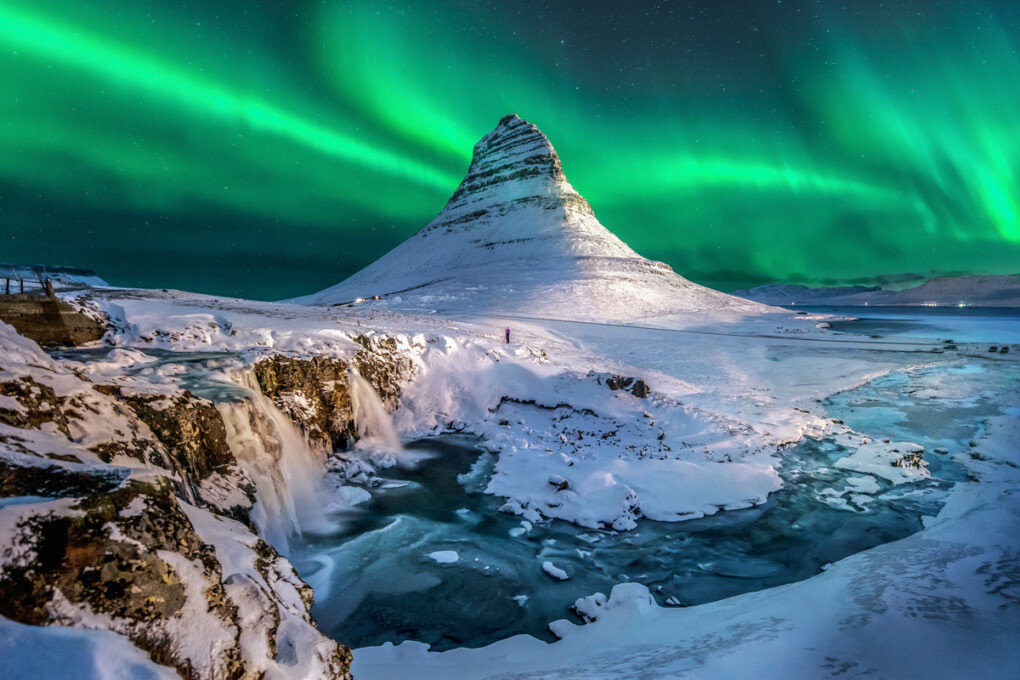
We usually go in early Icelandic winter, around the beginning of November. We’ve been four times now and I’ve seen the lights on each trip. It’s addictive and spectacular. The best display from our last trip in 2022 was when we made it back to Reykjavik from the north. They’re still incredibly visible even with the (albeit small) city lighting. Just some quick iPhone captures, I have a lot on my DSLR I still need to process
-
It’s not just based on KP, it pushes that info along with other things. I do look at those things, I just hadn’t for this presumed event. Was just mentioning the app never sent a push notification which implies it wasn’t a big deal, but as mentioned I hadn’t looked further into it this time.
-
I made it to 59.5 for a low this weekend, which feels unbelievable in light of how warm nights have been since July began.
-
I hadn’t looked into it but I have a location based aurora app on my phone for when we go to Iceland that sends push notifications with the KP and cloudcover when viewing is possible in your area, and I didn’t receive anything. I’ve gotten them here in Jersey before, too. It went off for one of those earlier storms this year where they were possibly visible, but it was a cloudy night and most of our area is simply too bright (and they’re likely to be low on the northern horizon at our latitude unless it’s like Kp 8-9).
-
El Nino 2023-2024
Volcanic Winter replied to George001's topic in Weather Forecasting and Discussion
Only several commonplace VEI 4’s which are not large enough to be climate impacting. You need at least a mid range VEI 5 like El Chichon in the 80’s, which was the largest recent atmospheric sulphate spike next to Pinatubo 91 (little less than half, but Pinatubo was a substantially larger eruption and also had an assist from Cerro Hudson’s VEI 5 the same year), and larger than anything since Novarupta in 1912. Hunga Tonga’s impact should be fading this year, in part because it simply didn’t release that much SO2. I read a paper that suggested the initial measurements were underestimated, but even their proposed value was like 1/4th to 1/7th of the release from El Chichon and much much lower still than Pinatubo. A lot of Hunga Tonga’s volatiles were released into the ocean from underwater ignimbrite formation (pyroclastic flows). Only about 1/3rd as I understand it made it into the eruption plume. -
@Typhoon Tip has made quite a few posts about this regarding how it’s human nature to not care about an abstract, intangible issue before it impacts you directly. Add to that how it’s become this weird political issue thanks to the oil industry, and the overall level of science denialism in this country. People overestimate their own understanding of things and operate off “that sounds true and aligns with my preconceived beliefs, so it’s correct.” Look I don’t post about this stuff much because I have a very pessimistic attitude about what we’re facing, but I don’t see any *real* change happening for another several decades. Until the point we’re so beyond the norm, anyone still left arguing against it will inherently look foolish. Until the point the younger generations that don’t have this weird political chip with climate change are the ones in the majority. Until we as a species literally have no choice (which by then will be too late, it’s already too late). People talk about natural cycles of the planet like it’s some kind of rebuttal of climate change. The Holocene interstadial has already been one of the longer ones, we should be sliding back toward the next stadial (ice age). We soundly aborted that. We’re outpacing the climate impact of even the worst flood basalt mass extinctions (Permian / Siberian Traps, that almost cooked the entire planet over many thousands of years). I read many climate papers as they are published, some of the ones from the past year or two are highly alarming. I don’t know what else to say, we needed to be on top of this 30 years ago. It’s not even about blame at this point, the Industrial Revolution served its purpose. Now we know, now we need to evolve beyond inadvertent geo-engineering. Nobody said it’s an easy issue to fix, but we’re collectively actually doing less than the bare minimum.
-
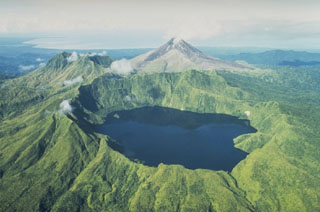
A remote volcano in Papau New Guinea named Bagana just had a stealthy moderately large explosive eruption. https://volcano.si.edu/volcano.cfm?vn=255020 Bagana is interesting because it potentially is the “offspring” of a very large neighboring caldera with the odd name of Billy Mitchell, which had an extremely powerful explosive eruption somewhere around the 16th century. Climate impacting, potentially a contributor during the LIA. Bagana is extremely young and extremely productive, apparently the majority of the edifice grew after Billy Mitchell’s eruption and could be from the same magma supply, as Billy Mitchell has been silent since then. Bagana erupts fresher, less evolved (explosive) magma than its ‘parent,’ and yet just had a pretty large sub - plinian event with a plume up to 16-18km. It doesn’t appear it was a sustained eruption and was a brief episode of activity, but still that is a substantial eruption and probably larger than anything other than Shiveluch’s big blast this year. Bagana lurking in the background behind the large caldera lake of Billy Mitchell. https://watchers.news/2023/07/15/high-level-eruption-at-bagana-volcano-ash-plume-to-16-4-km-54-000-feet-a-s-l-p-n-g/
-
I’m looking at that right now and it’s showing a shocking amount of 50’s lows for August. Have a hard time believing that becomes reality. Even mid 60’s seems difficult anymore in peak summer. I don’t watch the models as much this time of year as I do in winter, so not sure what they’re showing a few weeks out. Not that it really matters that far anyway. Still, dreams are nice .
-
What are the things that lead to the cold east coast* Nino outcomes of years like 2014? Looking at 40/70 Benchmark's composites on another thread it appeared as if a strong Nino could still have a cold eastern seaboard outcome at H5, but I know there's a lot of variability. Is that when sort of all other metrics are aligned to blast cold into the east continually?
-
Definitely man, just that ENSO is one of the easier variables to look at six months out is all.
-
Yeah, I agree. Been following the ENSO thread closely. Snowman of course feels we’re going 2.0+ in 3.4 with an east lean, but a lot of others feel it’ll be basin wide and a bit more tempered (below super levels). And then there’s the question of RONI and the WPAC warm pool. IDK, I’m happy with where things sit right now in the sense that it certainly could look worse relative to it being July still. Almost certainly taking another New England hiking trip this winter regardless, can’t imagine I’ll completely shut out of snow in Feb for my bday as I was when I went to Danbury last year for three days. Still some good hiking though.
-
What do you think about this winter? Awful or chance of at least decent? Unless we go full torch or locked in +++AO like 19-20 I can’t imagine it’s as bad as last year. Just IMHO. I’d like to see 20 inches at NYC, hopefully at least 15 for me. City is around 29-30 avg, right by me is about 22-24. Maybe one big event + one moderate, perhaps the moderate stays north of me and gets the city. Still bad, but not last year levels of bad.
-
The line is very impressive on radar. Just missed it getting to work.
-
I mean I’ve seen a reasonable amount of optimism regarding winter overall. We’re out of the perma-Niña and there’s a shot of a moderate -> strong basin wide Niño with potentially enhanced western forcing from the WPAC warm pool (as per @bluewave) all of which can be good for East Coast winters. Maybe it still goes super or stays further east based (generally less favorable), but I don’t see any indications that we should be cancelling winter yet. And even with a super we can still get the one off KU a la 2016. I’m rather excited; an average snow season this year would feel like getting buried after the miserable years we’ve had lately. Perhaps we’ll have a relatively mild but snowier winter; most would take that. I may stand alone in hoping for a winter so cold we see a brief resurgence of the Laurentide ice sheet, but I suppose with respect to reality I’ll have to settle for ‘mild and snowier than last year’ .
-
I grew up surfing as a teen all summer in SSP. I don’t ever remember water temps in the 70’s in July, that was more an August thing. And I recall like 70-73 max. 78 is stupid warm for 40n Atlantic coast IMO.
-
Bluewave, that’s exactly how I look at it as well. Cold is easier to mitigate. And you’re not sweating bullets and saturating your clothes. Not to mention cold air is refreshing, IMO. I realize I’m the inverse of the majority of people but cold weather makes me want to be outside, and when it’s (this) hot if I can’t be in a body of water I don’t leave my computer. Winter hiking in the right location can be really spectacular as well, I wish more people gave it a chance. Though it does require more gear / prep. We don’t really do much this time of year, just too hot all up and down the east coast.
-
I would frankly rather live in Antarctica than the desert southwest. Find me in an igloo near Mt Erebus.
-
Iceland, baby. Reykjanes peninsula (this is right under Reykjavik) just had its third eruption since 2021 after being silent since the Middle Ages.
-
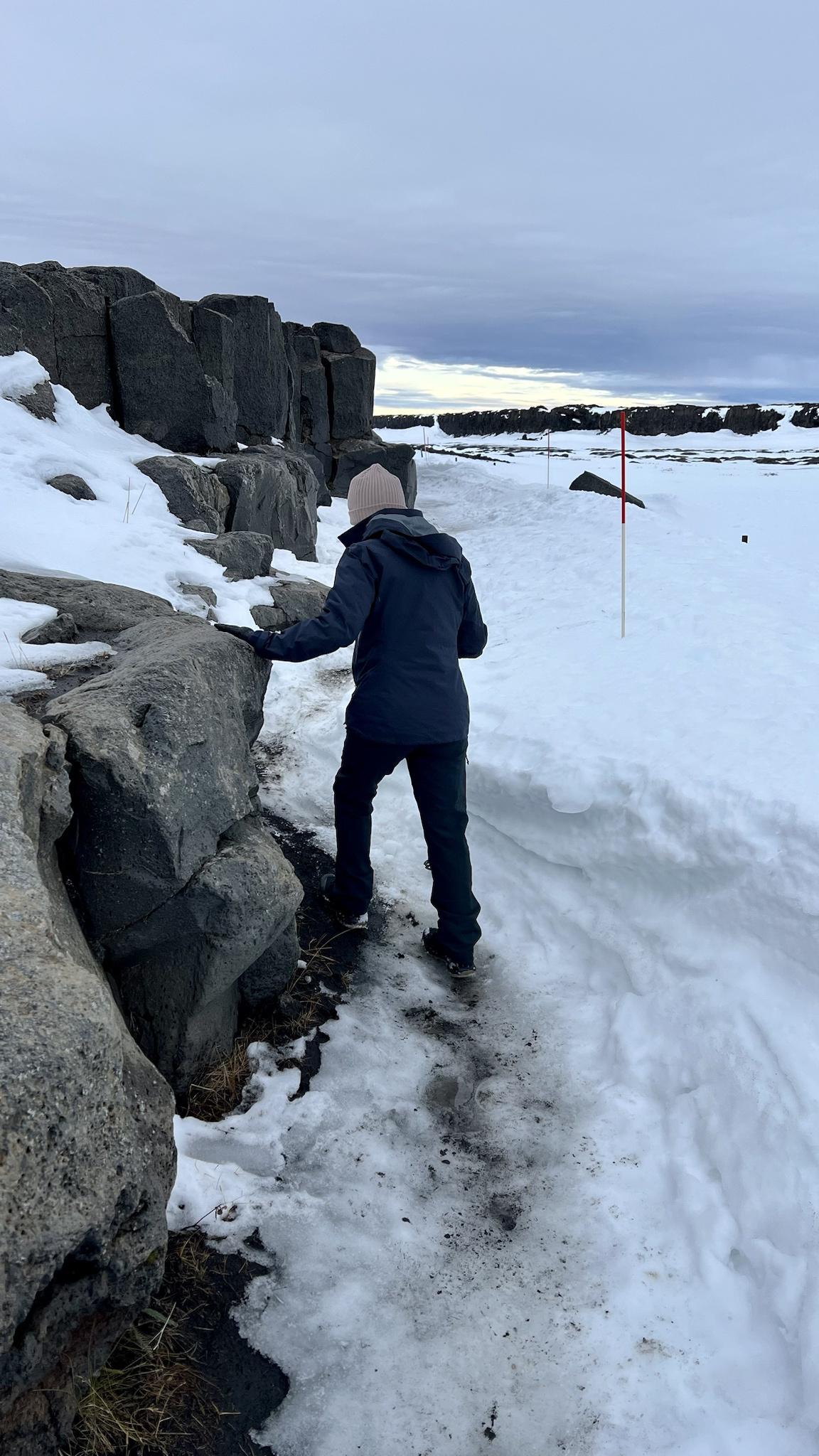
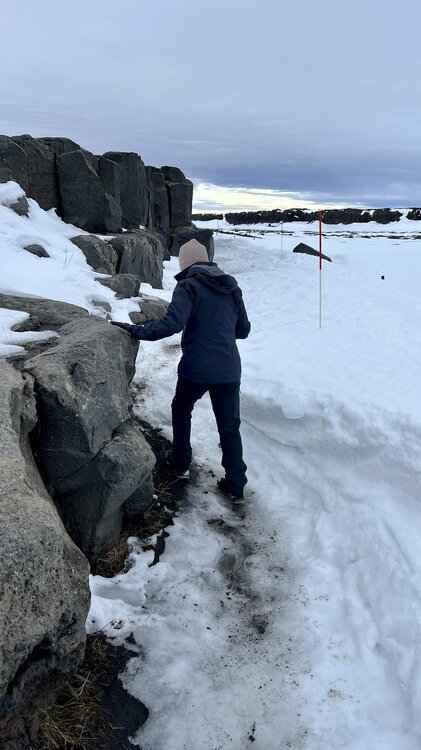
I haven’t been to VT since I was a kid and I’d love to get back there. My wife and I have made tentative plans the past couple years but just ultimately have delayed, we also want to do a longer trip from there and go up to Canada in winter. I’m a little crazy in the cold season. We’ve done Iceland now four times, including this past fall which is early Icelandic winter. We toured the north which is a little ballsy that time of year, as conditions can range from fine to literally damn near polar / glaciated depending on weather. It ain’t fluffy snow pack, to be sure, this was like the densest, iciest, break your neck with one wrong step kind of stuff I’ve ever been on, and dammit I loved every second of being out there. There’s a few very cool volcanic systems in the north I wanted to visit, and the Icelandic landscape with snowcover can’t be beat. I’d live there were it practical. Fun fact we caught a crazy ice storm out of nowhere leaving this place in our vehicle, and had something like a two hour drive in normal conditions back to Akureyri the northern capital, and it was an absolutely shitshow out there. We had to take a windy mountain pass where the road surface was completely frozen over and there was no guard rail to a several hundred foot tumble if you lose it. It was pretty harrowing, and you can get in a bad way pretty easily if you’re careless. But it’s so unbelievably beautiful out there, and we always approach things slow and cautiously. We really needed light crampons or ice spikes for the conditions we were in and the stuff we were doing, but we made it work. Next time I’ll have some different gear with me. Amazing time, though. Don’t you know I think about Iceland every single day of our infernal hellscape summer season.
-
Monster blizzard(s) at CFS hour 3705: @snowman19 you want to send this to Joe Bastardi to confirm? This looks like a civilization ender and it’s only a couple seasons away at this point.