Volcanic Winter
-
Posts
1,674 -
Joined
-
Last visited
Content Type
Profiles
Blogs
Forums
American Weather
Media Demo
Store
Gallery
Everything posted by Volcanic Winter
-
Just want to note that, and I think you guys are pretty much aware of it, the eruption (should it occur) in Iceland will not be anything that carries potential climate impacts. It could be intense and very damaging to the local population, but it will be a predominantly effusive fissure eruption as is typical over there. Now if Katla or Öræfajökull especially were waking up… different story. I’ve seen a few comments asking about the potential eruption in other threads here. But yeah, big danger to the population of Grindavík, zero intrigue as far as climate. You really need the absolutely massive and thus extremely rare fissure eruptions that have explosive components and the ability to get SO2 into the stratosphere (Laki, Eldgjá etc) to see climate impacts off these mainly effusive events. But this won’t be that, and they are extremely rare (only 3 known in the Holocene).
-
23.5, impressively chilly this morning. Was colder than Iceland’s lows! This trip ranged between 25-38 or so most days. Started in the northern part of West Iceland, more inland and ended up in the far southeast coast near Vatnajökull glacier.
-
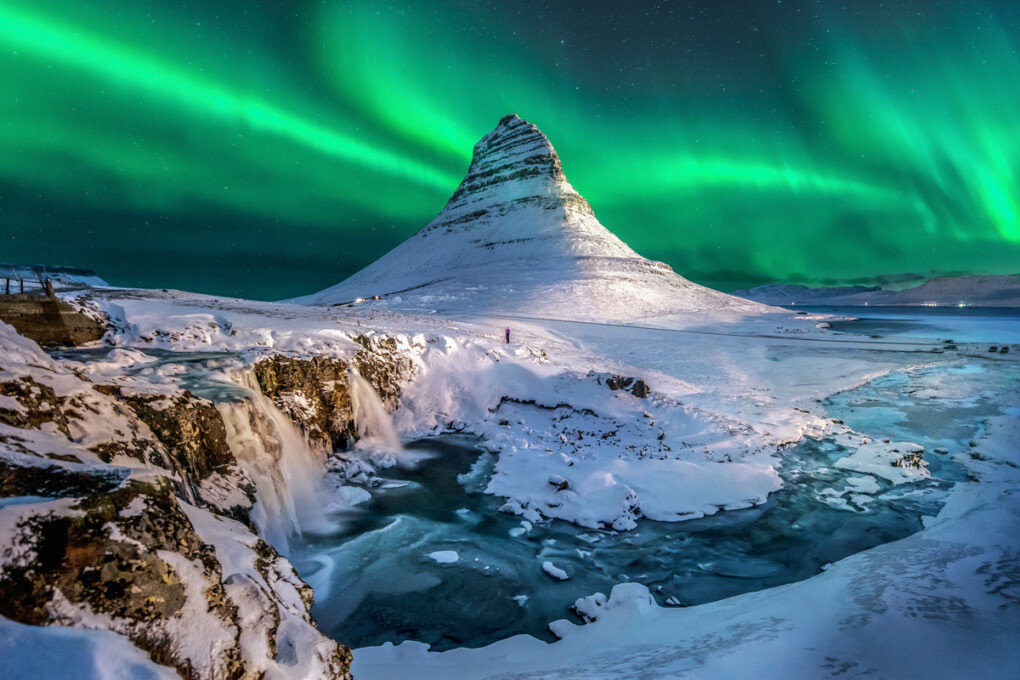
 Some pics of our amazing trip:
 -
We were supposed to stay a night at the end of our trip at the Northern Lights Inn, which is within a mile from Blue Lagoon! Crazy story, just been getting back and adjusted and I was going to post about the trip and this whole experience. it’s a very serious situation, a sill formed in the area of Grindavik / Blue Lagoon in a system that hasn’t erupted in 800 years. It’s a much spicier system than the gentle, tourist friendly Fagradalsfjall. It could erupt very fast and very powerfully with high effusion rates, and both Blue Lagoon and Grindavik are very much in real danger.
-
Einstök makes some really solid, fun beers. I love their take on a dopplebock! Garún stout from Borg is one of Iceland’s finest, too. One of the best stouts I’ve ever had, and it’ll knock you on your ass! Perhaps not so great for hiking, but a solid choice for later!
-
Not to be pedantic but +1-2 AN is actually substantial considering how much the average has increased since 1980. So the frequency we still get months going AN is concerning, to me at least. Very difficult for us to go BN for any length of time, and even then it’s hardly BN factoring earlier averages. Aside from that just anecdotally the warm ups always seem more acute and severe than the cooldowns, with a couple exceptions here and there of course. Just my 2c.
-
Thanks! Yeah, we’ve yet to do a summer trip. Allure of the northern lights are too intoxicating, plus for me the climate is pretty much perfect this time of year. Can do a strenuous hike and maintain temperature equilibrium well enough you’re not sweating bullets . Iceland with snowcover is also spectacular, especially in the north where we went after our volcano hike last year. Gives the appropriate sense of being near the polar latitudes. Summer has its charms too with the unexpected lush/greenness, midnight sun, and extremely mild temps which is more the speed of most. But the country is a geologic/volcanic wonderland and presents one of the most unique environments on the planet (mid ocean ridge on top of a powerful hotspot).
-
Will be in Iceland starting Sunday. Last year we hiked Fagradalsfjall volcano and saw the fresh lava flow fields. This specific volcanic system was dormant for 8,000 years before it woke up in 2020; pretty crazy. Volcanic activity on the Reykjanes peninsula goes in cycles with the last having been during the Middle Ages, though Fagradalsfjall itself was dormant for far longer. Well it appears to be waking up for yet another eruption (it’s popped off three times now since waking up), as this looks to be the start of yet another intrusion that began with a 4.6 quake in the area last night and now a notable swarm today which could be magma beginning to break for the surface: https://watchers.news/2023/10/25/intense-earthquake-swarm-near-fagradalsfjall-volcano-iceland/ At the volcanic cone from 2021 and viewing the freshly cooled flow fields during our trip last year.
-
Honestly my favorite types of storms are those that crush my area in coastal NJ and then continue on to crush you guys. Just that classic coastal bomb with something for everyone. 1/29/22 was outstanding for me at 16 inches given current trends, a bit less so for NYC area to my NNW, but then was a major, major storm for many folks in NE. Also thinking of storms like: https://en.m.wikipedia.org/wiki/January_2018_North_American_blizzard My biggest hope rather than absolute values is just the presence of a fun coastal storm with a wide swath of enjoyment for many in the northeast. Feels like that’s been a missing element the past few winters. And I know many in SNE have been really hurting in recent years, too, so hoping you lot get the goods this winter.
-
Funny how different people can be. I don’t hike until it’s in the 50’s on sunny days, I absolutely despise the feeling of heat / broiling in the sun while active. My favorite time of year to hike is mid-late fall into winter, but I’m definitely more of an oddball than not As of Sunday my wife and I will be back in Iceland for another hiking trip, so at least I’ll be in my glory haha. Beautiful out there.
-
It’s amusing how significantly I can fake cold my way into impressive lows with how well I radiate down here at the northern edge of the pine lands. Not factoring last night I’ve already been down to 36 a couple times and have had frost.
-
El Nino 2023-2024
Volcanic Winter replied to George001's topic in Weather Forecasting and Discussion
Regional impacts vary, that’s pretty standard with this stuff. Pinatubo had a very notable decrease to surface temperatures overall, even if region to region impacts had lots of variation. There’s a study disputing the impact of the largest known eruption of the past 100k years (Toba supereruption 75kya), because climate proxy data from a lakebed in Africa didn’t show much of a change from the norm. -
El Nino 2023-2024
Volcanic Winter replied to George001's topic in Weather Forecasting and Discussion
I just want to remind that HTHH is the only eruption in recorded history to be both of VEI 6 (Pinatubo) size and have its primary atmospheric pollutant be water vapor. Every eruption of similar size that has been studied has had a very different gas composition. It’s not hyperbole to say this is uncharted territory, and we’ll likely be learning in real time what the impact of that much water vapor will be. Maybe it will ultimately be of small or inconsequential impact, perhaps it will be larger. In my personal opinion a retrospective analysis will be more useful than any one study trying to predict the next several years. The most important point is that I would caution against comparing 2022+ to any other known volcanic years in recent history as they’ll ultimately have very little in common. Even at the highest SO2 calculations I’ve seen estimated, it’s still far below El Chichon in the early 80’s - and even if there were any impact from typical volcanic aerosols, it’d be fading rapidly this year. -
Yeah hit 37 this AM. By comparison I had two hard freezes, coldest down to 30 by tomorrow last year in Oct 2022. Was a third year Niña and not directly comparable but just mentioning.
-
Yeah as a kid growing up in CNJ during the 90’s and 2000’s, it felt like we lived somewhere that gets plenty of snow. A lot, even. My dad had a plow, we looked forward to the snowy season every year, and I don’t ever really remember thinking, “damn, it hasn’t snowed in so long.” Of course that’s growing up in one of the areas biggest periods, but yeah. This is mainly why my impression of 2016 to present feels a bit out of sync with my memories growing up, not that we haven’t had a few great storms in that period. Just that it feels like our winters lost something I remember as a kid. All anecdotal, just recollections.
-
@bluewave What made 95-96 such a crazy winter, anything anomalous? I know it was a Niña and one of those highly productive Niña winters, but I honestly don’t know much of the specifics from that season.
-
Yeah, I agree. I have to believe the cosmic scales are in our favor right now after whiffing historically bad on loaded patterns in both Dec and March of last winter. Even if the CONUS floods with warmth, I have to believe we’ll have favorable enough windows to get something going. I’m still hanging on to 1/29/22 because that was such a great event down my ways (16 inches at my front porch), but I’m also up north a lot (work just west of the city and have close friends in Stanhope and Montague) and just miss what should be our usual wintry vibe in peak winter. Obviously we don’t often have sustained pack, but just the threat of realistic events every other week or so, and temperatures that remind one of being in meteorological winter instead of protracted, second fall. And I playfully disagree with @bluewave, as wonderful as the 2016 HECS was, I actually preferred the sustained wintry vibe of 2014 but I’m one who prefers sustained cold. We had such a core grouping of insane winters from 2009-2016. Fingers crossed we get the kind of winter that offers something for everyone, except warmth lovers of course! They get quite enough of that already .
-
My biggest issue with the moving averages is how it normalizes our steadily increasing temperatures, even amongst us weather enthusiasts. I’m guilty of it too at times. The difference to pre-industrial really is staggering. I’ve actually read some intelligent opinions from scientists I follow that felt the Little Ice Age was potentially the beginning of the end of our current interstadial as we would otherwise be beginning the slide towards the next stadial (glacial, towards a glacial maxima). Just some speculation, but was interesting nonetheless. I know the LIA cause was traditionally considered multifaceted, but I’ve seen a lot of blame on volcanism which I disagree with. There’s always large volcanism lurking behind every century, there was nothing anomalously large during that period. Even Tambora’s happen 2-3 times per millenia. We know pretty well that volcanic forcing doesn’t last beyond 2-4 years at the max, perhaps a super eruption can sustain a decade of surface temp alteration. Regardless there had to be other feedback mechanisms in place, such as a cooling of the North Atlantic. Yikes I really drifted lol. What was my point again? Sorry lol.
-
Already feeling those hints of frustration creeping in. It’s not a rational thing, it’s October, more PTSD. Not expecting a blockbuster winter but would like to see something approaching average for many of us. But if I have to look at maps of troughs dumping to Baja all winter again I’m going to run and jump into the nearest lava lake. I’m sure we’ll see periods with mixed Niño forcing, but still.
-
Is it the blocking / pattern overall or the temperatures during Niño octobers that has some correlation with DJF? Following the Niño thread there was some hope a BN - east October would increase chances of BN in DJF, though from a temperature perspective that definitely seems unlikely now for most in the east. But if it’s more pattern related, blocking + eastern trough could be a good sign? Also @bluewave I followed your posts in the Niño thread about the sharp -PDO, most are calling for a more typical Dec Niño warmth, but couldn’t the -PDO if it stays considerably negative help Dec act more like a Niña and be cooler? I’m still a novice with a lot of this so be gentle .
-
The ENSO thread this year has been incredibly interesting. Some members feeling pretty positive on this winter, a few more reserved. But some good indicators at least we will have chances for snow, though we probably see a mild Dec / start before things get cooking. I do recommend peeping over there, great discussion / debate.
-
My Winter Outlook for 2023-24
Volcanic Winter replied to raindancewx's topic in Weather Forecasting and Discussion
El Chichon was actually an extremely stinky eruption for its size (3-5x smaller than Pinatubo in total eruptive volume), yet it had a sulfur release totaling ~7Mt / Tg of SO2 compared to ~19 for Pinatubo. Both were extremely gas rich eruptions, but El Chichon erupted through an anhydrite layer which really boosted the SO2 release relative to its size. AFAIK when researching this event it did produce a small decrease of surface temps in the early 80’s. It’s really difficult to compare to Hunga Tonga, which had an initial estimated SO2 release of 0.4Mt / Tg. I did catch a paper that suggested a revised estimate that at least doubled that amount, but it’s still substantially less than El Chichon while releasing much, much more water vapor. I would expect unusual variations to normal volcanic forcing due to HTHH. It was as large or larger than Pinatubo in total erupted volume but 80% of that mass was deposited in underwater Ignimbrite formation (think pyroclastic flows), which is why the expected volume of SO2 never hit the stratosphere. The enormous plume seen on satellite and some ground images is primarily steam. -
Been radiating each night to upper 30’s which is nice and cool in the morning, but daytime is definitely still growing quite warm at upper 60’s to 70ish in bright sunshine. What would really impress me is a month that runs below normal relative to older baselines, this could be mistaken but I believe most of our recent negative departure months (the few there are) wouldn’t have been negative against older normals, yes? Also (this is banter), I see the city every morning as I commute in to work. Almost every day I catch myself thinking the southern terminus of the Laurentide ice sheet used to be there. It’s really crazy to think about and conceive of.
-
Yeah I was in Middlesex, about 4 inches matches my recollection well. Crazy some of the higher totals.
-
What was the setup when we had that October snow event, what was it 2011 now? I remember that being a fairly big deal but details were fuzzy. Just remember driving in snow on my way to a doctor appointment in CNJ.