-
Posts
1,634 -
Joined
-
Last visited
Content Type
Profiles
Blogs
Forums
American Weather
Media Demo
Store
Gallery
Everything posted by Volcanic Winter
-
This is also why I personally enjoyed 2014 so much; I didn’t get too many big storms that year but we had very frequent minor snowfalls that stuck around for weeks. I distinctly remember my front porch being iced over and frequently replenished with powder for weeks on end that winter; for me that’s the holy grail even beyond gigantic coastals.
-
Exactly the post I was about to make. Sure, we may get more juiced up storms before temperature becomes completely prohibitive, but in the interim winters have warmed enough that we’re starting to lose borderline events that would’ve been paste-jobs in earlier decades. This issue has often been covered up by the monstrous MECS & HECS we’ve been getting in recent years. @bluewavehas posted about this frequently with good data to back up how we’ve begun a ‘feast or famine’ regime where we’ve lost many of our small to moderate events that’s covered up with monstrous storms. Of course the foot+ storms are amazing to witness and are very fun, but it’s those small to moderate events along with cold enough air temperatures to keep it around a few days that really provides a winter feel. And this is something we’ve really been lacking lately.
-
Can’t recall an SPC moderate risk this far east before, I’m assuming though this definitely isn’t a first, right? Still that 10% tornado risk area and CAPE estimations in the DC area are pretty wild. Here at work in Hillside (due west of NYC) it’s been consistently cloudy with on and off light rain, humid but not especially warm. Unless the sun starts peaking out I’d imagine it keeps a lid on severe potential up here.
-
I know last summer was hot here, but it seems the past few years we’ve avoided the truly record breaking, insane heat yes? Thinking back to the June 2021 Pac NW heat dome as well. I know we had multiple 100 days last summer, but I don’t recall a truly sustained ‘giga heatwave’ around here recently, just our usual ‘NYC Metro Swampass Special.’ Is that more because dews cap the top end heat, or have we not had the sustained high heights pattern that would build a traditional heat dome here yet? I’m sure our time is coming if it’s the latter.
-
Wow, got down to 54.3 for a low!
-
Yeah. This is why I’ve refrained from talking about ‘impacts’ of the AMOC switching to its other stable configuration. We know the Younger Dryas AMOC slowdown returned the planet to a colder state, but that it may have been regional (which is not surprising). We’re in a different climate state now with different starting parameters, and I’m not educated enough on the subject to speculate on the effect of a complete AMOC slowdown in the modern era. I know this is somewhat contentious, though. With that said, I would be very surprised if it did not cause a multi-century shift in climate norms across several regions, along with unexpected changes in others.
-
This is sort of unrelated directly, but tangentially related to what you’re talking about. I follow a well published university astrophysicist that writes for and helps run a geology blog; a very knowledgeable, multi-disciplinary dude with a lot of interesting perspectives. He believes based on comparing the duration of our current interstadial(length of the Holocene) with past interstadial in the recent Quaternary, along with the direction we’re heading along the Milankovitch cycles that help govern glaciation, that the LIA was potentially the beginning of the slide toward the next proper stadial (glacial, Pleistocene like climate). And that human activity effectively aborted it with carbon heat energy, which is the same mechanism that has pulled the earth out of ice ages throughout the epochs. In a way, our activity had an even bigger impact than we realize. Take this with a huge grain of salt, it’s a speculative opinion from a smart dude and nothing more. But it’s interesting food for thought. And regarding the ‘ice age’ fears during the 70’s, well climate science simply improved dramatically over time. And that era was when sulfur and other aerosols were still exerting considerable influence in suppressing the impact of rising CO2 (not unlike sustained volcanic influence), so it’s not wholly surprising to see a couple decade downturn with that in mind. Climate science only improves as we move forward and learn more about the various feedback mechanisms built into our planet. It’s also clearly established how CO2 has been correlated to every natural climate excursion, both warm and cold, going back throughout the Quaternary. There are many natural processes that help raise and lower CO2 over the millennia, but what we’re doing is causing CO2 to skyrocket at an unprecedented rate. The people that deny human caused climate change by talking about natural earth cycles are ‘half right,’ in a sense, while missing extremely important context with respect to what that actually means and how that relates to the Anthropocene.
-
The AMOC likely collapsed before the start of the Holocene during the Younger Dryas which was a significant climate excursion. I don’t necessarily think the impact would be as severe today, but I do believe it will be a substantial re-alignment of climate norms. As I’ve read it from other sources, the AMOC has a fast and a slow state that are considered stable. We’re currently in the fast state, but with notable slowing occurring. If that slowing continues, it will eventually quickly crash into its other slower stable configuration with less effective heat transport. There are beliefs the ultimate impact may be minimal, but I don’t necessarily subscribe to that line of thinking. It’s a major ocean - atmospheric system and we pretty much know what happened the last time it slowed, though as mentioned I don’t think impacts would be 1:1. If this new paper’s conclusions are valid and ultimately supported elsewhere, I believe this is something that needs to be taken very seriously. The IPCC was always conservative with the AMOC and last I read stated it was not in danger of collapsing at current trajectories for a couple centuries or so, IIRC. Though that would’ve been based on evidence that is now several years outdated in light of the new stuff coming out.
-
Hillside Serious CG lightning going on with this. Crazy storm.
-
Occasional Thoughts on Climate Change
Volcanic Winter replied to donsutherland1's topic in Climate Change
What about its effect and impact on the monsoons? I’ve read it has the potential to greatly disrupt that. The Younger Dryas featured a sharp temperature drop likely from the AMOC shutting down from the melting Laurentide, though that was a much bigger injection of freshwater than what’s happening today from Greenland. The mechanisms are different today (or at least there’s a multitude of causes), but I do believe it would trigger significant climate disruption. -
Occasional Thoughts on Climate Change
Volcanic Winter replied to donsutherland1's topic in Climate Change
Tip, was just coming to post this study! Crazy stuff. https://www.nature.com/articles/s41467-023-39810-w ”We predict with high confidence the tipping to happen as soon as mid-century (2025–2095 is a 95% confidence range). ” -
Check this new paper about a potential forthcoming AMOC collapse: https://www.nature.com/articles/s41467-023-39810-w “We predict with high confidence the tipping to happen as soon as mid-century (2025–2095 is a 95% confidence range).” This is pretty wild. I know the AMOC has a fast and a slow state, and I believe the last time the AMOC was believed to be in the slow state was the Younger Dryas just prior to the start of the Holocene, caused likely by the meltwater pulse of the Laurentide ice sheet.
-
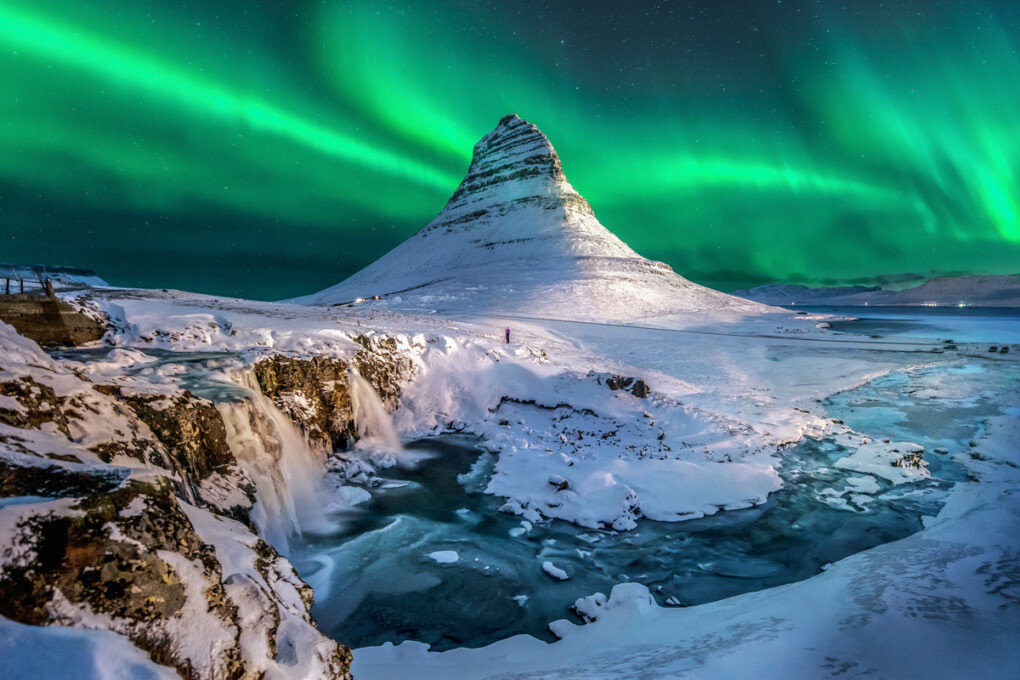
We usually go in early Icelandic winter, around the beginning of November. We’ve been four times now and I’ve seen the lights on each trip. It’s addictive and spectacular. The best display from our last trip in 2022 was when we made it back to Reykjavik from the north. They’re still incredibly visible even with the (albeit small) city lighting. Just some quick iPhone captures, I have a lot on my DSLR I still need to process
-
I made it to 59.5 for a low this weekend, which feels unbelievable in light of how warm nights have been since July began.
-
I hadn’t looked into it but I have a location based aurora app on my phone for when we go to Iceland that sends push notifications with the KP and cloudcover when viewing is possible in your area, and I didn’t receive anything. I’ve gotten them here in Jersey before, too. It went off for one of those earlier storms this year where they were possibly visible, but it was a cloudy night and most of our area is simply too bright (and they’re likely to be low on the northern horizon at our latitude unless it’s like Kp 8-9).
-
El Nino 2023-2024
Volcanic Winter replied to George001's topic in Weather Forecasting and Discussion
Only several commonplace VEI 4’s which are not large enough to be climate impacting. You need at least a mid range VEI 5 like El Chichon in the 80’s, which was the largest recent atmospheric sulphate spike next to Pinatubo 91 (little less than half, but Pinatubo was a substantially larger eruption and also had an assist from Cerro Hudson’s VEI 5 the same year), and larger than anything since Novarupta in 1912. Hunga Tonga’s impact should be fading this year, in part because it simply didn’t release that much SO2. I read a paper that suggested the initial measurements were underestimated, but even their proposed value was like 1/4th to 1/7th of the release from El Chichon and much much lower still than Pinatubo. A lot of Hunga Tonga’s volatiles were released into the ocean from underwater ignimbrite formation (pyroclastic flows). Only about 1/3rd as I understand it made it into the eruption plume. -
@Typhoon Tip has made quite a few posts about this regarding how it’s human nature to not care about an abstract, intangible issue before it impacts you directly. Add to that how it’s become this weird political issue thanks to the oil industry, and the overall level of science denialism in this country. People overestimate their own understanding of things and operate off “that sounds true and aligns with my preconceived beliefs, so it’s correct.” Look I don’t post about this stuff much because I have a very pessimistic attitude about what we’re facing, but I don’t see any *real* change happening for another several decades. Until the point we’re so beyond the norm, anyone still left arguing against it will inherently look foolish. Until the point the younger generations that don’t have this weird political chip with climate change are the ones in the majority. Until we as a species literally have no choice (which by then will be too late, it’s already too late). People talk about natural cycles of the planet like it’s some kind of rebuttal of climate change. The Holocene interstadial has already been one of the longer ones, we should be sliding back toward the next stadial (ice age). We soundly aborted that. We’re outpacing the climate impact of even the worst flood basalt mass extinctions (Permian / Siberian Traps, that almost cooked the entire planet over many thousands of years). I read many climate papers as they are published, some of the ones from the past year or two are highly alarming. I don’t know what else to say, we needed to be on top of this 30 years ago. It’s not even about blame at this point, the Industrial Revolution served its purpose. Now we know, now we need to evolve beyond inadvertent geo-engineering. Nobody said it’s an easy issue to fix, but we’re collectively actually doing less than the bare minimum.
-
A remote volcano in Papau New Guinea named Bagana just had a stealthy moderately large explosive eruption. https://volcano.si.edu/volcano.cfm?vn=255020 Bagana is interesting because it potentially is the “offspring” of a very large neighboring caldera with the odd name of Billy Mitchell, which had an extremely powerful explosive eruption somewhere around the 16th century. Climate impacting, potentially a contributor during the LIA. Bagana is extremely young and extremely productive, apparently the majority of the edifice grew after Billy Mitchell’s eruption and could be from the same magma supply, as Billy Mitchell has been silent since then. Bagana erupts fresher, less evolved (explosive) magma than its ‘parent,’ and yet just had a pretty large sub - plinian event with a plume up to 16-18km. It doesn’t appear it was a sustained eruption and was a brief episode of activity, but still that is a substantial eruption and probably larger than anything other than Shiveluch’s big blast this year. Bagana lurking in the background behind the large caldera lake of Billy Mitchell. https://watchers.news/2023/07/15/high-level-eruption-at-bagana-volcano-ash-plume-to-16-4-km-54-000-feet-a-s-l-p-n-g/
-
I’m looking at that right now and it’s showing a shocking amount of 50’s lows for August. Have a hard time believing that becomes reality. Even mid 60’s seems difficult anymore in peak summer. I don’t watch the models as much this time of year as I do in winter, so not sure what they’re showing a few weeks out. Not that it really matters that far anyway. Still, dreams are nice .
-
What are the things that lead to the cold east coast* Nino outcomes of years like 2014? Looking at 40/70 Benchmark's composites on another thread it appeared as if a strong Nino could still have a cold eastern seaboard outcome at H5, but I know there's a lot of variability. Is that when sort of all other metrics are aligned to blast cold into the east continually?