Typhoon Tip
-
Posts
43,367 -
Joined
-
Last visited
Content Type
Profiles
Blogs
Forums
American Weather
Media Demo
Store
Gallery
Everything posted by Typhoon Tip
-
May 2024 Discussion - Welcome to Severe Season!!!!
Typhoon Tip replied to weatherwiz's topic in New England
Might remind some of you that the models ... particularly the GFS but they all took some turn/guilt in this, had 3 or 4 consecutive days of Labradorian anal blow, scheduled to begin roughly yesterday, then to last through the weekend. This was 4 or 5 day's worth of model cycles ago. It seems there's a lot of triggering in here based upon very superficial causes when it comes to the mere complexion of what is immediately being seen. It almost comes off as actually wanting ( perhaps 'needfully' ) to be let down. Like, I'm new to the site, huh? LOL. Still, seeing this particular flavor of psycho-babble that goes on in here, I still sometimes muse over it. One could accelerate through a program toward a psychology PHD with the trove of data they have to work with in this malcontent seeking, a-bomb member social media depot. -
May 2024 Discussion - Welcome to Severe Season!!!!
Typhoon Tip replied to weatherwiz's topic in New England
36 here. probably car topped a little at that temperature. winter's not over - sorry. It's been 80 in February more than once in the past 8 years, and 70 to 80 countless times in Feb-Mar. We get obscenely warm in winters now as part of the CC charm. It can't be summer when your car topping. Doesn't matter what the calendar says. Think of it this way ... If you took our recent absenteeism winters, and shown May intensity sun through them ... you'd have what we have had over the last 2 weeks. -
May 2024 Discussion - Welcome to Severe Season!!!!
Typhoon Tip replied to weatherwiz's topic in New England
G5 has been breached extreme event is underway. -
May 2024 Discussion - Welcome to Severe Season!!!!
Typhoon Tip replied to weatherwiz's topic in New England
whereas I'm just overreacting and trigger happy pissed off about that f'n site - I don't care what the history and legacy to the area it has. -
May 2024 Discussion - Welcome to Severe Season!!!!
Typhoon Tip replied to weatherwiz's topic in New England
I'm pretty sure you could be encased in solid ice and locked away into the interstitial mass of a glacier for an epoch's amount of time and still wouldn't admit otherwise - -
May 2024 Discussion - Welcome to Severe Season!!!!
Typhoon Tip replied to weatherwiz's topic in New England
I don't think Logan's been a mystery at all. In fact, it only underscores that uselessness of placing any kind of a 'societal indicator' out on an island in the midst of a thermal black hole - that's the enigma. -
May 2024 Discussion - Welcome to Severe Season!!!!
Typhoon Tip replied to weatherwiz's topic in New England
Admittedly today surprises me a little with the sky and cloud layout. I was thinking the opposite, that the mid and high synoptic deck would eat back heading E of NYS, while we'd be inundated by Ole man Labrador strata farts up my way, rending CT and western Mass salvageable. But alas! the mid and high deck is spilling over, while apparently Labrador's been taking his dulcolax because there's no strata deck/accumulating fog miasma fartin off GOM so far. It's not warm, per se. But with that intense May sun beamin' through this coolish air it isn't so bad really. 60/37 ...nice early autumn appeal . It's interesting that the world is apparently still putting up gaudy CC temperatures making press about every month being warmer than the last and unprecedented this and that ... while we 'feel' like this is iglooian purgatory. I was just looking at the monthly - so far - DEPs on Box' climo site and apparently we are above normal - more so CT way. I suppose having a couple of 80 days'll do that, huh. I guess what it boils down to is that we will always be cool, relative to the world's CC issue ...while still being above normal, at times ...being stung by rancid Atlantic cold. Welcome to the heat short bus -
Occasional Thoughts on Climate Change
Typhoon Tip replied to donsutherland1's topic in Climate Change
yeah, coke 'n' taco -
May 2024 Discussion - Welcome to Severe Season!!!!
Typhoon Tip replied to weatherwiz's topic in New England
yeah, it means more to RH. like ... when it is 30f'ing9 degrees and pouring rain, while 'Making America great again' folk inform us that it's an unending, unperturbed perfect spring of warm days, ... the RH is likely up there around 99% phew. so hot that you have to install. I mean after all, it's 99 -
May 2024 Discussion - Welcome to Severe Season!!!!
Typhoon Tip replied to weatherwiz's topic in New England
oh, I know what the problem is - you have to stare at the illuminated disk with unaided, unprotected eye for no less than 5 consecutive minutes. -
May 2024 Discussion - Welcome to Severe Season!!!!
Typhoon Tip replied to weatherwiz's topic in New England
the cloud motion on there is something. 180 and deg between low and upper levels like that - I mean no angle. That rareness is what it takes to f over SNE from getting truly warm this late spring. -
May 2024 Discussion - Welcome to Severe Season!!!!
Typhoon Tip replied to weatherwiz's topic in New England
looping this .. we're "clearly" getting very lucky here in southeast NH and northeast MA. https://weather.cod.edu/satrad/?parms=local-Rhode_Island-02-24-0-100-1&checked=map&colorbar=undefined And no kidding! the cleanliness of the air must be providing exceptional radiation efficiency because 'brillant' is an understatement -
May 2024 Discussion - Welcome to Severe Season!!!!
Typhoon Tip replied to weatherwiz's topic in New England
that's because the sun is flat like the Earth - -
May 2024 Discussion - Welcome to Severe Season!!!!
Typhoon Tip replied to weatherwiz's topic in New England
I'm not trying to be contrarian here but it's pretty clear the GFS' QPF have been willfully overly prodigious at these longer termed aggregate sums. I'm not sure if that is true among all guidance; even if so, I suspect the GFS is the cult leader. It's certainly the Osama Bin Laden against seasonal change to warm season, in general... So in doing so, it's gotta consummately over amplify mechanism that rain, while conjuring up warm canceling synoptics etc. Re the former aspect... the GFS is always unbalanced with every wave space relative to all scales - I've noticed. speaking to the general audience here. It's not a hugely observable aspect but at a tedious, yet crucial scale, the model has more mass ending up in trough spatial dimensions, than it does in the coupled ridge. Not sure how it gets to that distribution, but I suspect it is because it's mass relay is too fast - wind speeds; which comes back to lowering heights too aggressively ( again ... small but noticeable to autistic nerds LOL ) in its physical processing. -
May 2024 Discussion - Welcome to Severe Season!!!!
Typhoon Tip replied to weatherwiz's topic in New England
I mean I'm looking at the NAM FOUS grid over BOS with - 2 to -4 C at 800 mb level for 48 straight hours on a May 10 model cycle. If we did ever plumb a sufficiently intense UVM core through that profile, it would bring fatties to the 1200' surfaces, and splashing cat paws to 800 ( sorry warm enthusiasts - don't blame the facts ) Luckily those projections from the GFS 5 days ago don't look to be worth a shit, else we'd really be entertaining at least 1200' blue QPF paint. On May 10-13th. In a May, yet again .. But, seein as we are not getting any kind of dynamic system capable of doing that, the May sun will probably make the lower levels oblivious to that 'what if' plausibility. I also wonder if there's some convective instability with that cold mid level. -
May 2024 Discussion - Welcome to Severe Season!!!!
Typhoon Tip replied to weatherwiz's topic in New England
It's been fun monitoring that beast all week. According to Spaceweather's front page info ... that spot mass rivals that which proceeded the great event in 1859 denoted as "Carrington" - not sure if that is a geographic location or a person but that Carrington Event is famous for setting primitive transformer stations on fire, and frying the early telegraph grid. As we all know ... it is theorized that a similar event today would basically "anesthetize the grid'"... if you get my meaning. Henceforth, no longer pan-dimension/general delivery of electrical services - i.e., everywhere. And telecom as we know it, hurled back to analog - if that even, because the physical framework of the grid itself may be rendered fubar, and transmission fails altogether. That would be a catastrophe. heh understatement. You know ... it's funny. Whenever this topic comes up, I am struck with this notion that - at least for humanity's saga - as conceit and hubris grows, fragility and peril that constructs is equally unknown. -
May 2024 Discussion - Welcome to Severe Season!!!!
Typhoon Tip replied to weatherwiz's topic in New England
We got really lucky down here along rt 2 ... 71 in near full sun and very little wind in zip RH. It's like that utopia feel to the air. -
May 2024 Discussion - Welcome to Severe Season!!!!
Typhoon Tip replied to weatherwiz's topic in New England
There kind of is though ... maybe this is hard to dispute when all sources the compute the teleconnections have some variation that does not argue this from CPC, That's actually huge signal for warmth over continental mid latitudes. What's puzzling is neither the operational runs, nor their respective ensemble means are being very representative of that warm signal. I was half thinking the CPC needed to 'recalibrate' or something, but other sources are similar. Maybe the numerical field is sort of detecting the non-linear wave function/forcing ... which is inherently always masked by the linear - what we see. In other words, "lurking" ... perhaps in wait of the linear to come toward constructive interference.. Supposition, but you can kind of see that 'trying' to happen if one pays attention to the run to run cinema over time. Which I am crushingly nerdy enough to do LOL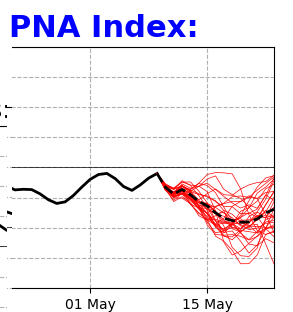
-
May 2024 Discussion - Welcome to Severe Season!!!!
Typhoon Tip replied to weatherwiz's topic in New England
Yup, exactly -
May 2024 Discussion - Welcome to Severe Season!!!!
Typhoon Tip replied to weatherwiz's topic in New England
So yeah ... GFS seems to have come around to the pivot S idea with the weekend synopsis' .... sparing us inundating cold rains and mist... but, the trade off isn't very balmy either. -
May 2024 Discussion - Welcome to Severe Season!!!!
Typhoon Tip replied to weatherwiz's topic in New England
Yeah, I saw you mention the EML around the time I posted that Wednesday looked interesting. I think that was 4 ...might have been 3 days ago. You may recall, I was telling you that there was possible warm intrusion into CT and that the helicity in the area look impressive while there was also a jet acceleration running by exit/entrance style N of the warm front. So the pieces were certainly there. The EML in concert with these synoptic advantages and away we go. -
May 2024 Discussion - Welcome to Severe Season!!!!
Typhoon Tip replied to weatherwiz's topic in New England
We were stuck in the BD air mass all throughout the event...right into the evening, and couldn't be liberated from it until the whole system passed off and gave it no choice but to mix out. When that warned cell came through around 4:30 pm to our S ( Ayer Ma), we had dead still air slate gray sky down pour with massive rain drops but no thunder. Didn't even hear any distant low decible, probably because the dense cool air. That's all we got from anything yesterday. It was all about where the warm front penetrated - along and S of that boundary had a party. -
May 2024 Discussion - Welcome to Severe Season!!!!
Typhoon Tip replied to weatherwiz's topic in New England
No offense to Ryan but some of us mentioned that Wednesday looked interesting 4 days ago ... Folks are getting used to disregarding some posters. boo hoo LOL it's all good. -
May 2024 Discussion - Welcome to Severe Season!!!!
Typhoon Tip replied to weatherwiz's topic in New England
'Cept that "back in the day" ... it didn't typically snow in May. Lol It's become a leitmotif since 2000 where these May excursions into a severely regressed/transient cold atmospheres. Whether they succeed in producing snow in air, the can... This was far less common prior to that 2000, though yes ... not unheard of, either. -
Occasional Thoughts on Climate Change
Typhoon Tip replied to donsutherland1's topic in Climate Change
Possible physical mechanism for the west Pacific warm pool and other consequences found https://phys.org/news/2024-05-north-pacific-due-china-aerosols.html This is important. For example, "break away" ridge nodes, containing climate anomalous warm atmospheric plumes, then meander down stream of these Rosby Wave sources and cause havoc. In a separate study cites the principle cause for the mega heat wave in the Pacific NW in June 2021 to be such a plume that migrated into a position over the Pac NW, stalled and then festered under solar maximum irradiance of that time of year. It also most likely means something for seasonal forecasting; the ENSO correlations have been less stable/coherent to the winter time patterns, for example. It's entirely intuitive that there is some negative interference, slow moving, at very large scaled mass fields ...etc.