psuhoffman
-
Posts
27,459 -
Joined
-
Last visited
Content Type
Profiles
Blogs
Forums
American Weather
Media Demo
Store
Gallery
Everything posted by psuhoffman
-

January Storm Term Threat Discussions (Day 3 - Day 7)
psuhoffman replied to WxUSAF's topic in Mid Atlantic
You missed the reference -
Feb Long Range Discussion (Day 3 and beyond) - MERGED
psuhoffman replied to WinterWxLuvr's topic in Mid Atlantic
But if they do make sure it’s with a color code for every half degree F so a 2c day 13 change looks like this huge crazy bust. -
Feb Long Range Discussion (Day 3 and beyond) - MERGED
psuhoffman replied to WinterWxLuvr's topic in Mid Atlantic
Pera looks like the euro only slightly further north. Enough to get DC into the goods. I’m still fringed. That’s how I roll up here. Gfs is alone in not washing out the lead wave. Expect it to cave -
Feb Long Range Discussion (Day 3 and beyond) - MERGED
psuhoffman replied to WinterWxLuvr's topic in Mid Atlantic
Yes but the only shutout was last year with a raging positive AO/NAO. Even 2018 there was that one wave that cut through the ridge and dropped 2-4” across the area. 2019 with just some very weak ridging up top we came close to a decent run. That on wave did cut across and drop 3-6” across the area. And we just missed one other to the north. I got 5” from that one. And early March a couple more waves hit my area but just missed DC. So let’s project that pattern with a little more NAO help. It would be warm at times when the SE ridge flexes. But it should also have opportunities for waves when it is suppressed. -
Feb Long Range Discussion (Day 3 and beyond) - MERGED
psuhoffman replied to WinterWxLuvr's topic in Mid Atlantic
It’s pretty much what I told Ralph to expect for Feb and totally acceptable Imo. There are 2 key differences between that and the failure of the blocking earlier. The first is simply time. It’s Feb. The waters are cooling. We’re starting with a colder base state. The second is the WPO. I still contend historically we have done better with the trough centered near the Aleutians not AK like that but this new pac base state is what it is. Look where the flow into our source regions in Canada is. Straight off the central pac firehose. This time the ridge west of the trough means the flow is off Siberia and across the Bering and AK. That’s not nearly as hostile to our source regions. The main pac firehose is directed across the south. The key there is the NAO. When it relaxes the SE ridge will flex. When the NAO goes through the periodic fluxes we’ve seen all cold season the ridge will be suppressed and the trough out west will cut under. But that is a mean of 50 members at a range where those details get washed out. Timing differences between when different members go through those fluctuations plus some members that probably lose the NAO completely and thus have a huge ridge in the east wash out attempts to show any trough in the east. But assuming the NAO remains negative it would be there at times and that’s a good look for Feb. if that’s how we roll the rest of winter I’ll take it. Weve snowed in much worse! ...of course recently we’ve not snowed in better so lol -
January Storm Term Threat Discussions (Day 3 - Day 7)
psuhoffman replied to WxUSAF's topic in Mid Atlantic
Excellent -
To be clear ideally I didn’t want either the GM or coach gone. But the relationship was such one had to go and so I would have kept the coach.
-
Feb Long Range Discussion (Day 3 and beyond) - MERGED
psuhoffman replied to WinterWxLuvr's topic in Mid Atlantic
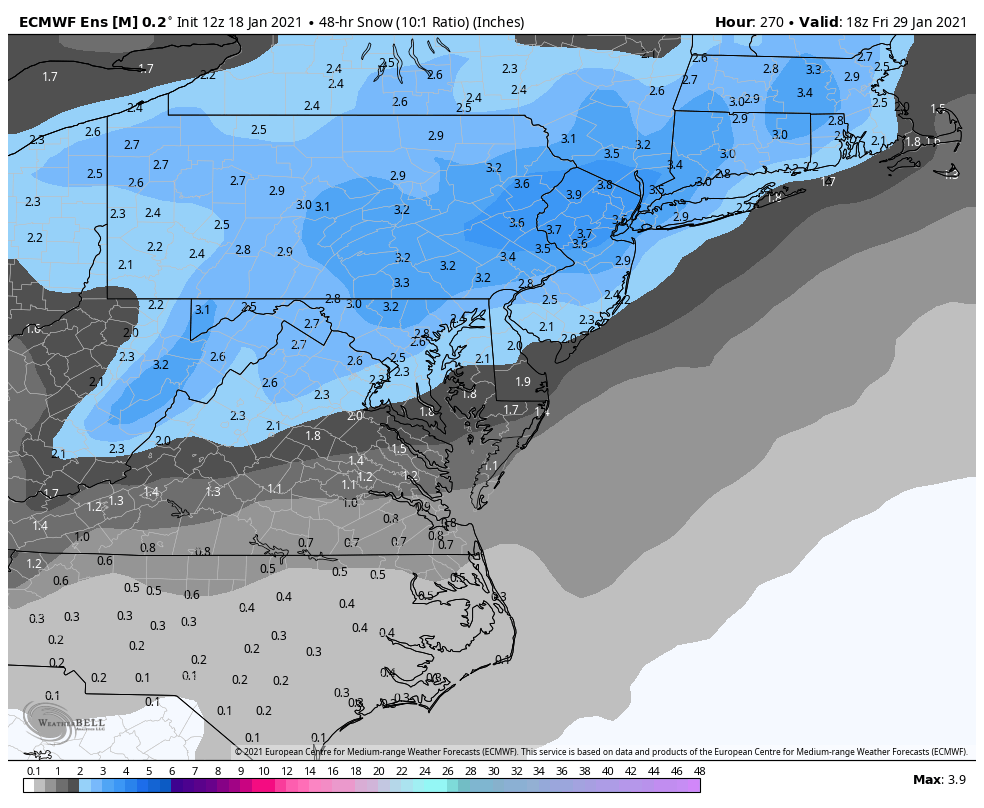
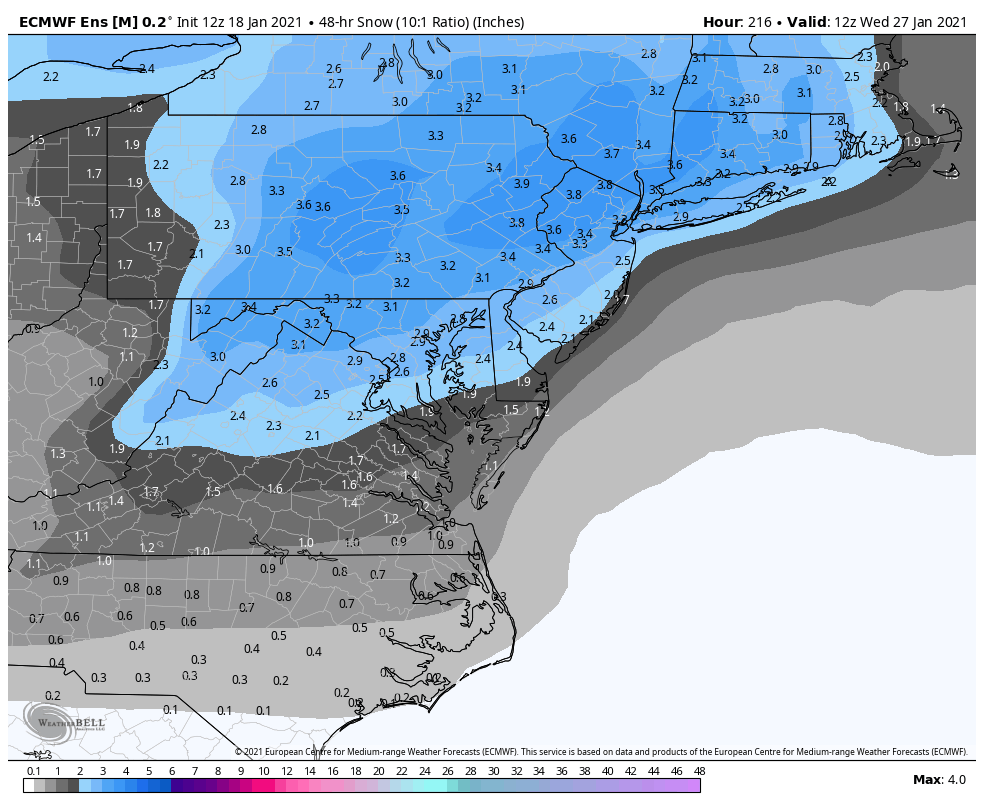
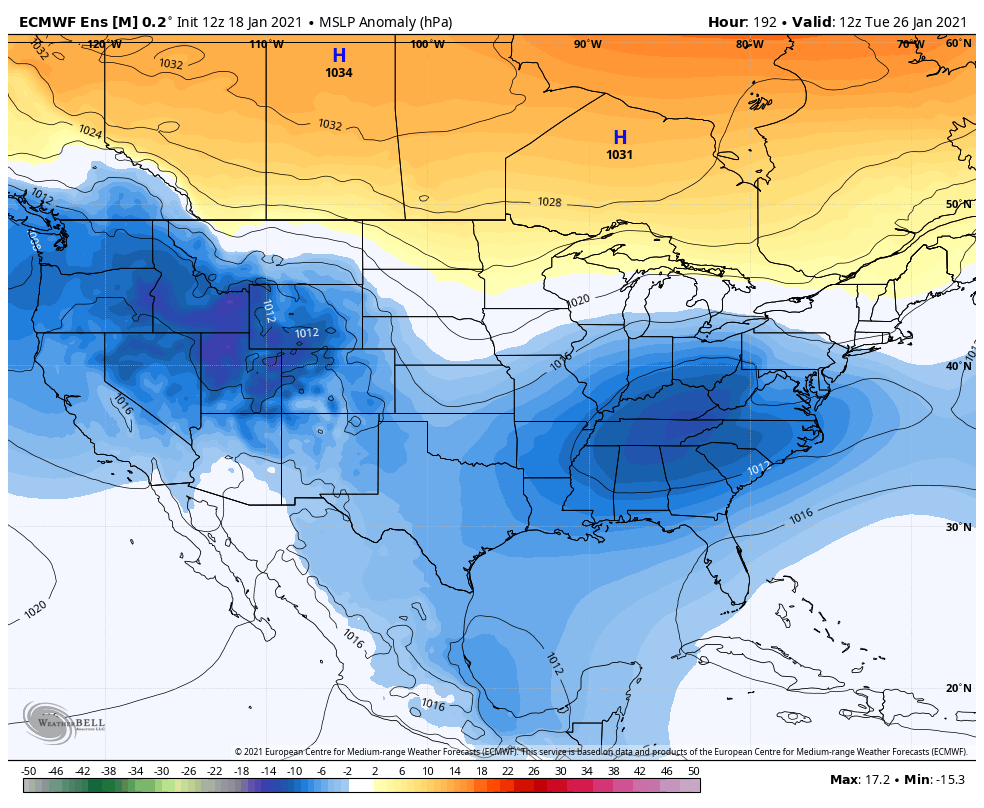
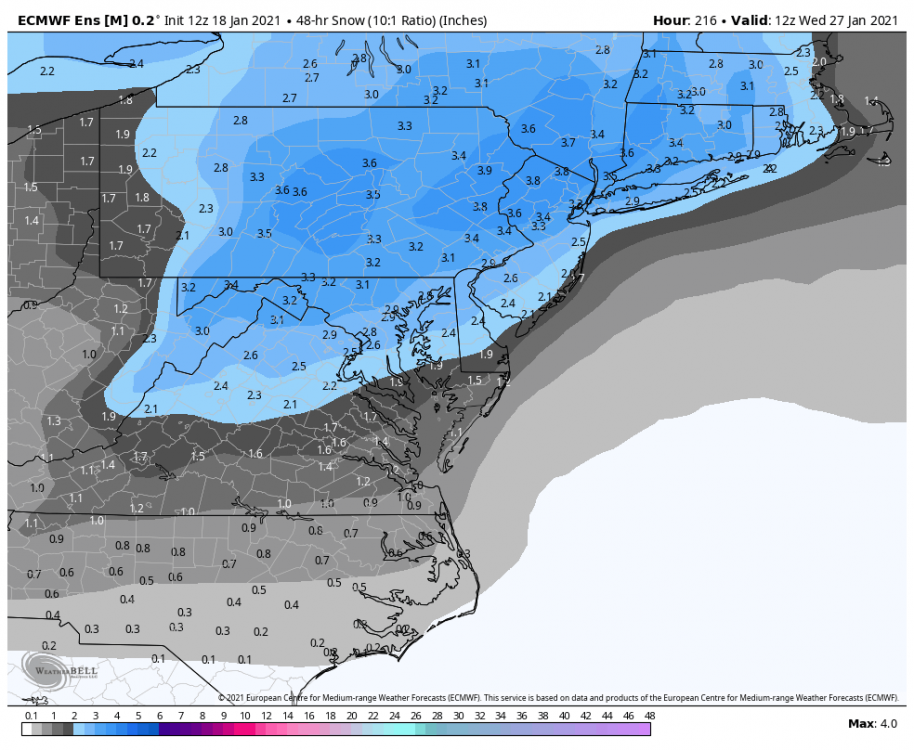
Just FYI eps likes both the 26th and 28th waves. Threat 1 Threat 2: this is still the best shot at a BIG storm Imo that ridge out west is close...slightly east but with that whole NW to SE alignment across North America due to the block something should be able to amplify in less room then typical wavelengths imo. Can see the energy coming east (x) and imo that’s primed for an amplifying system along the east coast at about our latitude. If anything this looks even better then when I first showed this period a few days ago.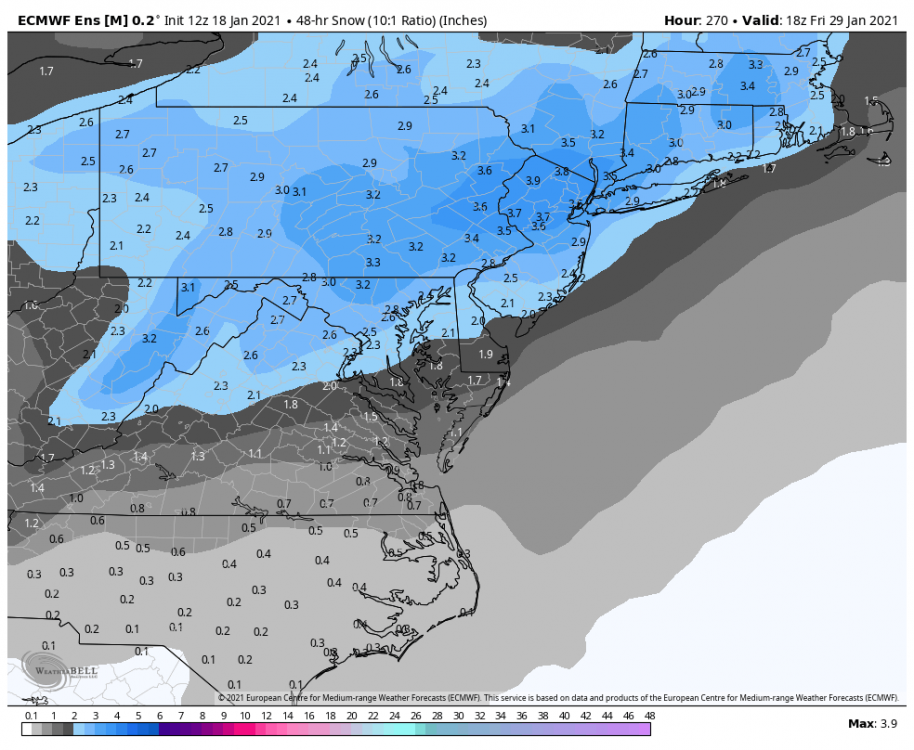
-
Feb Long Range Discussion (Day 3 and beyond) - MERGED
psuhoffman replied to WinterWxLuvr's topic in Mid Atlantic
Just once can it simply go the way we drew it up...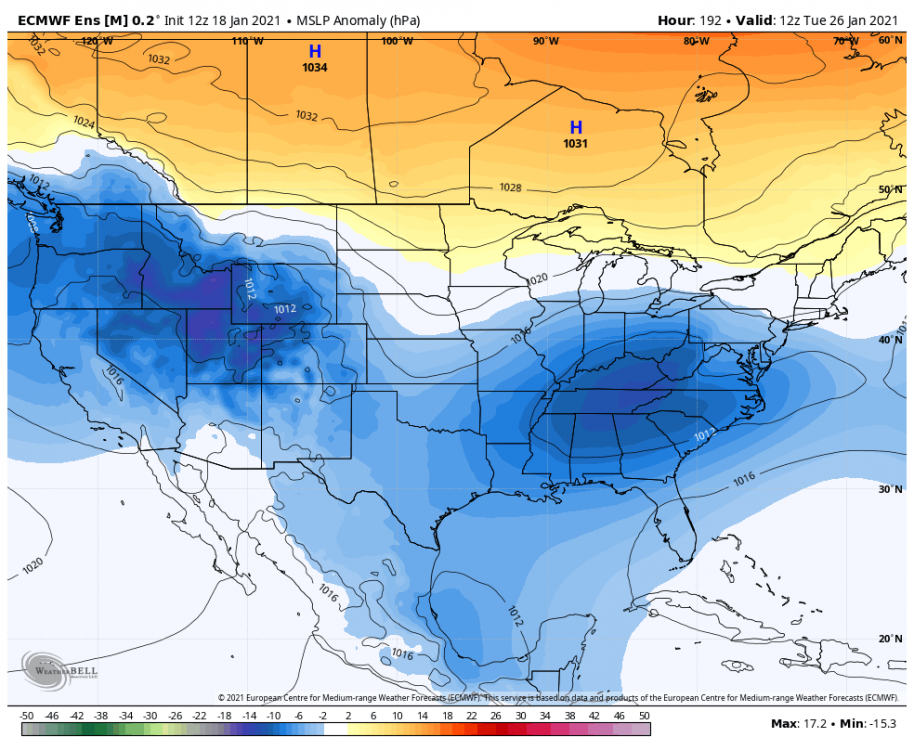
-
Feb Long Range Discussion (Day 3 and beyond) - MERGED
psuhoffman replied to WinterWxLuvr's topic in Mid Atlantic
Yea I’ve noticed somewhere around 150 hours (sometimes a little longer sometimes a little less) the globals have been latching onto the major synoptic setups. Adjustments after that are less wild and more fine tuning details. We need this to hold inside that window. -
Feb Long Range Discussion (Day 3 and beyond) - MERGED
psuhoffman replied to WinterWxLuvr's topic in Mid Atlantic
Yea hence the “not over react”. I felt like people wanted me to say “it’s over we’re screwed” because of a couple bad runs yesterday. -
Feb Long Range Discussion (Day 3 and beyond) - MERGED
psuhoffman replied to WinterWxLuvr's topic in Mid Atlantic
What triggered you lately? -
Feb Long Range Discussion (Day 3 and beyond) - MERGED
psuhoffman replied to WinterWxLuvr's topic in Mid Atlantic
@CAPE gefs is either about to score its biggest coup ever or it’s off on one of its old school not a clue tangents. This is no time for America to start to get its act together. -
Feb Long Range Discussion (Day 3 and beyond) - MERGED
psuhoffman replied to WinterWxLuvr's topic in Mid Atlantic
Euro control was noice -
Feb Long Range Discussion (Day 3 and beyond) - MERGED
psuhoffman replied to WinterWxLuvr's topic in Mid Atlantic
Not snowing has always been the most likely way we fail. We have gotten quite skilled at that. -
Feb Long Range Discussion (Day 3 and beyond) - MERGED
psuhoffman replied to WinterWxLuvr's topic in Mid Atlantic
Snow -
Feb Long Range Discussion (Day 3 and beyond) - MERGED
psuhoffman replied to WinterWxLuvr's topic in Mid Atlantic
Wrt pac crud...if the blocking holds once the MJO moves out of 6 (assuming we don’t get some fooking 3 week standing wave there like last year) that trough in the pac NW should start to press east some under the block. It’s not a cold pattern but in February that’s not a shutout look. We would get a trough along the east coast and some handoff of energy between the two. Of course lately everything’s a shutout pattern so who knows. -
Feb Long Range Discussion (Day 3 and beyond) - MERGED
psuhoffman replied to WinterWxLuvr's topic in Mid Atlantic
Euro control is a DC flush hit -
Feb Long Range Discussion (Day 3 and beyond) - MERGED
psuhoffman replied to WinterWxLuvr's topic in Mid Atlantic
I really do think as the ridge retrogrades and the trough backs into the east coast around the 28-30 somethings going to make it through the shred factory and amplify to the east coast. That still doesn’t mean we get a flush hit. But that’s been the best chance in this whole progression for a while and still looks like it. -
Feb Long Range Discussion (Day 3 and beyond) - MERGED
psuhoffman replied to WinterWxLuvr's topic in Mid Atlantic
On this run...but just from a longwave pattern POV that’s the most likely time period to get a more amped storm to the east coast. I have no idea what the details will be. Probably some convoluted progression that screws us bad. -
Feb Long Range Discussion (Day 3 and beyond) - MERGED
psuhoffman replied to WinterWxLuvr's topic in Mid Atlantic
This..we need that suppression bit that wave was weak sauce at the upper levels. We need a better handoff and more energy to eject across with one of those waves. The 3rd one does that but runs slightly north of where we want. Overall this run was good. That pattern was what I was looking for and would give us multiple chances next week. -
Feb Long Range Discussion (Day 3 and beyond) - MERGED
psuhoffman replied to WinterWxLuvr's topic in Mid Atlantic
The wave on the 28/29 is the one with the best upper support but it’s coming across a bit too far north. -
Feb Long Range Discussion (Day 3 and beyond) - MERGED
psuhoffman replied to WinterWxLuvr's topic in Mid Atlantic
No that run was beautiful. We want that boundary a little south of us at 200 hours. This isn’t a run that has it squashed to southern VA and NC. That would be bad. But we know it won’t be totally accurate at 200 hours. And we know the adjustment is still usually north 60% of the time. So all jokes aside just playing the odds we want it right there at that range. I’m totally fine with it..... But we all know no matter what the 40% screw us option is what will happen every time so why bother...there @Ji took care of it for you. -
Feb Long Range Discussion (Day 3 and beyond) - MERGED
psuhoffman replied to WinterWxLuvr's topic in Mid Atlantic
Yes that’s always been the most likely time period based on pattern progression. As everything retrogrades that’s the point where something is most likely to amplify in the east yet have a boundary far enough south to keep us on the frozen side. Doesn’t mean we don’t get something before or after...the pattern isn’t crap on either side of that but that’s when it all seems right wrt the longwave features to see an amplified wave along the east coast south of us. That’s all I saw. The details have to fill in as we get closer. -
Feb Long Range Discussion (Day 3 and beyond) - MERGED
psuhoffman replied to WinterWxLuvr's topic in Mid Atlantic
Lol I typed that up and then looked as the next panels loaded... details aside the whole euro progression is closer to my “vision” a week ago. Much less ridging and more of a mid latitude handoff between the western and eastern trough under the block v blasting a ridge between the two.