bluewave
-
Posts
37,312 -
Joined
-
Last visited
Content Type
Profiles
Blogs
Forums
American Weather
Media Demo
Store
Gallery
Everything posted by bluewave
-
Usually when the POPS are 20% or less they leave it off the point and clicks. But they will include it in the SFT. Today had only 10s or 20s on the POPS on the SFT. https://forecast.weather.gov/product.php?site=NWS&issuedby=OKX&product=SFT&format=CI&version=4&glossary=0
-
All the models had scattered showers and clouds today. The highs in many areas will probably be in the next hour. Seeing several 80° readings with the clearing in NJ now.
-
The main issue China is having with renewable energy is that the transmission infrastructure hasn’t been able to keep pace. So much of the clean energy has gone unused. This has lead to the continuing reliance on coal. While AI data centers also utilize large amounts of electricity, it would be interesting to see if AI can eventually figure out a way to transition away from fossil fuels. We know that AI hasn’t been getting very good press lately due to the haphazard implementation. It would be ironic if AI could lead to the development of a new exotic clean energy source. Even a more effective way to manage wind and solar would be a welcome AI achievement. https://e360.yale.edu/digest/china-renewable-curtailments China is leading the world on renewable energy, last year installing more wind and solar capacity than every other country put together. But its buildout has unfolded at such a ferocious pace that China is now generating much more electricity than its power grid can handle, meaning that huge amounts of clean power are going unused. When the grid is at capacity, operators must reject electricity from wind and solar plants to prevent overloads and blackouts. In the first six months of this year, China rejected 360 terawatt-hours of clean energy, enough to power Mexico for a year, according to a report from Global Energy Monitor and the Centre for Research on Energy and Clean Air. “Had this electricity been absorbed, the additional power supply could have met all demand growth and allowed coal power generation to fall,” analysts said. The problem, analysts say, is that China lacks the transmission infrastructure necessary to ferry its abundant clean energy from where it is generated to where it is needed. Also stymying the consumption of clean energy is a policy that guarantees the purchase of electricity from newly built coal power plants. Despite a pledge to shift away from coal, China continues to permit and construct new generators. “Coal capacity is still growing because of legacy approvals and policy protections, even as plants run fewer hours and large volumes of clean electricity go unused,” said Qi Qin, an analyst at the Centre for Research on Energy and Clean Air. The new report finds that China rejected 26.1 percent of its wind and solar output in the first half of this year, far more than official figures would suggest. Other countries with large amounts of renewable energy are also dealing with wasted power. In India, clean power capacity just surpassed fossil fuel capacity for the first time, but transmission infrastructure has yet to catch up. On a single day in March, India wasted 34 gigawatt-hours of clean electricity, enough to power about 5 million homes, according to an analysis from the think tank Ember. The core of the problem, analysts said, “is a growing mismatch between the pace of renewable energy development and the readiness of the transmission infrastructure.”
-
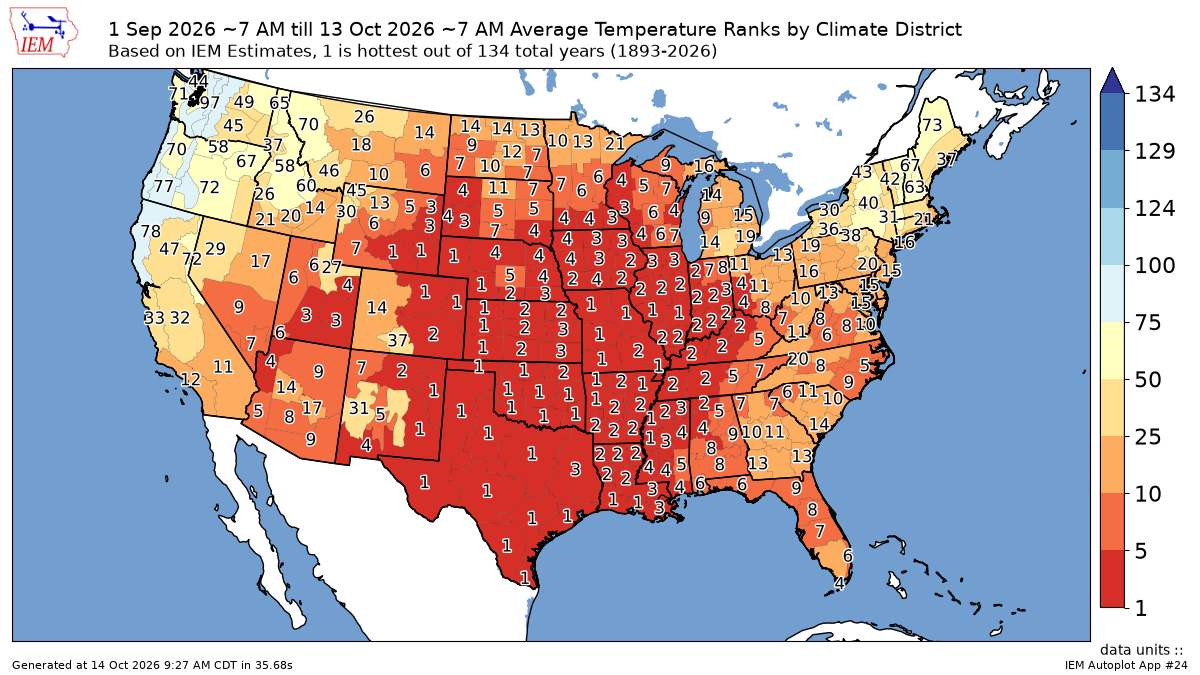
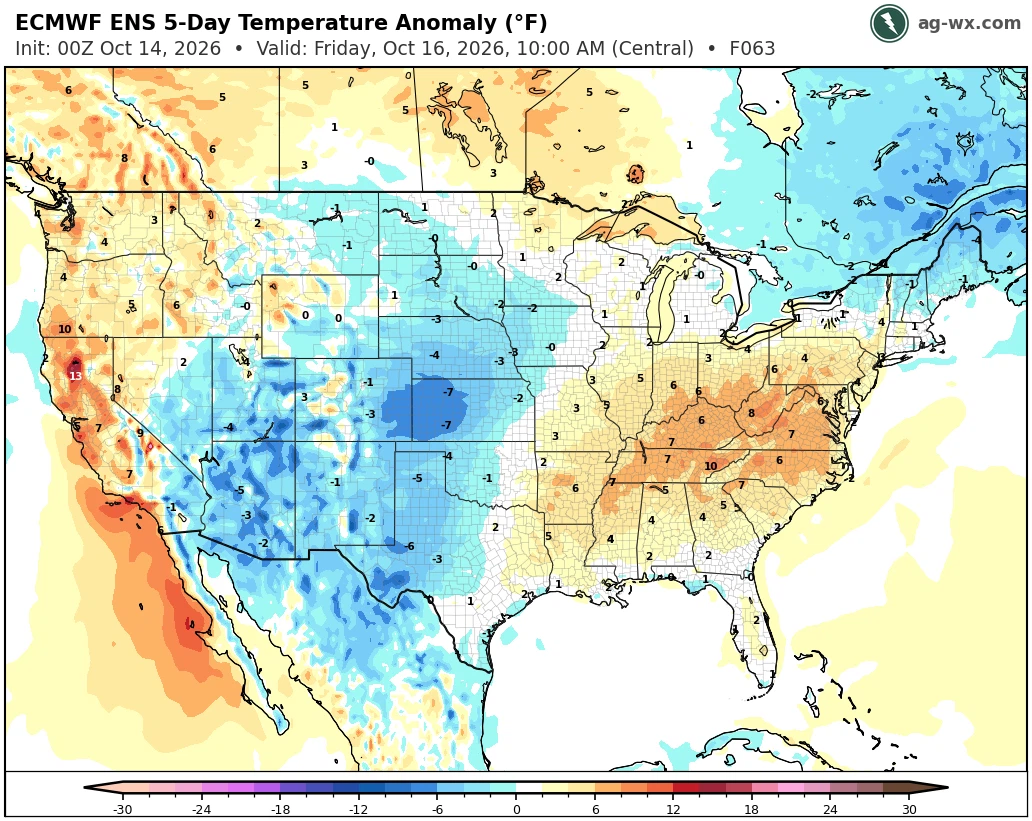
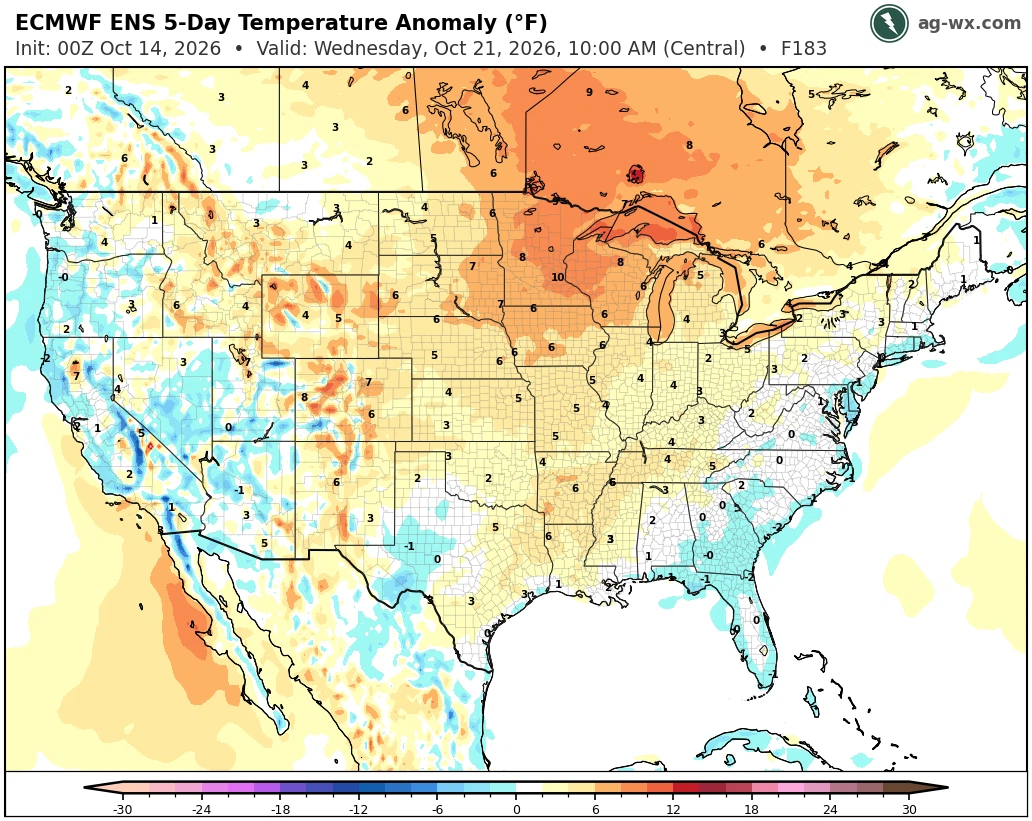
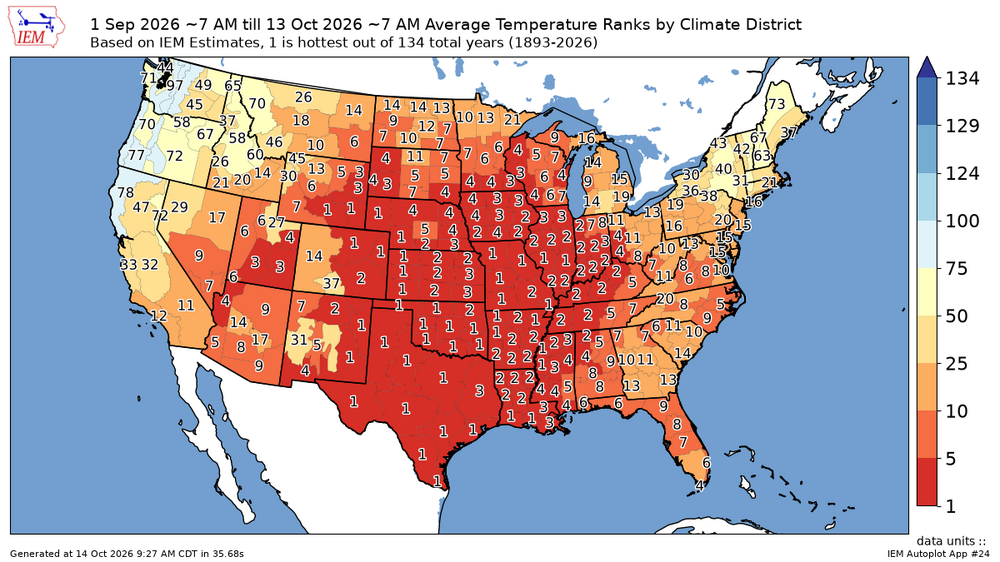
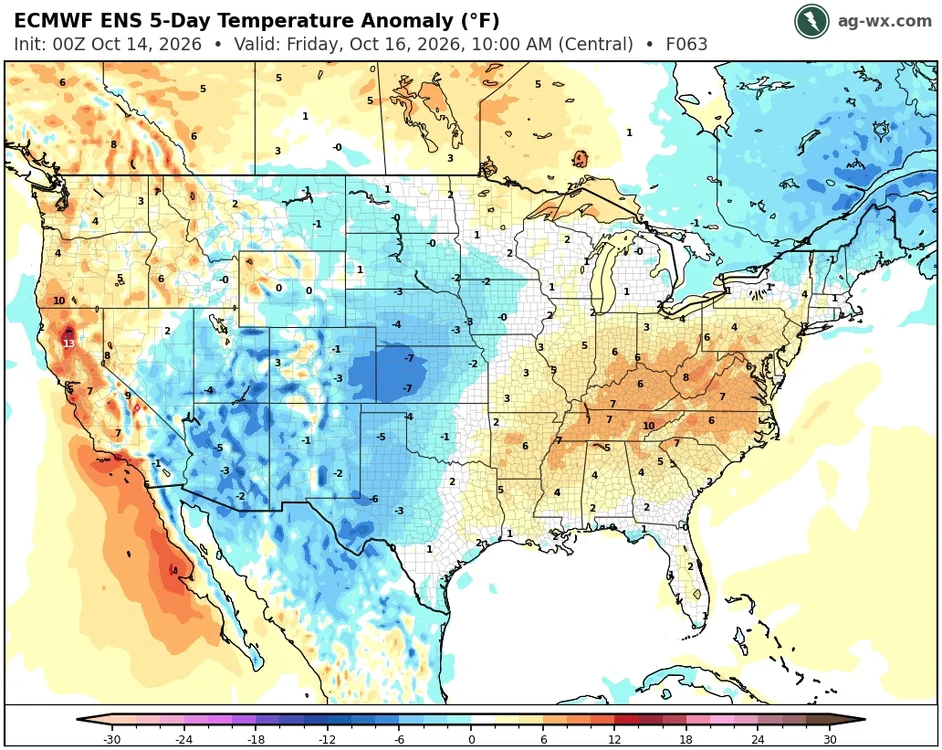
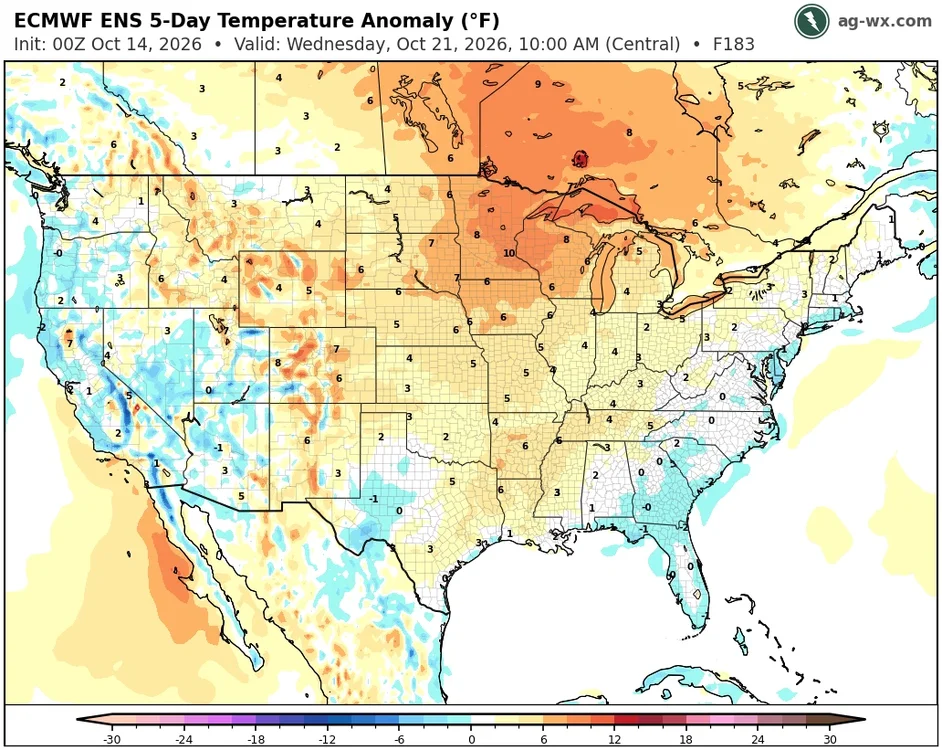
Looks like our area averaged out will finish around the 15th warmest first half of fall. The most impressive warmth has been to our west. This theme looks to continue for the next 10 days.
-
2026-2027 Record-breaking El Nino
bluewave replied to Stormchaserchuck1's topic in Weather Forecasting and Discussion
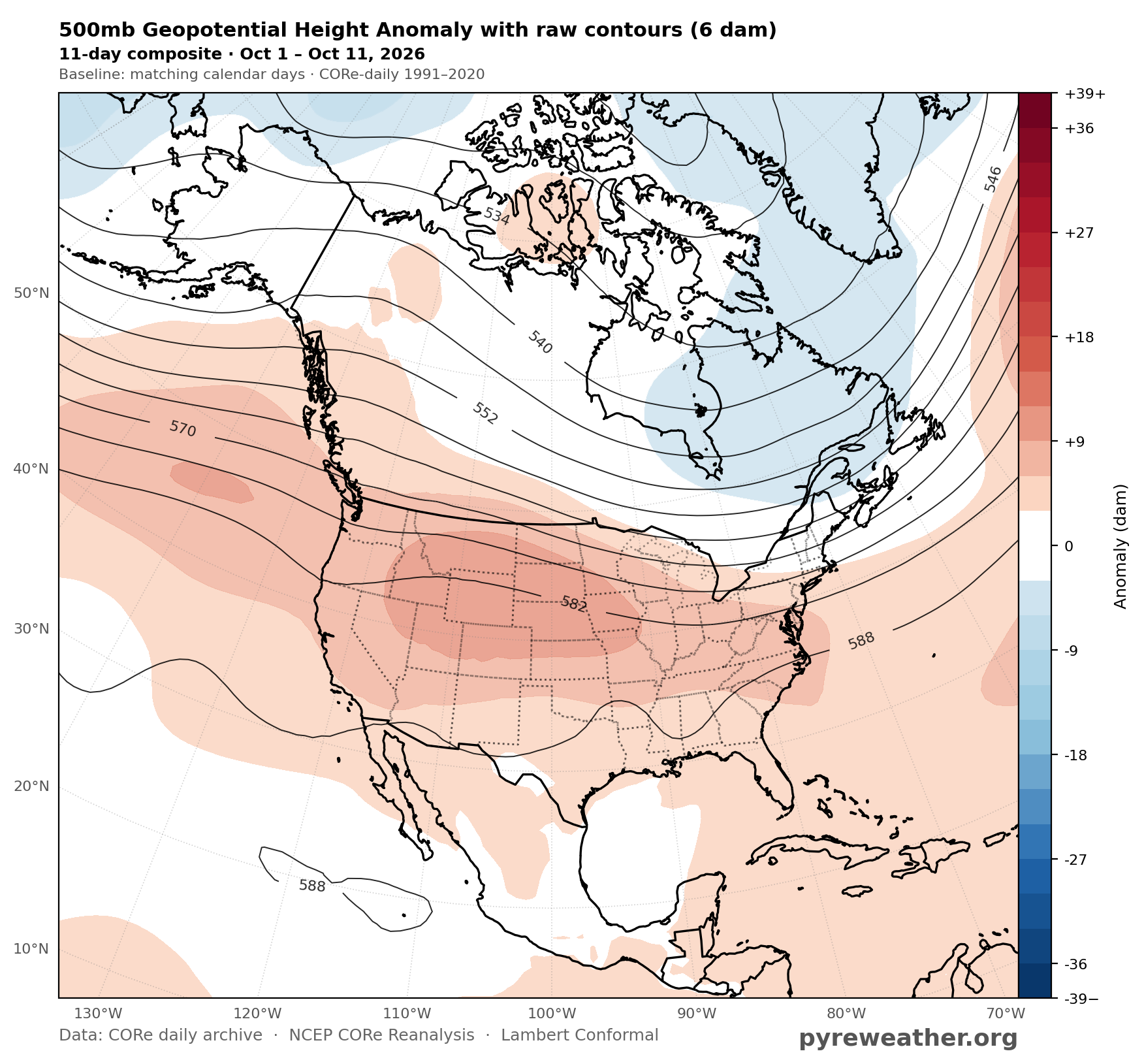
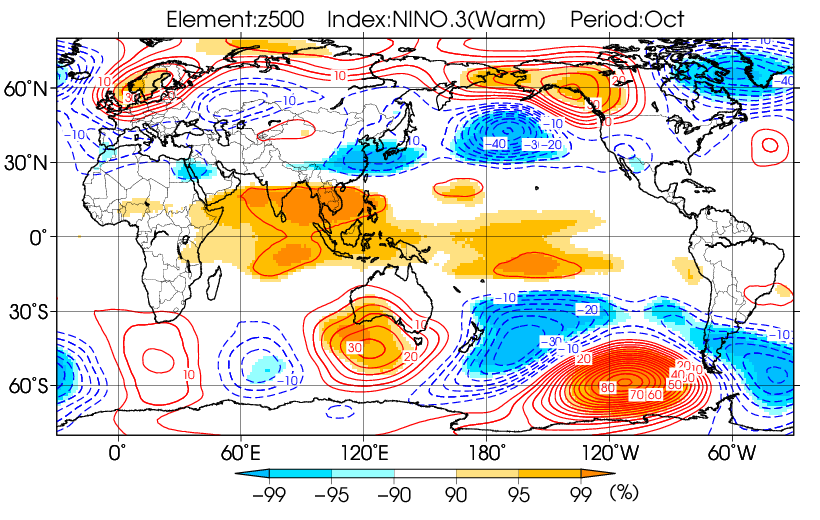
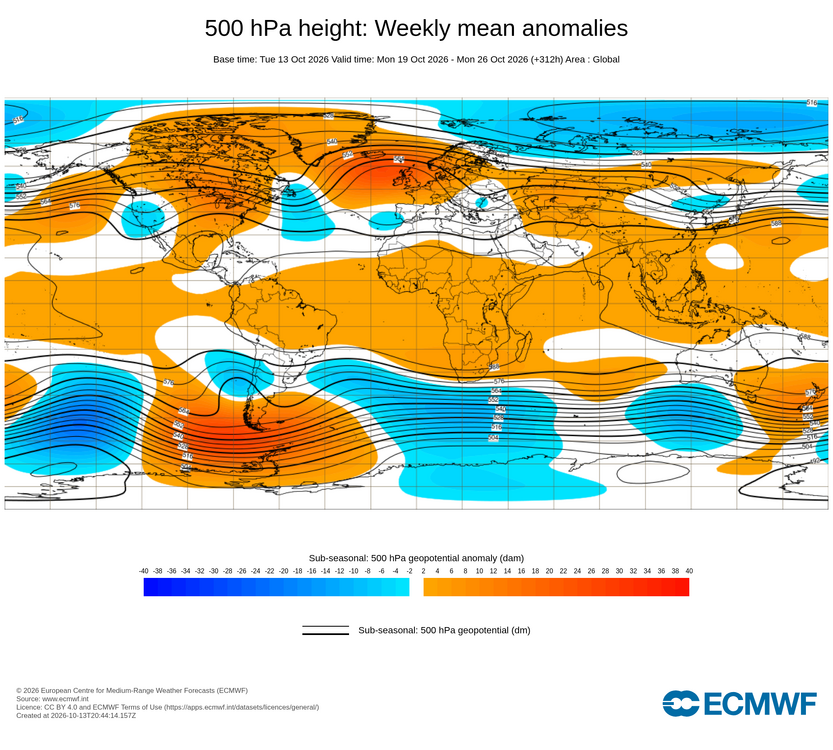
Main October ridge axis continues to remain much further south into the CONUS for an El Niño as we have seen since May. But starting to get some indication that the more typical SW trough will emerge in the means as we move further into mid-October. So the final monthly composite will probably have a split NP low between the Bering Sea and the SW CONUS.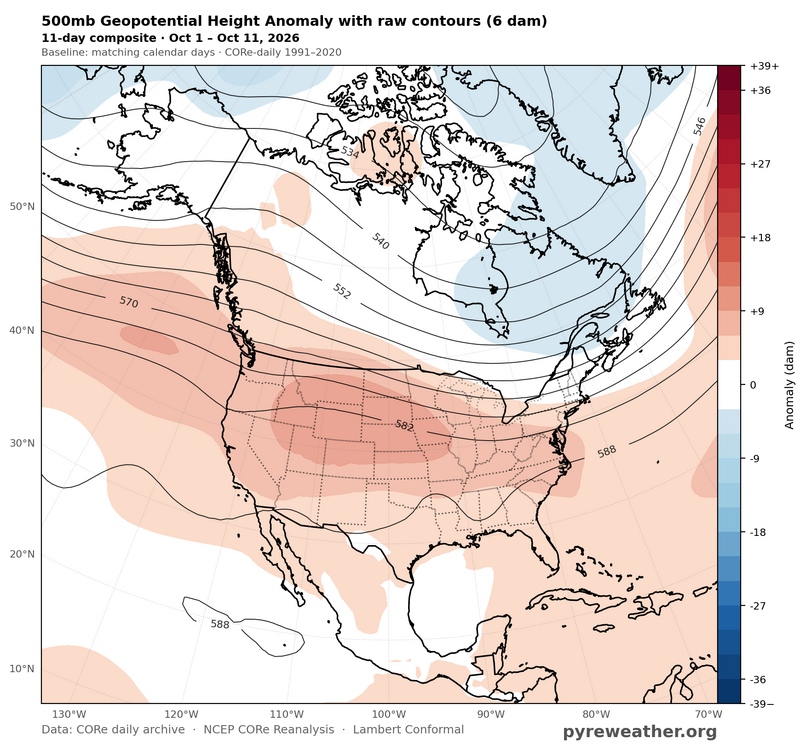
-
2026-2027 Record-breaking El Nino
bluewave replied to Stormchaserchuck1's topic in Weather Forecasting and Discussion
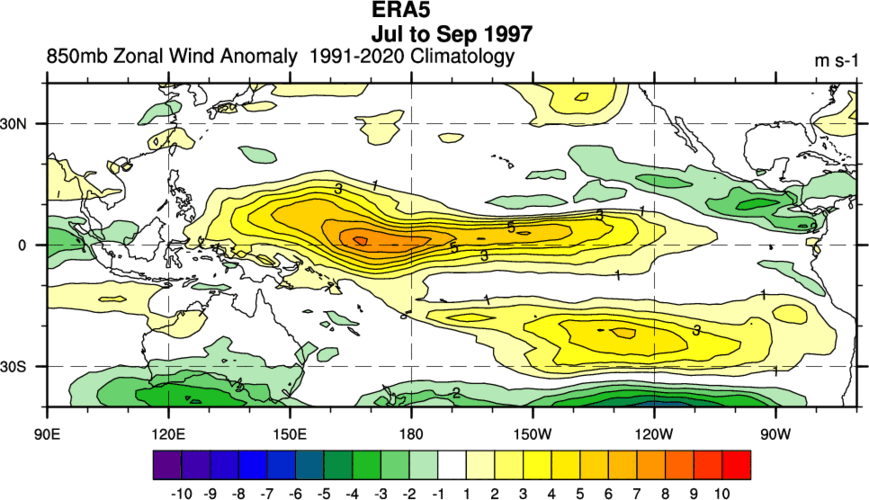
It’s no surprise that the July to September WWBs were also stronger than 1997.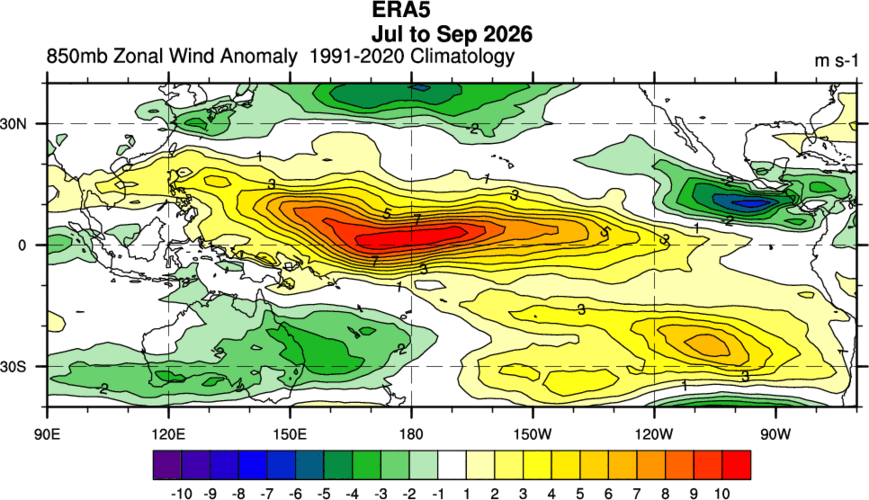
-
Just be grateful that we didn’t get the tree damage they just got around Great Falls. Record warmth start to October followed by an early record snowstorm. Rachael’s moisture streamed up into that area and met air cold enough for heavy wet snow with the trees still leafed out. https://www.youtube.com/watch?v=NBYb7eyjY-k Climatological Data for Great Falls Area, MT (ThreadEx) - October 2026 Click column heading to sort ascending, click again to sort descending. 2026-10-01 62 33 47.5 -3.9 17 0 0.00 0.0 0 2026-10-02 77 41 59.0 8.0 6 0 0.00 0.0 0 2026-10-03 71 38 54.5 3.9 10 0 0.00 0.0 0 2026-10-04 82 36 59.0 8.9 6 0 0.00 0.0 0 2026-10-05 85 52 68.5 18.8 0 4 0.00 0.0 0 2026-10-06 81 46 63.5 14.3 1 0 0.00 0.0 0 2026-10-07 76 44 60.0 11.2 5 0 0.00 0.0 0 2026-10-08 80 43 61.5 13.2 3 0 0.00 0.0 0 2026-10-09 81 54 67.5 19.7 0 3 0.00 0.0 0 2026-10-10 56 31 43.5 -3.9 21 0 1.29 6.4 0 2026-10-11 32 30 31.0 -15.9 34 0 0.83 9.3 8 2026-10-12 34 29 31.5 -15.0 33 0 0.03 M M Maximum 2-Day Total Snowfall for Great Falls Area, MT (ThreadEx) Click column heading to sort ascending, click again to sort descending. 1 15.7 2026-10-10 through 2026-10-11 0 2 12.4 2020-10-17 through 2020-10-18 0
-
2026-2027 Record-breaking El Nino
bluewave replied to Stormchaserchuck1's topic in Weather Forecasting and Discussion
Still has an east based El Nino continuing in Nino 1+2 and 3 with strong WWBs by June. But notice how the CFS is much too cool currently in Nino 1+2. So we’ll probably have to rely more on the Euro which is closer to the current Nino 1+2. -
Impressive how most of the weekends this year have had at least some measurable precipitation. Next significant storm appears to be set for Friday. But the way things have been going, we could have some lingering rain into early Saturday.
-
Even when we had our colder months from November to February, they were getting record +10 months in the West. So the geographic footprint of the cold was very small in the East. The shrinking size of the winter cold pools since the 2015-2016 super El Niño is part of the reason that 2025-2026 was our first colder longer term temperature winter since 2014-2015. Prior to the 2015-2016 winter, we would usually get a cold winter every few years. This was the first 11 year hiatus between cold winters. The chart below is for the entire Northeast which has been in the same boat as our local area.
-
2026-2027 Record-breaking El Nino
bluewave replied to Stormchaserchuck1's topic in Weather Forecasting and Discussion
We don’t know the specific details that far out. But the latest Euro continues the record WWBs at least into next March. This is why the model is trying to develop a 2nd Nino 1+2 warming peak near the end of the run like the CFS. -
The first week of October finished near the warmest on record for the CONUS. The average for the CONUS from October 1-7 on Prism was 64.54° or +5.2°. So we’ll have to wait a while longer to get the final number. October 2026 through the 7th….64.54° +5.2° Top 7 Warmest October for CONUS 1963…59.34° 2024…58.93° 1947….58.50° 2016….57.45° 1950…..57.45° 2015…..57.24° 2021…..56.95°
-
2026-2027 Record-breaking El Nino
bluewave replied to Stormchaserchuck1's topic in Weather Forecasting and Discussion
Even though the CFS is currently too cool in Nino 1+2, the updated seasonal model update still has an east based El Niño lingering into next June with strong WWBs continuing. -
2026-2027 Record-breaking El Nino
bluewave replied to Stormchaserchuck1's topic in Weather Forecasting and Discussion
October is continuing the seasonal model error for at least one month out. The seasonal models from early September had the typical -EPO October El Nino ridge near Alaska and NW Canada.This has been the seasonal model forecast error since May. The month to date has the 500mb ridge shifted further south over the CONUS with lower heights near Alaska. The next week will add to this pattern lowering heights more near Alaska and maintaining the CONUS ridge. This will be the furthest south ridge position for an El Nino October even when just using the 1972,1982,1997,2015, and 2023 super composite. Month to date Forecast through October 19th October forecast issued in early September October El Niño composite -
Impressive PWATs near 2.00” with post-tropical Isaias and a decent pocket of MUCAPE. So probably a 1” to locally 3” event where the best banding sets up from Sunday into Monday. Pattern warms up for a few days following the storm with the big ridge expansion. Wednesday looks like the peak of this warm up. If the front is slower allowing enough sun, then the usual warm spots in NJ could see low 80s. Interior sections could see first freeze next weekend. So an active pattern for mid-October.
-
2026-2027 Record-breaking El Nino
bluewave replied to Stormchaserchuck1's topic in Weather Forecasting and Discussion
It feels like we have started to see non-linear shifts following these major heat releases to the atmosphere from the accumulated excess heat stored in the oceans. If you think about it we had a very similar climate from the late 1800s through about 1982. Sure there was some warming from 1885 to 1982, but nothing all that dramatic. Since the coldest winters of that era occurred in the late 1970s. Then the 1982-1983 super El Niño gave a slight bump to temperatures which remained about steady until 1997-1998. Following the 1997-1998 heat release, the greatest warming occurred in the Arctic several years later from 2005 to 2012. So the state of the Arctic sea ice shifted to much younger around 2007 and continues to this day in the same range. Then the next major heat release in 2015-2016 dramatically warmed our winters to the point that places like NYC only saw their next long term colder winter after 2014-2015 a full 11 years later in 2025-2026. The major climatic shift following 2015-2016 was the rapid warming and ridge expansion east of Japan beginning around 2018-2019 which has lead to this persistent record -PDO run. The heat release in 2023-2024 lead to the warmest CONUS winter to that point. 2025-2026 finished close to the warmest also but our little corner of the world finally got a cold winter after 11 years. But the geographic footprint relative to the rest of the CONUS was very small. It didn’t take away from the fact that it was an enjoyable winter for many here. Nino 1+2 never fully cooled off following 2023-2024 and gave us the Nino-like December 2024 with the record +PNA for a La Niña. Now this is the first time 2 El Niños this strong have occurred only 3 years apart. It feels like the big shift following 2023-2024 was a warming of the EPAC which had been the one region of the planet that had resisted the warming through 2022-2023. Many papers were written about the famous EPAC cold tongue. Now this current warming there has exceeded anything that has occurred in the past. This event into 2027 is going to be the greatest heat release to a higher baseline than all the previous events. So we don’t fully understand the shifts that will occur following this jump to a much warmer climate as we head into the late 2020s and then early 2030s. This EPAC warming since 2023-2024 in the chart below has been unprecedented. -
2026-2027 Record-breaking El Nino
bluewave replied to Stormchaserchuck1's topic in Weather Forecasting and Discussion
Even the ONI wasn’t able to fully capture the full magnitude of the warming with the 2023-2024 event. Key Mechanisms and Findings Dual Warming Centers: Unlike typical El Niño events that center primarily in the eastern Pacific, the 2023–2024 event featured asynchronous double spatial peaks, combining a central Pacific peak (driven by zonal advective and thermocline feedbacks) with eastern Pacific warming. [1, 2] Synergistic Amplification: The dual Pacific warming centers worked together with an eastward-extended North Atlantic jet stream to amplify sea surface temperatures across multiple tropical basins.[1] Record Temperature Impact: Sea surface temperature anomalies accounted for roughly 92% of the interannual global warming spike, pushing the July 2023–June 2024 average global mean surface temperature to a record 1.58 °C above pre-industrial levels. [1] -
2026-2027 Record-breaking El Nino
bluewave replied to Stormchaserchuck1's topic in Weather Forecasting and Discussion
A big question going forward is what does the future relationship look like in regard to the equatorial trade winds vs WWBs following such an enormous warm pool push from the WPAC to EPAC? -
2026-2027 Record-breaking El Nino
bluewave replied to Stormchaserchuck1's topic in Weather Forecasting and Discussion
The Euro going into late winter and spring still has ENSO values warmer than any event had during the Nov-Dec peaks in the past. -
Yeah, these “I” storms usually occur when the hurricane season is at its peak so it’s the most-retired letter.
-
2026-2027 Record-breaking El Nino
bluewave replied to Stormchaserchuck1's topic in Weather Forecasting and Discussion
Probably a secondary underlying factor overlapping with both ONI and RONI. Since we have had much stronger GOA lows in the past with similar RONI values. 1986-1987 had a much more expansive GOA-NP low than 2023-2024 with both RONI values near +1.5. Also note the much weaker GOA low in 2015-2016 than 1997-1998 despite identical RONI values of +2.3. My guess is this is a similar phenomenon we have been observing with all ENSO states. The 500mb ridges have become much stronger and expansive relative to the low pressure troughs. These stronger ridges have been driving the persistent -PDO and +AMO. So the warmer SSTs in the mid-latitudes are probably helping to cause a feedback loop. This area is outside the RONI band in the tropics. -
2026-2027 Record-breaking El Nino
bluewave replied to Stormchaserchuck1's topic in Weather Forecasting and Discussion
RONI is not meant to be used for the absolute intensity of this event. It’s more about gradients and storm tracks. With something this historic, it’s the absolute temperatures and water vapor increase that matter which is better reflected by ONI. -
Luckily, my power was only out for 24 hrs. Took down a bunch of trees. But borderline TS to Cat 1 systems don’t get retired unless they cause historic flooding like Agnes in 1972.
-
First frost of the season here on the cartops with a low of 36°. https://www.weather.gov/wrh/timeseries?site=khvn
-
The names only get retired if they cause significant enough effects. While the first Isaias gave me my strongest wind gusts to 78 mph back in SW Suffolk, it didn’t produce wide enough damage as a weaker hurricane and then tropical storm to have the name retired. Many big majors get retired along with weaker systems which produce historic rainfall.