
weatherwiz
-
Posts
81,833 -
Joined
-
Last visited
Content Type
Profiles
Blogs
Forums
American Weather
Media Demo
Store
Gallery
Everything posted by weatherwiz
-

December 2021 Obs/Disco...Dreaming of a White-Weenie Xmas
weatherwiz replied to 40/70 Benchmark's topic in New England
A different type of naked. The GFS tends to overmix (while the NAM tends to undermix)...why this is IDK but it's kinda annoying actually but how often do you see wind potential like this in a synoptic event? That part of the country does synoptic wind events much better than we do but this is still quite impressive for them. Winter dynamics aloft with a spring environment at the sfc -
December 2021 Obs/Disco...Dreaming of a White-Weenie Xmas
weatherwiz replied to 40/70 Benchmark's topic in New England
man that is going to be one crazy wind event in the Plains Wednesday. GFS may be overmixing a bit but some of the soundings are insane. -
maybe you stole their snow
-
I got it too...I felt special but I did report it.
-
Forecasting within the West can be so challenging. How do people do it lol.
-
December 2021 Obs/Disco...Dreaming of a White-Weenie Xmas
weatherwiz replied to 40/70 Benchmark's topic in New England
This broad meso has been going for a while. I bet there’s some wind damage occurring under it even a bit of a bow -
December 2021 Obs/Disco...Dreaming of a White-Weenie Xmas
weatherwiz replied to 40/70 Benchmark's topic in New England
That’s a scary thought -
December 2021 Obs/Disco...Dreaming of a White-Weenie Xmas
weatherwiz replied to 40/70 Benchmark's topic in New England
Now it’s damage time impressive stuff with that stuff as it went across NY -
December 2021 Obs/Disco...Dreaming of a White-Weenie Xmas
weatherwiz replied to 40/70 Benchmark's topic in New England
Nice -
I was selling hot dogs
-
December 2021 Obs/Disco...Dreaming of a White-Weenie Xmas
weatherwiz replied to 40/70 Benchmark's topic in New England
Thunder in Springfield!!! -
I can't get over 500 m2/s2 of effective helicity juxtaposed with >1500 J/KG of MLCAPE and >100 J of 3km CAPE...it just seems unreal
-
Yes. The event and it's potential were very well forecast!
-
I think it's just a question of whether it was on the ground from it's initial warning point of near Jonesboro...may have to fully wait for survey but if it was then it will likely be official. Still can't believe this...so tragic
-
no signs of slowing down
-
-
Probably would be a miracle. NROT values exceeding 2
-
Remarkable...really hope everyone is alright
-
Really terrible and it's not going tp improve any over the next several hours.
-
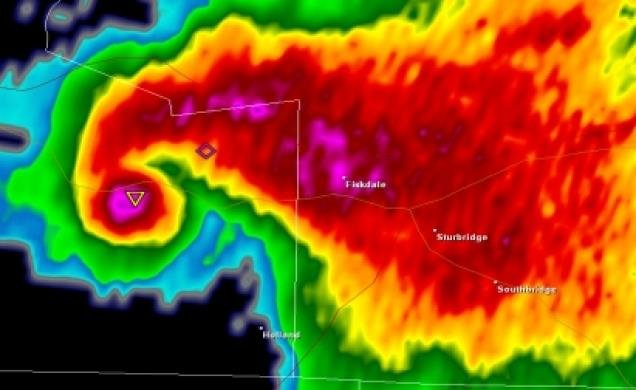
That is a large TDS over Mayfied....holy crap
-
My God...500 m2/s2 effective helicity across western TN to go along w/greater than 100 J 0-3km CAPE and 2000 J/MLCape. That stuff is going to explode in western TN
-
this is only getting started too
-
Tornado emergency on that now
-
23z RAP at MEM for 3z just ahead of that line of supercells before it approaches
-
St. Louis may be in some trouble. I've been watching that cell down near Jonesboro. That is some inflow notch on it. Confirmed TOR with it...haven't noticed any TDS yet but this thing may becoming long tracked