
NorthShoreWx
-
Posts
5,532 -
Joined
-
Last visited
Content Type
Profiles
Blogs
Forums
American Weather
Media Demo
Store
Gallery
Everything posted by NorthShoreWx
-
30⁰ here atm
-
Are you saying that it's going to snow in September?
-
Don't look down.
-
Shit! Roger was a gem. Gave me a sad smile to read that one of his wx board handles (IE) was MT Cranium. Fair winds and following seas Roger, and maybe a hurricane when the mood suits you.
-
34⁰ light to moderate snow. A dusting in sheltered areas.
-
Rain/Thunder and Anafrontal Snow
NorthShoreWx replied to WeatherGeek2025's topic in New York City Metro
Ditto -
Won't work...I still need the shift to winter around Thanksgiving.
-
This weather is perfect. No need for it to be any warmer ever. Can we just keep this until Thanksgiving? Still some decent patches of snow around this morning, but doubt they will be there tomorrow. 72° now.
-
71⁰ here at 1pm. Just took a walk around the neighborhood. A little surreal with a deep blue sky and a warm breeze and still lots of snow around, despite there being none left at the stake.
-
Down to just patches of snow cover here this morning. I spent the weekend in the Catskills. Snow is patchy at the trailheads (almost gone in spots), but at least a couple of feet remains starting around 2500 feet and more higher. In most places the snowpack is thoroughly rotted. It has no structure and if you go off the packed tracks you sink to the bottom with very little resistance. Some of the trails were washed out rivers on Sunday. The snowpack there is going to release a lot of water between now and Wednesday.
-
Incomplete.
-
That's impressive for Key Largo in March.
-
40 / 34 here. Harbinger of things to come. 38 now.
-
While I am dwelling on the topic, February 2013 comes to mind. There was 27.0" here and 27.8" at ISP. Close enough except that we had accumulated almost 10" here while it was raining at ISP. If we didn't record more snow than ISP in that storm, we never will in a major snowfall. It's not a problem, just differences in the motivation and protocol for snow measurement. Using the Central Park playbook would be a problem.
-
ISP has been holding on to their snow pack better than usual. They are still reporting 5" as of this morning. I have 7", but half of that is the pack thats been on the ground since January. ISP was reporting 0" snow depth prior to the late February blizzard.
-
Probably less than one not knowing the local history might think. In this latest major snowfall there was an obvious difference in the radar evidence. ISP snowed for many hours while the north shore was dry slotted. In previous major snow storms where there was no such obvious differences in radar presentation, we still fall short of ISP in storm totals (usually significantly so), but the history is that a day or so later, we have equal or greater snow depth.
-
Don't forget that ISP adds up 6-hour-snowfalls. That matters the most in prolonged major events and sometimes not at all in smaller events.
-
Surely there must be an exception for 32.5° and rain.
-
No change at the stake since this morning. Some sun and temps in the 40s tomorrow will impact the softened pack.
-
Light NE breeze off the sound....32/33 is basically the water temperature...and the snowpack temp. 32 with light rain. At least by April it will be 42 and rain
-
How much has it accumulated? We're switched over for the duration down here, but can still live vicariously. Looks like mix line is up near 84 east of the river on dual pol.
-
Most likely yes, and definitely by June, but it's still winter out there today.
-
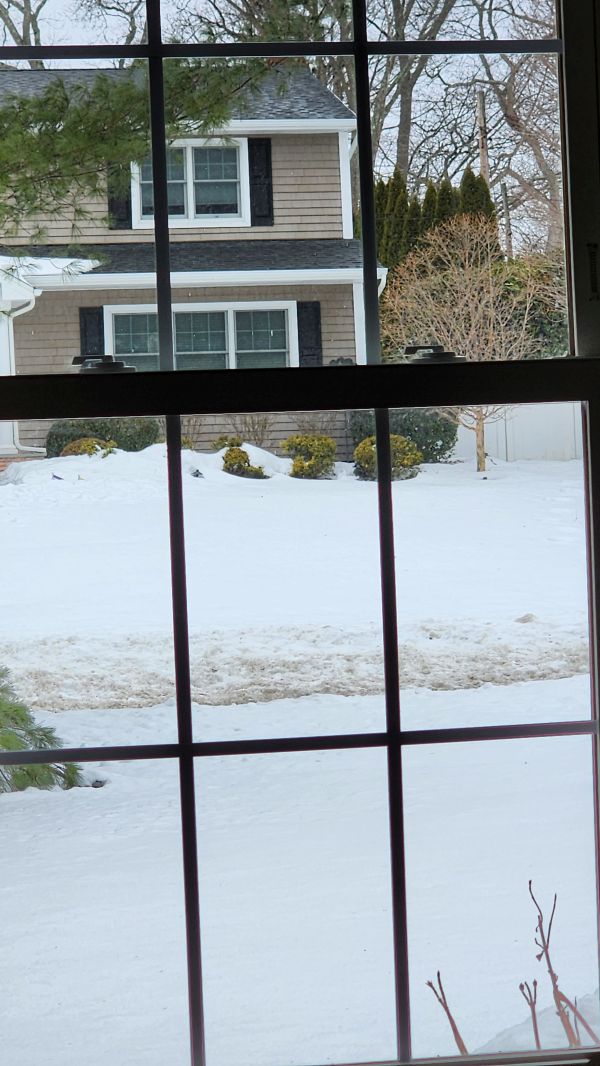
36/31 here with nothing more than a few sprinkles over the past hour. 9" of snow at the stake. It's hard to put all of the declarations that winter is gone in context with the view out the window a couple of hours ago with light snow and sleet falling:
-
Maybe a little east of there...395? There was evidence of the usual banding, but not of any shadowing in the Hudson and CT River valleys.:
-
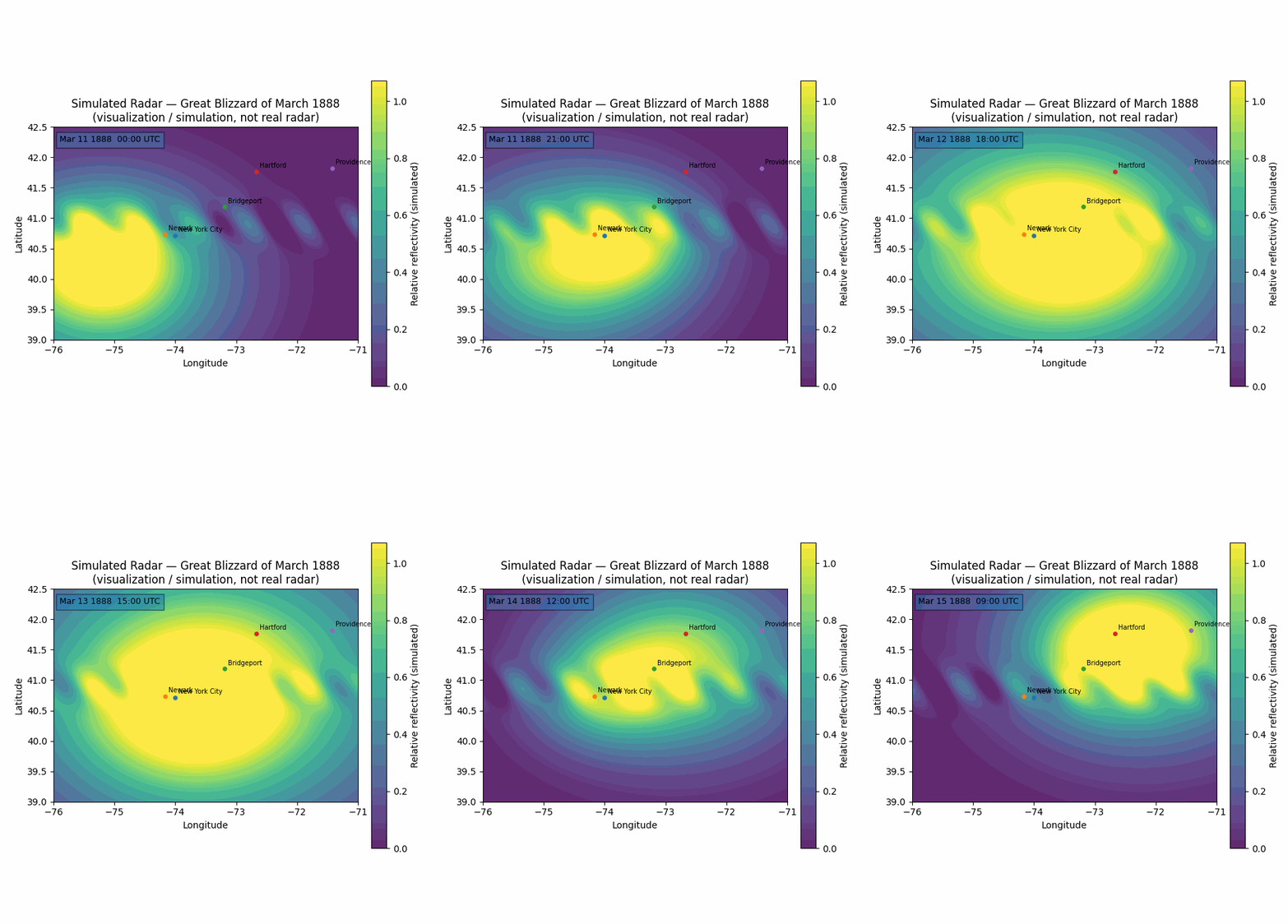
This needs work, but I gave it a half-hearted try: Simulated Radar Loop: March 11–14, 1888 March 11 (Evening): A low-pressure system moves up the Atlantic coast, initially appearing as a broad area of light-to-moderate rain across the Mid-Atlantic. March 12 (Midnight): As the storm reaches the New Jersey coast, it undergoes explosive cyclogenesis. On radar, you would see a sharp "rain-to-snow" line as cold Canadian air rushes in, turning precipitation into heavy, blinding snow over NYC. March 12 (Midday): The storm's "eye" or center (reaching a peak intensity of 978 hPa) sits just offshore. A massive, stationary band of intense snowfall (reflectivity values of 40+ dBZ) stalls over New York and western New England. March 13: Instead of moving out to sea, the cyclone loops counterclockwise near the southern New England coast. On a loop, the heavy snow bands would appear to rotate and pinwheel over the same regions for over 24 hours, dumping up to 22 inches in NYC and nearly 60 inches in parts of New Jersey and upstate New York. March 14: The system finally weakens and drifts east into the Atlantic, with the simulated radar showing the heavy bands breaking into scattered snow showers.