NorthShoreWx
-
Posts
5,532 -
Joined
-
Last visited
Content Type
Profiles
Blogs
Forums
American Weather
Media Demo
Store
Gallery
Everything posted by NorthShoreWx
-
Well that was quite the interruption. Had to take down tents and bring the bar in in a hurry.
-
I remember baking in the 90s Austin in March. At least the evenings were a little better at that time of year. Min this morning was 76. 97 now. I mowed the lawn in the backyard this morning while it was still in the shade, but the temp was already up to 90.
-
Good thing the water temperatures saved us today.
-
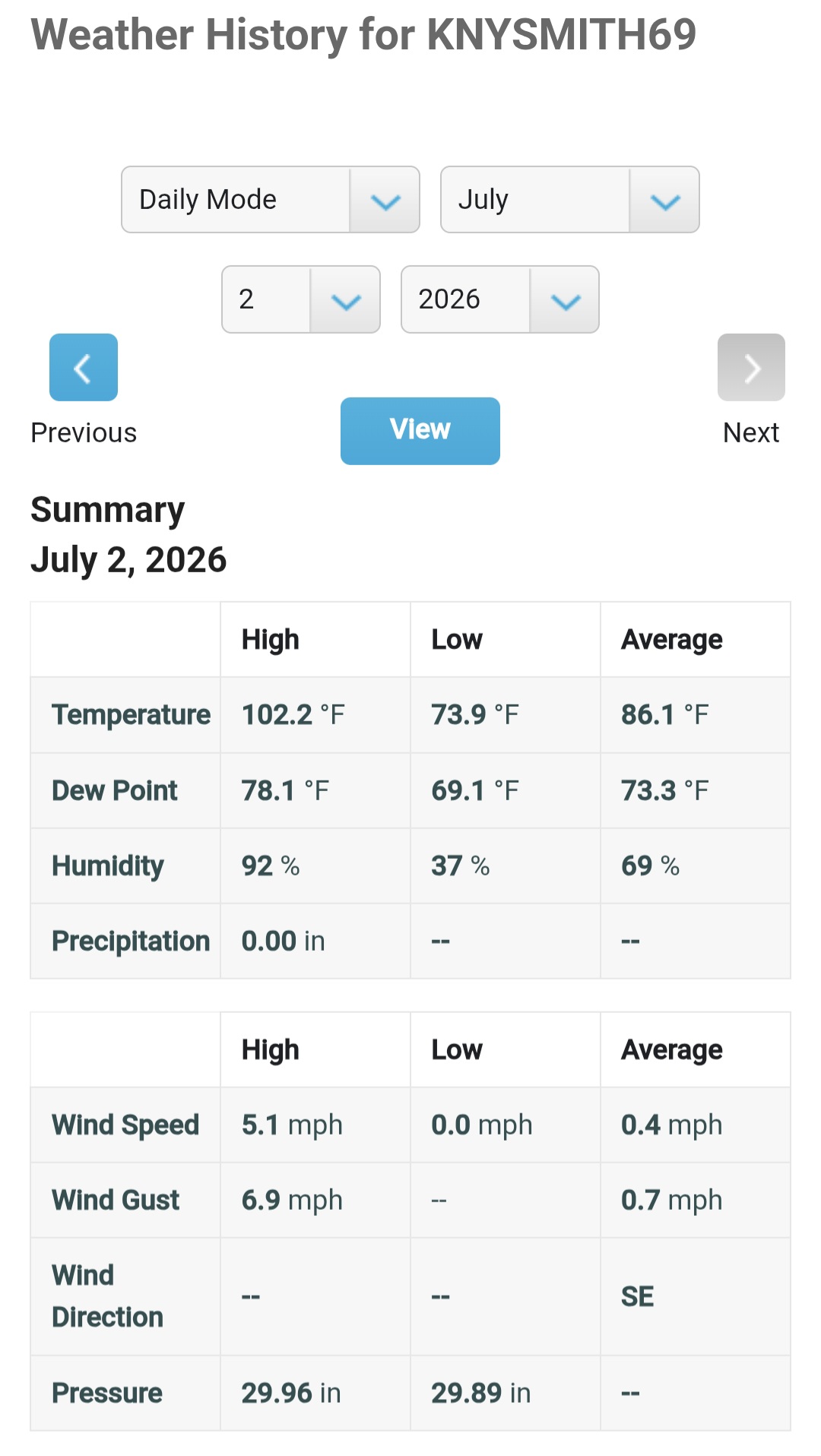
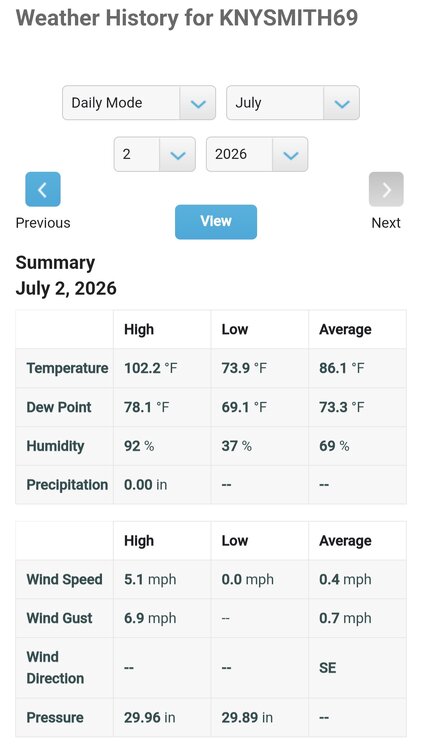
1:36 pm. Just hit 100.0 here.
-
Heatwave here: June 30 64 90 July 1 68 91 0.53" This morning's low was 74. Up to 85 shortly before 9am. Point and click warmer again with Friday at 101⁰
-
Max here yesterday was 90.1 at 1:09 pm. 68⁰ now with a noisy thunderstorm in progress. 0.40" in the guage so far. Nice!
-
My system is poorly placed for wind, but tonight's gust to 20.6 mph is tied for the 2nd highest gust it has recorded since I installed it 18 months ago. Highest was 21.2 mph. Its still useful. If I'm not home and I see it 10 mph or more, I know its windy.
-
Also this insane cloud of pollen out of one of our pines.
-
No rain yet, but we have large limbs down with the gust front a few moments ago. Heard them cracking and saw one fall across the street.
-
I'm the guest bartender at the St James Brewery this afternoon/evening (fundraiser at the tasting room for my SAR team) and was hoping for nice weather. Instead we got a typical November day. 53° cloudy and windy at 1pm. At least it wasn't last Saturday. PS Stop in and say hello.
-
Only 0.35" here.
-
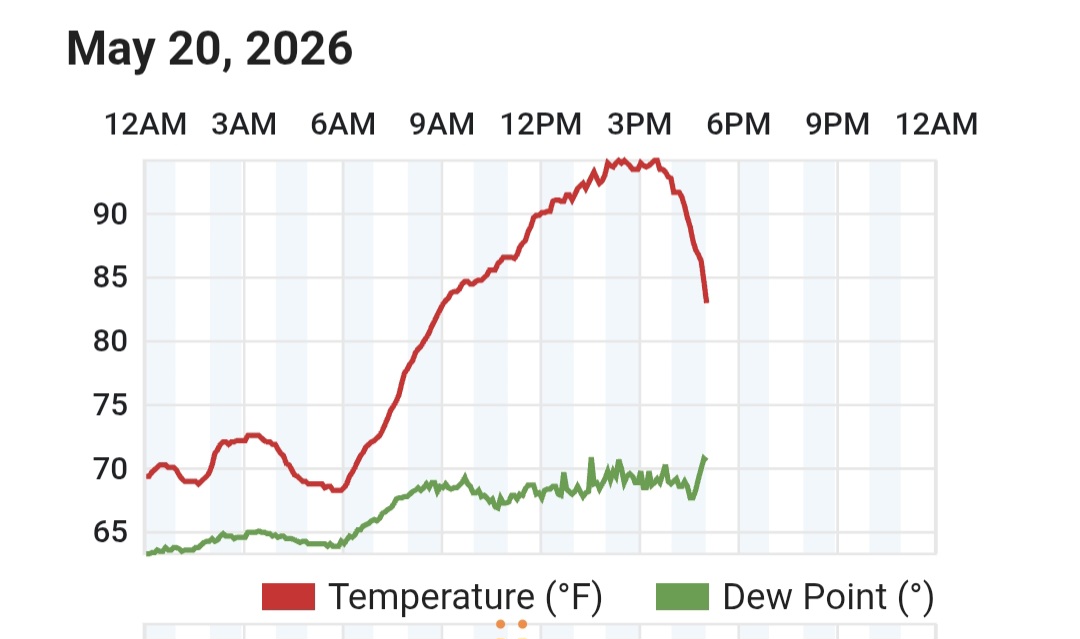
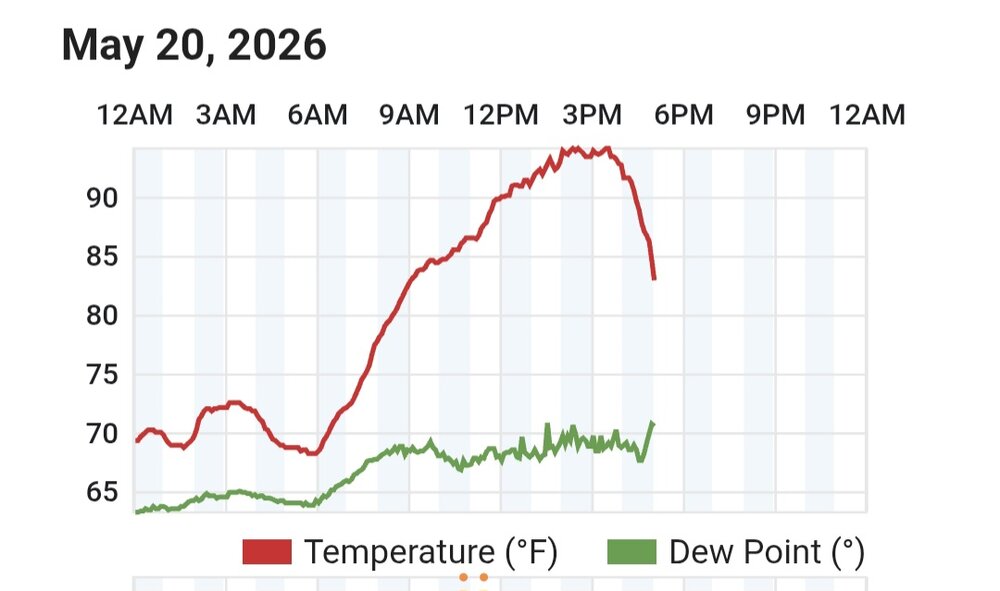
Kind of a fun temperature graph. There was no local storm responsible for the drop, although the nearby ones definitely helped. DP up around 70 though non é buono.
-
That's it. Put that marketing degree to work. Occasional rumbles of thunder here, but only a few moments of insignificant rain so far. We maxed at 94⁰ here. Down to 81 now.
-
Up to 1.46” on the Ambient. Drawn out rain like this is probably about the best way to get an inch and a half on dry ground. 40⁰ and rain continues.
-
It's a balmy 43° here. All things considered, I'll take the rain.
-
30.0⁰ low this am
- 956 replies
-
- 1
-

-
- april showers bring may..
- rain
- (and 2 more)
-
Took the thruway from Kingston around 9pm tonight and got treated to an awesome light show to the south.
-
Low was 27⁰ here with lots of frost.
- 956 replies
-
- 1
-
-
- april showers bring may..
- rain
- (and 2 more)
-
While I agree in principle, most of the non-native flowering cherries are sterile. Eastern Redbud is a better choice.
-
I had a date. We were off from school and took the LIRR to see the circus at MSG. Thundersnow at Herald Square is a cool memory.
- 956 replies
-
- 5
-
-
- april showers bring may..
- rain
- (and 2 more)
-
Down to 54⁰ here now. It's actually turned into a nice afternoon for getting some work in the garden done. It was too warm before.
- 956 replies
-
- 1
-
-
- april showers bring may..
- rain
- (and 2 more)
-
We seem to have topped out at 66⁰ here. Pretty steady around 65⁰ at the moment. It's dropped from the mid 60s earlier to the low 50s around Montauk. The cape is in the 40s. This is very April.
- 956 replies
-
- 1
-
-
- april showers bring may..
- rain
- (and 2 more)
-
It is literally almost 40° colder here than it was at the same time yesterday. I'm good with it. In my family we have a word for this kind of weather. We call it "April"
- 956 replies
-
- 2
-
-
- april showers bring may..
- rain
- (and 2 more)
-
Thanks, that is interesting. For that 20 year period, our average last freeze is April 11. Assuming a similar comparison in the fall, that's at least an extra month of growing season here. Not trivial, especially in the fall, but I'll work those numbers another time. I think the difference in the fall will be even more...it's hard to get to freezing when the LI Sound is still near 60°. Our first fall freeze is sometimes a couple of weeks later than the center of the island, but I don't think there is much difference in the spring.
-
Average last freeze in Smithtown for the past 30 years is April 12. It really hasn't changed much over that time, despite 1996 being an outlier. Last 32°, Smithtown NY Year Date Low Temp 1996 5/14/1996 32 1997 4/16/1997 32 1998 4/13/1998 32 1999 3/27/1999 29 2000 4/14/2000 29 2001 4/20/2001 32 2002 4/24/2002 32 2003 4/8/2003 31 2004 4/6/2004 31 2005 4/17/2005 30 2006 3/30/2006 32 2007 4/11/2007 28 2008 5/1/2008 32 2009 4/17/2009 32 2010 3/28/2010 30 2011 3/30/2011 30 2012 3/28/2012 30 2013 4/7/2013 32 2014 4/21/2014 31 2015 4/12/2015 32 2016 4/14/2016 32 2017 4/13/2017 32 2018 4/21/2018 32 2019 4/2/2019 26 2020 4/19/2020 30 2021 4/4/2021 32 2022 3/30/2022 28 2023 4/10/2023 30 2024 4/26/2024 31 2025 4/10/2025 32