
NorthShoreWx
-
Posts
5,532 -
Joined
-
Last visited
Content Type
Profiles
Blogs
Forums
American Weather
Media Demo
Store
Gallery
Everything posted by NorthShoreWx
-
39 here this morning. Not an easy feat with nearby LIS temps in the 60s. We had no power for a week after Isaiais in 2020.
-
Strong Nor'Easter/Hybrid Storm Late September 2026
NorthShoreWx replied to Rjay's topic in New York City Metro
Most of the island was out for one to two weeks. Some mitigation. -
Strong Nor'Easter/Hybrid Storm Late September 2026
NorthShoreWx replied to Rjay's topic in New York City Metro
Hopefully. It seemed like 97-98 had more nor'easters than any other winter. -
What caused the artificial cooling at BDR?
-
Labor Day 1998 https://www.cnyhistory.org/2014/09/labor-day-storm-1998/
-
Large scale derecho look to that system currently making a mess of western NY.
-
That was one of the more spectacular forcasting fails in a while. Decided to go kayaking on the Nissy with a friend. Checked the radar and bailed after 40 minutes. Now I'm stuck drinking beer and eating pub food while I watch the torrent running down Main Street. Oh, the humanity!
-
1.31" rain here so far. 73.9/73.3, i.e., its really wet
-
There's been lots of loooong rolling thunder here for the past couple of hours, the kind from lightning that stretches 10 miles or more, but only 0.21" rain in the automated gage.
-
Might have been some breaks in the clouds to the west, but just dark, dreary and damp wall to wall here today. MaxT was 73° which is the lowest daily maxT since July 7 (max that day was 68°). I've no problem with a few days with the wx like this, but the mosquitoes are beyond ridiculous this month. Little buggers are pissing me off. It's bad when you go backpacking to get away from them.
-
Crushed. Both forks. Heard a lot of thunder in the middle of the night here, but zero rain.
-
Quite noisy here now. Rainfall a bit mediocre. 78/72
-
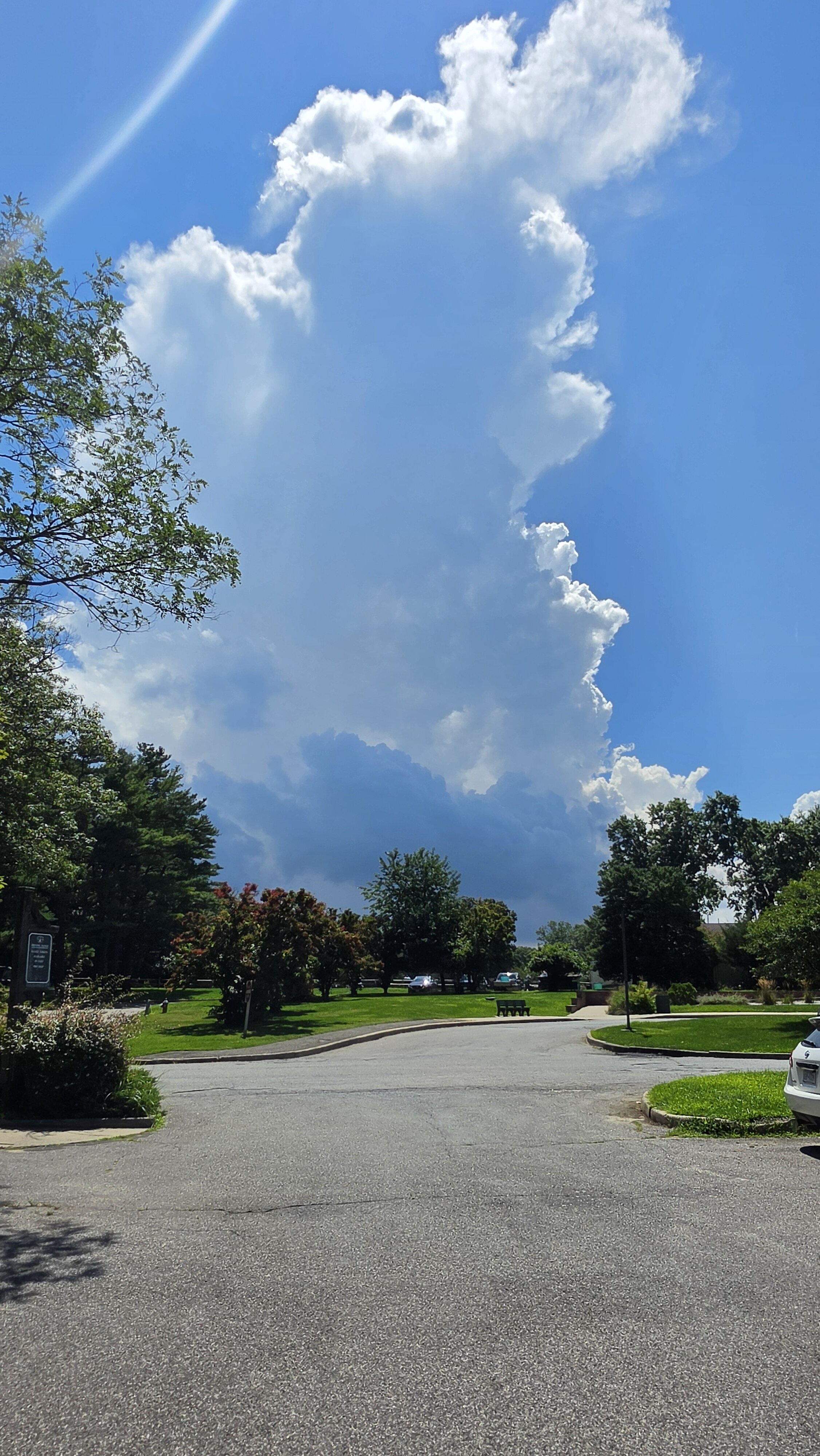
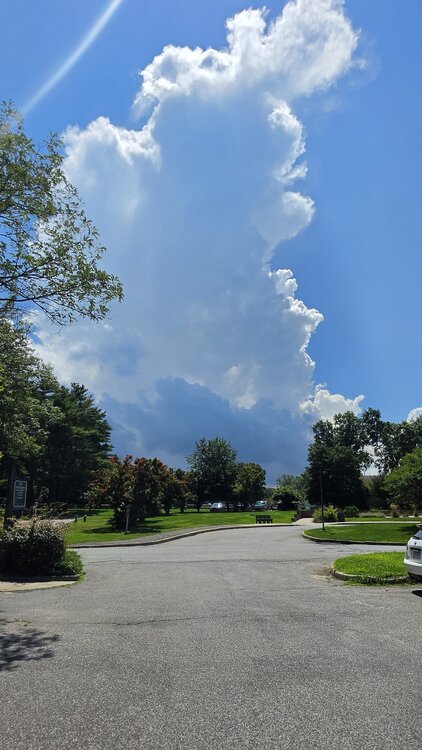
Moment ago view from the Sunken Meadow golf course.
-
86/79 yuck
-
Really cool looking at all the early valley fog burning off from eastern kentucky through central west virginia
-
Nada here so far. I think we'll get enough to keep the lawns happy. Its not like this July has been a dry month on LI.
-
Quick 0.51" from that TS that was warned west of here.
-
Takes all the fun out of golf.
-
655 PM EDT Thu Jul 16 2026 ...A SEVERE THUNDERSTORM WARNING REMAINS IN EFFECT UNTIL 730 PM EDT FOR SOUTHEASTERN OCEAN AND EAST CENTRAL BURLINGTON COUNTIES... At 654 PM EDT, a severe thunderstorm was located over Surf City, or 23 miles south of Toms River, moving southeast at 30 mph. THIS IS A DESTRUCTIVE STORM FOR SHIP BOTTOM AND SURF CITY. HAZARD...80 mph wind gusts and half dollar size hail. SOURCE...Trained weather spotters. At 647 PM EDT, a 85 MPH wind gust was recorded at the Surf City Yacht Club mesonet station. IMPACT...Flying debris will be dangerous to those caught without shelter. Mobile homes will be heavily damaged. Expect considerable damage to roofs, windows, and vehicles. Extensive tree damage and power outages are likely. Locations impacted include... Barnegat, Tuckerton, Surf City, Brookville, Warren Grove, Penn State Forest, Beach Haven West, Manahawkin, Ocean Acres, and Waretown. This includes Garden State Parkway between mile markers 57 and 73. PRECAUTIONARY/PREPAREDNESS ACTIONS... Prepare immediately for large hail and damaging winds. People outside should seek shelter inside a well-built structure and away from windows. Frequent cloud to ground lightning is occurring with this storm, and the storm will affect the beaches. For your safety, immediately move off the beach and seek shelter indoors. Torrential rainfall is occurring with this storm, and may lead to flash flooding. Do not drive your vehicle through flooded roadways.
-
on the bright side, its a great day to work outside (assuming you don't care what happens to your lungs). Apparently smoke blocks UV a lot better than clouds. UV index is near zilch.
-
The air here is now officially disgusting.
-
Mark Twain was right. Two 100° days in a row at the end of last week and two days in a row with a max of 68° to start this week. 65.8 now and the wind feels a bit chilly. I think we may end with a heating degree day today.
-
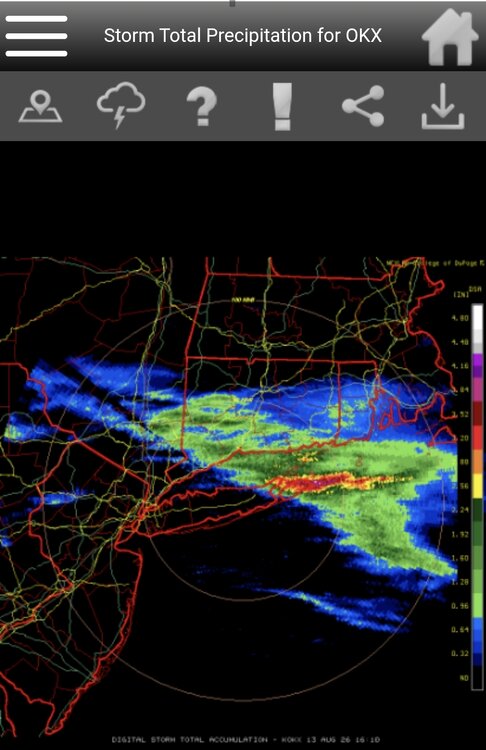
Meanwhile, Fairfield and New Haven counties are getting rather drowned. Temp here is only 64° 2.88" rain since midnight , 2.99" storm total, 3.55" since the 4th. Still raining.
-
2.17" here since midnight (as of 1:40 pm). 2.84" total since the 4th. The lawn is happy and the current temperature of 66° is a big improvement.