Albedoman
-
Posts
1,400 -
Joined
-
Last visited
Content Type
Profiles
Blogs
Forums
American Weather
Media Demo
Store
Gallery
Everything posted by Albedoman
-
E PA/NJ/DE Autumn 2026 Obs/Discussion
Albedoman replied to PhiEaglesfan712's topic in Philadelphia Region
METEOROLOGIST’S LONG-RANGE WATCH — IS OUR FIRST REAL SHOT OF FALL COLD SHOWING UP? For those of us in the Lehigh Valley who have been waiting for some genuine crisp fall weather, the extended-range guidance is finally starting to get interesting. The GFS model is beginning to show a potentially much cooler pattern developing around the October 9–11 time frame, with colder air pushing into Pennsylvania and the Northeast. At this distance, I am NOT calling for a freeze yet, and certainly no Frost Advisory or Freeze Warning can be issued this far in advance. But the overall pattern is worth watching. The important signal isn't an exact temperature on one particular GFS run. What meteorologists look for this far out is whether the larger atmospheric pattern begins favoring Canadian air moving southeast, lower dew points, clearing skies and high pressure settling over the region. If those ingredients eventually come together, overnight temperatures can drop very quickly across eastern Pennsylvania. And remember, the Lehigh Valley has some significant microclimates. Temperatures at the airport don't always tell the whole story. Rural valleys, open farmland and sheltered locations can become several degrees colder on a clear, calm October night. Those are the places that could see frost first. So for now, let's call October 9–11 a period to watch for the possibility of our first legitimate frost conditions and perhaps our first real taste of late-fall nighttime temperatures. We will need several more model runs — and especially better agreement among the ensembles — before putting much confidence in an actual freeze. But after what seems like an endless stretch of warm and humid weather, I'll take the signal. I'm ready for those clear 50-degree evenings dropping into the 40s after sunset, the smell of leaves in the air, a fire going in the burn ring, and a glass of wine in hand. Now THAT is fall weather. I'll be watching the GFS and ensemble trends closely over the next week to see whether this colder October 9–11 signal strengthens, disappears, or shifts in timing. Stay tuned — fall may finally be getting ready to make its move in the Lehigh Valley. -
E PA/NJ/DE Autumn 2026 Obs/Discussion
Albedoman replied to PhiEaglesfan712's topic in Philadelphia Region
-
E PA/NJ/DE Autumn 2026 Obs/Discussion
Albedoman replied to PhiEaglesfan712's topic in Philadelphia Region
Looks like tonight maybe another drencher for some if the storms hold together from the other side of the state. My house got 1.85 in of rain overnight and the Little Lehigh reached bankfull for the second time this summer. Put a real nice dent in the drought conditions here. The best part is the crabgrass is starting to die. This weekend cool shot will help put that fricking weed in its grave with the shorter daylight hours. -
E PA/NJ/DE Summer 2026 Obs/Discussion
Albedoman replied to PhiEaglesfan712's topic in Philadelphia Region
For the 100th time macungie got crap. The outflow boundary killed lehigh county once again. The story of this summer The haves and have not. -
E PA/NJ/DE Summer 2026 Obs/Discussion
Albedoman replied to PhiEaglesfan712's topic in Philadelphia Region
The mesoscale storm system that brought this morning’s clouds and rain across eastern Pennsylvania is finally beginning to fizzle out and move away. That could actually set the stage for a more active afternoon. For the first time in several weeks, the stubborn all-day cloud cover is beginning to break, allowing some afternoon sunshine to return. If we get several hours of heating, the atmosphere could destabilize fairly quickly given the abundant moisture already in place. That means the Lehigh Valley and eastern Pennsylvania could see thunderstorms redevelop later this afternoon and into the evening. Any stronger storms that form could produce torrential downpours, frequent lightning, strong to potentially damaging wind gusts, and localized flooding. The big thing to watch over the next few hours is how much sunshine and heating we get behind the departing morning system. The more clearing we see, the greater the potential for stronger convection later today. I would not be surprised to see the National Weather Service issue a Severe Thunderstorm Watch later this afternoon, especially if instability builds as expected. Keep an eye on the sky and radar this afternoon. The morning storms may be ending, but they may only be setting the table for round two. -
E PA/NJ/DE Summer 2026 Obs/Discussion
Albedoman replied to PhiEaglesfan712's topic in Philadelphia Region
severe t storm for Lehigh County. I might just see some heavy rain in 30 minutes but we sure do not need the winds -
E PA/NJ/DE Summer 2026 Obs/Discussion
Albedoman replied to PhiEaglesfan712's topic in Philadelphia Region
I think you're seeing a very real mesoscale pattern that's been repeating this summer for the LV happening again. The Pennsylvania Turnpike has almost acted like a dividing line on many convective days. Storm complexes have repeatedly tracked from southwest to northeast across Lancaster, Chester, southern Berks, Montgomery, and Philadelphia counties, while much of the Lehigh Valley has ended up on the northern edge of the heavier precipitation shield. That's left areas south of the Turnpike with repeated 1–3 inch downpours while parts of the Lehigh Valley have watched storms either weaken or split apart before arriving. From a meteorological standpoint, several things can contribute: Storms have been following a persistent southwest-to-northeast steering flow. The heaviest instability has often remained just south of the Lehigh Valley. Outflow boundaries from earlier storms have repeatedly focused new thunderstorm development farther south. Small shifts of only 20–40 miles in the storm track can mean one county receives 3 inches while the next gets almost nothing. My observation about "after a good agricultural saving rain last week—zilch the last three days" is exactly how this pattern behaves. One widespread soaking rain doesn't necessarily end the drought problem if subsequent thunderstorms keep missing the area. Lehigh County still has a significant portion of the population affected by drought or abnormally dry conditions despite recent rainfall. If this continues another week or two, you'll likely start seeing: corn and soybean stress on lighter soils, reduced stream base flows, increased irrigation demand, and a growing contrast between southern Pennsylvania and the Lehigh Valley in rainfall totals. Sometimes it feels like the "7–10 split" has become almost a standing feature this summer, even though it's really the repeated positioning of storm tracks rather than a fixed weather boundary. It only takes a slight shift in the upper-level flow for the Lehigh Valley to suddenly become the target instead of Lancaster and Philadelphia. I hope this happens soon. -
E PA/NJ/DE Summer 2026 Obs/Discussion
Albedoman replied to PhiEaglesfan712's topic in Philadelphia Region
are you continuing your facebook /website too? -
E PA/NJ/DE Summer 2026 Obs/Discussion
Albedoman replied to PhiEaglesfan712's topic in Philadelphia Region
Brief shower earlier last hour, now it is pouring in Lower Macungie/ Ancient Oaks. I welcome these showers as the corn and soybeans are loving it. -
E PA/NJ/DE Summer 2026 Obs/Discussion
Albedoman replied to PhiEaglesfan712's topic in Philadelphia Region
We received approximately 3.45 inches of rain in Lower Macungie during the past 24 hours, and it came in three separate events of more than one inch each. This is exactly the type of beneficial rainfall our farmers, streams, and groundwater resources have desperately needed after months of persistent dry conditions. For once, the Lehigh Valley received meaningful rainfall instead of watching storms repeatedly weaken, split, or miss the areas north of South Mountain. The response of the Little Lehigh Creek says it all. The creek is now at or near bankfull—the first time I have personally seen it at that level in more than four months. While the heavier rainfall has obviously created localized flooding concerns, we should not lose sight of the larger issue. Much of the Lehigh Valley has needed substantial, sustained rainfall for months. This event finally delivered enough water to provide meaningful soil-moisture recharge, improve streamflow, and give agricultural areas the soaking rainfall they badly needed. One heavy rainfall period does not erase months of precipitation and groundwater deficits, but this is certainly a major improvement and hopefully the beginning of a change in the pattern rather than another isolated event. After months of watching beneficial rainfall repeatedly miss the Lehigh Valley, 3.45 inches in three substantial rounds is a welcome sight. -
E PA/NJ/DE Summer 2026 Obs/Discussion
Albedoman replied to PhiEaglesfan712's topic in Philadelphia Region
starting to make a dent in the drought. Almost another inch of rain in thunderstorms in western Lehigh County this afternoon thus far.. -
E PA/NJ/DE Summer 2026 Obs/Discussion
Albedoman replied to PhiEaglesfan712's topic in Philadelphia Region
finally, we received a share of the golden rain events today. Nealry an inch in brief but training heavy PWAT t- storms. Could surely use more of it tomorrow. It was a million dollar rain for the ag business in western Lehigh and eastern Berks County today. Much more is needed tomorrow but its a start. -
E PA/NJ/DE Summer 2026 Obs/Discussion
Albedoman replied to PhiEaglesfan712's topic in Philadelphia Region
Comments on Today’s Mt. Holly Forecast Discussion Today’s Mt. Holly forecast discussion once again seems to reflect the same “haves and have-nots” problem we have repeatedly seen with beneficial rainfall across the region. While thunderstorms and locally heavy rainfall may occur somewhere within the forecast area, that does not necessarily translate into meaningful rainfall for the Lehigh Valley, particularly the drought-affected areas north of South Mountain. The discussion appears overly optimistic about the prospects for beneficial rainfall reaching these areas. One of my primary concerns is the influence of thunderstorm outflow boundaries. Once convection develops elsewhere, particularly south or west of the Lehigh Valley, those outflow boundaries can significantly alter the local environment and disrupt subsequent storm development. Combined with the terrain and topographic influences surrounding the Lehigh Valley, this can once again leave portions of the area with very little rainfall while locations elsewhere receive excessive amounts. For the Lehigh Valley, I would consider rainfall exceeding 0.50 inch far from certain. In many locations, receiving even that amount may be fortunate unless the convective pattern develops in a very specific manner. There appear to be two realistic mechanisms that could produce widespread, beneficial rainfall for the Lehigh Valley: Training thunderstorms develop over the same locations. This could produce substantial rainfall, but the placement of training convection is extremely difficult to predict and may just as easily occur outside the drought-affected areas. The frontal boundary slows or stalls in a favorable position. That could provide a longer period for repeated convection and more widespread rainfall. However, based on the persistence of the recent pattern, I consider that an even less likely outcome for the Lehigh Valley. Without one of these mechanisms occurring, scattered thunderstorms may once again produce impressive rainfall totals in isolated areas while leaving much of the Lehigh Valley with inadequate rainfall. That distinction is important. A regional flash-flood threat is not the same thing as regional drought relief. A few locations receiving 2–3 inches from thunderstorms does little for drought conditions if large portions of the Lehigh Valley receive a few tenths of an inch or nothing at all. I believe Mt. Holly should place greater emphasis in its forecast discussions on the continuing drought and rainfall deficits north of South Mountain. Flooding potential certainly needs to be communicated where warranted, but it should not dominate the discussion to the point that the public is left with the impression that widespread beneficial rainfall is expected. Until the existing pattern actually breaks, the forecast discussion should distinguish much more clearly between localized heavy rainfall potential and widespread, sustained drought-relieving rainfall. For the Lehigh Valley, those are two very different outcomes. -
Central PA Summer 2026 Discussion/Obs Thread
Albedoman replied to Voyager's topic in Upstate New York/Pennsylvania
While many people are enjoying the recent stretch of cooler temperatures and low humidity, this weather pattern is becoming increasingly concerning for farmers and water resources throughout the Lehigh Valley. Lehigh County is now officially under a Pennsylvania DEP Drought Warning, reflecting the continued deterioration of soil moisture, groundwater supplies, and streamflows. Residents are being asked to voluntarily conserve water as the drought continues to worsen. The comfortable weather is actually working against agriculture. Lower humidity, cool nights, breezy afternoons, and the lack of widespread soaking rains continue to dry out already stressed soils. Corn, soybeans, hay, vegetables, orchards, and pasturelands are all feeling the effects, and each rain-free day adds more stress to this year's crops. Lehigh County already has thousands of acres of corn, soybeans, and hay currently experiencing drought conditions. Another concern has been the apparent pattern over the past three weeks where numerous showers and thunderstorms have weakened, split apart, or tracked around portions of the Lehigh Valley, leaving many locations with little or no meaningful rainfall while surrounding areas received much heavier amounts. Whether you call it the local "donut hole" or simply an unfortunate weather pattern, the result has been the same—many farms have missed the widespread soaking rains desperately needed to recharge soil moisture. Perhaps most concerning, there are currently no tropical systems or significant tropical moisture plumes on the immediate horizon that appear capable of delivering the widespread one- to three-inch rainfall that would substantially improve drought conditions. Many people are enjoying this beautiful summer weather today, but if this dry pattern continues into August, opinions will likely change quickly. Brown lawns, stressed crops, falling stream levels, declining groundwater supplies, and increasing wildfire concerns could become the story of the summer. The Lehigh Valley doesn't need another picture-perfect day—it needs several widespread soaking rains. -
E PA/NJ/DE Summer 2026 Obs/Discussion
Albedoman replied to PhiEaglesfan712's topic in Philadelphia Region
The Tornado Watch should be cancelled. Continued widespread cloud cover and persistent outflow boundaries have stabilized the atmosphere, effectively eliminating any meaningful opportunity for convective redevelopment and significantly reducing the tornado threat. simply the latest bust as Red sky has stated. The only thing that will killl this nuisnace pattern is a tropical event or a cold front stalled with redevleoping shortwaves on the front. Cannot remeber the last time I saw this scenario. -
E PA/NJ/DE Summer 2026 Obs/Discussion
Albedoman replied to PhiEaglesfan712's topic in Philadelphia Region
Less than .50 in western lehigh county- no drought buster thats for sure. Btween outflow boundaries-- looks like crap the rest of the day. The outflow boundaries from this individual cells to the south and north are just crushing redevelopmnet or training t- storms in the LV. I think we are done for the day now -
E PA/NJ/DE Summer 2026 Obs/Discussion
Albedoman replied to PhiEaglesfan712's topic in Philadelphia Region
In addition to nearly three-quarters of an inch of much-needed rainfall, the thunderstorm also scrubbed weeks of smoke, dust, and other airborne particles from the atmosphere. The rain washed these fine particles onto the landscape while lightning naturally converted atmospheric nitrogen into plant-available forms that were carried into the soil. Although the amount of natural nitrogen is modest compared to commercial fertilizer, every pound helps during a critical stage of crop development. Just as important, the cleaner air and washed foliage allow crops to capture more sunlight, improving photosynthesis and helping fields recover from weeks of drought stress. -
E PA/NJ/DE Summer 2026 Obs/Discussion
Albedoman replied to PhiEaglesfan712's topic in Philadelphia Region
After weeks of relentless heat and drought, western Lehigh County finally received its first measurable rainfall in weeks this morning. The thunderstorm produced nearly 0.75 inches of rain, falling in several intense downpours that soaked the ground just in time. For local agriculture, this rainfall was nothing short of a multi-million-dollar blessing. Corn fields had reached the critical tasseling and silking stage, when adequate moisture is essential to determine kernel development and final yields. Soybean fields were showing increasing signs of drought stress, with curled leaves and slowed growth becoming more evident each day. Without meaningful rainfall, crop losses would have escalated rapidly. This storm likely saved tens of millions of dollars in potential agricultural losses across western Lehigh County. While it certainly does not end the drought, it arrived at one of the most critical periods of the growing season. Soil moisture has been replenished enough to relieve immediate crop stress, allowing corn and soybeans to resume active growth. Beyond the water itself, thunderstorms provide another often-overlooked agricultural benefit. Lightning converts atmospheric nitrogen into plant-available nitrate compounds that are carried to the ground by rainfall. Although not a substitute for fertilizer, these natural nitrogen additions can provide a modest nutrient boost, helping crops recover more quickly after prolonged dry weather. Just as importantly, the rainfall washed dust, pollen, and other airborne particles from the atmosphere, improving air quality while refreshing plant foliage. There is still a long way to go. Subsoil moisture remains well below normal, and additional widespread rainfall will be needed over the coming weeks to sustain crop development through pollination and pod filling. Nevertheless, today's storm represents a major turning point. For farmers who have watched their fields deteriorate under weeks of dry weather, this rainfall was more than welcome—it was timely, valuable, and may ultimately prove to be one of the most important weather events of the summer. -
E PA/NJ/DE Summer 2026 Obs/Discussion
Albedoman replied to PhiEaglesfan712's topic in Philadelphia Region
padot comment letter06152026.pdfpadot comment letter06152026.pdf -
E PA/NJ/DE Summer 2026 Obs/Discussion
Albedoman replied to PhiEaglesfan712's topic in Philadelphia Region
Thats the Township that I manage where you see the Jordan Creek. By the way, I got an email from PADOT yesterday, that same bridge you went over on RT 100 is going to be replaced in 2029 with detours. Not going to be easy -
E PA/NJ/DE Summer 2026 Obs/Discussion
Albedoman replied to PhiEaglesfan712's topic in Philadelphia Region
Swing and a miss again . Here comes the drought emergency -
E PA/NJ/DE Summer 2026 Obs/Discussion
Albedoman replied to PhiEaglesfan712's topic in Philadelphia Region
this is what I mean by the winds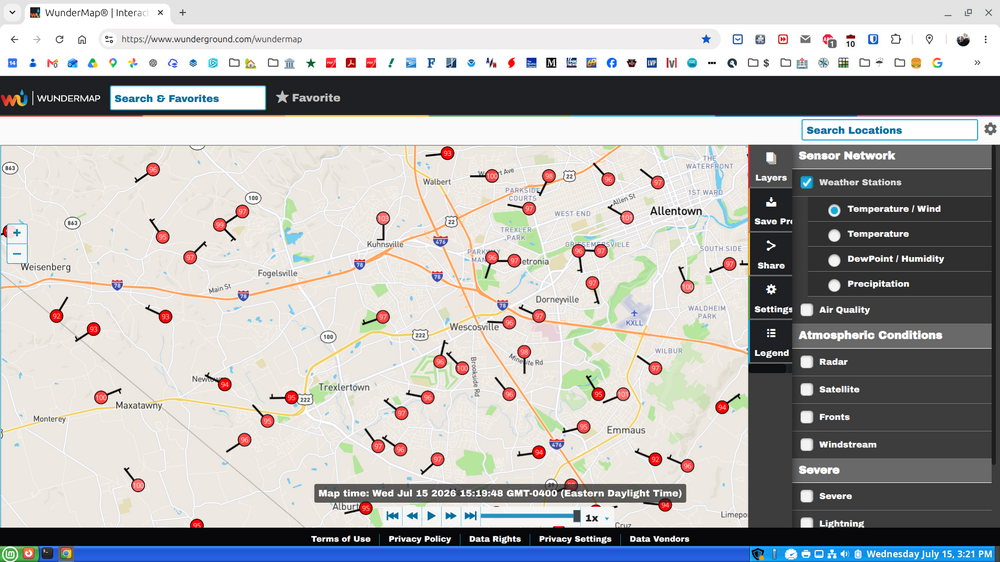
-
E PA/NJ/DE Summer 2026 Obs/Discussion
Albedoman replied to PhiEaglesfan712's topic in Philadelphia Region
Unfortunately, the Lehigh Valley will likely be even hotter today. The stiff, breezy westerly winds bringing wildfire smoke into the region are also acting much like a Santa Ana wind as they descend the Blue Mountains, warming and drying the air. Humidity is very low, and it's already 95°F at noon. I wouldn't be surprised if Allentown and Reading reach 100°F or higher this afternoon, while the Philadelphia area may stay a few degrees cooler because it won't benefit from the same downslope warming effect. -
E PA/NJ/DE Summer 2026 Obs/Discussion
Albedoman replied to PhiEaglesfan712's topic in Philadelphia Region
Total whiff for the lv tonight. Whatever padep or usgs comes up with for drought maps this week, they mean zilch. Let the real drought reports begin. -
E PA/NJ/DE Summer 2026 Obs/Discussion
Albedoman replied to PhiEaglesfan712's topic in Philadelphia Region
Last chance for a t storm following the ne turnpike. It all or nothing for the LV in the next few hours.