
OSUmetstud
-
Posts
16,532 -
Joined
-
Last visited
Content Type
Profiles
Blogs
Forums
American Weather
Media Demo
Store
Gallery
Everything posted by OSUmetstud
-
December 5-6, 2020 Storm Observations and Nowcast
OSUmetstud replied to Baroclinic Zone's topic in New England
Right, I usually use -6 out here and then -8 in Ontario, but it's just an estimate because of the stochastic nature of cloud droplets. -
December 5-6, 2020 Storm Observations and Nowcast
OSUmetstud replied to Baroclinic Zone's topic in New England
Without the drier dewpoints you also lose any heat of vaporization effects, which is about 8 times larger than the heat of fusion. So you're only left with heat of fusion and a smaller contribution of sensible heat from the flakes themselves. -
December 5-6, 2020 Storm Observations and Nowcast
OSUmetstud replied to Baroclinic Zone's topic in New England
Is it a mass issue? Melting large aggregated dendrites would remove more heat from the environment than smaller flakes? -
December 5-6, 2020 Storm Observations and Nowcast
OSUmetstud replied to Baroclinic Zone's topic in New England
I had a general 3-5" in my Portland/Augusta/Bangor forecast when I left on Friday, but given what the NWS and folks on the board were discussing, I was really worried I was going to bust low. I'm glad there was such a struggle in that regard. Lack of drier dewpoint advection and strong lift but in the wrong spot kinda makes sense to me. Given the lack of good antecedent airmass, there's more bust potential if things don't align. -
As do I...I just dont get that mpression from the folks here. Like I'm not sure the cross country travel is nearly as common.
-
The slope of the line looks pretty similar before and after October 12th so I'm not really sure theres a lot there. As you know Canadian Thanksgiving seems to pale greatly in cultural importance than American Thanksgiving.
-
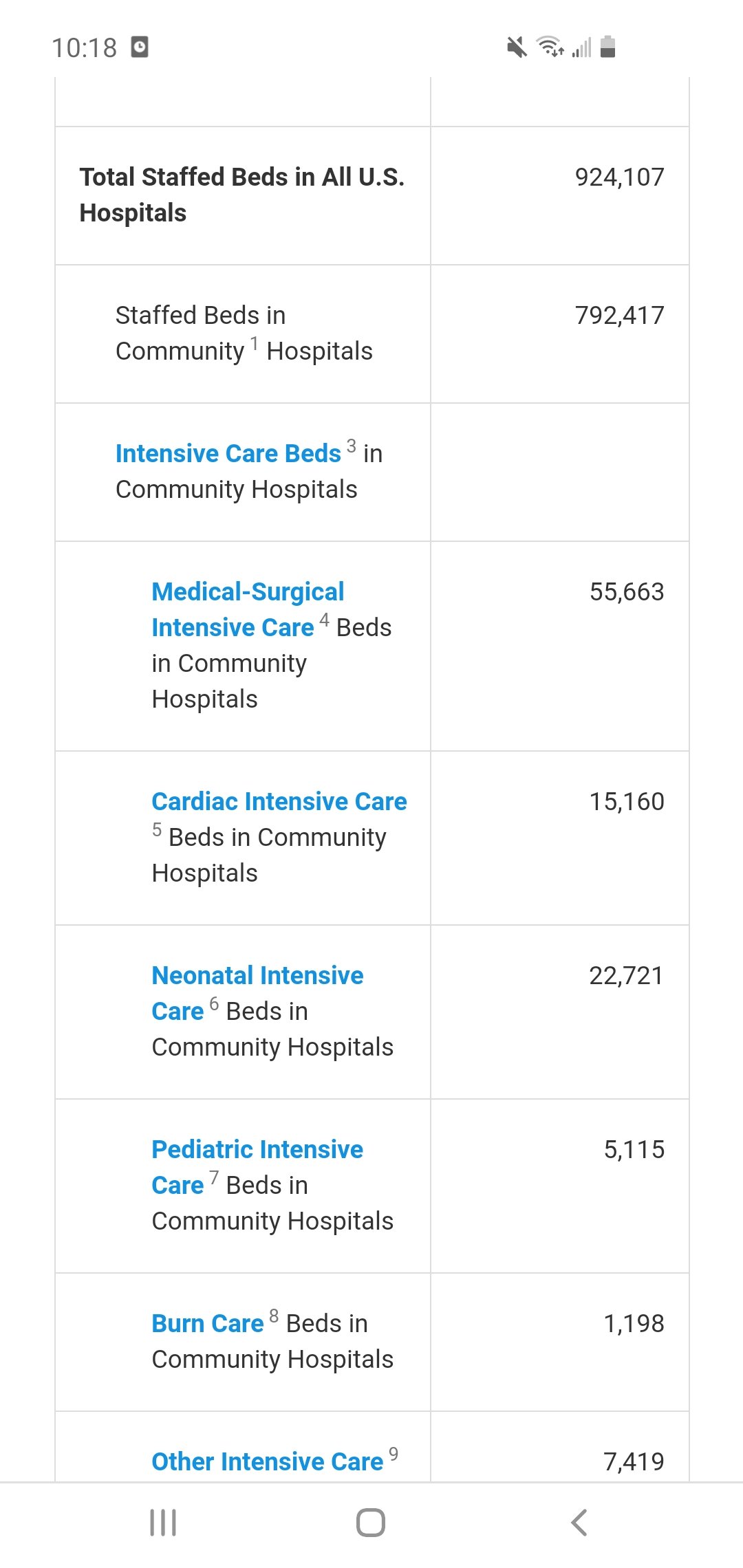
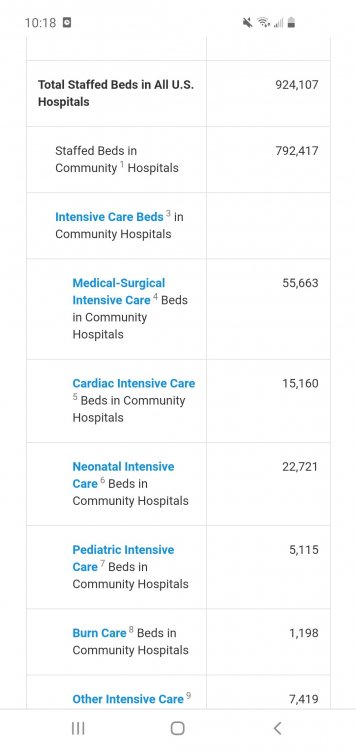
I think the choke point is intensive care and not regular hospital beds. https://www.aha.org/statistics/fast-facts-us-hospitals
-
Awesome. So it begins.
-
Meh. That CDC study showed 16% at the end of September.
-
Interesting thread suggesting that proportion of hospitalizations to cases has been falling over the past few months suggesting stricter admission criteria as hospitals fill up.
-
Yep, I know. Could be.
-
Yeah, it's pretty crazy. That prevalence differential probably lowers the effective IFR by 1/3rd or maybe even a bit more.
-
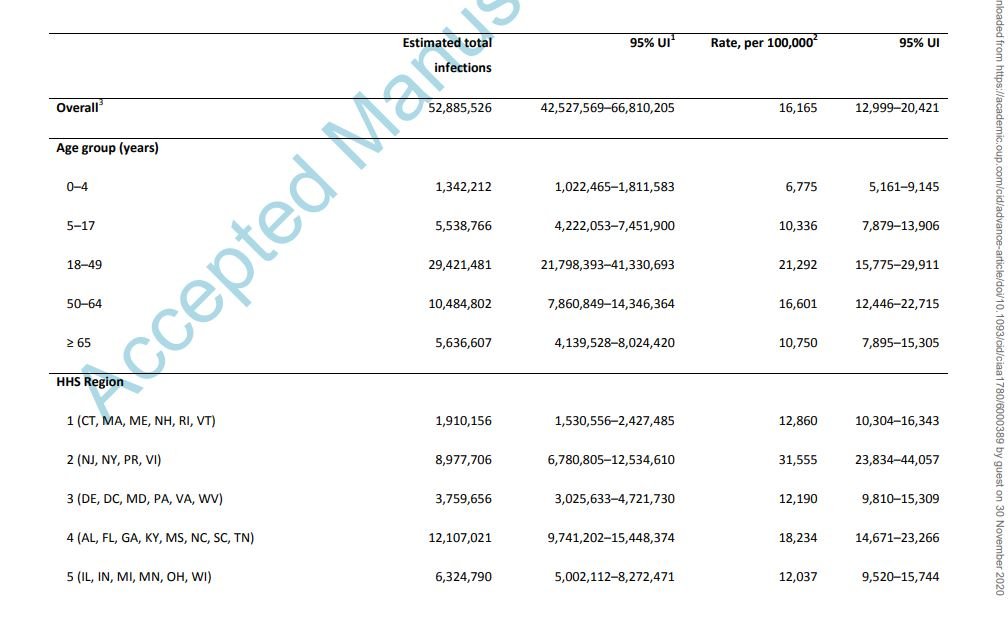
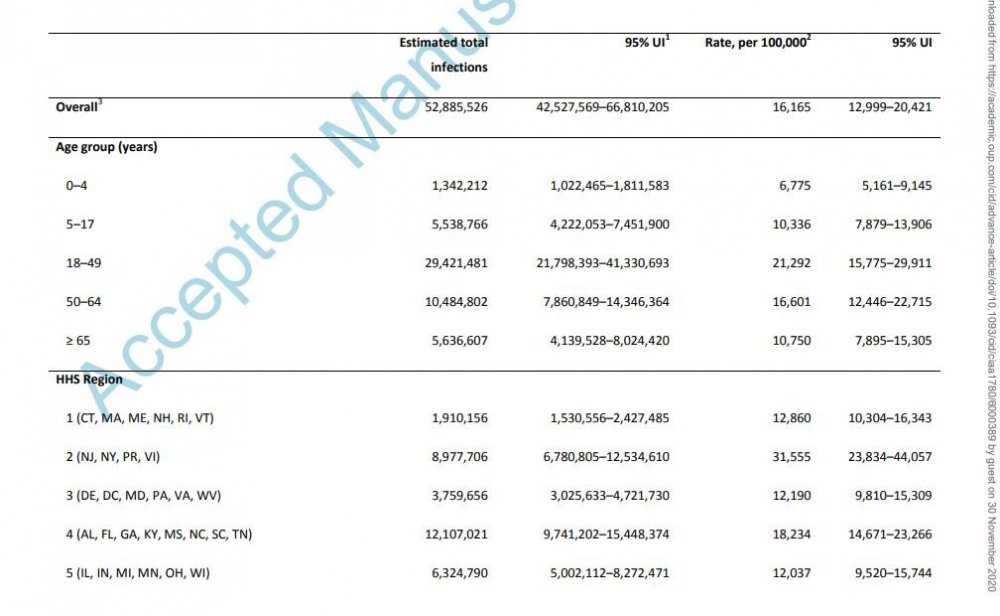
I was originally a bit skeptical of the estimate of 53 million by the study by CDC scientists, but I looked further into it. It makes sense that the younger and working population has been infected at a much higher rate than the older population. So, in the first wave, SARS Cov 2 infections probably were distributed fairly evenly among the population demographics, but then the second wave was driven by mainly younger and middle-aged people. You can see many more infections in that demographics without seeing as large of an increase in mortality. This study estimates that infections in the 18-49 cohort were double those of 65+. https://academic.oup.com/cid/advance-article/doi/10.1093/cid/ciaa1780/6000389
-
Upstate NY Banter and General Discussion..
OSUmetstud replied to wolfie09's topic in Upstate New York/Pennsylvania
Artvoice conservative? What is going on nowadays lol. -
Yeah the nature of testing is that there's larger error bars when the seroprevalence is lower.
-
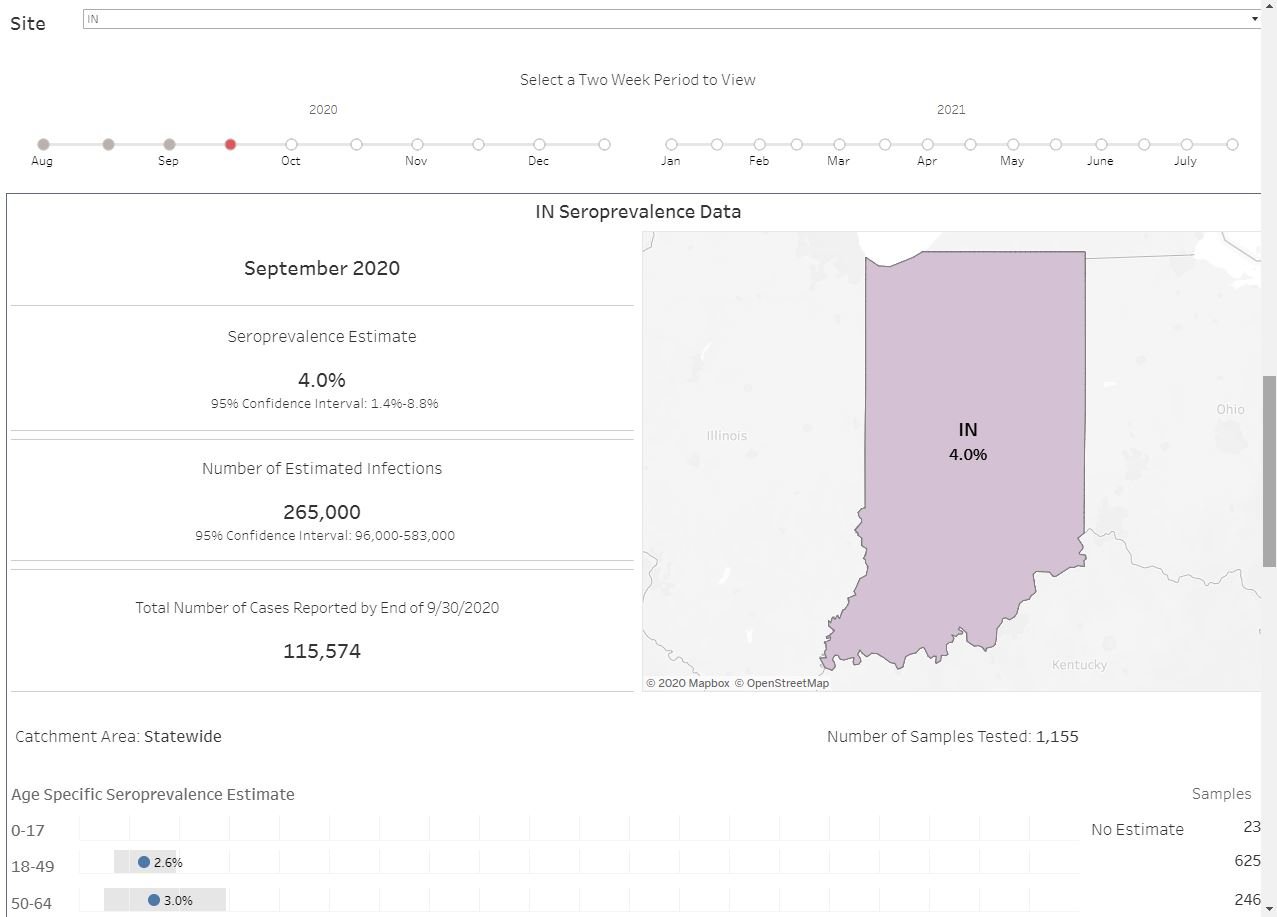
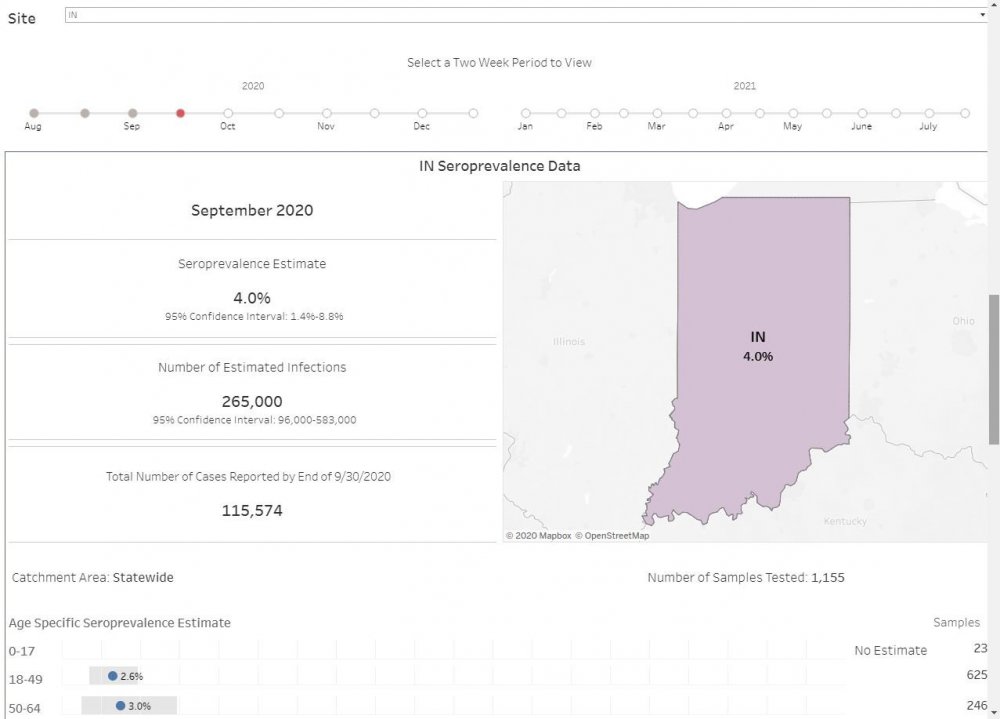
The CDC has been doing a Commercial Lab Seroprevalence Survey in each state. In Indiana, as of September 15th, they had 4%. That should be representative of the infections around September 1st. https://covid.cdc.gov/covid-data-tracker/#national-lab And the caveats on the interpreting the data. Interpreting Serology Results from These Surveys These surveys have limitations to consider when interpreting the results. The surveys aim to collect specimens nationwide, although results might not represent the geographic and demographic distribution of the population. Blood samples for the study were not chosen randomly and might not be representative of the US population. People who have blood taken for routine medical care or sick visits might not represent people in the general population because of differences in their overall health, their disease exposure risk, because they sought health care and had a blood test, or because of their immune response to SARS-CoV-2 infection. Seroprevalence estimates for age and sex might not be available for all places. This can occur when there are too few samples to calculate the estimates for a specific age or sex group. Some results could be false-positive results (the test result is positive, but the person does not really have antibodies to SARS-CoV-2), or false-negative results (the person has antibodies to SARS-CoV-2, but the test doesn’t detect them). False-positive results are more likely to change the survey results if it is an area where the percentage of people previously infected is relatively low. This might cause results to estimate that more people are infected in the community than actually are. Results from seroprevalence surveys should not be interpreted to mean that people who have tested positive for having SARS-CoV-2 antibodies are immune. We do not know whether having SARS-CoV-2 antibodies provides protection against getting infected again. Other studies are planned to learn more about SARS-COV-2 antibodies, including how long they last, whether they provide protection against getting infected again, and if people get infected again, whether having antibodies can make that illness milder. While some seroprevalence surveys study risk factors for infection, such as a person’s occupation or underlying health conditions, this seroprevalence survey was not designed to be able to provide that information. Finally, other seroprevalence surveys are designed to show how long antibodies last in people’s bodies following infection. This survey was not designed to provide that information.
-
Upstate NY Banter and General Discussion..
OSUmetstud replied to wolfie09's topic in Upstate New York/Pennsylvania
Sigh. Early on in the pandemic we didn't know how to best treat people. It was typical practice to put people on low oxygen with covid on ventilators. Now that we know more they don't put people on ventilators as much. They're still used at a certain point when oxygen is really low. There's 6000 people on ventilators with Covid right now. Covid sucks. The ventilators didn't cause the breathing issues and they didn't cause the pneumonia. Why is it so hard to you to accept that this a terrible disease killing lots of people and the doctors and scientists on the frontlines are doing their very best to treat people? -
Upstate NY Banter and General Discussion..
OSUmetstud replied to wolfie09's topic in Upstate New York/Pennsylvania
Theres 6000 people in the US right now on ventilators because they have covid 19 and need oxygen. -
Upstate NY Banter and General Discussion..
OSUmetstud replied to wolfie09's topic in Upstate New York/Pennsylvania
Dude is a ****ing nut. -
Upstate NY Banter and General Discussion..
OSUmetstud replied to wolfie09's topic in Upstate New York/Pennsylvania
You have no idea what you're talking. Literally none. Not everyone has it...most haven't. We aren't killing people with ventilators. These people need oxygen. -
Upstate NY Banter and General Discussion..
OSUmetstud replied to wolfie09's topic in Upstate New York/Pennsylvania
Stop polluting the board with your nuttiness. -
This is an old article. The NYT article which does a better job at describing the issue discusses why. Its likely that these people are being caught too late in their illness/infection when they get their positive test. Michael Mina discusses this back a few months ago on this week in virology. The average cycle to positive was 35 on the the RT-PCR meaning the majority of people are being caught after they are infectious. The point of care antigen testing thats being done more now is less sensitive so if you're positive from that you're more likely to fall in the infectious band. The high sensitivity RT-PCR test is still needed for clinic diagnosis. When people are late in their illness and show up at the hospital sometimes they have very little virus left. The inflammatory response is whats killing people generally not when they have a huge amount of virus.
-
Upstate NY Banter and General Discussion..
OSUmetstud replied to wolfie09's topic in Upstate New York/Pennsylvania
When there's a high volume of cases...its really difficult to do effective contract tracing. So its hard to say where the most likely source is of the majority of infections.