
LakePaste25
-
Posts
1,351 -
Joined
-
Last visited
Content Type
Profiles
Blogs
Forums
American Weather
Media Demo
Store
Gallery
Everything posted by LakePaste25
-
2026-2027 Record-breaking El Nino
LakePaste25 replied to Stormchaserchuck1's topic in Weather Forecasting and Discussion
While I may not agree with the Euro verbatim, it’s a perfect example of how a stronger Nino doesn’t always mean warmer. The August update increased the strength but went cooler. -
2026-2027 Record-breaking El Nino
LakePaste25 replied to Stormchaserchuck1's topic in Weather Forecasting and Discussion
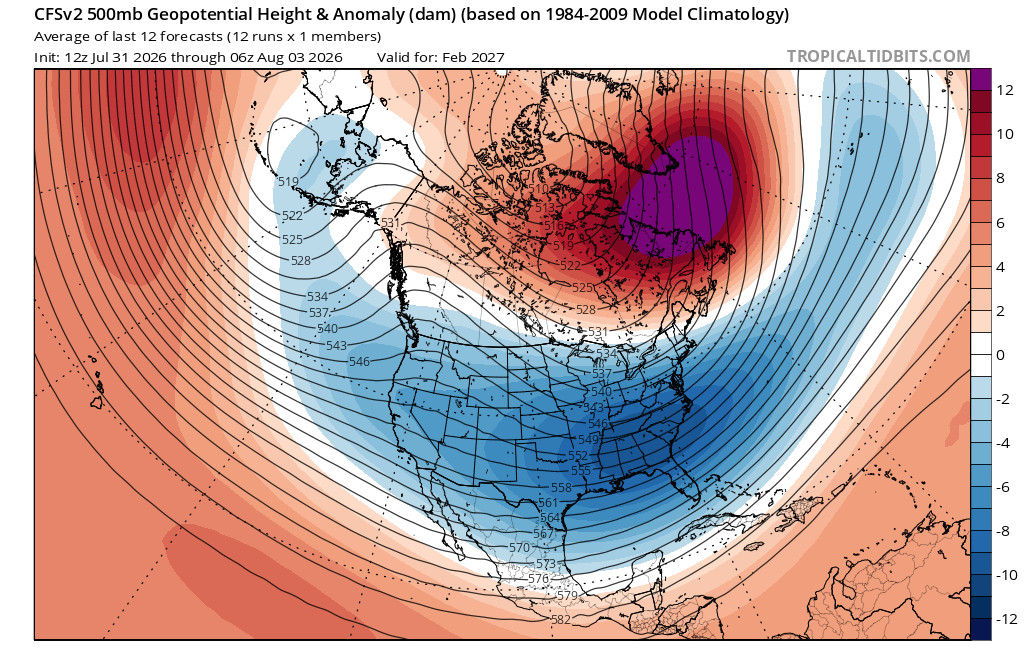
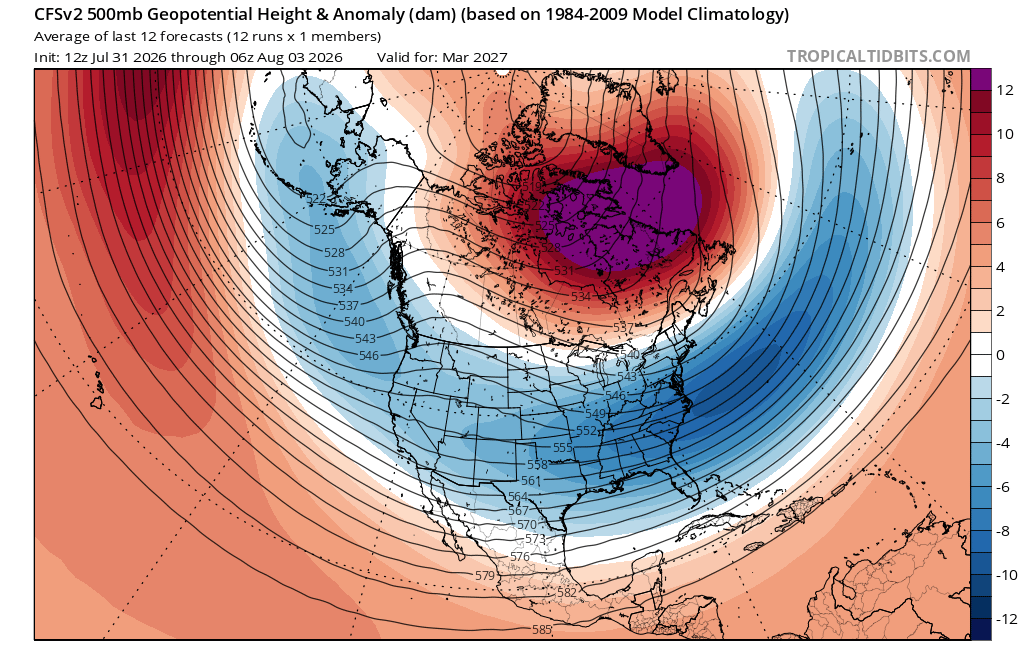
I wouldn’t dare predict a snowless winter. There’s no data to back that up. But I would place heavy bets on +3 or higher in terms of temp departures in the mean, locally. -
2026-2027 Record-breaking El Nino
LakePaste25 replied to Stormchaserchuck1's topic in Weather Forecasting and Discussion
I will place a heavy bet that Nino 1+2 will once again, not cool off as we head into next spring. This is why I don’t yet think we swing back to a major La Niña. Cold neutral is once again on the table next year. -
2026-2027 Record-breaking El Nino
LakePaste25 replied to Stormchaserchuck1's topic in Weather Forecasting and Discussion
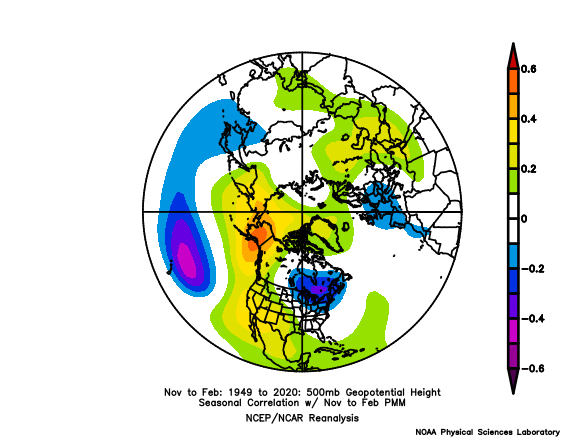
I keep circling back to the PMM. 2023-24 was a rare -PMM El Niño. Right now it’s positive. In the summer, -PMM constructively interferes with El Nino, while it destructively interferes during the winter. +PMM is the opposite (Nina like summer, but Nino like winter). Unfortunately we don’t have current PMM values but eyeballing SSTAs show it in the positive state, which implies more Nino-friendly interference as we head towards winter.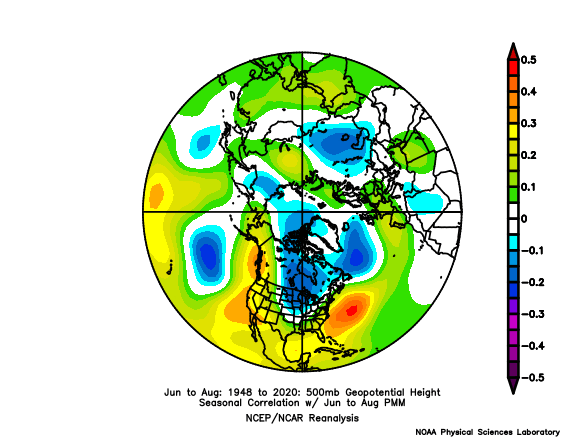
-
2026-2027 Record-breaking El Nino
LakePaste25 replied to Stormchaserchuck1's topic in Weather Forecasting and Discussion
My thing is, if the most record breaking El Niño of my life (and potentially by a huge margin) doesn’t do the job, then the climate system has been messed up to the point where we’ve lost a major predictability factor in ENSO. It’s possible. But I hope not. -
2026-2027 Record-breaking El Nino
LakePaste25 replied to Stormchaserchuck1's topic in Weather Forecasting and Discussion
I get the reluctance for some to take a “wait and see” approach to see if the NH actually couples. But at the same time, just make a call. I think it’ll couple, and couple well. Sure, we can count on a less expansive area of below normal anomalies than the 1983 Aleutian Low due to warming. It is what it is. But otherwise it’ll couple in the NH and if i’m wrong i’m wrong. -
2026-2027 Record-breaking El Nino
LakePaste25 replied to Stormchaserchuck1's topic in Weather Forecasting and Discussion
This is like me saying you don’t agree it’s east based because you don’t like using the ELI. I simply didn’t like how the MEI was a limited dataset nor did I need to wait for this monthly updated to figure out it was coupled. -
2026-2027 Record-breaking El Nino
LakePaste25 replied to Stormchaserchuck1's topic in Weather Forecasting and Discussion
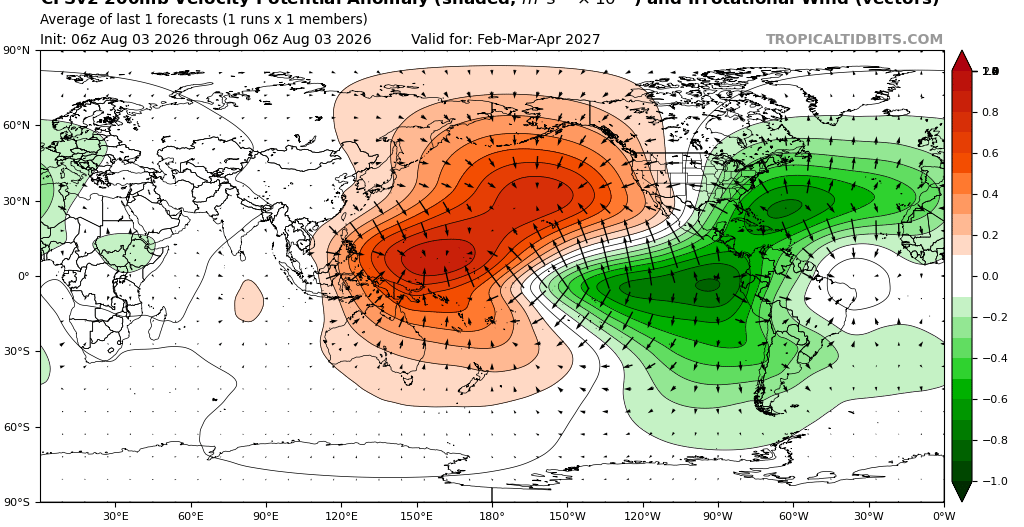
We can agree to disagree. SOI, VP anomalies, and OLR anomalies will also tell me if it’s coupled and I much prefer using those. I’m just not a fan of using it. -
2026-2027 Record-breaking El Nino
LakePaste25 replied to Stormchaserchuck1's topic in Weather Forecasting and Discussion
That was me who was dismissing the MEI awhile ago and you still don’t see me posting about it. Just not a fan of it. It’s equally weighting all variables, only uses one dataset (JRA-55), and like ensonerd mentioned it’s limited to the first EOF. I felt like it made the 2023-24 event weaker than it was even compared to the RONI, thanks to the rare -PMM that went with it. -
2026-2027 Record-breaking El Nino
LakePaste25 replied to Stormchaserchuck1's topic in Weather Forecasting and Discussion
Yes. -PDO is not the cause, it’s an effect of the pattern. -
2026-2027 Record-breaking El Nino
LakePaste25 replied to Stormchaserchuck1's topic in Weather Forecasting and Discussion
How is 55 degree water “overriding El Niño”? I’m sorry I just don’t buy that -
2026-2027 Record-breaking El Nino
LakePaste25 replied to Stormchaserchuck1's topic in Weather Forecasting and Discussion
For the NH at least, it appears to be a better fit for +PMM, which is an actual pattern driver much more so than the PDO.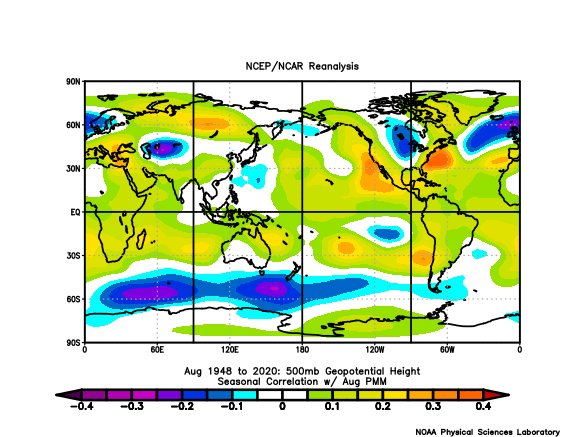
-
2026-2027 Record-breaking El Nino
LakePaste25 replied to Stormchaserchuck1's topic in Weather Forecasting and Discussion
Not exactly strong correlations to begin with in the NH, with the exception of the low southwest of the Aleutian’s that appears to be displaced about 60 degrees east. -
super el nino banter thread
LakePaste25 replied to forkyfork's topic in Weather Forecasting and Discussion
TBH i’m not really thrilled on how mild it’ll be but I also like extremes, and this will be the most extreme El Niño on record, which fascinates me. Plus I think the +QBO could really reinforce it. It should be interesting -
super el nino banter thread
LakePaste25 replied to forkyfork's topic in Weather Forecasting and Discussion
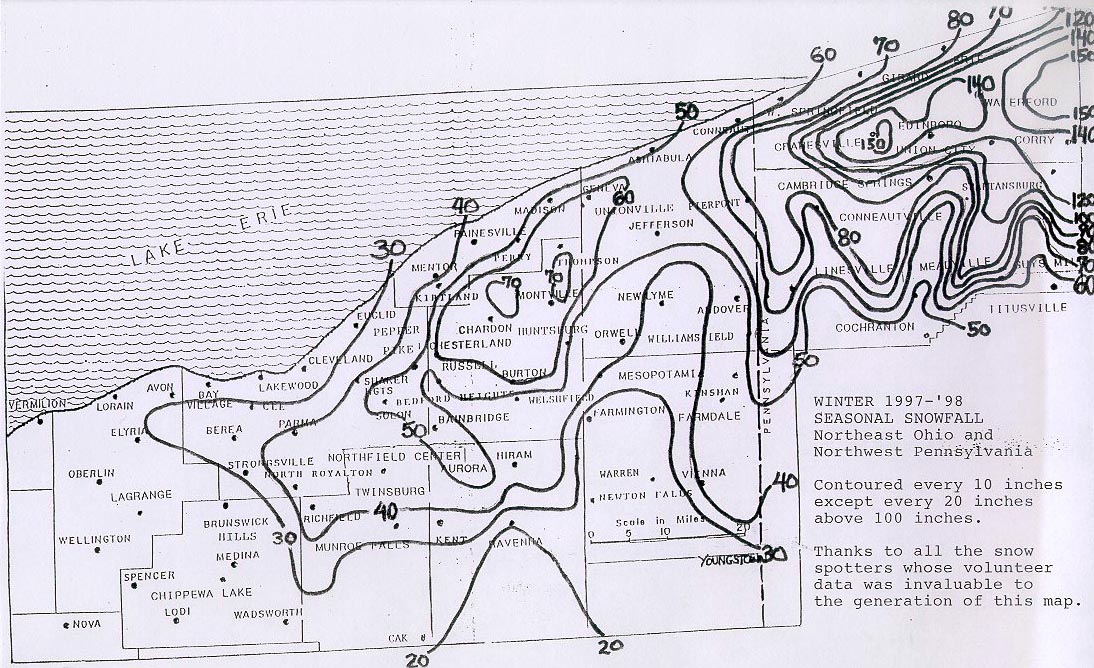
Those late phasers are always solid here for NW flow up the hills. 97-98 was pretty decent here. When they phase early as full coastal blizzards, I tend to do worse because they usher in polar high pressure too quickly. Happened a lot in years like 09-10. I don’t expect even 97-98 again considering how much it’s warmed since then but I’ll take an active coastal track regardless if most are rainstorms. Also looking forward to watching SVR outbreaks down south.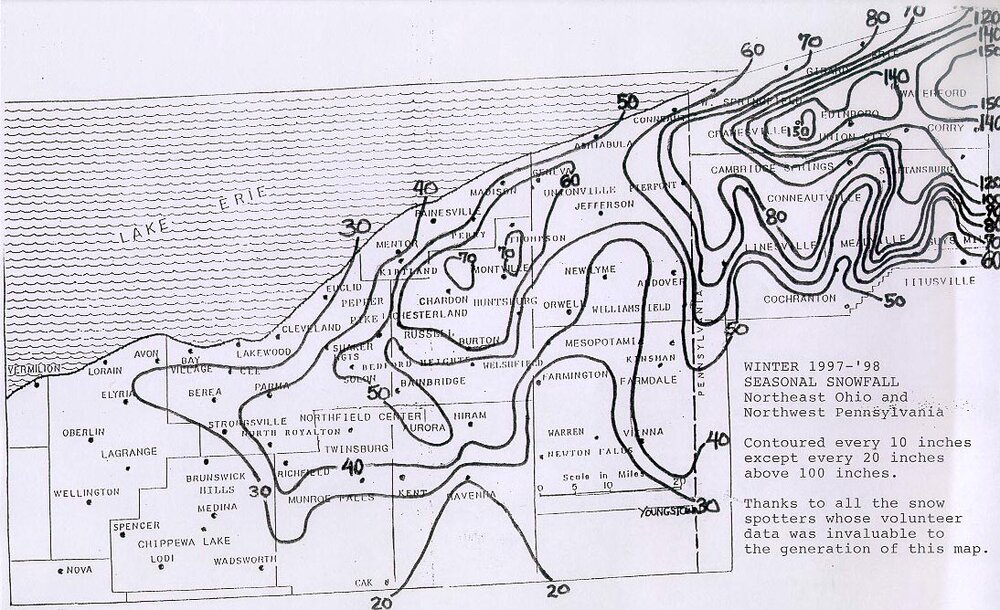
-
2026-2027 Record-breaking El Nino
LakePaste25 replied to Stormchaserchuck1's topic in Weather Forecasting and Discussion
I’m thinking weak to moderate positive (+.5 to +1.5) peak before it dips negative later next summer and probably doesn’t flip back to long term positive until the 2030s. -
2026-2027 Record-breaking El Nino
LakePaste25 replied to Stormchaserchuck1's topic in Weather Forecasting and Discussion
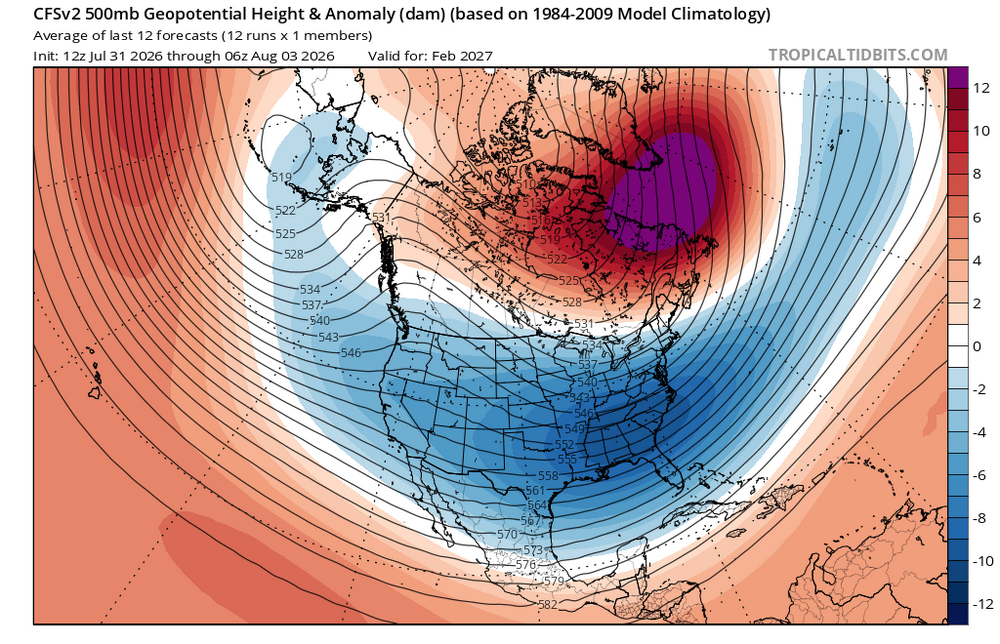
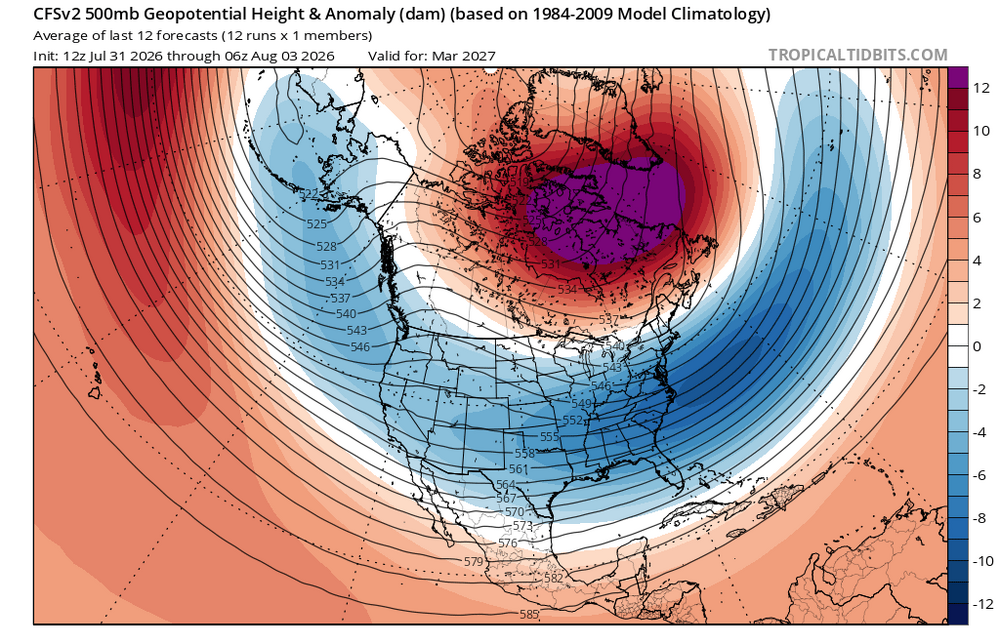
I can’t get over how CFS is just absolutely bonkers with how extremely east based it models the Nino. Convection/Hadley cell is so far east that the SE canada/NE US ridge backdoors itself into a -NAO. Likely overdoing it and we probably see something east of CANSIPs but west of the CFS, but it’s interesting to see the patterns that it is spitting out. Very possible this ends up being the most east-based El Niño in observed history.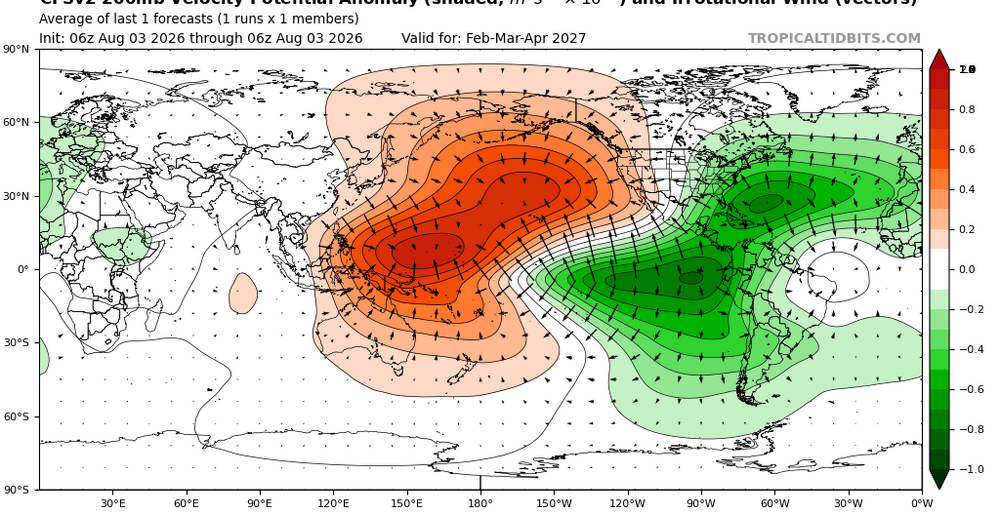
-
2026-2027 Record-breaking El Nino
LakePaste25 replied to Stormchaserchuck1's topic in Weather Forecasting and Discussion
To be fair, the ONI is actually being punished here because of how fast the W Pacific has been warming. So for the purposes of trying to determine the extent of suppressed convection in the MC/W Pac and enhanced convection near the dateline into the E pac, RONI seems to be useful here -
2026-2027 Record-breaking El Nino
LakePaste25 replied to Stormchaserchuck1's topic in Weather Forecasting and Discussion
PDO correlation +PDO = more troughing in the east. 97-98 would’ve been an extreme torch without the +PDO.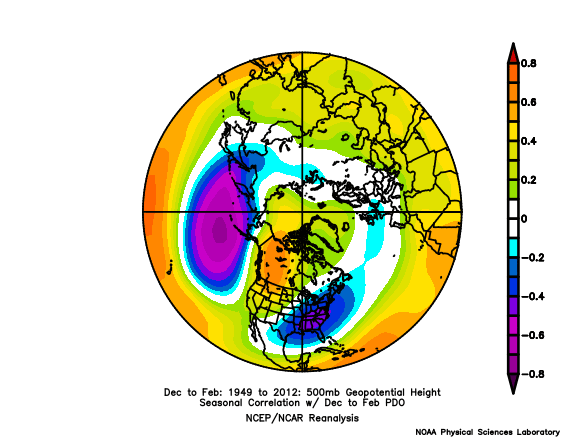
-
2026-2027 Record-breaking El Nino
LakePaste25 replied to Stormchaserchuck1's topic in Weather Forecasting and Discussion
It interferes by *weakening* the SE trough and making it *even warmer* meanwhile a 97-98 type pattern increases the chances of a big snowstorm via the active southern stream. That winter came very close to multiple KUs that barely missed the cold air phase. 82-83/15-16 produced one and had +PDOs as well. In my several years of tracking weather it has always been preferable to have a +PDO and is backed up by evidence. “-PDO means less el niño so it’s snowier” is such a wrong way to view it. You *always* want a +PDO in the East, and hopefully it flips and we get that! -
2026-2027 Record-breaking El Nino
LakePaste25 replied to Stormchaserchuck1's topic in Weather Forecasting and Discussion
1972-1973 is the only super Nino analog we have of the -PDO not flipping into winter. However, the RONI peaked at +2.3 and we are potentially going much higher than that this time around, so it could be such an overwhelming force that it flips to + -
2026-2027 Record-breaking El Nino
LakePaste25 replied to Stormchaserchuck1's topic in Weather Forecasting and Discussion
Are there really weenies out there that think a -PDO will “counteract El Niño and make it colder and snowier?” That is such a baseless take. -PDO interferes in a way that makes it warmer, not colder. You WANT it to flip +PDO. I think the sad part is, some of these accounts know this but they’re lying and giving out doses of hopium to the less informed weenies just for money. -
2026-2027 Record-breaking El Nino
LakePaste25 replied to Stormchaserchuck1's topic in Weather Forecasting and Discussion
-
2026-2027 Record-breaking El Nino
LakePaste25 replied to Stormchaserchuck1's topic in Weather Forecasting and Discussion
97-98 was not half bad for the Great Lakes/SNE if i remember correctly. December ‘97 was decent here while it was a total shutout in 2015. -
2026-2027 Record-breaking El Nino
LakePaste25 replied to Stormchaserchuck1's topic in Weather Forecasting and Discussion
CANSIPS now getting close to a +4C ONI peak…