


SnowGoose69
-
Posts
16,881 -
Joined
-
Last visited
Content Type
Profiles
Blogs
Forums
American Weather
Media Demo
Store
Gallery
Posts posted by SnowGoose69
-
-
13 minutes ago, olafminesaw said:
Who would have thought as of a year or two ago the NHC would already be explicitly using AI models as part of their forecast in 2026 (courtesy of Google, of all entities)
I still am reluctant to trust AI models too heavily. We saw them botch the NE blizzard last winter and also with tropicals it seems til the system reaches peak intensity or near it their tracks undergo more drastic shifts than non AI models.
-
 2
2
-
-
1 hour ago, 40/70 Benchmark said:
I was thinking last night that the correction vector is usually east with a poleward moving tropical cyclones and an approaching front.
Yeah always is the case. I think it could come in as far east as maybe Destin but don’t think it’s going much east of that
-
1
-
-
I’m wondering if 2020’s year of fiasco is the reason this name isn’t retired lol. I was sure Isiaisis was retired after the damage it did in the NE in 2020 but usually the state governments or FEMA departments need to issue requests for retirement and probably due to everything else going on they never did so
-
3
-
-
AI's seem too fast with track
-
1
-
-
Obviously early RI would probably make this stronger at landfall too as if it becomes a Cat 3 extremely rapidly over the next 60 hours that would allow it to do the whole "making its whole environment around it" thing
-
1 hour ago, 40/70 Benchmark said:
I'm a bit torn on how the disconnect between the PDO and ENSO may go.....I see some indicate that it could force a colder outcome in the east, but that definitely didn't work out in 2023. I see how it could weaken the GOA low, thus reducing the proclivity for +EPO/strong Pac jet, but I also see that adding an element of destructive interference via elevated se heights....I tend to place greater emphasis on the latter, but perhaps we are especially prone to severe bouts of winter when said SE heights relative to expectation relax.
I think we've come a long way the last 2 winters since 23-24 where it seems like the odds we get any 23-24 or December 2015 type thing with this El Nino are going down quite a bit. I really don't think we will be seeing any La Nina looks with this Nino. I think Dec will much more resemble 72/82/97 here than it will 2015, that was just a rare example of where the MJO somehow totally overwhelmed a strong ENSO signal and 23-24 again looked like 18-19 or 19-20, whichever one was the Nino where the atmosphere never coupled. There are some weather bets on some of the rogue sites for cities like ATL/BHM/BNA having zero 70 degree days from 12/1-1/31 this year, that has not happened for any of the 3 since the winter of 13-14, may happen this year I think.
-
2
-
-
Just now, Brian5671 said:
going to be a disaster for sure (The model)
I guess the ECAIFS to a degree has that idea too but its evolution of the far west drift is quite a bit later on and would make sense.
-
Not exactly promising to see the RRFS doing something even more wacky than the NAM. Albeit the RRFS version available is not the one I believe will be going operational
-
1
-
-
3 hours ago, 40/70 Benchmark said:
That is an east-based El Nino with a basin-wide expression across the hemisphere on the EURO...no doubt. I think those expecting a season completely devoid of winter weather on the east coast are going to be in for a surprise if that model is correct.
The only thing I am sure of is it will probably act much closer to 82-83/97-98 than it will 15-16 and 23-24, those last 2 just had numerous oddities that more resembled La Ninas, there is probably no chance that is happening this time, especially since the last 2 winters showed signs of moving away from that pattern we had been seeing for the previous 5-6 winters.
-
19 minutes ago, bluewave said:
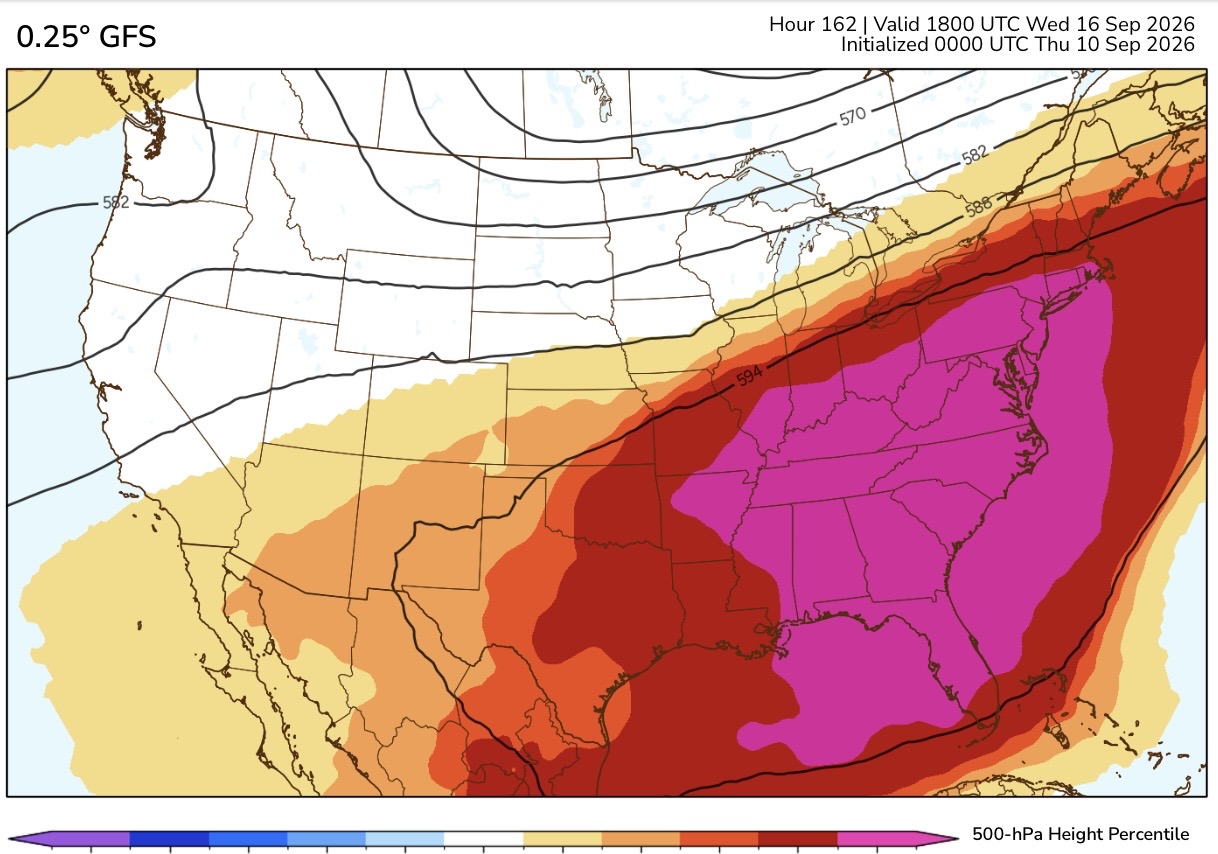
Both the Euro and GFS are hinting at a record Southeast ridge next week.
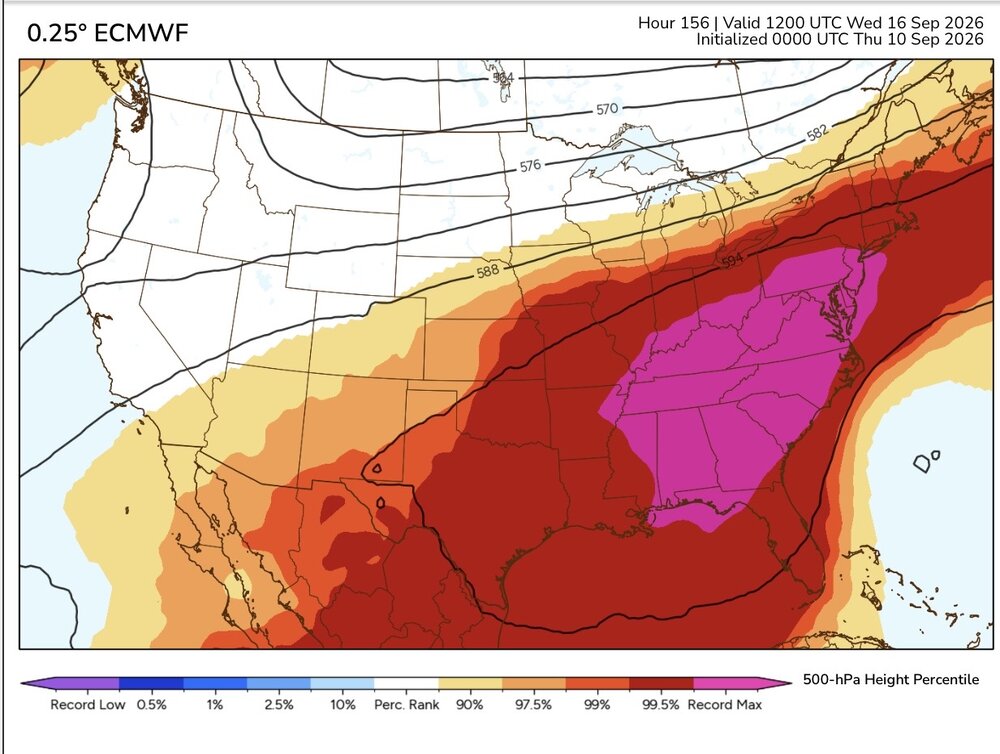
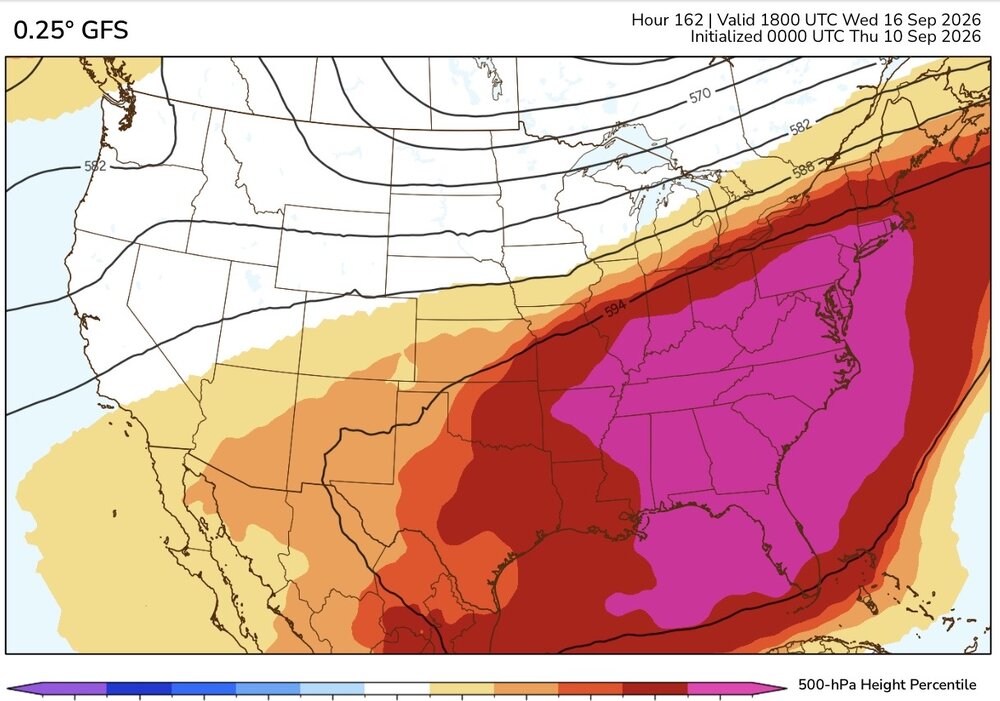
I expect some 2019 records get broken in a few places. Fortunately looks like it’ll retrograde back west soon after so I don’t see persistence of the heat as much as that year
-
2
-
-
27 minutes ago, IrishRob17 said:
A meso discussion was issued in the last 15 minutes, watch looks likely by 5pm. I’m hoping it’s south of me.
Both the 18Z HRRR/RRFS expect massive convection over the area by 2030-2130Z. That seems unlikely. I do think areas south though in NJ may see extensive storms later
-
We'll see if anything happens. I lean towards it being mostly city south now as I think atmosphere may have been too overworked from earlier rain
-
 1
1
-
-
20 minutes ago, winterwarlock said:
Whats the timing 9f storms tomorrow?
Mainly afternoon?
Low confidence really, I think outside of far west areas if the warm front from 1-5pm does not generate anything we may see nothing but a weak line of showers after 8pm.
-
2
-
-
14 minutes ago, NEG NAO said:
and pop up showers are starting to show up on radar
Unsure how much TS we see, not impressed with the instability and the front is still back north...so far the few cells that went off made the mid 20s on tops but collapsed
-
 1
1
-
-
6 minutes ago, nycsnow said:
Line really crapped the bed looks weak
Yeah the HREF was onto that idea for sure showing very little TSTM risk east of about the mid point of NJ
-
1
-
-
5 minutes ago, Stormlover74 said:
If that. Rrfs dries out the 2nd one as well giving us nothing
Yeah the HREF probs for TS here are not that high 22-01z...especially once east of W NJ
-
Looks like 23-01z. Some models suggest activity tomorrow well north of the mid-Atlantic activity, likely keying in on a boundary or subtle shortwave but I'm thinking tomorrow is dry
-
1
-
1
-
-
50 minutes ago, CAPE said:
That's not typically a thing in an El Nino. And on a smoothed climate model depicting a long wave pattern over a 3 month period months in the future, the only thing that can be gleaned is the general idea and its somewhat subjective. There isn't really a notable signal for a -NAO on this panel imo. A -EPO.. yes.
December 2015 somehow had it but that was a product of a wild raging MJO through 3-4-5 if I recall right, December El Ninos do tend to be warm but its rarely due to an SER
-
On 7/29/2026 at 9:49 AM, forkyfork said:
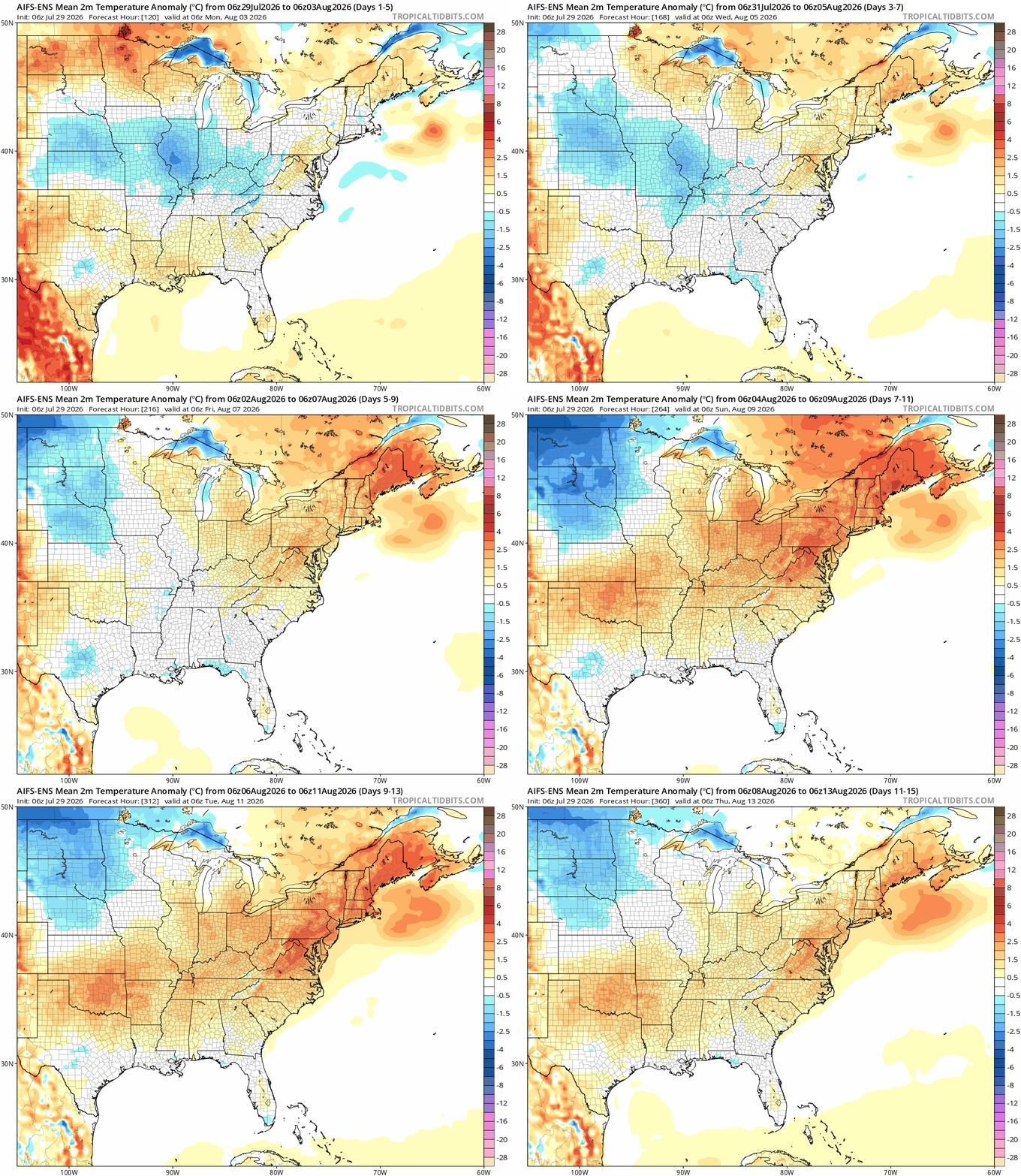
heat is coming back
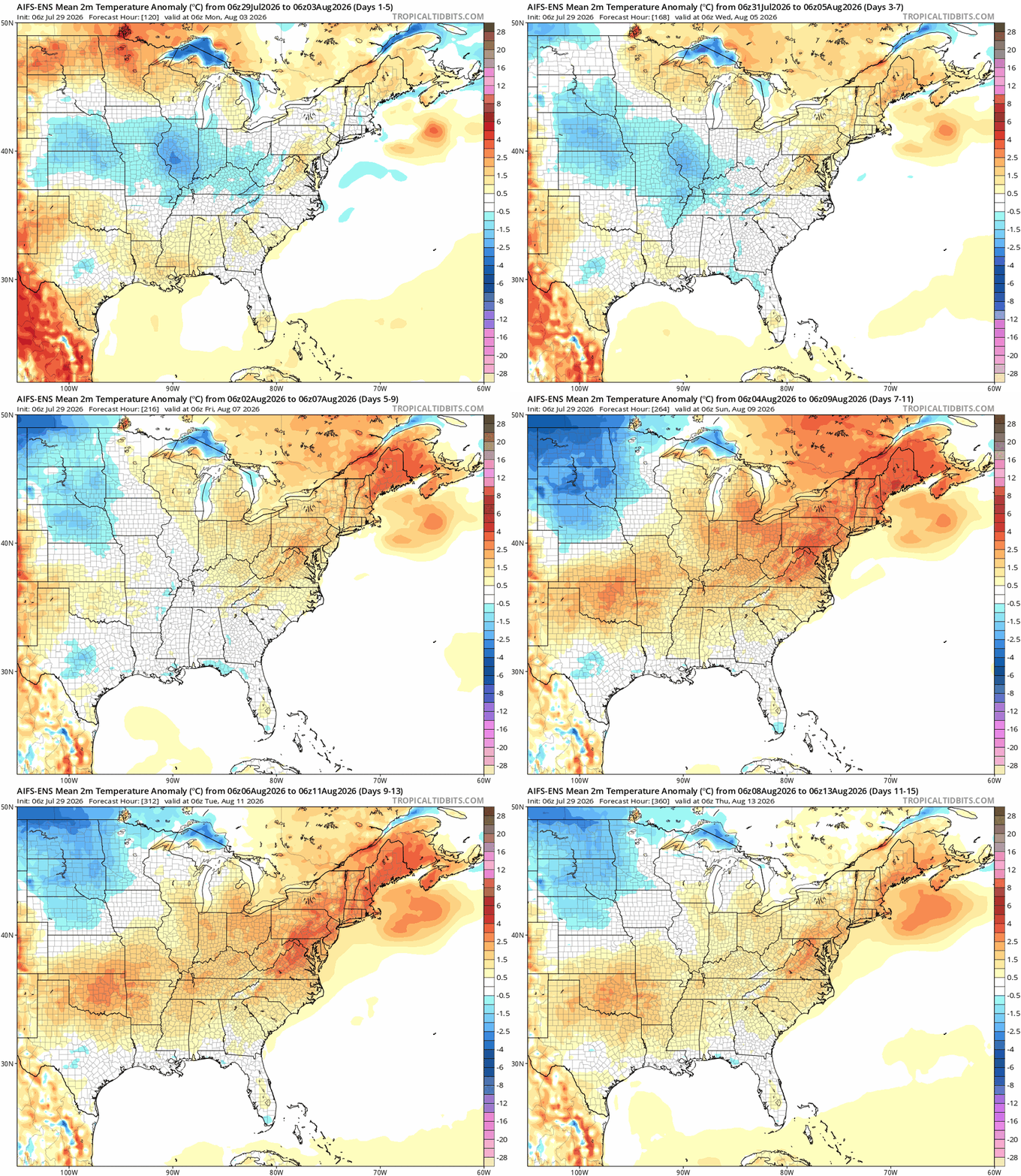
I think a bigger concern there 8/12 and later on the ensembles is the WNW flow if the ridge sets up that strong over the Plains/Midwest. That is going to send big time smoke into at least New England if any fires are still burning.
-
1
-
-
The area consolidating now over W NJ and E PA near ABE is what most likely could hit NYC but even that might pass north of them...would need to see more activity fill in down towards PHL
-
Isolated cells now E of the main area might hit the NYC area or W parts of Queens/Brooklyn
-
2 minutes ago, NJwx85 said:
It’s the same people that call bust before an event even starts every time. They over analyze the radar instead of just letting things play out.
I think relative to what models showed yesterday this is more W-NW overall. I think this initial around stays mostly Newark west now, its the activity post 22Z that may be more of a factor to the east.
-
1
-
-
3 minutes ago, Poker2015 said:
Everything is developing west of Philly and going too far north for that area.
I'm thinking my area right on 78 is too far southwest for the heaviest.
Those areas more south will likely be hit later because of the surface low that forms. You can see on the 3km NAM and HRRR that when that low forms in S PA later the precip explodes in those areas.
-
8 minutes ago, jconsor said:
Recent guidance targeting northern NJ for heaviest rainfall: https://x.com/BhatiaKieran/status/2082103580756971568
This event feels easier to forecast than last Tuesday since energy is more consolidated and its also arriving later and not during the AM.
-
1
-
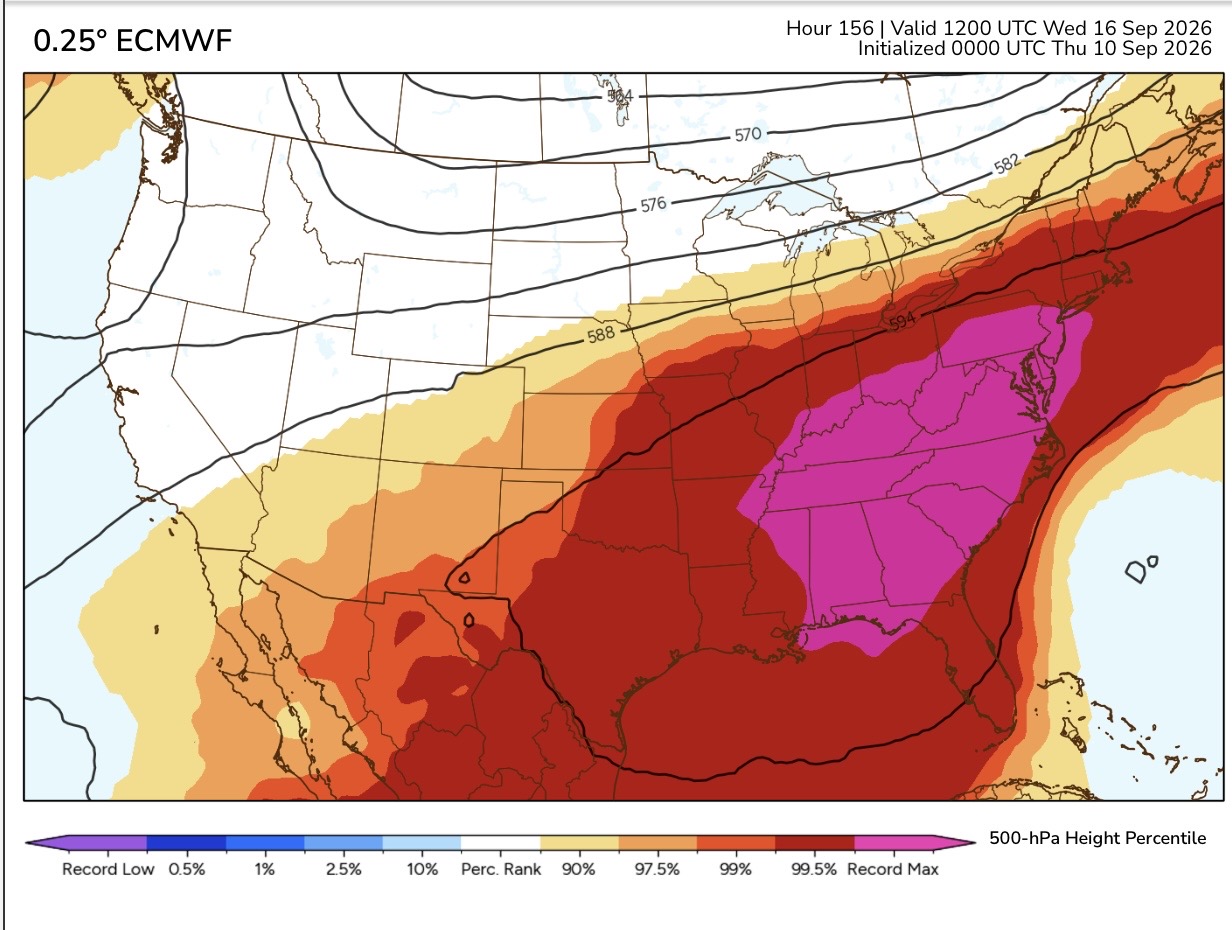
Hurricane Isaias
in Tropical Headquarters
Posted
Tornado risk could be significant, especially if it landfalls PNS east but overall the impacts on winds should be more in line with Michael in your area vs Irma/Zeta. I don't see 40-50-60 mph winds at the moment based on the size of the system and the likely track, you'd need it to come in markedly more east than even the east edge of the cone. The direction of the winds though being S-SE is risky however as those are infrequent directions with high speeds over GA. WNW-ENE are more common. One of the few areas JB makes good points is tree roots being used to winds from various directions. When they are, not severe damage can happen even at speeds of 45-50 equivalent to what you might see at 60-70 mph, especially if the ground is saturated.