vortex95
-
Posts
728 -
Joined
-
Last visited
Content Type
Profiles
Blogs
Forums
American Weather
Media Demo
Store
Gallery
Everything posted by vortex95
-
"Don’t do it" 2026 Blizzard obs, updates and pictures.
vortex95 replied to Ginx snewx's topic in New England
Sounds like CoastalWx! LOL. Earlier this winter, he went "I AM DONE WITH NNE" b/c they were doing well so early. -
"Don’t do it" 2026 Blizzard obs, updates and pictures.
vortex95 replied to Ginx snewx's topic in New England
I am looking at SNE as a whole. Regardless of what happens for rest of the snow season, all 5 SNE CLI sites will have an avg or above avg winter snowfall, w/ PVD and BDR well above avg. That's how you have to look at it b/c having a "CoastalWx IMBY I want it all" () attitude going to frustrate/disappoint one often! Not every winter is going to be a 1992-93, 1995-96, 2004-05, or 2014-15. I would say earlier in Jan before the first biggie when CoastalWx got 6" and said it looked "VIOLENTLY BEAUTIFUL" out there, that said a lot! Little did he know that nearly 50" of "white gold" was coming for Weymouth in the next month! And the two blockbuster snowstorms this winter were rather non-standard meteorologically. The Jan event has among the weakest sfc lows I have ever seen for so much coverage of 20"+, and the most recent storm? Well, I talked about its "weirdness" earlier on this thread. And how about the model forecasts leading up to that storm? What a "coup" for the GFS, and in general, the long and medium range forecasts for all the global models were really bad/inconsistent! -
"Don’t do it" 2026 Blizzard obs, updates and pictures.
vortex95 replied to Ginx snewx's topic in New England
What about winter for Weymouth? Scott doesn't like the TORCH on the 6-10 day! Almost everyone did well this winter DCA-BOS. Not epic levels for snowfall, but *far* better than the previous 4 winters. How many winters has Weymouth had two 20"+ events? Probably can count on one hand. So I don't want to hear it Scot!! -
That's a good point. That table is not updated as the paper it was taken from is from Dec 2013. Do you have the storm surge for those days in Jan 2024?
-
"Don’t do it" 2026 Blizzard obs, updates and pictures.
vortex95 replied to Ginx snewx's topic in New England
Atypically sharp/confined big S+ area, given the center passed just outside 40/70. The screwy 500, as noted in a previous post, probably resulted in this. The 4" area DC area S and SW is overdone. DCA only had 1" for the event. 3" nrn suburbs. -
Gust 91 mph IOSN3 and 94 mph Seabrook. "Double" high tide at BOS on the gauge and it was fortunate the the storm tide did not coincide w/ high tide. It was so flipped/wrapped up, NYC got 20" snow on a NW. 7"+ rain total in SW ME which is an enormous rain total for a single storm in the winter month NEUS. The CAA pattern was whacked w/ temps dropping sharply on the S Coast as winds shifted to the S! CoastalWx liked the snow squalls all over the place for two days after the above as the upper low stalled right over the region! I thought t was as Shapiro-Keyser cyclone (T-bone frontal fracture), which are rare in the NEUS, but I came across the paper recent and it was some weird hybrid thingee! I attached the paper from GYX. Look at the sfc analyses in the paper for the evolution of the sfc low. Went from N-S to W-E axis in short order ("instant occlusion"). Also, on the last page, a list of the top 17 storm surges at PWM. I thought the Bliz of 78 was PWM's highest, but 4 exceeded it and 2 others tied it. ta2013-03.pdf
-
"Don’t do it" 2026 Blizzard obs, updates and pictures.
vortex95 replied to Ginx snewx's topic in New England
-
"Don’t do it" 2026 Blizzard obs, updates and pictures.
vortex95 replied to Ginx snewx's topic in New England
-
"Don’t do it" 2026 Blizzard obs, updates and pictures.
vortex95 replied to Ginx snewx's topic in New England
Yes, pattern got blocked up sending all systems S of SNE. -
"Don’t do it" 2026 Blizzard obs, updates and pictures.
vortex95 replied to Ginx snewx's topic in New England
-
"Don’t do it" 2026 Blizzard obs, updates and pictures.
vortex95 replied to Ginx snewx's topic in New England
Confirmation bias, one of the most common logical fallacies and *rife* in society, as has always been, but the age of information overload has exacerbated it. -
"Don’t do it" 2026 Blizzard obs, updates and pictures.
vortex95 replied to Ginx snewx's topic in New England
Thanks for the info/input. The 2/2/1976 storm, yes 957 mb at CAR is their lowest pressured on record. BOS had 965 mb for its second lowest on record (has this been matched or exceeded since?). Bliz of 93 was about 963 mb when it passed over central MA (up from 960 mb peak over the Mid-Atlantic). What is the "OV Blizzard?" The Feb 1976 one? The Jan 2018 blizzard offshore SE of ACK was 950 mb. I seem to recall in the New England Wx Book (Ludlum) stated a storm SE of ACK in the mid 20th century was 947 mb. The "CLE Superbomb" Jan 1978 lowest was 956 mb in Mt Clemens MI. The New England non-tropical pressure record is 955 mb at BID set on 3/7/1932. And Canton NY had 955 mb in a Jan 1913 storm. These are the lowest non-tropical pressures for the CONUS, although very close is 955.2 mb at Bigfork MN set on 10/26/2010. The -
"Don’t do it" 2026 Blizzard obs, updates and pictures.
vortex95 replied to Ginx snewx's topic in New England
So did the high winds knock the ratios down as expected? Never had realized that until it was brought up leading up to this past storm. -
"Don’t do it" 2026 Blizzard obs, updates and pictures.
vortex95 replied to Ginx snewx's topic in New England
You get *that* much "mashed potatoes," that's whats going to happen. Not often you get so much snow that is wet/high LEQ for the duration of the storm. Same thing happened in the DC area for the storm last month (plows getting stuck/equipment breaking), but for a different reason. 6" of snow, followed by 2-4" of PL, then a seal coast of FZRA! Then wicked cold after. It turned into a glacier quickly ("snowcrete" came up as a term, new one for me!) and made snow removal unusually difficult. This is why I say that I would take 3 ft of fluff over 6" of mashed potatoes any day, at least when it comes to overall impact and the hassle of driving in it and cleaning it up! -
"Don’t do it" 2026 Blizzard obs, updates and pictures.
vortex95 replied to Ginx snewx's topic in New England
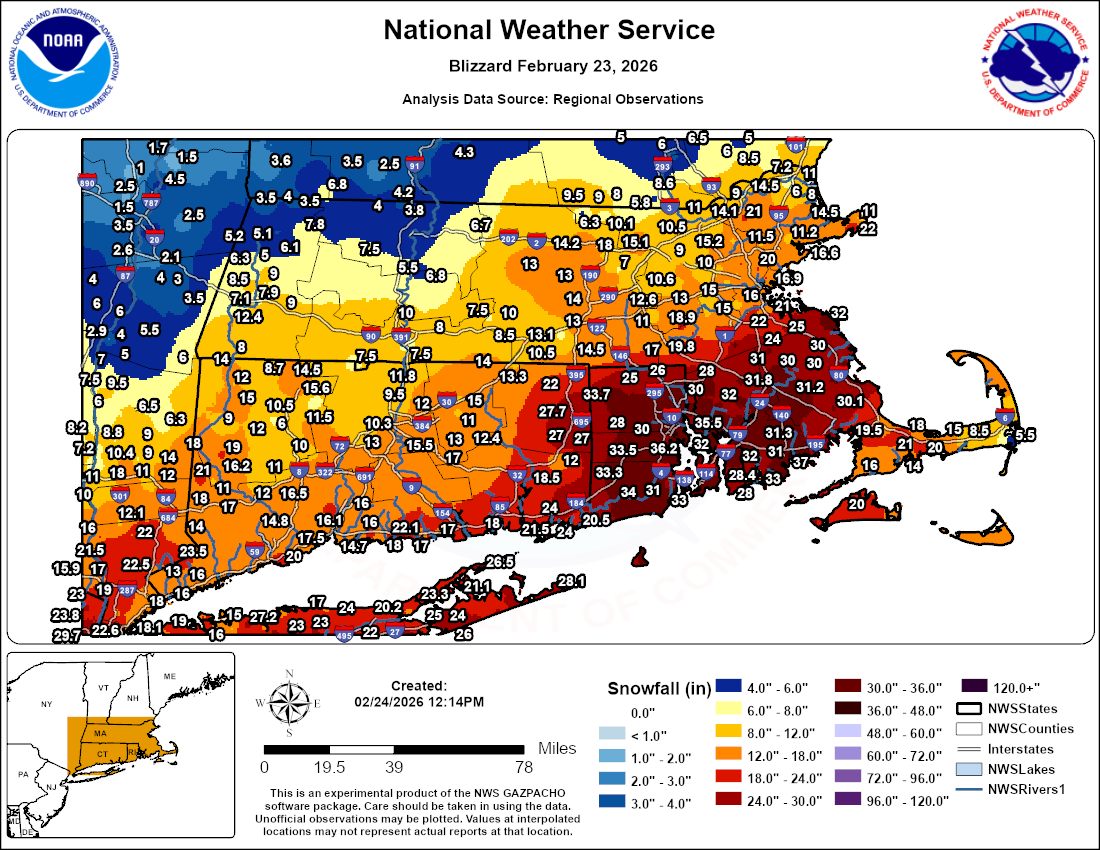
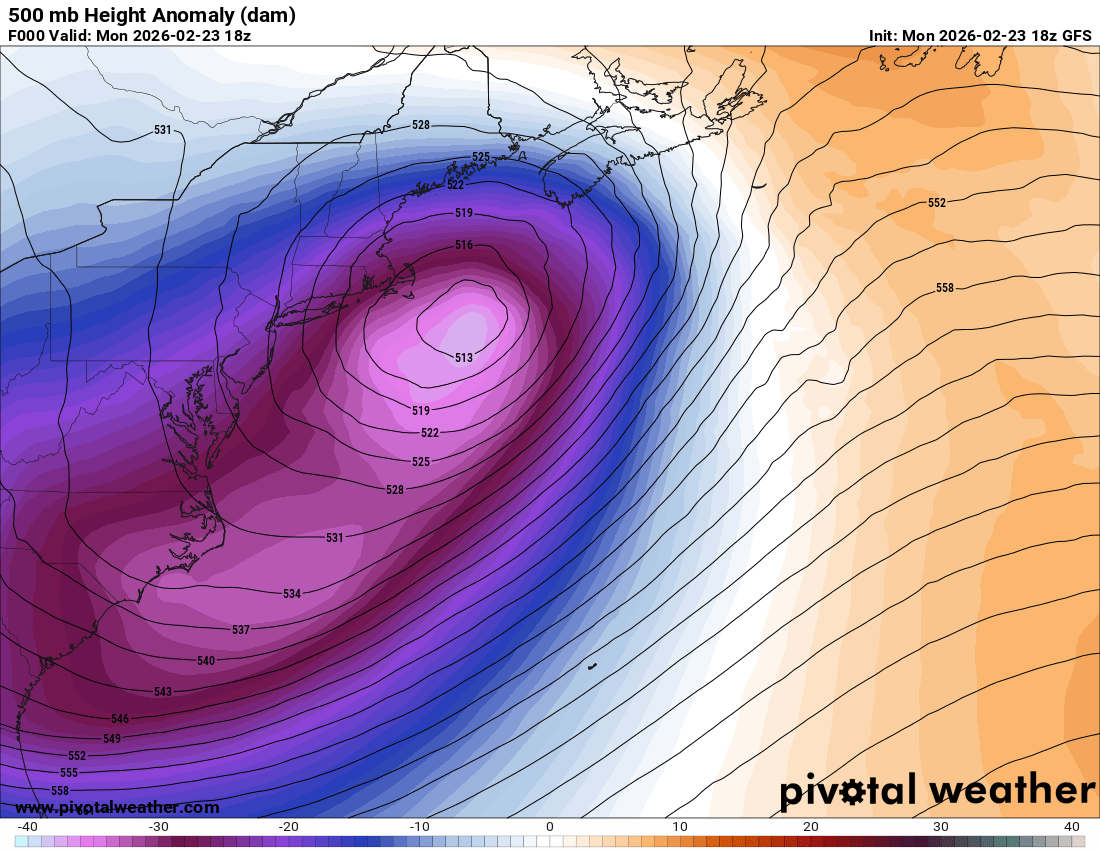
Talking about low track, this storm was a bit odd. It tracked just outside the benchmark, yet you look at the SNE snowfall plot (attached), things stand out. To have ptype issues or lacking big snowfalls on the Outer Cape, and yet heavy snow lacking once you get to the NH border and in the Berks, and monster totals "wedged" in-between, is atypical for a New England snowstorm. Typically, if the S+ does not make it into NH or Berks, there are *no* ptype issues in SNE or any issues are corrected quickly due to the ageostrophic flow/backing winds as the low wraps up well to the S and SE, so even the Outer Cape will do just fine, at least later in the winter season. Sure, PVD gets an all-time snowfall smashed, but BOS/ORH/CEF/BDL not even top 10, in fact, not even *close* for any of these cities? That's quite a disparity, probably the biggest one on record for a New England snowstorm. So in some ways, this was *not* a classic snowstorm for SNE or New England. The storm's big S+ area was rather confined and small N and NW of the low center, and the models overdid the big amounts in Berks and srn VT/NH until the last minute. I was confident 15-25" would make it into these areas, why not?, based on the track of the sfc low, that's what you'd expect! Do I sound pedantic? Well, the details count here, as they do in all sciences. Subtle differences not so obvious can and are *huge* as to sensible wx for an event. I go back to my previous (long) post on this thread, "one size does not fit all" and thus you can't gloss over any event calling it "perfect" or "classic" or "what it should be." That's not how the wx, climate, and atmosphere work. One explanation I think for the odd snowfall pattern/gradient is the cut-off 500 low stayed well offshore. For the best expansive comma head S+, you want sfc low right near the benchmark, but the 500 low to pass right over or very close to the BOS-ORH-BDL-PVD zone. You get the biggest height falls and max dynamic cooling aloft, so "part 2" of the storm (no mdt-hvy snow break though) is solid fluffier, more convectively-driven snow. In this case, the 500 low as it passed SNE was almost co-located w/ the sfc low. That's not common for a classic blockbuster for New England. Why was that? Well, no blocking over NAMR for one. In fact, deep 500 low near Greenland! Second, no polar jet at all. Just one big solid jet across the cntrl/srn CONUS. Hard pressed to call it a STJ though! And remember, some posts I saw elsewhere on this, the CONUS pattern 2 before the storm, it was pointed out, "does this look like a 500 flow over the CONUS and a blizzard on the E Coast 2 days later??? (attached is the 2/20 12z 500 analysis). Where is your cold confluence over the NEUS? No Hudson Bay vortex! See what I mean, non-standard not just in the smaller-scale for the event itself, but the larger-scale across NAMR!!! Third, the 500 low itself, going by its last closed contour, was rather small. Look at 18z 2/23 GFS 500 analysis below. The last closed contour extended only from central ME to about RIC's latitude. Also, the elongated of the trough as a whole to the SW?, again, not something you see typical for a KU! Comments?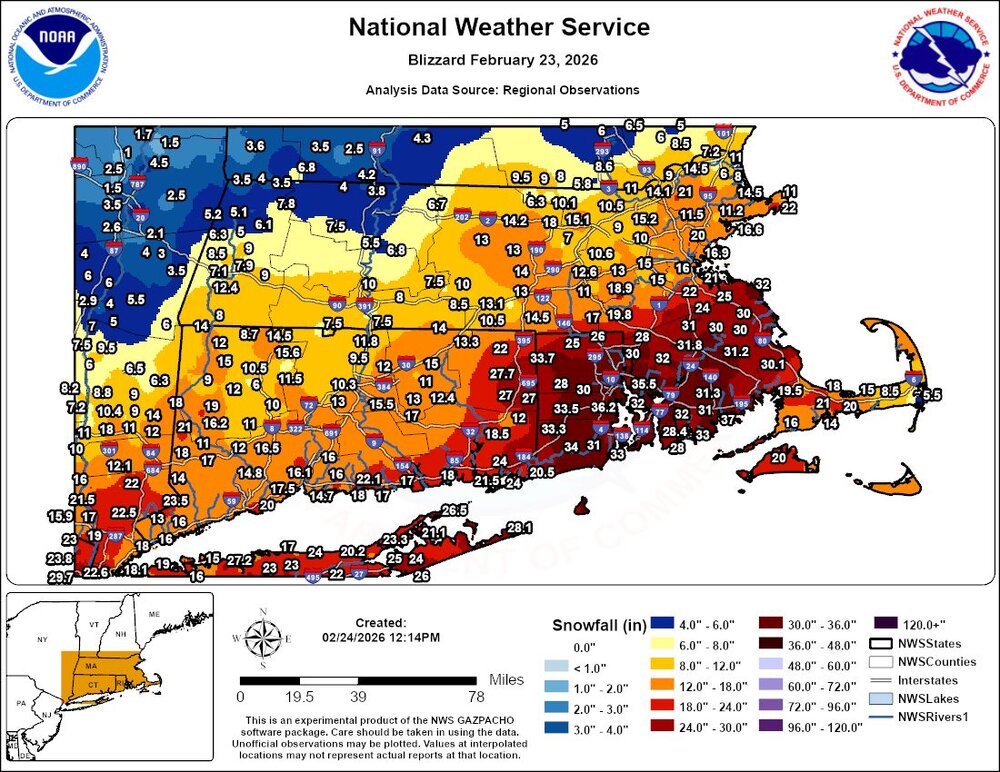
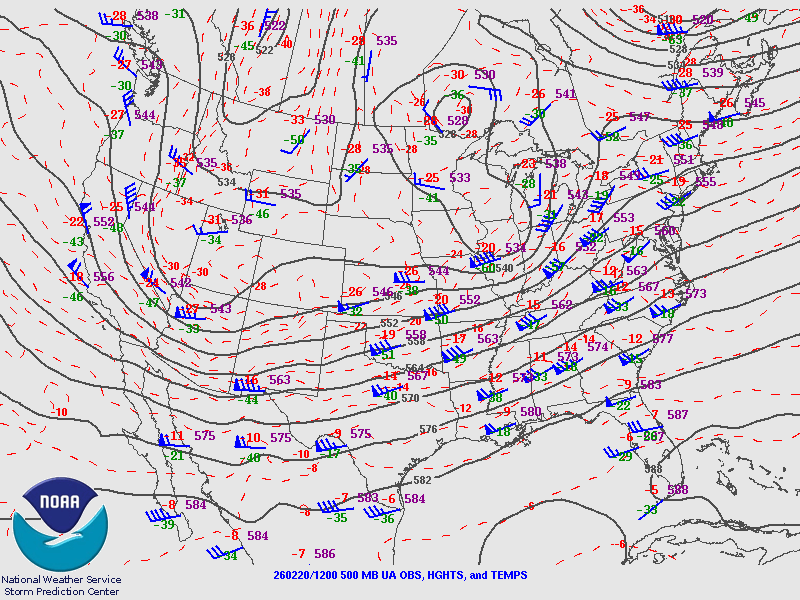
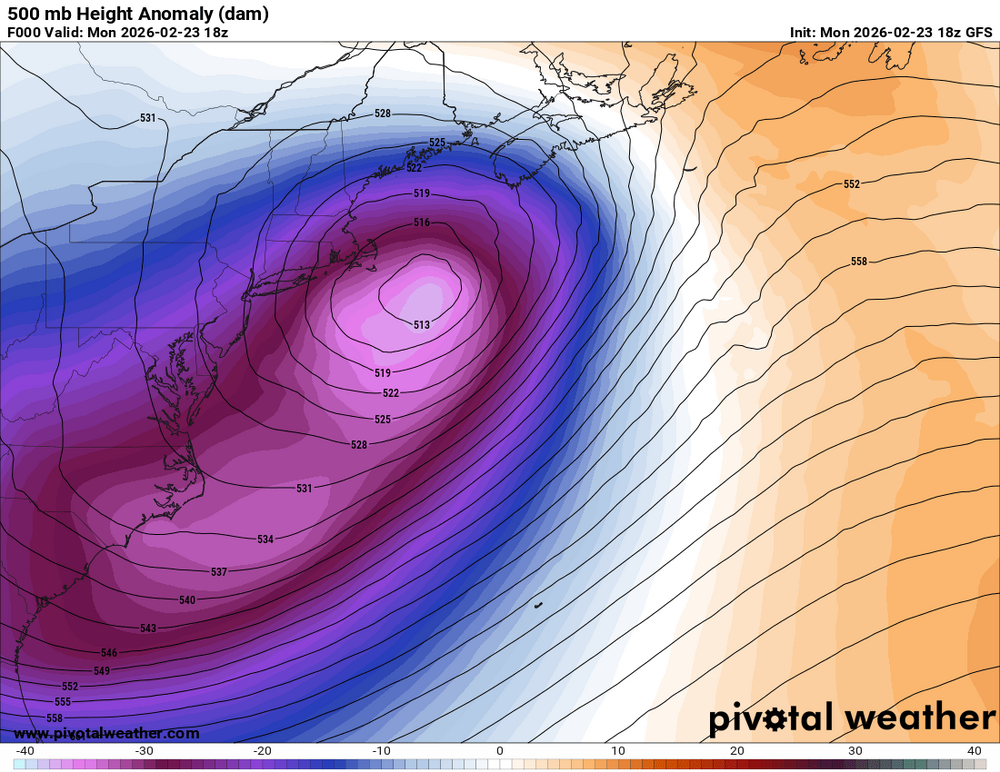
-
"Don’t do it" 2026 Blizzard obs, updates and pictures.
vortex95 replied to Ginx snewx's topic in New England
The below is a bit of a rant, but I know the snow weenies of this forum will appreciate detailed and proper meteorology when it comes to snowstorms! And I cannot emphasize this enough, when you know wx history so you can quote examples to support your position/argument, it makes a huge difference (see "one size does not fit all" statement below). Concerning the link in the quoted post. "Goldilocks situation" -- first I have heard of this label concerning a snowstorm, at least for track. The Blizzard of '78 tracked farther NW, and look what the did, snowfall heavier both in absolute totals and areal coverage. https://www.ncei.noaa.gov/monitoring-content/snow-and-ice/rsi/nesis/19780205-19780207-5.78.jpg There are other cases, of course. There is no studies or literature I am aware of that say, "if a low pressure takes X track, that means the max amount of snow will be Y" or "X temps present, then Y snow." Actually, when you think about it meteorologically, these statements are ridiculous IMHO. Low pressure track is one of *many* factors for total snowfall, and can't be treated in a vacuum. The list is long, and I know the weenies here know the below, but worthy laying out anyways! 1) High pressure - Its position, NW, N, or NE? How strong/expansive? Is there even a high? (there are a few KU cases where *no* high existed). 2) UA jet structure/features - Is it just the PJ involved (northern stream), or the STJ (southern stream), or both? Is it a full phase of both jets (or s/w trofs)? Position of entrance/exit regions of the jets? When/where does this phase occur relative to the location of interest? 3) Antecedent air mass - How cold is it pre-storm? Low-level cold only or deep layer cold? Is there any cold at all pre-storm? (we know about that -- look at the Blizzard of '97!). 4) Size - How large is the storm, both sfc and aloft? Is it just a little "dent" at 500 (Feb 1983), or a massive 5 contour 500 cut-off (May 1977)? 5) RI - At what lat/lon does the RI take place, if any RI at all? RI is not required, neither is an intense sfc low - see the big snowstorm last month. 6) Speed/direction - Does the storm stall/slow/loop or move along? And slow movement for a blockbuster is not required. Look at the Bliz of '93. As typical w/ Gulf waves, it *flew* NE! And then you get the weird outliers, like March 8-9, 2013 (a CoastalWx fav). Low pressure 600 mi SE of ACK and yet 1-2 ft in parts of SNE. MQE gets 29.8" for a top 5 snowstorm (up to the time). So how does the work for a track correlation? The point is there is no "one size fits all" for snowstorms, and wx in general. Oh, we try to force things into such categories/classes, but nature doesn't give a hoot about what we try to do or think! And the article linked, in general, it has some glaring generalizations and glosses over important details, as to dilute things down for general public consumption? But it not just about things being diluted, some things are factually wrong or overstated/exaggerated. "The nor'easter quickly intensified to easily qualify as a “bomb cyclone" and featured thundersnow and lightning, two things rarely seen in snowstorms." First, "thundersnow and lightning" treated as two things? Well, you can't have one w/ the other. Saying "lightning" in this case is superfluous. If you have thunder, you *have* to have lightning, so just say "thundersnow." Second, thundersnow is not rare in snowstorms, or not as rare as claimed to be. Sure, at any *one* location it is rare, but when you include the entire areal coverage of the snow and the existence of the storm itself? "An unusual combination of winter and summer weather — thundersnow and lightning — flashed at times with this storm, thrilling meteorologists on air. That's because “you only see it in the most intense winter storms,” Where does it say thundersnow is only seen in the most intense winter storms? The famous Dec 1996 Cantore ORH video, that nor'easter was pretty avg for a winter storm for intensity. And based on what? Central pressure?, max winds?, total snowfall? You don't need an intense storm to get CSI and thus slantwise convection for thundersnow. The article mentions it if were any colder there would not been as much moisture in the air to feed that snowfall. Really? Anyone ever hear of the fluff factor and snow ratios? How about what happened in Jan-Feb 2015 in SNE, for that snowblitz, it was unusually *cold* for so much snow, and all-time records were set. So absolute total moisture availability is not always a deciding factor, neither are temps! "A little farther inland and its would have lost its ocean energy" Huh? Are we talking about tropical cyclones or baroclinic winter storms? And since when is "ocean energy" required for intense blizzards and snowfalls? See the OH Valley Jan 1978 blizzard (957 mb) or November 1950 Appalachia monster (62" in WV). I could go on and on, but you get the idea! -
"Don’t do it" 2026 Blizzard obs, updates and pictures.
vortex95 replied to Ginx snewx's topic in New England
Really tired of these kind of statements from various media outlets and organizations (not upset at you MJO812 ), as if it is AK vs. the rest of U.S. for cold/snow, and anything in the CONUS for cold/snow that "outdoes" AK means it is significant. These kind of statements are more for content and engagement bait that drives the social media algorithm than anything else. Anchorages avg winter snowfall is 76.4" and so far this season, they have 65.6" as shown above. However, what they conveniently leave out on the infographic is that avg season-to-date snowfall for Anchorage is 61.4". So nothing unusual going on in Anchorage for snowfall this snow season. And Anchorage for a location in AK for snow is relatively "low" for the state as a whole, so not a good comparison location. Bu the general public doesn't know that. They think AK is all cold/snow to the extreme. See what's going on here? Make more out of what it really is, or turning the ordinary into the extraordinary for wx (all too often done these days by the MSM). It's the same for temps, and this created hype has already happened this winter. Well, we all know that when it CONUS is very cold, AK is often very mild, so temps warmer in AK in the winter than say in the Deep South are not uncommon. Why don't they compare Fairbanks for snowfall? That's b/c they have had 89" so far this winter. Well, that won't work for hype, will it? Must be nice to cherry-pick locations to "force" significance. And there have been a significant number of winter seasons where locations in southern New England have outdone the larger cities in AK, so again, how is this a big deal in the large pix? -
"Don’t do it" 2026 Blizzard obs, updates and pictures.
vortex95 replied to Ginx snewx's topic in New England
I recall this incident quite well, and the filed court case was of public record. Holy cow, if even 1/10th of what was claimed occurred in that court paper, it is unreal BS like that went on for *any* length of time. -
"Don’t do it" 2026 Blizzard obs, updates and pictures.
vortex95 replied to Ginx snewx's topic in New England
I know BOS has had issues for observers and snowfall since the NWS moved to Taunton in the mid-90s. But I did not know the LEQ was such an issue. Has the LEQ been a problem for a long time? Same w/ PVD? And I know for much of the time, the snow obs have not been taken at Logan, but from observers close to the airport, which is fine, but couldn't the off-site snow observer do an LEQ? Then they could take that LEQ and mesh it w/ any ASOS rainfall, and come up w/ a reasonable amount. -
"Don’t do it" 2026 Blizzard obs, updates and pictures.
vortex95 replied to Ginx snewx's topic in New England
It's really an insult to the climate record. And how much is based off of such records, and it is this bad? And there are ways to mitigate snow loss from wind w/ equipment. Blue Hill has done it forever. -
"Don’t do it" 2026 Blizzard obs, updates and pictures.
vortex95 replied to Ginx snewx's topic in New England
Sorry if this has already been brought up, but so many posts, it's hard to read them all! So w/ no augmented ASOS snow observations at PVD 05-10z and it appears at least a foot fell during that time, how does that work? Going by just SOG is an issue in this case b/c of the blowing and drifting, never mind settling as temps where 31-32 F during this time. And LEQ for PVD CLI on 2/23 .58" and 35.5" of snow?? Same w/ BOS .47" w/ 17.1" of snow?? This is a *major* problem and significant impact to the climate record. Also, we are drought conditions currently in the NEUS, but are we really or it is as bad as it is shown on the U.S. Drought Monitor? LGA/JFK/EWR/PHL/BWI do not have this snow/LEQ issue. Same for many other ASOS climate sites around the country. -
"Don’t do it" 2026 Blizzard obs, updates and pictures.
vortex95 replied to Ginx snewx's topic in New England
Is weatherwiz "mad" he only got, what, 10" total???? -
"Don’t do it" 2026 Blizzard obs, updates and pictures.
vortex95 replied to Ginx snewx's topic in New England
With this being said from CoastalWx, and him getting two 20"+ blockbusters in Weymouth in a month, I *never* want to hear him Cartman b*ticin' about no snow or saying "THIS BLOWS" again!!! Recall earlier this winter, "THIS PATTERN BLOWS" was said by him, even though it was much better overall for New England even early on w/ the big snows in Nov on Mt Mansfield. That should have set him on a more positive path for the odds of a good winter. -
"Don’t do it" 2026 Blizzard obs, updates and pictures.
vortex95 replied to Ginx snewx's topic in New England
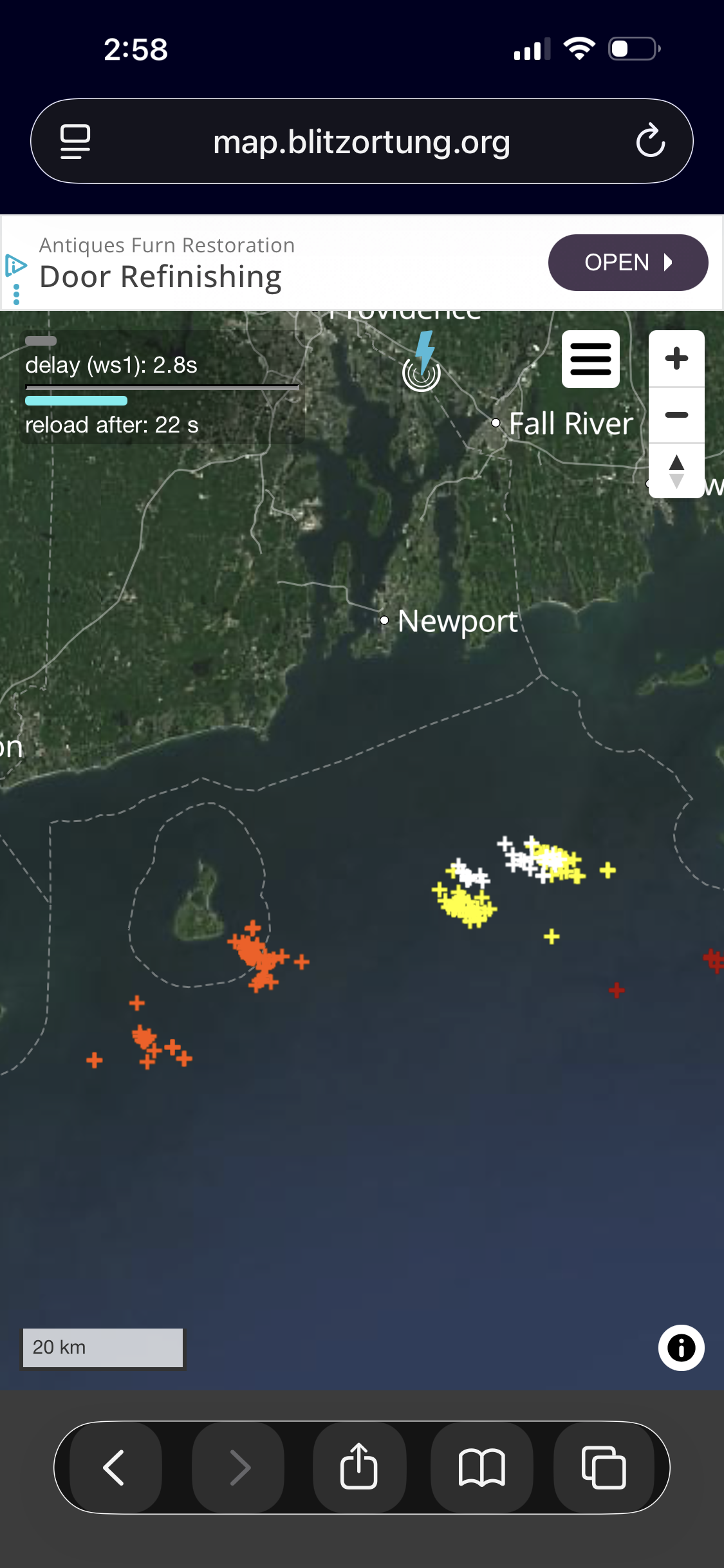
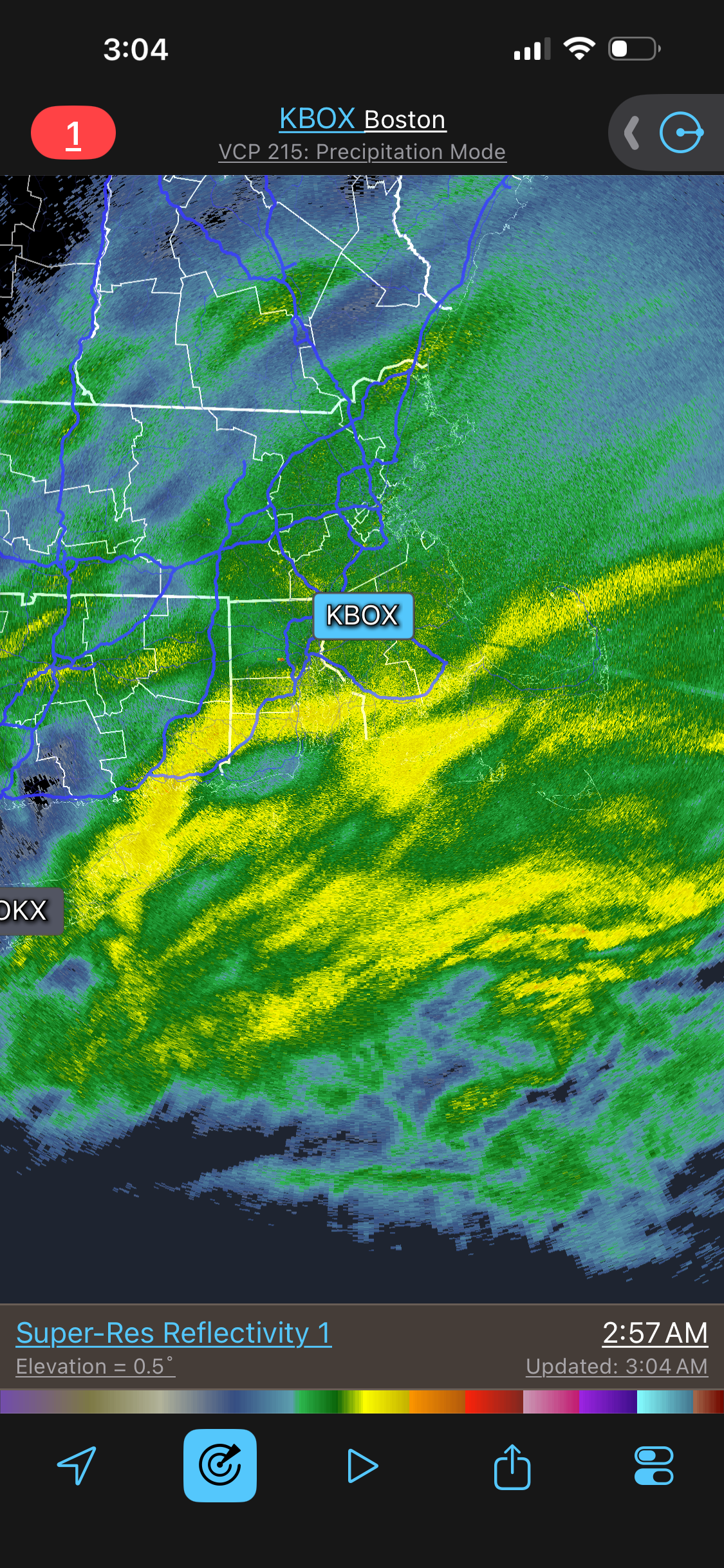
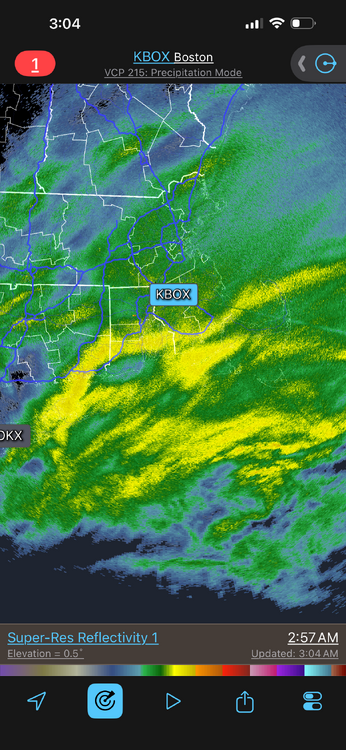
Just catching up on reading all these ob posted for this storm. Attached is the CG plot from around 3am Monday. That is a *lot* of CGs for S+ bands well N in the cold sector of a coastal, looks like several dozen over a 2 hr period. I can't recall that so many near or over SNE for a snowstorm, even the Bliz of 93. On the BOX radar from 257am Mon attached, the uber snow weenies here I bet can answer this question. That much solid 30 dBZ in multiple bands for for a SNE snowstorm? Often it is more peppered dBZ 30-35 within 20-29 dBZ for bands like this, but not so solid. So how does this radar rank for S+ weenie bands? And BOX radar was not running "hot." I checked OKX at the same time and the dBZ matched over SE CT.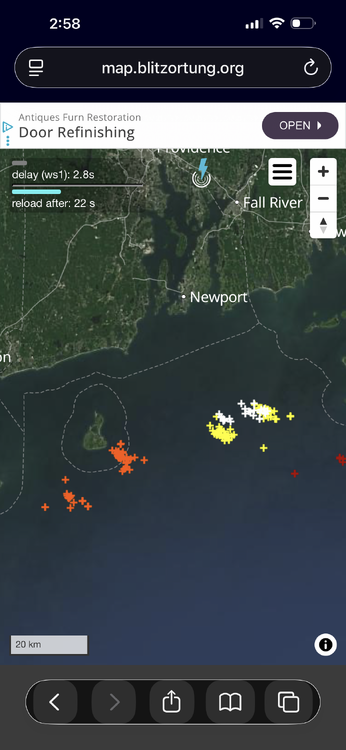
-
Tony, I have been on the New England section of this board a lot more recently. You'll find that the uber of uber snow weenies all here, and the passion has not waned. "CoastalWx" probably tops them all, at least for number of posts he has done over the last 15 years (take a look at his stats). Boris