ORH_wxman
-
Posts
93,110 -
Joined
-
Last visited
Content Type
Profiles
Blogs
Forums
American Weather
Media Demo
Store
Gallery
Everything posted by ORH_wxman
-
MLK 2010 redux?
-
Wow. 495 N and W.
-
You should move.
-
Weeklies back in January we’re definitely pathetic about the first half of February. Busted badly.
-
Yeah some of the other guidance actually hits 495 west into ORH region pretty good. So hopefully models trend more toward that today.
-
We need the closer tracks because most of the precip actually falls out ahead of the low. So by the time the low makes it up here the forcing is northeast except for the stronger/closer lows which might CCB us with snow.
-
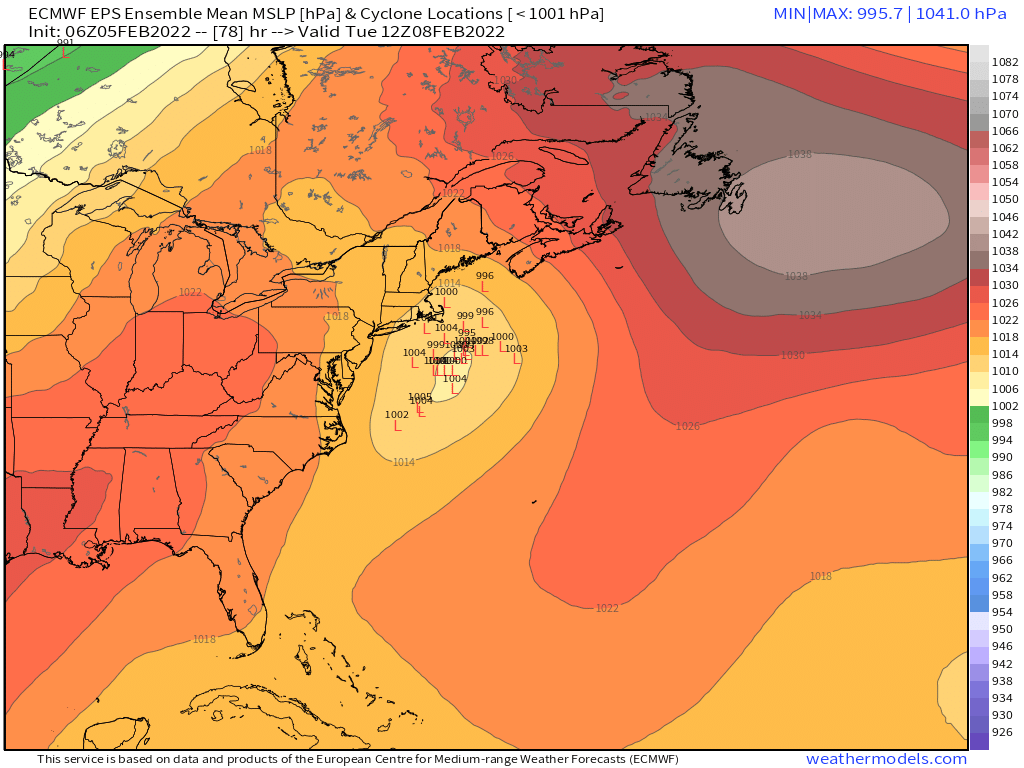
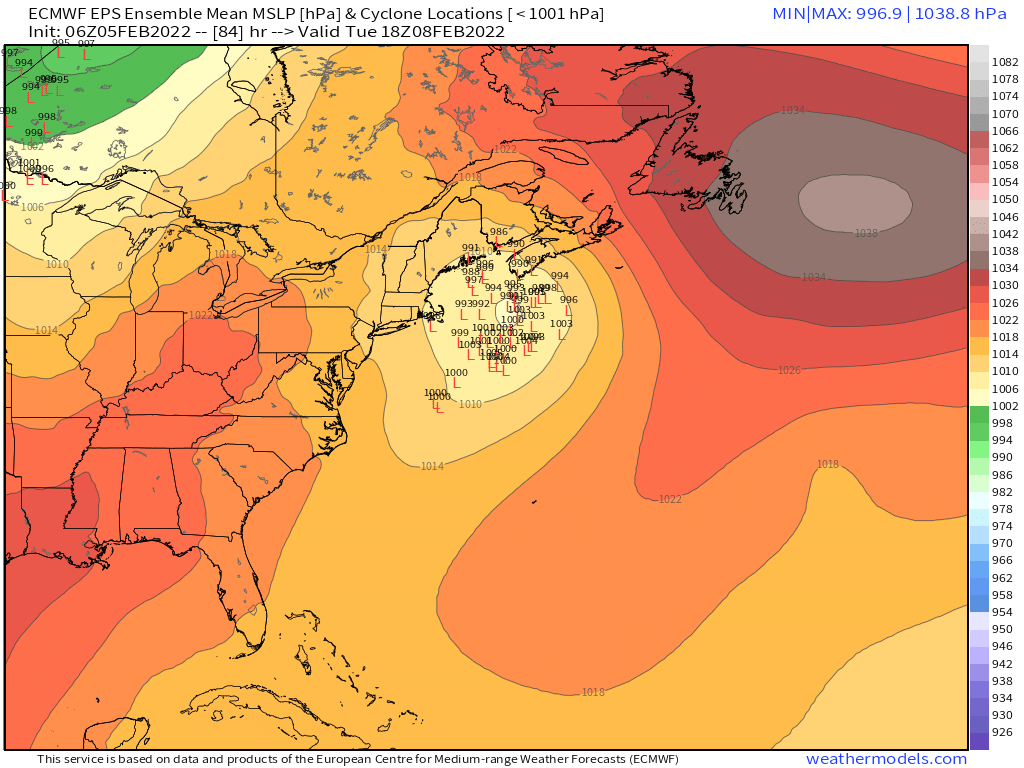
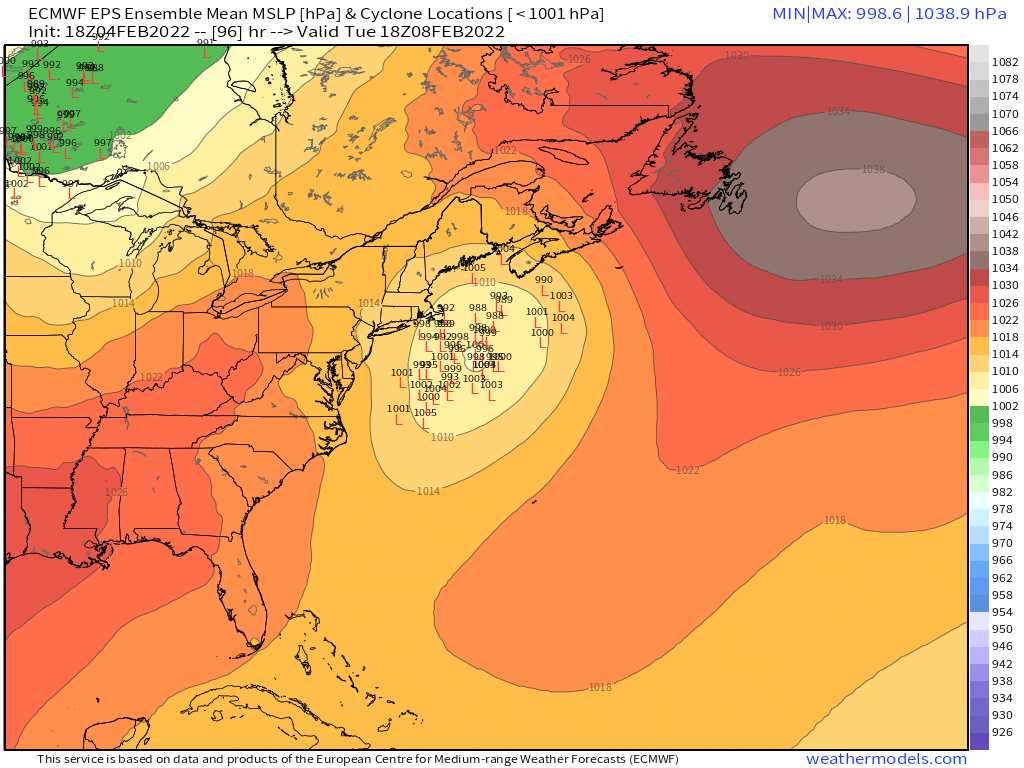
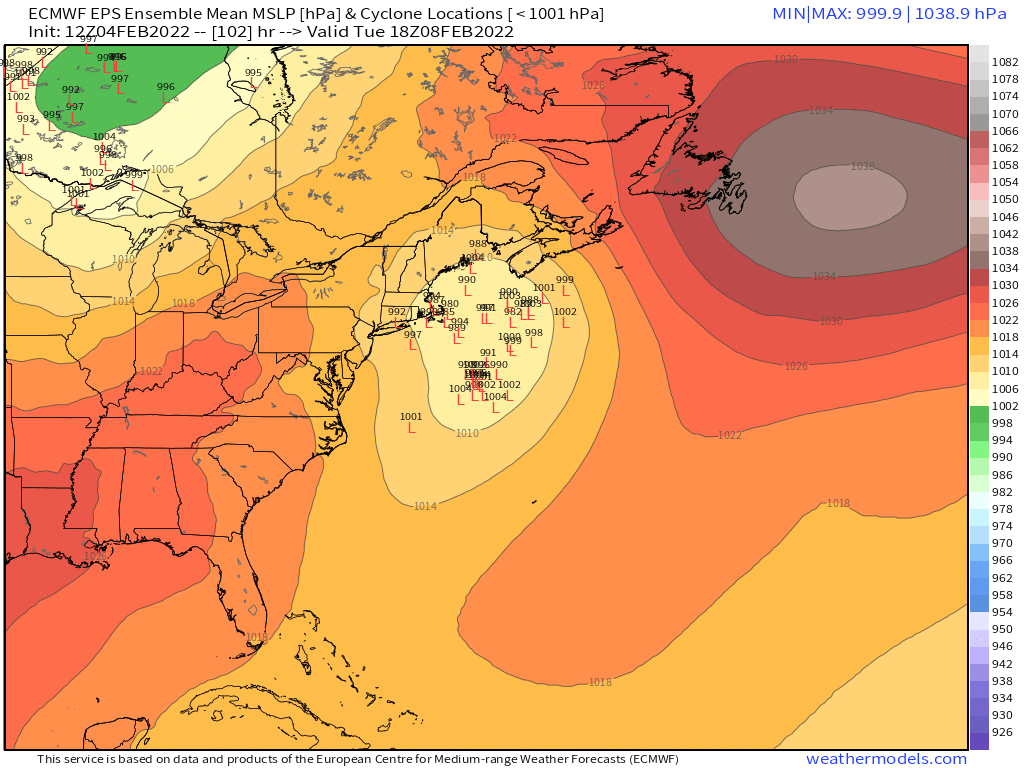
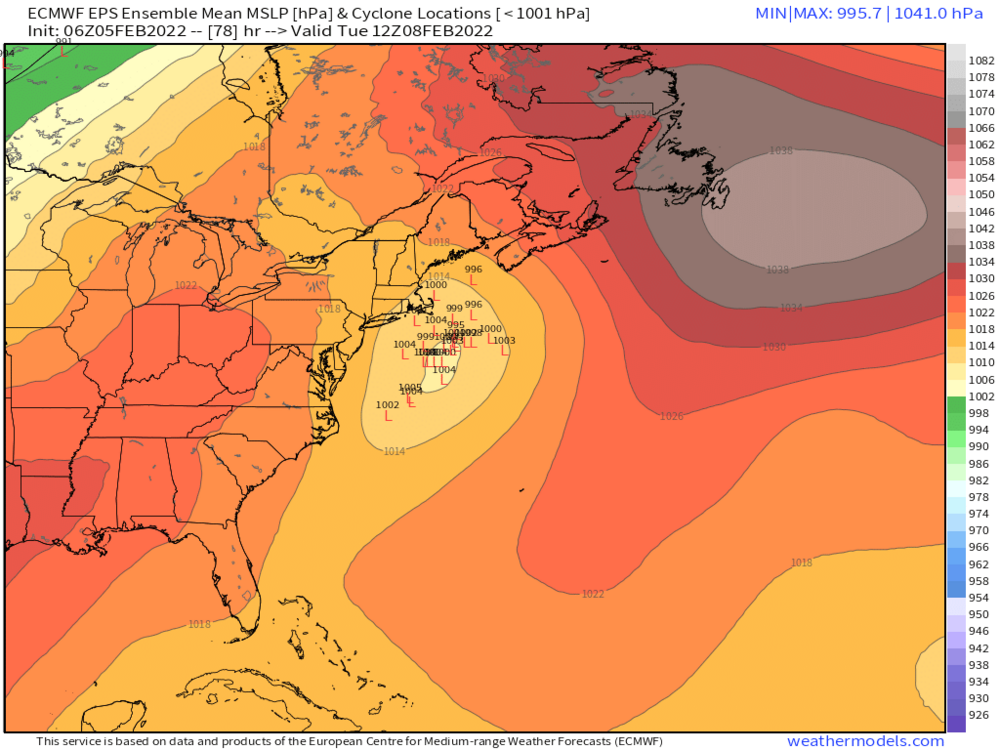
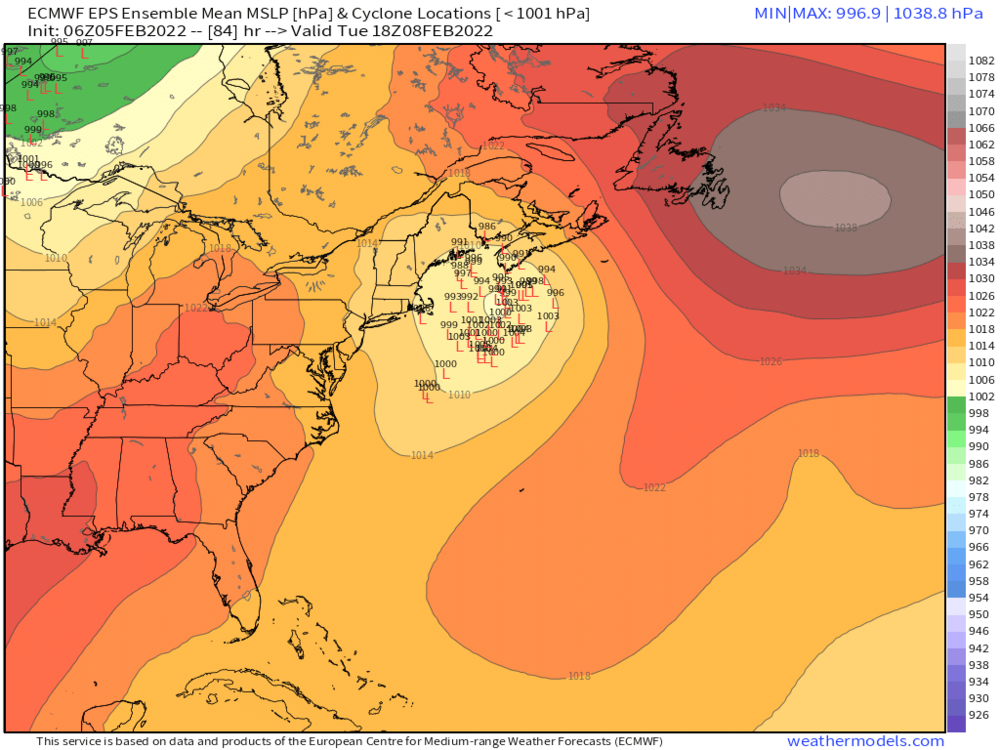
06z EPS
-
Definitely a better trend. Several OP runs now give ORH county over to Ray’s hood several inches. 06z euro looks a little warm for that. Does get interior NH into ME with warning snows though.
-
Looks like we got another half inch of fluff or so. Prob 1.5-2” of total junk yesterday. This pack is officially bulletproof for a while.
-
Lol, I remember I started breaking out in a cold sweat when you showed me that property.
-
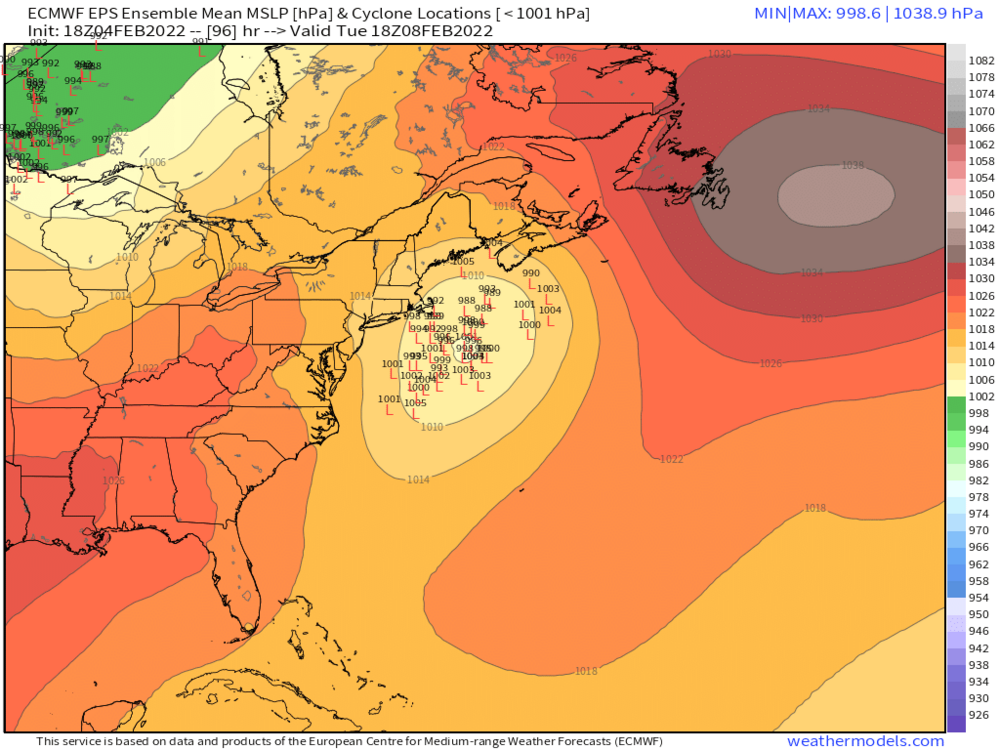
EPS didn’t look bad
-
I wonder what would happen if we saw a few more frames. It had that initial lead pulse of precip but the main show is still well south and that looked promising because it could form a proper midlevel circulation and draw the colder air back in via CCB.
-
Ripping pellets and mixed with some legit flakes in this latest batch. Not as many flakes as earlier today. Ran the shovel over the driveway earlier. Seems pretty useless though as it’s covered in another 1/4 to 1/2 inch of crud again and it will be even harder to scrape now that it’s falling with temps in the mid 20s.
-
GFS still not really interested in this.
-
They are. The GFS was legit forecasting real snow and ended up wrong. But even after it trended north, the “snow depth change” was looking off compared to the usual clown map of just snowfall.
-
Sleet and some crappy flakes mixing in with this next batch....temp down to 24.8F.
-
Yeah the models have gotten a lot better at identifying the marginal boundary layers....but at 3+ days out, it obviously can still be off. The March 7-8, 2013 storm was like that....that's the one where he just got firehosed from the east and slammed 12-24" in mostly a 15-18 hour span (but we were spitting snow showers for 24 hours before that)....model guidance had initially kept trying to warm the BL, though a couple model runs were showing around -1C at 950mb, and then they kept cooling until it was like -5C....obviously that is an extreme example....it can snow at -1C. But the forecasts were very conservative at first....showing very little inside 495 and even only a sloppy 3-6/4-8 for ORH hills.
-
18z NAM has a nice burst for RI and SE MA overnight....like 1-2 inches.
-
They don't have the individual member ptype maps out yet, but the mean snowfall has zero inside of 495 or so with a few inches in ORH county and a bit more into interior S NH and ME, so that tells me even the "good" tracks are mostly rain outside of those areas. The caveat though is of course the modeled BL temps and snow algorithms too....sometimes in those blue bombs, models won't pick up on the isothermal nature of the atmosphere below 3000 feet and will try to over-warm the BL.
-
Yeah it was really cool...like there were legit dendrites in there even though pellets were still ripping from above.
-
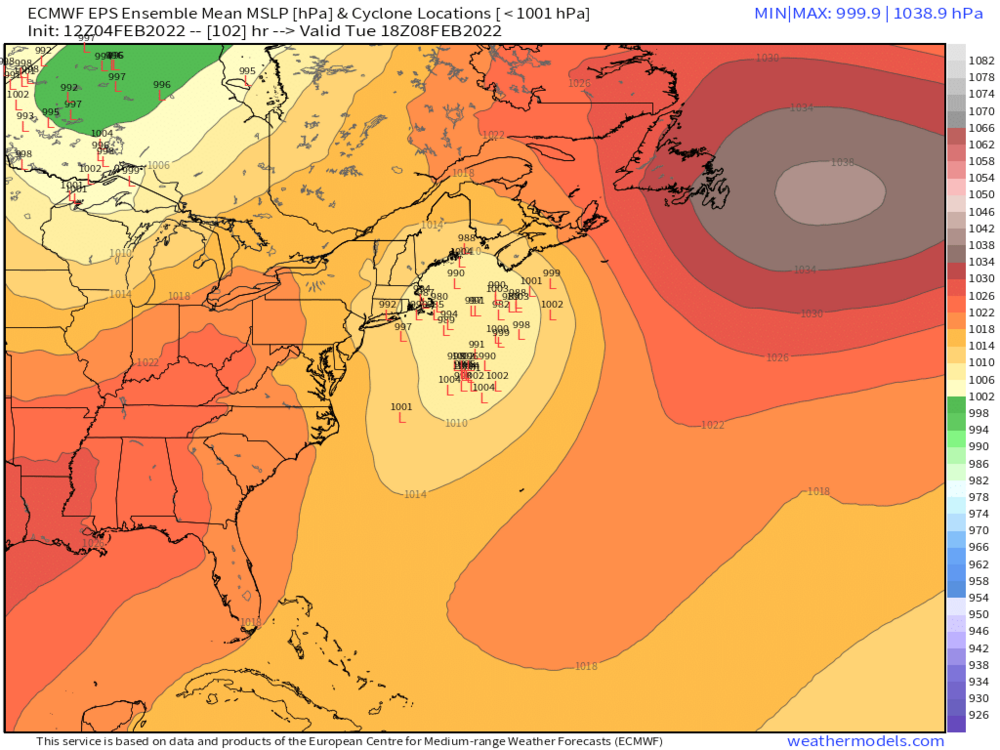
EPS has a lot of good-looking members....but most of these are rain outside of ORH county into CNE/NNE. The low levels are trash.
-
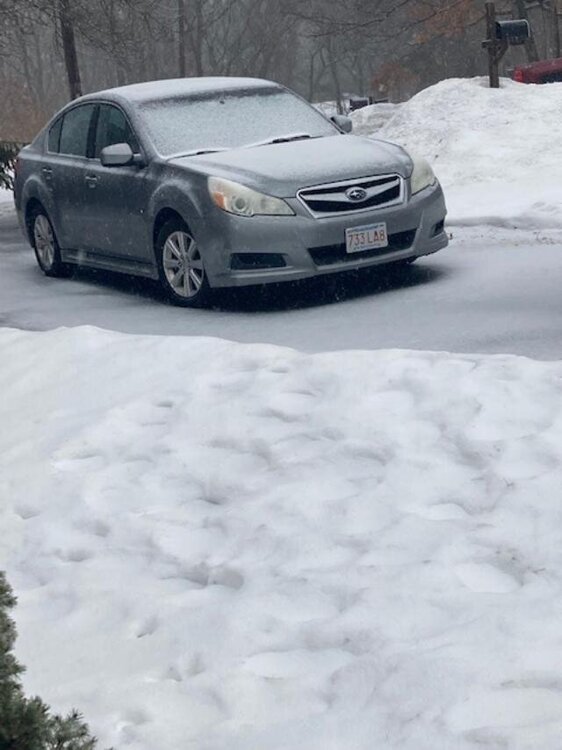
Driveway is going to be a disaster....just gonna have to wait for the Tip warm fanny days next week. Maybe i can push some of this off later, but it's already frozen pretty solid.
-
Some people take "Above average" to mean a blowtorch with no snow chances....but this isn't that type of pattern. But I agree, people should really look at model guidance for next week...it's not cold. It's not a torch either, but in February if you have a little sun with that atmospheric profile, it's easy to have highs cracking 40F. Might be some high diurnal ranges too...where its pretty cold in the morning...esp the rad pits that have snow cover. It does look like we could get an arctic shot or two beyond that though.
-
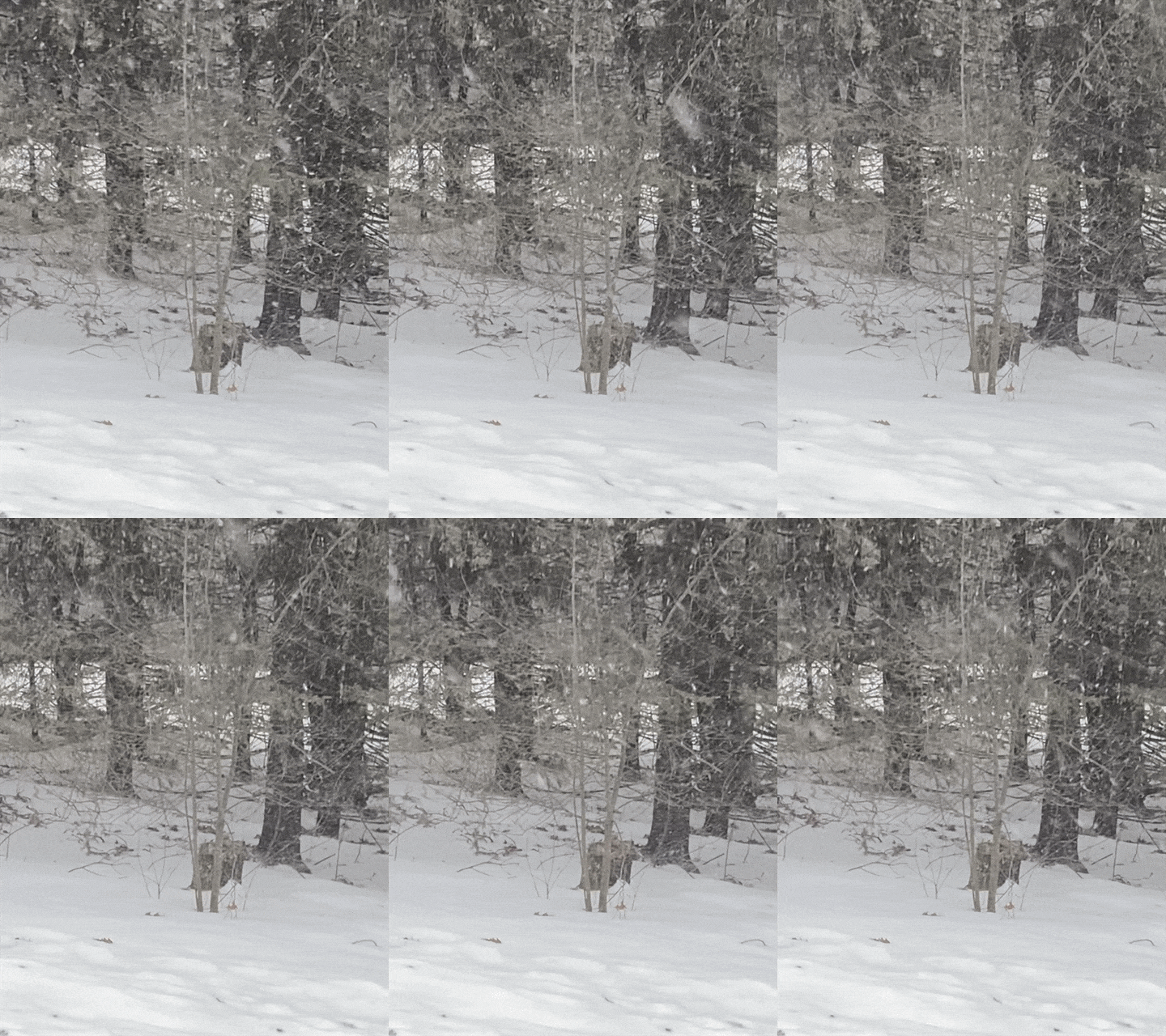
Legit flakes here underneath the warm layer....we're still ripping pellets but this is what else is falling:
-
We have a lot of crappy flakes right now...like it almost looks like the predominate precip type now. Vis is def down to less than a mile as my reference ridge line about 0.8 miles away is obscured now. You might get some OES enhancement as the flow at 900-925 turns NE/NNE after 21z.