paulythegun
-
Posts
977 -
Joined
-
Last visited
Content Type
Profiles
Blogs
Forums
American Weather
Media Demo
Store
Gallery
Everything posted by paulythegun
-
January 24-26: Miracle or Mirage JV/Banter Thread!
paulythegun replied to SnowenOutThere's topic in Mid Atlantic
Capital Weather Gang just did the exact opposite. https://bsky.app/profile/capitalweather.bsky.social/post/3md4fnulpvc24 -
https://repository.library.noaa.gov/view/noaa/53067 Analysis of Model Thermal Profile Forecasts Associated with Winter Mixed Precipitation within the United States Mid-Atlantic Region This paper looked at overrunning events in a CAD setup in the mid-atlantic and found a warm bias for NAM and NAM3k. Money part:
-
January 24-26: Miracle or Mirage JV/Banter Thread!
paulythegun replied to SnowenOutThere's topic in Mid Atlantic
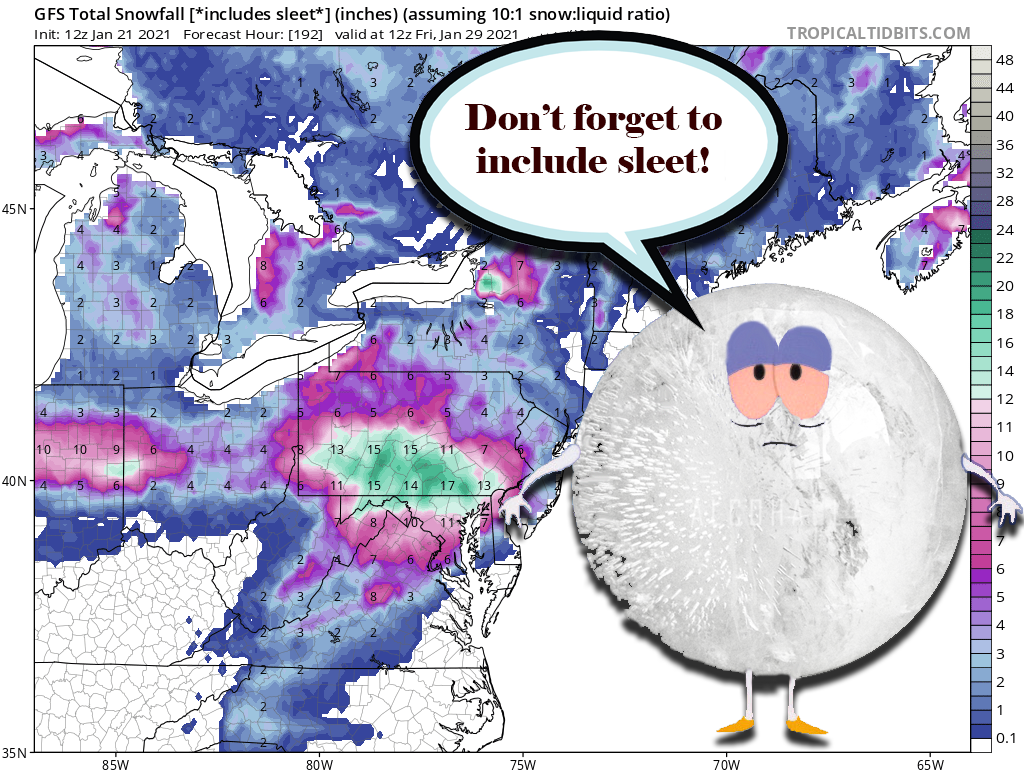
SLEETY SAYS "Don't forget to include sleet!"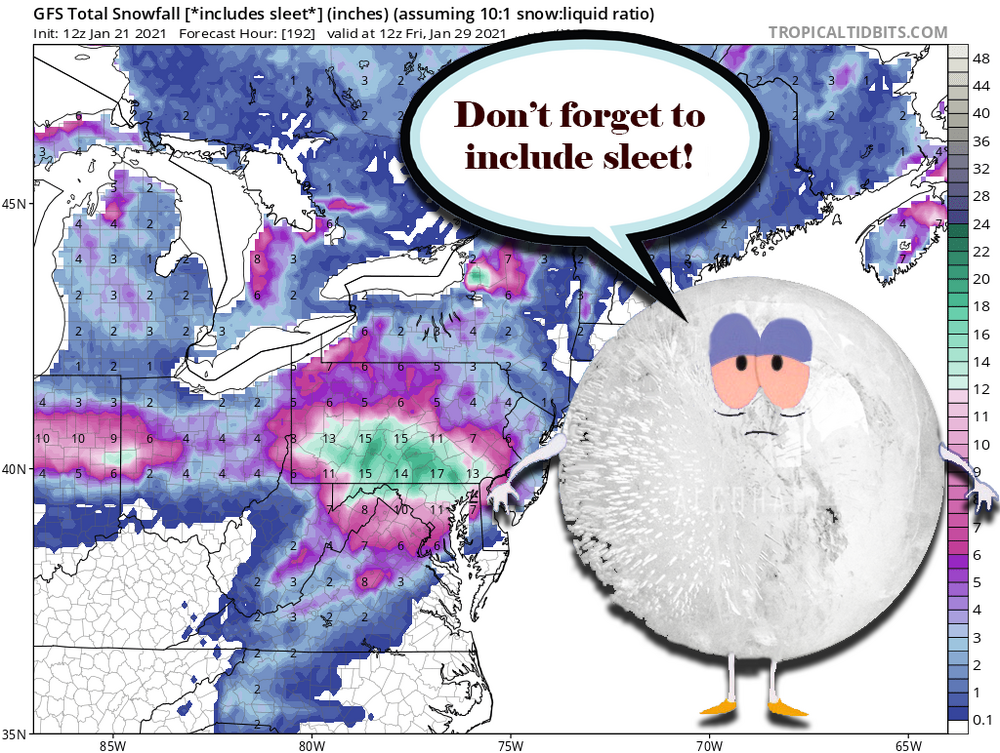
-
January 24-26: Miracle or Mirage JV/Banter Thread!
paulythegun replied to SnowenOutThere's topic in Mid Atlantic
I've got one of those Segway e-scooters. I plan to take it out late Sunday with tons of padding (and a helmet) and skid around some parking lots. Done it before, it's the greatest thing ever. Falling down doesn't hurt either. -
January 24-26: Miracle or Mirage JV/Banter Thread!
paulythegun replied to SnowenOutThere's topic in Mid Atlantic
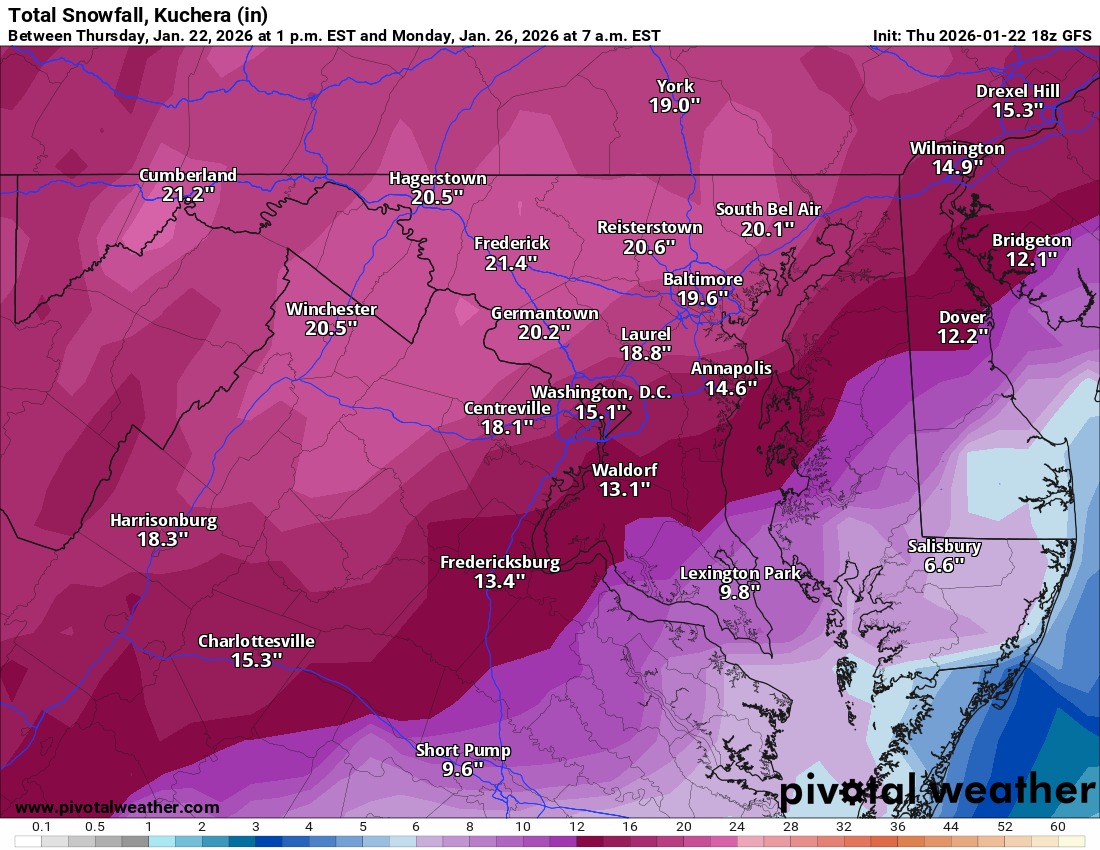
FV3 buries DC with snow. Very late changeover. NAM3k brings a very early changeover. NWS' forecast looks much more like FV3 (high snow totals). See the other thread. I asked ChatGPT to discuss the models' strengths and weaknesses (LOL). Here's what it told me (EXACTLY WHAT I WANTED TO HEAR, SHOCKER! but an interesting read): This is a classic Hour-40–60 Mid-Atlantic fork, and the way you described it already hints at which solution is more plausible versus more diagnostic noise. Here’s how forecasters would parse exactly this setup. What the disagreement really is NAM solution Introduces a 700-mb warm nose after ~40 hr Overruns CAD → sleet/freezing rain inland Produces a fall-line snow cliff (DC ~4", south much less) FV3 solution Keeps the column colder Maintains deep isothermal profiles Allows widespread synoptic snow, including south of DC Matches the current forecast thinking from National Weather Service This is not subtle disagreement — it’s a structural difference in storm evolution, not just a few degrees. Why the NAM solution is suspect at 40–60 hr The NAM’s warm nose is a known bias At this lead time, the NAM often: Over-advects mid-level warmth ahead of strengthening southern stream systems Especially above CAD, where it erodes cold air too early Invents sleet/freezing rain before the synoptic forcing is mature This is textbook NAM behavior in overrunning setups. A 700-mb warm nose at hour 48 does not mean it will verify — it often means “the model is ahead of itself.” Sharp fall-line cutoffs scream “fake precision” At 3-km resolution, a knife-edge cutoff near the fall line at Day 2–2.5 usually means: Convective or feedback-driven thermal noise Poor handling of ageostrophic ascent CAD erosion happening too abruptly Real storms: Transition gradually Evolve over multiple cycles Rarely stop snow exactly at the fall line at this lead time FV3 matching NWS matters — but why matters more It’s not just that FV3 agrees with NWS — it’s what it agrees on: Cold column integrity Broad ascent Synoptic-scale snow shield That alignment tells you: The conceptual model is consistent across guidance. That’s far more important than any single snowfall number. What’s likely happening physically Most likely evolution given current signals: CAD holds longer than NAM suggests Warm nose (if it arrives) is: Later Weaker South/west of DC Snow extends well south of the fall line initially Any mix issues become: Late-stage South-focused Elevation-dependent NAM is probably correct that warm air exists aloft eventually FV3 is probably correct on timing and impact How forecasters would weight this right now At Hour 40–60: Reject the NAM snowfall cliff Flag the NAM warm nose as a risk, not an outcome Lean FV3 for: Snow extent Cold-air durability Early & mid-storm evolution If future NAM runs: Delay the warm nose Soften the cutoff Trend colder That’s convergence toward FV3, not the other way around. Bottom line (plain language) The NAM is likely too warm, too fast, and too sharp The FV3/NWS solution is meteorologically cleaner At this range, widespread snow is the higher-probability outcome Mixing concerns are real but premature This is exactly the kind of setup where: NAM scares you early FV3 ends up closer on the big picture If you want, next we can: Walk through what would need to change for the NAM solution to win Identify the specific upstream feature that decides this Compare this setup to Jan 2016 / Jan 2018 / Jan 2000-style cases Just tell me where you want to go next. -
January 24-26: Miracle or Mirage JV/Banter Thread!
paulythegun replied to SnowenOutThere's topic in Mid Atlantic
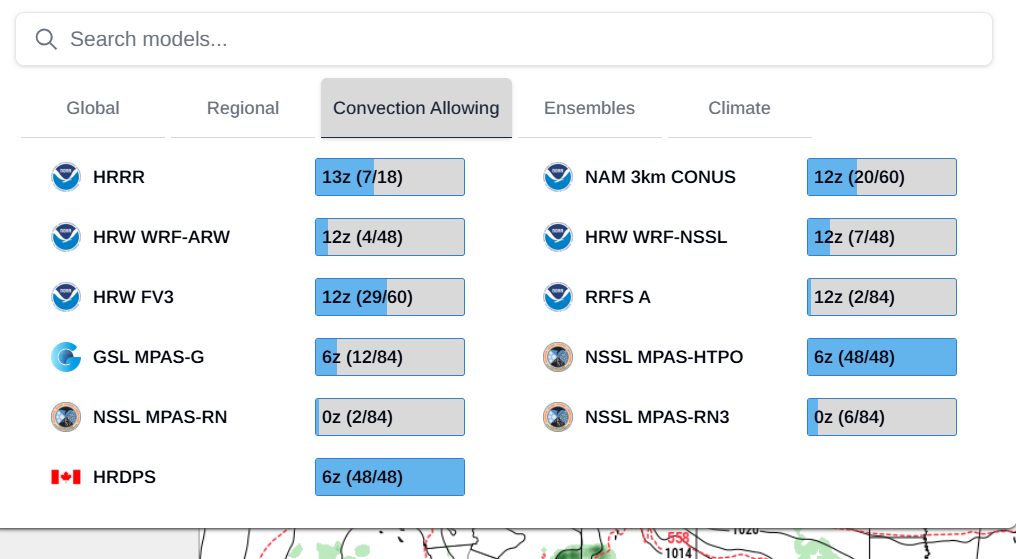
HAPPY CONVECTION ALLOWING DAY to those who celebrate
-
January 24-26: Miracle or Mirage JV/Banter Thread!
paulythegun replied to SnowenOutThere's topic in Mid Atlantic

-
January 24-26: Miracle or Mirage JV/Banter Thread!
paulythegun replied to SnowenOutThere's topic in Mid Atlantic
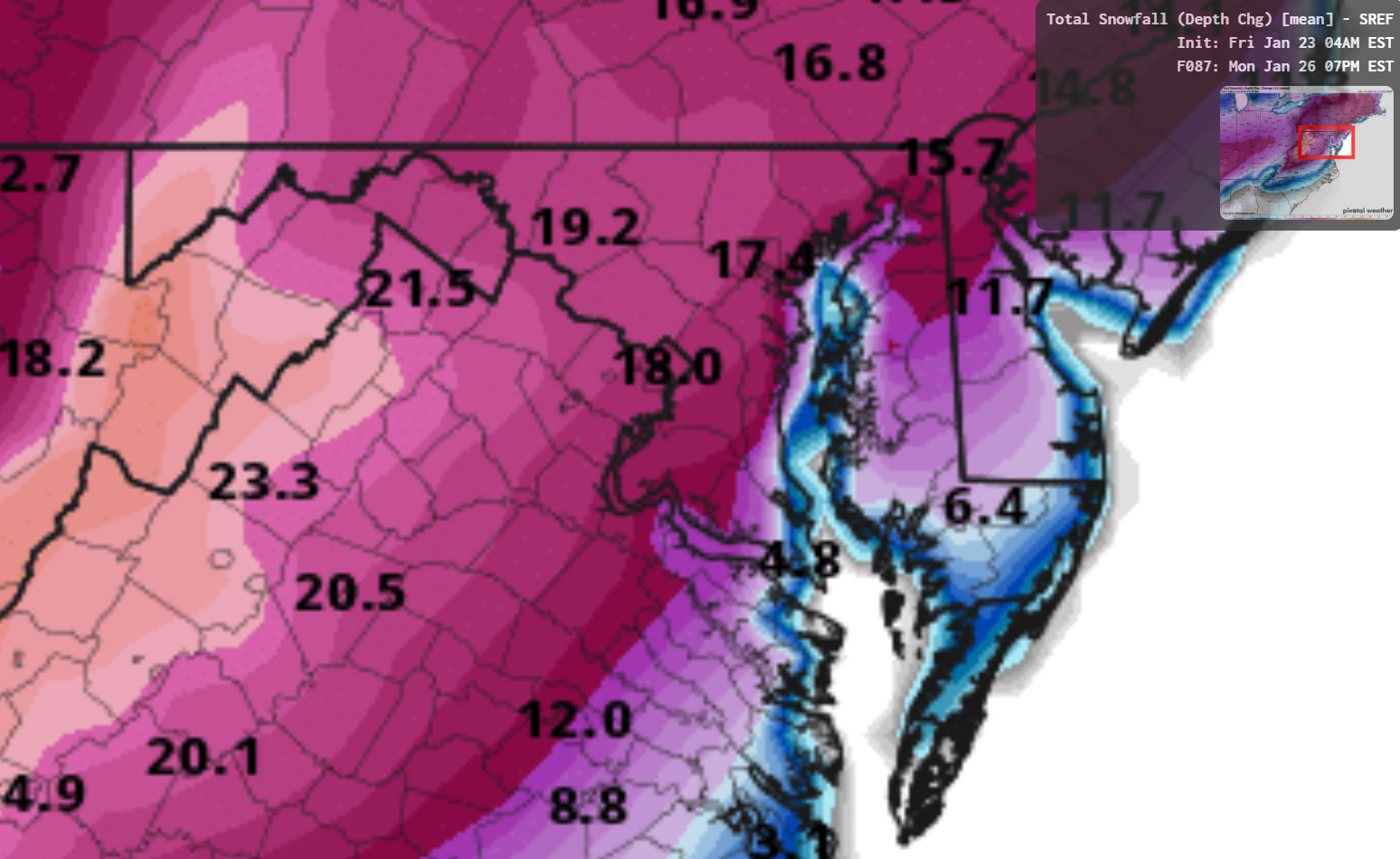
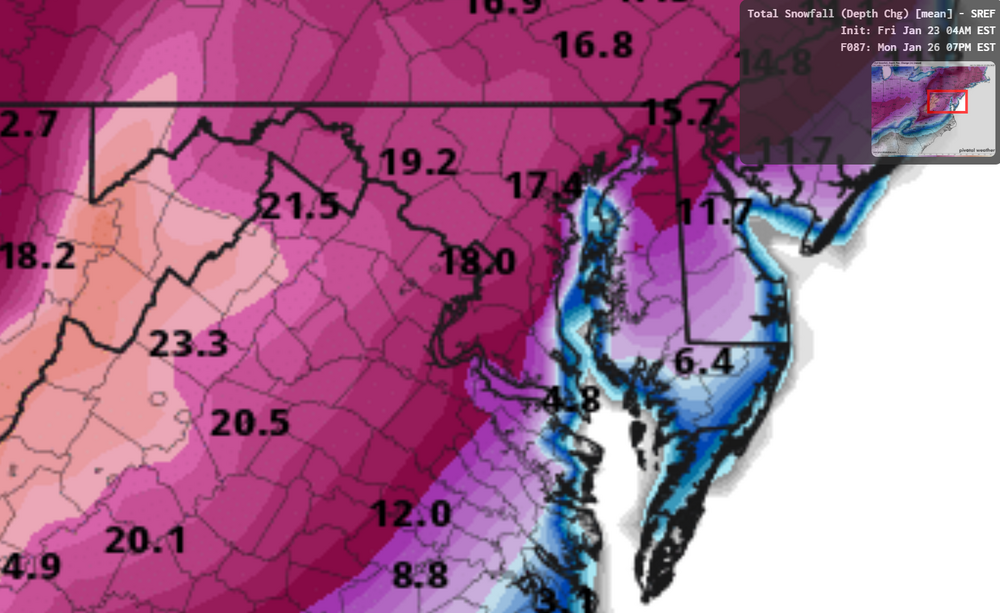
Sticking this here since it's SREF: 8(!!!!) SREF Plumes out of....I don't know, 25(?) bring the temp above freezing at DCA Sunday. THREE (!!) are above 40F. (the snowmean is like 19" though hahaha)
-
January 24-26: Miracle or Mirage JV/Banter Thread!
paulythegun replied to SnowenOutThere's topic in Mid Atlantic
GFS ingested the Baja Recon data. Instead of waiting an hour, it became impatient after about 15 minutes and ingested MORE Baja Recon Data. Amateur hour. -
January 24-26: Miracle or Mirage JV/Banter Thread!
paulythegun replied to SnowenOutThere's topic in Mid Atlantic
GFS was not informed about the slightly anomalously cold temps in a tiny area of the Pacific. Once it learns, it will Make Less Snow For Us* *Source: SCIENCE -
January 24-26: Miracle or Mirage JV/Banter Thread!
paulythegun replied to SnowenOutThere's topic in Mid Atlantic
Dumb Dumb NAM -
January 24-26: Miracle or Mirage JV/Banter Thread!
paulythegun replied to SnowenOutThere's topic in Mid Atlantic
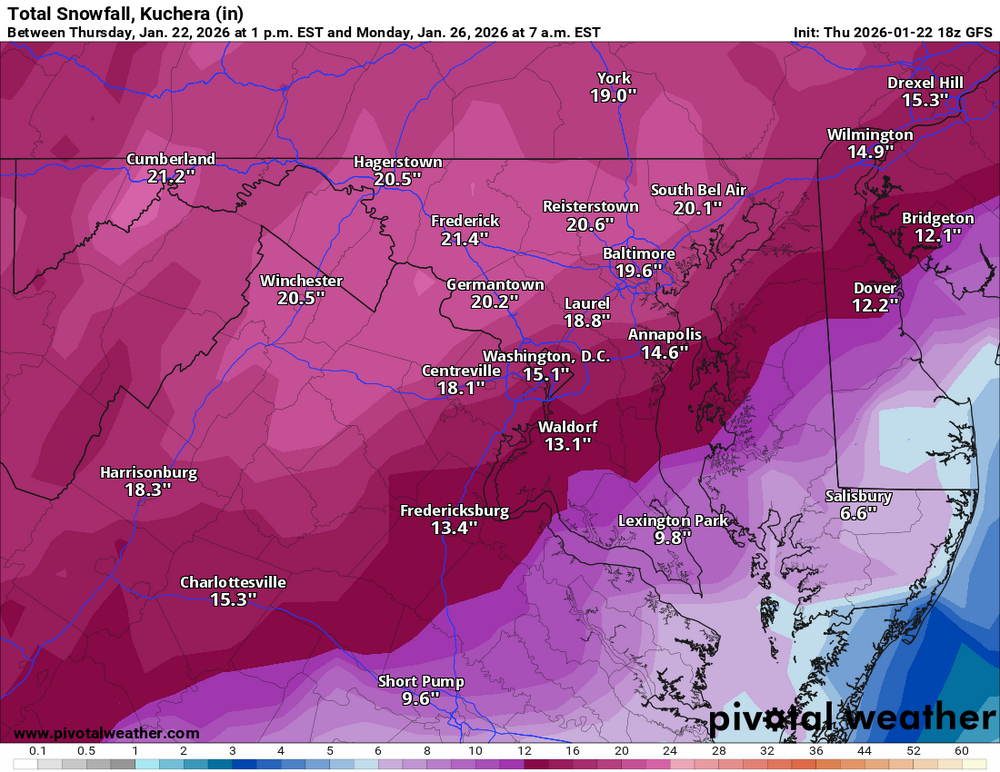
SREF OUT! -
January 24-26: Miracle or Mirage JV/Banter Thread!
paulythegun replied to SnowenOutThere's topic in Mid Atlantic
-
January 24-26: Miracle or Mirage JV/Banter Thread!
paulythegun replied to SnowenOutThere's topic in Mid Atlantic
It's really quite funny if you reread it. -
January 24-26: Miracle or Mirage JV/Banter Thread!
paulythegun replied to SnowenOutThere's topic in Mid Atlantic

-
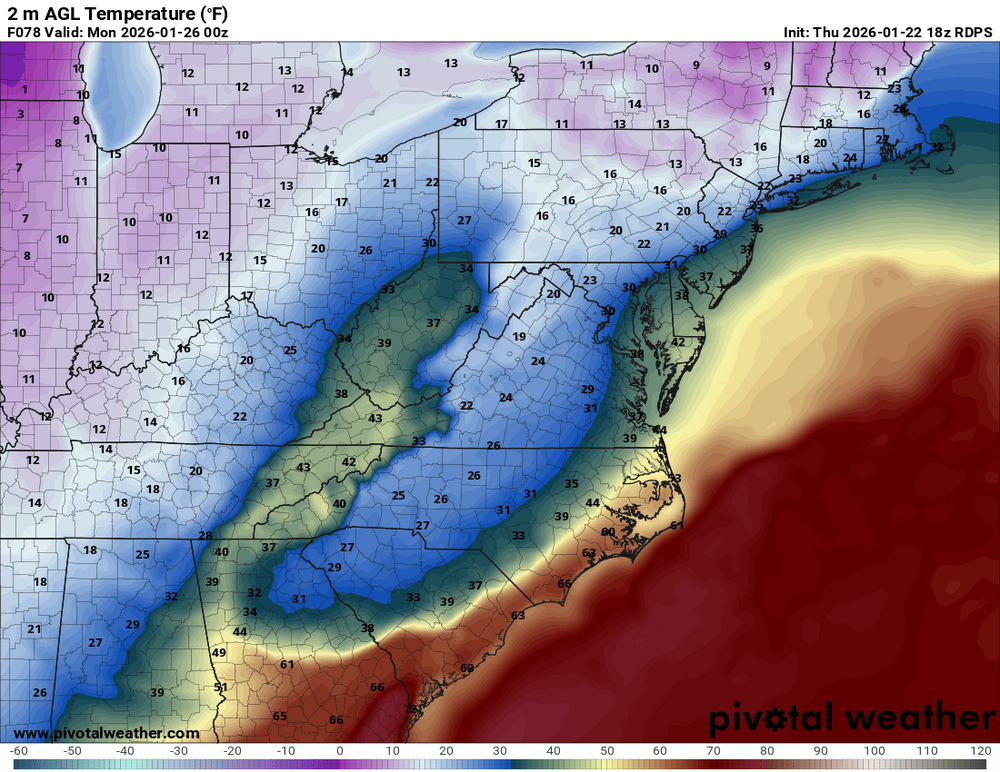
Surface temps flirt with the freezing line on RGEM...
-
January 24-26: Miracle or Mirage JV/Banter Thread!
paulythegun replied to SnowenOutThere's topic in Mid Atlantic
I've got a flat roof (with internal drainage) that I can't really access myself, though trying to get up there on a ladder would be kind of fun, in a very stupid way. A week+ of pressure from 10" of snow + ice seems bad! The resulting melt would almost certainly cause tons of pooled water trapped under the ice cap. Anybody in this region ever deal with this? I know you can get gouged if you wait until its an emergency to schedule snow removal. I'm just a dummy here and most of my roof knowledge comes from yesterday, on ChatGPT, so keep that in mind. -
Nothing too close but the top analogs based on 12z GFS (MAYBE NOT REALITY?) included: February 11, 1986: https://www.upi.com/Archives/1986/02/11/The-second-winter-snowstorm-in-a-week-blanketed-the/4624508482000/ The infamous 2021 southern ice storm (February 10-15, 2021) that crippled Texas. The christmas slop snowstorm of 2002 (I believe that's baltimore's last "White" christmas): https://www.raymondcmartinjr.com/weather/2003/25-Dec-02.html
-
January 24-26: Miracle or Mirage JV/Banter Thread!
paulythegun replied to SnowenOutThere's topic in Mid Atlantic
people in central virginia who live at 700mb are going to be boiled alive saturday night -
January 24-26: Miracle or Mirage JV/Banter Thread!
paulythegun replied to SnowenOutThere's topic in Mid Atlantic
spot on
-
January 24-26: Miracle or Mirage JV/Banter Thread!
paulythegun replied to SnowenOutThere's topic in Mid Atlantic
Sampling the Baja Vort. Will have data by 00z tomorrow.gif.060fd7b53d8c11fb1b41ff37acd5bb5c.gif)
-
all the ingredients are in place. Ample moisture from the southern stream, exploding tree risk to our northwest
-
i deleted it almost immediately, you're quick!
-
This wasted about 50,000 gallons of water in a datacenter in the southwest.... EVAPORATED WATER THAT WILL FUEL OUR COMING SNOWSTORM!!!
-
the part i forgot: The trajectory of the WAA runs heavily north of the city, forming a finger-like stream of precip that stays north while the city stays dry for 12 hours