-
Posts
2,144 -
Joined
-
Last visited
Content Type
Profiles
Blogs
Forums
American Weather
Media Demo
Store
Gallery
Posts posted by tunafish
-
-
1 hour ago, Baroclinic Zone said:
Take a gander at the 00z HRW WRF-NSSL.

Lol 6" right over me and only me.
-
1
-
-
1 hour ago, Lava Rock said:
You cold. 29f here
Sent from my SM-S921U using Tapatalk
Bottomed out at 23° here around 7, upta 25° now.
-
5 minutes ago, weathafella said:
Based on NWS other records up to date that graphic is wrong-low for all the big climo sites.
Also wrong for Jay Peak, VT. They are at 238" for the season.
-
Just now, tunafish said:
I've been contemplating making an AI bot account to automatically post the tldr; versions of your posts. I wanted to test out of it would have the desired result and the initial attempt resulted in a text body even longer than yours. AI still has a ways to go it seems.
The short version (TL;DR)
He’s saying:
A major, fast, and violent pattern change in the North Pacific around Jan 6–8 is likely.
That change will probably force a stronger-than-expected ridge in western North America, which in turn means models are likely underestimating how amplified (extreme) the downstream pattern will be over the eastern U.S. around Jan 7.
Bottom line: don’t trust the details yet — bigger swings are favored.Now let’s unpack the jargon.
Line-by-line translation
“I think we need to consider the 6-7-8 a pattern arrival event”
➡️
Around January 6–8, a new large-scale weather pattern is expected to fully arrive.Think of this as: the atmosphere reorganizes itself rather than just day-to-day weather noise.
“That's going to be an H.A. implication (I suspect…)”
➡️
“H.A.” = Height Anomaly (upper-air pressure departures from normal).He’s saying this pattern change will strongly affect upper-level pressure patterns, not just surface weather.
“all ens systems agree in the rather abrupt guard change in the N. Pacific”
➡️
All ensemble models agree that there’s a sudden flip in the North Pacific pattern.“Guard change” = the atmosphere switches roles quickly (like defense → offense).
This agreement is important — it means the signal is probably real.
“The entire circulation medium out there essentially product reverses”
➡️
The whole North Pacific flow flips (ridges become troughs, troughs become ridges).“like on a temporal dime… Really fast… intra-weekly time scale.”
➡️
This happens very fast, within a few days, not weeks.Meteorologists don’t like this — fast changes break models.
Why this matters for forecasts
“that's likely to cause increased model performance problems”
➡️
Models struggle when the atmosphere changes this quickly.So details beyond a few days become unreliable.
“sending such a violent signal downstream”
➡️
A big Pacific change ripples eastward across North America.Weather patterns behave like waves — a hard shove upstream creates chaos downstream.
“the western N/A ridge will be in a period… correction vector… toward more amplitude”
➡️
As models adjust, they will likely correct toward a stronger western North America ridge.“More amplitude” =
-
higher ridges
-
deeper troughs
-
bigger temperature swings
-
more extreme outcomes
“more than is currently in the cinemas”
➡️
Current model maps are too tame.Reality is likely bigger and sharper.
“wave # number/distribution argument”
➡️
This is deep meteorology, but in plain English:The way large planetary waves are rearranging forces compensation elsewhere.
If heights crash in one region, they must build in another.
“supplant the regions N of HA with… height anomaly reversal”
➡️
When upper-level pressure drops hard in the North Pacific, physics demands that pressure builds somewhere else — in this case:➡️ Western North America
“there will physically necessitate height growth into western North America”
➡️
A strong western ridge is basically unavoidable.This is the key sentence.
Why New England should care
“More than 50%… closer to 80%… takes place in < 5 days”
➡️
This is an extremely rapid atmospheric reorganization.Which means:
-
Models haven’t “caught up” yet
-
Downstream details are suspect
“I would be reeeally leery about any depictions down stream over eastern N/A”
➡️
Do not trust model specifics for the eastern U.S. yet.Snow vs rain, cold vs warm — all still very fluid.
“more amplitude is actually favored”
➡️
When things settle, expect bigger extremes, not moderation.For New England, that usually means one of these, depending on timing:
-
Sharper cold shots
-
Stronger storms
-
Higher snow potential or sharper cutters
-
Bigger pattern swings overall
“That all times around the 7th for some sort of emergence E of the nations midriff longitudes.”
➡️
Around January 7, the effects of this pattern change should start clearly showing up east of the Mississippi.That’s when things “pop.”
The Big Picture (in normal human language)
He’s essentially warning other mets:
“Hey — the Pacific is about to flip hard and fast.
That almost guarantees a stronger western ridge than models currently show.
Because this happens so quickly, models will struggle and probably underplay how extreme things get downstream.
Expect bigger swings over the eastern U.S. around Jan 7 — and don’t lock into specifics yet.”If you want, next we can:
-
Apply this specifically to New England snow/cold odds
-
Decode what this implies for storm track vs cold supply
-
Or compare this to past winters with similar Pacific flips
Before you respond in earnest, I'm half joking. Always read and appreciate your insight.
-
1
-
1
-
-
3 hours ago, Typhoon Tip said:
I think we need to consider the 6-7-8 a pattern arrival event
That's going to be an H.A. implication ( I suspect ...) as nearing the 5th, all ens systems agree in the rather abrupt guard change in the N. Pacific. The entire circulation medium out there essentially product reverses, like on a temporal dime when considering planetary wave distribution. Really fast... intra-weekly time scale.
If that happens - first of all - that's likely to cause increased model performance problems. Furthermore, the implications of sending a such a violent signal down stream, the western N/A ridge will be in a period whence the 'correction vector' will be pointed toward more amplitude - hint, I think more than is currently in the cinemas. It's a wave # number/distribution argument. When you supplant the regions N of HA with as much total height anomaly reversal (lowering in this case) like these charts below are showing ( using the GEPs but they are all doing it ), there will physically necessitate height growth into western North America...
More than 50% ...closer to 80% of this mass field alteration takes place in < 5 days. I would be reeeally leery about any depictions down stream over eastern N/A. And by that, more amplitude is actually favored. When I say correction vector that's just an expression I use to mean corrections that are inevitable in the guidance will likely lean in a given direction...
That all times around the 7th for some sort of emergence E of the nations midriff longitudes.
I've been contemplating making an AI bot account to automatically post the tldr; versions of your posts. I wanted to test if it would have the desired result and the initial attempt resulted in a text body even longer than yours. AI still has a ways to go it seems.
The short version (TL;DR)
He’s saying:
A major, fast, and violent pattern change in the North Pacific around Jan 6–8 is likely.
That change will probably force a stronger-than-expected ridge in western North America, which in turn means models are likely underestimating how amplified (extreme) the downstream pattern will be over the eastern U.S. around Jan 7.
Bottom line: don’t trust the details yet — bigger swings are favored.Now let’s unpack the jargon.
Line-by-line translation
“I think we need to consider the 6-7-8 a pattern arrival event”
➡️
Around January 6–8, a new large-scale weather pattern is expected to fully arrive.Think of this as: the atmosphere reorganizes itself rather than just day-to-day weather noise.
“That's going to be an H.A. implication (I suspect…)”
➡️
“H.A.” = Height Anomaly (upper-air pressure departures from normal).He’s saying this pattern change will strongly affect upper-level pressure patterns, not just surface weather.
“all ens systems agree in the rather abrupt guard change in the N. Pacific”
➡️
All ensemble models agree that there’s a sudden flip in the North Pacific pattern.“Guard change” = the atmosphere switches roles quickly (like defense → offense).
This agreement is important — it means the signal is probably real.
“The entire circulation medium out there essentially product reverses”
➡️
The whole North Pacific flow flips (ridges become troughs, troughs become ridges).“like on a temporal dime… Really fast… intra-weekly time scale.”
➡️
This happens very fast, within a few days, not weeks.Meteorologists don’t like this — fast changes break models.
Why this matters for forecasts
“that's likely to cause increased model performance problems”
➡️
Models struggle when the atmosphere changes this quickly.So details beyond a few days become unreliable.
“sending such a violent signal downstream”
➡️
A big Pacific change ripples eastward across North America.Weather patterns behave like waves — a hard shove upstream creates chaos downstream.
“the western N/A ridge will be in a period… correction vector… toward more amplitude”
➡️
As models adjust, they will likely correct toward a stronger western North America ridge.“More amplitude” =
-
higher ridges
-
deeper troughs
-
bigger temperature swings
-
more extreme outcomes
“more than is currently in the cinemas”
➡️
Current model maps are too tame.Reality is likely bigger and sharper.
“wave # number/distribution argument”
➡️
This is deep meteorology, but in plain English:The way large planetary waves are rearranging forces compensation elsewhere.
If heights crash in one region, they must build in another.
“supplant the regions N of HA with… height anomaly reversal”
➡️
When upper-level pressure drops hard in the North Pacific, physics demands that pressure builds somewhere else — in this case:➡️ Western North America
“there will physically necessitate height growth into western North America”
➡️
A strong western ridge is basically unavoidable.This is the key sentence.
Why New England should care
“More than 50%… closer to 80%… takes place in < 5 days”
➡️
This is an extremely rapid atmospheric reorganization.Which means:
-
Models haven’t “caught up” yet
-
Downstream details are suspect
“I would be reeeally leery about any depictions down stream over eastern N/A”
➡️
Do not trust model specifics for the eastern U.S. yet.Snow vs rain, cold vs warm — all still very fluid.
“more amplitude is actually favored”
➡️
When things settle, expect bigger extremes, not moderation.For New England, that usually means one of these, depending on timing:
-
Sharper cold shots
-
Stronger storms
-
Higher snow potential or sharper cutters
-
Bigger pattern swings overall
“That all times around the 7th for some sort of emergence E of the nations midriff longitudes.”
➡️
Around January 7, the effects of this pattern change should start clearly showing up east of the Mississippi.That’s when things “pop.”
The Big Picture (in normal human language)
He’s essentially warning other mets:
“Hey — the Pacific is about to flip hard and fast.
That almost guarantees a stronger western ridge than models currently show.
Because this happens so quickly, models will struggle and probably underplay how extreme things get downstream.
Expect bigger swings over the eastern U.S. around Jan 7 — and don’t lock into specifics yet.”If you want, next we can:
-
Apply this specifically to New England snow/cold odds
-
Decode what this implies for storm track vs cold supply
-
Or compare this to past winters with similar Pacific flips
-
5
-
3
-
9
-
-
9 minutes ago, moneypitmike said:
Were you raining for a while there?
Short while. Maybe a half hour? And even then it was light - only 0.02". I know the peninsula proper and adjacent areas right (and I mean right, like your place) on the water rained for 2 hours, give or take.
I'm centered 3mi from the water on all sides and that was enough to make a difference. Driving around during that time, the difference between 35/36° was the line and it was an immediate line.
-
4.9" / 0.74" for PWM at 12z.
Probably a few more tenths to go.
1.2" on 0.34" first part
3.7" on 0.38 second half.
-
1
-
-
-
00z obs
0.3" / 0.07"
SN- 35° Feels close to flipping.
Rain in downtown PWM, pounding SN 2mi up the road in Falmouth.
-
3
-
-
1 hour ago, dryslot said:
All guidance is hammering you and I's area, Going to be a nowcast deal.
NAM and Euro have been consistent tainting my area, haven't seen that factored into GYX or any other forecast yet.
-
2 hours ago, CoastalWx said:
I saw that. Some models came west with that, but hrrr seems like an outlier. That’s my only shot I think unless this first piece comes in aggressive which isn’t likely.
Anyways enjoy near PWM. Hopefully lemons grabs 12-18 there.
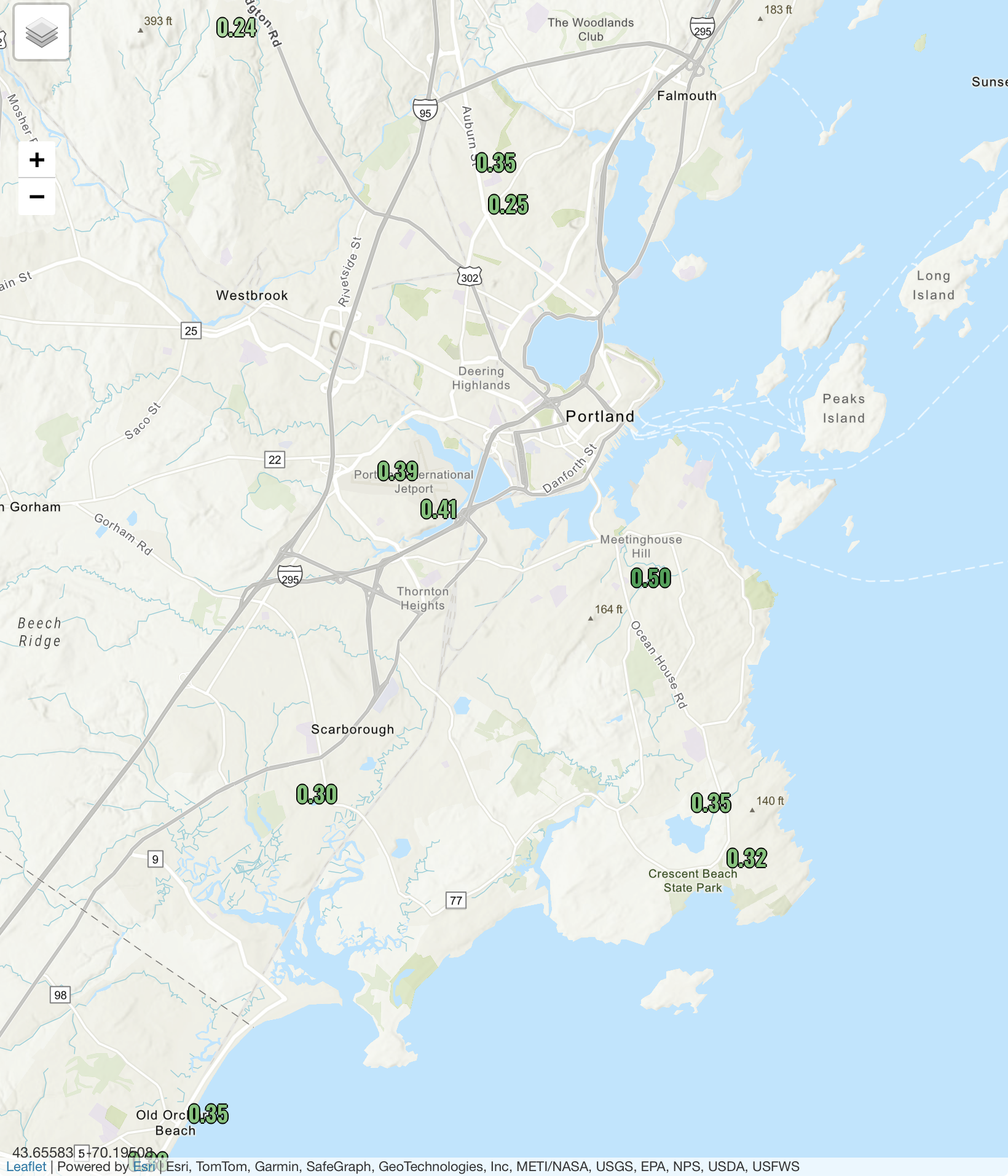
Bullseye of > 1.50" right over me is hilarious.
-
3
-
-
IVT already showing up on radar over midcoast Maine??
-
34 minutes ago, dryslot said:
Woof
I don't need to jack, just cover the ground back up and get ponds and lakes re-solidified. Drilling through 5" of ice to fish last weekend, at least down this way, and wouldn't dare set foot on it today.
-
5
-
-
4 minutes ago, ineedsnow said:
might have
Map only showed through 1PM Tuesday.
Back-to-Back holiday parties.
-
3
-
-
37 minutes ago, dendrite said:
No one should be melting over missing a couple inches.
Thank you, I've been trying to tell my wife this for years.
-
16
-
-
4 hours ago, powderfreak said:
I figure some of you will appreciate the obsessive anal-retentive details of snow reporting on Mansfield...
Yesterday we had 1.75" or so that we called 2"... then it snowed a bit overnight... but was very windy and the grooming team thought several inches fell. The snow cam went off-line briefly around the time of the morning report and it was called 2" more overnight for a 24-hour total of 4". Snow cam came back and only had just over 3". Say 3.1" or 3.2".
The early reports on the hill from skinners was 4-5". It actually looked good (photo from friend JA).
However, once we got to High Road, we saw that was also a wind-blown 3" (barely, if you got level with the snowpack).
The funny part is that folks on the hill thought at least 4" was a good number and were trying to talk us into it. However, the argument is if you have multiple source points saying 3".... maybe it is just 3".
And we removed an inch from the snow report and Stowe seasonal total to reflect an accurate total, from 114" to 113" after considering the evidence.
This hobby is like an exhibit in OCD, ha.
The good news is the snow depth is still stout and only compacted about 7” at the 3,000ft level.
My PWM plot is night and day from Mansfield in most regards, but I totally get the OCD part. I will go back and forth in my head about the depth during every wind-driven event. Hell, I'll even do it when measuring new snow. Talking myself in and out of literally tenths of an inch.
At least you have other people to converse with. I come back in the house talking to myself and my family just looks at me funny.
-
3
-
2
-
-
-
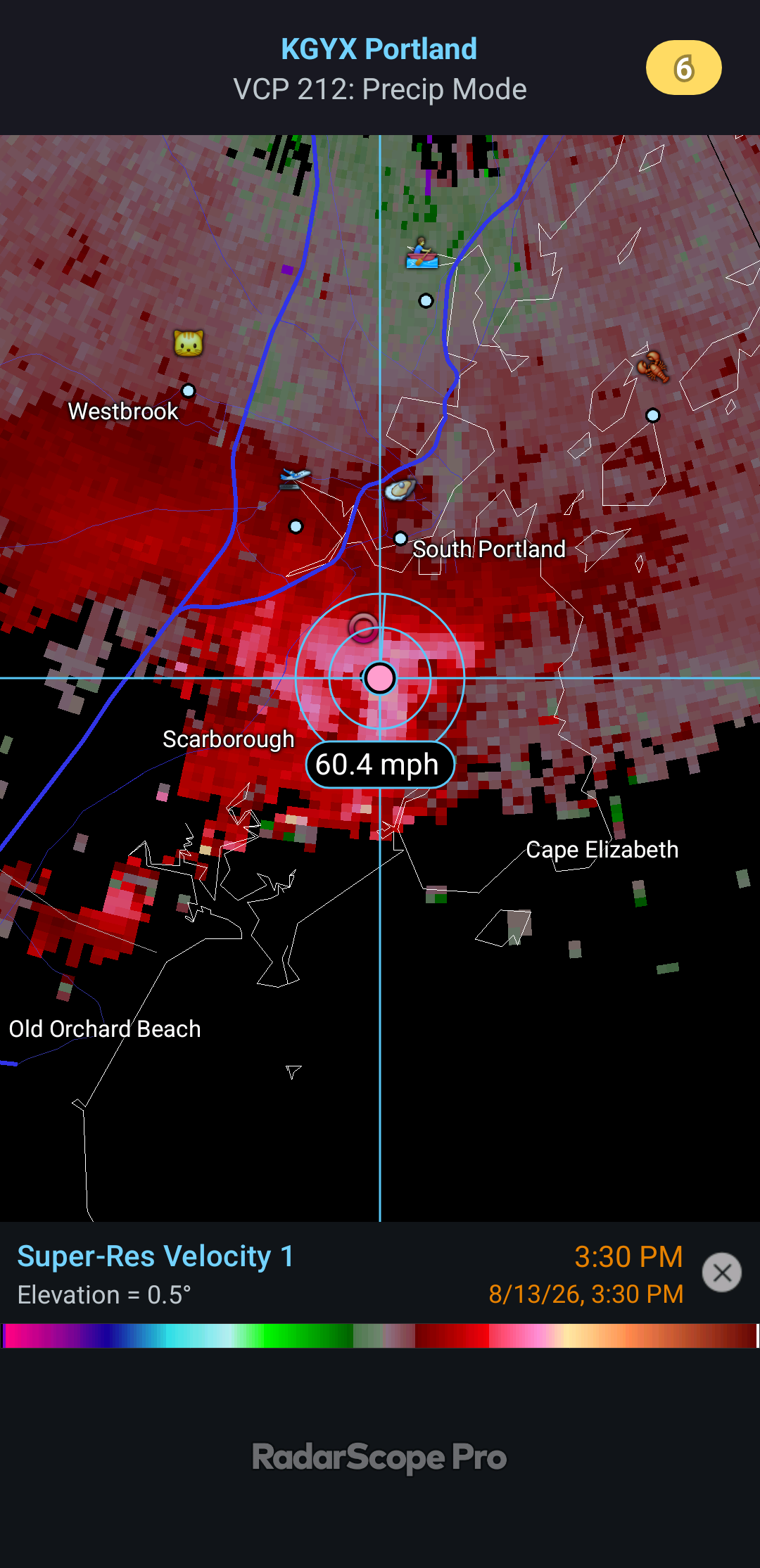
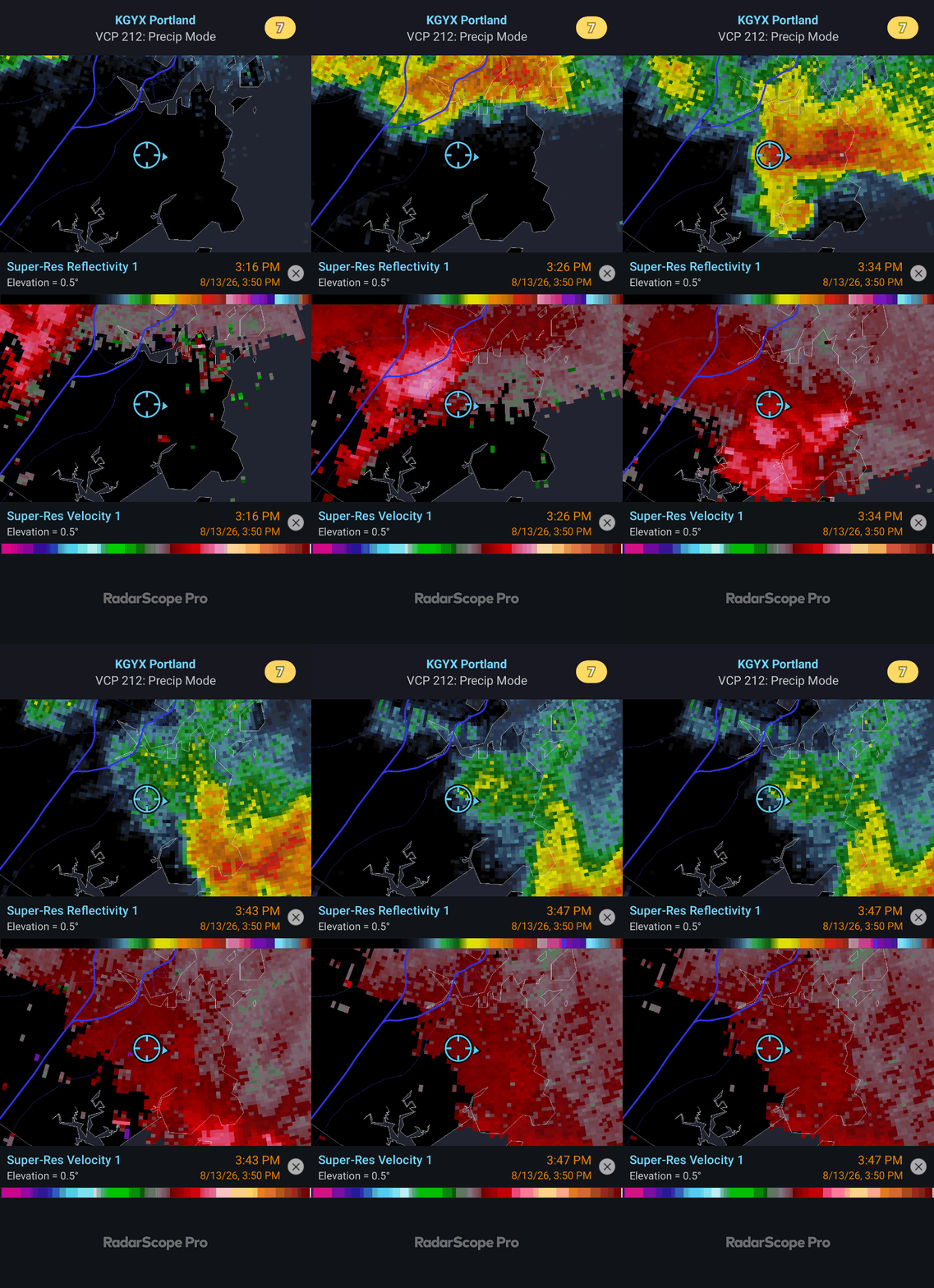
School busses gon' get blown off the damn road this afternoon.
-
1 hour ago, Torch Tiger said:
it's wild how warm 40's feel after the very cold month or so.
Thought the same last night when it was 29°.
-
1
-
1
-
-
1 minute ago, alex said:
Still snowing lol. Love these stretches where it just won’t stop

-
7
-
-
27 minutes ago, dendrite said:
8hrs of Christmas rain. Enjoy.
If you listen closely you can hear children crying as defeated middle-aged men throw wrapped gifts and a flame-engulfed tree out the window.
I also heard what sounded like a hooved animal getting choked out, and some muttering about the Mansfield snow depth, maybe?
Wasn't expecting that based on the title. Kinda wild, actually.
-
4
-
-
3 minutes ago, Lava Rock said:
I don't think so. Astronomyenjoyer was able to log today's event and has "view only" permissions as does everyone else. Not sure how he got his entered.
That breaks my DBA brain.
View only (read, not write) permissions universally means it can't be edited, ha.
-
2 hours ago, mreaves said:
I entered my totals this morning and looked the summary but I don't see where I left anything open or did anything to it.
I'm half joking. Most likely @bristolri_wx didn't set me up with editor permissions.
-


January 2026 regional war/obs/disco thread
in New England
Posted
You can run but you can't hide from that nasty, nasty Atlantic.