Jump to content

MAG5035

Meteorologist
  • Posts

    5,950
  • Joined

  • Last visited

Everything posted by MAG5035

  1. Friday's system is definitely shaping up to get blocked well under us. I thought a couple days ago this may eventually come back up enough to swipe at the DC region or perhaps even into the southern tier LSV. But now it's looking like interior southern VA is as close as it gets. Name of the game whenever you have a significant NAO/AO blocking regime, we're gonna lose some stuff underneath us. This system's coming at the point when teleconnection forecasts are generally at their most negative for the NAO in the forecast period (about a -3 on the WB forecasts). There's also isn't much western ridging to really amplify the system either at this point. The next system being progged out in that D6-7ish timeframe probably has a better shot but hasn't been really consistent. The overnight Euro for instance pretty much didn't even have it. That may end up being south too but I think it's a better chance for at least the Mid-Atlantic folks to get their first system, we'll see. Still looking at the bigger picture here, I said a couple previous pattern posts ago that I was eyeing the second half of Jan more than the first half and I would consider scoring a snow event in the next couple weeks to near mid month a win. And really it has been even if some didn't get snow out of Sunday's system. Take away the dominance of the blocking regime we have in the NAO/AO realm with the current look in the Pac with that +EPO and very low heights in the Gulf of Alaska and we probably have very little chance in what would be a much warmer regime. The blocking is suppressing the storm track and providing just enough marginal cold air (in what really isn't at all a cold pattern) with the Pacific air flooded CONUS to give us a chance with each system the next 6-10 days. I think the system after next has a better shot since it seems we tone down the NAO/AO a little bit and it's in the timeframe where the Pacific/western US side of the equation is starting to look more favorable. Models/ensembles have all been showing a big shift in the Pac, building ridging in the EPO realm up into AK where we have very low heights now while keeping a -NAO/AO. We need to inject some actual Canadian cold into this pattern and that's how it gets done. This is also a better alignment to involve the northern branch better with any potential phasing opportunities. Here was the overnight Euro ensemble for 12z this morning, D7 (near the timeframe of that second event) and D12. Look how much the Pac improves especially between the D7-D12 ones. The GEFS is doing the same general thing as well. Shaping up to be quite wintry after mid month if that comes to fruition. Current: Day 7: Day 12:
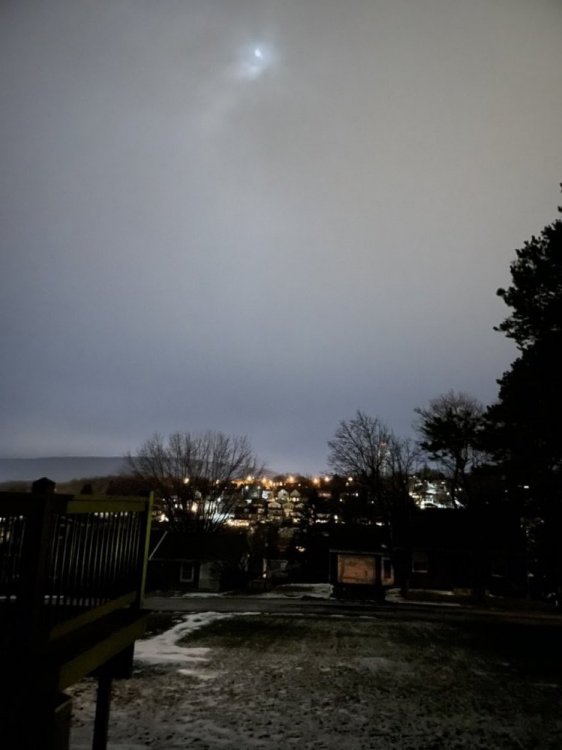
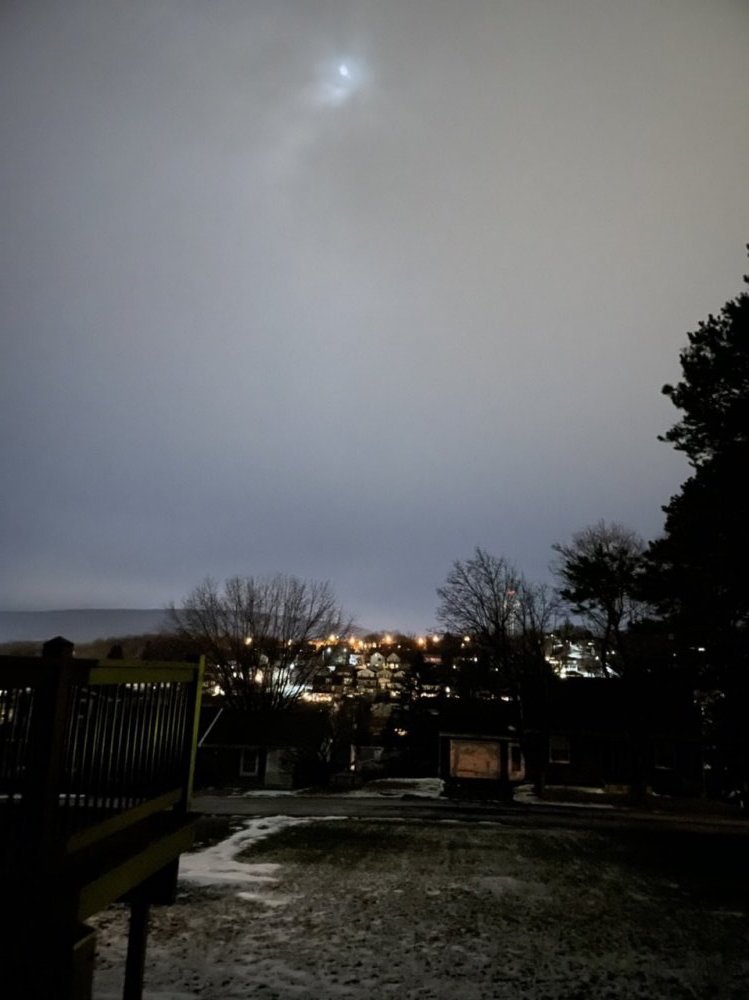
  2. Slotted out here at 1.1", def a really wet snowfall. I'll bet some of that 3-5" the models were cranking out ends up coming to fruition somewhere in between UNV and IPT.
  3. Wow I haven't seen flakes this big in a few years. Pouring half dollar snowflakes in this band.
  4. Passed the 0.5” mark, moderate to heavy rate.
  5. Same here, it didn't take long to start accumulating (on the roads too).
  6. Mostly sleet falling currently after a bit of a damp start to this. Had a glaze of ice on the car first thing this morning. Now to see if this gets to snow quick enough so it can do something accumulation wise.
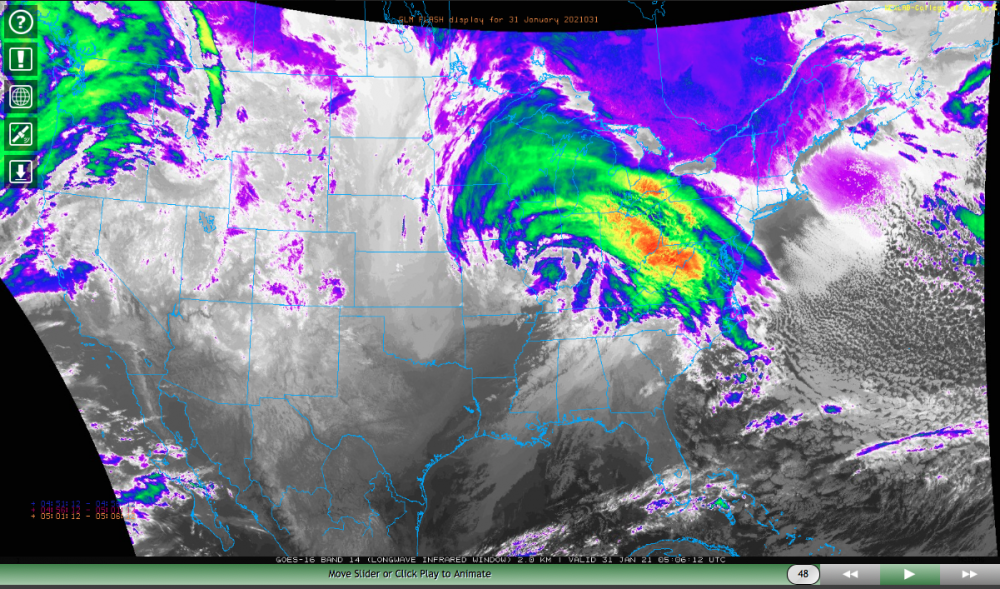
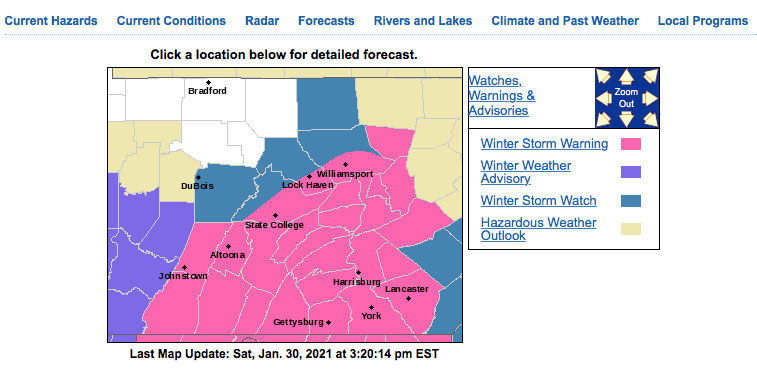
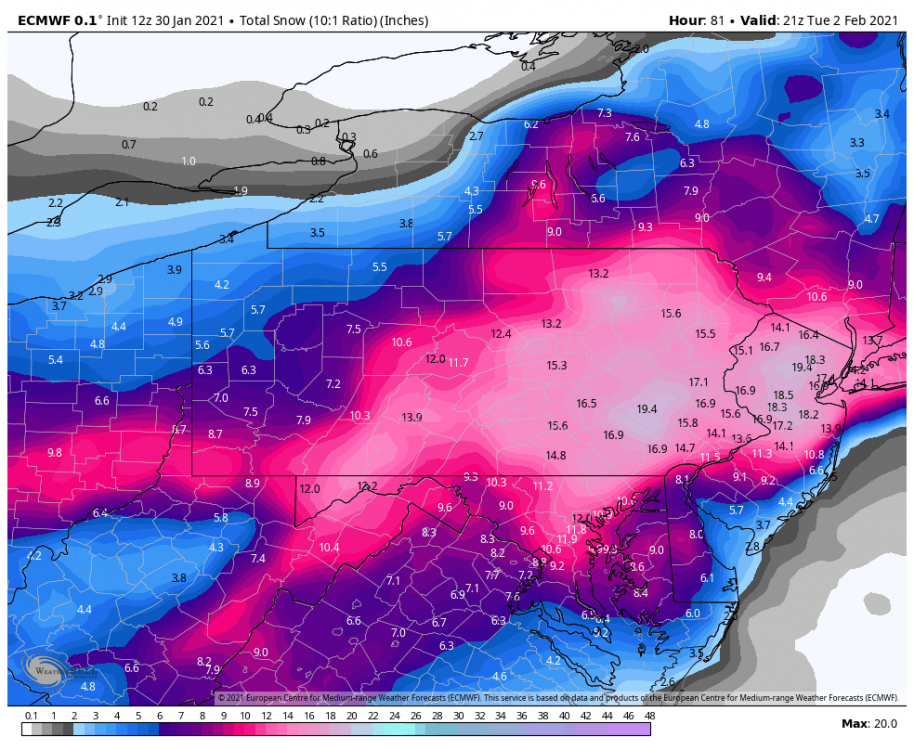
  7. Still not totally sure what to make of today's system. Looks like two different waves of precipitation. Surface temps have cooled off nicely overnight and most areas near or below freezing. However, temps per mesoanalysis at the 925mb (southern third of the state) and 850mb level (most of the state) still above freezing. This means the initial wave of precip arriving later this morning likely to be a mix, which is the main basis of the advisory for the Sus Valley (for the possibility of a T of ice). The second and probably main wave of precip arrives in the afternoon associated with the upper level low itself. Under this is where we have the cooling at 925 and 850 to support an all snow column. Track of the weak mid level low features seem a tad NW to me, thus I kind of support CTP having the best snows from UNV on to the NE instead of LSV locations like MDT. This could cover more of the central counties depending on how precip develops though. Near term guidance has generally been putting the best QPF from the upper level low from the central counties to NE PA. Dare I say Williamsport appears to be the new snowtown these days haha.
  8. Was able to get a couple general measurements of the ice. Looks like about 0.2" of ice accrual. Temps still hovering in the 33-34ºF range.
  9. I upgraded to an iPhone 12 Pro a few weeks ago, it has one heck of a camera system. Really excels at the low light stuff, and also showing we’re still in the thick of the icing phase of this system here.
  10. Have had some sleet occasionally but all freezing rain currently. Starting to be pretty noticeable on the trees. Have a feeling this is gonna end up more towards a warning level ice event.
  11. You only need a T of freezing rain to verify a WWA, which is fairly likely even in H-burg.
  12. Generally in agreement here. While not completely flipping the EPO, ensembles have been at least neutralizing it some as it's gotten out past next week. It's a key thing to happen, because we do have an issue of source region of cold initially which likely manifests in the coastal later this week probably not getting cold enough at the low levels for much snow in PA (more likely toward interior NY/New England) and probably the next system of note that comes about later next week. But you can see it on the models.. once they build any semblance of higher heights on/just off the west coast, it's enough to get the eastern US right where we want it. With that block over the top, we don't really need a raging -EPO ridge to succeed (though an EPO ridge would be nice). We just need to tone down the Pac jet enough as to not flood the CONUS with Pacific air under this awesome block we have materializing in the NAO/AO realm. I'm pretty confident were going to get there.. it just might be around week 2 of Jan or so where we really start seeing this. The 09/10 comparison is relevant here.. simply because we haven't seen that kind of a strong and stable NAO/AO blocking regime since 09/10 and the early part of the 10/11 winter. What I'm curious to see is where the obvious differences between this winter and that winter take us. Of course the big difference is we're working a solid La Nina vs 09/10's solid Nino. The other thing is the SST anomalies in the north Pacific. I was going to post about this earlier in the month, but then the big snowstorm showed up and that was the big topic. But pretty much when comparing past Nina's of the last 25 years+, you won't find one with the + anomalies in the N Pacific that this one has. Most of them are quite cold there. The most recent Nina in 2017-18 is about the closest comparison but still had more colder water. My big worry initially when seeing anomalies like this going into the winter was the assumption of not much help from the NAO/AO and seeing hostile teleconnections from the Pac side materialize. One could see the potential torch in the making. The blocking is a game changer, and now suddenly one can see the potential from an active pattern and suppressed storm track from the blocking. Back to 09-10, here's what that looked like at this point. The Atlantic and the Gulf of Mexico got even colder with respect to average when February rolled around. But yea, huge difference in SST makeup. I tend to suspect that the much warmer N Atlantic this year might help keep a tighter storm track to the coast and you might not see quite the suppression you saw in the 09-10 winter, which was certainly less memorable in New England.. or Williamsport for that matter if we're talking about this particular subforum haha. There were some folks in here that got next to nothing from Feb 5-6, 2010. It's going to be interesting to see how all this shakes out going through January. If we hang onto the -NAO/AO regime we're definitely going to have chances.
  13. Currently getting a brief period of steady snow early this morning, ahead of what's looking like a really icy New Year's Day later on tomorrow around here.
  14. Models have been pretty solid on this threat for the last couple days once they started sticking that high pressure to our north. The high itself has gotten stronger on the progs too as we've gotten closer. It's a pretty good setup for a straight-up ice event, especially in the interior counties. Mid-levels are easily shot already lacking much cold aloft and the system cutting well west. The fairly strong high solidly anchors the sufficient cold we do have in the low levels. The cutting low pressure is weakening as if lifts northward, so it may draw out the ice longer in the central counties. I'd say this is probably an area-wide advisory event in the making, and potentially a WSW worthy one in interior central/north central PA, dependent on QPF and if sleet is a more predominant p-type during the first part of the event. Canadian joined the Euro today having that kicker system right behind this potential ice event. Both were very marginal in their cold air availability for snow (Canadian somewhat better).
  15. With the EPO/WPO forecast to go way positive during at least the opening week of January, I don't think we're going to live up to this high latitude blocking pattern's potential initially. An active Pac jet (+EPO/WPO) is going to ensure trouble in getting access to any decent cold into our part of the CONUS in a pattern that had already been kind of lacking it since our big snow event with the exception of the couple days in the aftermath of the X-mas eve system. If we break this down, or better yet get a -EPO ridge to build.. then you force a better alignment from a colder source region (such as NW Canada). That coupled with the high latitude blocking in the NAO/AO realm.. ideally shifting westward a bit in time would provide a much colder pattern and a suppressed storm track that is less apt to try to cut in the east. We're just not fully there yet. Personally, I'm eyeing up the second half of Jan more than the first half and considering anything we do score in the next two weeks a bit of a bonus. We have a pretty decent strat-warm event seemingly in the cards in the first part of January and it usually takes a couple weeks to start realizing whatever the results are in terms of cold air outbreaks in the mid latitudes. The -NAO/AO regime is looking like more of an overall theme rather than just a passing fad and pretty much couldn't get a more opposite look from what was just getting warmed up this time last winter up in that realm. This significant of a NAO/AO blocking regime was not something I was expecting to see out of this winter. Barring a major change up there or the MJO suddenly busting out into a strong 4-5-6 pulse (currently not looking very likely attm), i'm fairly confident in saying that we're going to eventually see a really good period of winter weather set up at some point.
  16. Might not want to sleep on this New Year's event potentially becoming some kind of a wintry mix event in C-PA. Models have been toying around with sending the first piece up into the lakes, pulling a front across and holding back a good bit of energy for another wave to roll up. While the southern wave builds, models have been getting some high pressure in place over us/just to our north. Positioning of the mid-level features (850 & 700 lows well west) definitely aren't looking ideal for an extended snow event, but get that high over us for at least a bit and we probably are going to be dealing with some kind of messy mix event on at least the front end.
  17. You guys definitely killed it this month over there in western PA. If we can speed up by about 12hrs what appears to be a really similar situation to yesterday shaping up on New Year's Eve/Day, maybe there can be some snow added to December's total haha.
  18. Merry Christmas everyone, it did somehow manage to be a white one here.
  19. Straight-up moderate to heavy wind driven sleet at the moment, maybe a couple flakes. Starting to accumulate and deck's starting to freeze.
  20. There's two boundaries that are noticeable on velocity images. One associated with the thin line of intense rainfall in the warm sector (impacting H-burg and LSV) and a secondary boundary further west, which i've noted with the blue dash.. that is the actual cold front boundary.
  21. I still don't think much makes it over to the Sus Valley but we'll have to see how much precip hangs on behind the cold front. Short range guidance like the HRRR and NAM haven't had much lingering by the time it's cold enough. There could perhaps be enough to witness a changeover period and perhaps a coating in spots in the region east of I-99 over to the Sus Valley. The big thing to watch first thing tomorrow morning is for untreated stuff to freeze up.
  22. Changeover is starting to occur. Sleet, rain, maybe some wet flakes. Temp back to 35ºF.
  23. Frontal passage has occurred here, pretty decent gusty winds. Temp only got to about 41 or so during this whole thing today (about an hour or so ago) and it's back down to 38 already. Frozen precip shouldn't be too far off.
  24. It seems like the most significant flood potential focuses on the Susquehanna main-stem (and NE PA tributaries), especially in the Upper Sus Valley on into NE PA where that particular region has the trifecta of significant rainfall, the most significant existing snowpack, and a several hour period where warm temps via southerly flow punch up into eastern PA to further enhance a more rapid snow melt. Short range models like the NAM have been downright excessive with rain totals, and the next several hours this evening will reveal if that comes fully to fruition as radar trends look to be starting to focus the heavier rainfall rates into eastern PA along the Susquehanna. The other major tributaries coming from the central counties (West Branch and Juniata watersheds) look to have a significant rise but most point forecasts appear to stay below flood stage along those rivers. Temps in this part of C-PA are locked into the upper 30s-low 40s and as mentioned, heavier rainfall is starting to focus towards eastern PA. Appears that any surge in temps in the central probably comes close to/with the frontal passage as the stable b-layer gets mixed out. Lack of big time flooding coming from those two tributaries probably prevents the main stem from going full blown '96 repeat in lieu of a more minor-moderate flood event coming primarily from upstream in NE PA/southern NY. Definitely not ideal anyway you slice it, what an ugly Christmas Eve weather-wise.
×
×
  • Create New...