
wxmvpete
-
Posts
76 -
Joined
-
Last visited
Content Type
Profiles
Blogs
Forums
American Weather
Media Demo
Store
Gallery
Everything posted by wxmvpete
-
Jan 19th Snow on Snow: the this always works until it doesn't thread
wxmvpete replied to psuhoffman's topic in Mid Atlantic
Josh is on the grids today and I'm the afternoon winter shift, so I'll shoot him a message -
Jan 19th Snow on Snow: the this always works until it doesn't thread
wxmvpete replied to psuhoffman's topic in Mid Atlantic
Living on the edge of your Zone C and Zone D. I'd happily take another 3" as would my kids! -
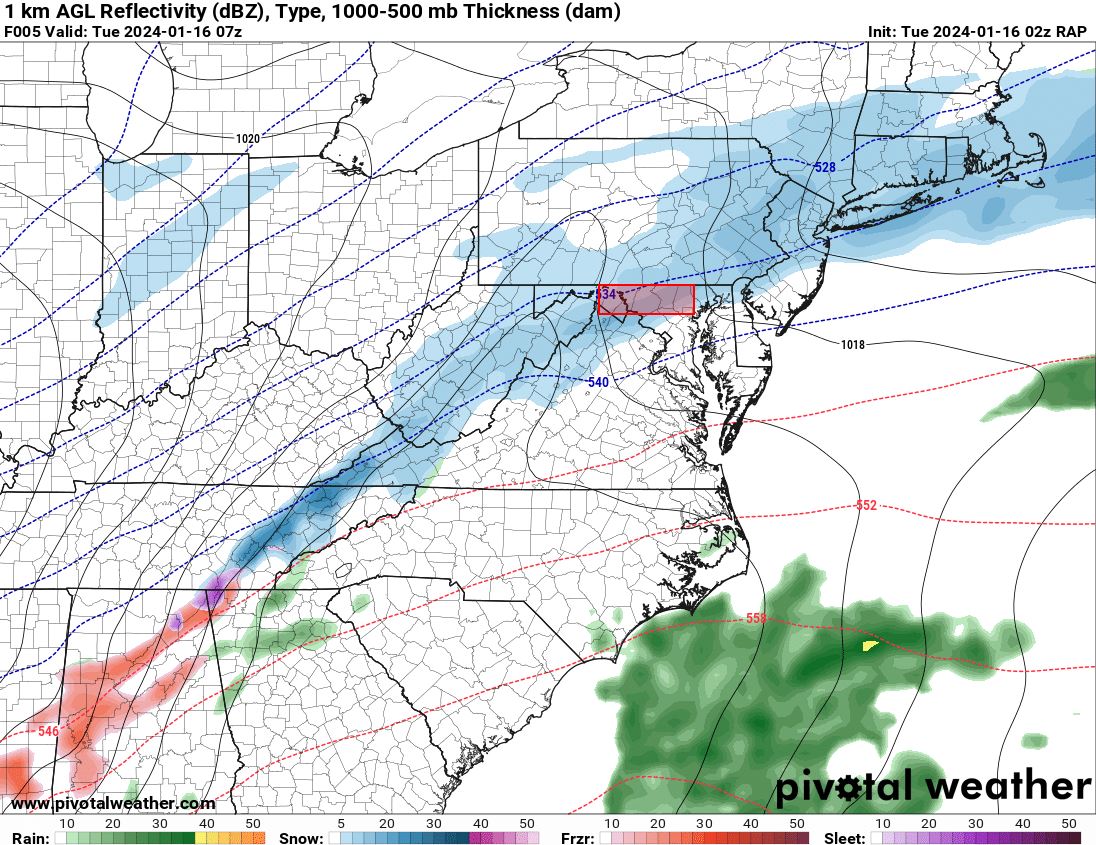
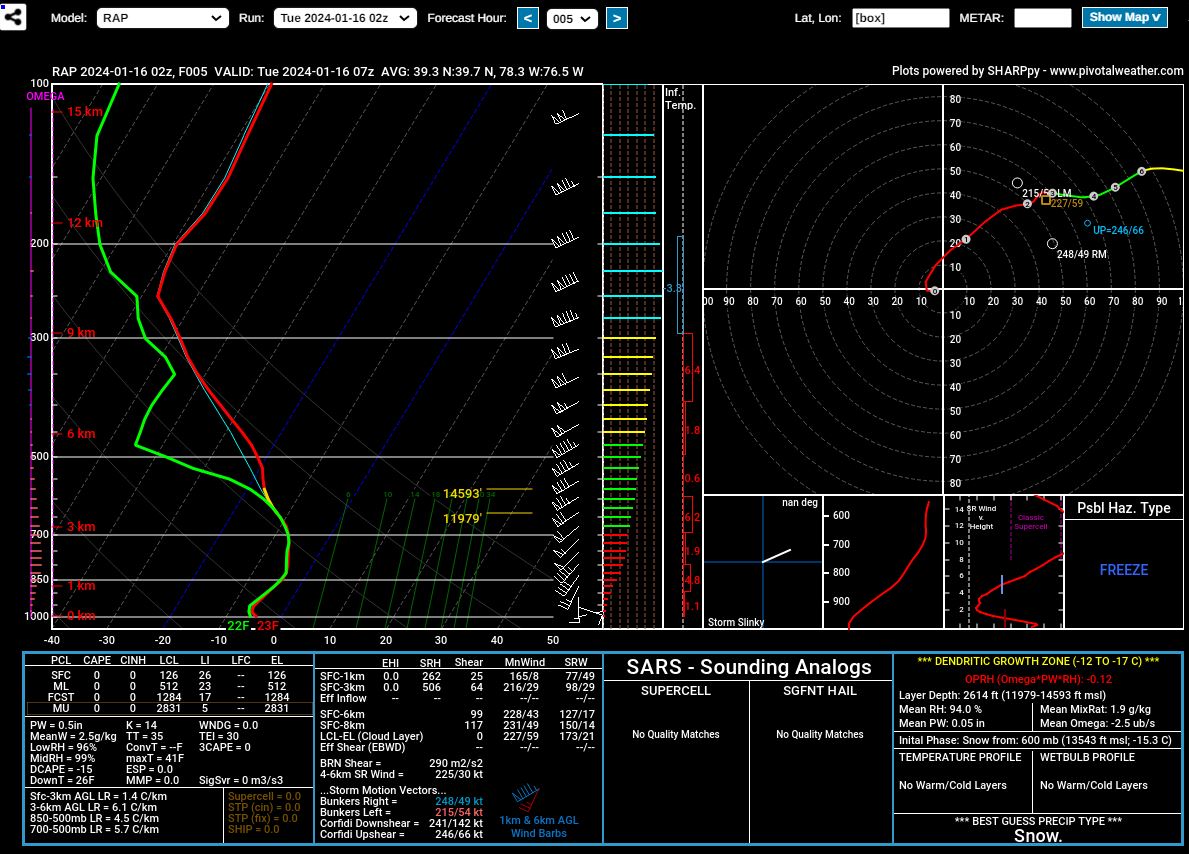
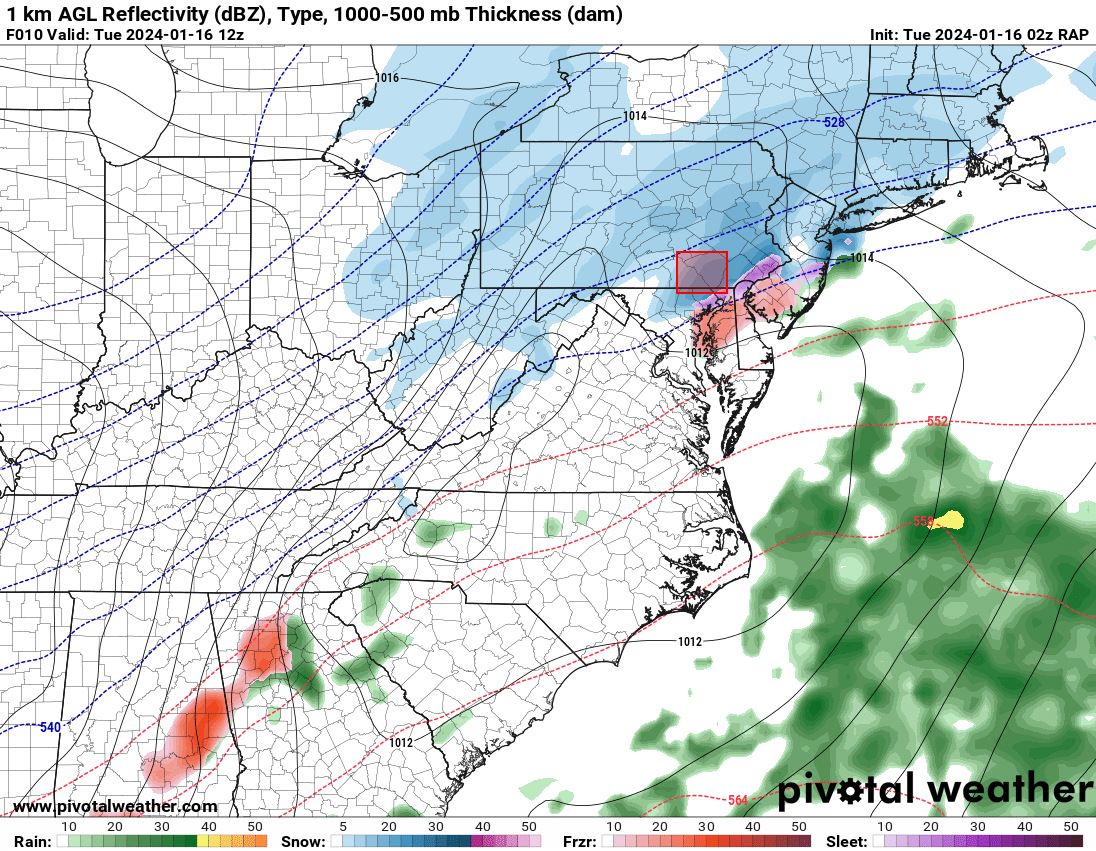
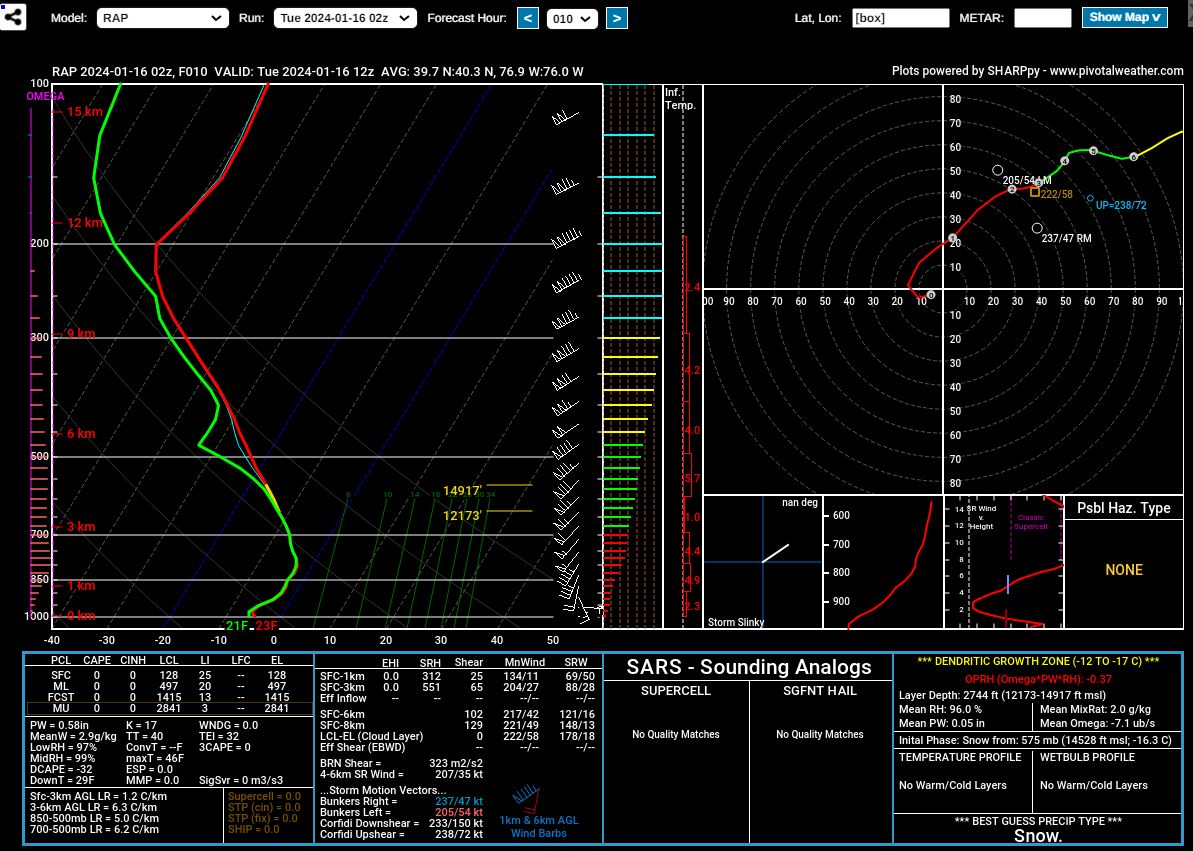
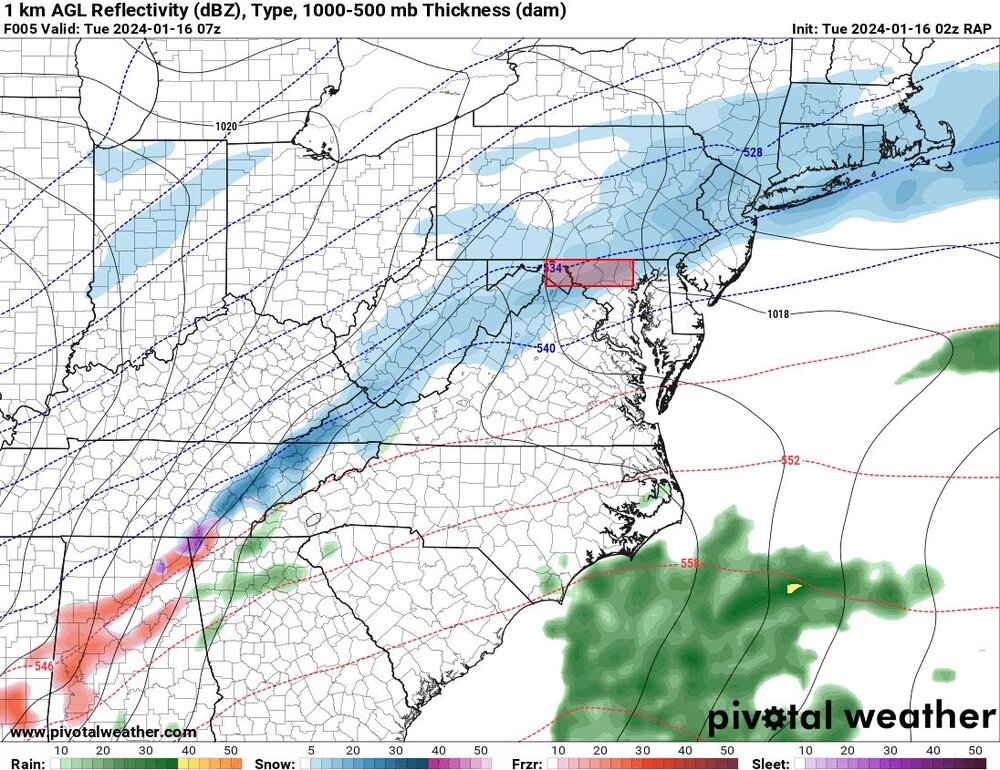
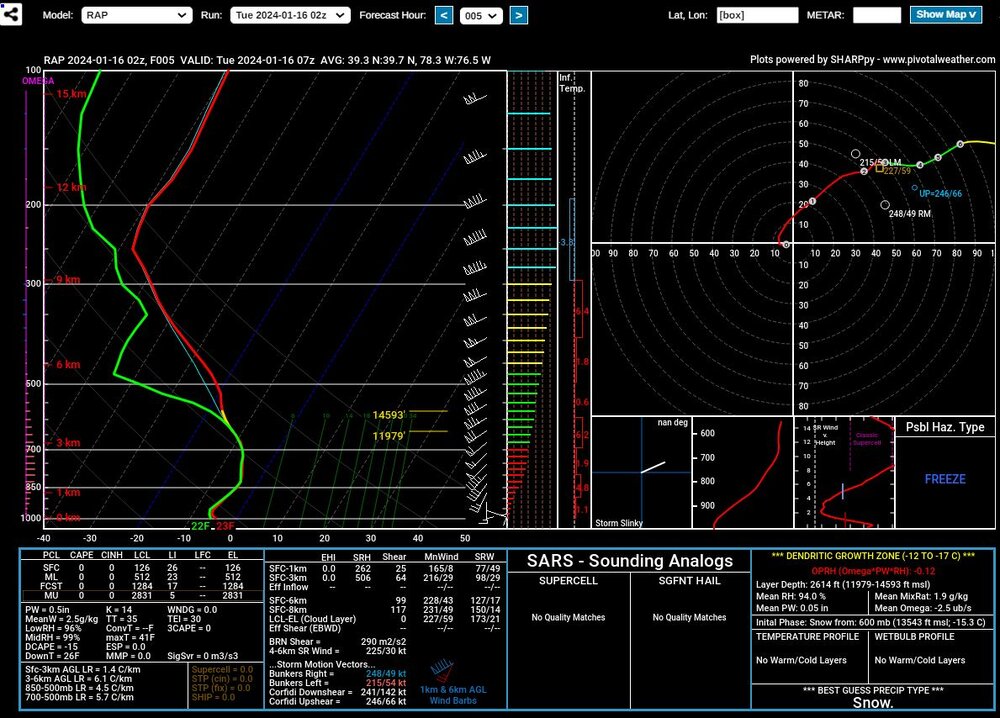
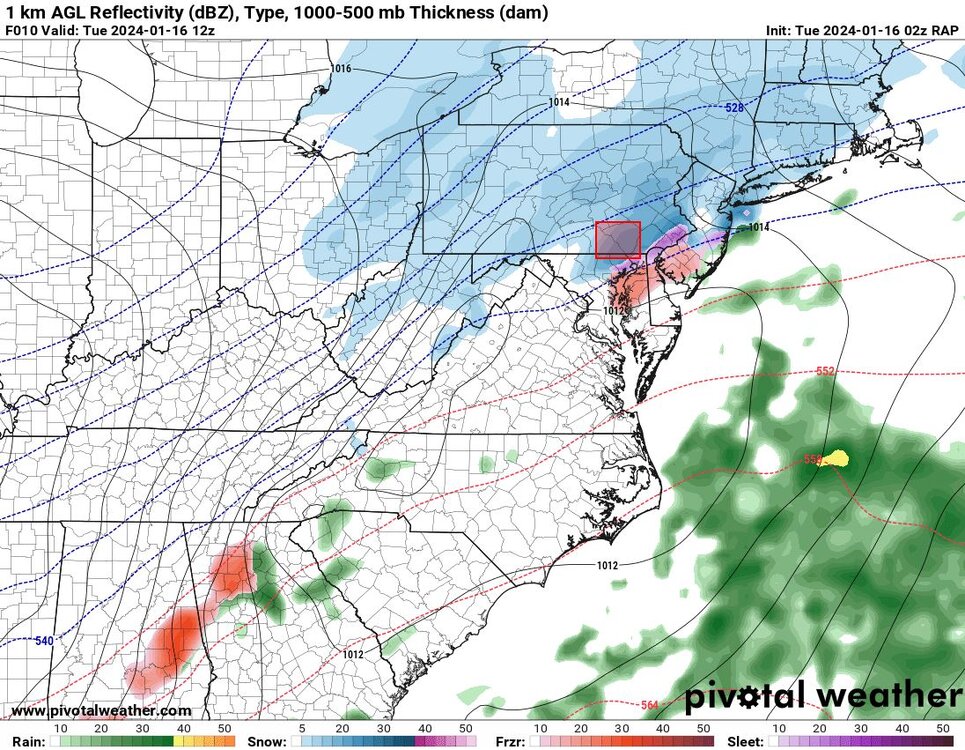
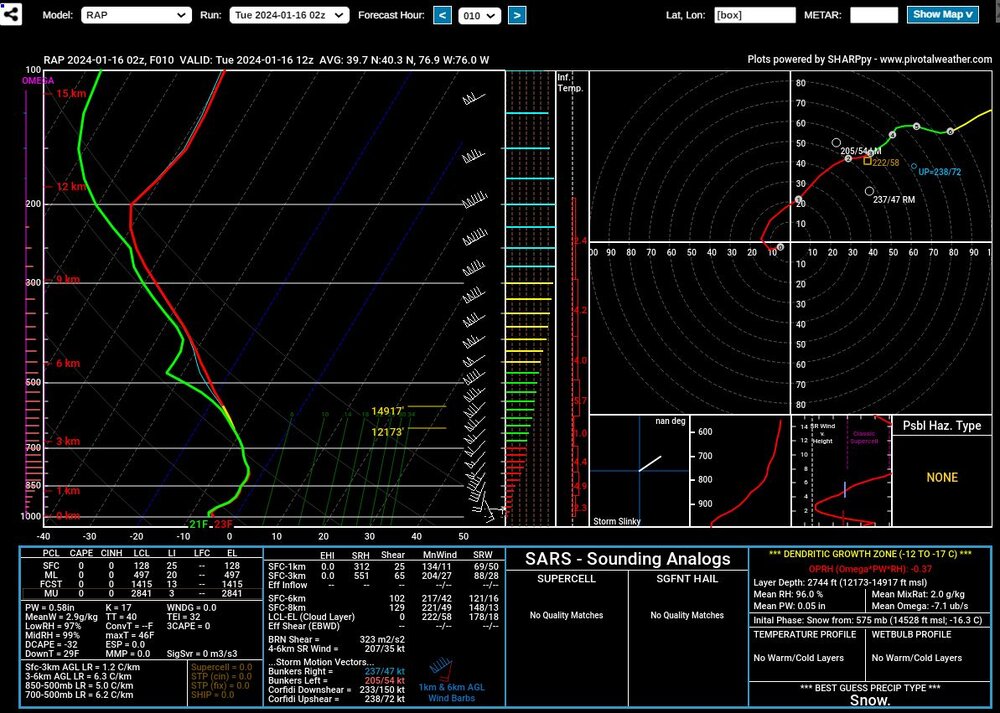
However, take a look at early this morning up near the Lower Susquehanna Valley- that sounding regains some of that moisture at mid-upper levels with increasing VVs through the depth of the column. That could be pretty impressive over eastern PA if that can materialize Tuesday AM.
-
Yep good catch, that is probably the primary reason this band isn't a bigger 1-2"/hr setup. The lowest layer of the DGZ on down to the boundary layer is sufficient to give folks an advisory level event (pockets of warning criteria still possible). You want that DGZ zone layer fully saturated with strong VVs. Still, this is enough to produce a nice event here.
-
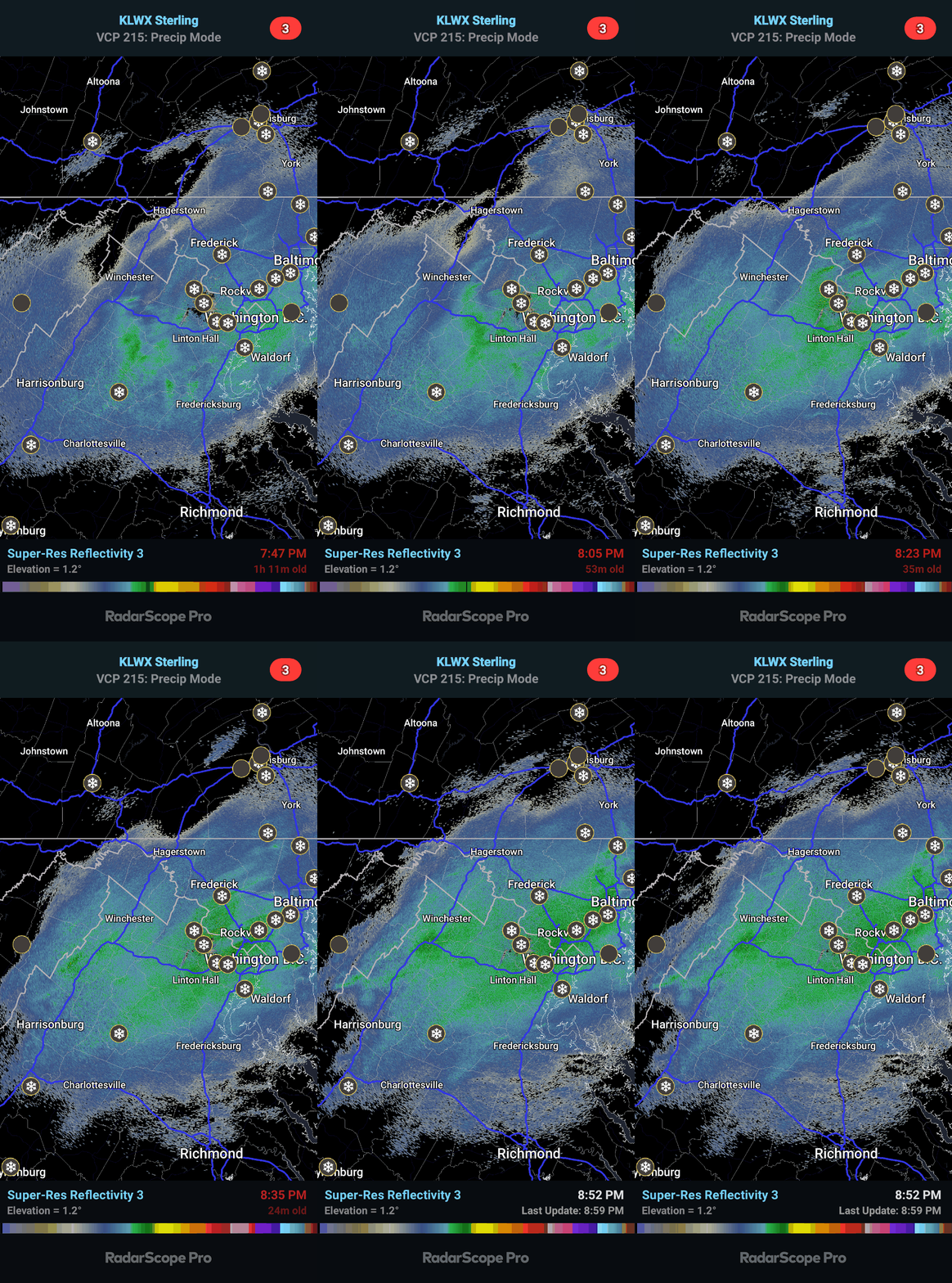
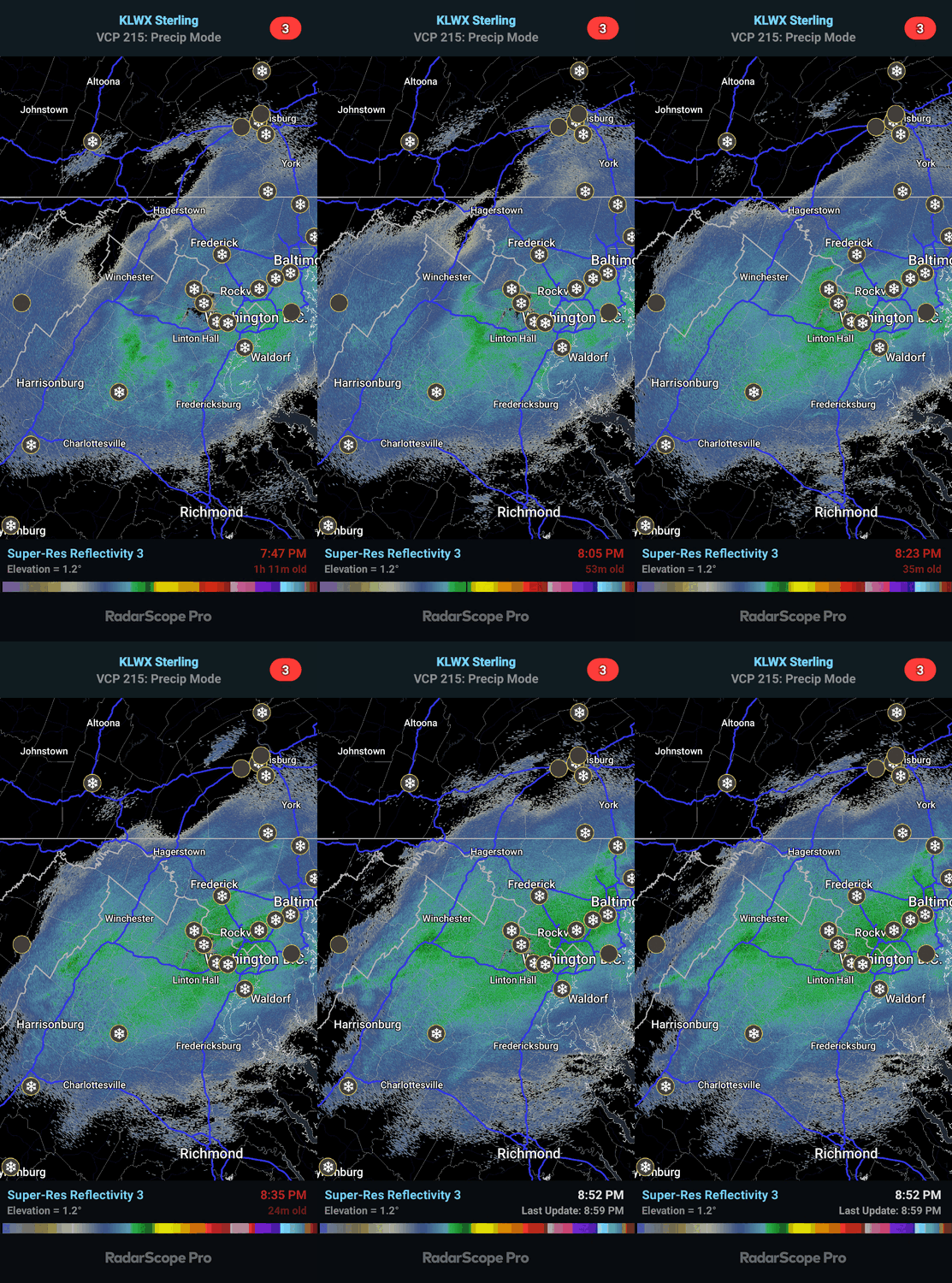
Really starting to see returns filling in at higher radar tilts in western VA. What originally featured drier returns around 4,800ft out near the I-66/I-81 merger (around 850mb) is showing brighter returns. For those who have patiently waited in Northern MD, those heavier rates will be realized soon.
-
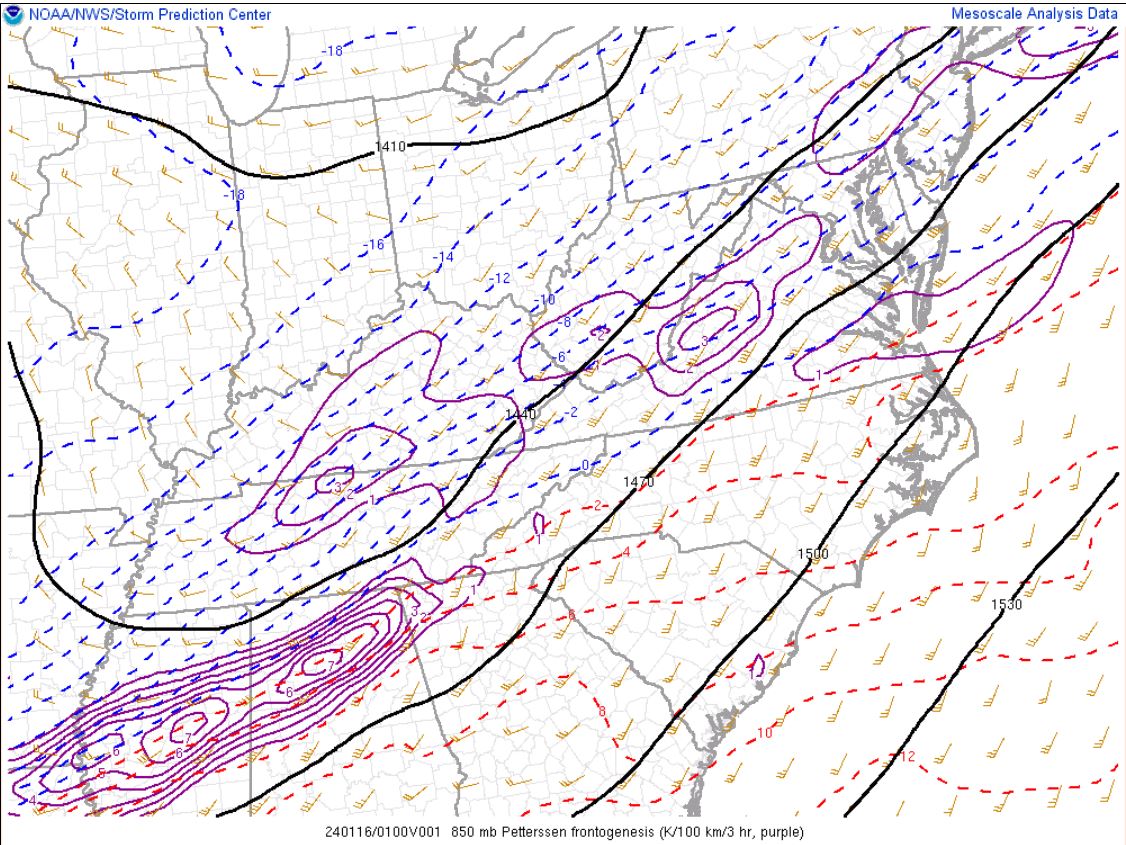
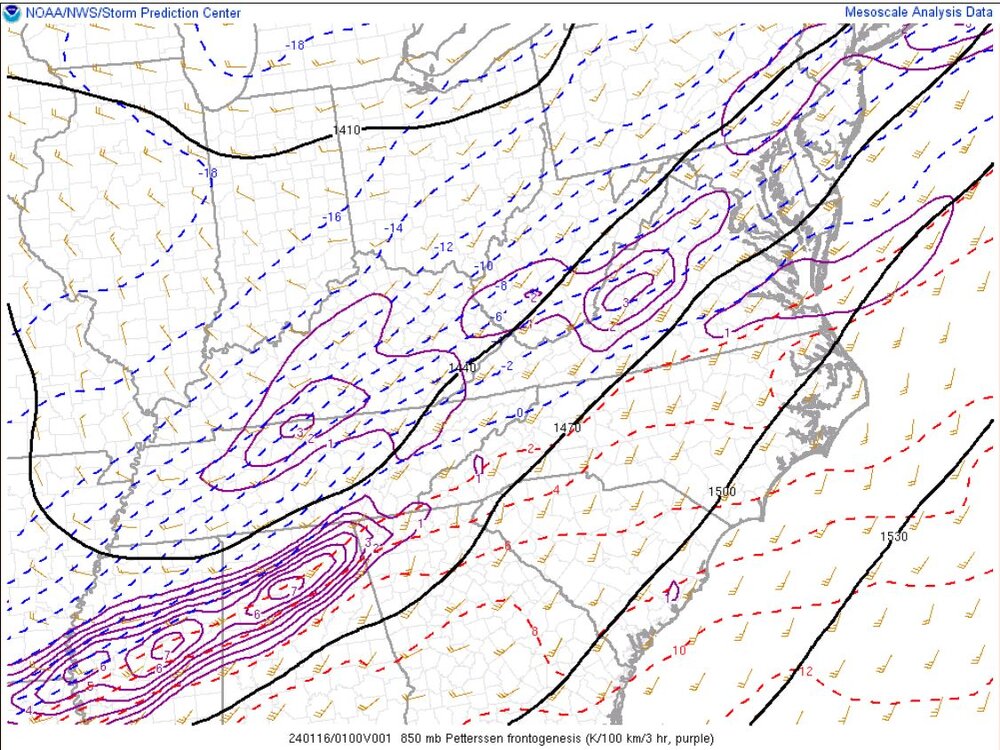
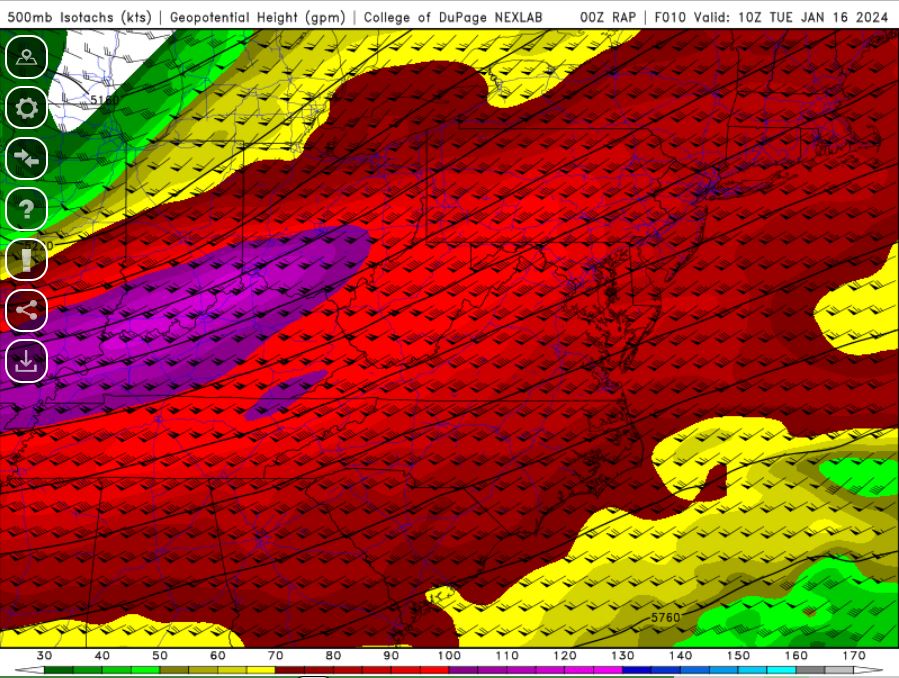
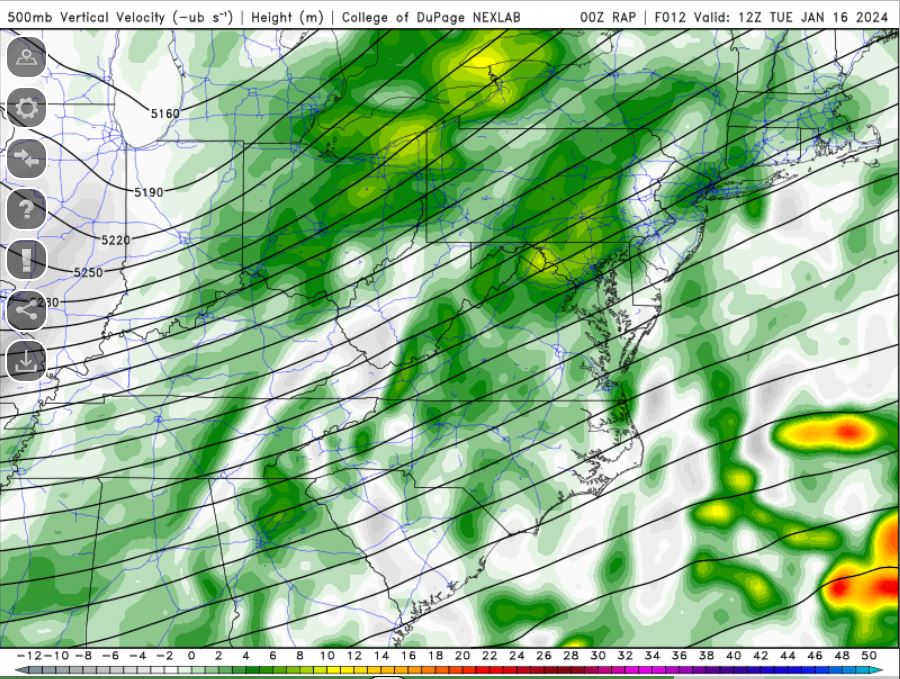
850mb warm air advection continues to increase with 850mb frontogenesis that will support a band of heavier snow N&W of DC in the coming hours. What becomes the wildcard is the approach of a 500mb jet streak over the OH Valley overnight. At the nose of the jet, divergent flow atop the atmosphere will support healthy vertical velocities 12Z Tuesday. This is driving the snowier solutions from northern MD into eastern PA. The new NAM seems to feature similar setup.
-
I also have a half inch northeast of Westminster. Quite a few cars spun out on the road going home.
-
Jan Medium/Long Range Disco 2: Total Obliteration is Coming
wxmvpete replied to Jebman's topic in Mid Atlantic
As a heads up, these maps are resent to include our hemispheric fronts created from our Alaska desk. The fronts over the CONUS by our day shift medium range forecaster (Rausch, if you look at the Fronts tab on the homepage) is identical compared to this one. The new fronts and pressure from night shift likely won't make the web for a couple more hours, and the overnight forecaster would use the 12/18Z guidance as their foundation for this next set of fronts/pressures forecasts. Usually these fronts and pressures have to be sent out before the new suite of 00Z guidance comes in. -
Jan Medium/Long Range Disco: Winter is coming
wxmvpete replied to stormtracker's topic in Mid Atlantic
January 2014 event- the week before KIAD got 8.5". For those dates, cold with 0.3". January 2011 dates- KIAD 1.2" January 1992 dates-- cold and dry March 9-10, 1960 dates-- 5.8" at DCA (Bigger storm here to open that month) March 11-12, 1960-- cold and dry at DCA December 11-12, 1958-- cold and a Trace at KDCA March 24-25, 1940-- cold and a Trace in DC January 23-24, 1940-- big storm, 9.5" in DC and cold January 29-31, 1936-- Cold and 0.2" in DC December 28-29, 1935-- Cold and 6.3" of snow in that period. So we know it's cold, but it can give us a decent event based on the event. -
Jan Medium/Long Range Disco: Winter is coming
wxmvpete replied to stormtracker's topic in Mid Atlantic
May be pulling up xmACIS to check what they did. -
Ahh it did start to try to hint at it on the 18Z ECMWF. Hadn't gotten a chance to look at it. Will be curious to see if it keeps making that adjustment at 00Z.
-
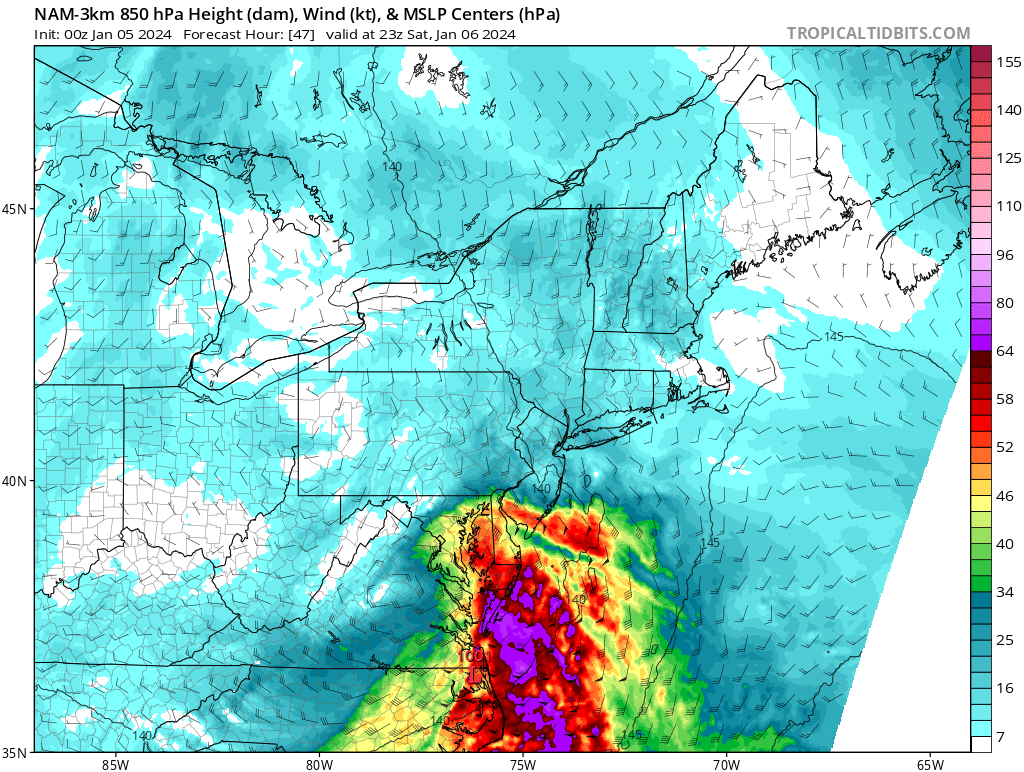
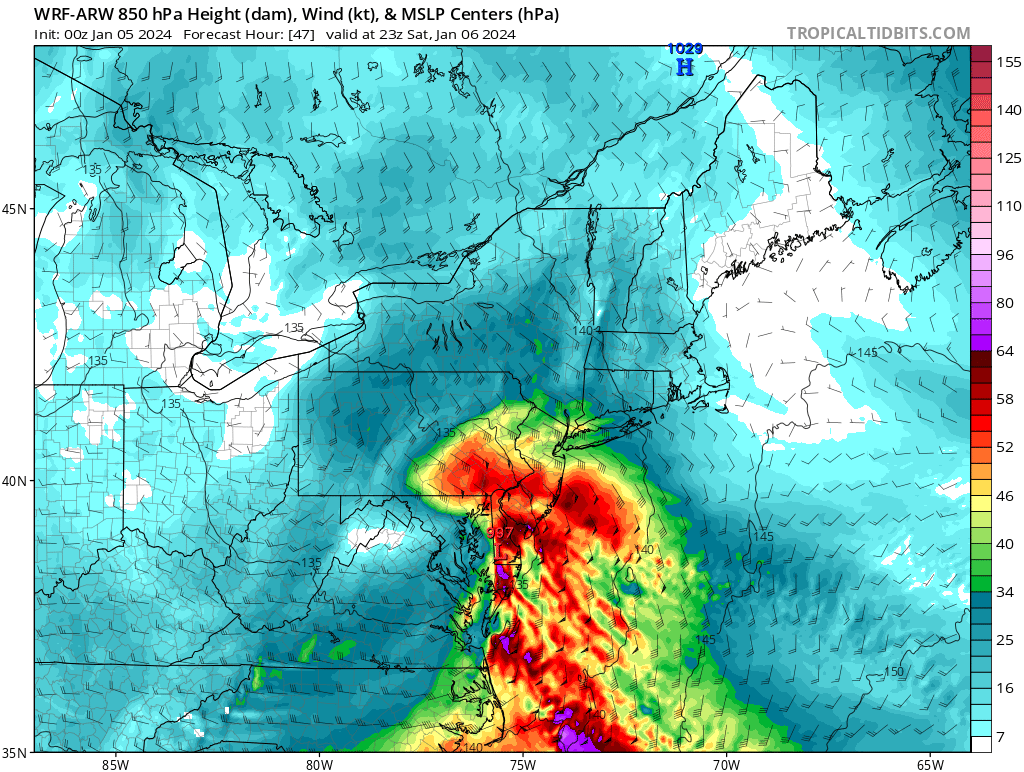
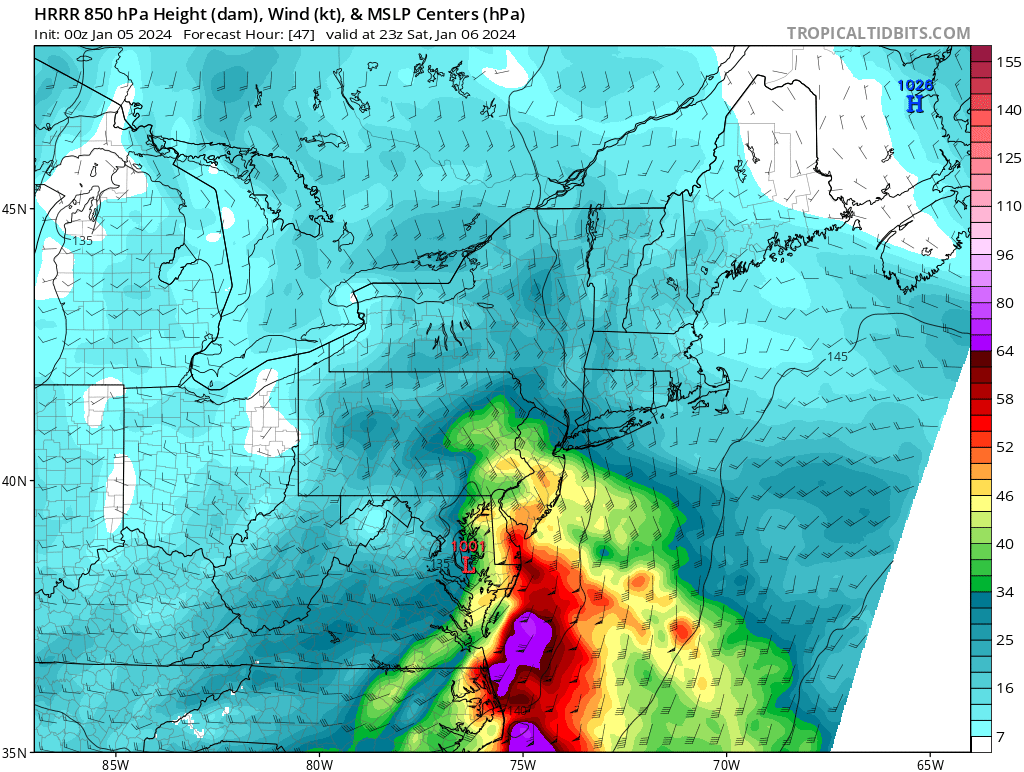
This is a great catch. Just comping a couple other CAMs at 23Z Saturday, the HRRR and ARW remain more southeasterly and don't pinch off that 850mb low as far south as the 3kmNAM. While it isn't to say the 3kmNAM isn't on to something, there isn't any guidance showing an 850mb low evolution quite like what the 00Z 3kmNAM just did. It's something you keep in the back of your mind, but going to need to see it get more support before buying in (and that is assuming if it even still maintains this in future runs).
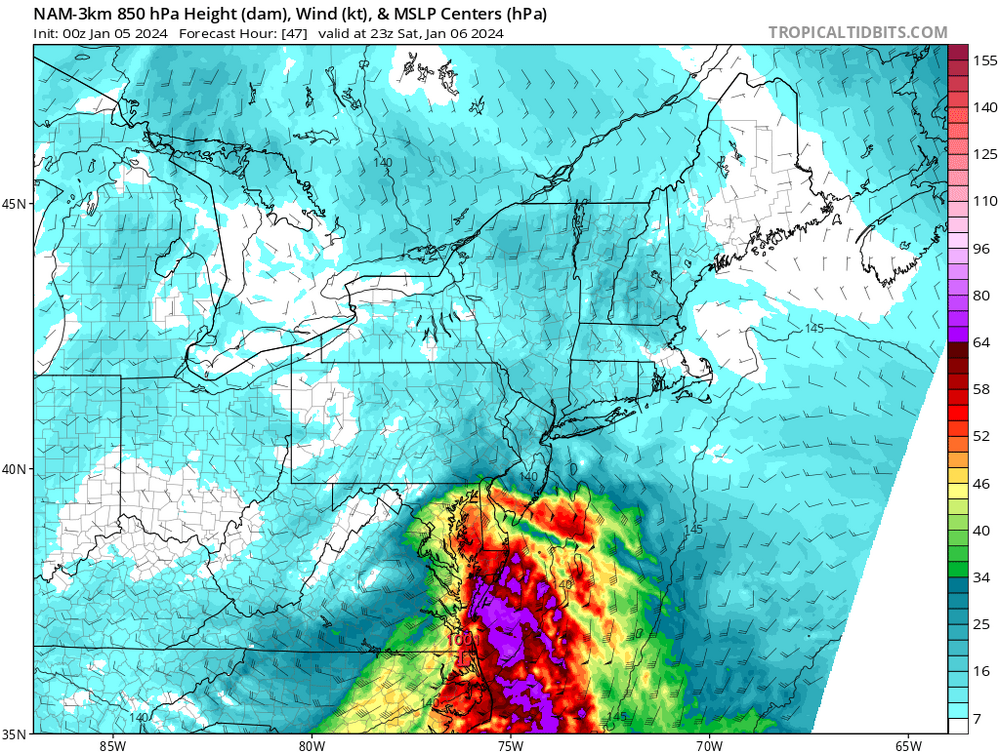
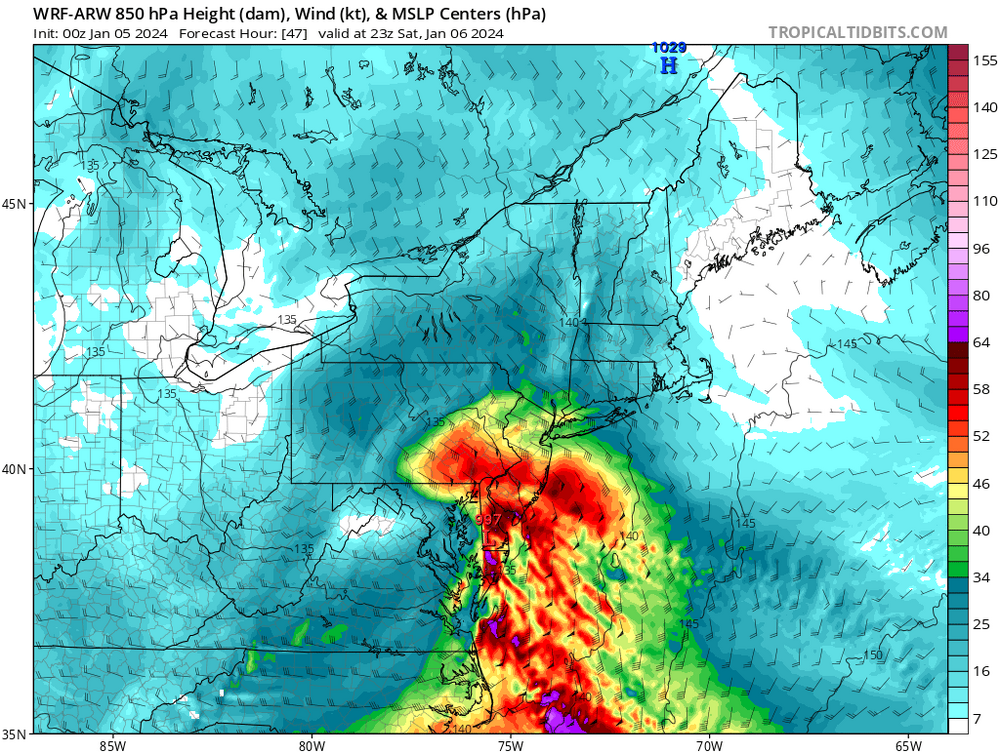
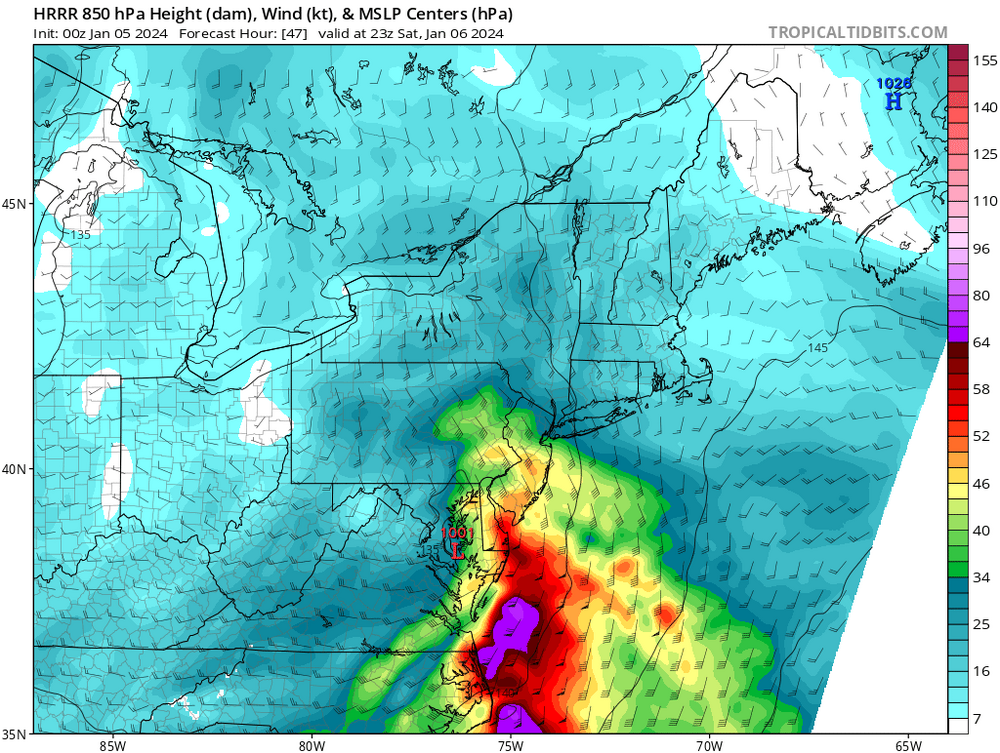
-
Something that has been on my mind, especially for those to the west maybe more along Parrs Ridge, is are we seeing guidance bring that warm nose in as-advertised, but also not capturing just how cold the low levels will be once they wet bulb initially? I can see an avenue that still certainly result in a less snowy regime. But if those N-NE winds at low levels holds, some areas may end up more icy than just rain. That will be worth watching on the CAMs in future runs. And the CAMs will be more included in the WPC PWPF now that we are inside of 60 hours for this event.
-
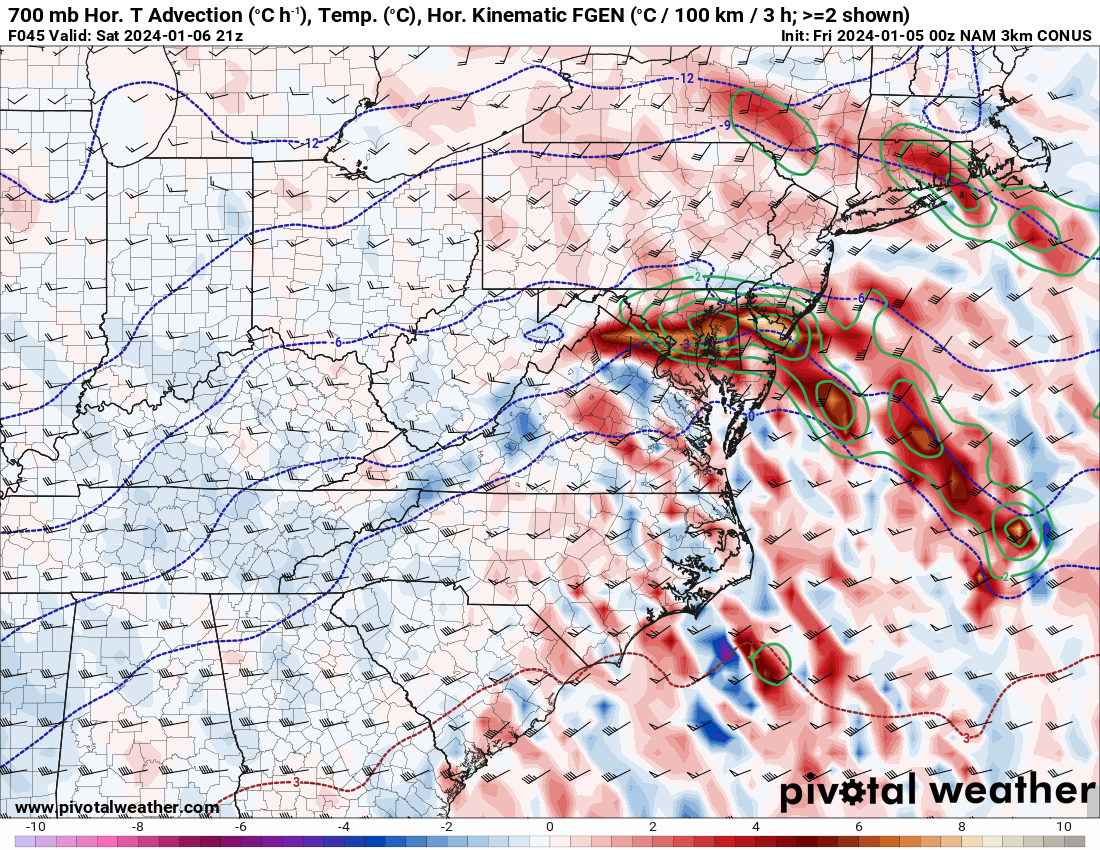
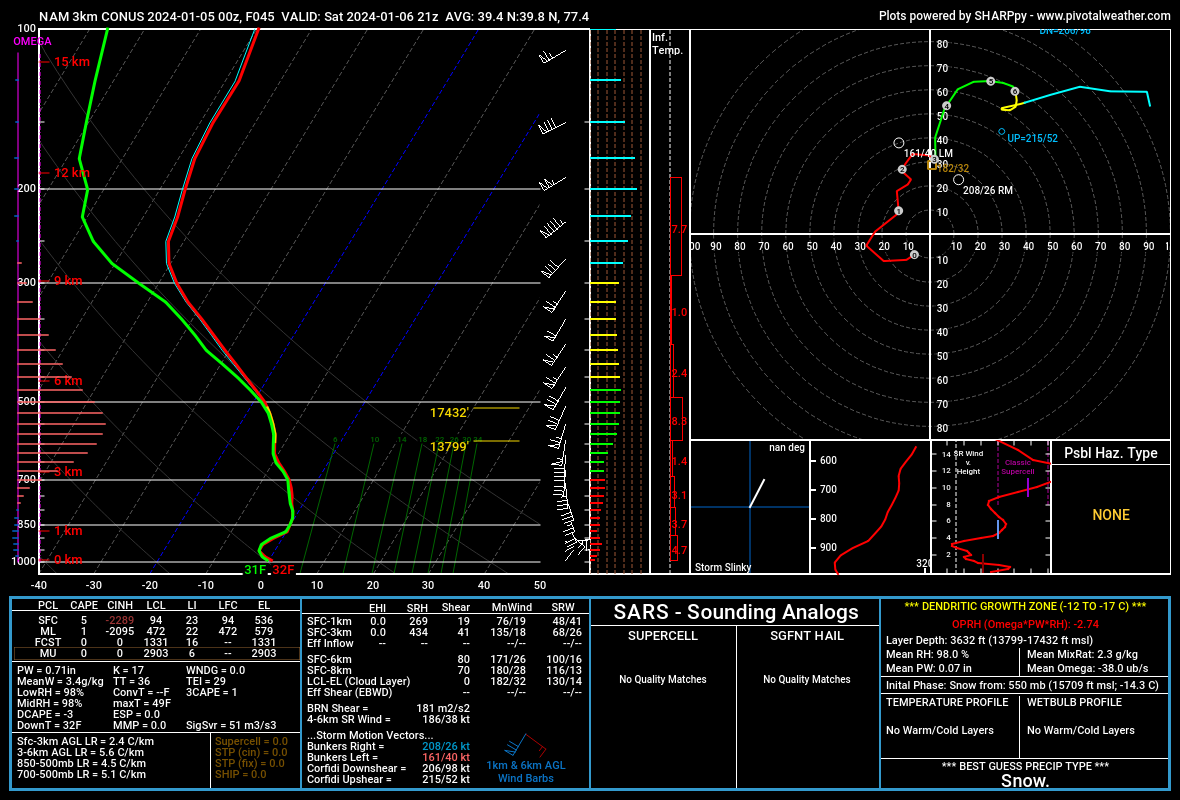
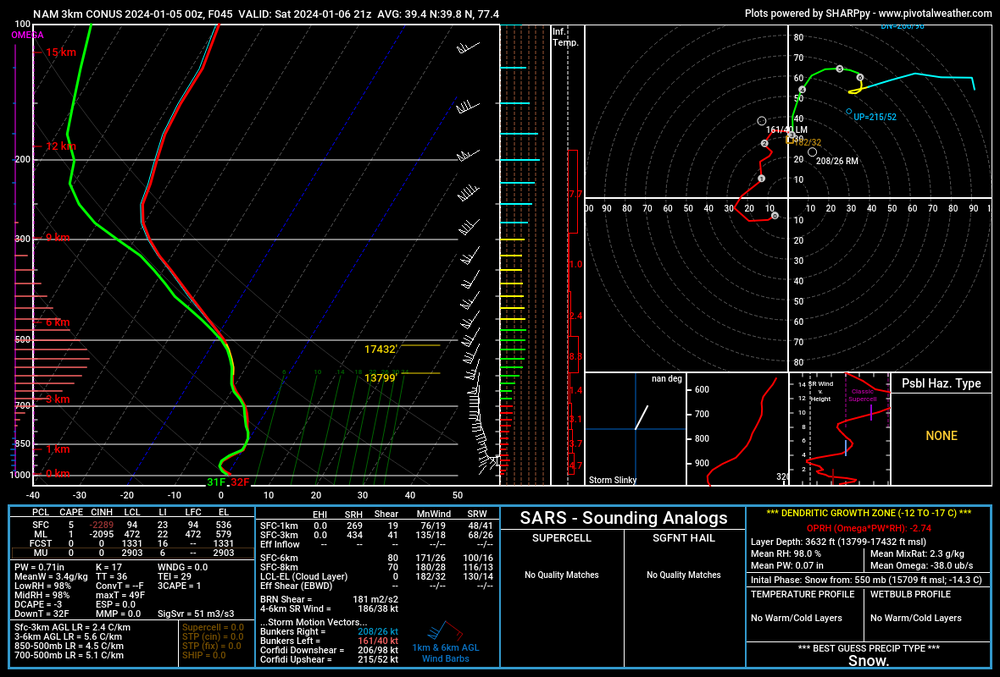
3kmNAM really went full blown NAM'd here. A notable change was the stronger frontogenesis at 850mb and 700mb (attached). Taking a sample sounding (it is basically eastern Frederick County, all of Carroll, and western Baltimore County, as far south as I-70 and on north to the M-D), the intense vertical velocities lineup well with the DGZ. This stronger FGEN held on for a good 6 hour span. This is the way to an over performer. Now, whether that actually occurs or not, well, we still have time to see.
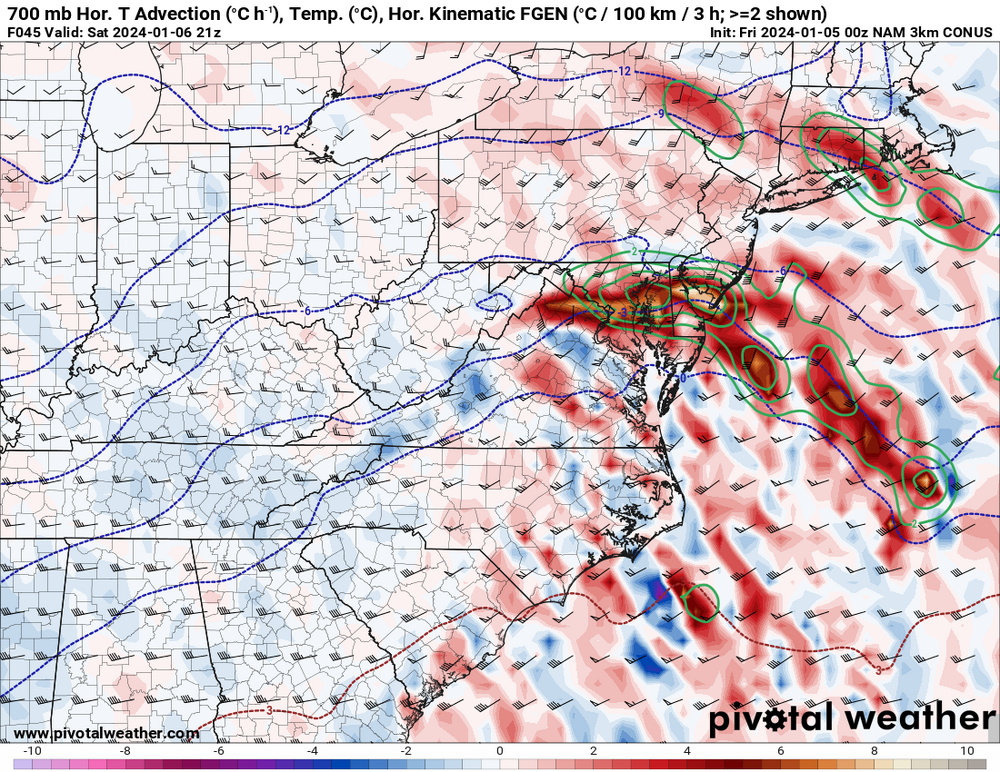
-
Jan Medium/Long Range Disco: Winter is coming
wxmvpete replied to stormtracker's topic in Mid Atlantic
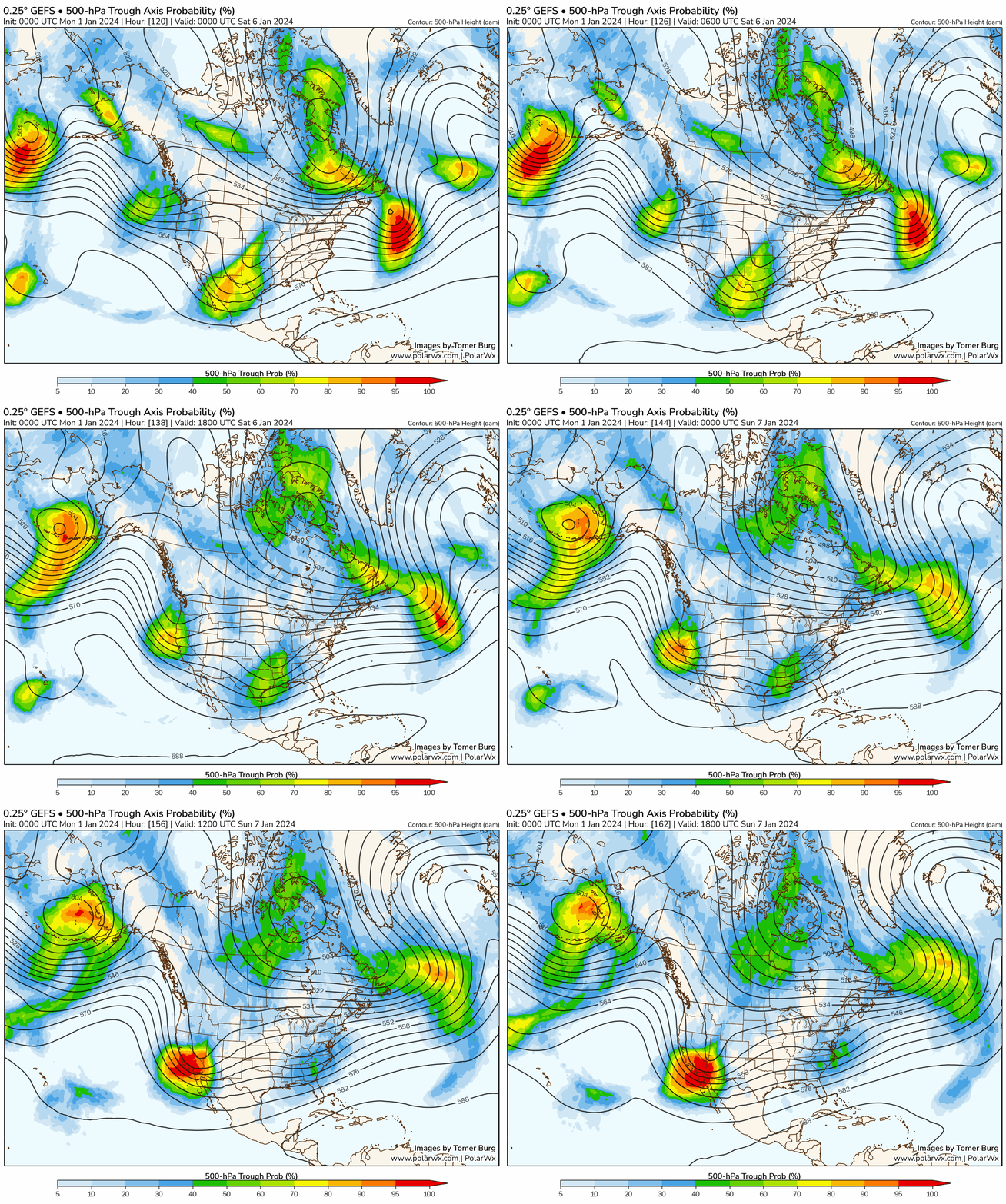
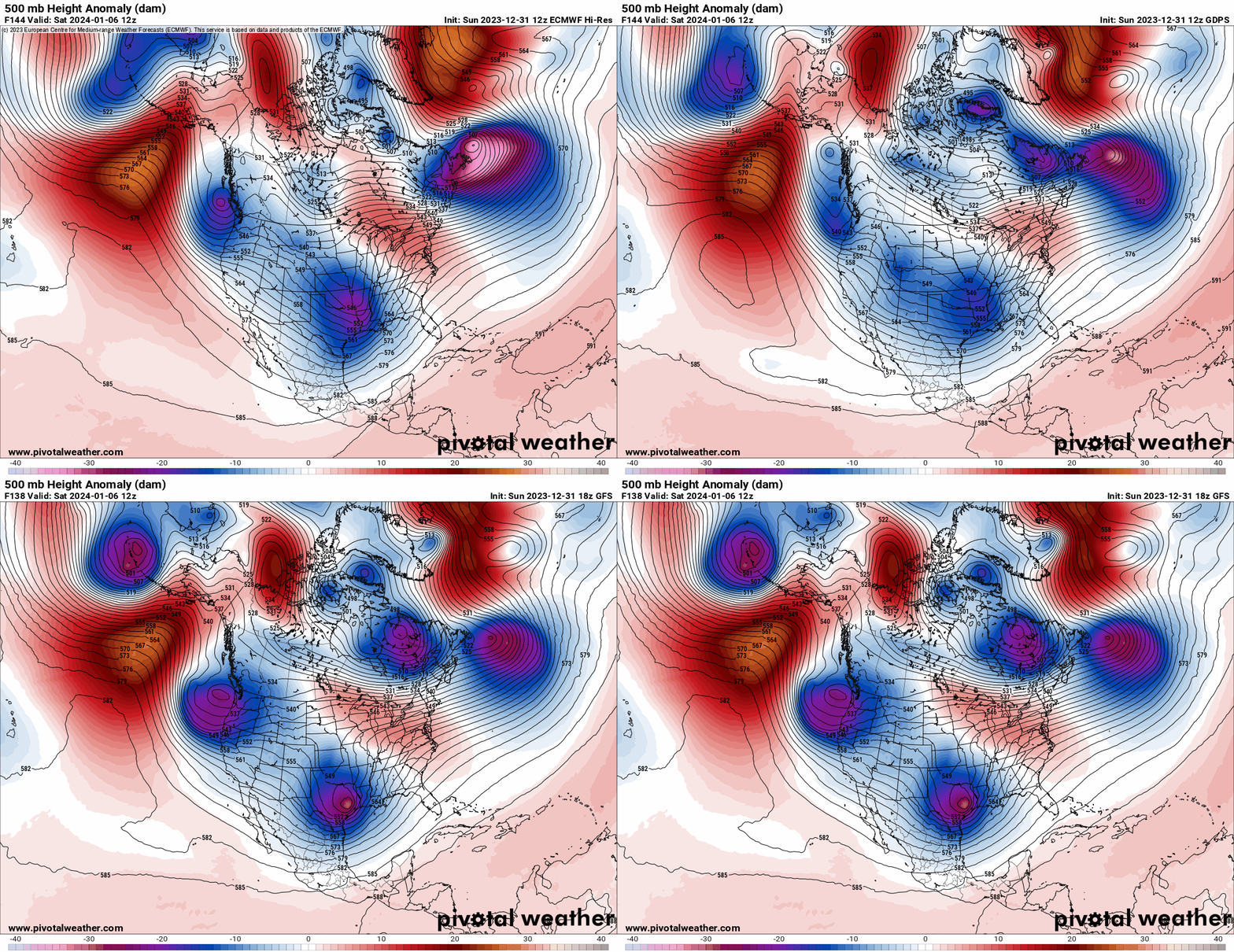
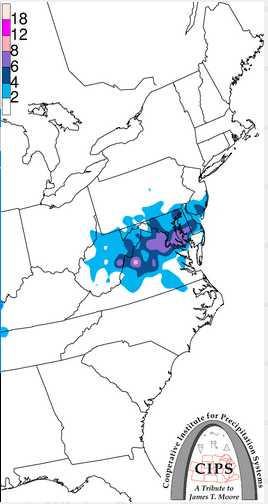
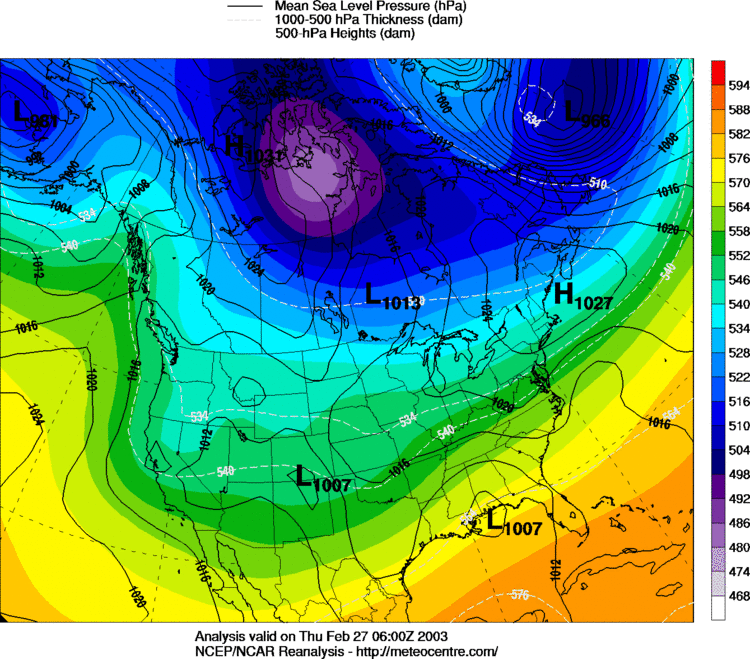
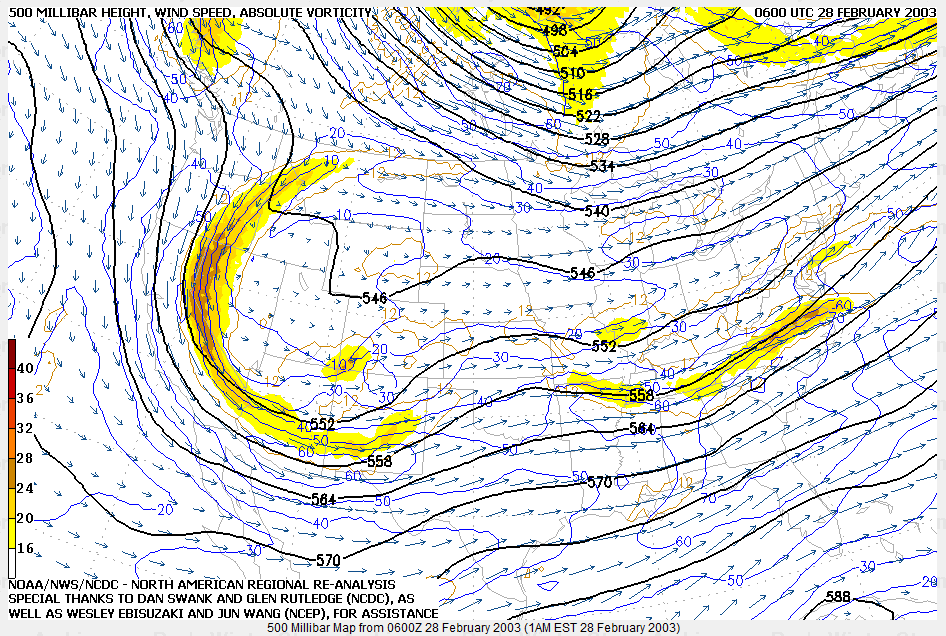
The 00Z trends on paper show a colder/more south solution for the weekend winter storm. But there's still plenty of time for more changes. Just using the GEFS for this exercise. Here is a Tomer Burg plot showing GEFS probabilities for 500mb troughs. It's a good thing to see a lack of even moderate probabilities (topping out around 20-30%) for toughing in Quebec, suggesting the higher probability for confluence there. However, note the primary shortwave trough in the Southern Plains. As was mentioned a couple times on the forum, part of this is less phasing/interaction with a northern stream shortwave. However, some of this signal could also be a signal flattening of the shortwave. Part is this is also growing dispersion in the GEFS (more ensembles showing more and more different potential amplitudes/positions of the trough drowning out the signal), but it likely includes some flatter solutions. We can get away with slightly less amplified features, particularly in an El Nino when the STJ is super charged and these southern stream disturbances are loaded with moisture. However, the need for strong upper level ascent out ahead of the trough is still important in generating both heavier snowfall rates and dynamic cooling. In short, there are still signs where this trough could weaken, but there are enough solutions to suggest this system remains quite strong. It is simply too early to tell. But we could get by with still a meaningful and impactful event even with a weaker shortwave. A good example was February 26-28, 2003. Note on the reanalysis image for Feb 27 at 06Z-- the surface low along the Gulf Coast is weak, but there is an anchored high to the north and some tighter 1000-500mb thickness packing over VA. On the archived 500mb chart centered on 06Z Feb 28, 2003, the 500mb trough didn't exactly look that impressive. Still, they produced a swath of 4-8" (CIPS image), which given the snow drought we've experienced, just getting an event like that would be a start. Dulles managed 6.4" from this event, DCA 5.3", and BWI 4.5". We'll see how trends go in the coming days. Seems like a storm is coming. But to what extent is still up for debate.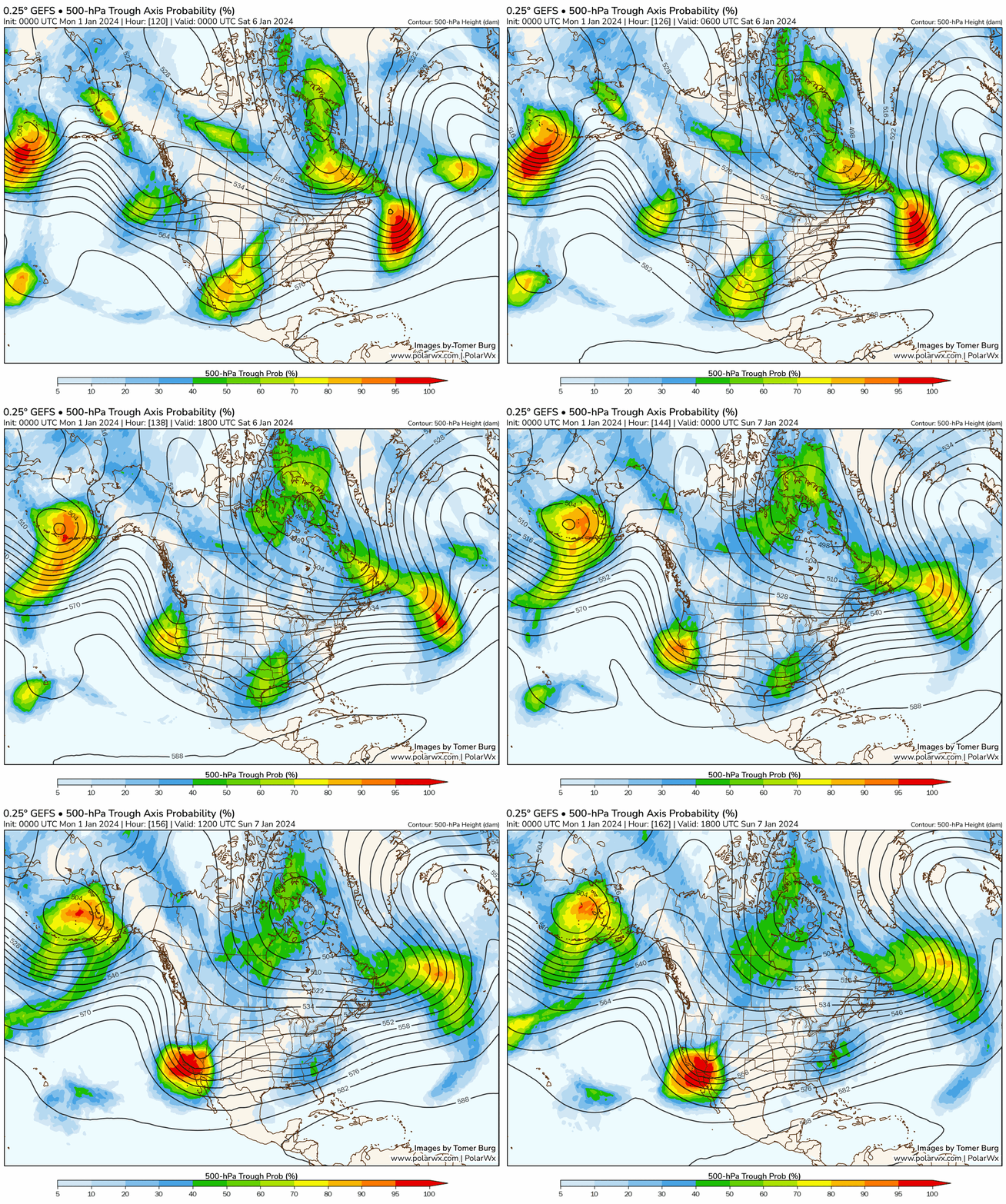
-
Jan Medium/Long Range Disco: Winter is coming
wxmvpete replied to stormtracker's topic in Mid Atlantic
Yep. We get to work remotely a couple times a pay period. But otherwise, I commute to College Park. On a great day, I can get here in just over 1 hour. My wife works in the Hereford Zone and my in-laws live near Freeland. So it's closer to family and my wife's job which is what we wanted (originally lived near Sykesville). Farther drive for me, but I remind myself on those 90+ minute commutes home that the house/price was worth it, and living at 1,000ft will occasionally have its perks in winter. -
Jan Medium/Long Range Disco: Winter is coming
wxmvpete replied to stormtracker's topic in Mid Atlantic
That MillvilleWx guy is a pretty good dude also. Knows his stuff pretty darn well. P.S.A. for all the mets that contribute on here. It takes time away from their day (and nights depending on what your job is), while balancing being a significant other/spouse and possible father/mother that many of the mets make to contribute on here. I wish when I was in middle/high school that I had the kind of access to degreed mets (and even those non-mets that have learned a ton over the years on forums such as these) that younger folks have today. It's going to be a long 5-6 days for this system and still plenty of winter to go. Be courteous and treat others how you'd like to be treated. Sprinkle in a couple good snowstorms and this place ought to be fun. -
Jan Medium/Long Range Disco: Winter is coming
wxmvpete replied to stormtracker's topic in Mid Atlantic
There are many variables to watch for next weekend's winter storm. The first glaring one that stands out is northern Quebec. The ECMWF does NOT buy what the GFS is selling with the upper low aiding in stronger confluence. The CMC is more of a blend of the two. Outside of the upper level feature in the South, that upper trough the GFS is showing in northern Quebec will be something I'm monitoring in the coming days.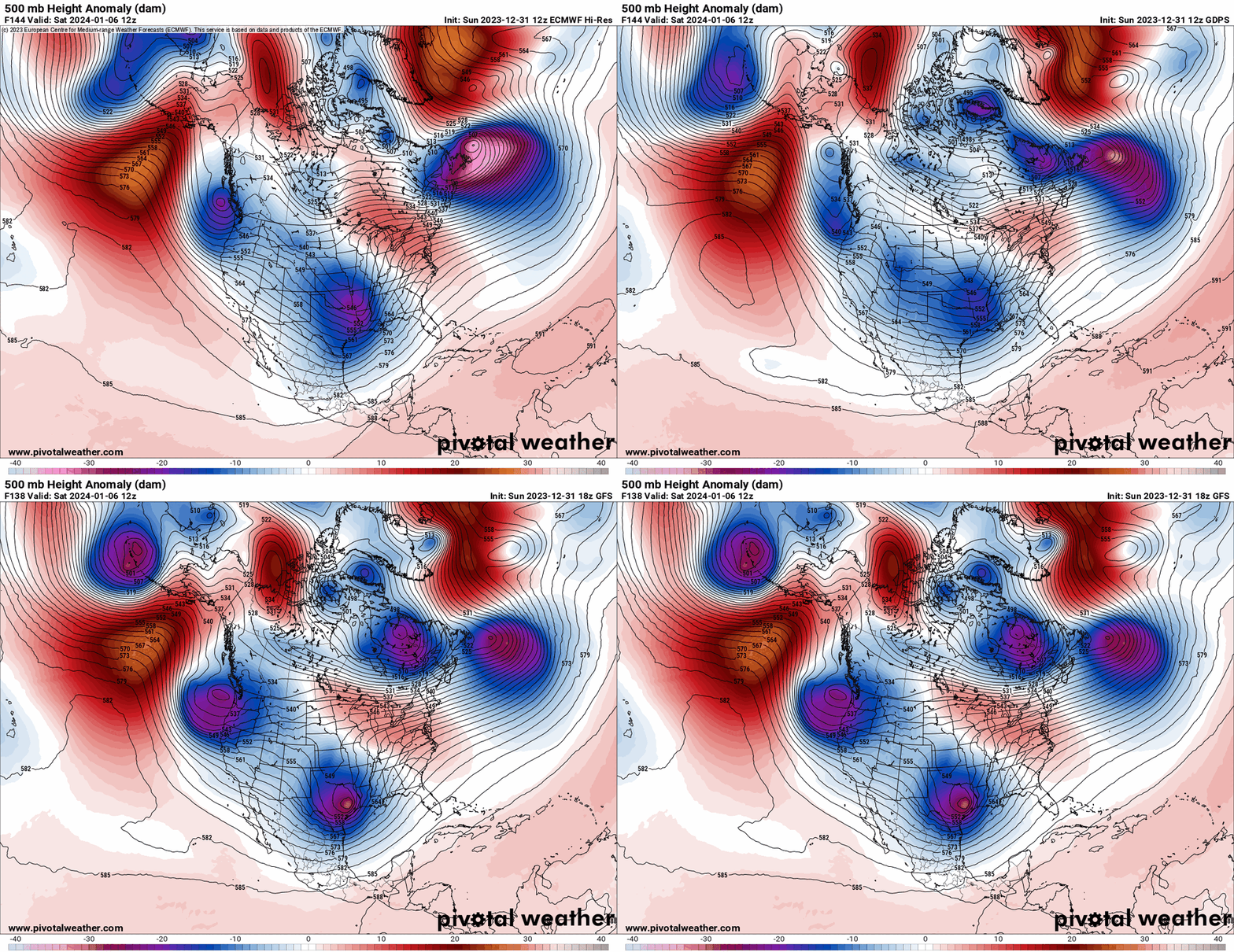
-
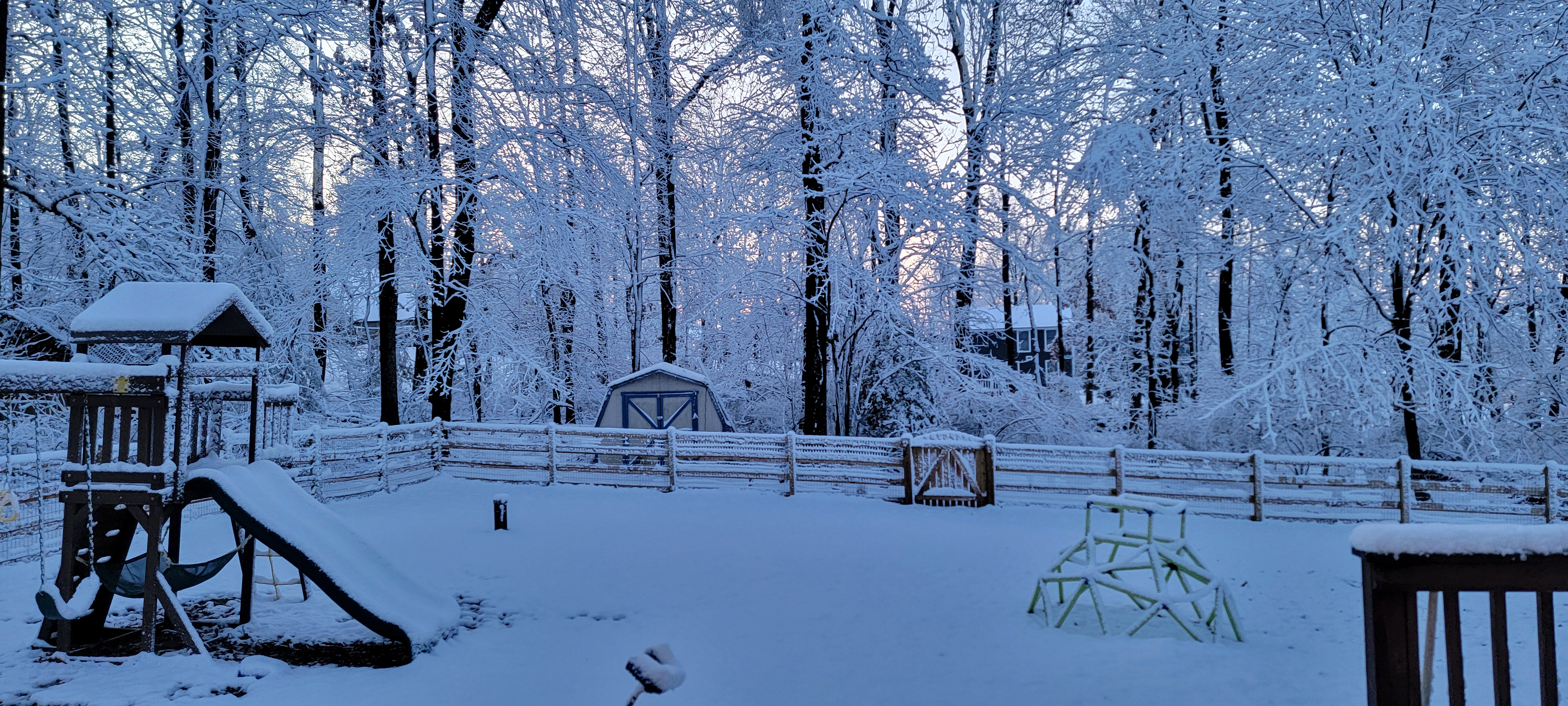
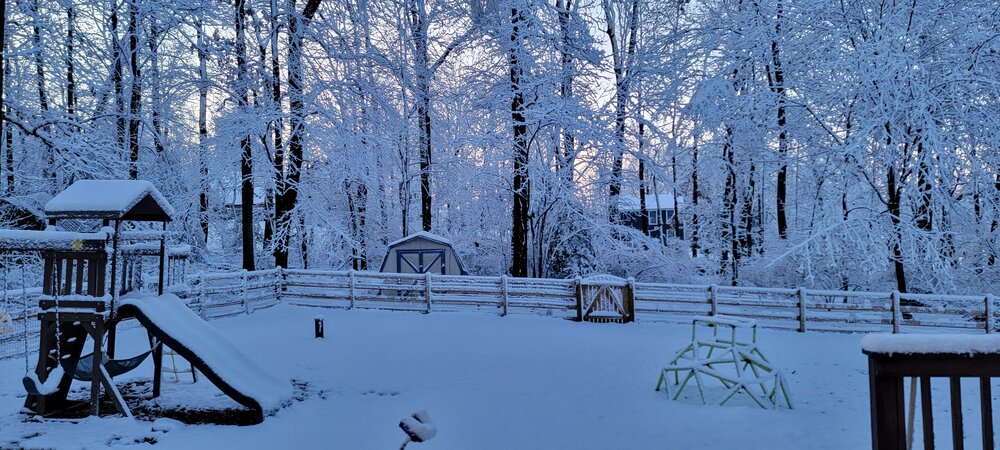
At 5:30, I measured 3". If I had measured maybe between 4:30 and 5, I may have sqeaked out a tiny bit more. But it compacted fast.
-
42/42 here between Westminster and Manchester (elevation 1,000ft). I've picked up 1.26" of rain today.
-
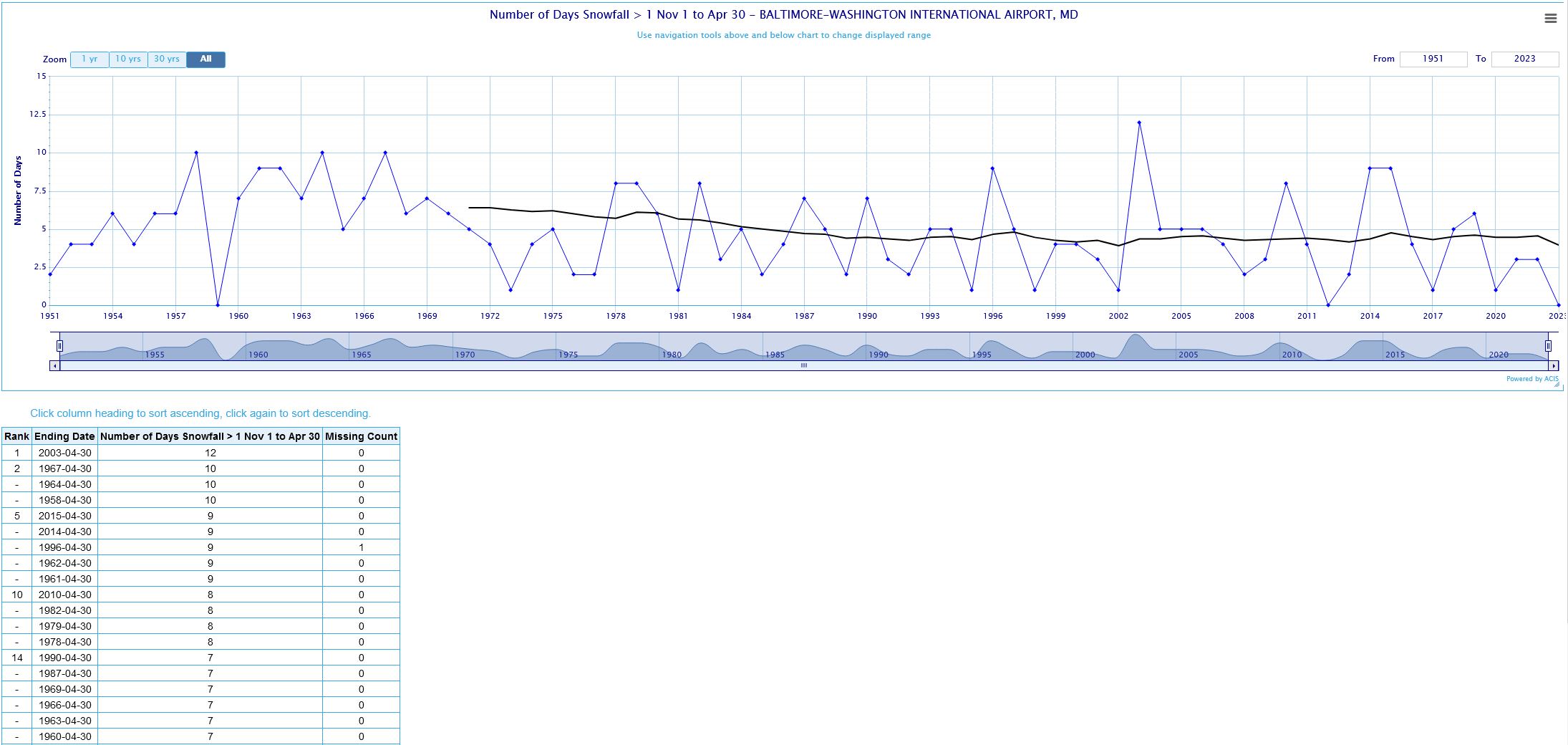
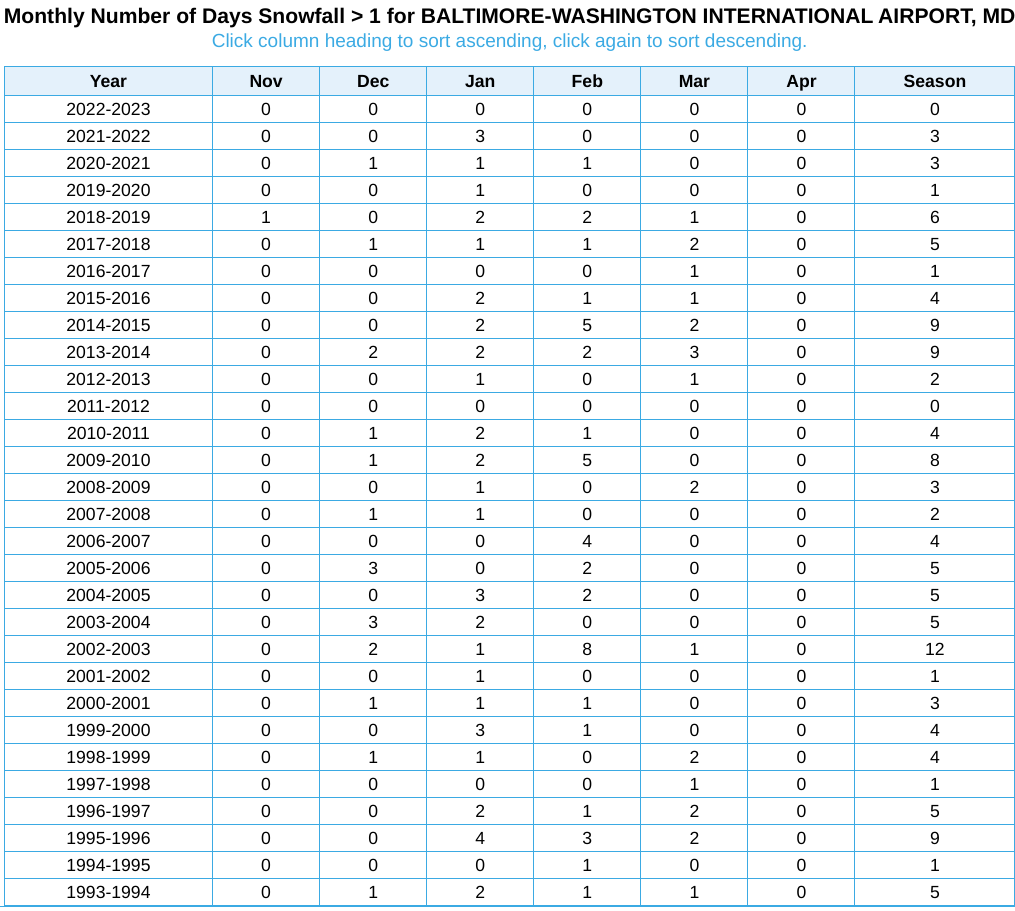
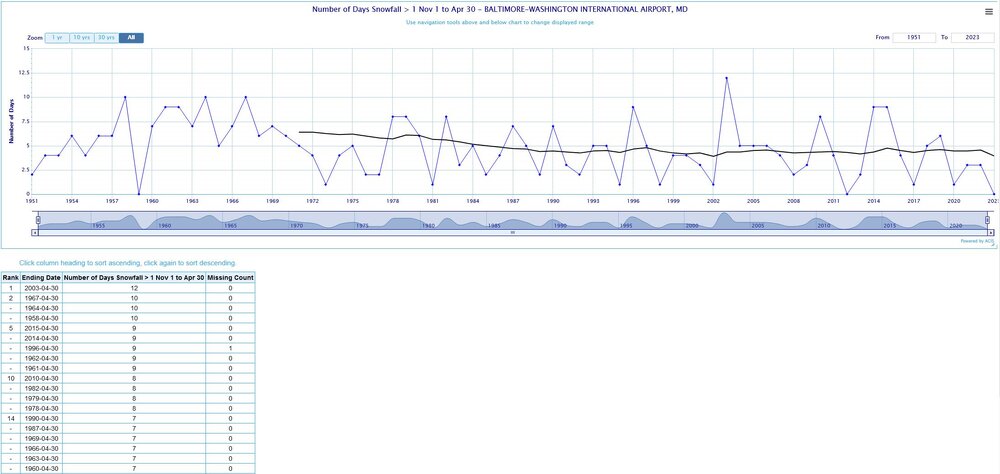
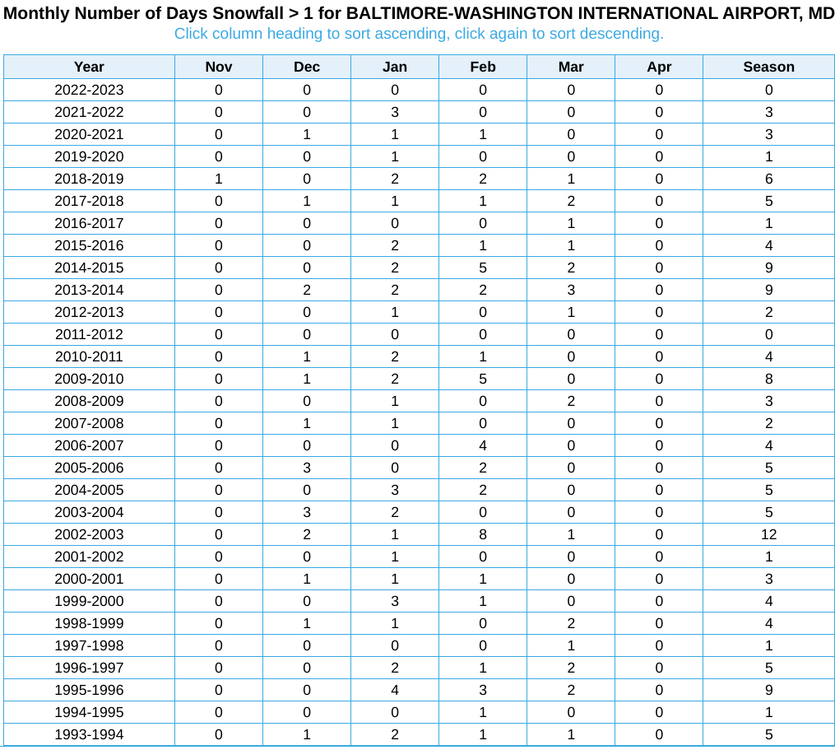
This is a great point to bring up. Here is a chart that shows the number of days where KBWI measured >1" of snow between Nov 1 - Apr 30 (PoR dates back to 1950-51). A couple disclaimers-- I added Nov since there were a handful to pick from, and April actually never measured 1" at any point at BWI, but there have been cases where the elevated terrain to the west has managed an April snow so I wanted to include April. The table I sorted shows the most days with >1" (2002-03 was the highest with 12 days, 8 of which came in Feb). I added a 20-yr moving average to the graph. After last year's "winter", the latest 20 year moving average shows BWI only sees 4 days during that stretch with >1". Think about that. When accounting for all those months (NDJFMA), which comes out to 181 days (not including leap years), only 4 days on average does BWI see >1". Of course, the higher terrain to the west will be higher, but it speaks to how everything genuinely needs to come just right that roughly, on average, only 2.2% of the 181 days in NDJFMA see >1" along the I-95 corridor. That's why so many care. We know these opportunities don't come together often for simply 1" in many cases. That's why every inland cutter, late forming storm, or suppressed storm track can sting. So why do I post these sad stats on this snow-starved forum? This is climo in essence. Dating back to Nov 1950, there have only been 12 November days that BWI picked up over 1" of snow. Including 2023, that's 73 Novembers, or 2,190 November days. And BWI got over 1" on 12 of those days. Which is less than 1%. December the numbers start to gradually go up from there, and March is still considerably better than November. As we know, January and February are the top months. I added a chart with the number of days BWI reported >1" going back to 1993-94 for fun. So, patience. There's plenty of reasons to be optimistic, but a handful of other reasons to keep expectations in check. But it's early (as I'm trying to convey). There's a lot more of the season to go, and being patient, kind, and courteous to others will hopefully allow for healthy discussion for a season that should provide us with plenty of model watching. Cheers!
-
I am just west of Snydersburg and about a mile east of MD-27. I refer to it as living in the middle of the triangle that Manchester, Westminster, and Hampstead create. I noticed those marginal events a couple times late last winter already. Interested to see how I fare this winter compared to my immediate family (they are near Manassas and Chantilly, VA).
-
It's a bold forecast, but given the highly unusual atmospheric and oceanic factors at play, you'd think highly unusual events should transpire. That's why I totally get the "all or nothing" type seasonal forecasts I've been seeing. Also, I moved closer to Manchester late last winter and already saw how much that elevation matters. I live right at 1,000ft. Hoping to reap some of the rewards of that added elevation for my first full winter in northeast Carroll County.
-
Very true. One of the other reasons for this is the style of storm system this is. This isn't a well formed low tracking across the Deep South then going up the coast. It is one 850mb low over the OH/TN Valley that weakens and gives way to development along the coastal front, while intense synoptic scale forcing takes shape and leads to the deepening on the coast. Where these fronts lineup at this range is anyone's guess. I had another tweet in that thread that goes into the 10-90th climatological percentiles at 850mb, that are exceptionally wide ranging across the region. It highlights how far we have to go before we really see truly what kind of cold air there is to work with. All that said, my main point was most major winter storms in these parts will have an 850mb low in that vicinity. However, not all 850-750-500-300mb evolutions are the same and neither are the air-masses. For this range, you could just have several shortwaves that aren't phasing and create a mess. In this case, the main system is well agreed upon to be a highly anomalous, significant storm in California. I recall some of the areas worst winter storms also being a big problem for the West Coast. The pattern itself is interesting. But there's time to see how the thermals and frontal positions come together.
-
It can be vary from run to run given the ensembles involved, but it does give at least an early glimpse for some areas to keep an eye on in the days to come. (My first post. How about that!)